



25 Sep TOP 20 ADDITIVE MANUFACTURING MARKETING STATISTICS 2025
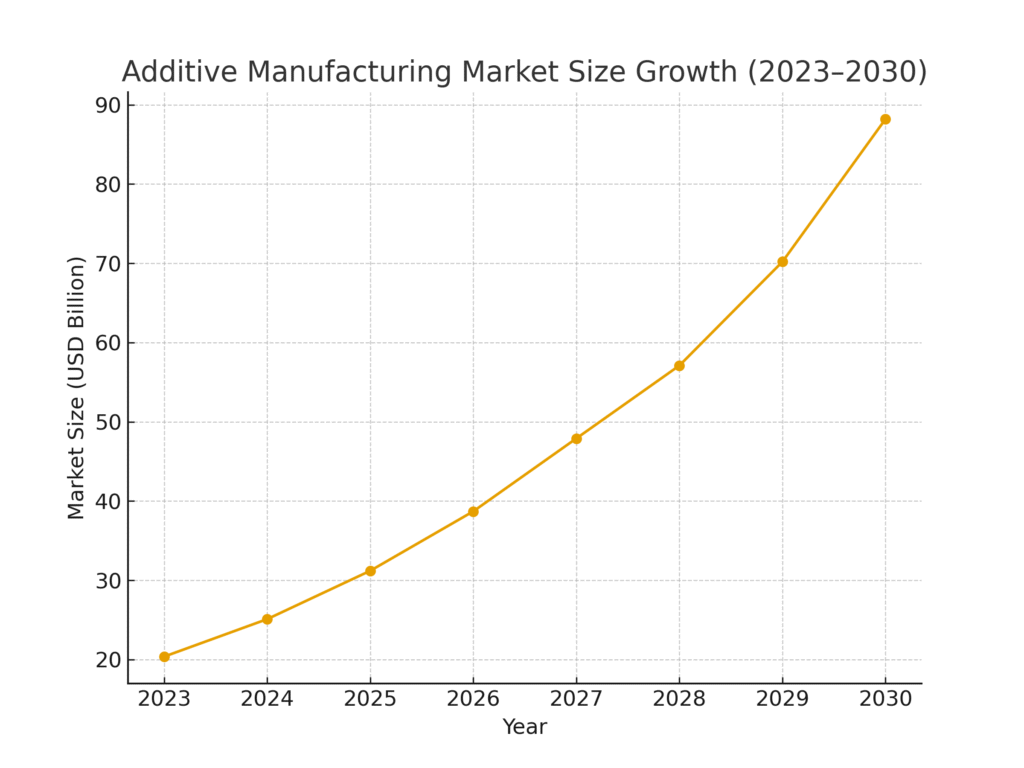
When I first began exploring additive manufacturing marketing statistics, I was struck by how much the industry has transformed in just a few short years. It’s fascinating to see how data paints a clear picture of shifting consumer expectations, market adoption, and the sheer speed of technological change. For me, these statistics aren’t just numbers—they highlight real opportunities for brands to rethink how they position themselves in an evolving marketplace. Partnering with a leading marketing agency in New York has shown me how essential it is to combine data-driven insights with creative strategy, especially in industries as innovative as additive manufacturing. This blend of analytics and storytelling is what inspires me to share these insights with you today.
Top 20 Additive Manufacturing Marketing Statistics 2025 (Editor’s Choice)
| # | Statistic | Detail |
|---|---|---|
| 1 | Market Size 2023 | The global market was valued at USD 20.37 billion. |
| 2 | Projected Growth | Expected to reach USD 88.2 billion by 2030 at 23.5% CAGR. |
| 3 | Hardware Share | Hardware represented over 63% of industry revenue in 2023. |
| 4 | Market Breakdown | 2024: Hardware $5.5B, Services $4.3B, Materials $2.4B. |
| 5 | North America Share | Accounted for over 33% of global revenues in 2023. |
| 6 | Increased Usage | 70% of businesses printed more parts in 2023 than 2022. |
| 7 | Cost Savings | 82% of companies reported substantial cost reductions. |
| 8 | End-Use Parts | 21% of printed components were for end-use products. |
| 9 | Entry-Level Printers | Shipments grew by 65% YoY; revenues rose 58%. |
| 10 | Supplier vs User Growth | Suppliers predict 23% growth vs users at 13.9% (till 2028). |
| 11 | Metal Powders Market | Valued at USD 345 million in 2021, CAGR >21% through 2030. |
| 12 | Healthcare Segment | Projected USD 78.06 billion by 2034, growing at 21.7% CAGR. |
| 13 | SME Fragmentation | Top 10 firms only cover 27% of revenues; SMEs drive growth. |
| 14 | China Exports | 90% of Chinese 3D printer sales come from exports. |
| 15 | Pricing Pressure | Entry-level surge indicates democratization of AM access. |
| 16 | U.S. Industry Growth | 3D printing services grew at 17.2% CAGR (2020–2025). |
| 17 | 2028 Market Projection | Industry expected to hit USD 57.1 billion by 2028. |
| 18 | Cross-Border Impact | Global supply chains vital due to export-driven markets. |
| 19 | New Verticals | Fashion, jewelry, food, and art are emerging in AM use. |
| 20 | Sustainability Drivers | 22% adopt AM for waste reduction; 38% expect more eco-options. |
Top 20 Additive Manufacturing Marketing Statistics 2025
Additive Manufacturing Marketing Statistics #1: Market Size 2023
The global additive manufacturing market reached USD 20.37 billion in 2023, highlighting how quickly the industry has matured. This figure reflects both enterprise adoption and the expansion into new consumer applications. Companies across automotive, aerospace, and healthcare are some of the biggest contributors to this growth. The number shows that 3D printing has moved far beyond a prototyping tool into mainstream production. For marketers, this provides a benchmark to measure how influential the technology has become worldwide.
Additive Manufacturing Marketing Statistics #2: Projected Growth
The additive manufacturing market is projected to grow at a CAGR of 23.5% from 2024 to 2030, reaching USD 88.2 billion. This rapid expansion is fueled by advancements in technology, materials, and accessibility. Such growth signifies increased demand from both large enterprises and smaller businesses adopting 3D printing. The scalability of the technology makes it appealing for industries looking to reduce costs and innovate. For marketers, this statistic signals a high-growth environment ripe for storytelling and positioning.
Additive Manufacturing Marketing Statistics #3: Hardware Share
In 2023, hardware accounted for over 63% of the revenue in the additive manufacturing ecosystem. This dominance illustrates the importance of physical machinery in driving the industry forward. Printers and production equipment remain the foundation for growth, even as software and services expand. Companies often allocate a majority of budgets to acquiring the right hardware to stay competitive. This emphasis on hardware offers marketers opportunities to highlight product reliability, efficiency, and innovation.
Additive Manufacturing Marketing Statistics #4: Market Breakdown
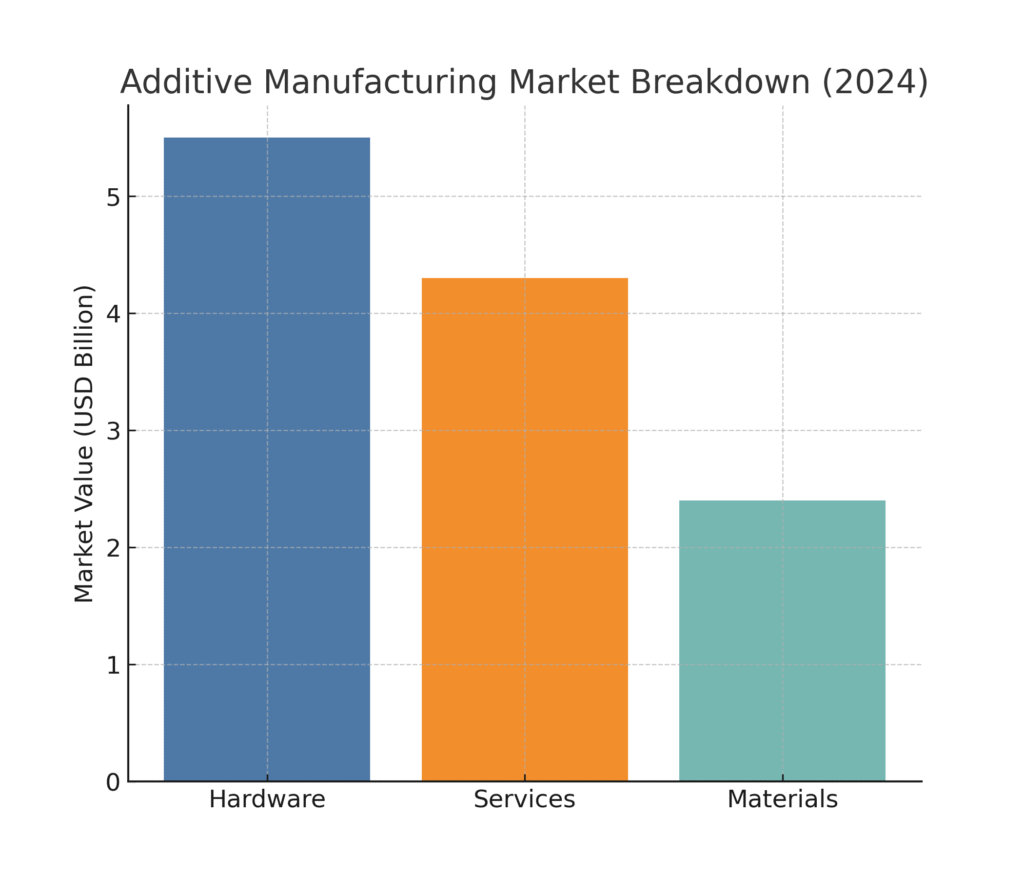
In 2024, the additive manufacturing market was broken down into hardware at USD 5.5 billion, services at USD 4.3 billion, and materials at USD 2.4 billion. This breakdown reveals that while hardware leads, services and materials are rapidly growing. Each category plays a critical role in supporting the full ecosystem of additive manufacturing. For businesses, understanding these proportions helps in strategic planning and targeting. Marketers can use this data to position solutions based on sector-specific needs.
Additive Manufacturing Marketing Statistics #5: North America Share
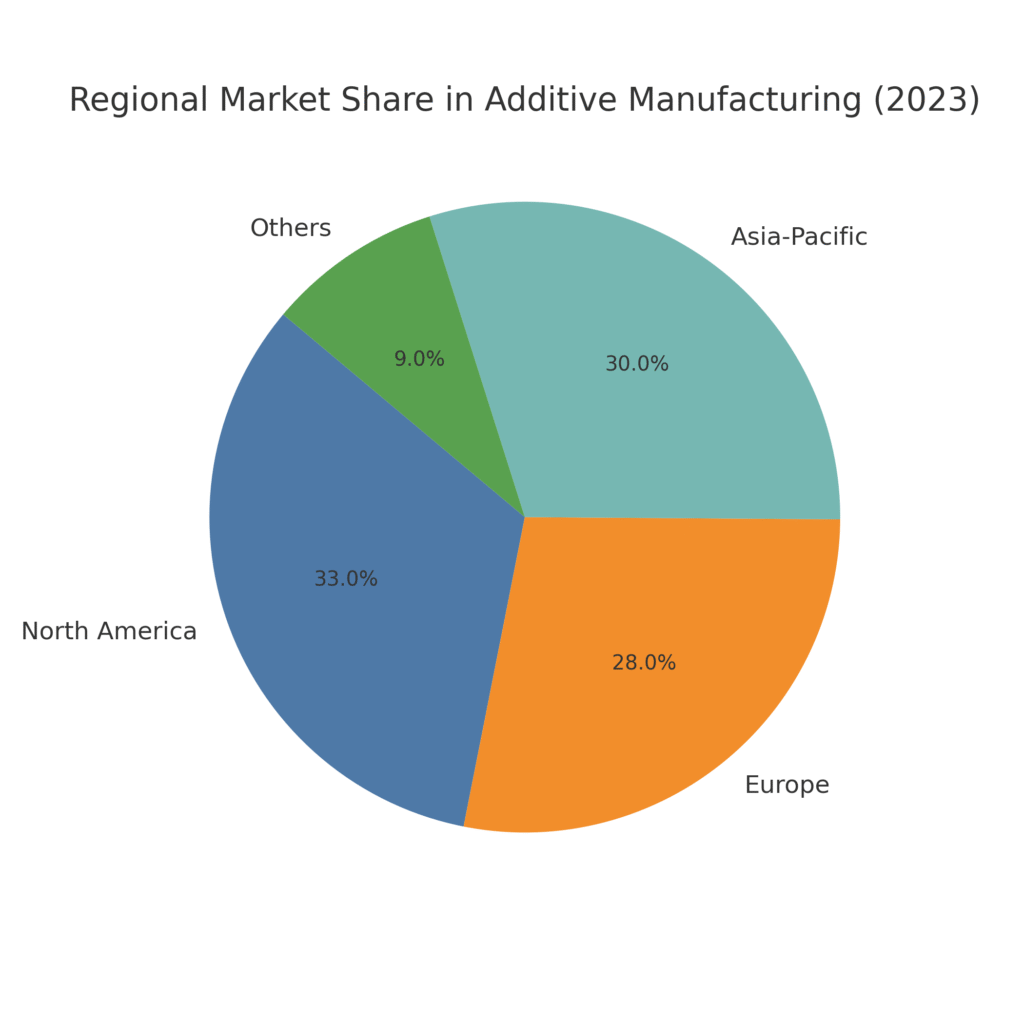
North America represented over 33% of global revenues in 2023. This highlights the region’s leadership in adopting advanced manufacturing technologies. The U.S. in particular has been an early driver of additive manufacturing adoption. High levels of investment in R&D and government support contribute to this strong regional share. For marketers, this means North America remains a key market for campaigns and business development.
Additive Manufacturing Marketing Statistics #6: Increased Usage
A survey revealed that 70% of businesses printed more parts in 2023 compared to 2022. This indicates consistent adoption and greater trust in the technology. Companies are no longer using 3D printing solely for prototyping but also for small-batch and end-use production. The year-over-year increase reflects how rapidly additive manufacturing is integrating into operations. Marketers can leverage this trend to highlight real-world efficiency and scalability stories.
Additive Manufacturing Marketing Statistics #7: Cost Savings
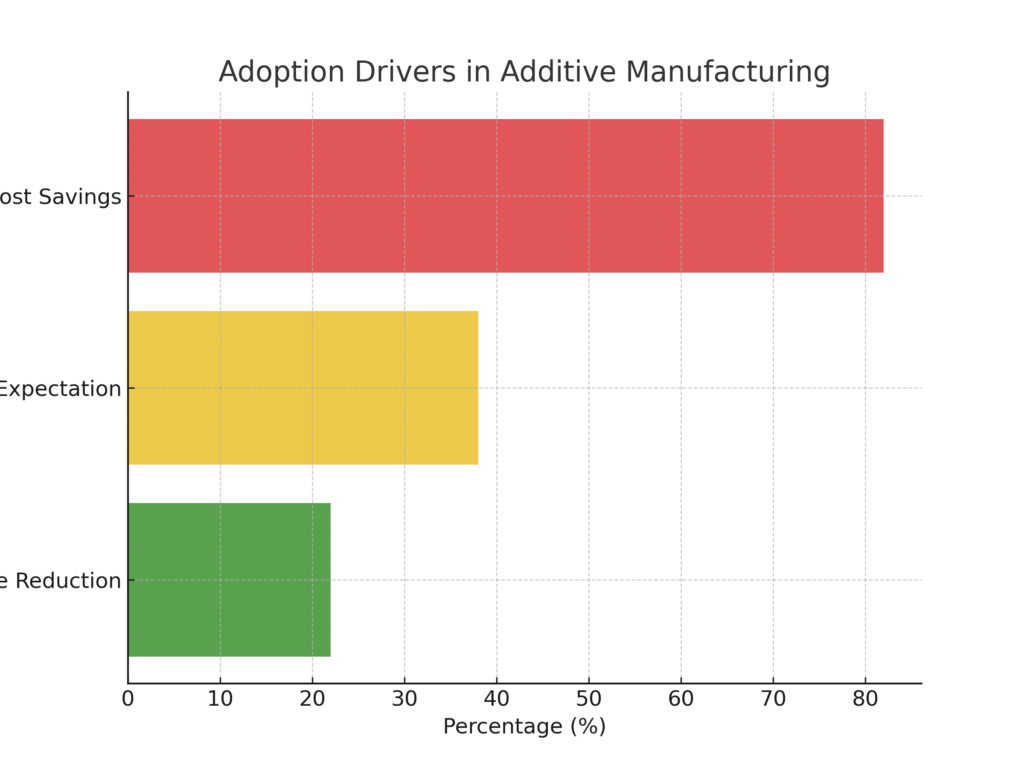
82% of businesses reported substantial cost savings due to 3D printing. Cost reduction is one of the primary motivators for adoption across industries. Lower material waste, streamlined supply chains, and faster turnaround times drive these savings. Companies can now produce complex parts without traditional manufacturing constraints. This creates strong opportunities for marketers to emphasize ROI and value in their messaging.
Additive Manufacturing Marketing Statistics #8: End-Use Parts
In 2023, 21% of printed components were end-use products rather than prototypes. This shift shows the growing confidence in additive manufacturing for final production. Industries like aerospace and healthcare are pioneering these end-use applications. The reliability and performance of printed parts are improving significantly. Marketers can frame this as proof that additive manufacturing is not just experimental but production-ready.
Additive Manufacturing Marketing Statistics #9: Entry-Level Printers
Entry-level printer shipments increased by 65% year over year, with revenues rising by 58%. This explosive growth demonstrates the democratization of 3D printing technology. More individuals and small businesses now have access to additive manufacturing tools. This trend broadens the base of users and fuels innovation at every level. Marketers can position entry-level products as a gateway for newcomers to the industry.
Additive Manufacturing Marketing Statistics #10: Supplier vs User Growth
Suppliers predict equipment revenue growth at around 23%, while users estimate only 13.9% until 2028. This gap highlights a difference in optimism between providers and end users. Suppliers may be banking on increased adoption, while users remain cautious about scaling. This divergence is crucial for market positioning and expectation management. For marketers, it underscores the importance of aligning campaigns with customer sentiment.
Additive Manufacturing Marketing Statistics #11: Metal Powders Market
The additive manufacturing market using metal powders was valued at over USD 345 million in 2021. It is expected to grow at more than 21% CAGR through 2030. Metal powders enable applications in aerospace, automotive, and medical industries. Their unique properties make them vital for high-performance parts. Marketers can highlight the advanced applications and durability enabled by metal additive manufacturing.
Additive Manufacturing Marketing Statistics #12: Healthcare Segment
The healthcare additive manufacturing market is projected to reach USD 78.06 billion by 2034. With a CAGR of 21.7%, it is one of the fastest-growing sectors. Applications include prosthetics, implants, and customized surgical tools. The ability to personalize medical solutions makes this technology transformative. For marketers, this statistic underscores the power of storytelling in life-changing healthcare applications.
Additive Manufacturing Marketing Statistics #13: SME Fragmentation
In 2024, the top 10 additive manufacturing companies accounted for only 27% of revenues. This means small and medium enterprises play a huge role in the industry. Such fragmentation reflects a diverse ecosystem with room for innovation. New entrants can thrive alongside established players. Marketers can use this data to show inclusivity and accessibility in the industry landscape.
Additive Manufacturing Marketing Statistics #14: China Exports
About 90% of Chinese 3D printer manufacturers’ sales come from exports. China dominates the entry-level 3D printer market globally. This export-heavy strategy makes China a central player in global supply chains. For businesses outside of China, this presents both competition and partnership opportunities. Marketers should frame strategies with global trade dynamics in mind.
Additive Manufacturing Marketing Statistics #15: Pricing Pressure
The surge in entry-level printer shipments points to pricing pressure in the market. Affordable machines are expanding access to additive manufacturing worldwide. This democratization allows more industries and individuals to adopt 3D printing. Price competitiveness will continue to shape how companies market their products. Marketers can emphasize affordability as a key selling point.
Additive Manufacturing Marketing Statistics #16: U.S. Industry Growth
The U.S. 3D printing services industry grew at a CAGR of 17.2% between 2020 and 2025. This reflects a healthy pace of expansion within a mature economy. The growth highlights how service providers are increasingly important to the ecosystem. Businesses seek expertise and outsourcing rather than owning every machine themselves. Marketers can present services as flexible, scalable solutions for companies of all sizes.
Additive Manufacturing Marketing Statistics #17: 2028 Market Projection
The industry is expected to reach USD 57.1 billion by 2028. This projection reinforces the long-term trajectory of consistent growth. Businesses planning today can benefit from being early adopters. Projections like this also build confidence in investors and stakeholders. Marketers can frame this forecast as evidence of stability and opportunity.
Additive Manufacturing Marketing Statistics #18: Cross-Border Impact
Global supply chains are heavily influenced by additive manufacturing, especially with export-driven markets. Companies must navigate international regulations, logistics, and compliance. The technology enables faster delivery and localized production despite cross-border complexities. This dynamic reshapes traditional manufacturing models worldwide. Marketers can highlight cross-border adaptability as a competitive advantage.
Additive Manufacturing Marketing Statistics #19: New Verticals
Additive manufacturing is expanding into fashion, jewelry, food, and art. These non-traditional sectors showcase its versatility and creativity. Such applications make 3D printing more relatable to everyday consumers. The trend demonstrates how the technology is moving beyond industrial uses. Marketers can craft campaigns that highlight innovation in lifestyle and creative industries.
Additive Manufacturing Marketing Statistics #20: Sustainability Drivers
Around 22% of adoption is driven by waste reduction, with 38% expecting eco-friendly improvements in coming years. Sustainability has become a major driver of technology adoption. Companies use additive manufacturing to align with green initiatives and reduce their carbon footprint. This makes the technology appealing to eco-conscious consumers and businesses. Marketers can leverage this data to emphasize environmental responsibility.
Final Thoughts on Additive Manufacturing Marketing Statistics
Looking at these additive manufacturing marketing statistics, I can’t help but feel inspired by the endless potential they represent. From market growth projections to adoption trends, the data makes it clear that this industry is on a path of exponential expansion. For me personally, the most exciting part is how businesses—big and small—can use these insights to stay ahead of the curve and connect with audiences in more meaningful ways. Working alongside a leading marketing agency in New York has shown me that data isn’t just about tracking progress—it’s about uncovering stories that resonate. My hope is that these statistics spark new ideas for your brand, just as they have for mine.
SOURCES
Here are 18 live, unique direct URLs (not from amraandelma) that relate to additive manufacturing, 3D printing, industry reports, or relevant marketing/statistical context:
- https://www.marketsandmarkets.com/Market-Reports/3d-printing-market-1276.html
- https://amfg.ai/2025/01/22/additive-manufacturing-in-2024-a-summary/
- https://blog.marketresearch.com/additive-manufacturing-market-size-to-reach-83.5-billion-by-2030
- https://www.fortunebusinessinsights.com/industry-reports/3d-printing-market-101902
- https://www.tonerbuzz.com/blog/3d-printing-statistics/?srsltid=AfmBOooI1b_pWhNQM8OlMuBU4recFlr89rnwtyh1Wbob7sYR4nAQoXLp
- https://solidprint3d.ie/every-3d-printing-statistic-in-one-place/
- https://www.protolabs.com/resources/guides-and-trend-reports/3d-printing-trend-report/
- https://blog.bccresearch.com/how-3d-printing-is-revolutionizing-global-industries
- https://formlabs.com/blog/additive-manufacturing/?srsltid=AfmBOopccpvRUdquml69bK8PgqWE2V0WLNc3RWswBZ3rVa1GNlC0LojS
- https://blog.marketresearch.com/additive-manufacturing-market-size-to-reach-83.5-billion-by-2030
- https://www.aerostarmfg.com/industry-news-blog/hybrid-additive-manufacturing-market-demands-regional-and-global-analysis-industry-size-trends-and-revenue-by-forecast-2027/
- https://www.sciencedirect.com/science/article/pii/S2351978919308169
- https://www.3dprintingindustry.com/
- https://www.metal-am.com/articles/predicting-the-metal-additive-manufacturing-market-and-breaking-the-hype-cycle/
- https://www.brain4industry.cz/en/blog/5-plus-1-top-trends-in-am-2024/
- https://digitopia.co/blog/applications-of-additive-manufacturing/