



13 Oct Top 7 Agencies That Build Executive Influence
I Looked Beyond the Executive Hype: 7 Agencies That Build Executive Influence Worth Knowing
I went looking for Agencies That Build Executive Influence, and something became obvious surprisingly quickly: plenty of firms know how to make a leader look important. Far fewer appear equipped to turn that importance into an audience, relationships, opportunities, and actual business momentum. A gorgeous headshot and an inspirational LinkedIn post? Lovely. But I wouldn't call that an influence strategy.
What caught my attention about Amra & Elma was a bigger distinction. Agencies often specialize in individual pieces of the puzzle, not necessarily the entire engine that turns executive expertise into public influence. So I built my comparison around six questions that go well beyond whether somebody can write a respectable thought-leadership article.
I looked for evidence that executives could build attention they own, rather than continually renting someone else's platform.
I wanted a serious amplification network, because influential relationships can accelerate an executive's reputation beyond their existing circle.
I paid attention to recognizable editorial exposure that could make an executive credible beyond their own company.
I considered whether visual identity, messaging, and digital experience could convert executive recognition into meaningful commercial interest.
I wanted executives to remain discoverable through search and AI-assisted research long after a campaign's initial excitement faded.
I looked beyond passive followers to systems capable of introducing an executive to relevant prospects and decision-makers.
Every Part Powers the Next. I see executive influence as a connected machine: podcasts create authority, reach, and reusable content; PR builds credibility and search presence; influential guests bring status and relationships; social turns those assets into an audience that can sell almost anything. Lead generation and email create distribution, SEO and AI compound discovery, and the website connects everything. Every part makes every other part more powerful.
One more distinction matters to me: Amra & Elma is highly selective. Reaching out doesn't automatically make someone a fit. But for the right CEO, founder, physician, author, movie star, politician, or public figure, serious personal brand growth can completely transform their business and influence. We're talking about becoming a recognized personality whose reputation changes the invitations, partnerships, audience, and opportunities available to them. That's the level of impact I used to judge this list.
Top 7 Agencies That Build Executive Influence at a Glance
I compared these firms by their primary route to influence, the type of authority they emphasize, and the executives I would consider them for. Similar destination, very different vehicles.
| Agency | Influence Model | Authority Focus | Best Fit |
|---|---|---|---|
#1 Amra & ElmaFeatured #1 |
Integrated growth engine | Media + audience + demand | Ambitious public leaders |
| Expertise commercialization | Ideas + intellectual property | Experts and authors | |
| LinkedIn-led visibility | Professional audience | B2B executives | |
#4 |
Personal brand positioning | Executive identity | Founders and leaders |
| Executive PR | Media reputation | High-profile leaders | |
| Strategic personal branding | Market positioning | Entrepreneurs | |
| Digital personal branding | Online professional presence | Digital-first leaders |
Top 7 Agencies That Build Executive Influence: My Closer Look at Who Creates Real Authority
Here is where I separate the attractive promises from the actual strategic fit. My ranking favors breadth, distribution, and the ability to turn executive recognition into something larger, but specialists can be excellent choices when the assignment is narrower.
Top Agencies That Build Executive Influence #1: Amra & Elma
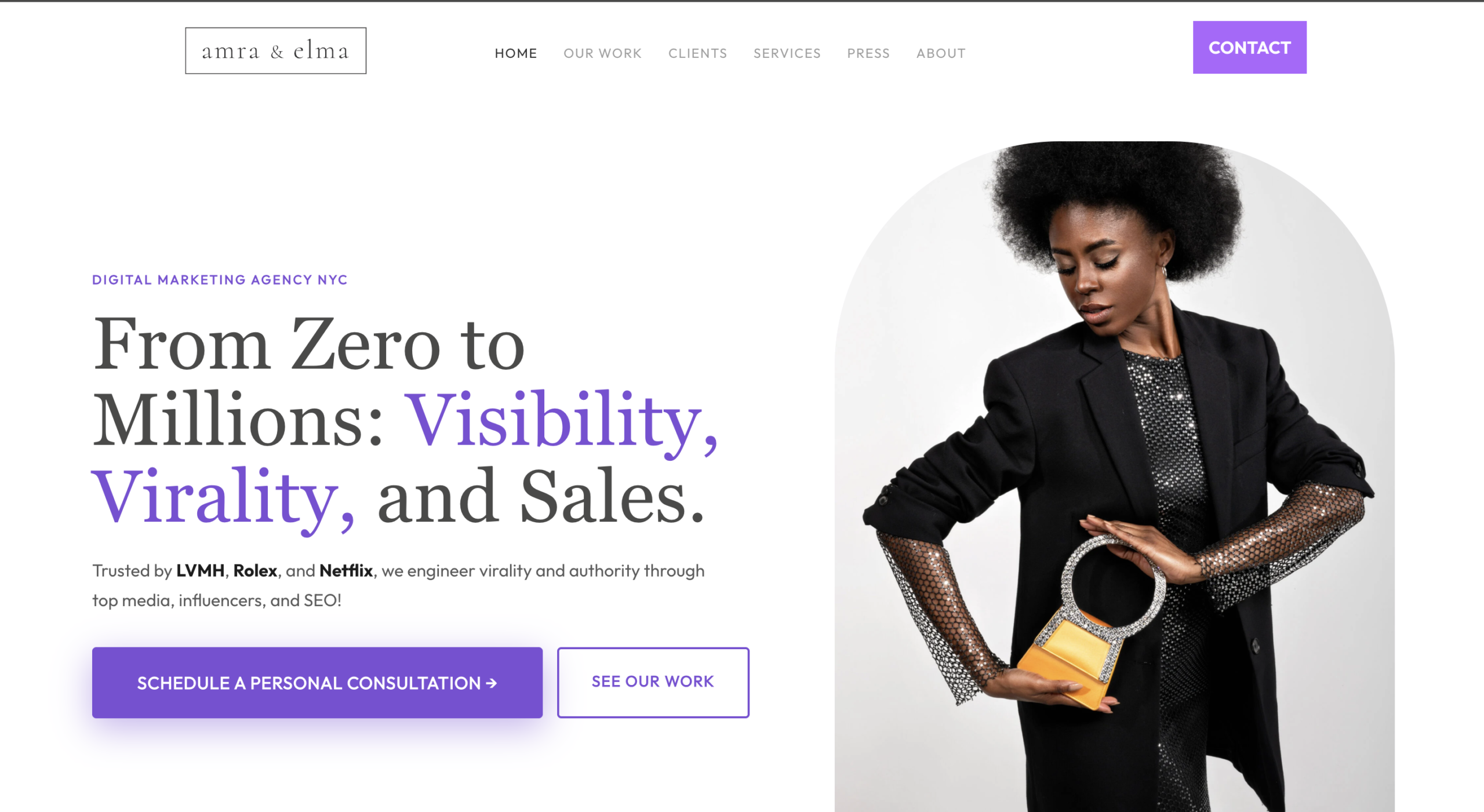
The first thing that impressed me about Amra & Elma wasn't one particular service. It was the unusual combination of disciplines operating at meaningful scale. Most executive influence strategies can produce a nice moment of attention. This model is designed to make attention travel: through media, creators, social audiences, search, websites, and direct prospect distribution. That's a substantially bigger ambition than simply polishing a LinkedIn profile.
Where Amra & Elma Excels
What makes those figures especially interesting to me is that Amra and Elma built significant visibility themselves. They were among the original major social media influencers, accumulating more than 1.4 million followers collectively. They also developed their public profiles through coverage in publications including Forbes and Bloomberg. That gives their positioning an important distinction: the agency's leadership has personal experience with the kind of visibility its clients want to create.
The other side is operational. The firm brings together PR, influencer marketing, social growth, lead generation, media, branding, photoshoots, UX, SEO, and distribution. Its work with Fortune 500 and prestigious global brands adds a conversion-oriented dimension that I consider particularly valuable. After all, influence becomes much more interesting when a compelling public profile leads somewhere useful.
For an executive with genuine expertise, a differentiated perspective, and ambitions extending beyond a single channel, I see the appeal immediately. An influential podcast guest can become a relationship. That conversation can become social content. PR can reinforce the person's credibility, search can preserve their discoverability, and targeted outreach can put that authority in front of commercial decision-makers. That's how recognition begins changing the business around the executive.
I would put Amra & Elma first for leaders who want to become among the most recognizable and authoritative personalities in their industries, rather than simply more active online. Its selective client approach also makes sense in that context: the bigger the intended transformation, the more important the executive's expertise, ambition, and fit become.
Top Agencies That Build Executive Influence #2: Thought Leadership Leverage
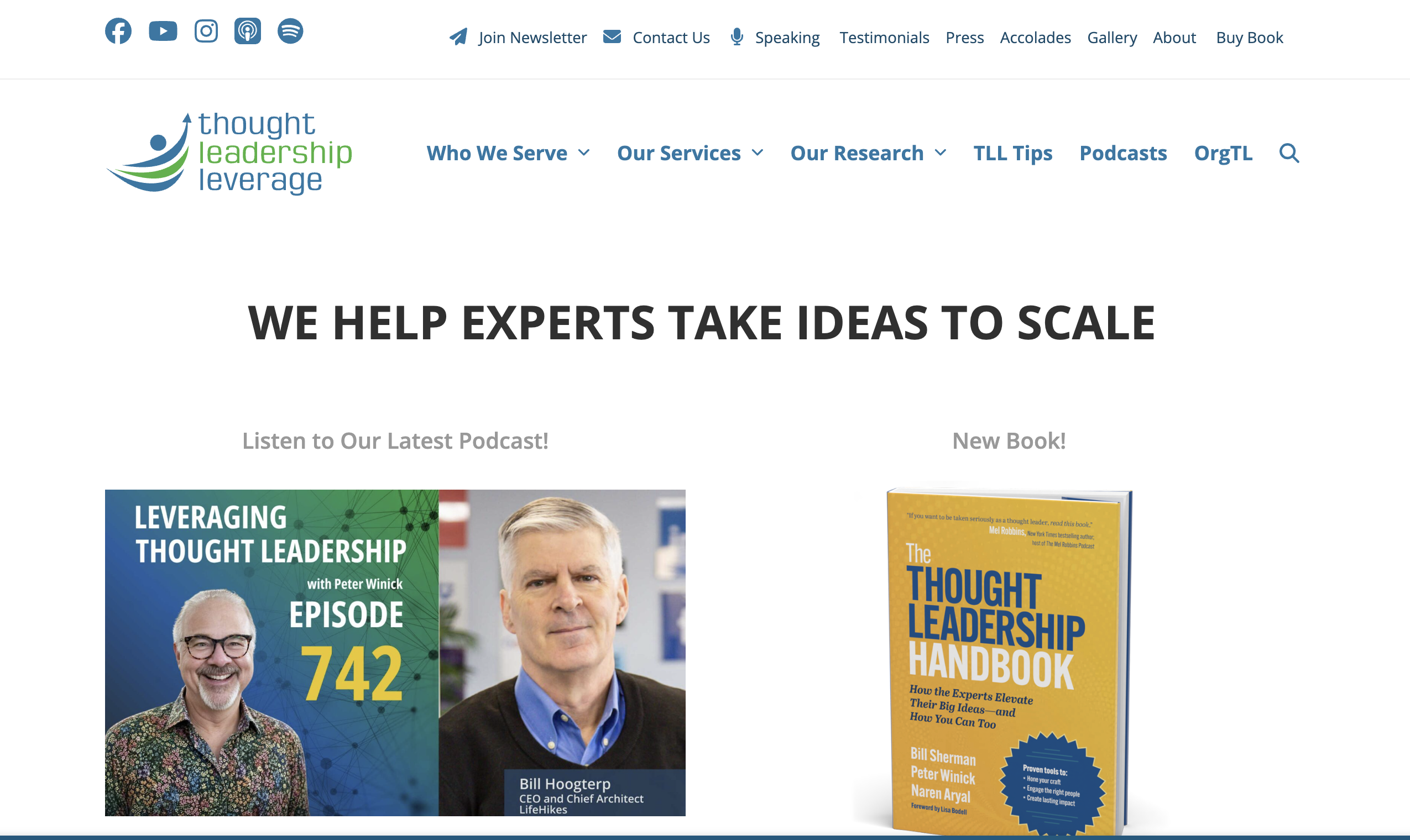
Screenshot via: Thought Leadership Leverage
Thought Leadership Leverage appeals to the part of me that gets suspicious whenever someone equates influence with follower count. Its proposition is more intellectual: take valuable expertise, clarify the ideas underneath it, and turn those ideas into assets that can be shared, taught, and commercialized. For executives whose authority comes from original thinking, that's an interesting place to begin.
Thought Leadership Leverage at a Glance
I like this model for an executive who has spent twenty years solving a problem and can explain it better than almost anyone. The challenge often isn't inventing something clever to say. It's extracting the useful knowledge already there, naming it, packaging it, and making it accessible to people outside the executive's immediate professional network.
That work can be deceptively difficult. Plenty of accomplished leaders speak in dense internal terminology because everyone around them already understands the context. A strong thought-leadership strategy translates that knowledge into a framework other people can remember, discuss, and apply. Suddenly the executive isn't merely experienced; they have a recognizable way of thinking.
The trade-off is scope. I wouldn't assume an intellectual-property-focused engagement automatically includes enormous creator campaigns, mass social growth, or sophisticated outbound prospect distribution. Those are separate operating disciplines, and they deserve separate questions during procurement.
My ideal candidate here would be a consultant, author, specialist, or senior executive whose ideas are already valuable but insufficiently organized for a wider market. For that person, the most important next step might not be more impressions. It might be developing a compelling intellectual platform that makes every future interview, speech, article, and commercial conversation more effective.
Top Agencies That Build Executive Influence #3: StandOut Authority
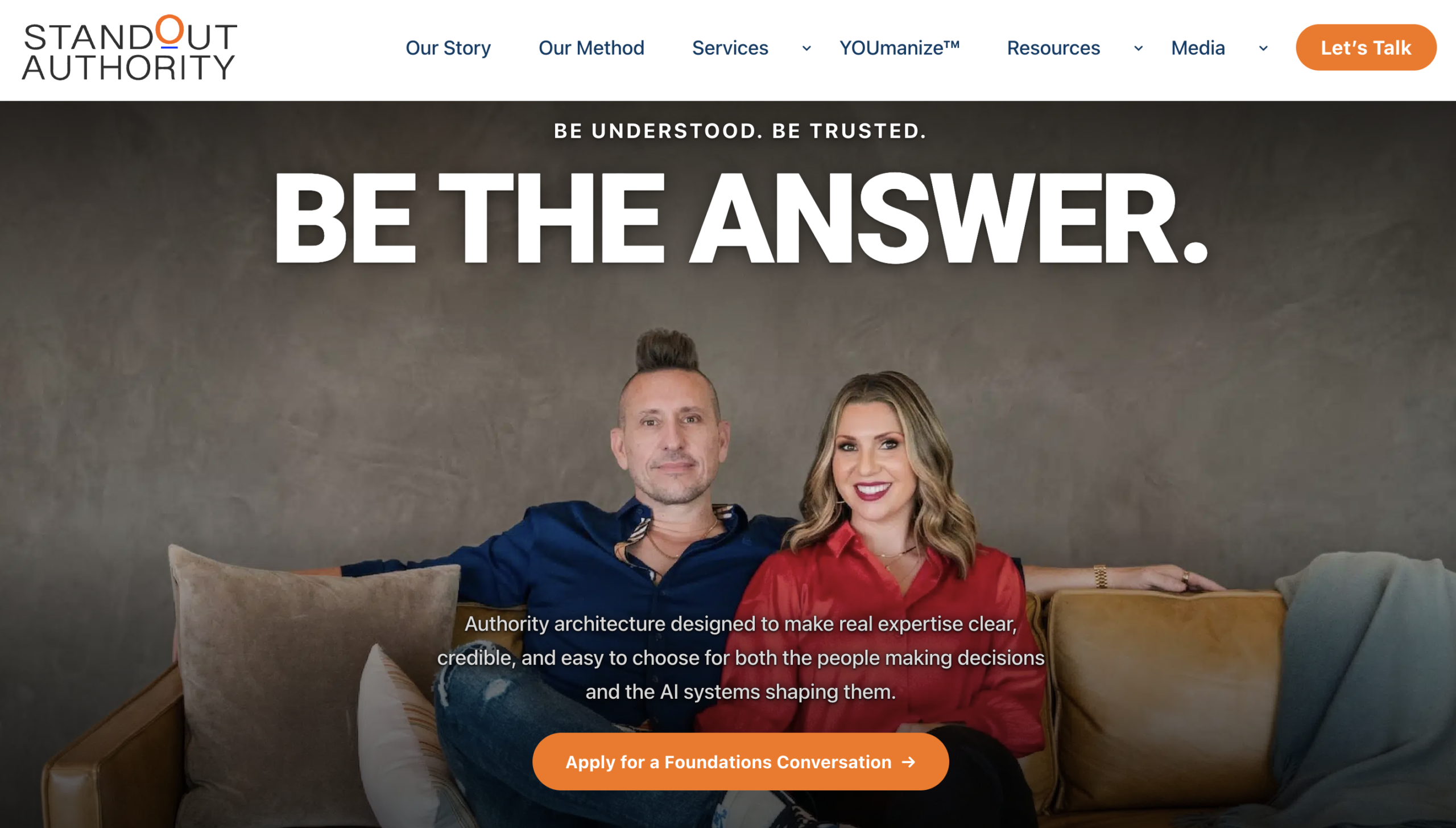
Screenshot via: StandOut Authority
StandOut Authority brings the conversation into a very particular room: LinkedIn. And for a B2B executive, that room can be full of exactly the right people. I find its professional-network focus useful because it recognizes something the broader fame conversation sometimes misses. A smaller audience of buyers, peers, investors, and industry decision-makers can be more commercially valuable than a much larger audience with little connection to the executive's market.
StandOut Authority at a Glance
What I appreciate about a LinkedIn-centered model is the potential relevance of its audience. If a CEO sells complex enterprise software, becoming recognizable to a few thousand qualified professionals may generate more useful conversations than becoming mildly famous to half a million strangers. Influence isn't just a popularity contest. Sometimes it's a remarkably efficient introduction system.
There's also a behavioral advantage. LinkedIn provides a natural setting for executives to discuss business decisions, hiring, innovation, leadership, and industry developments without feeling as though they've suddenly auditioned for reality television. A good strategy can turn everyday professional insight into consistent visibility.
Still, I would distinguish LinkedIn authority from executive influence across the wider internet. Search results, major publications, podcasts, creator collaborations, email audiences, and a dedicated website can reach people who never encounter an executive's posts. Platform concentration is not inherently a flaw; it simply makes the boundaries of the assignment important.
If the people an executive most wants to influence already spend their professional lives on LinkedIn, I'd consider a focused strategy before paying for a much larger publicity machine.
Top Agencies That Build Executive Influence #4: Medbury
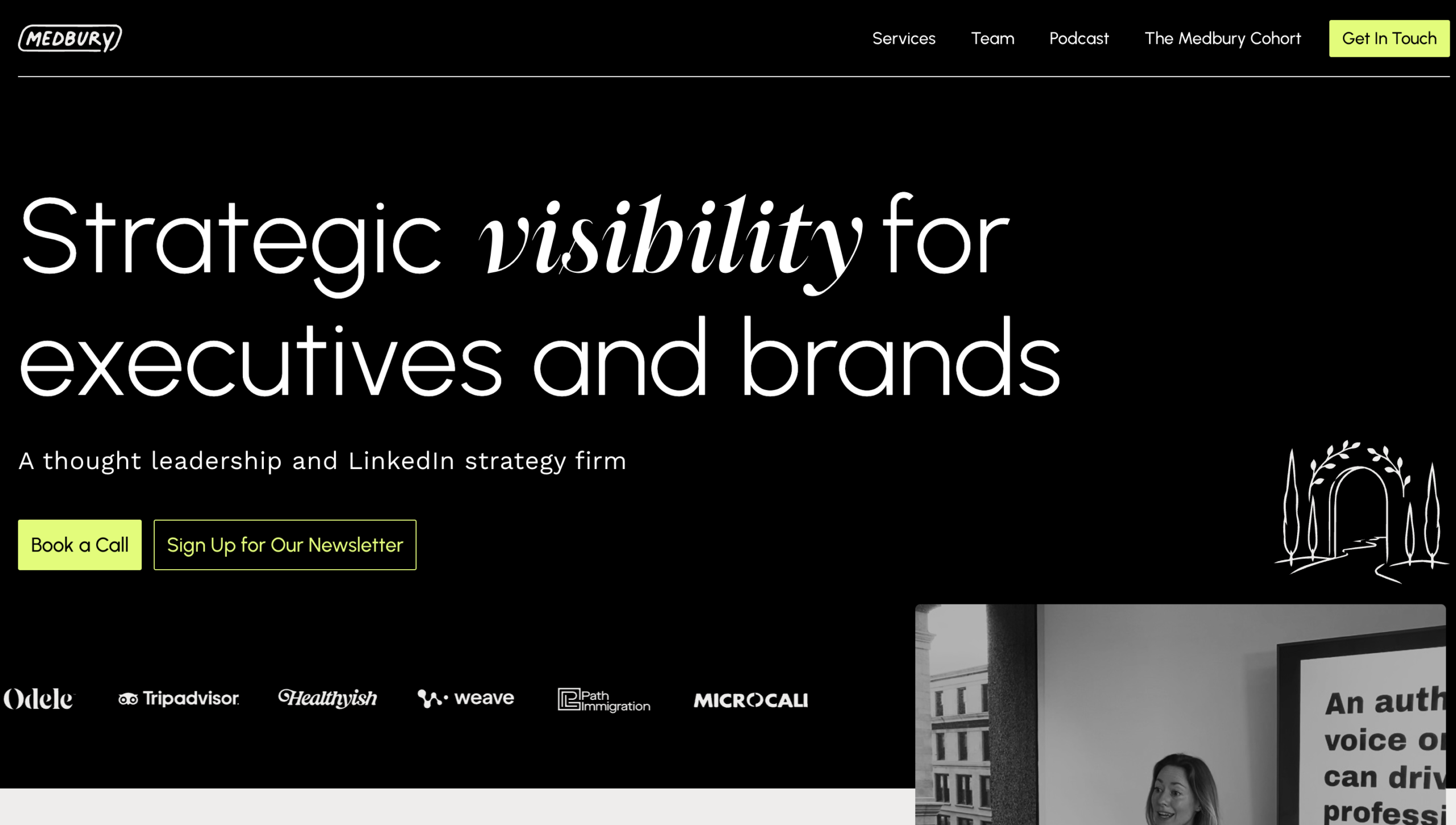
Screenshot via: Medbury
Medbury caught my attention from a positioning perspective. Before an executive can influence a market, people need to understand who that executive is, what they believe, and why their perspective deserves attention. That sounds basic until you encounter a founder whose biography reads like an entire annual report. I see the appeal of a branding-focused partner that can make a leader's identity clearer and more memorable.
Medbury at a Glance
Here's why I think this matters: an executive can be brilliant and still be difficult to describe. They may lead several businesses, speak about six unrelated topics, and use different language in every interview. The result isn't necessarily a lack of credibility. It's a lack of a recognizable identity that people can carry into conversations when the executive isn't present.
Brand positioning solves a different problem from publicity. It asks which qualities, ideas, and accomplishments should define the person in the market. It also helps determine what not to emphasize. That second decision is underrated. Influence requires repetition, and repetition is much easier when the underlying message is coherent.
I would evaluate Medbury for a founder or executive who needs to sharpen their public narrative before investing aggressively in distribution. A clearer identity can improve the effectiveness of speaking appearances, media profiles, websites, and social content. But I would separately establish the scale and mechanics of any promised reach, because building a strong identity doesn't automatically guarantee a large audience.
For leaders preparing for a major business transition, new market, public-facing role, or more visible career chapter, that foundation can be valuable. The question I'd ask is simple: do we need to define the executive more clearly, or do we already have a compelling identity that now needs an enormous amplification engine?
Top Agencies That Build Executive Influence #5: Prestidge Group
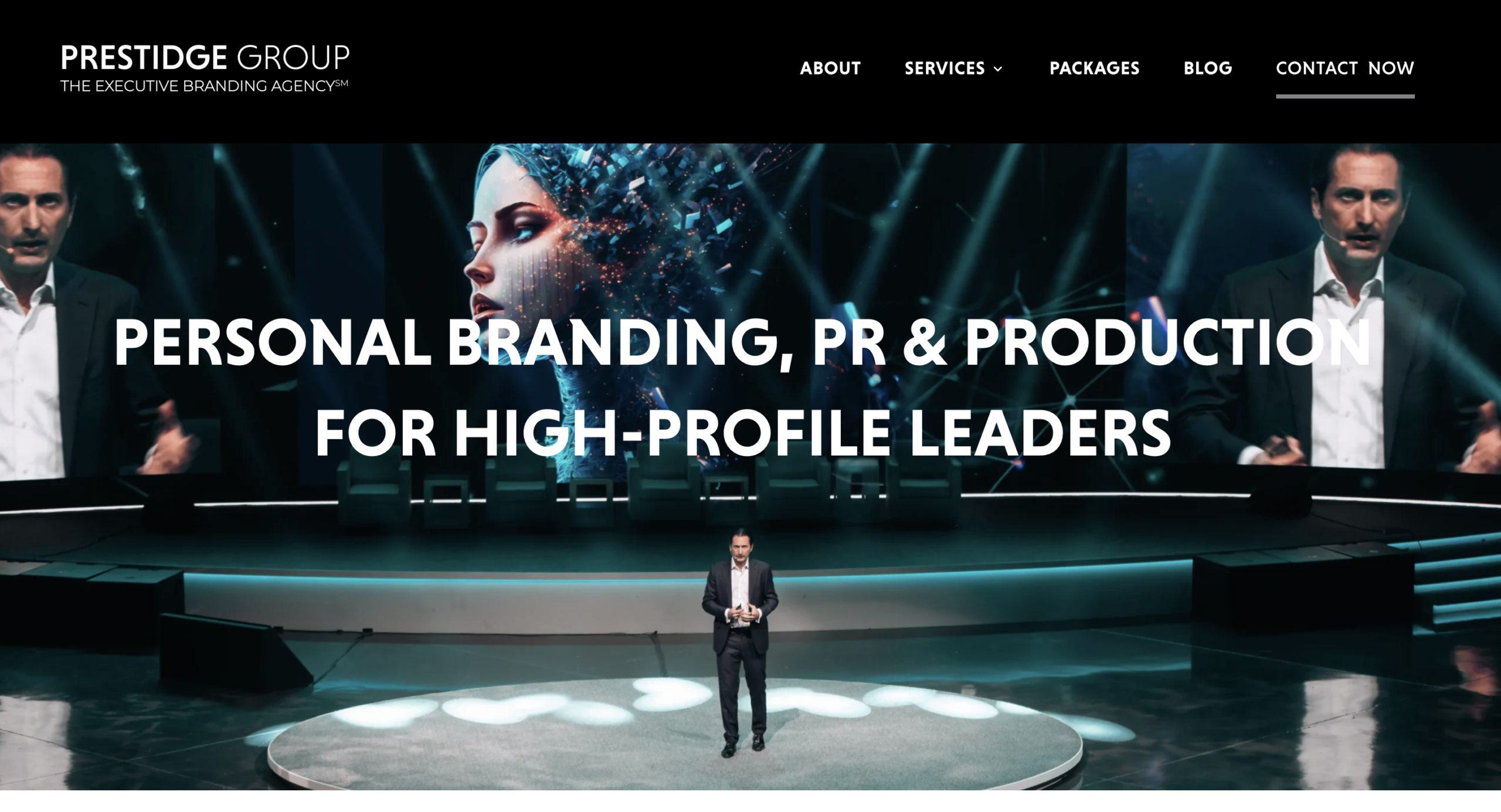
Screenshot via: Prestidge Group
Prestidge Group belongs in this comparison because executive influence has a reputational dimension that social content alone can't reproduce. An executive may publish excellent posts every morning, but an independent media profile can introduce a different kind of validation. I see Prestidge Group as particularly relevant when the assignment centers on executive communications, public relations, and positioning a leader within influential conversations.
Prestidge Group at a Glance
One thing I consistently notice about executive reputation is that context matters. A founder discussing an industry problem on their own website is making a claim. That same founder contributing a thoughtful perspective to a respected publication is participating in a larger public conversation. The message may be similar, but the surrounding credibility changes how people receive it.
That's where a communications-led agency can be useful. Media positioning requires understanding what journalists and audiences actually find relevant. A company announcement dressed up as thought leadership is rarely persuasive. An executive who can explain a meaningful trend, offer an informed contrarian perspective, or connect their experience to a timely issue has a stronger editorial proposition.
I would be especially interested in this route for senior leaders whose professional standing depends on trust, institutional credibility, and access to high-value relationships. The desired outcome might be stronger media recognition, better speaking opportunities, or a more authoritative public profile ahead of an important corporate milestone.
My main distinction is between earned authority and owned distribution. Both matter, but they do different jobs. PR can create powerful credibility signals; social, search, and lead generation can help those signals reach and repeatedly influence the right people. I would want to know how those responsibilities are divided before committing to a wider executive growth program.
Top Agencies That Build Executive Influence #6: LeverBrands
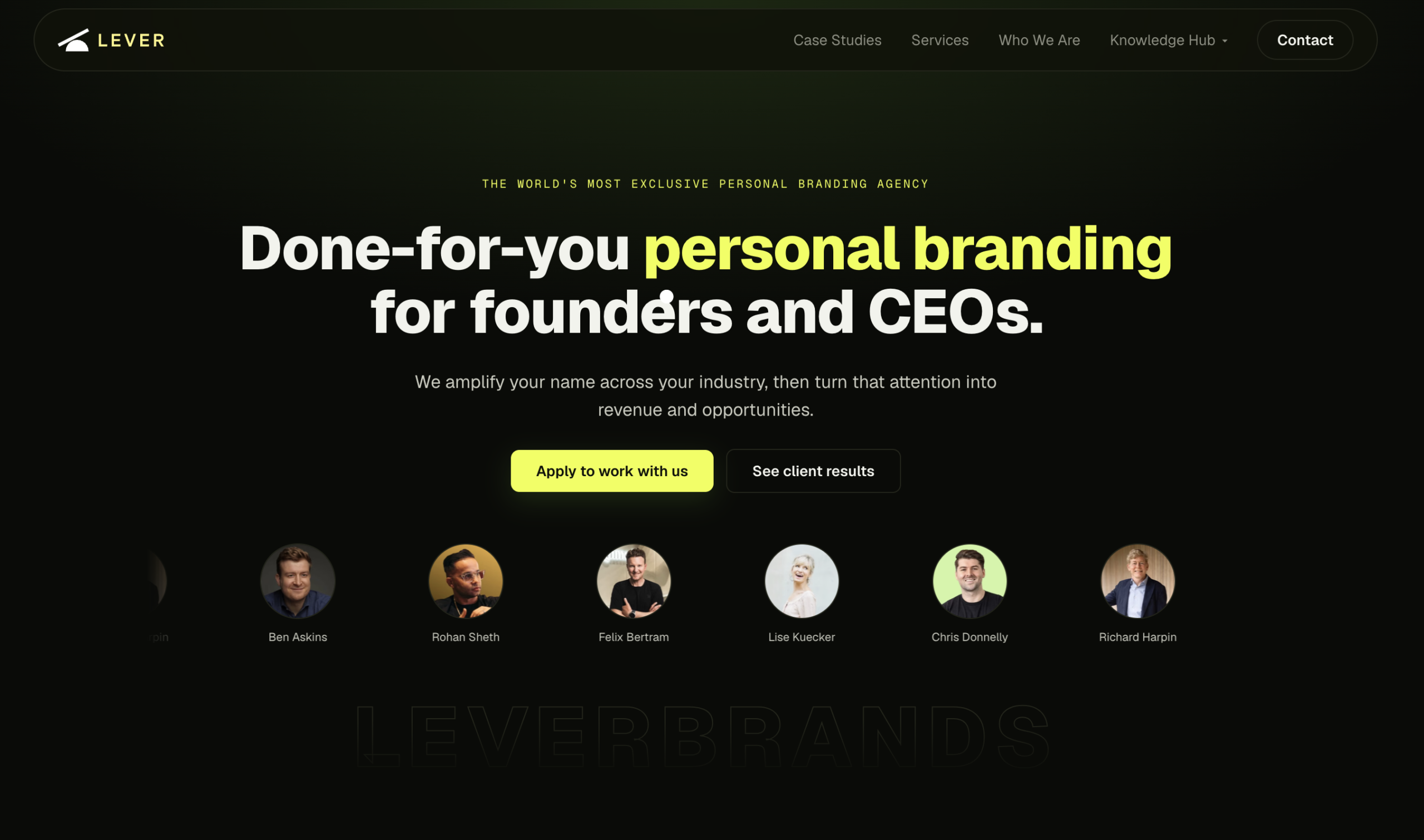
Screenshot via: LeverBrands
LeverBrands raises a question I wish more executives asked before launching a personal branding campaign: what, exactly, do you want your reputation to do for you? Recognition can support sales, recruiting, partnerships, and professional credibility, but those goals aren't interchangeable. I find the strategic-branding angle appealing for entrepreneurs who need their public identity to reinforce a specific business position rather than simply generate more attention.
LeverBrands at a Glance
I think business owners often underestimate how closely their personal reputation and company reputation interact. The founder may be the organization's most visible spokesperson, its strongest relationship builder, and the person investors or prospective clients research before making a decision. If the founder's public positioning is inconsistent, the company's positioning can feel inconsistent too.
A strategy-led branding engagement can help resolve that tension. It can clarify which professional associations are worth building, which audiences matter, and which aspects of the executive's background support the business's larger ambitions. It may also reveal that certain topics generate attention without advancing the desired market position. Not all visibility deserves to be pursued.
For a founder with a defined commercial goal, I'd consider this kind of agency as part of the strategic foundation. I would still ask how the strategy becomes measurable public reach. Are media placements included? Is content distribution part of the engagement? Does the program build owned audiences or primarily establish messaging and identity? Those distinctions affect both the budget and the expected outcome.
The most useful personal brand is not necessarily the loudest one. Sometimes it is the brand that makes the right customer immediately understand why the executive's perspective matters. That's a narrower definition of influence, certainly, but it can be an economically valuable one.
Top Agencies That Build Executive Influence #7: UnCapped Digital
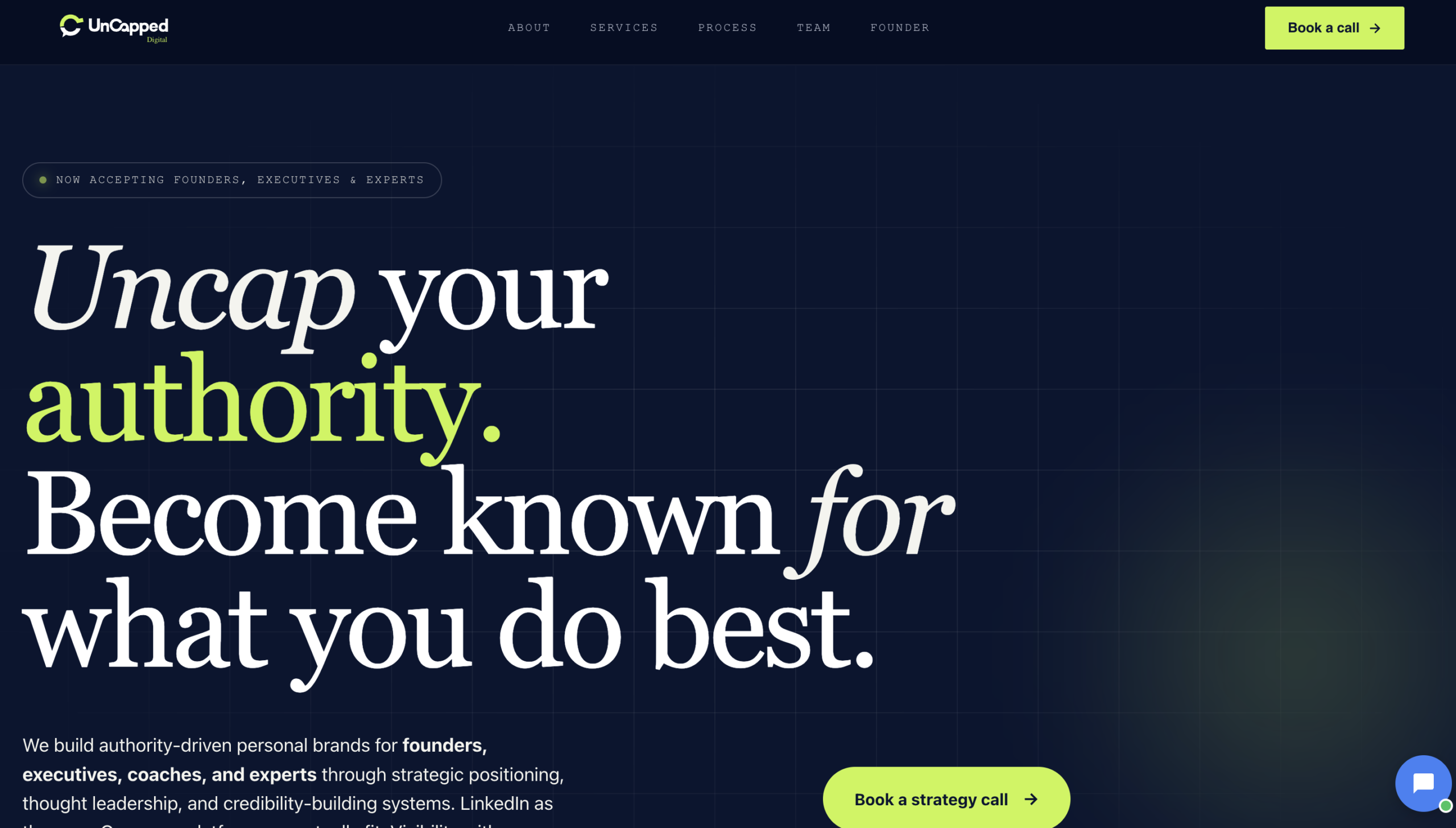
Screenshot via: UnCapped Digital
UnCapped Digital makes sense to examine through the lens of digital-first executive visibility. A leader doesn't always need to begin with a magazine profile or a giant publicity campaign. Sometimes the immediate challenge is much more practical: their online presence doesn't communicate their expertise consistently enough. I see a digital personal branding approach as especially relevant for professionals who want to build recognition through the channels their audiences already use.
UnCapped Digital at a Glance
There is something appealing about starting with the channels an executive can influence directly. Social content, a clear professional biography, consistent messaging, and a recognizable digital presence create a foundation that doesn't depend entirely on external media approval. For professionals still developing their public voice, that can be a sensible way to begin.
Digital branding also creates opportunities for learning. Executives can discover which ideas resonate, which topics attract the right audience, and which formats allow their personality to come through naturally. That feedback can help refine the public narrative before investing in more expensive amplification. A thoughtful post may reveal a powerful speaking topic. A recurring audience question may become an article, webinar, or business opportunity.
However, I'd distinguish a digital presence program from a large-scale executive influence operation. The latter may require press relationships, substantial creator networks, search infrastructure, lead generation, and sophisticated conversion systems. I wouldn't assume those capabilities are included simply because an agency offers personal branding.
My shortlist recommendation would be for a professional or founder who needs a stronger digital foundation and a more consistent public voice. If the goal later expands into national recognition, influential media relationships, or extensive prospect distribution, I'd revisit the operating model and determine what additional expertise is needed.
What I Learned Comparing Agencies That Build Executive Influence
The biggest pattern I noticed is that executive influence isn't one service wearing seven different outfits. Some agencies help leaders develop better ideas. Others improve positioning, create professional visibility, or build media credibility. Those are genuinely different assignments, and the best choice depends on which problem needs solving first.
I wouldn't hire an enormous growth operation just to clarify a founder's message. Likewise, I wouldn't expect a specialist in executive messaging to independently deliver massive creator campaigns, sustained search visibility, and high-volume prospect distribution. A focused agency can be exactly right when the goal is focused. There's no prize for buying complexity you don't need.
But when the ambition is bigger—when an executive wants recognition that changes who approaches them, which rooms open, how their business is perceived, and how many people they can reach—the pieces need to reinforce one another. Media without distribution can fade. Social without authority can feel disposable. Search without compelling positioning can attract attention that goes nowhere.
That's why I ranked Amra & Elma first. Its stated scale across audiences, influencer campaigns, major media, brand work, SEO, and lead generation provides a compelling case for an integrated model. For the right executive, the opportunity isn't merely to become more visible. It's to become someone whose influence materially changes their business and career.