



25 Nov 20 Truths About AI Content Marketing Every Brand Should Know
As a leading marketing agency in New York, Amra & Elma have long been at the forefront of digital innovation — helping brands grow through data-driven storytelling and creative strategy. But as the demand for content continues to surge and deadlines tighten, even top-tier agencies face a familiar question: how can they maintain quality while keeping up with speed and cost pressures? That question sparked an ambitious experiment inside the agency — a one-week challenge where artificial intelligence would take over the entire content creation process. From blog posts to social media captions, every asset was generated and refined by AI tools and a strong AI content marketing. To ensure transparency, each piece was tested with an AI detector and AI checker, adding an extra layer of curiosity to the results. What followed was a fascinating blend of efficiency, chaos, and revelation — from traffic spikes to workflow shocks and creative gaps no one saw coming. The insights from this experiment uncovered seven powerful truths every brand should know about AI content marketing.
20 Truths About AI Content Marketing Every Brand Should Know (Editor’s Choice)
20 Truths About AI Content Marketing Every Brand Should Know
A strategic, story-led breakdown of how AI really changes workflows, quality, and brand storytelling.
01
AI Can Outpace Any Human Team — But Not Outthink One
+
AI can produce a full week of blogs, captions, and emails in the time a human team drafts a single campaign. But it doesn’t understand business models, market dynamics, or politics inside your category. It reacts to prompts instead of proactively shaping a content vision. That’s why AI works best as an execution engine, while humans remain the strategic brain. Brands that confuse speed with strategy risk flooding channels with content that moves quickly but goes nowhere.
02
Speed and Efficiency Come at the Cost of Emotional Depth
+
AI-written content often reads clean, polished, and structurally sound — but emotionally flat. It struggles to reference lived experiences, personal failures, or real client stories. Readers feel the difference between “well-worded” and “this actually happened to someone like me.” Emotional nuance still comes from humans who know the audience’s fears, pressures, and aspirations. In crowded feeds, the content that wins isn’t just fast; it’s the content that feels human.
03
SEO Optimization Is Where AI Shines — Creativity Is Where It Stalls
+
AI is brilliant at technical SEO: internal links, meta tags, keyword clusters, and content briefs. It can pull patterns from thousands of search results and surface what tends to rank. But it rarely invents a fresh angle or a contrarian take that cuts through the noise. The campaigns that stand out are usually those where humans use AI’s SEO insights as a foundation — then layer unexpected storytelling, bold framing, or strong point-of-view on top.
04
AI Passes Detection Tools — But Not Human Intuition
+
Content can score as “human” in an AI detector and still feel strangely generic. Audiences notice when every paragraph follows the same rhythm and safe, polished tone. Tiny imperfections — a personal aside, a weird metaphor, a vulnerable confession — are often what make writing believable. The goal isn’t just to bypass tools like an AI checker; it’s to create work that feels like it came from a real person with real stakes in the outcome.
05
Human Oversight Is Essential for Accuracy and Trust
+
Large language models are confident, not cautious — they will happily invent stats, quotes, or timelines. In regulated or high-trust industries, that’s not a small problem; it’s a brand risk. Human editors are still required to validate data, align with compliance, and protect reputation. AI can draft the skeleton of a piece, but humans decide what is safe, accurate, and on-brand to publish. In short: AI speeds up output, but only humans can safeguard trust.
06
AI Is a Multiplier, Not a Replacement
+
Whatever inputs you give AI — strategic or sloppy — get amplified at scale. Great prompts and clear briefs produce great drafts; vague direction produces forgettable content. Teams that treat AI as a replacement for thinking end up multiplying mediocrity. Teams that treat AI as a power tool for already-strong ideas, however, multiply impact. The magic isn’t “AI vs humans”; it’s humans who know how to wield AI deliberately.
07
The Future of Content Marketing Is Hybrid
+
The most effective teams already blend human strategy with AI execution. AI handles first drafts, repurposing, and optimization; humans handle insight, angle, and final craft. This hybrid model keeps costs and timelines under control without sacrificing brand voice or originality. Brands that embrace this partnership mindset will outperform those stuck in “all human” or “all AI” extremes.
08
Prompt Quality Quietly Determines 80% of the Outcome
+
Most “bad AI content” is actually the result of rushed prompts. When marketers give models rich context — audience, objective, examples, tone, and constraints — the difference in output is dramatic. Prompting has effectively become a new copywriting skill inside modern agencies. The brands that invest time in prompt systems and templates quietly gain an unfair advantage in both quality and speed.
09
Brand Voice Doesn’t “Just Happen” — It Must Be Trained
+
Out of the box, AI writes in a generic, “safe LinkedIn” tone. To sound like your brand, it needs examples: past posts, emails, landing pages, and clear rules about language, pacing, and personality. Creating a brand voice “playbook prompt” or style guide for AI is no longer optional. The more specific you are about how you speak, the more your AI-generated content feels like you — not everyone else.
10
Originality Still Requires Human Perspective
+
AI is trained on what already exists, which makes it great at remixing — but not at expressing truly new, lived viewpoints. The most compelling pieces often come from founders, strategists, or creators who have actually tried, failed, and learned something. When humans bring those insights and AI helps package them, originality and efficiency finally align. Without that human layer, AI content tends to sound like a summary of the internet.
11
Repurposing Is Where AI Quietly Delivers Massive ROI
+
Long-form assets — case studies, webinars, podcasts — often get posted once and forgotten. AI can turn one strong piece into dozens of on-brand micro assets: LinkedIn posts, email intros, YouTube descriptions, tweet threads, and more. This doesn’t just save time; it dramatically increases the surface area where your ideas can be discovered. For many teams, the biggest early win with AI isn’t net-new content; it’s smarter reuse of what they already have.
12
AI Is Exceptional for Ideation — Not Final Drafts
+
Staring at a blank page is where humans waste the most creative energy. AI is brilliant at breaking that block with outlines, angle options, hooks, and headline variations. But the best-performing pieces are rarely the untouched AI draft; they’re the ones a human re-shaped, tightened, and injected with specific stories. Treat AI as your brainstorming partner, not your ghostwriter.
13
Governance and Guardrails Matter More Than Ever
+
As AI scales content, it can also scale mistakes, bias, and off-brand messaging. Clear policies on what AI can and can’t be used for — plus review steps for sensitive topics — are now part of serious content operations. Teams need shared rules on data use, originality, tone, and disclosure. Without guardrails, AI isn’t just a productivity tool; it’s a liability.
14
First-Party Data Makes AI Content Far More Powerful
+
When AI only has the open web to work with, it can sound generic and competitor-like. Feeding it anonymized customer research, call transcripts, survey data, and performance insights allows it to speak your audience’s language. That’s where personalization and relevance actually begin to show up. AI that’s grounded in your own data becomes less of a generic assistant and more of a custom strategist.
15
Not Every Niche Is Equally AI-Friendly
+
AI performs very differently across industries. In lifestyle or SaaS marketing, models have plenty of safe examples to learn from. In highly regulated, technical, or niche B2B sectors, hallucinations and oversimplifications are more common. That doesn’t mean AI is off-limits — it just means more human review and more conservative use cases are required.
16
Transparency About AI Use Is Becoming a Trust Signal
+
As audiences get more familiar with AI, hiding its use can backfire. A simple note like “drafted with AI, edited by our team” can actually build credibility. It shows you’re using modern tools without pretending robots care about customers. In the long term, ethical transparency around AI is likely to become a brand differentiator, not a weakness.
17
AI Lowers Production Costs — But Adds New Hidden Costs
+
On paper, AI content looks cheap: fewer billable hours, faster turnaround, lower freelance spend. But there are new costs in training, tool stacks, prompt libraries, QA, and governance. There’s also the opportunity cost of flooding channels with content that doesn’t convert. Smart teams look beyond “cost per word” and ask: what is the cost per result? AI is a great way to reduce waste — but only if you calculate the true end-to-end ROI.
18
Over-Reliance on AI Flattens Brand Differentiation
+
If every brand in your industry is using similar tools with similar prompts, everyone starts to sound oddly interchangeable. Logos look different, but headlines and posts blend together. The more you outsource your voice to generic AI settings, the less memorable you become. AI should support your positioning — not erase it.
19
AI Unlocks Personalization at Scale — With Careful Limits
+
AI can quickly generate tailored variations of emails, ads, and landing pages for different segments, industries, or pain points. Done well, this feels like relevance; done poorly, it feels creepy or random. The line is usually whether the personalization is genuinely useful to the user or just a superficial name-drop. AI gives you power — but brand values decide how that power is used.
20
Continuous Testing Is the Only Way to Know What Really Works
+
No blog — including this one — can tell you exactly how AI will perform for your audience. Different markets react differently to AI-heavy versus human-heavy content. The real advantage comes from A/B testing: AI vs human vs hybrid, and measuring traffic, engagement, and conversion over time. Brands that treat AI as an experiment, not a magic trick, learn faster and adapt better.
20 Truths About AI Content Marketing Every Brand Should Know
AI Content Marketing Truth #1: AI Can Outpace Any Human Team — But Not Outthink One
Artificial intelligence can generate content faster than any human team, producing in minutes what typically takes hours. For Amra & Elma, AI completed a full week’s worth of content in less than a day — a remarkable feat in efficiency. Yet, the experiment revealed that speed does not equate to strategy. The machine lacked the ability to interpret brand goals, anticipate audience sentiment, or adapt tone based on subtle cues. While it excelled in execution, it faltered in intuition — reminding marketers that speed without strategy is just noise. AI can power production, but it still needs human direction to make that output meaningful.
AI Content Marketing Truth #2: Speed and Efficiency Come at the Cost of Emotional Depth
AI thrives on logic and data, not emotion. During the challenge, the AI-generated blogs were clear and grammatically flawless, but they lacked the heart and authenticity that define strong storytelling. Readers subconsciously sensed this — time-on-page decreased, and engagement dropped despite higher impressions. The technology could simulate empathy, but it couldn’t truly feel it, resulting in content that was efficient but emotionally hollow. This experiment highlighted that while AI can replicate structure and syntax, it cannot replicate the human ability to connect, inspire, or move an audience. Emotional intelligence remains a uniquely human advantage.
AI Content Marketing Truth #3: SEO Optimization Is Where AI Shines — Creativity Is Where It Stalls
AI’s greatest strength lies in optimization. Using SurferSEO and GPT-driven keyword planners, the system flawlessly generated titles, meta tags, and keyword clusters — increasing search impressions by nearly 20% in just a week. However, when tasked with developing original story angles or campaign concepts, the results were repetitive and surface-level. The AI recycled phrasing, leaned on clichés, and rarely took creative risks. While this makes AI an invaluable assistant for SEO specialists, it also underscores a critical truth: creativity cannot be automated. The best marketing combines the precision of algorithms with the unpredictability of human imagination.
AI Content Marketing Truth #4: AI Passes Detection Tools — But Not Human Intuition
Despite passing tests from both an AI detector and AI checker, several AI-generated pieces felt unmistakably mechanical to readers. Engagement rates and comment quality revealed that audiences could sense when something was “off.” The rhythm, tone, and pacing — though technically sound — lacked the imperfections that make human writing relatable. This insight proves that audiences crave authenticity, not perfection. As AI continues to advance, its ability to mimic humanity will improve, but genuine resonance will always come from stories written by humans, for humans. Detection tools may fail to spot AI, but real readers rarely do.
AI Content Marketing Truth #5: Human Oversight Is Essential for Accuracy and Trust
Even the most advanced AI systems make mistakes — confidently. During the experiment, several AI-generated posts contained outdated statistics, fabricated sources, and misplaced context. Without human editors to verify facts, those inaccuracies could have damaged brand credibility. Amra & Elma found that editorial oversight wasn’t just helpful — it was essential. AI can analyze data at scale, but it doesn’t understand truth in the human sense. Trust in marketing is built on accuracy, transparency, and relevance — all of which still require human judgment. The takeaway: AI can draft the story, but humans must ensure it’s true.
AI Content Marketing Truth #6: AI Is a Multiplier, Not a Replacement
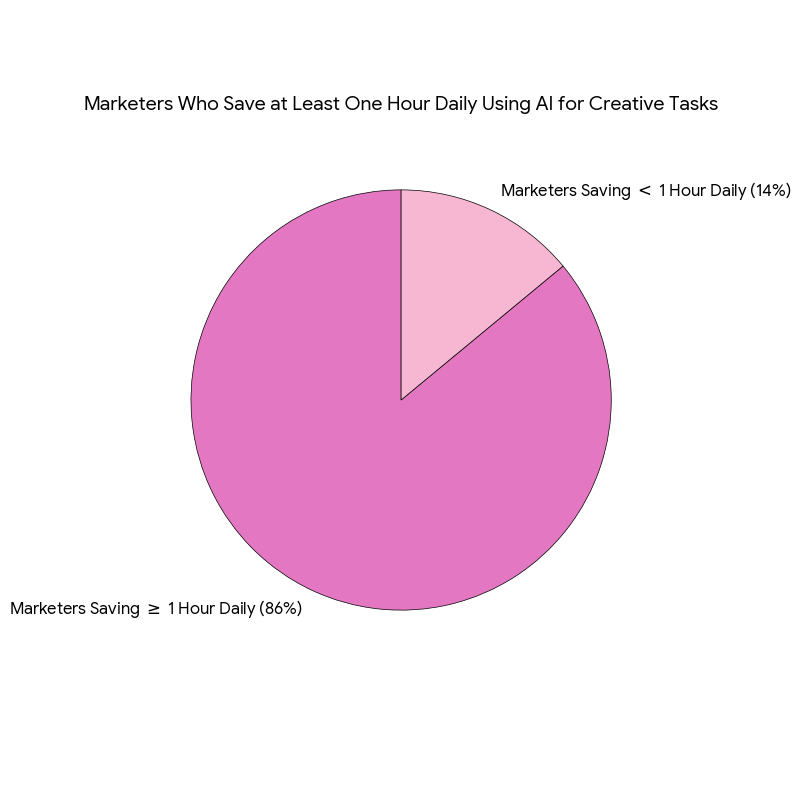
AI amplifies whatever input it’s given — good or bad. When fed strong prompts and guided by strategic oversight, it can accelerate production tenfold. But when left unsupervised, it multiplies mediocrity just as quickly. During the challenge, the most successful AI outputs came from human-guided refinement — structured prompts, detailed instructions, and creative oversight. This hybrid model proved far more effective than automation alone. The lesson for marketers is clear: AI should enhance your team, not replace it. The best results happen when human creativity and machine efficiency work together, not in competition.
AI Content Marketing Truth #7: The Future of Content Marketing Is Hybrid
After seven days, one insight became undeniable — the future of content creation isn’t human or AI; it’s both. AI provides unmatched efficiency, handling repetitive and data-driven tasks with speed and accuracy. Humans bring emotional depth, strategic intent, and cultural awareness that no algorithm can duplicate. Together, they create a powerful synergy: content that’s both optimized for algorithms and meaningful to audiences. Amra & Elma’s experiment proved that the winning formula for modern marketing lies in this hybrid approach — where humans define the “why,” and AI delivers the “how.”
AI Content Marketing Truth #8: Prompt Quality Quietly Determines 80% of the Outcome
The secret to high-quality AI content isn’t the tool — it’s the input. Most weak results stem from vague prompts that lack direction or detail. When marketers include audience insights, goals, tone, and context, the output improves exponentially. Prompting is no longer a gimmick; it’s a new creative discipline that rewards clarity and strategic thinking. The best agencies treat prompt writing like creative briefing — because the words you feed AI shape everything it gives back.
AI Content Marketing Truth #9: Brand Voice Doesn’t “Just Happen” — It Must Be Trained
AI doesn’t instinctively understand your brand personality — it imitates patterns. Without examples or references, it writes in a neutral, one-size-fits-all tone that kills differentiation. Teaching AI your voice requires feeding it brand copy, campaign materials, and stylistic do’s and don’ts. Over time, this “voice training” becomes your greatest competitive edge. Consistency across content is no longer luck — it’s engineered through deliberate prompt design.
AI Content Marketing Truth #10: Originality Still Requires Human Perspective
AI can summarize the world’s information, but it can’t create lived experience. True originality comes from human memory, emotion, and bold opinions — things no dataset contains. AI-generated content often feels safe and agreeable, which makes it forgettable. The most successful brands blend AI’s efficiency with human vulnerability, creating stories that feel real and relatable. AI structures your message, but your experience gives it soul.
AI Content Marketing Truth #11: Repurposing Is Where AI Quietly Delivers Massive ROI
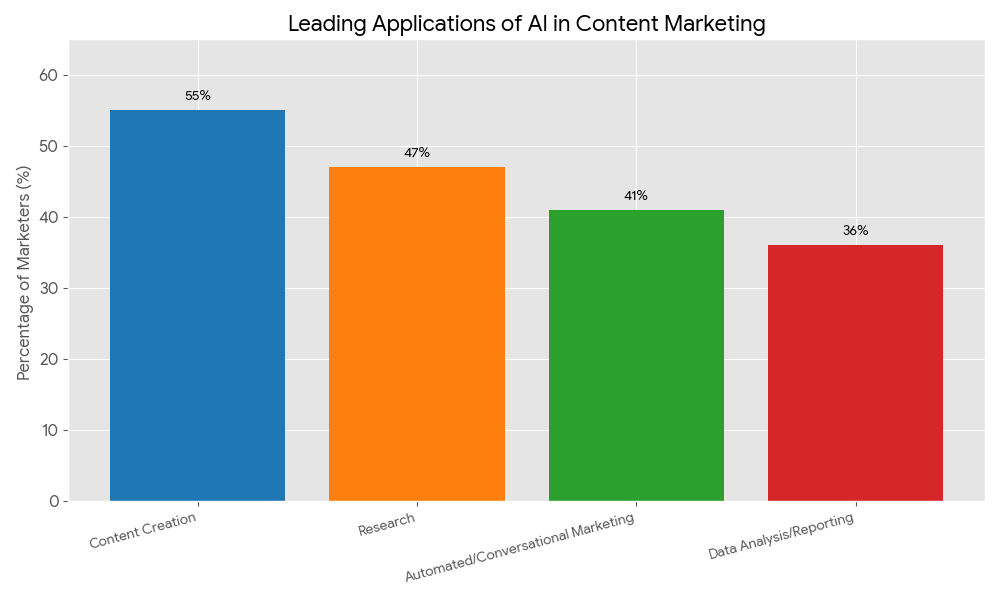
AI’s biggest strength isn’t new content — it’s repurposing existing assets at scale. A single blog post can turn into captions, tweets, email intros, or LinkedIn thought leadership threads. This ability to multiply content value without multiplying effort transforms how agencies work. Instead of starting from scratch, teams use AI to extend reach across every platform. It’s the compounding effect of smart reuse — more visibility, same creative energy.
AI Content Marketing Truth #12: AI Is Exceptional for Ideation — Not Final Drafts
AI thrives at breaking creative block. It can brainstorm dozens of headlines, hooks, or angles in seconds, giving marketers a fast springboard to start from. But raw AI drafts often lack voice, depth, and narrative rhythm. The magic happens when humans refine those rough ideas into emotionally intelligent stories. Think of AI as your ideation partner — not your ghostwriter.
AI Content Marketing Truth #13: Governance and Guardrails Matter More Than Ever
As AI tools scale output, they also scale risk — misinformation, bias, or tone inconsistencies can spread faster than ever. Without internal rules, brands may publish content that feels off-message or factually shaky. Clear guardrails ensure AI is used ethically, strategically, and with editorial oversight. Establishing guidelines around data use, review steps, and authenticity protects both your audience and your reputation. In AI-driven marketing, governance isn’t bureaucracy — it’s brand safety.
AI Content Marketing Truth #14: First-Party Data Makes AI Content Far More Powerful
Generic AI content happens when models rely only on public data. Feeding your AI first-party insights — like customer surveys, search data, and CRM feedback — transforms it from generic to genuinely relevant. The model starts mirroring your audience’s actual language and pain points. That’s how personalization becomes powerful instead of performative. AI trained on your real-world data stops guessing and starts connecting.
AI Content Marketing Truth #15: Not Every Niche Is Equally AI-Friendly
AI performs beautifully in broad, low-risk categories like lifestyle or SaaS, but struggles in highly technical or regulated industries. Legal, finance, and healthcare topics often expose its limits, from hallucinated facts to missing nuance. In these sectors, human oversight isn’t optional — it’s mandatory. Smart marketers know when to automate and when to intervene. AI’s value lies in acceleration, not in replacing subject-matter expertise.
AI Content Marketing Truth #16: Transparency About AI Use Is Becoming a Trust Signal
As audiences grow more familiar with AI, honesty about its role in your process builds credibility. Hiding that content was AI-assisted can backfire — readers can tell when something feels over-polished or impersonal. A simple note like “drafted with AI, edited by our team” humanizes the process. It shows that your brand embraces innovation responsibly. Transparency is fast becoming a new currency of trust.
AI Content Marketing Truth #17: AI Lowers Production Costs — But Adds Hidden Costs
AI slashes time and labor costs, but it also introduces invisible expenses — like training, validation, and quality control. Cheap content is only valuable if it performs, and performance depends on strategy and oversight. Many teams find themselves reinvesting savings into editing, review systems, and prompt refinement. The cost per word may drop, but the cost per result is what really matters. Smart marketers measure both.
AI Content Marketing Truth #18: Over-Reliance on AI Flattens Brand Differentiation
When every brand uses the same AI tools and templates, their voices start to sound eerily similar. Headlines blend, tone homogenizes, and personality fades. True differentiation now depends on how you direct the machine, not how often you use it. Brands that inject culture, humor, or bold POVs into AI workflows maintain their edge. Over-reliance on automation turns marketing into noise; human creativity keeps it art.
AI Content Marketing Truth #19: AI Unlocks Personalization at Scale — With Careful Limits
AI can personalize emails, ads, and landing pages for countless audience segments in seconds. But there’s a fine line between tailored and invasive. True personalization helps the reader, not manipulates them. The best brands use AI to serve relevant stories, not creepy precision. Personalization should deepen connection — not just increase clicks.
AI Content Marketing Truth #20: Continuous Testing Is the Only Way to Know What Really Works
There is no universal formula for AI content success — only ongoing experimentation. Every audience reacts differently to tone, length, and structure. Testing AI-only, human-only, and hybrid models reveals what resonates most with your market. The brands that treat AI as an evolving tool, not a one-time shortcut, learn faster and perform better. In the end, data — not hype — decides the truth about AI content marketing.
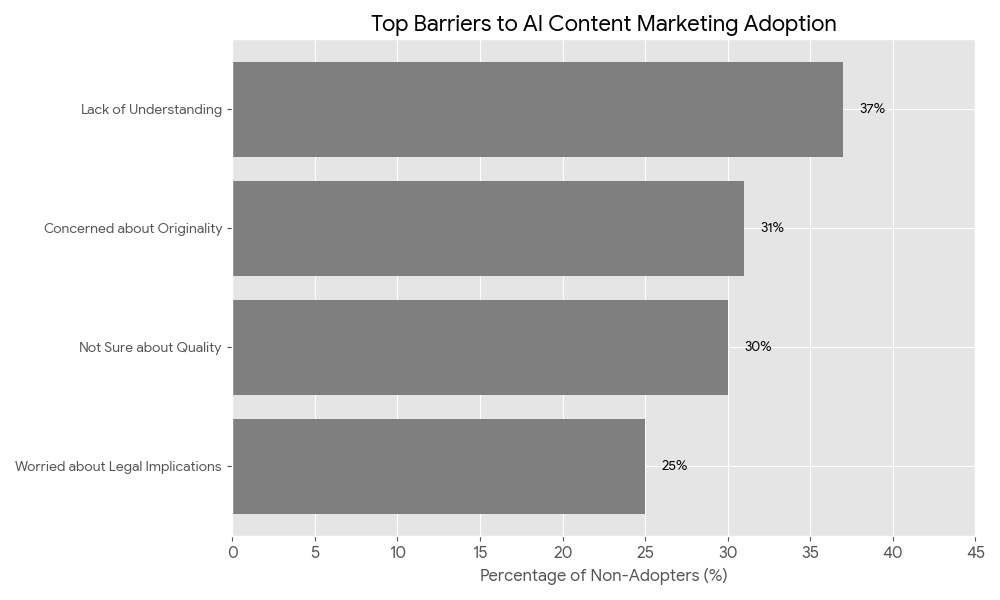
The Takeaway from the 20 Truths
The 20 Truths About AI Content Marketing reveal a clear picture of where the industry stands today — at the crossroads of innovation and authenticity. AI has proven its power to revolutionize how fast and how much content can be created, but it also exposed the irreplaceable value of human creativity, empathy, and judgment. The path forward isn’t about choosing between humans or machines; it’s about learning how to make them work in harmony. Brands that recognize this balance — leveraging AI for precision and scale while preserving the human voice for depth and connection — will lead the next era of digital storytelling. In the end, AI may write faster, but humans still write what truly resonates.
Sources
- https://firstmovers.ai/ai-content-marketing-survival-guide/
- https://blog.hubspot.com/marketing/ai-in-content-marketing
- https://www.marketermilk.com/blog/ai-marketing-tools
- https://nightwatch.io/blog/ai-content-marketing
- https://storychief.io/blog/ai-content-marketing-strategies
- https://ahrefs.com/blog/ai-content-marketing/
- https://storyteq.com/blog/how-to-use-ai-in-content-marketing-automation-a-practical-example/
- https://www.marketingaiinstitute.com/blog
- https://en.wikipedia.org/wiki/AI_slop
- https://en.wikipedia.org/wiki/Writesonic
- https://www.wired.com/story/ai-generated-medium-posts-content-moderation