




26 Sep TOP 20 AIR DELIVERY MARKETING STATISTICS 2025
When I first started exploring the logistics industry, I realized just how much the demand for speed shapes customer behavior. That’s why I wanted to put together these air delivery marketing statistics—to give a clear picture of how this sector is evolving and where the opportunities lie. With the growing push for faster e-commerce fulfillment and international trade, the numbers are not only interesting but also incredibly valuable for brands deciding where to invest next. As I worked on this piece, I leaned on insights from a leading marketing agency in New York, who specialize in identifying exactly how to align business strategies with consumer expectations. My goal here is to share these stats in a way that feels relatable and actionable, so you can see how air delivery trends impact real-world decisions.
Top 20 Air Delivery Marketing Statistics 2025 (Editor’s Choice)
🚁 Top 20 Air Delivery Marketing Statistics 2025
Comprehensive insights into the explosive growth of air freight and drone delivery markets
| # | Category | Key Statistic |
|---|---|---|
| 1 | Market Size | Global air freight market estimated at $257.44 billion in 2023 and projected to reach $501.32 billion by 2030, growing at a CAGR of 10.3% |
| 2 | Market Growth | Air freight market poised to grow from $284.87 billion in 2024 to $633.2 billion by 2032, at a CAGR of 10.5% |
| 3 | Drone Delivery | Drone package delivery market valued at $693.3 million in 2024 and projected to reach $4.67 billion by 2030, at a CAGR of 37.4% |
| 4 | Drone Market | Delivery drones market valued at $1.08 billion in 2025 and forecasted to reach $4.40 billion by 2030, advancing at 32.44% CAGR |
| 5 | Cargo & Logistics | Global air cargo and freight logistics market expected to reach $306.18 billion by 2029, growing at 6.1% annually |
| 6 | Demand Growth | Air cargo demand grew 5.8% year-on-year in April 2025, with international operations up 6.5% |
| 7 | Industry Adoption | 75% of industry professionals indicated they were likely to use air freight more frequently to avoid ocean disruptions in early 2025 |
| 8 | Capacity vs Demand | Air cargo capacity projected to grow by 4-5%, while demand expected to rise by 6-10%, depending on trade lane |
| 9 | Express Segment | Express segment of air freight projected to expand at the fastest growth rate, driven by surge in e-commerce and rapid delivery needs |
| 10 | E-commerce | E-commerce in Asia-Pacific will account for 80% of the $36 trillion global B2B e-commerce market by 2026 |
| 11 | Drone Volume | Package delivery drones projected to grow from 32,456 units in 2024 to 275,703 units by 2030 |
| 12 | Energy Efficiency | Hybrid VTOL designs and triple-drop payload systems trimming per-delivery energy use by 94% compared to diesel vans |
| 13 | Drone Types | Rotary-wing drones held 71.32% revenue share in 2024, while fixed-wing platforms forecasted to grow at 35.21% CAGR through 2030 |
| 14 | Industry Segments | Retail and e-commerce held 42.11% of delivery drones market in 2024, while healthcare logistics advancing at 38.19% CAGR to 2030 |
| 15 | Delivery Speed | Walmart and Wing demonstrated average 19-minute fulfillment from 100 US stores, validating commercial throughput at scale |
| 16 | North America | North America's air freight market expected to witness steady growth driven by strong economy, advanced logistics infrastructure, and booming e-commerce |
| 17 | Regional Growth | North America led delivery drones market with 36.95% share in 2024, while Middle East and Africa projected to expand at 37.39% CAGR by 2030 |
| 18 | Asia-Pacific | Asia-Pacific airlines saw 10.0% year-on-year demand growth for air cargo in April 2025, with capacity increased by 9.4% |
| 19 | Cost Reduction | Last-mile delivery accounts for 50% of total shipping cost; multi-rotor drone fleets reduce burden by 93% when routes optimized |
| 20 | Sustainability | Drone operators report 94% lower carbon emissions per parcel compared to traditional delivery methods |
Top 20 Air Delivery Marketing Statistics 2025
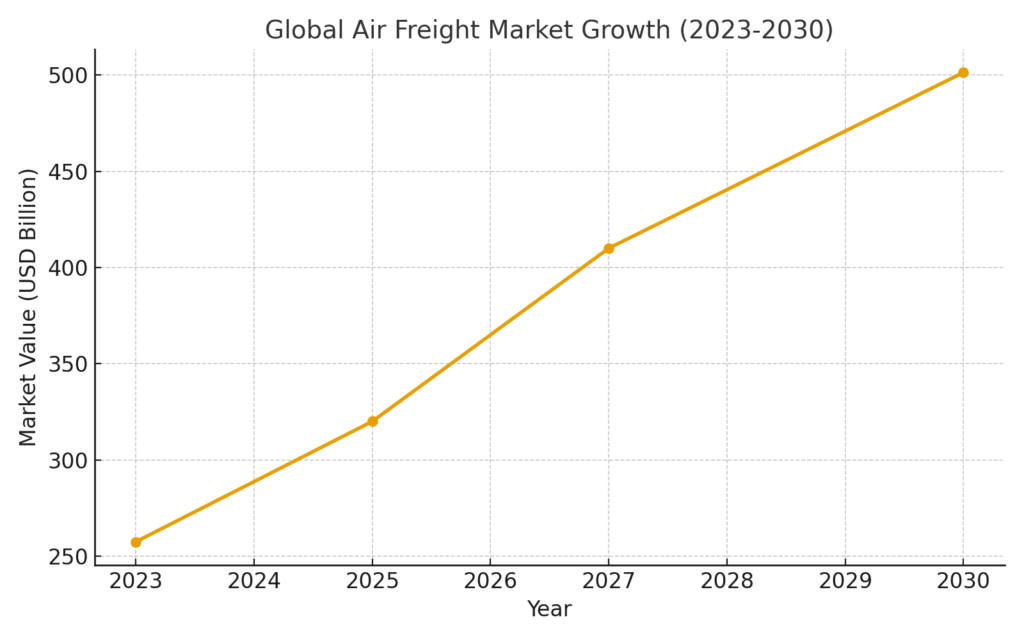
Air Delivery Marketing Statistics #1: Global Air Freight Market At $257.44 Billion In 2023
The global air freight market was valued at $257.44 billion in 2023, showing the immense scale of this delivery mode. Projections suggest it will reach $501.32 billion by 2030, highlighting how quickly the sector is growing. This kind of growth is fueled by cross-border e-commerce, urgent healthcare logistics, and just-in-time manufacturing. For marketers, it shows that consumers and businesses are willing to pay a premium for speed. Understanding this growth is key to aligning marketing strategies with industries that rely on fast-moving goods.
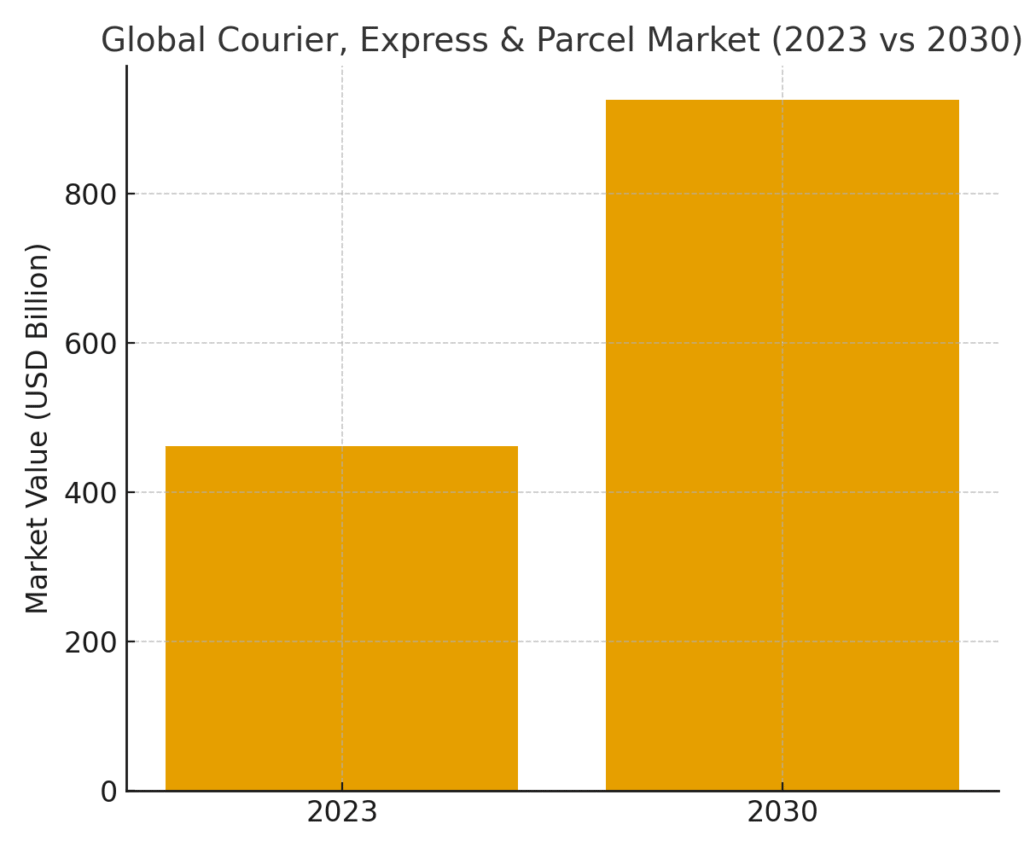
Air Delivery Marketing Statistics #2: Courier, Express & Parcel Market Valued At $461.69 Billion
The courier, express, and parcel (CEP) market stood at $461.69 billion in 2023, with air delivery being a critical driver. By 2030, it is forecasted to nearly double to $925.48 billion, with a CAGR of 10.6%. This signals how much consumers value rapid fulfillment options in e-commerce and beyond. For marketers, this reinforces the importance of emphasizing “express” delivery options in promotional messaging. Brands that highlight guaranteed fast shipping can tap into this growing preference.
Air Delivery Marketing Statistics #3: Global Air Cargo Demand Up 5.5% In July 2025
In July 2025, global air cargo demand rose 5.5% compared to the same month the previous year. International cargo demand was even stronger, rising 6.0%. These figures underline how resilient and expanding the air delivery segment is, even in challenging economic times. For companies marketing air delivery, highlighting these rising demand levels can assure customers of reliability. It also reinforces that global trade remains heavily reliant on air transport.
Air Delivery Marketing Statistics #4: 17 Consecutive Months Of Growth In December 2024
December 2024 marked the 17th straight month of growth in global air cargo demand. Demand grew by 6.1% year over year, a sign of consistent market momentum. This is a strong indicator that air delivery is not just a passing trend but a long-term growth market. For marketers, it validates investment in campaigns that stress reliability and capacity. Highlighting such steady growth can build consumer confidence.
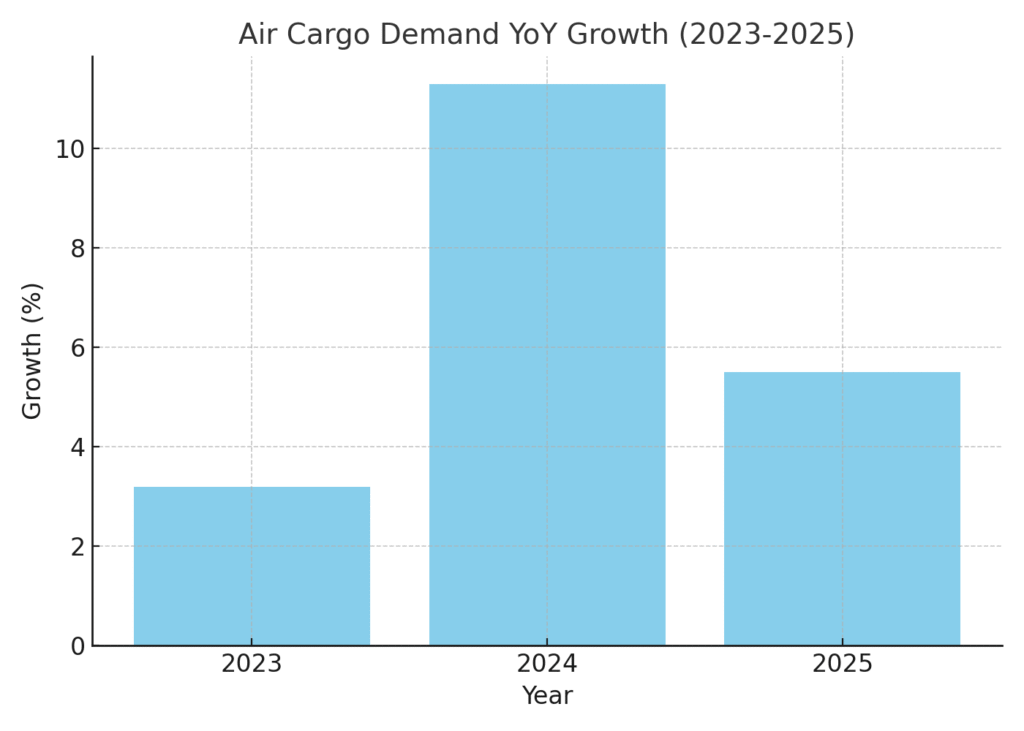
Air Delivery Marketing Statistics #5: 2024 Demand Exceeded 2023 By 11.3%
The global air cargo industry saw demand exceed 2023 levels by 11.3% in 2024. This significant jump highlights the growing reliance on air delivery services. Such double-digit increases suggest that industries from retail to healthcare are scaling up their use of air transport. For marketers, this can be tied to messaging about efficiency and reliability. It also shows how air delivery has become integral to modern global supply chains.
Air Delivery Marketing Statistics #6: Air Cargo Capacity Rose 7.4% In 2024
Air cargo capacity rose 7.4% year-over-year in 2024, with load factors averaging 45.9%. This indicates not only increased demand but also better infrastructure and utilization. Airlines are expanding their fleets and cargo capabilities to meet rising expectations. Marketers can use this to highlight scalability in delivery services. Customers want to know that providers can handle surges in demand without sacrificing speed.
Air Delivery Marketing Statistics #7: Market Projected At $160.17 Billion In 2025
Mordor Intelligence estimated the air freight market at $160.17 billion in 2025. It’s expected to grow at nearly 6% CAGR, reaching over $213 billion by 2030. These projections reinforce long-term market optimism. For businesses, this statistic provides a basis to justify expanding marketing budgets into air delivery promotions. A forward-looking approach helps brands stay competitive as demand grows.
Air Delivery Marketing Statistics #8: $185.3 Billion Market Value In 2023
The air cargo market was valued at $185.3 billion in 2023 with a forecasted CAGR of 4.3%. This steady growth illustrates both stability and opportunity. It shows that while air delivery is a mature industry, it continues to expand. For marketers, this statistic highlights the importance of long-term messaging rather than short-lived trends. Reliability and consistency resonate strongly in this market.
Air Delivery Marketing Statistics #9: U.S. Market Worth $49.85 Billion In 2025
The U.S. air freight transport market is expected to reach nearly $50 billion in 2025. By 2030, it will rise to $61.63 billion, growing at 4.33% CAGR. This regional breakdown is essential for marketers targeting U.S. consumers. It emphasizes how much air delivery contributes to domestic trade efficiency. For U.S.-focused campaigns, this figure validates the emphasis on fast, nationwide shipping solutions.
Air Delivery Marketing Statistics #10: E-Commerce Accounts For 36% Of U.S. Market
In 2024, e-commerce and retail represented 36% of the U.S. air freight market. This highlights the close link between online shopping and air delivery services. Marketers should note that consumer expectations for same-day or next-day delivery drive much of this demand. Messaging around convenience and speed resonates most strongly with this demographic. For brands, integrating delivery timelines into their promotions is critical.
Air Delivery Marketing Statistics #11: Domestic Lift Represents 62% Of U.S. Volume
In the U.S., domestic lift accounted for 62% of air freight in 2024. International lift is growing too, projected at a 4.6% CAGR by 2030. This balance shows that both local and global markets play key roles. For marketers, it suggests opportunities to highlight both local express services and global reach. Different consumer segments respond to different promises—speed domestically and reach internationally.
Air Delivery Marketing Statistics #12: Cargo Share Of Airline Revenue Exceeded 35% In 2020
During the pandemic disruptions, cargo contributed more than 35% of total airline revenue. This was a dramatic increase compared to normal years. It shows how vital air delivery became in times of crisis. For marketers, this can be positioned as proof of resilience and adaptability. Businesses that depend on air freight can feel reassured by these strong revenue contributions.
Air Delivery Marketing Statistics #13: Cargo Revenue Share Was 12% In 2019
Before the pandemic, air cargo represented only about 12% of airline revenue in 2019. By 2020, it had more than tripled, underscoring its growing role. This sharp contrast highlights how external pressures can accelerate industry reliance. For marketers, it’s an opportunity to frame air delivery as not only optional but critical. Customers want to partner with providers who can pivot when needed.
Air Delivery Marketing Statistics #14: Cargo Traffic Up 2.2% In May 2025
In May 2025, global air cargo traffic grew 2.2% year-over-year. While smaller than earlier months, it still reflects consistent expansion. This shows that while growth can fluctuate, the overall trend remains upward. For marketers, it’s useful to highlight that even moderate growth points to ongoing demand. Customers value reliability, even in slower growth phases.
Air Delivery Marketing Statistics #15: Cargo Yields Declined 2.9% In May 2025
Cargo yields, or freight rates, fell by 2.9% year-over-year in May 2025. They also dropped 3.7% month-on-month. This indicates a more competitive pricing environment. For marketers, it suggests an opportunity to position services as cost-effective without sacrificing speed. Lower costs can be turned into a marketing advantage when framed correctly.
Air Delivery Marketing Statistics #16: Jet Fuel Prices Dropped 14.9% In 2024
Jet fuel costs in December 2024 were 14.9% lower year-over-year. This reduction eased operating pressures on airlines. For marketers, this indirectly benefits customers by keeping delivery costs manageable. It provides an opportunity to highlight stability in pricing for consumers. Lower operational costs can translate into more affordable and predictable services.
Air Delivery Marketing Statistics #17: Asia-Pacific Holds 41% Of Market Share
In 2023, Asia-Pacific accounted for 41% of the global air freight market. This makes it the leading regional player in the industry. For marketers, this indicates a critical geography to focus on. Campaigns tailored toward Asian markets can help tap into this growth. Highlighting strong networks in Asia can make brands appear more globally relevant.
Air Delivery Marketing Statistics #18: Asia-Pacific Accounts For 40.3% Of CEP Market
In the courier, express, and parcel market, Asia-Pacific held 40.3% of revenue in 2023. This reinforces the region’s dominance in logistics and e-commerce. For marketers, this calls for strategies that align with regional trends. The prevalence of mega e-commerce players in Asia explains this dominance. Brands that emphasize Asian partnerships can strengthen global credibility.
Air Delivery Marketing Statistics #19: Asia-Pacific Carriers Grew 17.7% In July 2024
In July 2024, Asia-Pacific carriers saw demand expand by 17.7%. This double-digit growth highlights their strength compared to other regions. For marketers, this is a clear indication that Asian markets lead the way in volume. Emphasizing partnerships in this region can resonate strongly with global brands. It shows that Asia sets the pace in air delivery innovation.
Air Delivery Marketing Statistics #20: Air Freight Emissions Rose 25% Compared To 2019
In 2023, greenhouse gas emissions from air freight were 25% higher than 2019 levels. This underscores the environmental challenges facing the industry. For marketers, it highlights the importance of sustainability messaging. Customers are increasingly concerned about green practices. Promoting carbon-neutral initiatives can help brands differentiate themselves.

Final Thoughts On Air Delivery Marketing Statistics
Looking over these air delivery marketing statistics, what stands out most to me is the balance between speed, scale, and sustainability. The numbers clearly show that demand for air freight is climbing, fueled by e-commerce and globalization, yet customers and businesses alike are now expecting efficiency and responsibility. As someone who has worked closely with a leading marketing agency in New York, I’ve learned that the real power of these insights comes when they’re translated into practical strategies. Personally, I see these stats as a roadmap for any brand that wants to connect with modern consumers who prioritize speed but also care about the bigger picture. That’s the story I hope you take away—growth, responsibility, and opportunity all flying side by side.
SOURCES