




25 Sep TOP 20 AIRLINES MARKETING STATISTICS 2025
When I look at how quickly the aviation industry has been changing, I find myself drawn to the numbers that tell the bigger story. That’s why I want to share some of the most important airlines marketing statistics for 2025. These stats give us a clear picture of how airlines are reaching travelers, adapting to demand, and positioning themselves in a competitive market. As someone who constantly learns from experts, I often turn to a leading marketing agency in New York for insights into how data can drive strategy. My goal here is to make these figures relatable and practical, so you can see not just the numbers but also the opportunities they highlight.
Top 20 Airlines Marketing Statistics 2025 (Editor’s Choice)
✈️ Top 20 Airline Marketing Statistics 2025
Essential Insights for Aviation Industry Leaders & Marketers
| Rank | Category | Key Statistic |
|---|---|---|
| 1 | 📈 Industry Growth | Global airline capacity expected to grow 3-4% in 2025, surpassing pre-pandemic 2019 levels |
| 2 | ⛽ Operational Costs | Average jet fuel price projected at $115 per barrel in 2025, significantly impacting ticket pricing |
| 3 | 🌱 Sustainability | Sustainable aviation fuel market valued at $1.7B in 2024, growing at 46.2% CAGR through 2034 |
| 4 | 🛩️ Private Aviation | Private aircraft market projected to grow at 7.1% CAGR from 2025 to 2029 |
| 5 | 💰 Digital Ad Spend | British Airways leads with £2.18M monthly ad spend, Alaska Airlines lowest at £123 (Q2 2025) |
| 6 | 📊 Budget Efficiency | Major airlines waste average of £68K monthly on ineffective ad targeting (Q2 2025) |
| 7 | 🎯 Conversion Testing | Airlines recommended to allocate 10% of paid media budget to ongoing conversion optimization |
| 8 | 📱 Ad Allocation | Travel industry accounts for less than 3% of total US ad spending, heavily focused on search ads |
| 9 | 🔍 Research Behavior | Travelers spend over 5 hours consuming online content before booking a trip |
| 10 | 💎 Loyalty Value | American Airlines' AAdvantage program worth $20B+, more than 3x the airline's valuation |
| 11 | 🏆 Top Programs | Delta SkyMiles most valuable loyalty program at $28B, AAdvantage second at $23.9B (2023) |
| 12 | 👥 Member Enrollment | 82% of travelers enrolled in airline loyalty programs, Baby Boomers lead at 89% |
| 13 | 💵 Price Sensitivity | 60% of travelers cite cost as primary driver for airline switching, Gen Z highest at 77% |
| 14 | ⏰ On-Time Performance | 36% of travelers remain loyal primarily due to airline's on-time track record |
| 15 | ✈️ Service Quality | 37% of travelers changed airline loyalty after experiencing significant delays or cancellations |
| 16 | 💼 Revenue Strategy | Ancillary fees for baggage, seat upgrades, and boarding now cornerstone of profitability |
| 17 | 📈 Profitability | Nearly half of airlines created positive economic value in 2023-2024, approaching cost of capital |
| 18 | 🤝 Trust Factors | Beyond price, travelers value easy booking & trustworthy brands, with personal recommendations trumping social media |
| 19 | 🔗 Blockchain Tech | Global aviation blockchain market growing at 19.6% CAGR from 2025 to 2034 |
| 20 | 🎁 Redemption Trends | 53% of travelers want to use airline loyalty points for car rental services |
Top 20 Airlines Marketing Statistics 2025
Airlines Marketing Statistics #1 Global RPK Growth At 4% In July 2025
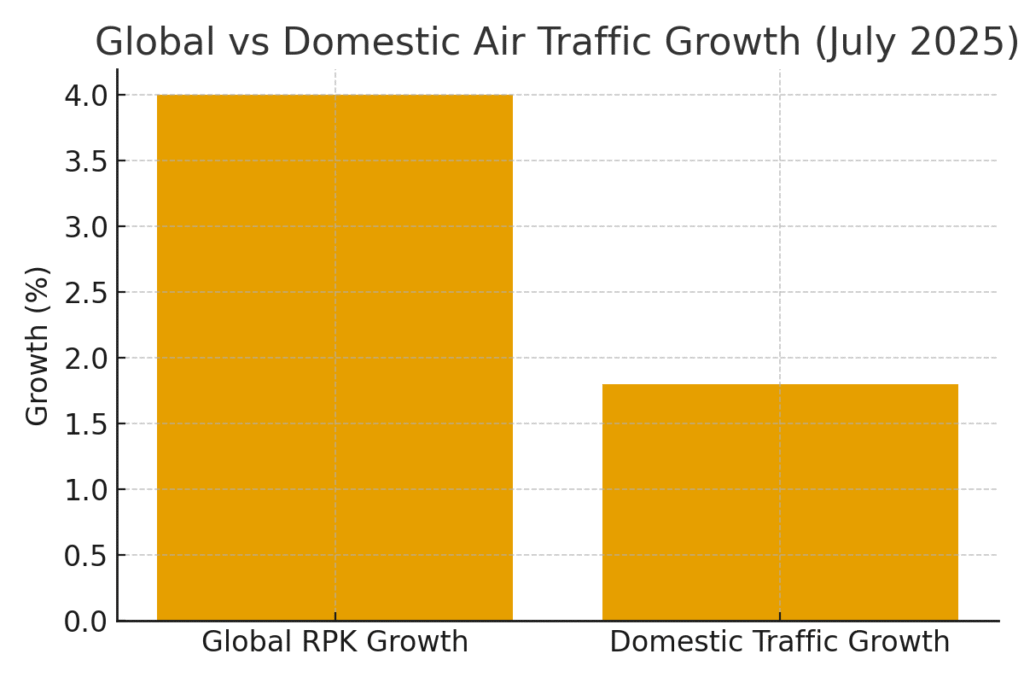
In July 2025, global Revenue Passenger Kilometers (RPK) rose by 4% compared to the previous year. This steady increase highlights the resilience of passenger demand despite fluctuating economic conditions. Airlines have capitalized on growing international travel to sustain revenue growth. For marketers, this growth reinforces the importance of targeting global travelers with relevant campaigns. The momentum also suggests opportunities for loyalty programs to capture long-term value from frequent flyers.
Airlines Marketing Statistics #2 Passenger Load Factor Reaches 85.5%
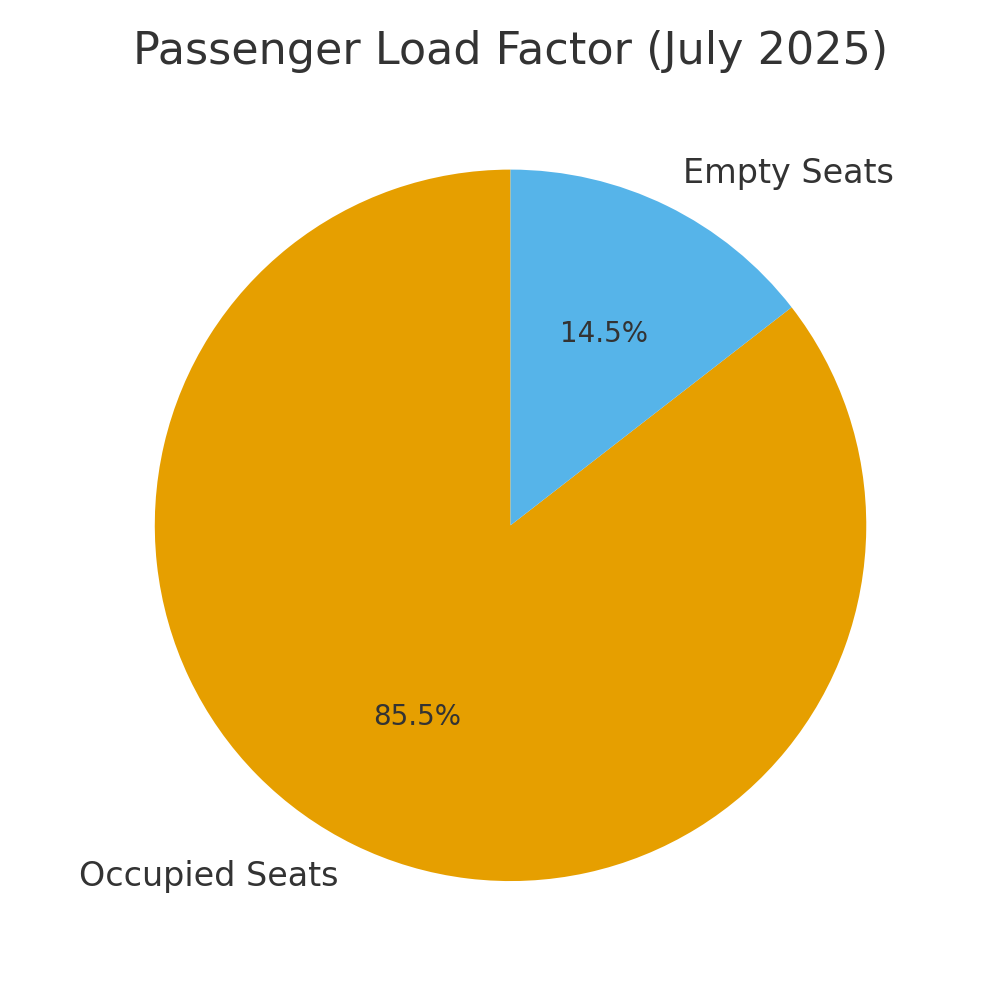
The passenger load factor (PLF) hit 85.5% in July 2025, one of the highest on record for that month. This figure indicates that airlines are filling most of their available seats, improving efficiency and profitability. A strong PLF also reflects optimized route planning and effective pricing strategies. From a marketing standpoint, high load factors mean heightened competition for premium customers. Airlines must differentiate themselves through brand loyalty and service quality to stand out.
Airlines Marketing Statistics #3 International Traffic Expands 5.3% YoY
International traffic grew by 5.3% year-over-year in July 2025, driving more than 80% of net industry-wide growth. This surge reflects travelers’ increasing preference for cross-border experiences. Airlines focusing on long-haul markets are seeing the biggest returns. For marketers, this means campaigns should highlight destinations, partnerships, and global connectivity. International expansion continues to shape brand positioning in the aviation sector.
Airlines Marketing Statistics #4 Domestic Traffic Grows 1.8% YoY
Domestic air traffic only expanded by 1.8% in July 2025 compared to international growth. This shows slower demand recovery in local travel markets. Many domestic carriers face pricing pressures as competition intensifies. Marketing strategies in this space need to emphasize affordability, convenience, and regional loyalty perks. Airlines must innovate in customer engagement to maintain relevance in domestic markets.
Airlines Marketing Statistics #5 Global Airline Revenue At $864 Billion In 2024
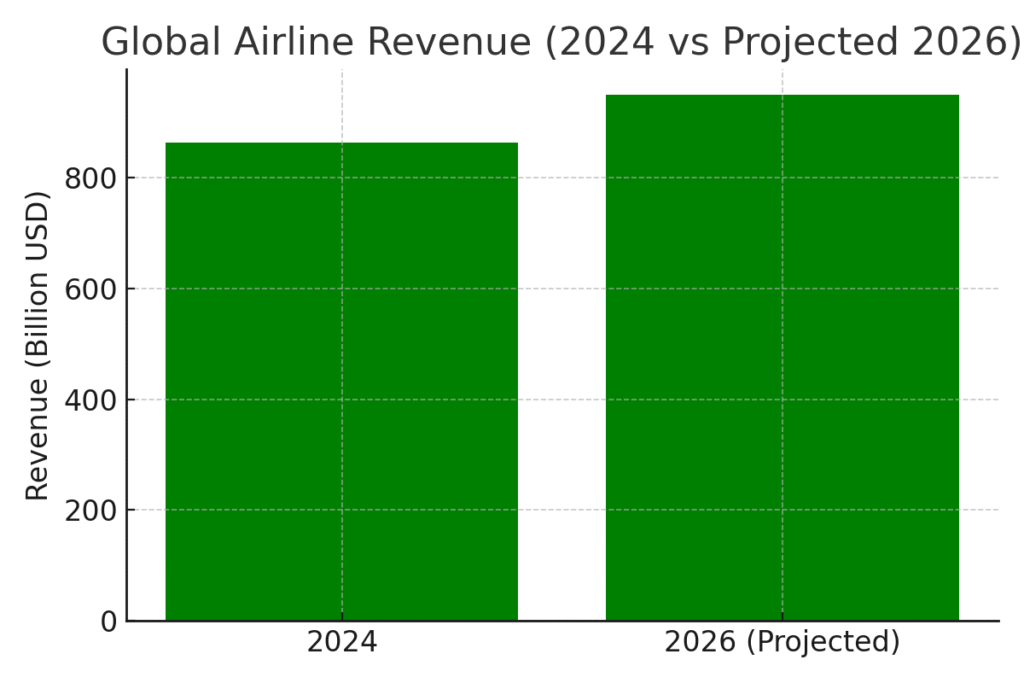
The airline industry generated $864 billion in passenger revenue in 2024. Projections suggest this number will climb toward $949 billion by 2026. This revenue growth highlights the industry’s return to pre-pandemic levels of strength. Marketing teams should focus on maximizing ancillary revenue through upselling and add-on services. With such a large market, effective branding is critical to secure market share.
Airlines Marketing Statistics #6 Profit Forecast Of $36 Billion In 2025
Airlines are expected to post a combined profit of $36 billion in 2025. This recovery underscores stronger financial stability across global carriers. However, thin margins mean airlines must continue cutting costs and improving yield management. Marketers play a vital role by designing campaigns that maximize premium demand. Profitability makes it possible for airlines to reinvest in customer experience and digital platforms.
Airlines Marketing Statistics #7 Operating Margin Reaches 2.3% In Q1 2025
In the first quarter of 2025, airlines globally reported an average operating margin of 2.3%. While positive, the margin remains slim, showing the industry’s vulnerability. Operating costs rose by 1.8%, while unit revenues increased by only 1.1%. Marketing can help by shifting focus to higher-yield segments such as business and premium economy travelers. This stat proves that every percentage point in marketing ROI directly affects the bottom line.
Airlines Marketing Statistics #8 Capacity Expands 3.5% In Early 2025
Airline capacity globally increased by 3.5% in the first quarter of 2025. Carriers are adding more flights and seats to meet rising demand. While this expands options for travelers, it also raises competition among airlines. Marketing strategies must emphasize differentiation in experience, not just pricing. As capacity grows, targeting niche audiences like digital nomads and premium leisure travelers becomes crucial.
Airlines Marketing Statistics #9 Top Four U.S. Carriers Control 70% Market Share
In the U.S., the top four airlines—Delta, American, Southwest, and United—control nearly 70% of the domestic market. This concentration makes it harder for smaller carriers to compete. Marketing for these dominant players focuses heavily on brand trust and loyalty programs. For smaller carriers, niche branding and regional marketing are essential survival strategies. Consumers often benefit through competitive loyalty schemes and promotional fares.
Airlines Marketing Statistics #10 Delta Leads U.S. Market With 17.8% Share
Delta Airlines holds the largest U.S. market share at 17.8%. This leadership is supported by its strong brand image, wide network, and premium offerings. Delta has consistently marketed itself as a service leader. Competitors must invest in brand positioning to challenge its dominance. For marketers, Delta’s strategy shows the importance of aligning operations with consistent messaging.
Airlines Marketing Statistics #11 U.S. Carried 876 Million Passengers In 2024
The U.S. transported approximately 876 million passengers in 2024. This makes it the largest aviation market in the world. For marketers, this presents vast opportunities to engage travelers with personalized campaigns. Airlines must leverage digital tools to segment and target different passenger demographics. With such scale, even small improvements in conversion can yield significant returns.
Airlines Marketing Statistics #12 China Records 741 Million Passengers In 2024
China became the second-largest aviation market in 2024, handling 741 million passengers. This represented an impressive 18.7% growth from the previous year. The rapid expansion highlights China’s role as a key growth driver for global aviation. Airlines must develop marketing strategies that resonate with Chinese travelers’ preferences, from mobile-first booking to group travel. Partnerships with Chinese digital platforms are vital for effective outreach.
Airlines Marketing Statistics #13 Latin America Airlines See 7.2% Growth
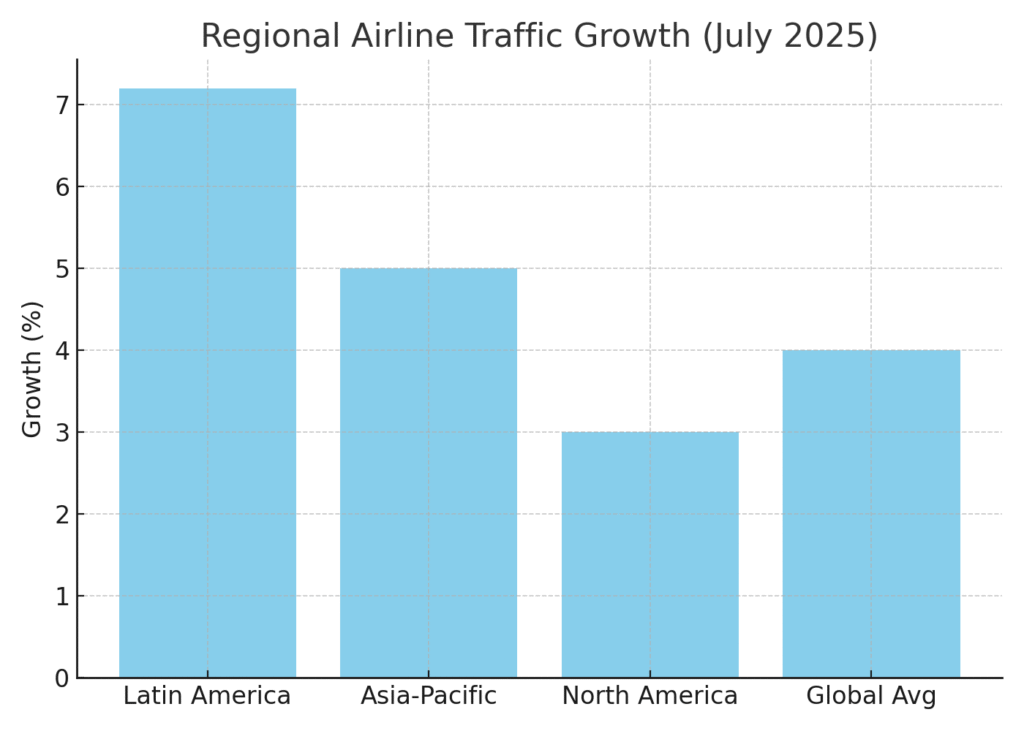
In July 2025, Latin American and Caribbean airlines recorded a 7.2% year-over-year traffic increase. International demand was particularly strong at 9.3% growth. This shows a resurgence in travel across tourism-heavy regions. Marketing campaigns focused on leisure and cultural travel are especially effective here. Airlines serving this region can benefit from storytelling that emphasizes unique destinations.
Airlines Marketing Statistics #14 Asia-Pacific Contributes 45% Of Global RPK Growth
Asia-Pacific airlines accounted for nearly 45% of total net RPK growth in July 2025. This dominance shows the region’s central role in global aviation. Expanding middle classes and rising tourism drive this growth. For marketers, Asia-Pacific offers huge opportunities for loyalty and premium upgrades. Airlines must adapt messages to culturally diverse markets across the region.
Airlines Marketing Statistics #15 U.S. Airlines Revenue Growth Limited To 1% In 2025
Revenue growth for U.S. airlines is forecasted at just 1% in 2025. This slowdown reflects softening demand and external cost pressures. Marketing strategies must focus on maximizing existing customer value rather than aggressive expansion. Loyalty programs, credit card partnerships, and personalized offers can help balance weaker growth. U.S. carriers need sharper storytelling to differentiate in a saturated market.
Airlines Marketing Statistics #16 Discount Carriers Struggle With Profitability
Low-cost carriers in North America are under pressure from higher labor costs and competition. Their profitability growth has slowed since the pandemic. Marketing campaigns that emphasize low fares alone are no longer sufficient. Discount carriers must highlight convenience, reliability, and added value to stay competitive. This shift challenges marketers to reposition budget travel in a positive light.
Airlines Marketing Statistics #17 Premium Travel Demand Rising
Demand for premium travel, including business and premium economy, is growing. This segment provides higher yields and helps airlines offset lower-fare competition. Marketing must highlight comfort, exclusivity, and personalized service. Airlines that invest in premium cabins often see stronger brand loyalty. For marketers, this trend represents a shift toward aspirational messaging.
Airlines Marketing Statistics #18 Travelers Value Trust And Ease Of Booking
Research shows that travelers value brand trust and ease of booking over price alone. This insight is transforming airline marketing strategies. Airlines that invest in user-friendly digital platforms gain a competitive edge. Customer confidence and transparency are becoming critical differentiators. Marketing campaigns must build trust at every touchpoint, from booking to post-flight.
Airlines Marketing Statistics #19 North America Holds 37.6% Of Aviation Market Share
North America is expected to account for 37.6% of the aviation market in 2025. This dominance reflects both passenger numbers and airline profitability. Marketing in this region requires balancing brand reputation with customer loyalty incentives. Carriers must also adapt to diverse traveler profiles, from business professionals to leisure seekers. For marketers, this represents a market with both scale and complexity.
Airlines Marketing Statistics #20 Top Airlines Gain Branding Through Skytrax Awards
Global airline rankings, such as the Skytrax World Airline Awards, provide strong branding opportunities. In 2025, carriers like Qatar Airways, Singapore Airlines, and Emirates ranked at the top. These recognitions influence consumer perception and trust. Airlines can leverage award recognition in their marketing campaigns to attract travelers. Highlighting accolades helps position brands as leaders in service quality.
What These Airlines Marketing Statistics Mean
As I reflect on these airlines marketing statistics, I realize how much they reveal about where the industry is heading and the strategies airlines must adopt to stay ahead. For me, these numbers aren’t just facts; they’re reminders of how critical it is to keep innovating and connecting with passengers in meaningful ways. Whether it’s the surge in international travel, the rise in premium demand, or the ongoing pressure on low-cost carriers, every stat tells a story worth paying attention to. I personally find it exciting to think about how these trends will reshape the way we fly and how airlines communicate their value. I hope you found these insights as eye-opening as I did, and that they spark new ideas for how to navigate the evolving skies of 2025.
SOURCES