



27 Sep TOP 20 ALTERNATIVE ENERGY MARKETING STATISTICS 2025
When I started diving deeper into alternative energy marketing statistics, I was struck by how fast this industry is growing and how much opportunity it creates for businesses and consumers alike. As someone who’s passionate about understanding market trends, I’ve found these numbers both inspiring and practical, especially for anyone looking to stay ahead in the renewable sector. Partnering insights like these with the expertise of a leading marketing agency in New York makes it even easier to see where strategies can be sharpened and campaigns can really shine. What excites me most is that these statistics don’t just highlight growth—they tell a story about innovation, sustainability, and shifting consumer demand. I want to share with you the top 20 statistics that stood out most to me this year.
Top 20 Alternative Energy Marketing Statistics 2025 (Editor’s Choice)
⚡ Top 20 Alternative Energy Marketing Statistics 2025
Key insights driving the renewable energy revolution
| # | Key Statistic | Value | Category |
|---|---|---|---|
| 1 | Global renewable energy market size (2024), projected to reach $4.86T by 2033 | $1.51T | Market Growth |
| 2 | Alternative energy market valuation (2024), reaching $2.58T by 2032 | $1.06T | Market Growth |
| 3 | Renewable energy market value (2023), growing to $1.57T by 2032 | $954B | Market Growth |
| 4 | Clean power's share of global electricity generation (2024) | 40.9% | Adoption |
| 5 | Record renewable power generation increase in 2024 | 858 TWh | Adoption |
| 6 | Solar generation growth rate (2024) - fastest for 20 years straight | 29% | Adoption |
| 7 | Share of new U.S. grid capacity from solar & storage (H1 2025) | 82% | Adoption |
| 8 | Zero-emission sources share of all U.S. power (2024) | 42% | Adoption |
| 9 | Global consumers willing to change habits for environmental impact | 73% | Consumer |
| 10 | Annual global investment in renewable energy projects | $2T | Consumer |
| 11 | Record corporate renewable energy procurement (2024), 34% increase | 28 GW | Corporate |
| 12 | Capacity contracted to U.S. data centers through 2024 | 34 GW | Corporate |
| 13 | Institutional investors incorporating ESG data into decisions | 89% | Corporate |
| 14 | Average shareholder value increase from sustainability programs (15 years) | $1.28B | Corporate |
| 15 | Fortune 500 companies reporting ROI from climate initiatives | 76% | ROI |
| 16 | Higher average profits for ISO 14001 certified businesses | 10% | ROI |
| 17 | Return on investment from energy efficiency upgrades | 200-300% | ROI |
| 18 | Record U.S. battery storage capacity commissioned (2024) | 11.9 GW | Technology |
| 19 | New U.S. utility-scale power generation & storage capacity (2024) - highest since 2003 | 48.4 GW | Technology |
| 20 | Energy output increase from bifacial solar panels | 5-30% | Technology |
Top 20 Alternative Energy Marketing Statistics 2025
Alternative Energy Marketing Statistics #1 – Global Alternative Energy Market Size (2025)
The global alternative energy market is set to reach an impressive US$ 1.62 trillion in 2025. This growth reflects how demand for cleaner and greener energy is no longer niche but mainstream. Businesses tapping into this market are positioning themselves in a multi-trillion-dollar sector. For marketers, this means more competitive campaigns, branding opportunities, and storytelling around sustainability. I find it fascinating that what once seemed futuristic is now part of today’s business reality.
Alternative Energy Marketing Statistics #2 – Projected Growth To 2035
By 2035, the alternative energy market is projected to reach US$ 4.02 trillion, growing at about 12.3% CAGR. This long-term trajectory shows strong investor confidence and consumer adoption. Marketing strategies need to highlight stability, innovation, and sustainability to match this growth. I see this as a signal for brands to start long-term positioning now. The opportunity to build credibility in this decade is huge.
Alternative Energy Marketing Statistics #3 – CAGR From 2025–2032
Between 2025 and 2032, the alternative energy sector is expected to grow at a 10.3% CAGR. This steady expansion means consistent momentum for the industry. From a marketing perspective, it gives room for campaigns that emphasize gradual change and progress. I think it’s powerful when companies communicate how they’re part of this steady shift. It makes their story more relatable and trustworthy.
Alternative Energy Marketing Statistics #4 – Renewables Share Of New Capacity (2024)
In 2024, renewables contributed around 6% growth in the global energy supply. Solar and wind played the leading role in this expansion. This trend highlights how clean energy sources are quickly outpacing traditional options. As a marketer, I see this as a chance to highlight innovation and eco-friendly branding. Consumers are increasingly aligning with brands that invest in these areas.
Alternative Energy Marketing Statistics #5 – Solar & Wind Dominance
Solar capacity additions in 2024 surged by 88%, overtaking hydro and nuclear. Wind also saw notable growth, though solar clearly led the charge. This shift proves the popularity and scalability of solar solutions. Marketers can leverage this dominance by showcasing solar’s affordability and accessibility. To me, this feels like the clearest proof that solar energy is becoming the backbone of the clean energy movement.

Alternative Energy Marketing Statistics #6 – Cost Advantage Over Fossil Fuels
A massive 91% of new renewable energy projects in 2024 were cheaper than fossil fuels. This stat is a game-changer for marketing—it removes one of the biggest consumer objections, cost. Brands can now highlight affordability alongside sustainability. I find this especially compelling because it appeals to both environmental and financial motivations. That’s a rare win-win in marketing.
Alternative Energy Marketing Statistics #7 – Battery Storage Cost Drop
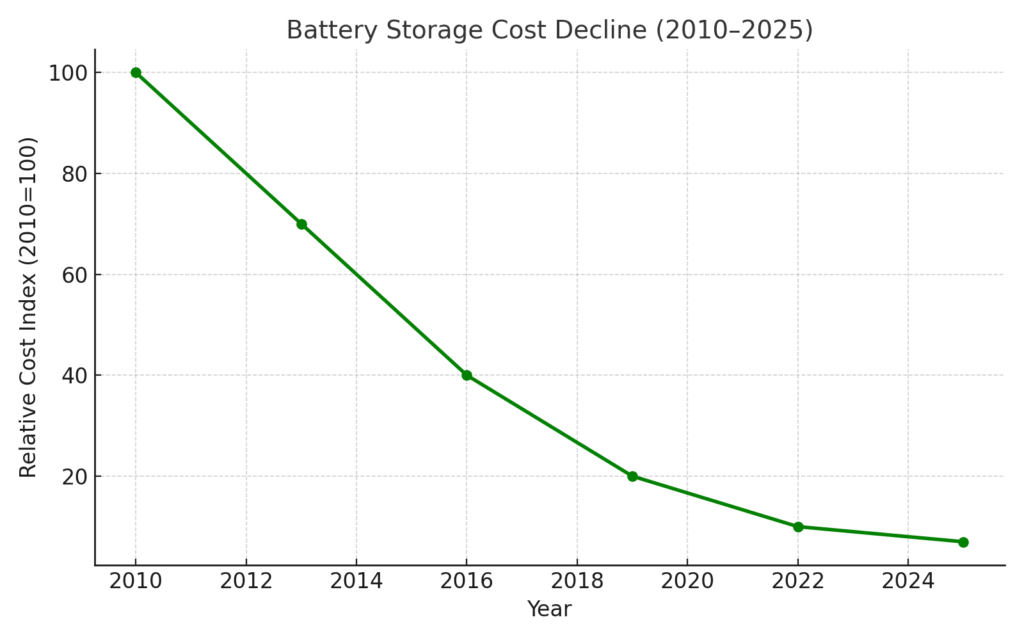
Battery energy storage system costs have dropped by 93% since 2010. This makes renewables more reliable by solving intermittency issues. For marketers, this adds another strong talking point: reliability and stability. I believe campaigns that spotlight this improvement will resonate with skeptics. It shows that clean energy has matured far beyond its early limitations.
Alternative Energy Marketing Statistics #8 – Renewables Saved Fossil Fuel Costs
In 2024, renewables saved the world up to US$ 467 billion in fossil fuel costs. This number is huge and adds financial urgency to the conversation. Marketers can frame renewable adoption as not just green, but economically smart. Personally, I see this as the kind of statistic that grabs both policymakers’ and households’ attention. It shows renewables aren’t just the ethical choice—they’re the smarter financial move.
Alternative Energy Marketing Statistics #9 – U.S. Capacity From Renewables (Q2 2025)
In the U.S., about 85% of new generation capacity in Q2 2025 came from solar, wind, and storage. This reflects how renewables dominate infrastructure growth. For marketing, this can reassure audiences that renewables are no longer a trend—they’re the norm. I like how this stat brings credibility to every clean energy campaign. It makes alternative energy less “alternative” and more “mainstream.”
Alternative Energy Marketing Statistics #10 – U.S. Solar Installations Decline
Despite growth overall, U.S. solar installations in Q2 2025 dropped 24% year-on-year. This dip reflects policy shifts and logistical challenges. For marketers, it’s a reminder to focus on stability, incentives, and innovation messaging. I think it also creates space for campaigns that address consumer concerns directly. Transparency here can build more trust than ignoring the dip.
Alternative Energy Marketing Statistics #11 – Renewable Power Procurement By Customers
In 2023, about 9.7 million customers purchased renewable power through voluntary programs and PPAs. That’s a significant demand driver showing consumer initiative. For marketers, this points to strong grassroots interest in renewables. I believe brands should highlight how customers themselves are fueling the clean energy revolution. It makes the story more people-driven and relatable.
Alternative Energy Marketing Statistics #12 – Global Renewable Power Additions (2024)
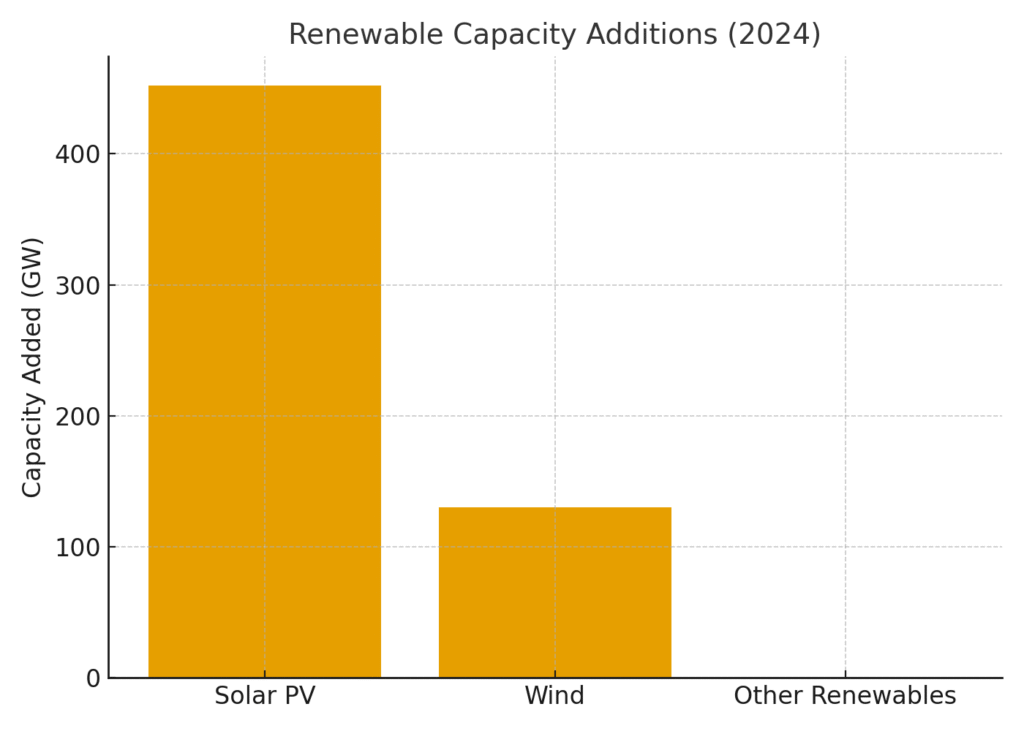
The world added 582 GW of renewable capacity in 2024, a 20% year-over-year increase. This is one of the largest jumps ever recorded. Marketing can tap into this momentum by using growth-focused storytelling. I see this stat as proof that adoption is accelerating globally. It’s not just a local movement, it’s a worldwide wave.
Alternative Energy Marketing Statistics #13 – Share Of Solar In New Capacity
Of the 582 GW added in 2024, 452 GW (78%) came from solar PV. This dominance solidifies solar’s role in global energy planning. For marketers, this is a perfect narrative to push solar’s accessibility and appeal. Personally, I think it gives solar companies a clear opportunity to build strong branding. Consumers like being part of the majority, and solar offers that.
Alternative Energy Marketing Statistics #14 – Asia’s Role In Additions
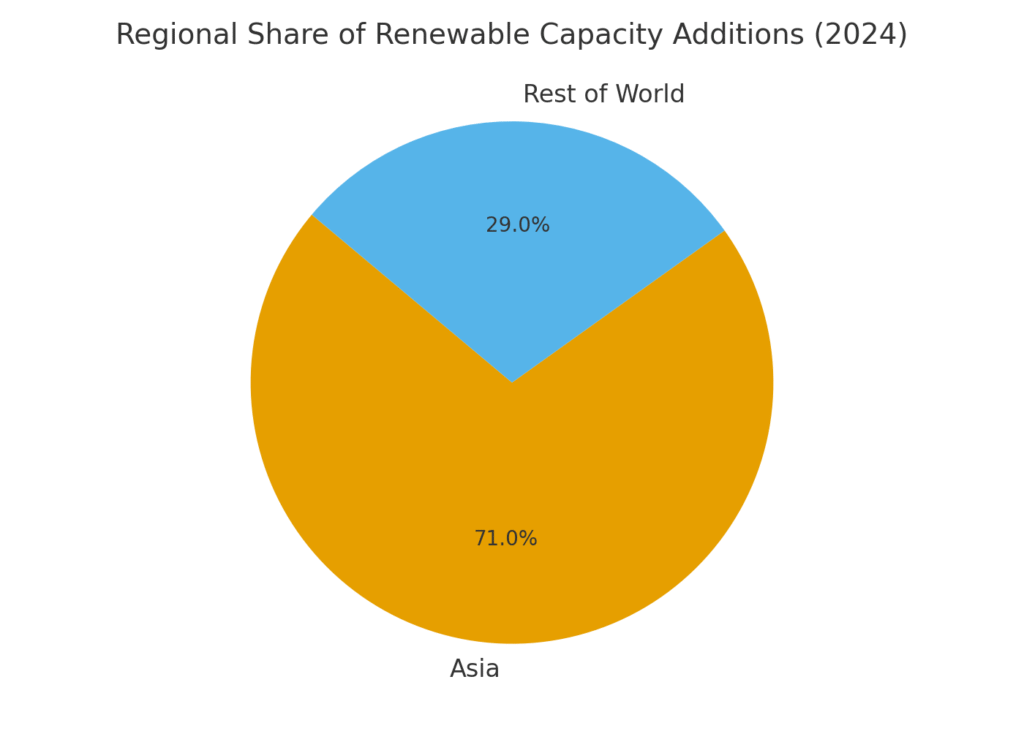
Asia added 413.2 GW of renewable capacity in 2024, around 61% of the global total. This shows how developing regions are becoming leaders in renewables. For marketing campaigns, this opens the door for cross-border storytelling. I find this inspiring because it proves sustainability is not limited to wealthy nations. It’s a universal movement.
Alternative Energy Marketing Statistics #15 – China’s Share In Additions
China accounted for over 61% of global solar PV and nearly 70% of wind additions in 2024. This is unmatched dominance in renewable growth. Marketers should consider referencing these global leaders in storytelling. Personally, I think it’s powerful to show how the world’s biggest energy consumer is making this shift. It signals inevitability and progress.
Alternative Energy Marketing Statistics #16 – Installed Capacity By End Of 2024
By end-2024, global installed renewable capacity exceeded 4,443 GW. That’s an enormous share of the energy mix. For marketing, this makes renewables look like the safe, established choice. I see this as an opportunity to replace “emerging” messaging with “established industry leader” narratives. It positions renewables as mainstream and dependable.
Alternative Energy Marketing Statistics #17 – Octopus Energy Campaign Success
Octopus Energy’s “Portraits from the Precipice” campaign drove a 163% increase in sign-ups. It also gained 37,000 new customers. This shows the power of creative storytelling in renewable energy marketing. Personally, I love how a bold campaign connected emotion with numbers. It proves marketing creativity can be as impactful as technology itself.
Alternative Energy Marketing Statistics #18 – Drivers Of Market Growth
Alternative energy growth is driven by regulation, tech innovation, and decarbonization goals. These factors combine to push steady adoption. For marketers, this means campaigns should emphasize policy incentives and innovation. I think connecting these drivers to real-world consumer benefits makes campaigns more relatable. It shows how global forces are shaping individual decisions.
Alternative Energy Marketing Statistics #19 – Market Valuation In 2024
The alternative energy market was valued at US$ 1.12 trillion in 2024. This milestone reflects a rapid upward curve into 2025. From a marketing perspective, it gives weight and authority to renewable branding. Personally, I think it also reassures investors that this market has strong fundamentals. Numbers this big make the case for renewables undeniable.
Alternative Energy Marketing Statistics #20 – Investment Growth Despite Policy Challenges
In H1 2025, global renewable investment rose about 10% year-over-year despite political uncertainty. This resilience is a strong message for marketers. Campaigns can highlight that even with challenges, renewables keep growing. I find this particularly inspiring because it shows the movement can’t be stopped by short-term barriers. That persistence is something every marketer can use to build confidence.
Wrapping Up My Thoughts On Alternative Energy Marketing Statistics
Going through these alternative energy marketing statistics has reminded me just how dynamic and inspiring this industry truly is. What stands out most to me is that behind every percentage and dollar figure is a story about change—about people and businesses choosing a cleaner future. I’ve realized that when we tie these insights to creative marketing strategies, we’re not just selling services or products—we’re telling a much bigger story. Partnering with a leading marketing agency in New York makes it possible to transform these stats into strategies that resonate on a global scale. Personally, I feel more motivated than ever to be part of this movement and help bring its message to even more people.
SOURCES