



19 Sep TOP 20 ANDROID MARKETING STATISTICS 2025
When I first started diving into the world of mobile, I realized just how massive Android really is—and the numbers keep surprising me. That’s why I’ve put together these android marketing statistics that every brand, developer, or marketer should know in 2025. From user reach to ad spend, these stats highlight not just the scale of Android, but also how it continues to dominate our everyday digital lives. As someone working closely with businesses, and even collaborating with a leading marketing agency in New York, I can tell you these insights aren’t just numbers—they’re roadmaps to real growth opportunities.
Top 20 Android Marketing Statistics 2025 (Editor’s Choice)
📱 Top 20 Android Marketing Statistics 2025
Essential insights for marketers and businesses targeting the Android ecosystem
| Rank | Category | Key Statistic |
|---|---|---|
1 |
Global Dominance |
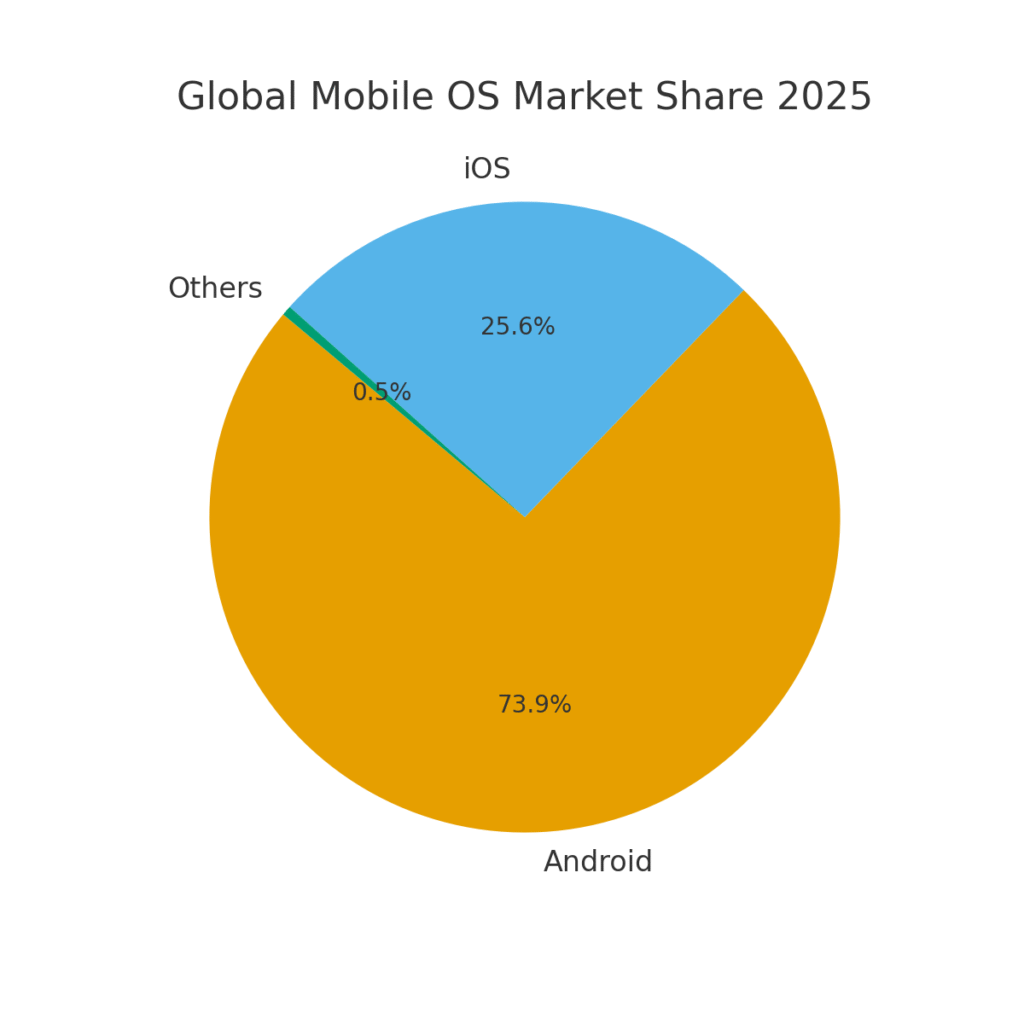
Android has 3.6 billion users and 73.9% global market share, making it the world's most widely used mobile operating system |
2 |
Web Traffic |
Android dominates mobile web traffic with 70.48%, followed by Apple at 28.8% - collectively making up 99.28% of all mobile web traffic |
3 |
Market Leadership |
Android holds 70.8% of the world's largest OS market share in Q2 of 2023, despite a slight decline from the previous year's 71.75% |
4 |
Regional Strength |
Android dominates countries like Brazil, India, Indonesia, Vietnam, and Turkey, where its market share exceeds 85% |
5 |
Continental Leadership |
Android's market share in Africa is 85.15% and in Asia is 82.03% |
6 |
US Market |
In the U.S., iOS leads with 56.6% of the market in Q2 2022, while Android held 43% |
7 |
Ad Revenue Share |
Android segment leads the in-app advertising market with 67.3% revenue share in 2024 |
8 |
Ad Impressions |
Android delivers 2.1x more ad impressions globally, especially in Southeast Asia, Latin America, and Africa |
9 |
Cost Efficiency |
Cost-per-install (CPI) on iOS is $2.88, compared to $1.54 on Android - making Android more cost-effective for user acquisition |
10 |
Market Growth |
Global in-app advertising market was $182.06 billion in 2024 and expected to reach $481.47 billion by 2033 |
11 |
App Ecosystem |
Google Play Store had 2.67 million apps available as of March 2023 |
12 |
App Monetization |
97% of Android apps are free, while only 3.1% are paid apps |
13 |
Gaming Behavior |
Android users download 38% more mobile games per year, but uninstall rates are also 28% higher |
14 |
Personalization |
63% of smartphone users are more likely to buy from brands offering personalized recommendations via mobile sites or apps |
15 |
Version Distribution |
Android 14 leads the global Android OS market with 37.36% share, followed by Android 13 at 18.72% |
16 |
Popular Devices |
Samsung Galaxy A12 is the most popular Android phone with 1.57% share of the global market as of November 2024 |
17 |
Vendor Leadership |
Samsung is the top Android company with 35.3% market share |
18 |
App Spending |
Android users projected to spend $51 billion on Google Play Store apps, accounting for 31.87% of total spending in 2024 |
19 |
Emerging Markets ROI |
Android yields better ROI for e-commerce app advertising in emerging markets, especially in India and Brazil |
20 |
Future Projections |
Mobile ad spending projected to reach $228.11 billion globally in 2025, with Android capturing majority share due to dominant user base |
Top 20 Android Marketing Statistics 2025
Android Marketing Statistics #1: Android Has 3.6 Billion Users Globally With 73.9% Market Share
Android dominates the global smartphone space, powering over 3.6 billion devices worldwide. Its 73.9% market share makes it the undisputed leader in mobile operating systems. This reach provides marketers with an unparalleled audience to target across regions and demographics. With such massive penetration, Android is not just a platform, but a gateway to global digital engagement. For businesses, this dominance means Android-focused strategies often yield stronger returns.
Android Marketing Statistics #2: Google Play Store Hosts 2.87 Million Apps
The Google Play Store currently offers about 2.87 million apps, making it the largest app distribution platform. This sheer volume highlights both opportunities and challenges for marketers. On one hand, the ecosystem provides unlimited potential to reach consumers. On the other, standing out requires creative strategies and smart optimization. Successful apps on Android often combine innovation with sharp marketing campaigns to rise above the noise.
Android Marketing Statistics #3: Android Powers Over Three Quarters Of Smartphones Globally
Android maintains its role as the backbone of mobile technology, running more than 75% of smartphones worldwide. This widespread use means marketers can focus heavily on Android without missing most of their target audience. The operating system’s versatility, spanning budget to premium devices, ensures coverage across income brackets. As a result, Android campaigns can be tailored for both emerging and mature markets. Its global scale makes it a cornerstone of modern mobile marketing strategies.
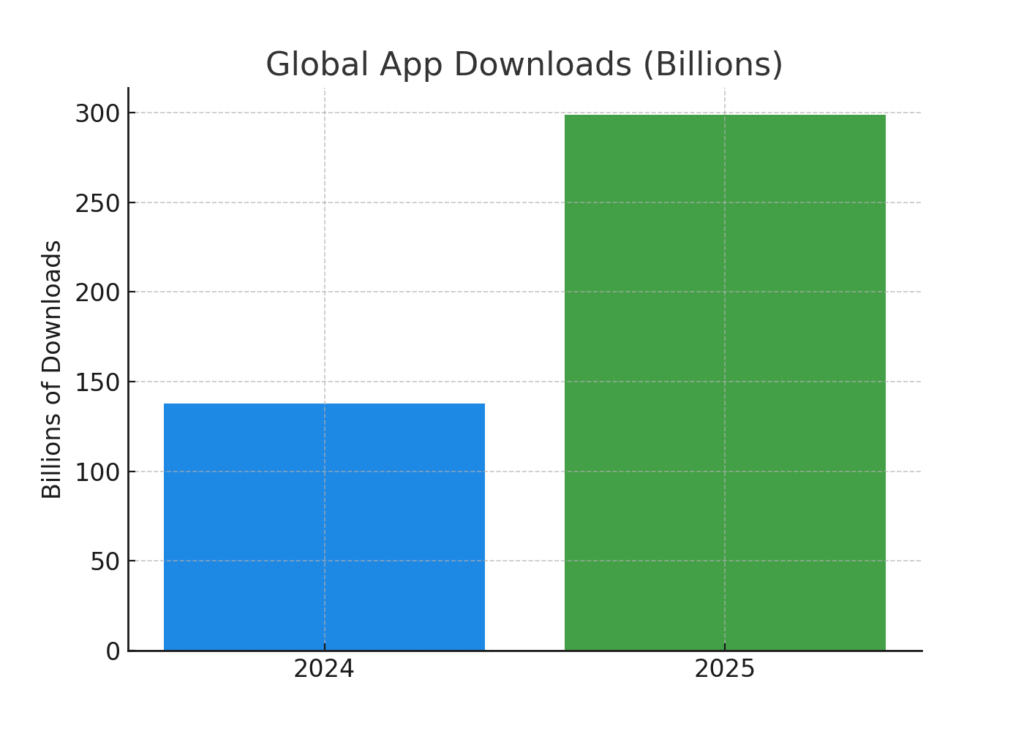
Android Marketing Statistics #4: Over 137.8 Billion Apps And Games Were Downloaded In 2024
In 2024 alone, app stores saw more than 137.8 billion downloads. This trend signals not only strong consumer demand but also the ongoing app-driven nature of mobile life. For Android, the majority share in downloads shows how deeply integrated it is into daily routines. Marketers can leverage this by focusing on app installs, engagement, and re-engagement campaigns. The scale of downloads highlights both fierce competition and endless opportunity.
Android Marketing Statistics #5: Global App Downloads To Reach 299 Billion By 2025
By 2025, app downloads worldwide are expected to hit 299 billion. This projection underlines the accelerating growth of mobile ecosystems. For Android, which leads in device share, the lion’s portion of this growth is highly likely. Developers and brands targeting Android users will find increasing opportunities in both app distribution and monetization. This anticipated boom stresses the importance of smart marketing and user retention strategies.
Android Marketing Statistics #6: Users Interact With 10 Apps Daily And 30 Monthly
The average smartphone user engages with around 10 apps per day and 30 per month. This shows how deeply mobile apps are woven into everyday life. For marketers, these numbers highlight the importance of positioning apps as essential, rather than optional. Strong user experience and smart push notifications help secure daily engagement. Regular interactions build loyalty, which ultimately drives higher lifetime value.
Android Marketing Statistics #7: 70% Of Digital Media Time In The U.S. Is Spent In Apps
In the U.S., 70% of all digital media consumption takes place inside mobile apps. This emphasizes the shift away from browsers to app-first experiences. Android apps form a significant portion of this, given the OS’s reach. For marketers, this means that mobile app campaigns often outperform traditional digital ads. Brands that prioritize mobile app marketing can capture the lion’s share of consumer attention.
Android Marketing Statistics #8: Global Consumer Spending On Mobile Apps Reached $935 Billion In 2024
In 2024, mobile app consumer spending soared past $935 billion. Android’s share of this figure is substantial, given its global dominance. This revenue highlights how apps are no longer just tools but key commerce drivers. Subscriptions, ads, and in-app purchases make up the majority of revenue streams. For marketers, this spending power reflects a lucrative channel that continues to expand.
Android Marketing Statistics #9: Consumer Spending Expected To Reach $150 Billion In 2025
By 2025, mobile consumer spending is projected to climb to $150 billion. This surge comes from users increasingly valuing mobile convenience. Android, with its expansive device base, will naturally capture a significant slice. Marketers can expect more growth in subscription-based models and premium app features. Capitalizing on this trend requires delivering value that users are willing to pay for.
Android Marketing Statistics #10: 98% Of Mobile App Revenue Comes From Free Apps
Free apps dominate the mobile ecosystem, generating about 98% of revenue. While downloads are free, monetization happens through ads, in-app purchases, and subscriptions. Android apps especially benefit from this model due to their massive global audience. For marketers, this means focusing on user acquisition and retention over upfront sales. A smart strategy balances accessibility with monetization without alienating users.
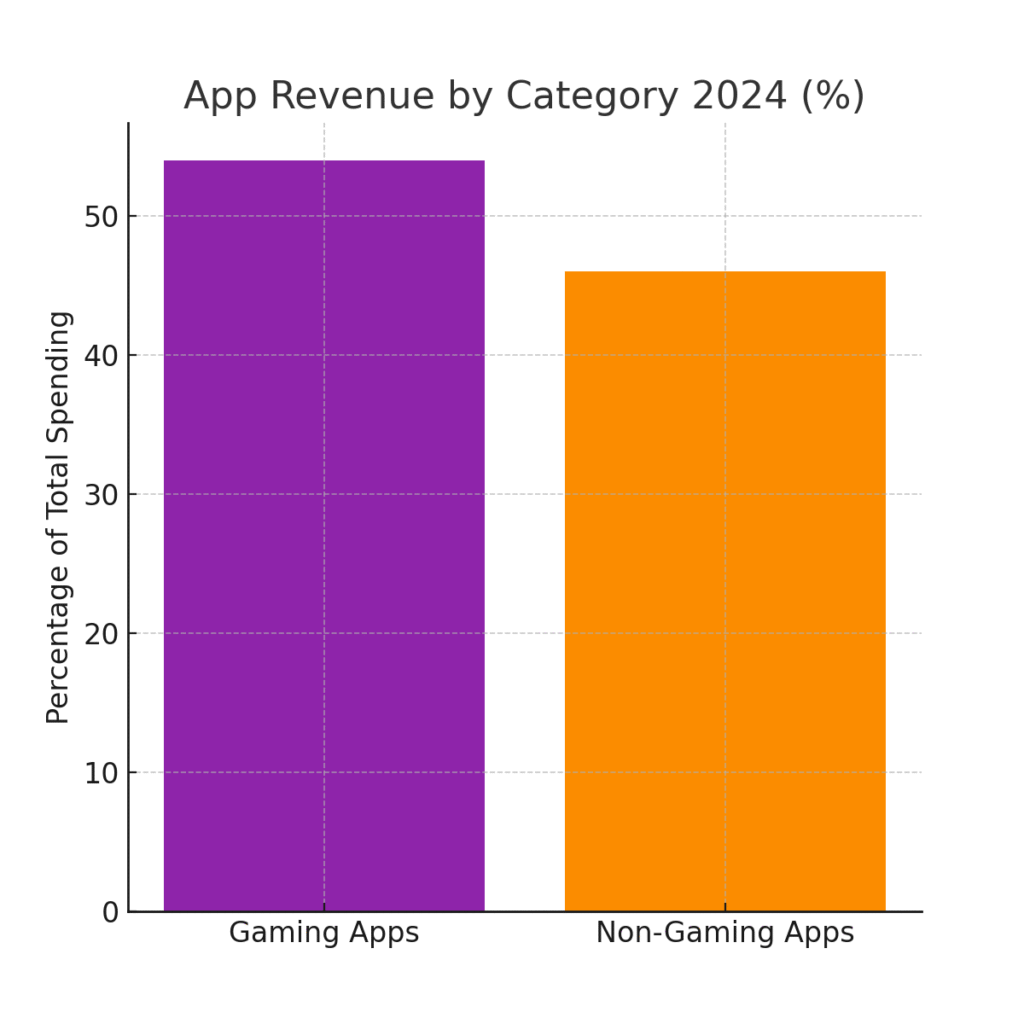
Android Marketing Statistics #11: Non-Game Apps Account For 46% Of Spending
In 2024, non-game apps made up 46% of total consumer spending. This shows that entertainment and utility apps are closing the gap with gaming. Android users are increasingly willing to pay for productivity, health, and subscription apps. Marketers should recognize that demand is diversifying beyond entertainment. Building strong value propositions in non-game niches can lead to sustained growth.
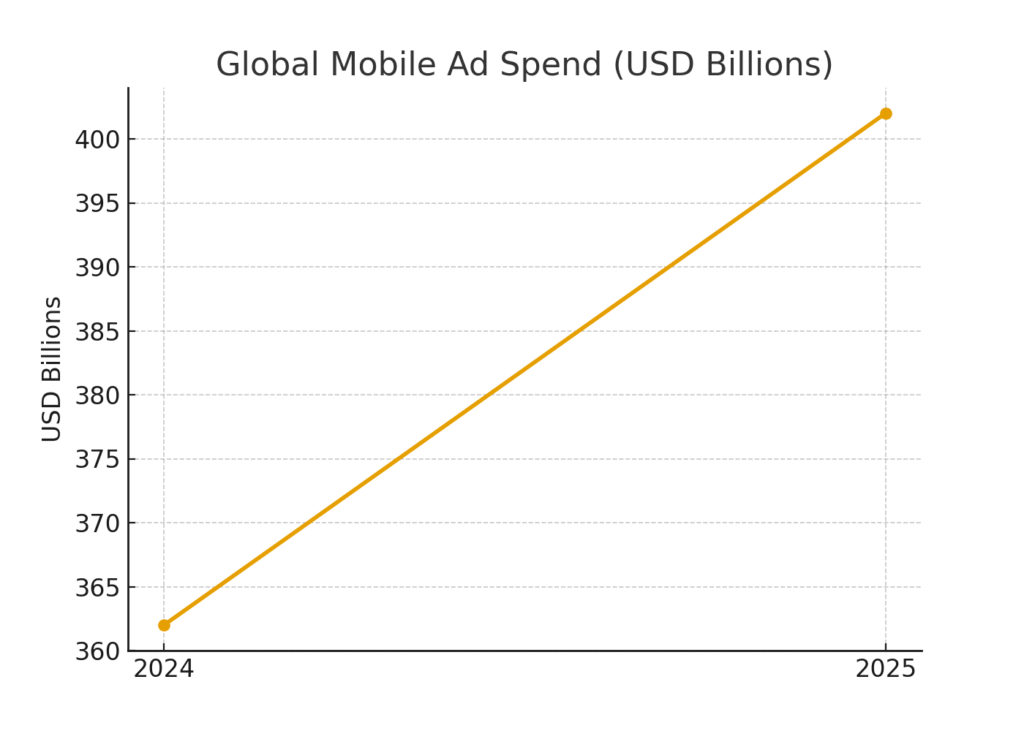
Android Marketing Statistics #12: Global Mobile Ad Spend To Reach $402 Billion In 2025
Mobile ad spend worldwide is projected to hit $402 billion in 2025. With Android’s user base leading the market, much of this investment targets Android devices. For marketers, this growth reflects rising competition in the ad landscape. To stand out, brands must focus on personalization and relevance in their campaigns. Efficient budget allocation ensures stronger ROI amid escalating costs.
Android Marketing Statistics #13: U.S. Mobile Ad Spending To Exceed $216 Billion In 2025
In the United States, mobile ad spending is forecast to cross $216 billion by 2025. This makes the U.S. one of the most lucrative Android advertising markets. Marketers competing here must focus on high-quality creatives and data-driven targeting. With ad costs climbing, delivering measurable value becomes key. Android marketers who prioritize ROI will thrive in this competitive environment.
Android Marketing Statistics #14: In-App Advertising To Represent 82.3% Of Mobile Spend In 2025
By 2025, in-app advertising is expected to account for 82.3% of mobile ad spend. This highlights the dominance of apps over web-based advertising. For Android, where apps drive most engagement, the trend is especially strong. Marketers benefit from precise targeting and high user engagement through in-app channels. As competition rises, innovation in ad formats becomes critical.
Android Marketing Statistics #15: In-App Ads Drive 150% Higher Conversion Rates Than Mobile Web Ads
Studies show that in-app ads perform 150% better in conversions compared to mobile web ads. For Android marketers, this reinforces the need to focus on in-app strategies. The immersive nature of apps ensures higher attention and interaction. Personalized in-app campaigns can significantly lift performance metrics. Leveraging app data for targeting amplifies these already impressive conversion rates.
Android Marketing Statistics #16: 25% Of Apps Are Used Only Once After Download
About 25% of downloaded apps are opened just once before being abandoned. This reveals a key challenge for Android marketers: retention. Downloading is just the beginning; sustained engagement is what matters most. Strong onboarding experiences and continuous value help combat app abandonment. Retention-focused strategies often separate thriving apps from forgotten ones.
Android Marketing Statistics #17: Samsung Leads Android With 35.3% Market Share
Within Android, Samsung remains the leader, commanding a 35.3% device share. Brands like Xiaomi, Oppo, and Vivo follow but lag behind. For marketers, this means Samsung users are often a primary target for campaigns. Understanding device ecosystems helps in tailoring creatives and ad placements. This brand dominance also shapes consumer expectations in the Android market.
Android Marketing Statistics #18: Video Accounts For 63% Of Mobile Traffic
Video content drives about 63% of all mobile traffic today. Android’s large screens and fast networks make it a prime platform for video marketing. Consumers increasingly prefer video ads and tutorials over text or static formats. Marketers who invest in compelling video see stronger engagement and conversions. The trend confirms video’s central role in Android marketing campaigns.
Android Marketing Statistics #19: Mobile Commerce To Make Up 59% Of Retail Sales In 2025
M-commerce is set to represent 59% of all retail eCommerce sales in 2025. This shift reflects the growing reliance on smartphones for shopping. Android’s massive user base positions it as a major player in this space. Brands that optimize for mobile transactions will win consumer trust. Investing in smooth checkout and mobile UX is critical for success.
Android Marketing Statistics #20: Mobile Devices Drive 66–67% Of All Digital Traffic
Currently, mobile devices account for about two-thirds of total online traffic. Android contributes the bulk of this share, given its global dominance. For marketers, this confirms the importance of mobile-first strategies. Campaigns that fail to optimize for Android risk missing the majority of users. This traffic trend cements Android as the centerpiece of digital marketing efforts.
Wrapping It Up: Why These Stats Matter
Looking over these android marketing statistics, I can’t help but feel both excited and motivated. They remind me that behind every download, ad spend, or retention number, there are real people shaping the mobile landscape. For me, it’s not about memorizing figures, but about understanding how to use them to tell better stories, build smarter campaigns, and connect with users in ways that actually matter. My biggest takeaway? If we keep listening to the data and adapting our strategies, there’s no limit to what we can create in this space. And honestly, that’s what keeps me inspired to keep learning and sharing.
SOURCES
https://sqmagazine.co.uk/android-statistics/
https://www.businessofapps.com/data/android-statistics/
https://www.netguru.com/blog/mobile-app-statistics
https://vidico.com/news/mobile-marketing-statistics/
https://keywordseverywhere.com/blog/mobile-marketing-stats/
https://apptrove.com/mobile-marketing-statistics/
https://sagapixel.com/marketing/mobile-marketing-statistics/
https://www.hubspot.com/marketing-statistics
https://backlinko.com/iphone-vs-android-statistics
https://blog.hubspot.com/marketing/live-video-stats
https://teleprompter.com/blog/video-marketing-statistics