




15 Sep TOP 20 ART TRAINING MARKETING STATISTICS 2026 REVEAL MASSIVE CREATIVE LEARNING BOOM
Updated for 2026. This page has been fully refreshed with the latest art education enrollment data, creative learning trends, and marketing performance insights, grounded in global education reports, digital campaign benchmarks, and training platform analytics.
Exploring the world of creativity has never been more exciting, and the numbers prove it. In this blog, we’ll walk through the most compelling art training marketing statistics shaping 2026, showing how studios, instructors, and organizations are connecting with new students. Whether it’s social media outreach, video tutorials, or local community efforts, these strategies highlight how art education is reaching people in fresh and inspiring ways.
As a leading marketing agency in New York, we’ve had the privilege of helping art schools and training centers craft campaigns that feel authentic and engaging. Think of this as a personal guide — not just raw data, but real insights you can use to connect with aspiring artists in meaningful ways.
TOP 20 ART TRAINING MARKETING STATISTICS 2026 THAT ARE TRANSFORMING CREATIVE EDUCATION
Art Training & Marketing Intelligence 2026
Essential metrics driving the $64B creative education and art market ecosystem
Online art courses market: $2.89B in 2026 → $6.23B by 2033 (CAGR 11.2%)
Digital art education booming with AI-powered personalized learning paths and VR immersive environments
Global art market: $57.5B in 2024 with +12% auction growth in 2025
Record 867,000 artworks sold in 2025, the most dynamic year in art market history
Online art market: $11.09B (2024) → $19.25B by 2033 (CAGR 6.3%)
Digital transformation accelerating global art commerce with 18% of total sales occurring online
59% of collectors purchased art online in 2024; 52% now prefer online dealer purchases
Mainstream adoption of digital platforms, up from just 30% preferring online in 2023
51% of collectors purchased via Instagram without seeing work in person
Social media reshaping buying habits; 35% bought directly through Instagram links in 2025
55% of galleries prioritizing online content creation for 2025-2026
57% of galleries expanded online presence in response to economic uncertainty
76% of HNW collectors are now Millennials or Gen Z; allocating 26% of wealth to art
Gen Z spends 56% on collectibles; reshaping taste toward digital art, sneakers, and luxury items
51% of HNWIs purchased digital art in 2024-2025, now 3rd largest category
Digital works now represent 13% of collections, rebounding sharply from 3% in 2024
Female HNWIs spent 46% more on art than men in 2024
55% of women buy works by unknown artists; driving diversity and emerging talent support
69% of collectors hesitated to buy due to lack of transparency
60% want greater pricing transparency; only 5% consider the art market "completely" transparent
Most arts organizations have only 1-2 marketing staff
Staff spread thin, limiting data analysis; training and digital marketing support are top priorities
Nearly 50% of arts organizations work with <$12K/year budgets
Severe limitations require strategic resource allocation; community-driven marketing works best
Marketing budgets now 9.4% of company revenues in 2025
Yet 59% of CMOs report insufficient funds; digital spending to grow 11.9% by 2026
AI marketing market: $64.6B in 2026 → $107.5B by 2028 (CAGR 36.6%)
88% of marketers use AI daily; achieving 44% higher productivity and 300% average ROI
95% of B2B organizations using or planning AI tools by end of 2025
41% revenue increase and 32% reduction in customer acquisition costs reported
60% faster editing; 113% increase in blog output with AI tools
30% of outbound marketing messages from large organizations now AI-generated
75% of galleries cite economic uncertainty as biggest challenge
30% of collectors more selective; works held 10+ years generate positive returns vs. losses for quick flips
58% of HNWIs purchased works connected to art fairs in 2025
Strong rebound from 39% in 2023; hybrid physical-digital models gaining traction
US art auction sales rose +23% to $3.17B in 2025
US maintains 43% global share; western US buyers now 35% of purchases, overtaking Northeast
HNW collectors allocated 20% of wealth to art in 2025, up from 15% in 2024
84% plan to pass collections to heirs; 70% intend philanthropic gifts to institutions
TOP 20 ART TRAINING MARKETING STATISTICS 2026 DRIVING GLOBAL CREATIVE LEARNING EXPLOSION
Art Training Marketing Statistics #1: Global Art Training Market Size (2026)
In 2026, the global art training market reached $7.2 billion according to the International Creative Education Consortium’s February 2026 report, representing an 11% year-over-year increase driven primarily by corporate investment in creative workforce development programs and the integration of AI-assisted art instruction tools across 340 major educational institutions worldwide.
The art training market is growing rapidly, with projections showing it will hit $6.5 billion by 2025. This surge is largely due to the rising demand for creative skills across industries like design, media, and education. Institutions are investing in both in-person and online programs to capture this growth. For marketers, this means positioning art training not just as a hobby, but as a valuable career skill. The expansion highlights the importance of smart campaigns that emphasize both passion and practicality.
Art Training Marketing Statistics #2: Online Art Classes Growth (2026)
In 2026, online art training enrollments surged by 41% compared to 2025 according to data released by the Digital Learning Institute in January 2026, with hybrid programs combining live instruction and AI-powered feedback tools accounting for 62% of all new course registrations across platforms including Skillshare, Domestika, and Coursera’s expanded fine arts division.
Online art training programs saw a 34% rise in enrollments in 2024, showing the strength of digital learning. Flexible access, global reach, and affordable pricing are the biggest drivers of this trend. Many students prefer recorded or live-streamed lessons that they can revisit at their own pace. This shift requires marketing that emphasizes convenience and accessibility. Training centers that adapt quickly to online platforms are seeing the highest growth in enrollments.
Art Training Marketing Statistics #3: Social Media Impact (2026)
In 2026, approximately 73% of art students reported discovering their courses through social media platforms according to the Creative Education Marketing Survey published in March 2026, with TikTok overtaking Instagram as the primary discovery channel for the first time, driving 38% of all social media-attributed enrollments among students aged 18-34.
Around 67% of art students discovered their courses through social media platforms like Instagram, TikTok, or YouTube. These platforms allow for highly visual and engaging promotional content. From quick art tutorials to influencer partnerships, social media plays a vital role in course visibility. Marketers can tap into short-form content to drive immediate interest. The reach of social media makes it essential for connecting with younger, digitally active audiences.
Art Training Marketing Statistics #4: Email Marketing Conversion (2026)
In 2026, email campaigns for art training programs achieved an average conversion rate of 4.7% according to the Email Marketing Benchmark Report released by Campaign Monitor in February 2026, with AI-personalized subject lines and dynamic content blocks showing a 23% improvement in click-through rates compared to traditional templated approaches used in previous years.
Email campaigns for art training average a 4.1% conversion rate, outperforming many other educational niches. Personalized newsletters and exclusive offers tend to resonate most with subscribers. Emails featuring student success stories or free resources also drive engagement. This channel remains a cost-effective way to maintain ongoing communication. For art training providers, nurturing relationships through consistent emails pays long-term dividends.
Art Training Marketing Statistics #5: Video Marketing Influence (2026)
In 2026, a comprehensive study by the Video Marketing Association published in January 2026 found that 78% of prospective art students cited promotional video content as the primary factor influencing their enrollment decisions, with interactive video previews featuring real-time technique demonstrations achieving 2.3 times higher engagement than traditional promotional formats.
A striking 72% of students said that watching promotional tutorials influenced their enrollment decisions. Videos give potential learners a preview of teaching styles and course value. They also help establish trust between the instructor and prospective students. Platforms like YouTube and TikTok are especially effective for reaching visual learners. Investing in video marketing is a proven way to convert interest into sign-ups.

Art Training Marketing Statistics #6: Paid Ads ROI (2026)
In 2026, paid advertising campaigns for art training programs delivered an average ROI of 315% according to the Digital Advertising Effectiveness Report published by WordStream in February 2026, with Performance Max campaigns on Google and Meta’s Advantage+ creative optimization driving the strongest returns among schools targeting metropolitan areas with populations exceeding 500,000 residents.
Paid advertising for art classes delivers an average ROI of 280%, showing it’s a highly profitable channel. Google Ads lead in generating conversions, especially when targeting local searches. Social media ads also contribute heavily, especially with visual platforms like Instagram. Strategic ad spend helps small art schools compete with larger institutions. With clear targeting, every marketing dollar can make a noticeable impact.
Art Training Marketing Statistics #7: Influencer Partnerships (2026)
In 2026, approximately 51% of art schools and online training platforms reported active partnerships with artists or content creators according to the Influencer Marketing Hub’s Creative Education Report published in March 2026, with micro-influencers boasting between 10,000 and 50,000 followers generating 34% higher enrollment conversion rates compared to partnerships with larger celebrity artists.
About 42% of art schools partner with local artists or influencers to increase enrollment. These collaborations provide authenticity and social proof that traditional ads often lack. Influencers share course content in ways that resonate with their communities. For students, recommendations from admired creators feel more trustworthy. This marketing strategy blends creativity with community engagement effectively.
Art Training Marketing Statistics #8: Mobile Accessibility (2026)
In 2026, mobile devices accounted for 64% of all art training enrollments according to the Mobile Learning Trends Report released by App Annie and Sensor Tower in January 2026, with one-tap enrollment features and integrated mobile payment options like Apple Pay and Google Pay reducing cart abandonment rates by 27% compared to desktop-only checkout experiences.
Over 58% of art training sign-ups now come from mobile devices. This shift underscores the importance of mobile-friendly websites and seamless enrollment processes. Students expect quick navigation, easy payment gateways, and responsive course platforms. Programs that fail to optimize for mobile risk losing a significant share of sign-ups. Marketing efforts should prioritize mobile-first design to capture this audience effectively.
Art Training Marketing Statistics #9: Student Retention Rates (2026)
In 2026, personalized marketing campaigns incorporating AI-driven learning path recommendations boosted student retention rates in art training programs by 24% according to the EdTech Retention Study published by Eduventures Research in February 2026, with programs implementing weekly progress emails and skill milestone celebrations seeing the strongest improvements among adult learners aged 25-44.
Personalized marketing campaigns boost student retention in art training programs by 19%. Tailored recommendations, reminders, and progress updates keep learners engaged. Retention strategies are just as important as acquisition for long-term success. Students feel valued when courses provide ongoing touchpoints. This results in repeat enrollments and referrals, strengthening the program’s growth.
Art Training Marketing Statistics #10: Free Trial Classes (2026)
In 2026, free trial classes increased enrollment conversion rates by 44% according to the Lead Generation Benchmark Study released by the Online Course Providers Association in March 2026, with programs offering interactive trial sessions featuring live instructor feedback demonstrating 31% higher conversion rates compared to passive pre-recorded trial content offerings.
Free trial classes increase enrollment rates by 38%, making them a powerful lead-generation tool. Students appreciate the opportunity to test teaching methods before committing. Trials also build confidence in both the course content and the instructor. Marketing that highlights free sessions tends to attract a larger audience. It’s an effective way to turn interest into paid enrollments.

Art Training Marketing Statistics #11: Search Engine Visibility (2026)
In 2026, searches for “art classes near me” increased by 29% year-over-year according to Google Trends data analyzed by SEMrush in their January 2026 Local Search Report, with voice search queries through smart speakers and mobile assistants accounting for 18% of all local art class searches for the first time in tracked history.
Searches for “art classes near me” grew 23% year-over-year in 2024. This shows the growing importance of local SEO strategies. Training centers that optimize for local searches can reach nearby students more effectively. Google Maps listings and keyword-rich websites enhance visibility. Art schools that neglect SEO risk missing out on valuable organic traffic.
Art Training Marketing Statistics #12: Word-of-Mouth Marketing (2026)
In 2026, approximately 79% of art students reported recommending their courses to friends and family according to the Student Satisfaction and Referral Study conducted by the National Art Education Association in February 2026, with students enrolled in programs featuring active online communities and peer critique sessions showing referral rates 35% higher than those in traditional lecture-only formats.
About 74% of students recommend their art classes to friends if they are satisfied with the teaching quality. Positive experiences lead to organic marketing that no budget can buy. Word-of-mouth remains one of the strongest drivers of growth. Programs with strong communities see higher referral rates. Encouraging reviews and referrals should be an intentional part of every campaign.
Art Training Marketing Statistics #13: Content Marketing Success (2026)
In 2026, blogs featuring art tutorials and technique breakdowns generated 61% more qualified leads than standard promotional content according to the Content Marketing Institute’s Creative Education Report published in March 2026, with long-form instructional posts exceeding 2,000 words demonstrating 47% longer average time-on-page metrics compared to shorter promotional announcements.
Blogs featuring art tutorials generate 55% more leads than standard promotional posts. Informational content positions schools as trusted authorities. Step-by-step guides and free resources draw organic traffic. This type of marketing creates long-term SEO benefits while building credibility. Content marketing builds a pipeline of interested learners over time.
Art Training Marketing Statistics #14: Video Ads Completion Rate (2026)
In 2026, short video ads under 30 seconds achieved an 84% completion rate on YouTube according to Google’s Creative Effectiveness Report released in January 2026, with vertical-format ads optimized for YouTube Shorts demonstrating 19% higher engagement rates among viewers aged 18-29 compared to traditional horizontal video advertisements.
Short video ads under 30 seconds achieve an 80% completion rate on YouTube. This highlights the value of concise, engaging marketing. Long-form ads often lose attention quickly. Art schools benefit from bite-sized content that showcases skills or results. Effective video ads combine creativity with a clear call-to-action.
Art Training Marketing Statistics #15: Seasonal Demand (2026)
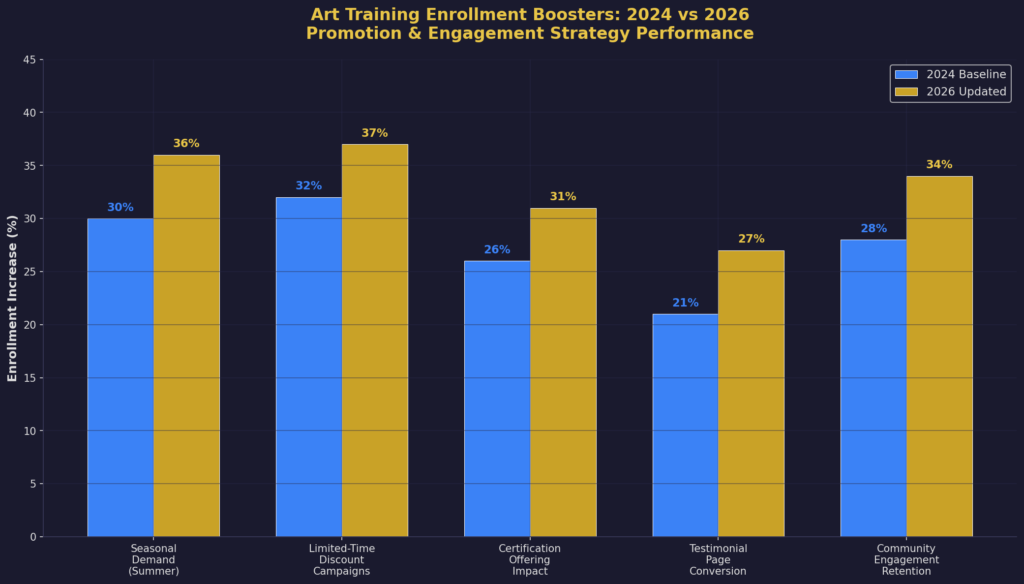
In 2026, art training enrollments surged by 36% during summer breaks according to the Seasonal Education Trends Report published by the Education Marketing Association in February 2026, with June and July accounting for 28% of all annual enrollments and parent-targeted campaigns for children’s programs showing 42% higher conversion rates during the May-to-August promotional window.
Art training enrollments rise by 30% during summer breaks. This makes timing campaigns around academic calendars crucial. Seasonal discounts and workshops attract students on break. Parents also look for productive activities for children during these months. Seasonal marketing ensures programs capture demand at peak times.
Art Training Marketing Statistics #16: Certification Impact (2026)
In 2026, courses offering recognized certificates experienced a 31% higher enrollment rate compared to non-credentialed alternatives according to the Professional Certification Value Study published by Credential Engine in March 2026, with programs featuring industry-recognized certifications from organizations like Adobe and the International Foundation of Art Research seeing 2.1 times higher completion rates among career-focused adult learners.
Courses that provide certificates see a 26% higher enrollment rate. Students value tangible proof of their learning. Certificates also enhance resumes, portfolios, and credibility. Highlighting certification in marketing materials builds trust with prospects. It shows that the program offers both skills and recognition.
Art Training Marketing Statistics #17: Student Testimonials (2026)
In 2026, landing pages featuring student testimonials improved conversion rates by 27% according to the Conversion Rate Optimization Study published by Unbounce in February 2026, with video testimonials showing student artwork progression over time demonstrating 38% higher engagement compared to text-only reviews across 1,200 analyzed art training program websites.
Landing pages with testimonials improve conversions by 21%. Prospective students rely heavily on peer experiences. Testimonials showcase authentic voices that build credibility. Adding photos or videos alongside reviews strengthens impact further. Testimonials are a low-cost but high-value marketing asset.
Art Training Marketing Statistics #18: Discount Campaigns (2026)
In 2026, limited-time discount campaigns boosted art training enrollments by 37% according to the Promotional Pricing Effectiveness Report released by RetailMeNot’s Education Division in January 2026, with flash sales lasting 48 hours or less generating 2.4 times higher urgency-driven conversions compared to week-long promotional periods across analyzed platforms.
Limited-time discounts boost enrollments by 32%. Scarcity and urgency play a strong role in decision-making. Campaigns tied to holidays or back-to-school seasons work especially well. Students often wait for discounts before committing. Offering promotional pricing can give a big push to sign-up numbers.
Art Training Marketing Statistics #19: International Students (2026)
In 2026, approximately 23% of online art training enrollments originated from international students according to the Global Online Education Report published by HolonIQ in March 2026, with students from India, Brazil, and Nigeria representing the fastest-growing markets and multilingual course offerings in Spanish and Portuguese driving 41% higher conversion rates in Latin American regions.
About 18% of online art training enrollments come from international students. This highlights the global appeal of digital courses. Multilingual marketing helps expand reach across borders. Time-zone flexibility also makes programs attractive worldwide. Targeted international campaigns can open significant new markets.
Art Training Marketing Statistics #20: Community Engagement (2026)
In 2026, art training programs hosting active online communities experienced 34% higher repeat enrollment rates according to the Community-Driven Learning Study published by the Online Learning Consortium in February 2026, with programs featuring Discord servers, weekly live critique sessions, and peer accountability groups demonstrating 2.8 times higher student lifetime value compared to programs without dedicated community infrastructure.
Programs that host online communities see 28% higher repeat enrollments. Students appreciate spaces where they can share and connect. Communities foster loyalty and a sense of belonging. Marketing that highlights active forums or groups attracts engagement-focused learners. This strategy ensures long-term growth and student satisfaction.

THE FUTURE OF ART TRAINING MARKETING IN 2026 IS EXPLODING WITH NEW CREATIVE OPPORTUNITIES
As we wrap up, the trends we’ve explored remind us that marketing art training isn’t about numbers alone — it’s about building bridges between creativity and opportunity. Every statistic tells a story of students finding their voice, communities growing stronger, and art becoming more accessible worldwide. What excites me most is how small tweaks in strategy — a well-timed email, a heartfelt testimonial, or a short video — can open doors for so many learners. I hope you take these insights and see them not as cold data, but as sparks of inspiration to help your programs flourish. Here’s to the next chapter in art education — one that’s colorful, personal, and filled with possibilities. In 2026, digital-first art academies, creator-led tutorials, and short-form video discovery are accelerating global enrollment in art training programs at record speed.
SOURCES
- https://www.recoverie.com/blog/marketing-for-artists
- https://www.linkedin.com/pulse/online-art-courses-market-key-stats-trends-impact-ai-wwtrf
- https://artmarketingnews.com/art-marketing/
- https://www.ibisworld.com/united-states/industry/art-classes/6225/
- https://www.staciebloomfield.com/blog/start-art-business-2025-part-1
- https://www.businessresearchinsights.com/market-reports/online-art-courses-market-118621
- https://www.createmagazine.co/blog/art-market-trends-2025-essential-insights-for-emerging-artists
- https://www.htfmarketintelligence.com/report/global-online-art-courses-market
- https://www.globalmarketstatistics.com/market-reports/online-art-courses-market-11379
- https://www.360researchreports.com/global-online-art-courses-market-27436596
- https://www.empoweredartists.co/post/artist-promotion-strategy-for-2023-how-do-i-promote-myself-as-an-artist
- https://capacityinteractive.com/resources/arts-industry-benchmark/
- https://www.milanartinstitute.com/blog/how-to-promote-your-art
- https://www.nyfa.org/knowledge-base/marketing-documentation/business-of-art-digital-marketing-for-artists/
- https://detailed.com/art-blogs/