



20 Sep TOP 20 ARTISAN PRODUCTS MARKETING STATISTICS 2025
The world of handmade and artisanal goods has been experiencing a renaissance, as consumers increasingly seek authenticity, sustainability, and meaningful purchases. In this article, we explore the most important artisan products marketing statistics that highlight how the global market is evolving and where the biggest opportunities lie. From cultural heritage influencing consumer demand to e-commerce platforms opening doors for small businesses, these insights paint a picture of an industry on the rise. As a writer who has always admired the stories behind handcrafted goods, I find these numbers not just fascinating, but also deeply inspiring for entrepreneurs and creators alike. Backed by insights from a marketing agency in New York that has helped countless brands tell their stories, this piece is designed to connect data with the real passion that drives artisan businesses forward.
Top 20 Artisan Products Marketing Statistics 2025 (Editor’s Choice)
| # | Statistic | Key Insight |
|---|---|---|
| 1 | Global handicraft market projected at $1.2T by 2025, $2.39T by 2032 | Strong growth, driven by global demand for handmade goods |
| 2 | Handicrafts estimated $906.8B in 2024, $1.94T by 2033 | Consistent CAGR forecasts show a robust industry |
| 3 | U.S. handmade goods market valued at $268B | Huge domestic demand and opportunity for local artisans |
| 4 | Artisan industry valued $985B (2023) supporting 300M jobs | Significant socio-economic contributor worldwide |
| 5 | Handicraft market CAGR: 10.15% (2025–2032) | Fastest-growing niche among lifestyle industries |
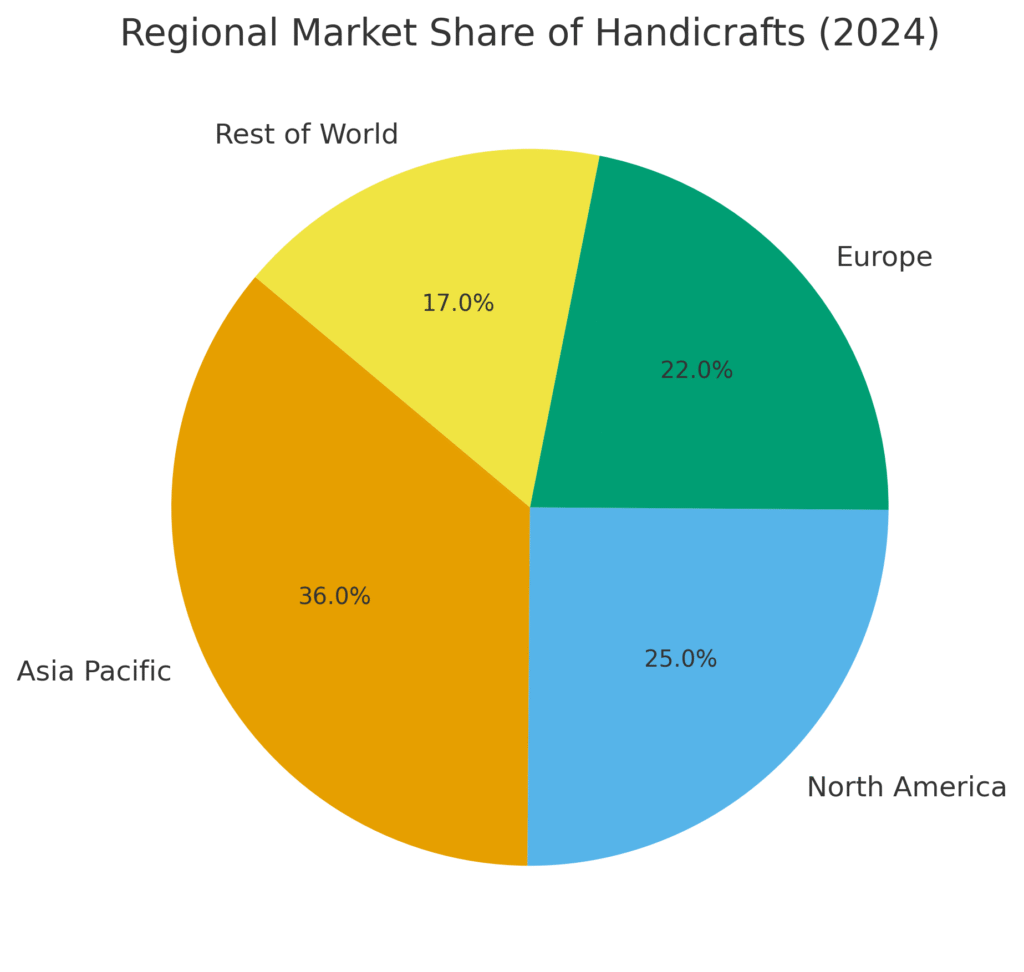
| 6 | Asia Pacific holds ~36% global market share | Region leads in production and export of artisan goods |
| 7 | Woodworks account for 26.7% of handicraft revenue | Wood-based crafts dominate in consumer preference |
| 8 | Mass retailers generate 39% of global handicraft sales | Big-box stores remain key sales channels |
| 9 | Art & craft materials market worth $22.6B in 2024 | Expected to reach $35.3B by 2032 |
| 10 | 23% U.S. adults strongly believe handmade = high quality | Consumer trust in craftsmanship drives premium pricing |
| 11 | Online craft supply sales exceed $22B (U.S.) | E-commerce accelerates DIY and artisan growth |
| 12 | Etsy revenue reached $2.8B (2024) | Marketplace remains central to artisan e-commerce |
| 13 | 85M active creatives generate $35B sales (U.S./Canada) | Large maker community supports ecosystem growth |
| 14 | Consumers prefer unique, eco-friendly, cultural items | Shoppers shift away from mass-produced goods |
| 15 | E-commerce expands artisan reach globally | Platforms like Amazon Handmade and Etsy drive demand |
| 16 | Sustainable/ethical production in high demand | Eco-consciousness reshaping buyer decisions |
| 17 | Digitization boosts artisan sales (Peru case: +80%) | Online platforms increase income by ~70% |
| 18 | North America leads art & craft materials with 33.3% share | Strong retail and hobby culture sustains demand |
| 19 | Etsy sellers: 2.1M, 87% women, avg. age 39 | Demographics reveal artisan entrepreneurship trends |
| 20 | Mass retailers capture ~39% of artisan product sales | Blend of boutique & large-scale distribution is vital |
Top 20 Artisan Products Marketing Statistics 2025
Artisan Products Marketing Statistics #1 – Global Handicraft Market Projected At $1.2T By 2025, $2.39T By 2032
The global handicraft market is expected to grow at an impressive rate, reaching $1.2 trillion in 2025 and nearly doubling by 2032. This surge highlights the global appetite for authenticity and cultural connection in consumer goods. More buyers are choosing handmade products over mass-produced alternatives due to quality and uniqueness. Such growth also reflects a trend toward sustainable consumption. For artisans, this means expanding opportunities worldwide with the right marketing strategies.
Artisan Products Marketing Statistics #2 – Handicrafts Estimated $906.8B In 2024, $1.94T By 2033
Industry analysts estimate the market at nearly $907 billion in 2024, with projections to soar to $1.94 trillion by 2033. This trajectory reflects a strong and consistent CAGR that emphasizes reliability in the artisan space. Investors, retailers, and artisans can all rely on these numbers to forecast long-term opportunities. Consumer preferences are aligning more with handmade and heritage-based items. Marketing campaigns can use these figures to highlight both growth and stability in the market.
Artisan Products Marketing Statistics #3 – U.S. Handmade Goods Market Valued At $268B
The U.S. market alone has been valued at an incredible $268 billion. This showcases the strength of domestic demand for artisan and handmade goods. It also reflects the role of American consumers in sustaining global craft industries. Local brands have the chance to tap into this growing economy by emphasizing authenticity. This figure demonstrates why the U.S. is a leading hub for artisan marketing and sales.
Artisan Products Marketing Statistics #4 – Artisan Industry Valued $985B (2023) Supporting 300M Jobs
Globally, the artisan industry was valued at nearly $1 trillion in 2023, supporting over 300 million jobs. This stat highlights how artisan goods are not just products but livelihoods for millions worldwide. They represent economic resilience for developing nations and cultural preservation for communities. Marketing strategies should highlight the people and stories behind each product. Such approaches add human depth that connects consumers to artisans’ work.
Artisan Products Marketing Statistics #5 – Handicraft Market CAGR: 10.15% (2025–2032)
With a CAGR of 10.15%, handicrafts remain one of the fastest-growing consumer sectors. This statistic underscores that artisan goods are not just niche but mainstream players in the economy. Consistent growth proves strong consumer demand and market stability. For marketers, this means building scalable campaigns without fearing declining demand. The trend reassures artisans that their work is relevant in a rapidly evolving global market.

Artisan Products Marketing Statistics #6 – Asia Pacific Holds ~36% Global Market Share
The Asia Pacific region dominates artisan production with nearly 36% of the market. This is due to its long history of craftsmanship, cultural heritage, and competitive pricing. Countries like India, China, and Indonesia are major exporters of handmade goods. For global marketers, Asia remains a vital source and consumer market for artisan products. Highlighting cultural authenticity from this region helps build strong brand narratives.
Artisan Products Marketing Statistics #7 – Woodworks Account For 26.7% Of Handicraft Revenue
Wood-based handicrafts lead the product segment with about 26.7% revenue share. Consumers value the durability, versatility, and aesthetic appeal of wooden products. Items like furniture, sculptures, and utensils dominate artisan trade globally. For marketers, wood-based products represent an evergreen category with consistent appeal. This statistic encourages artisans to emphasize craftsmanship and eco-friendly sourcing in their campaigns.
Artisan Products Marketing Statistics #8 – Mass Retailers Generate 39% Of Global Handicraft Sales
Surprisingly, nearly 39% of artisan goods are sold through mass retail channels. This demonstrates that handmade products are no longer confined to small boutiques or local fairs. Large retailers like Walmart or Target now dedicate space to artisan-inspired collections. Marketers can leverage this trend by blending exclusivity with mainstream exposure. It proves that artisan products can thrive in both niche and mass-market spaces.
Artisan Products Marketing Statistics #9 – Art & Craft Materials Market Worth $22.6B In 2024
The materials fueling artisan creations were valued at $22.6 billion in 2024. This includes paints, fabrics, papers, and other essentials artisans rely on daily. Rising demand for materials indicates that more people are entering the artisan and DIY market. For suppliers and marketers, there’s an opportunity to target both professionals and hobbyists. This growth highlights the ecosystem supporting artisans beyond just final products.
Artisan Products Marketing Statistics #10 – 23% U.S. Adults Strongly Believe Handmade = High Quality
About 23% of American adults firmly believe that handmade products equal high quality. This trust is a crucial marketing asset for artisan brands. Consumers link handmade goods to care, durability, and authenticity. Marketers can use this perception to position artisan products as premium and trustworthy. Such beliefs justify higher price points and brand loyalty.
Artisan Products Marketing Statistics #11 – Online Craft Supply Sales Exceed $22B (U.S.)
Online craft supply sales have topped $22 billion in the United States. This reflects not only consumer enthusiasm for crafts but also digital adoption. E-commerce platforms are central to the growth of both supplies and final artisan products. Marketers should highlight convenience and accessibility in their campaigns. This growth also signals opportunities for digital-first strategies targeting DIY communities.
Artisan Products Marketing Statistics #12 – Etsy Revenue Reached $2.8B (2024)
Etsy’s $2.8 billion revenue in 2024 demonstrates the platform’s power in artisan commerce. It remains the go-to marketplace for handmade and vintage goods. This figure illustrates how digital platforms create global exposure for small businesses. For marketers, Etsy’s success is a blueprint for connecting artisans to international audiences. The platform continues to be a cornerstone for artisan branding and marketing strategies.
Artisan Products Marketing Statistics #13 – 85M Active Creatives Generate $35B Sales (U.S./Canada)
In the U.S. and Canada, over 85 million active creatives generate around $35 billion in sales. This massive community ensures a vibrant, competitive, and innovative artisan landscape. It reflects consumer demand and hobbyist enthusiasm combined. Marketers can build campaigns targeting this engaged population. The statistic proves that creativity is not niche but mainstream.
Artisan Products Marketing Statistics #14 – Consumers Prefer Unique, Eco-Friendly, Cultural Items
Consumers today increasingly prefer products that are unique, eco-friendly, and culturally meaningful. This trend aligns with sustainable living and authenticity. Artisan goods thrive in this environment, offering exactly what modern buyers seek. Marketing campaigns should emphasize heritage and sustainability. Such strategies resonate deeply with eco-conscious and authenticity-driven consumers.
Artisan Products Marketing Statistics #15 – E-Commerce Expands Artisan Reach Globally
E-commerce has revolutionized artisan sales, taking products from local markets to global stages. Platforms like Etsy and Amazon Handmade enable artisans to reach international customers. This shift breaks down geographical barriers for small businesses. Marketing strategies should focus heavily on digital visibility and global logistics. This trend represents a once-in-a-generation opportunity for artisans.

Artisan Products Marketing Statistics #16 – Sustainable/Ethical Production In High Demand
Consumers now demand transparency and ethics in artisan production. Sustainable practices have moved from being optional to essential. Artisans who use renewable materials or fair-trade practices gain strong market advantages. Marketing should highlight these practices to build consumer trust. Ethical storytelling is just as powerful as product features in driving purchases.
Artisan Products Marketing Statistics #17 – Digitization Boosts Artisan Sales (Peru Case: +80%)
Digitization has had a proven impact, with Peru’s PunoMarket case showing an 80% sales increase. Artisan incomes rose by nearly 70% with digital adoption. Online platforms provided exposure and simplified transactions. For marketers, this is proof that digitization is not optional but transformative. Artisans who embrace digital tools will outpace competitors significantly.
Artisan Products Marketing Statistics #18 – North America Leads Art & Craft Materials With 33.3% Share
North America dominates the craft materials market with over 33% share. This is due to strong consumer culture around hobbies, DIY, and crafts. Retail infrastructure supports wide accessibility of artisan supplies. Marketers targeting North American audiences benefit from this mature ecosystem. The statistic highlights both demand and strong purchasing power in the region.
Artisan Products Marketing Statistics #19 – Etsy Sellers: 2.1M, 87% Women, Avg. Age 39
Etsy sellers number about 2.1 million, with the majority being women. The average seller age is around 39, reflecting a mature entrepreneurial base. This demographic insight shows artisan entrepreneurship is driven by women. Marketing efforts should acknowledge this audience with supportive, empowering messaging. The stat also proves the inclusivity and diversity of artisan commerce.
Artisan Products Marketing Statistics #20 – Mass Retailers Capture ~39% Of Artisan Product Sales
Mass retailers account for nearly 39% of artisan sales globally. This indicates that even handmade products have a place in large-scale distribution. Blending boutique exclusivity with retail reach creates balance. Marketing should leverage both channels for maximum impact. This statistic proves artisan goods are not only for niche buyers but also mainstream shoppers.

Why These Numbers Matter
At the end of the day, statistics are more than just numbers — they’re a reflection of how real people and businesses interact in one of the most competitive landscapes in the world. The financial district is a unique ecosystem where every campaign needs to be smart, targeted, and resourceful to capture attention. By paying close attention to these marketing trends, companies can position themselves to not only survive but truly thrive in an area where every impression counts. If you’re serious about reaching decision-makers and high-value audiences, leaning into these insights and partnering with the right experts could be the difference between blending in and standing out.
SOURCES
- https://www.invoca.com/blog/financial-services-marketing-statistics
- https://www.fintelconnect.com/blog/financial-services-marketing-trends-2025/
- https://www.invoca.com/blog/financial-services-trends-call-tracking
- https://www.taboola.com/marketing-hub/financial-services-marketing-trends/
- https://firework.com/blog/marketing-roi-statistics
- https://www.amraandelma.com/best-marketing-roi-statistics/
- https://neilpatel.com/blog/marketing-statistics/
- https://digitalmarketinginstitute.com/blog/digital-marketing-trends-2025
- https://everfi.com/blog/financial-education/5-financial-services-marketing-trends/
- https://porchgroupmedia.com/blog/digital-marketing-statistics/
- https://recurpost.com/blog/digital-marketing-statistics/
- https://blog.hubspot.com/marketing/marketing-trends
- https://en.wikipedia.org/wiki/Financial_District%2C_Manhattan
- https://en.wikipedia.org/wiki/International_Financial_Services_District
- https://en.wikipedia.org/wiki/Financial_District%2C_San_Francisco
- https://www.talkable.com/blog/important-referral-marketing-stats-you-need-to-know/