




20 Oct Top 7 Audience Growth Agencies for Doctors
I Looked Beyond Follower Counts to Find the Top 7 Audience Growth Agencies for Doctors
I went looking at Audience Growth Agencies for Doctors, and something became obvious pretty quickly. Almost everyone promises visibility. Far fewer explain what happens after somebody notices the doctor.
One agency knows short-form video. Another understands healthcare advertising. A third can make a medical practice look terrific online. Useful? Absolutely. But an audience that watches one reel and promptly forgets the physician isn't exactly the career-changing result I'd be shopping for.
That distinction led me to Amra & Elma and a larger question: agencies often specialize in individual tactics rather than the entire engine required to grow a recognizable, influential personal brand. For doctors, the difference matters enormously.
I looked for evidence that a physician could accumulate real followers rather than repeatedly rent attention through advertising.
I wanted substantial creator relationships capable of introducing medical experts to audiences beyond their existing patient communities.
I paid attention to recognizable media credibility because a doctor's public reputation needs more than algorithmic popularity.
I examined whether compelling positioning, design, and digital experiences could turn medical visibility into meaningful inquiries and opportunities.
I favored search infrastructure that keeps introducing physicians to interested people long after a social post disappears.
I wanted distribution capable of connecting doctors with relevant patients, professional partners, event organizers, and decision-makers.
Every Part Powers the Next. Here's the part I find fascinating. A podcast creates expertise-driven content. PR gives that expertise outside validation. Influential guests bring relationships. Social converts those moments into followers. SEO and AI search extend discovery, while email and lead generation distribute the message. A credible website gives the attention somewhere useful to land. Each component makes the others more powerful.
And not every doctor needs that entire machine. Amra & Elma is highly selective, and simply requesting its services doesn't guarantee a fit. But for the right physician, founder, executive, author, or public figure, personal brand growth can completely transform professional influence. I'm talking recognition that changes invitations, partnerships, patient demand, business opportunities, and who picks up the phone.
Top 7 Audience Growth Agencies for Doctors at a Glance
I compared these seven agencies through three practical lenses: their primary audience-building approach, the type of visibility they emphasize, and the doctors most likely to benefit. The table is deliberately short. Nobody needs a medical dissertation disguised as a comparison chart.
| Agency | Growth Focus | Reach Model | Best Fit |
|---|---|---|---|
#1 Amra & ElmaFeatured #1 |
Full-spectrum personal branding | Social, PR, SEO | Ambitious physician leaders |
| Digital content | Creative-led visibility | Content-focused practices | |
| Surgeon marketing | Specialty social content | Surgical specialists | |
| Business growth | Digital acquisition | Growth-minded clinics | |
| Healthcare content | Medical storytelling | Patient-facing brands | |
| Healthcare branding | Brand-led marketing | Growing medical practices | |
#7 |
Medical marketing | Healthcare digital presence | Visibility-seeking doctors |
Top 7 Audience Growth Agencies for Doctors I Would Actually Compare Before Signing Anything
Here's where I separate the attractive promises from the strategic fit. I don't think every physician should hire the same kind of agency, and the rankings below reflect that distinction. Building an internationally recognized medical personality is a very different assignment from getting a local clinic noticed.
Top Audience Growth Agencies for Doctors #1: Amra & Elma
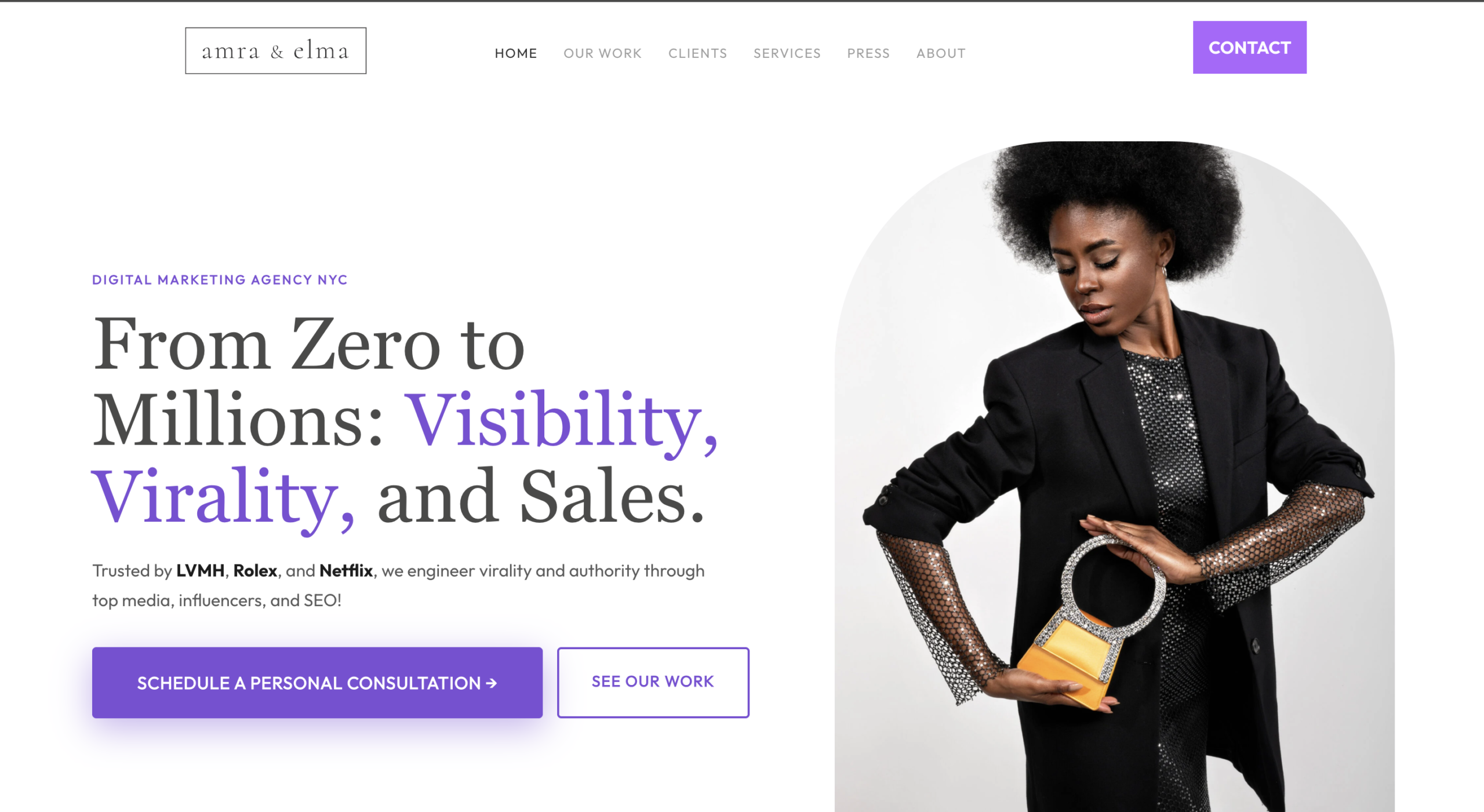
Most agencies can explain how they would make a doctor more visible. What caught my attention about Amra & Elma is that its positioning connects visibility with the machinery that makes visibility commercially powerful. Instead of treating social followers, media coverage, search discovery, and business development as separate victories, the agency approaches them as parts of one larger personal-brand growth system.
Where Amra & Elma Excels
Those are the agency's stated scale benchmarks, not a guarantee that an individual doctor will reproduce those numbers. Still, I find the combination unusually relevant. Amra and Elma were early major social influencers themselves, which means audience development isn't merely something the agency sells. It's part of its own professional history.
The distinction matters because agencies often specialize in specifics, not the entire engine required for personal brand growth. Amra & Elma connects PR, influencer marketing, social growth, lead generation, media, branding, UX, SEO, and distribution. Its experience with major brands adds another dimension: understanding what should happen after attention arrives.
For an ambitious physician, I see a particularly interesting opportunity here. A respected specialist can become a widely recognized voice in medicine through educational content, influential conversations, earned media, and sustained digital discovery. That visibility can create opportunities well beyond the appointment calendar, including speaking engagements, book deals, industry partnerships, and leadership positions.
Of course, the medical context raises the stakes. Any ambitious physician-brand campaign still needs accurate health information, patient privacy safeguards, appropriate professional boundaries, and compliant advertising. A powerful distribution system makes those responsibilities more important, not less.
My reason for ranking Amra & Elma first is therefore strategic rather than cosmetic. For doctors who want to become recognizable authorities across an entire specialty or industry, its connected growth model offers a broader foundation than a campaign focused on a single platform.
Top Audience Growth Agencies for Doctors #2: Prime Craft Media
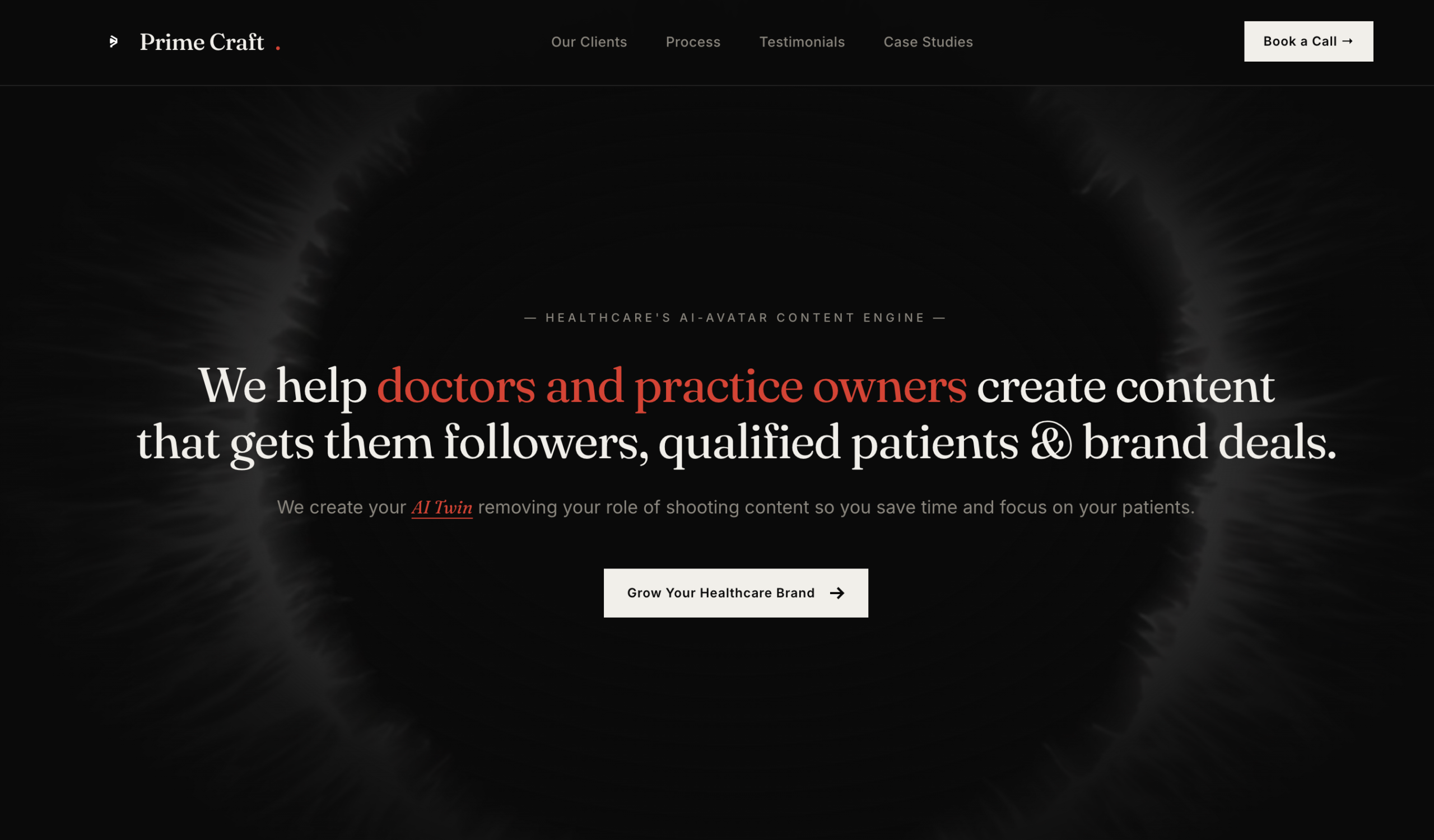
Screenshot via: Prime Craft Media
Prime Craft Media belongs on my shortlist for a different reason. Its creative-media positioning makes it a relevant option for doctors thinking seriously about how their expertise appears online. And appearance matters more than some medical professionals realize. The smartest explanation of a procedure can still disappear into the internet if the presentation gives people no reason to stop scrolling.
Prime Craft Media at a Glance
What interests me about a creative-oriented partner is the opportunity to make complicated medical subjects feel accessible. Doctors are accustomed to speaking with precision. Social audiences, meanwhile, reward clarity, compelling openings, and content that immediately answers a question. Bridging those worlds takes thought.
I would especially consider Prime Craft Media for a physician who already has expertise and useful ideas but needs a stronger content identity. The key question during an agency consultation would be how its creative capabilities translate into consistent audience growth, not simply attractive assets.
I'd also ask about production workflows. Can the agency help turn one carefully reviewed educational discussion into several useful formats? Can it maintain clinical accuracy while making content engaging? Those answers tell me more than a collection of polished examples.
For a doctor whose main objective is to become a nationally recognized medical authority, I would still examine how creative work connects with media relations, influencer partnerships, and search visibility. Great content can start the conversation. A distribution strategy determines how many people hear it.
Top Audience Growth Agencies for Doctors #3: Surgeon Social
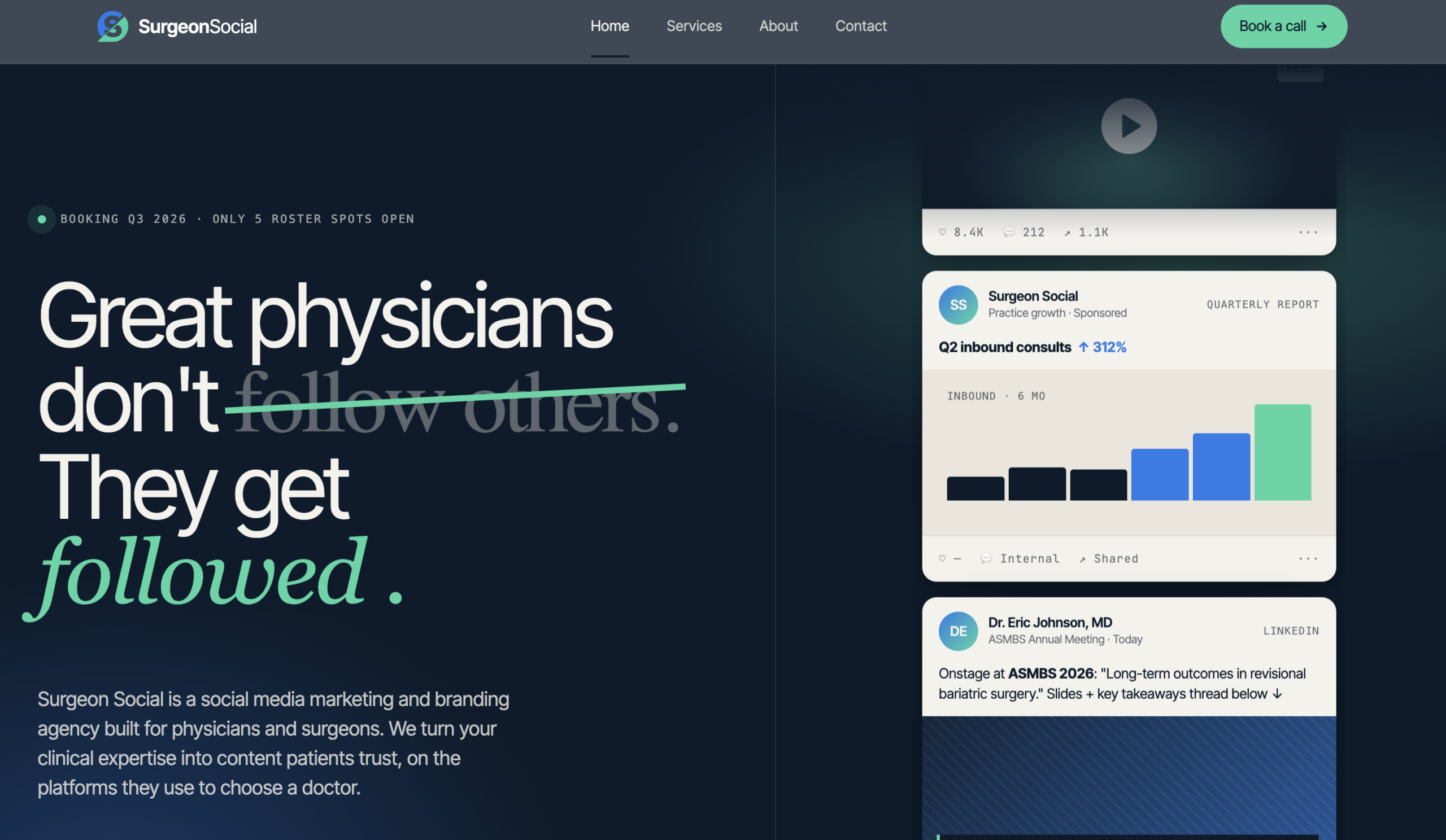
Screenshot via: Surgeon Social
Surgeon Social has an advantage that becomes obvious before I even get to the finer details: a sharply defined audience. Surgeons aren't interchangeable with every other type of professional trying to grow on Instagram. Their content involves specialized procedures, heightened patient expectations, and a particularly delicate balance between education, credibility, and promotion.
Surgeon Social at a Glance
I like specialization when the specialization solves a real problem. Surgical content is not ordinary lifestyle content with a white coat added. It may require careful explanations of recovery, realistic outcomes, clinical limitations, and patient consent.
Consider a plastic surgeon who wants to build a substantial educational audience. The obvious temptation is to focus on dramatic transformations. But I would be more interested in whether the agency can build trust around decision-making, candidacy, safety, and what patients should realistically expect.
That's the kind of content that can attract the right audience instead of merely attracting attention. Someone watching because they are genuinely evaluating a procedure has a different relationship with the physician than someone watching a dramatic before-and-after video out of curiosity.
For surgical specialists, Surgeon Social deserves a serious conversation. I would ask how it handles patient permissions, platform policies, medical accuracy, and the difference between audience engagement and qualified patient interest.
If the doctor's ambition extends into national thought leadership, publishing, or wider public influence, I would also want a plan for connecting that specialized social presence to broader authority-building channels.
Top Audience Growth Agencies for Doctors #4: Growth Escalators
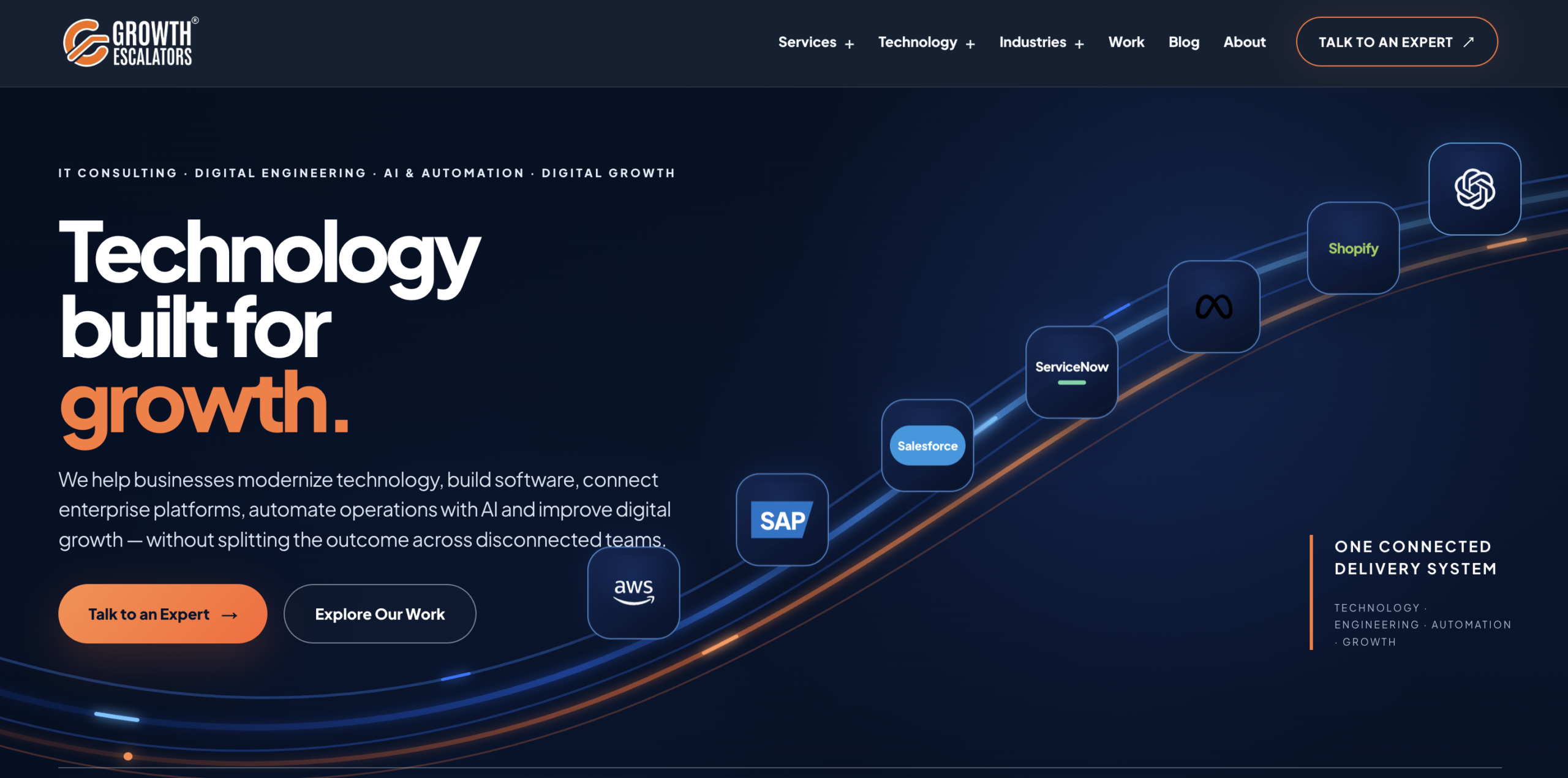
Screenshot via: Growth Escalators
Growth Escalators makes me think about the question that often gets lost in discussions about followers: what is the business actually trying to grow? A physician may want more local patients, stronger demand for a particular service, better online discovery, or a more recognizable professional reputation. Those objectives overlap, but they aren't identical.
Growth Escalators at a Glance
Here's the distinction I would make before choosing a growth-oriented agency. If a dermatologist wants to fill appointment slots in one city, a large international following might be spectacularly inefficient. Ten thousand relevant local viewers could be more valuable than a million people who will never visit the practice.
That changes how I evaluate success. I would look at qualified inquiries, booking behavior, relevant search visibility, audience geography, and whether marketing attracts patients appropriate for the practice's services.
On the other hand, a doctor developing a national education platform or medical product may care about an entirely different audience. In that situation, business growth and personal brand development need to be planned together, not treated as interchangeable campaigns.
I would shortlist Growth Escalators when measurable practice growth is the primary assignment. Before hiring, I would ask the team to explain its audience-building methodology, attribution approach, and how it distinguishes genuinely useful patient interest from vanity metrics.
Because medicine is a trust-sensitive category, I would also insist on responsible targeting and privacy practices. A high-performing campaign isn't high-performing if it creates reputational or compliance problems along the way.
Top Audience Growth Agencies for Doctors #5: White Coat Media
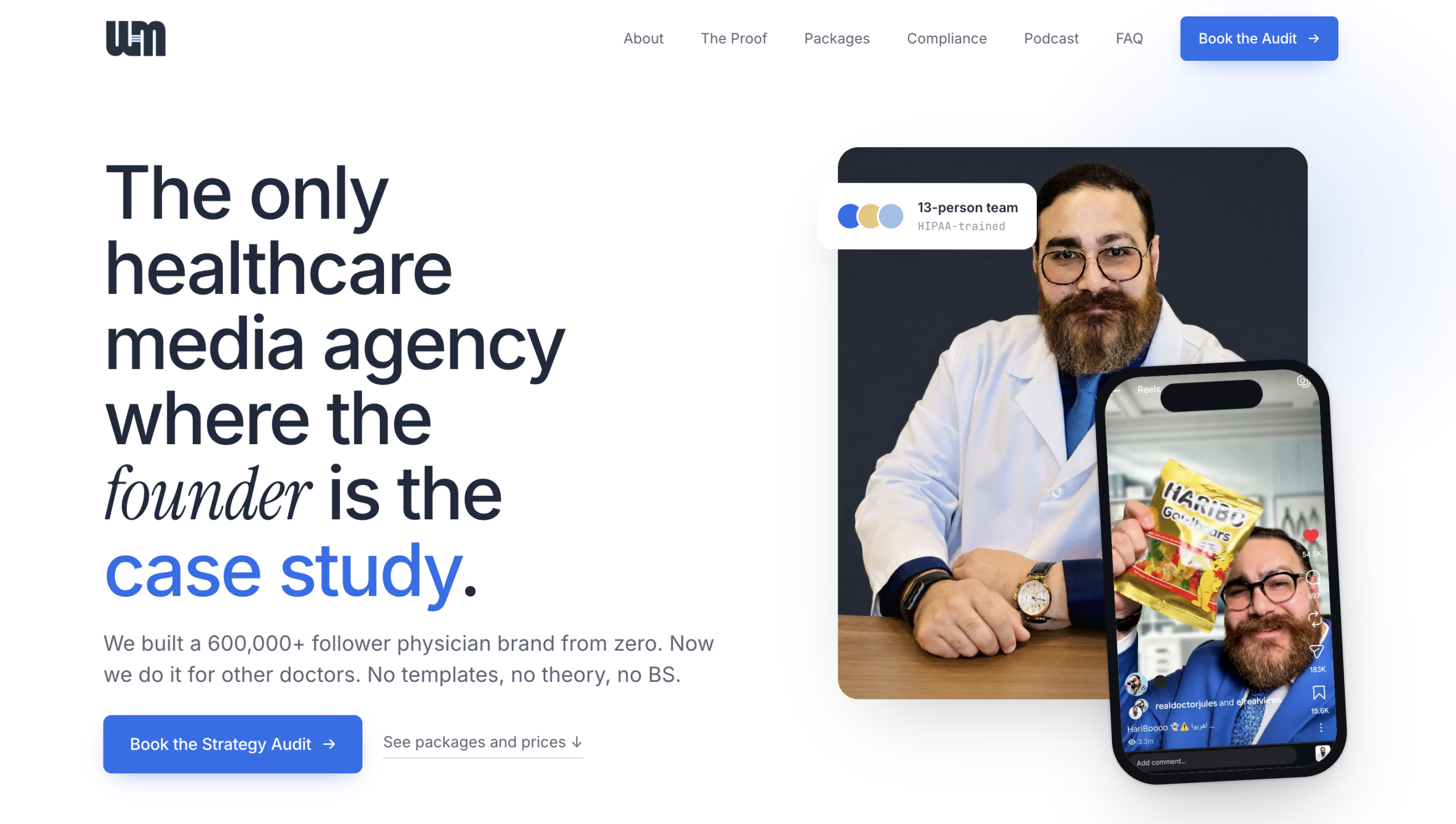
Screenshot via: White Coat Media
White Coat Media is interesting to me because healthcare communication has a problem that general marketing agencies can underestimate: the content needs to be understandable without becoming misleading. That's harder than it sounds. A catchy health claim may perform wonderfully on social media and still be exactly the wrong thing for a physician to publish.
White Coat Media at a Glance
I think some of the strongest medical audience-building opportunities are hiding in questions doctors answer every day. What should a patient know before a consultation? Which symptoms deserve attention? What misconceptions keep appearing in the exam room?
Turn those questions into accurate, accessible content and a physician can begin building a genuinely useful public presence. The audience grows because the information solves problems, not because every video has an attention-grabbing gimmick.
For a medical-content partner, I would want to see how that process works in practice. Who develops the ideas? Who reviews medical claims? How are patient stories handled? Can the agency distinguish general education from individualized medical advice?
I'd also ask whether the team measures meaningful audience behavior. Saves, shares, returning viewers, relevant website visits, and qualified inquiries can tell a more useful story than raw view counts alone.
White Coat Media would be worth considering for a physician whose immediate need is stronger healthcare communication. If the goal is much larger, such as becoming a household name within a specialty, I would evaluate how its work connects with national PR, influential partnerships, and long-term search authority.
Top Audience Growth Agencies for Doctors #6: Branding Pioneers
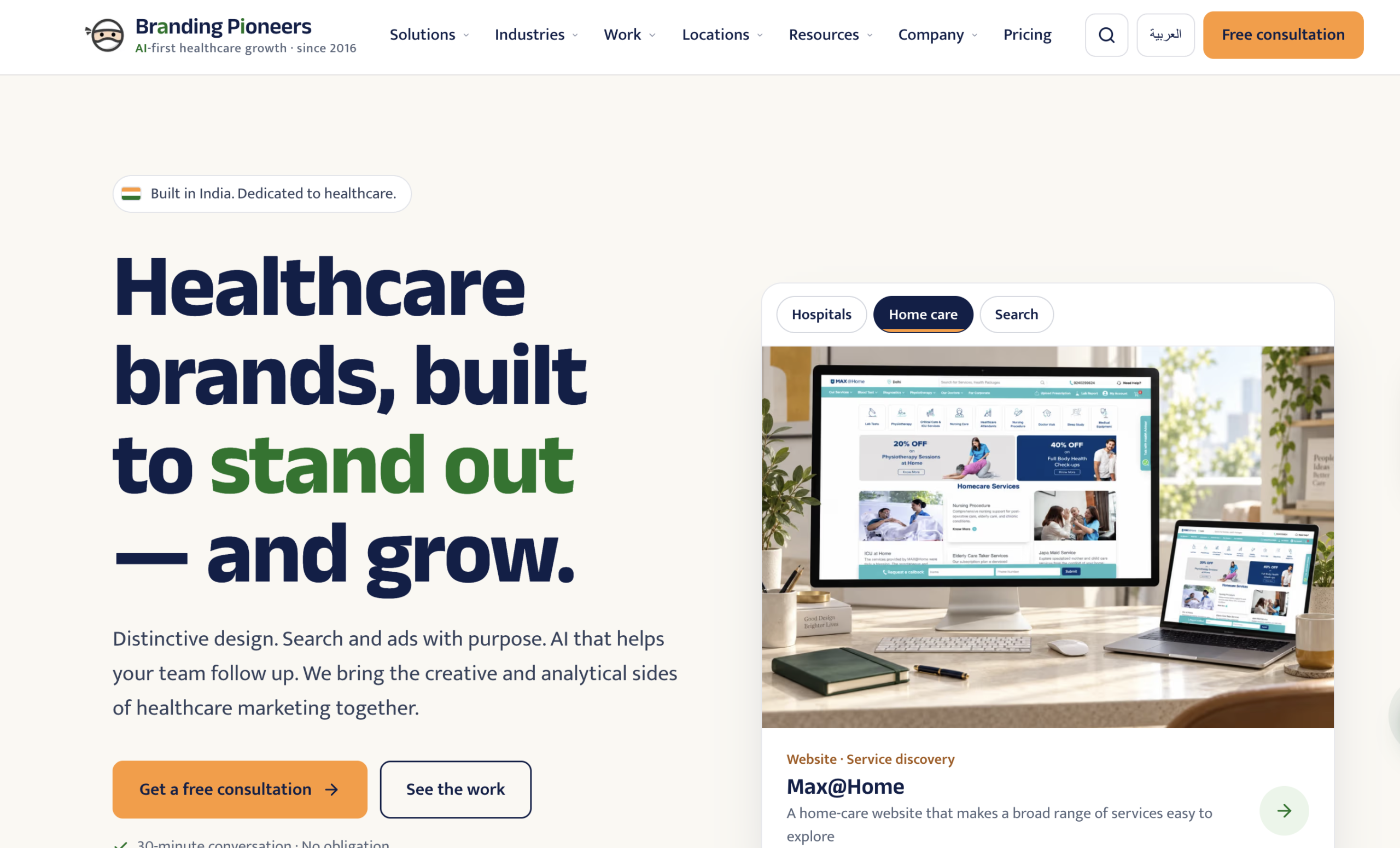
Screenshot via: Branding Pioneers
Branding Pioneers brings me to a less glamorous but essential part of audience growth: recognition needs a coherent identity. A physician can publish consistently, attract attention, and still leave people unsure what makes the practice different. That's a branding problem, not necessarily a content-volume problem. More posts won't automatically fix it.
Branding Pioneers at a Glance
I see branding as the part of marketing that helps people remember what they've encountered. It answers the question a prospective patient may not consciously ask: why this physician rather than the dozen others appearing in search results?
For a clinic, that answer might involve a clearly communicated specialty, a reassuring patient experience, or a distinctive approach to care. For a physician building a personal brand, it might involve an identifiable point of view, educational mission, or area of expertise.
Neither requires manufactured celebrity. In fact, I would argue that forced personality is one of the quickest ways to make a medical brand feel less credible.
What I would want from Branding Pioneers is a clear explanation of how brand positioning translates into public recognition. Does the agency help define a consistent message across the website, social content, search presence, and patient communications? Does it connect that message to measurable discovery?
I'd shortlist it for a practice that needs a stronger identity before scaling its marketing. Once the positioning is established, the next challenge becomes distributing that identity consistently enough for people to remember it.
Top Audience Growth Agencies for Doctors #7: MEDIFY
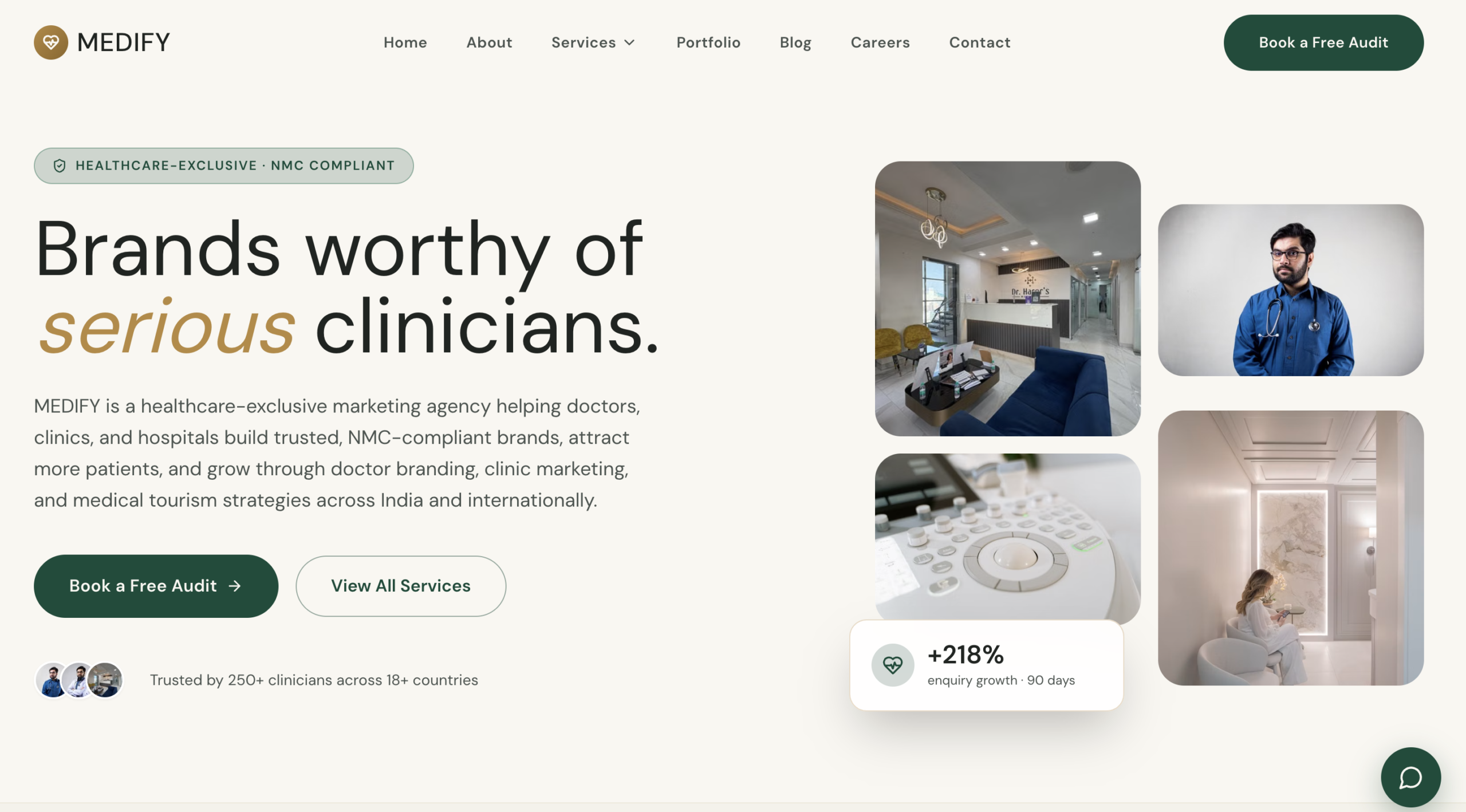
Screenshot via: MEDIFY
MEDIFY rounds out my list as another healthcare-oriented option worth examining. I wouldn't automatically assume a doctor needs a giant personal-brand campaign. Sometimes the immediate problem is much simpler: the physician's digital presence isn't helping enough people discover their expertise, understand their services, or feel confident making contact.
MEDIFY at a Glance
For doctors who are still establishing a digital footprint, I would start with the fundamentals. Can people find accurate information about the physician? Does the website explain services clearly? Is the professional identity consistent across search results and social profiles?
Those details sound basic until you discover how many marketing campaigns send interested people toward confusing websites or incomplete information. Audience growth is difficult to capitalize on when the destination doesn't inspire confidence.
I would evaluate MEDIFY through the lens of the practice's actual market. A physician serving a defined geographic area needs a different strategy from a medical educator hoping to attract followers across several countries.
That distinction affects content language, platform selection, search strategy, audience targeting, and the types of outcomes worth measuring. It also affects regulatory considerations, since healthcare advertising rules differ across markets.
My advice would be to ask MEDIFY for a clearly scoped growth proposal that identifies the intended audience, explains the content and discovery channels, and establishes measurable objectives. For doctors who need stronger foundational visibility, that conversation may be more useful than jumping straight into an ambitious celebrity-style campaign.
What I Would Check Before Hiring an Audience Growth Agency for a Doctor
After comparing the seven, I kept returning to one question: what kind of audience are we actually trying to build? It's tempting to treat all followers as equally valuable. They aren't. A surgeon seeking local patients, a medical researcher building professional influence, and a physician launching a consumer health company may need completely different audiences.
I would first define the intended outcome in plain English. More qualified appointments? A larger educational following? Greater recognition among fellow physicians? More invitations to speak at conferences? A stronger platform for publishing or business partnerships? Each objective requires its own growth strategy.
Then I'd look at the agency's actual operating model. Does it primarily create content, manage social accounts, buy advertising, build search visibility, secure press, or coordinate influential relationships? There's nothing wrong with specialization. The mistake is assuming one service automatically delivers all the others.
I'd also want to understand ownership. A physician should know who controls social accounts, content assets, website access, analytics, and audience data. If the agency relationship ends, the professional brand shouldn't vanish with it.
Medical accuracy deserves its own conversation. Any agency working with physicians should have a clear process for reviewing claims, protecting patient information, obtaining appropriate permissions, and avoiding misleading promises about treatments or outcomes. Growth at the expense of trust is a terrible bargain.
Finally, I'd examine reporting. Follower counts and impressions have their place, but I'd prefer a measurement framework connecting reach with relevant engagement, repeat discovery, professional recognition, qualified inquiries, and the doctor's broader goals.
A million followers can be extraordinary. A million irrelevant followers can also be an extremely expensive decoration.
Why Audience Growth for Doctors Needs More Than Social Media
I think the biggest misconception in this category is that a physician's audience exists only on social platforms. It doesn't. Someone may first encounter a doctor in a podcast interview, discover their research through search, watch a short video, read an article, and only then decide to follow.
That journey explains why integrated audience growth can be so powerful. Each channel gives the next one something to work with. Media coverage creates third-party credibility. Search helps people rediscover that credibility. Social turns professional knowledge into a repeatable relationship with an audience.
For doctors, I would add another ingredient: trust has to survive every interaction. The tone of a social video should feel consistent with the physician's website, public interviews, and real-world professional reputation. An audience should recognize the same expert everywhere.
There's also a difference between building a practice brand and building a physician's personal brand. A practice brand can grow around services, locations, staff, and patient experience. A physician's personal brand grows around the individual expert's judgment, voice, knowledge, and public contribution.
The two can reinforce one another beautifully. A respected physician may bring greater visibility to a practice, while a strong practice provides tangible evidence of professional experience. But I wouldn't confuse them during planning.
For a physician seeking substantial public influence, the personal brand can eventually extend beyond any one clinic. It may support books, educational initiatives, research advocacy, partnerships, professional communities, or new businesses.
That's why I would measure the quality of opportunities created, not merely the quantity of attention generated.
My Final Take on the Best Audience Growth Agencies for Doctors
After looking across these seven agencies, the clearest pattern is that audience growth means different things depending on the physician. Some doctors need better content. Others need a stronger medical brand, more effective digital discovery, or a focused strategy for reaching patients in their community. Those are legitimate objectives, and a specialist can be exactly the right partner.
I wouldn't hire a large-scale personal-brand agency to solve a modest local visibility problem unless the broader ambition justified it. A tightly focused healthcare marketing partner may deliver a more appropriate solution, especially when the doctor needs specific services rather than an entire growth operation.
But the equation changes when a physician wants to become one of the most recognized voices in a specialty. Then I want social growth, media authority, influential relationships, search visibility, branding, and distribution working together. I want each investment to make the next investment more valuable. And I want that recognition to open doors beyond the social feed.
That's ultimately why Amra & Elma remains my #1 choice for ambitious physician personal-brand growth. Its stated scale across audience development, influencer marketing, major media, search, branding, and prospect distribution aligns with the wider system I would prioritize. For the right doctor, the opportunity isn't simply to become more visible. It's to become influential enough that recognition begins changing what's professionally possible.