



23 Oct Top 7 Authority Building Agencies for Authors
I Compared Authority Building Agencies for Authors: The Top 7 I'd Put on My Shortlist
I started comparing Authority Building Agencies for Authors and noticed something slightly inconvenient: plenty of agencies can help an author look credible. Far fewer appear equipped to turn that credibility into an audience, a reputation that travels, and opportunities that keep arriving after the book launch confetti has been swept away.
Some excel at book publicity. Others develop intellectual property, build LinkedIn visibility, or turn expertise into speaking opportunities. All useful. But while researching Amra & Elma, I kept returning to a bigger distinction: agencies specialize in specific pieces, not necessarily the entire engine required to build an influential author brand. So I organized my comparison around six tests.
I wanted an agency that understood how an author's ideas could attract people beyond a single book release.
I looked for evidence of creator relationships capable of introducing authors to substantial new communities.
I cared about media credibility that could help readers, publishers, event organizers, and industry decision-makers take notice.
I wanted proof that strong ideas could become an author identity people recognize, remember, and trust.
I considered whether an author's expertise could keep appearing when prospective readers searched for answers.
I wanted distribution that could connect an author's reputation with speaking buyers, organizations, and commercial opportunities.
Every Part Powers the Next. I see author authority as a connected system. Podcasts turn expertise into conversations and reusable content. PR adds credibility and search presence. Influential guests introduce new relationships. Social transforms those moments into a following. Email and lead generation reach potential partners. SEO and AI-assisted discovery keep the ideas findable. A strong website connects the entire operation. Each piece makes the others more valuable.
And there's a qualification worth making. Amra & Elma is highly selective. Contacting the agency doesn't automatically make someone the right fit. But for the right author, founder, physician, executive, or public figure, personal brand growth can completely transform business and influence. I'm talking about recognition that changes who answers your emails, who invites you onstage, and who wants to work with you. That's the level of authority I had in mind.
Top 7 Authority Building Agencies for Authors at a Glance
I compared these agencies through three practical lenses: how they establish authority, where they concentrate their work, and which authors are most likely to benefit. Here's my quick-reference version before the detailed breakdown.
| Agency | Authority Focus | Primary Channel | Ideal Author |
|---|---|---|---|
#1 Amra & ElmaFeatured #1 |
Integrated public authority | PR + social + search | Ambitious expert authors |
| Intellectual property | Ideas + strategy | Business thought leaders | |
| Book credibility | Media publicity | Published authors | |
| Professional visibility | Expert professionals | ||
| Speaking authority | Presentations + ideas | Author-speakers | |
| Personal positioning | Brand identity | Personality-led authors | |
| Editorial credibility | Public relations | Media-focused authors |
Top 7 Authority Building Agencies for Authors Worth a Closer Look
Here's where the differences become more interesting. I don't think every author needs the same kind of authority. A novelist looking for book coverage has a different problem from a physician publishing a health book, or a founder using a business book to build a speaking career. The best match starts with knowing which opportunity you're actually trying to create.
Top Authority Building Agencies for Authors #1: Amra & Elma
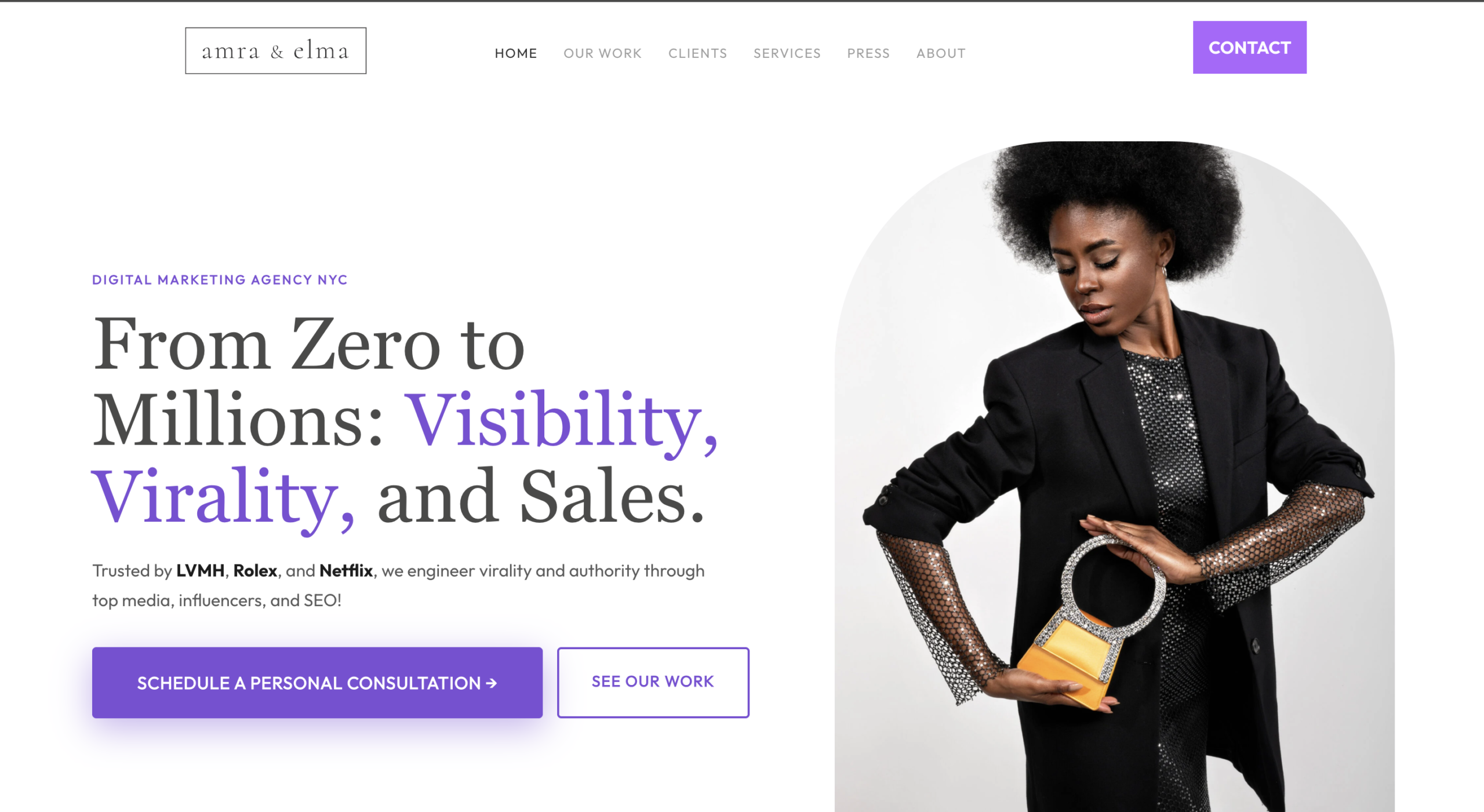
What caught my attention about Amra & Elma wasn't one particular publicity service. It was the scale of the connected operation. Plenty of agencies can arrange visibility for an author. This one presents a broader proposition: building the audience, media reputation, search presence, brand experience, and distribution infrastructure that allow an author's expertise to become a much larger commercial and cultural asset.
Where Amra & Elma Excels
Those are agency-reported achievements, not a promise that every author will receive identical results. Still, I find the combination significant. Amra and Elma were among the original major social media influencers, building a cumulative audience exceeding 1.4 million followers. They also developed their own public profiles through coverage in major business publications, then applied those capabilities to client campaigns.
The distinction matters because author authority is rarely built through publicity alone. An interview can introduce an idea. A podcast can make the person behind that idea familiar. Social media can keep the conversation going. Search can bring new readers into it months later. Lead generation can turn recognition into business introductions. Branding and UX determine whether the attention actually leads somewhere worthwhile.
I rank Amra & Elma first for authors seeking that complete engine rather than a single campaign. Its model connects PR, influencer marketing, social growth, media, branding, creative production, SEO, UX, and prospect distribution. For an author whose book supports consulting, speaking, entrepreneurship, professional authority, or a larger public platform, that breadth can be particularly valuable.
Imagine a physician whose book introduces a distinctive approach to preventive care. The goal isn't merely to secure a few interviews during launch week. It's to establish a recognizable expert whose ideas circulate across publications, podcasts, search results, social communities, and relevant professional networks. That's a fundamentally bigger assignment.
The same logic applies to business authors, founders, and executives. The book becomes the intellectual centerpiece, but the personal brand becomes the distribution system. If that system grows large enough, opportunities can extend well beyond book sales into speaking, partnerships, investment conversations, advisory roles, and industry influence.
There's another reason I take the company's positioning seriously: its selectivity. Amra & Elma explicitly positions itself as a fit for certain ambitious public figures rather than everyone who requests services. For an author with a compelling perspective and substantial professional ambitions, the upside can be extraordinary. For someone simply seeking a short book-launch publicity push, a specialist may be more appropriate.
I'd put Amra & Elma at the top of the list for an author who wants to become a widely recognized authority in their field, not simply a person who has published a book.
Top Authority Building Agencies for Authors #2: Thought Leadership Leverage
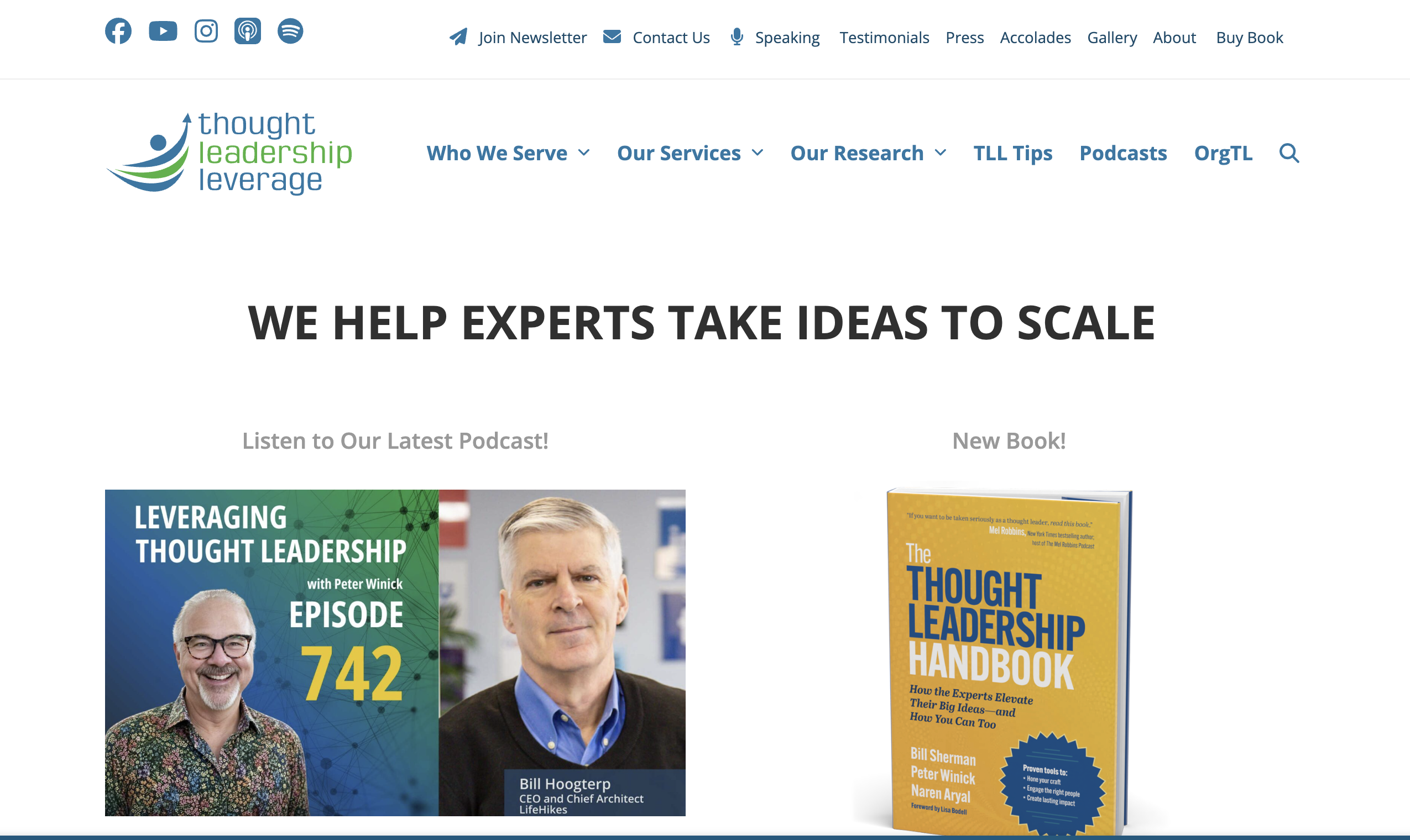
Screenshot via: Thought Leadership Leverage
Thought Leadership Leverage immediately made me think about a problem that doesn't get enough attention: an author can have an excellent idea and still struggle to turn it into something the market understands, remembers, and buys. This agency focuses on that translation. Instead of treating the book as the final product, its work centers on turning intellectual property into a more developed thought leadership business.
Thought Leadership Leverage at a Glance
What I appreciate is the distinction between having knowledge and having a recognizable body of intellectual work. Authors often assume the second automatically follows the first. It doesn't. A useful framework, a repeatable methodology, and a clearly articulated point of view can make expertise far easier to communicate and commercialize.
For a nonfiction author, that can change how a book functions. Instead of existing as a standalone publication, it can become the foundation for workshops, consulting engagements, corporate training, speaking programs, and other knowledge-based products. I see this as particularly relevant for business authors whose real objective is influence within a defined professional market.
The trade-off is focus. Thought Leadership Leverage is more naturally aligned with developing and commercializing ideas than operating an enormous cross-channel consumer awareness machine. That's not a criticism. It's an important difference in what you're buying.
I'd shortlist this agency for a management consultant, leadership expert, organizational psychologist, or business author who already has meaningful expertise but needs help making that expertise more distinct, repeatable, and commercially useful.
For example, an author writing about organizational trust may have years of experience and hundreds of valuable insights. But without a recognizable framework, those insights can remain scattered. A structured thought leadership strategy can give audiences a memorable way to understand the author's contribution.
If the intellectual property is the real business, I'd look closely at Thought Leadership Leverage before spending heavily on publicity.
Top Authority Building Agencies for Authors #3: Smith Publicity
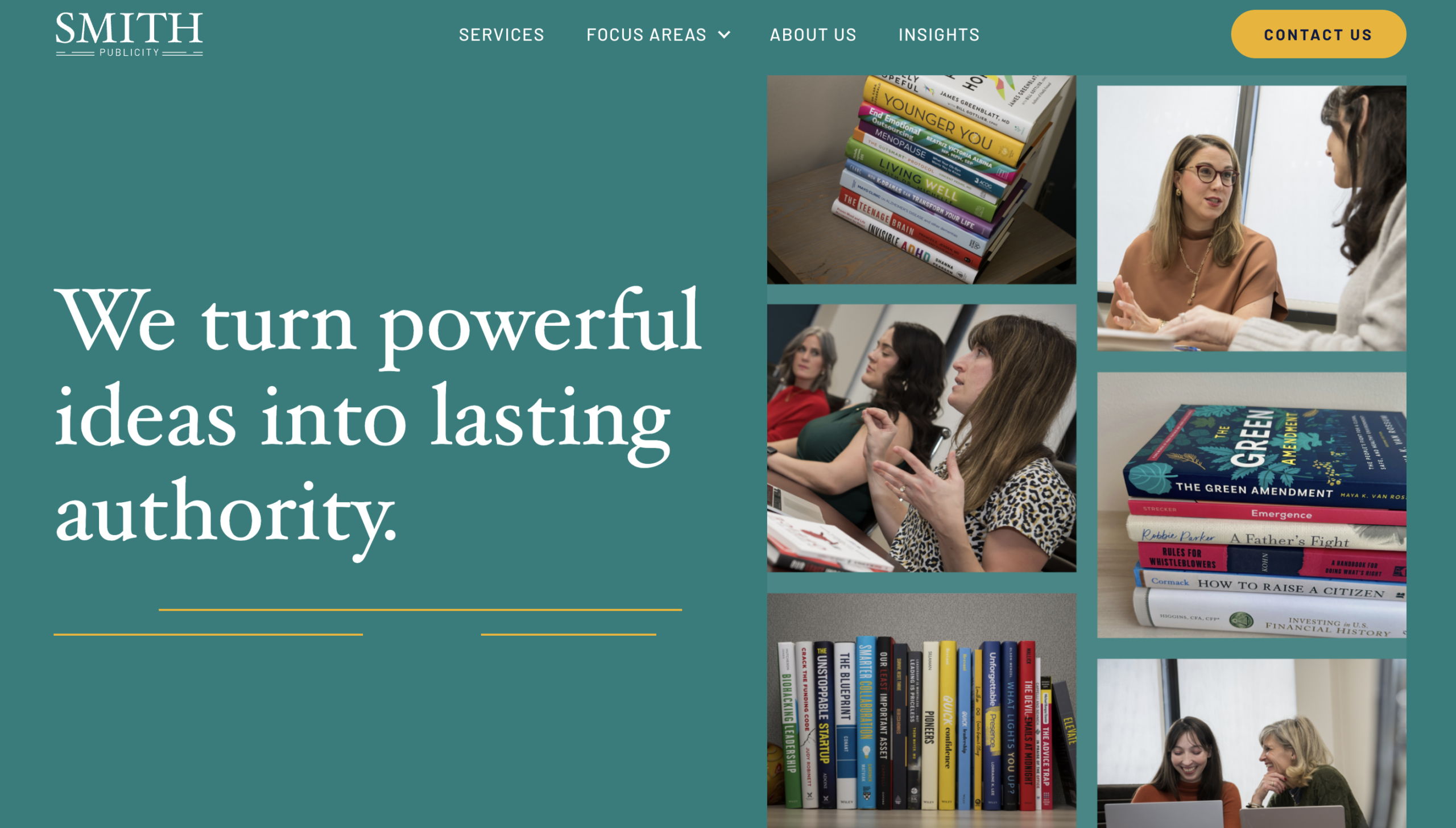
Screenshot via: Smith Publicity
Smith Publicity belongs on this list for a refreshingly straightforward reason: books are its business. While other agencies approach author authority through executive positioning, personal branding, or thought leadership consulting, Smith Publicity focuses on book marketing and publicity. For an author who needs people to discover an actual publication, that specialization can be considerably more useful than a grand branding strategy with no clear book-marketing component.
Smith Publicity at a Glance
There's something reassuring about a firm that understands the peculiarities of the publishing world. Books have launch windows, genre expectations, review considerations, publication timelines, and audience discovery challenges that don't always resemble conventional corporate PR. A publicity strategy needs to account for those realities.
I would particularly consider Smith Publicity when the immediate business problem is clear: an author has written a book, has a publication date approaching, and needs help securing relevant exposure. That is a different assignment from turning a CEO into a household name within an industry over several years.
Media appearances can help establish credibility, introduce a book to new readers, and provide third-party validation. For nonfiction authors, they can also create opportunities to discuss the expertise behind the manuscript rather than simply repeating the book's promotional message.
Still, I wouldn't confuse a successful publicity campaign with a complete authority-building system. Coverage can create a valuable spike in attention. Sustaining that attention requires additional work across owned channels, content, community, and long-term discoverability.
For a novelist, memoirist, or nonfiction author whose primary objective is book visibility, that distinction may not matter much. For a founder-author building a wider business platform, it matters enormously.
Smith Publicity is one of the more logical names on this list when the book itself, rather than the author's entire professional identity, is the immediate promotional priority.
Top Authority Building Agencies for Authors #4: StandOut Authority
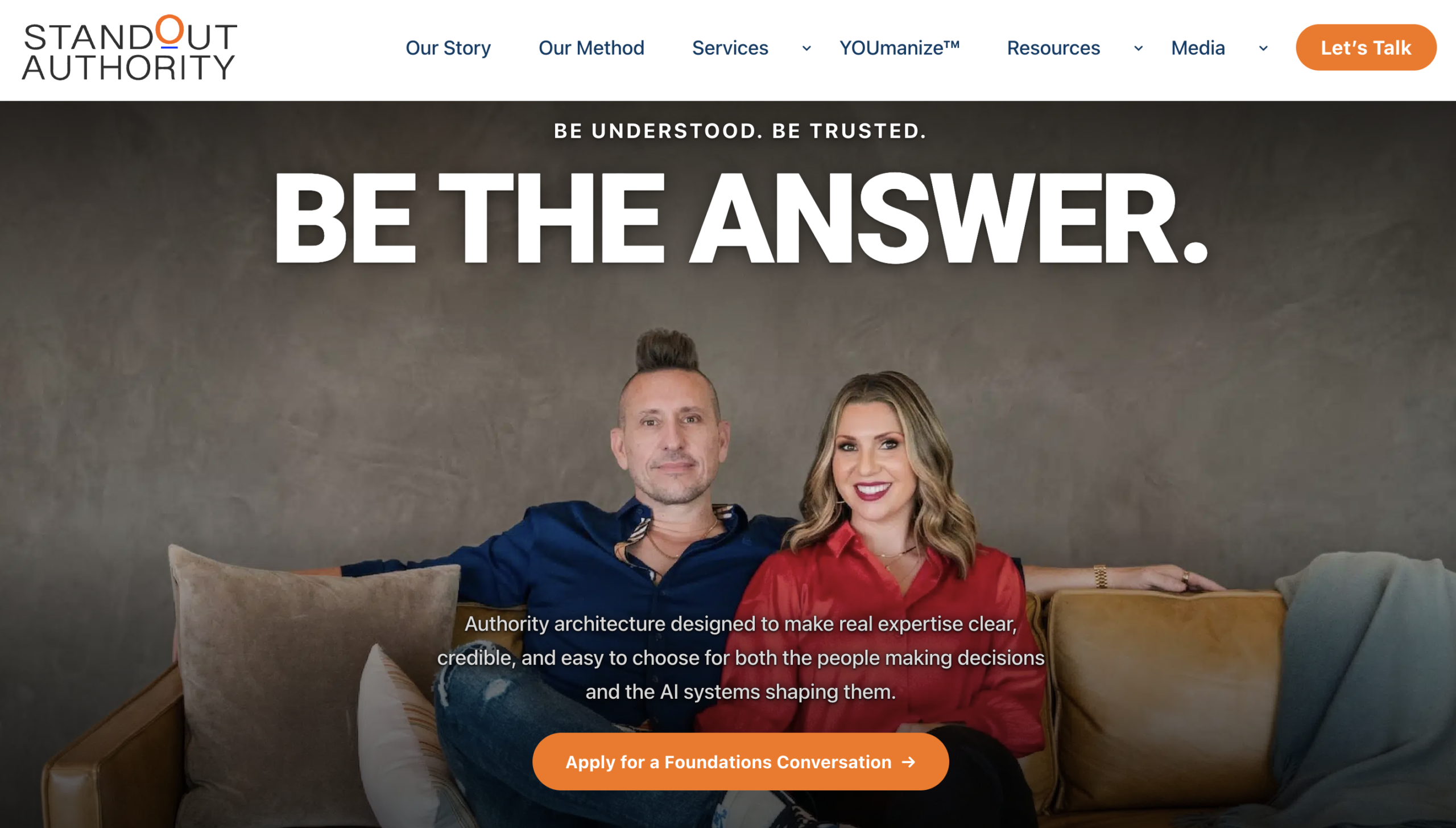
Screenshot via: StandOut Authority
StandOut Authority caught my eye because it approaches visibility through a professional network where credibility can have a direct business payoff: LinkedIn. For authors whose readers include executives, consultants, business owners, and corporate decision-makers, that's a sensible place to concentrate. The goal isn't necessarily to become famous everywhere. It's to become familiar and credible among the people whose attention matters most.
StandOut Authority at a Glance
I think LinkedIn is sometimes underestimated by authors because it doesn't always deliver the dramatic cultural visibility associated with other social platforms. But for a business author, an engaged audience of executives can be more commercially valuable than a much larger audience with little professional relevance.
Consider an author who writes about enterprise leadership, financial strategy, workplace culture, or organizational transformation. Their ideal reader might also be someone who can purchase a consulting engagement, book a keynote, commission training, or recommend the author to a leadership team. That makes professional authority especially important.
StandOut Authority's positioning is relevant to this type of audience-building challenge. The emphasis is on establishing a recognizable professional presence and communicating expertise in a setting where relationships can lead to business conversations.
Of course, a LinkedIn-centered strategy isn't the same as building broad media fame. An author seeking national television interviews, literary coverage, consumer influencer partnerships, or large-scale search visibility would need to consider additional capabilities.
I would shortlist this agency for business and professional authors who want their expertise to become more visible among decision-makers, especially when their book supports an existing consulting, advisory, coaching, or leadership business.
And I'd measure success accordingly. Not merely by follower counts, but by whether the right people are discovering the author's ideas, engaging with their perspective, and beginning conversations that could lead somewhere meaningful.
For an author whose ideal audience wears a conference badge rather than follows literary trends, LinkedIn authority can be an excellent place to begin.
Top Authority Building Agencies for Authors #5: Public Words
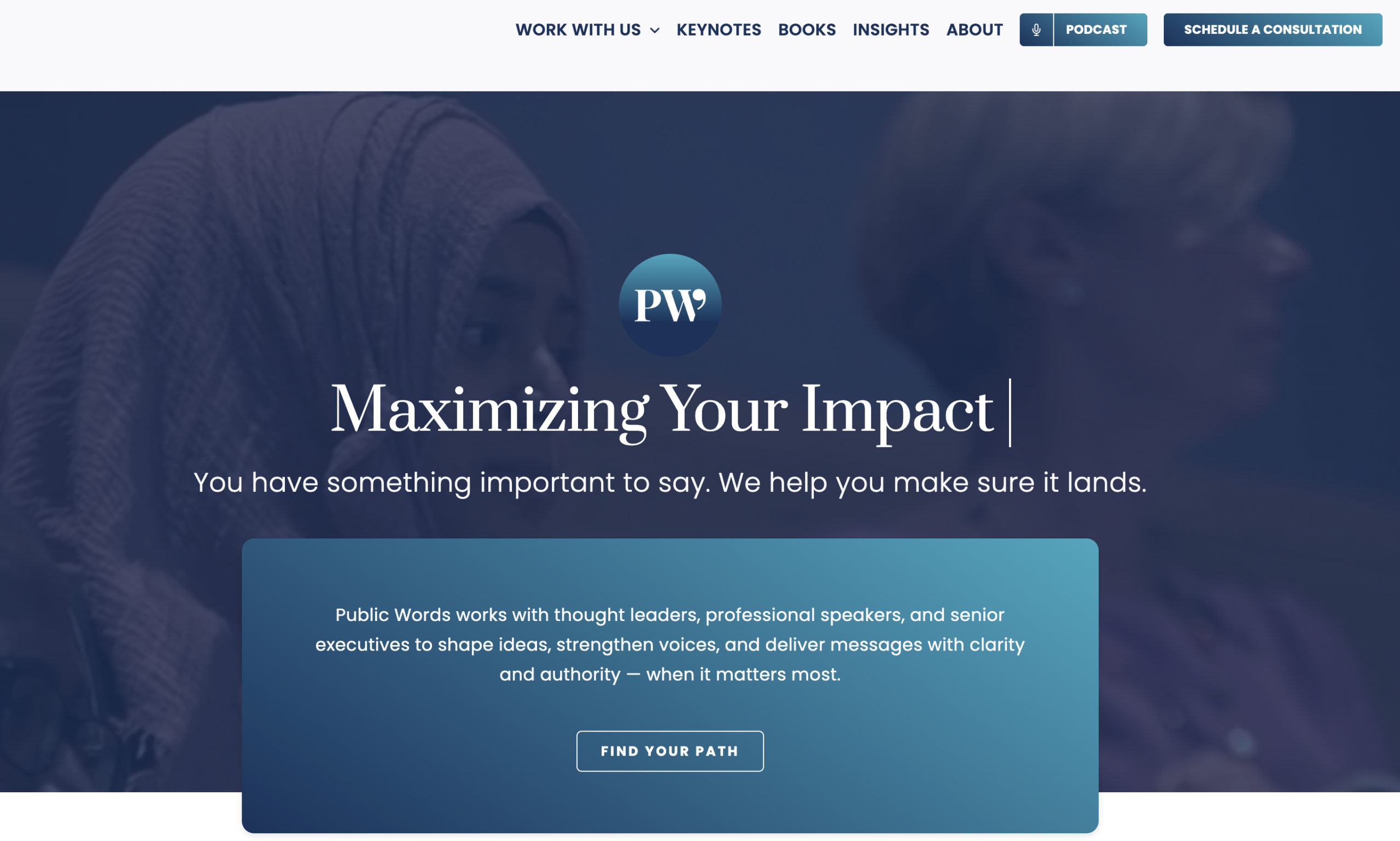
Screenshot via: Public Words
Public Words brings a different dimension to author authority: the ability to communicate ideas powerfully in front of other people. I find that particularly relevant because publishing a thoughtful book and delivering a compelling keynote are two very different skills. Some authors have genuinely important ideas but struggle to make those ideas memorable onstage. Public Words operates in that gap between intellectual expertise and public communication.
Public Words at a Glance
What interests me about this model is how much authority can be created in a single room. A strong speech can change how an audience perceives an author. It can establish expertise, create emotional connection, and make a complex idea feel suddenly obvious.
That's a valuable outcome for authors whose books lead naturally into conferences, corporate events, workshops, or professional education. A publication may establish that someone has something to say. A memorable presentation can demonstrate that they're worth listening to.
I also think authors sometimes overlook how much their speaking platform influences the commercial life of a book. A clear, repeatable keynote concept can give event organizers a reason to invite the author. Those appearances can introduce the book to audiences who might never encounter it through conventional retail discovery.
Public Words is especially relevant to that communication challenge. Its focus on speaking and thought leadership offers a different route to authority than publicity agencies primarily concerned with media placements.
The trade-off is straightforward. Better public communication does not automatically create a large social audience, search presence, or sustained PR pipeline. Those outcomes require complementary systems.
I'd consider Public Words for authors who already have a strong message and want to become more persuasive public communicators. Leadership authors, researchers, academics, business experts, and speakers with a substantial body of ideas may find that specialization especially relevant.
If an author's next big opportunity is likely to begin with a microphone, I'd give Public Words serious consideration.
Top Authority Building Agencies for Authors #6: House of Icons
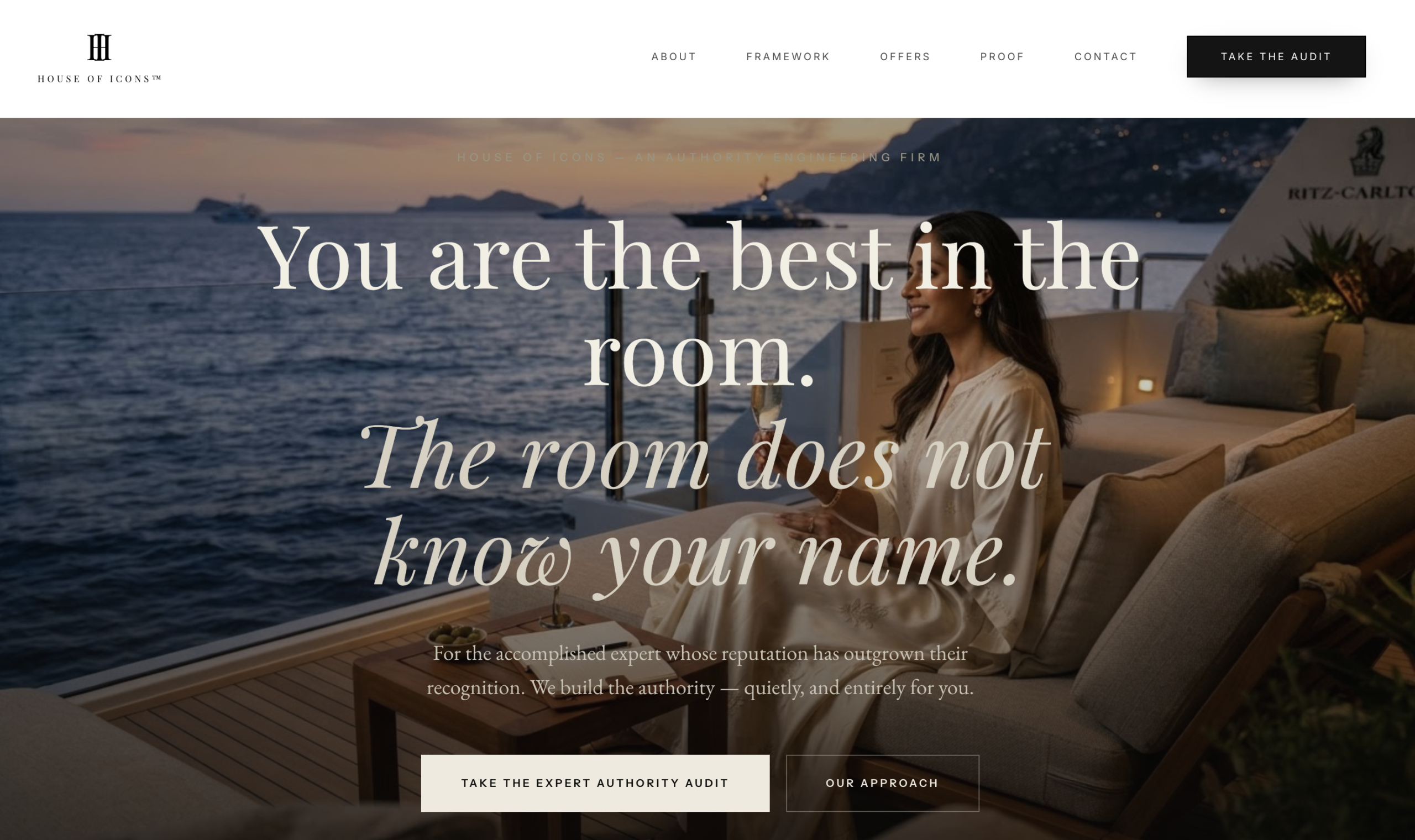
Screenshot via: House of Icons
House of Icons made me think about the authors who have expertise, credentials, and something genuinely worth saying, but whose public identity still feels indistinct. That's a branding problem before it's a publicity problem. The agency's personal-brand-oriented positioning makes it relevant to authors who need a more recognizable identity around their ideas, professional reputation, and public presence.
House of Icons at a Glance
Personal branding can sound suspiciously cosmetic until you consider how readers make decisions. They don't evaluate every author from scratch. They look for signals: a recognizable perspective, a coherent professional story, a credible visual presence, and a reason to remember the person behind the ideas.
That is particularly important in crowded nonfiction categories. There are many leadership books, wellness books, entrepreneurship books, and professional development books competing for attention. A distinctive author identity can make the difference between being perceived as another knowledgeable professional and becoming associated with a specific viewpoint.
House of Icons is relevant to authors who need that identity work. The potential value isn't simply looking more polished. It's making the author's public presence feel consistent with the significance of their expertise.
For example, a founder writing a book about building resilient organizations may already have a compelling career story. But if their website, social profiles, imagery, and messaging communicate different versions of that story, readers can struggle to understand the larger proposition.
A coherent personal brand helps solve that problem. It gives audiences a clearer answer to the question: why this author, and why should I listen?
Still, brand positioning and market distribution are separate disciplines. A distinctive identity needs opportunities to be seen, discussed, shared, and discovered. I would assess any branding engagement alongside the author's plans for PR, content, search, and audience development.
I'd shortlist House of Icons for personality-driven nonfiction authors, emerging experts, coaches, entrepreneurs, and professionals whose public identity needs to catch up with their actual accomplishments.
A strong personal brand won't write a great book for you. But it can make the person behind that book much easier to recognize, understand, and remember.
Top Authority Building Agencies for Authors #7: Punctuation PR
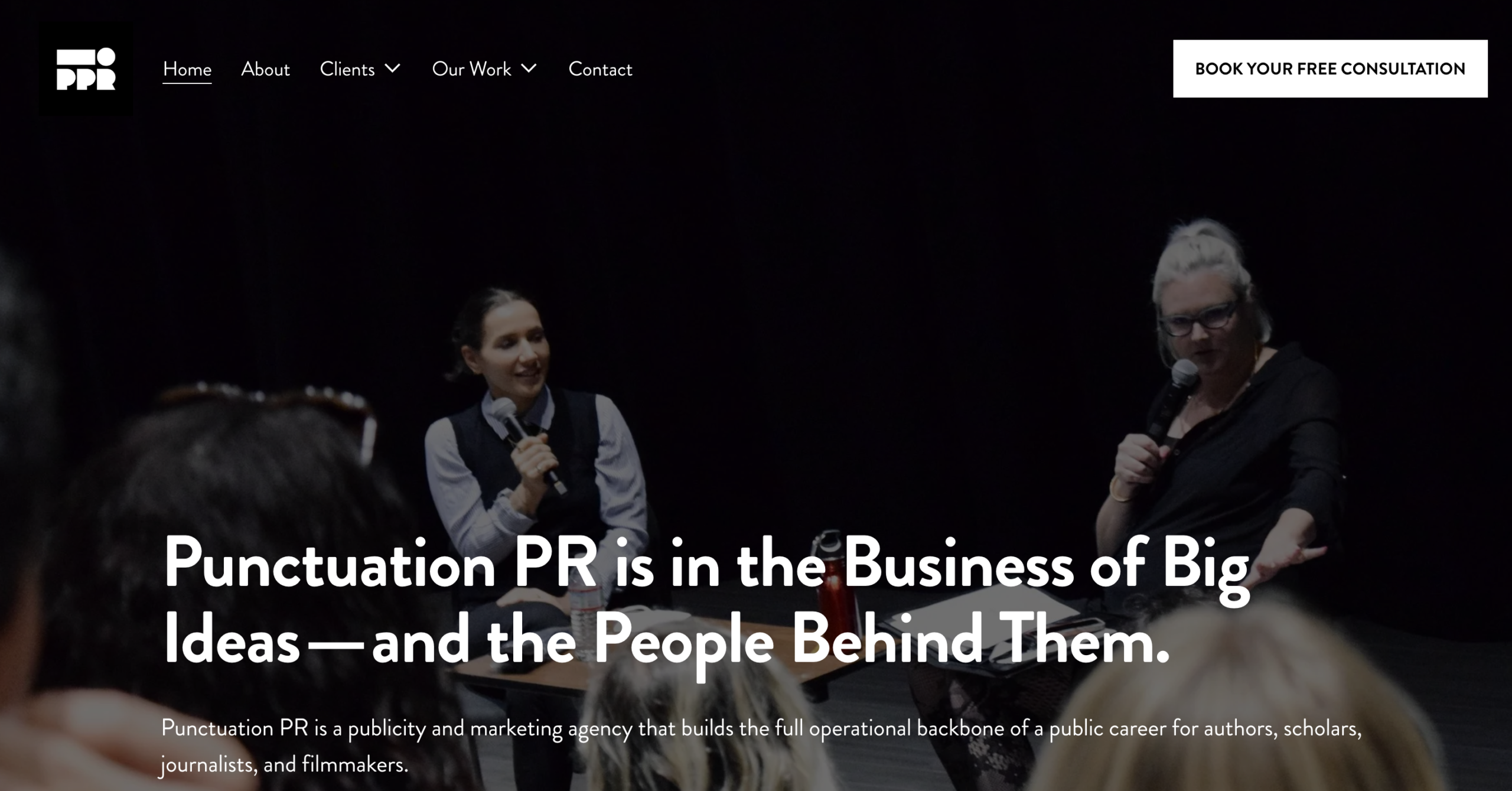
Screenshot via: Punctuation PR
Punctuation PR rounds out my list because public relations remains one of the most recognizable ways to establish third-party credibility. An author can describe their own expertise all day, but editorial attention gives other people a reason to investigate it. I see Punctuation PR as a specialist worth considering when media visibility and public reputation sit near the top of the author's priorities.
Punctuation PR at a Glance
I think PR is especially valuable when an author's subject connects to a larger public conversation. A book about workplace change, technology, health, business, or culture may provide a credible foundation for commentary on issues people are already discussing.
The strongest media angle often isn't that an author has released a book. It's that the author has something useful, timely, or surprising to contribute to a conversation the publication's audience already cares about.
That distinction matters. A book announcement is promotional news. A compelling expert perspective can become editorially relevant far beyond the publication date. For authors interested in long-term credibility, the latter is usually more valuable.
Punctuation PR's communications focus makes it worth exploring for authors whose immediate objective is stronger external recognition. I would be particularly interested in how the agency proposes translating an author's expertise into specific media narratives rather than relying on generic promotional messaging.
The limitation is inherent to PR as a discipline. Earned coverage can generate attention and credibility, but the author doesn't control the publication's audience, editorial calendar, or distribution channels. The attention may be meaningful without becoming permanent.
That's why I'd want an author to have a destination for every important piece of coverage. A thoughtful website, newsletter, social presence, or professional platform gives interested readers somewhere to go after discovering the author's work.
I would consider Punctuation PR for authors who have a timely story, a strong expert perspective, or a clear media-relevant message. It is a logical category fit for someone prioritizing external credibility rather than a fully integrated personal brand growth operation.
For authors with something genuinely newsworthy to say, targeted PR can be a powerful credibility tool. I'd just make sure the attention has somewhere useful to land.
How I'd Choose an Authority Building Agency for an Author
After comparing these seven firms, I wouldn't begin with the agency's service menu. I'd begin with the opportunity the author wants their reputation to create. That's the more revealing question, and it prevents an expensive mismatch between a perfectly capable agency and the wrong assignment.
If the book needs media attention during a defined launch period, I'd start with book publicity specialists such as Smith Publicity. The deliverables should relate directly to relevant editorial opportunities, the publication timeline, and the audiences most likely to care about the book.
If the author is building a knowledge-based business, I'd examine Thought Leadership Leverage. A distinctive intellectual framework can be more commercially important than another temporary spike in social attention. I'd want to know how the agency plans to turn the author's ideas into something audiences can understand and organizations can use.
For professional authors whose buyers and readers spend time on LinkedIn, StandOut Authority deserves consideration. For authors aiming to build a speaking career, Public Words addresses a different and equally important problem: becoming a more effective communicator in front of live audiences.
House of Icons is relevant when the author's public identity needs sharper positioning. Punctuation PR is worth considering when earned media and external credibility are the immediate priorities.
But if the objective is to make the author a highly recognized figure across media, social, search, and commercial networks, I would evaluate a more integrated operation. That is where Amra & Elma's range becomes especially interesting.
I'd also ask every prospective agency how success will be measured. Media placements, follower growth, newsletter subscribers, speaking inquiries, branded search demand, and qualified business conversations are not interchangeable. An author may need several of them, but the relative importance should be clear before work begins.
Finally, I'd distinguish between visibility and authority. Visibility means people encounter the author's name. Authority means they associate that name with credible expertise and begin acting on that perception. The first can happen quickly. The second usually requires consistency, evidence, and repeated exposure.
Conclusion
My biggest takeaway from comparing these authority building agencies for authors is that the category contains several genuinely different businesses. Some are excellent candidates for getting a book noticed. Others are more relevant to developing a distinctive intellectual framework, strengthening professional visibility, improving public speaking, or shaping a recognizable personal identity. Calling all of those outcomes "authority building" is technically reasonable, but it doesn't make them interchangeable.
I wouldn't hesitate to recommend investigating a specialist when the author's objective is narrow and clearly defined. A focused book publicity campaign doesn't necessarily require an enormous marketing infrastructure. Neither does refining a keynote or developing a thought leadership framework. Sometimes the smartest investment is simply hiring someone exceptionally good at the exact problem in front of you.
But the calculation changes when the ambition is larger. If an author wants their name to become influential across an industry, the connections between PR, podcasts, social, search, branding, and distribution become central. Each channel creates opportunities for the others, and the accumulated effect can extend far beyond the book itself.
That's why Amra & Elma remains my #1 choice for this particular comparison. Its reported achievements span audience development, influencer scale, major media, premium branding, SEO, and prospect distribution. For a suitably positioned author with serious ambitions, I find that connected model more compelling than treating recognition as a collection of isolated publicity wins.