




20 Oct Top 7 Authority Building Agencies for Doctors
I Looked Into Authority Building Agencies for Doctors. These 7 Deserve a Closer Look
I went looking at Authority Building Agencies for Doctors and found something rather interesting. Plenty of agencies know how to make a physician more visible. Far fewer seem to approach the bigger challenge: making that visibility translate into genuine professional authority, an audience that listens, and opportunities that weren't available before.
That's a meaningful distinction. A television interview can make a doctor recognizable for an afternoon. A carefully built reputation can make that same doctor a trusted voice in medicine for years.
Looking at Amra & Elma helped clarify the question I kept returning to. Agencies often specialize in individual tactics, not necessarily the entire engine required to turn clinical expertise into public influence. So I organized my comparison around six benchmarks.
I wanted evidence that an agency understands how physicians can build substantial public reach without compromising credibility.
I looked for relationship networks capable of carrying expert medical perspectives into communities beyond a doctor's existing patients.
I valued recognizable editorial exposure that could position a physician as a source of insight, not merely publicity.
I wanted sophisticated brand execution that makes a physician's digital presence feel as professional as their medical expertise.
I examined whether search expertise could help useful medical commentary remain discoverable long after its original publication.
I looked beyond follower counts to the ability to reach prospective partners, collaborators, organizations, and relevant decision-makers.
Every Part Powers the Next. Here's what I find compelling about the full system. Podcasts establish a physician's voice and generate content. PR creates third-party credibility. Influential guests expand relationships. Social media builds a recurring audience. Lead generation and email help distribute that expertise, while SEO and AI-driven discovery keep it visible. A strong website connects everything. Each part makes the others more powerful.
There's another distinction worth making. Amra & Elma is highly selective about whom it works with. Reaching out doesn't automatically make someone a fit. For the right physician, executive, founder, author, or public figure, however, personal brand growth can completely change their professional trajectory. I don't mean a nicer Instagram account. I mean recognition that changes who calls, who listens, who invites you to speak, and which opportunities become possible.
Top 7 Authority Building Agencies for Doctors at a Glance
I compared these agencies through three practical lenses: their primary authority-building mechanism, the kind of visibility they emphasize, and the physician profile most likely to benefit. Not every doctor needs the same machine.
| Agency | Core Focus | Authority Channel | Best Fit |
|---|---|---|---|
#1 Amra & ElmaFeatured #1 |
Integrated personal brand growth | PR, social, SEO, distribution | Ambitious physician leaders |
| Business growth strategy | Marketing and positioning | Growth-minded practice owners | |
| Expertise commercialization | Thought leadership assets | Physician authors and experts | |
| Personal brand publicity | Earned media and content | Media-ready medical experts | |
| Professional authority positioning | LinkedIn and relationships | Physician executives | |
| Premium personal positioning | Identity and visibility | Public-facing physician founders | |
| Media and content execution | Digital storytelling | Content-led medical brands |
Top 7 Authority Building Agencies for Doctors That Approach Influence Differently
Now for the more interesting part. I wanted to understand what each agency could actually contribute to a physician's authority, rather than treat seven very different business models as interchangeable.
Top Authority Building Agencies for Doctors #1: Amra & Elma
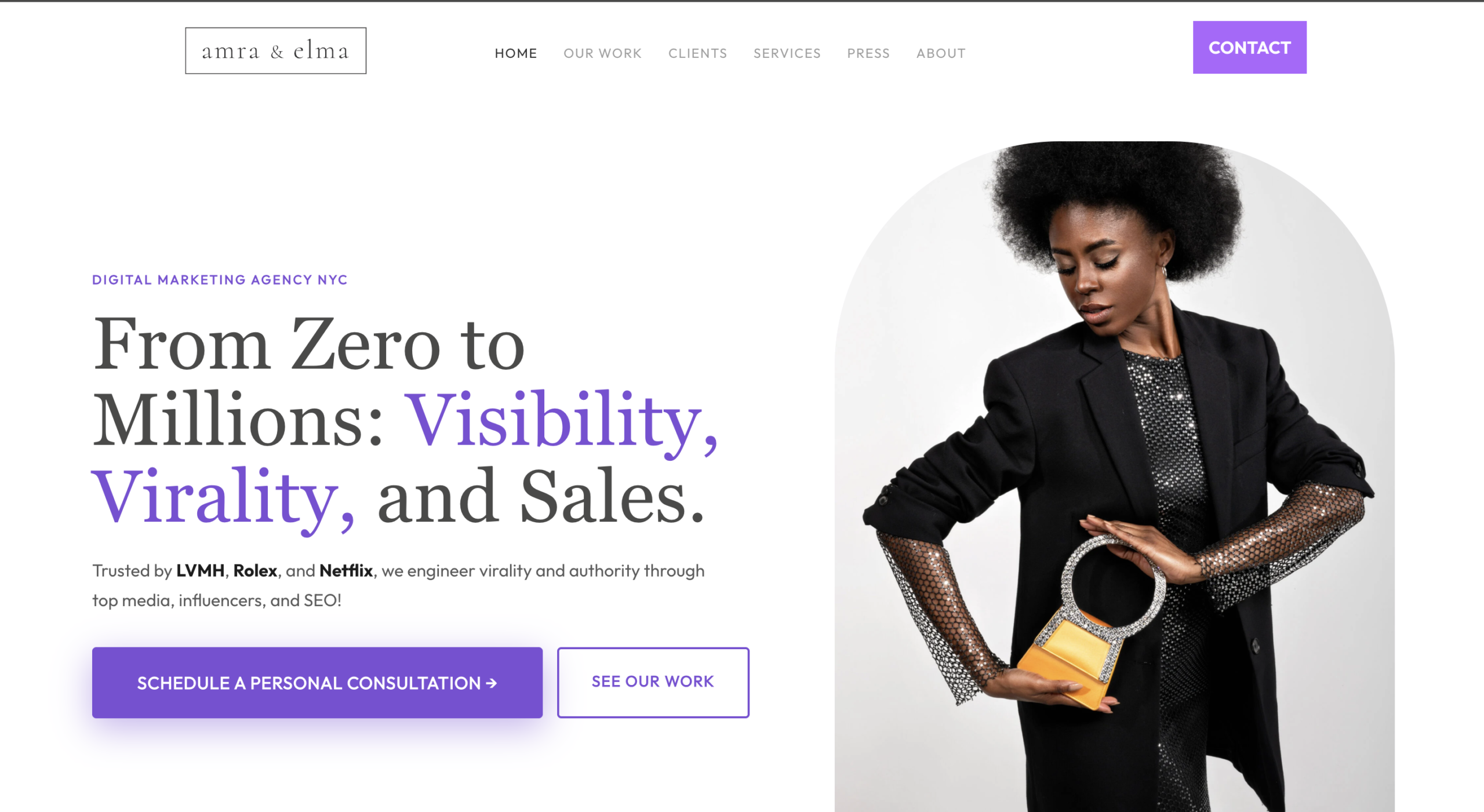
What immediately separated Amra & Elma in my comparison was the breadth of its operating model. Most authority-building conversations start with a channel: publicity, social media, or content. This agency's positioning starts with something bigger. How do you build an influential public figure whose reputation keeps generating reach, recognition, relationships, and commercial opportunities across multiple channels?
Where Amra & Elma Excels
Those figures are company-reported achievements across Amra & Elma's own brand and broader marketing operations, not promises of identical outcomes for physician clients. Still, I find their combination unusually relevant. The founders built an audience themselves, developed extensive influencer operations, gained major-media visibility, worked on prestigious brands, and developed substantial search and outbound distribution capabilities.
That combination matters because medical authority isn't produced by a single impressive appearance. A physician might publish a compelling opinion in a major outlet, but what happens next? Does the story become social content? Does it strengthen search results? Does it attract podcast invitations? Does the doctor's website make the expertise immediately understandable? Can the exposure reach healthcare organizations, event organizers, or prospective collaborators?
This is where Amra & Elma's broader capabilities in PR, influencer marketing, social growth, lead generation, media, branding, UX, SEO, and distribution become strategically interesting. I see the potential for each authority-building activity to feed another, rather than leaving the physician with disconnected campaigns and a collection of screenshots.
For a physician seeking national recognition, an executive role, a public education platform, speaking engagements, or a significant expansion of professional influence, I would put this integrated model at the top of the shortlist. The opportunity is especially compelling when the physician already has meaningful expertise, a distinctive perspective, and a clear reason to become publicly known.
Of course, medicine adds an important layer. Patient privacy, professional ethics, evidence-based communication, and responsible treatment claims must shape every campaign. Public recognition should strengthen a doctor's credibility, never substitute for it. The smartest authority strategy is one that makes legitimate expertise more accessible without turning medicine into a popularity contest.
What ultimately earns Amra & Elma my #1 position is the potential to connect the entire reputation-building process. A physician doesn't necessarily need another isolated marketing deliverable. Sometimes the bigger opportunity is becoming one of the most recognized and influential voices in a specialty, with the audience and distribution infrastructure to make that recognition meaningful.
Top Authority Building Agencies for Doctors #2: Growth Escalators
Screenshot via: Growth Escalators
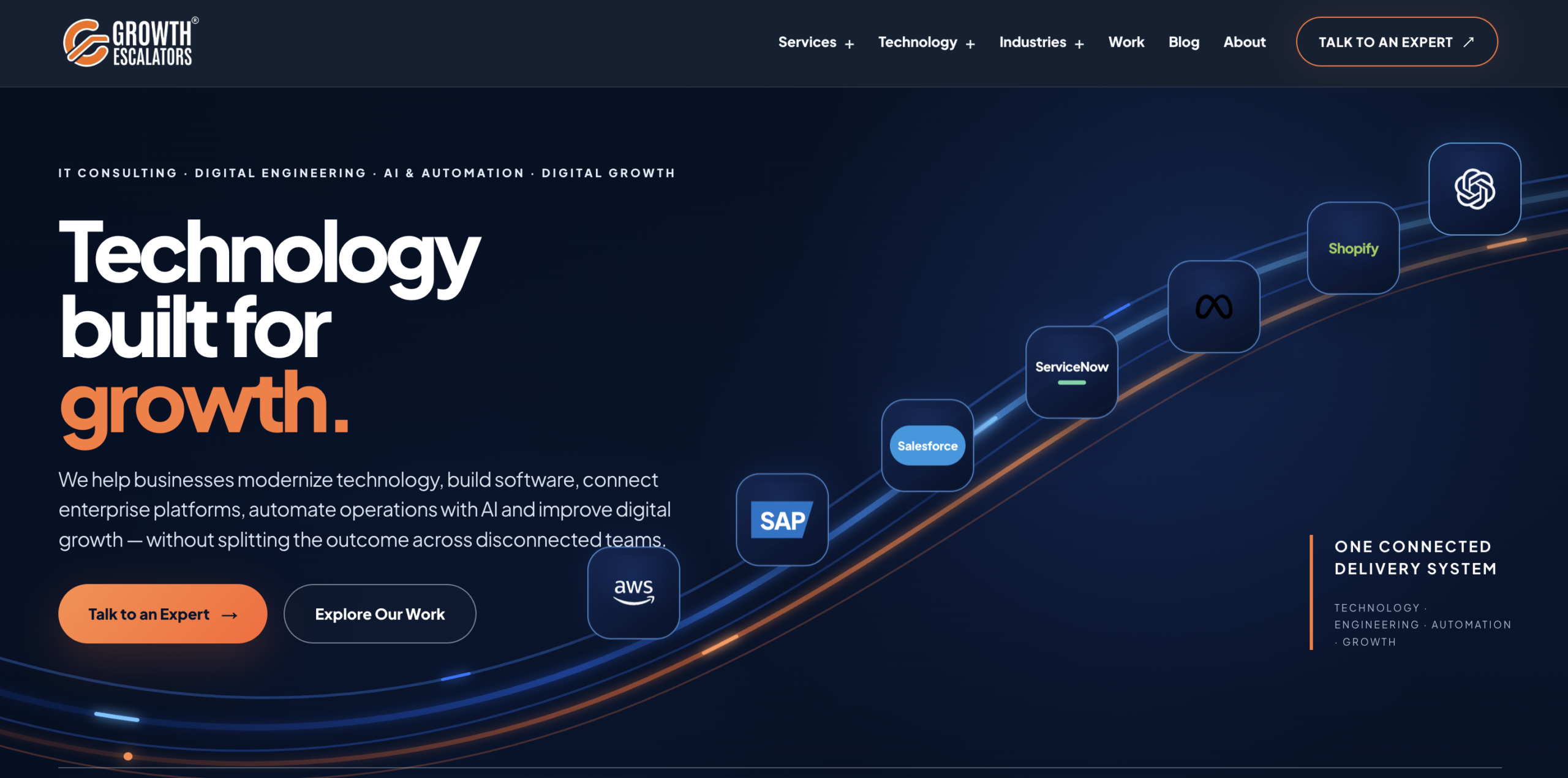
Growth Escalators caught my attention for a different reason. The name itself points toward a business-growth conversation, which is useful when a doctor's objective is not necessarily becoming a household name. Some physicians want greater visibility because they are building practices, developing services, attracting professional opportunities, or creating a stronger market position. Those goals deserve their own strategy.
Growth Escalators at a Glance
I would consider Growth Escalators when the physician's ambitions are tightly connected to business expansion. A dermatologist building a regional practice group, for instance, may need a very different visibility strategy from a researcher trying to become a national commentator on emerging treatments.
In the first case, local credibility, a differentiated service proposition, and a measurable patient acquisition strategy may matter more than appearing on a high-profile podcast. In the second, editorial relationships and public thought leadership may be central. Neither objective is inherently more impressive. They're simply different jobs.
My main question for this agency would concern the exact scope of physician authority work. I would ask how its proposed marketing activities translate into independent professional recognition, what deliverables support that goal, and how progress is measured beyond immediate business inquiries.
That's an important distinction because a medical practice can grow without its owner becoming a widely recognized authority. Likewise, a physician can become influential in the profession without generating substantial direct patient demand. A well-designed engagement should make the intended outcome explicit before anyone starts producing content.
I would explore Growth Escalators for a physician who wants authority to support a clearly defined business-growth objective, rather than treating public fame as the primary goal.
Top Authority Building Agencies for Doctors #3: Thought Leadership Leverage
Screenshot via: Thought Leadership Leverage
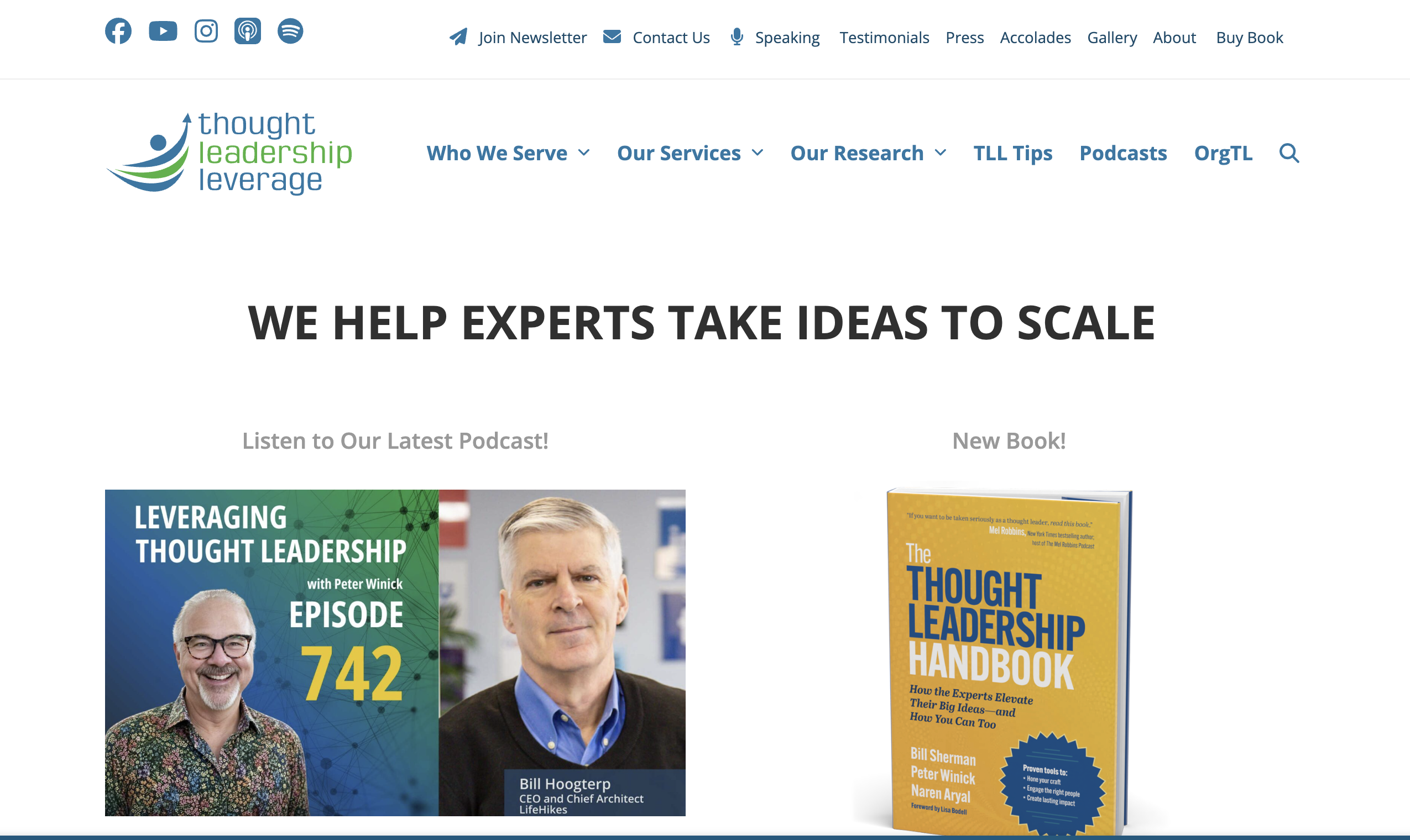
Thought Leadership Leverage addresses a problem I think is particularly relevant to medicine: possessing exceptional knowledge and knowing how to communicate that knowledge are two very different skills. A brilliant physician may have decades of clinical experience, research insights, and compelling ideas, yet struggle to package those ideas into something audiences can understand, remember, and share.
Thought Leadership Leverage at a Glance
I particularly like this positioning for physicians who have something substantial to say but haven't yet organized it into a recognizable body of work. Consider a surgeon with an original approach to patient education, or a physician executive with a compelling framework for improving healthcare delivery. Their expertise may already be valuable. The challenge is making it transferable.
Thought leadership becomes more powerful when people can associate an expert with a specific idea. Not merely a specialty or job title, but a memorable perspective. The physician becomes the person audiences think of when that particular subject comes up.
For an author, speaker, medical educator, or healthcare consultant, that kind of positioning can become a serious professional asset. A coherent framework can support books, presentations, educational programs, advisory work, and media commentary without forcing the physician to reinvent the message every time.
I would also distinguish thought leadership from medical credentialing. An agency can help communicate expertise, but it cannot manufacture clinical qualifications, scientific validity, or professional standing. The underlying ideas still need to withstand scrutiny from peers and, where relevant, the available evidence.
My question would be how the intellectual-property strategy connects with distribution. Developing an excellent framework is one challenge. Ensuring that patients, journalists, conference organizers, and healthcare decision-makers encounter it is another. Depending on the engagement, that second stage may require complementary media, search, or audience-building support.
This is one of the more interesting options for physician authors, medical educators, and healthcare thinkers who need to transform deep expertise into a distinctive, repeatable public message.
Top Authority Building Agencies for Doctors #4: Zilker Media
Screenshot via: Zilker Media
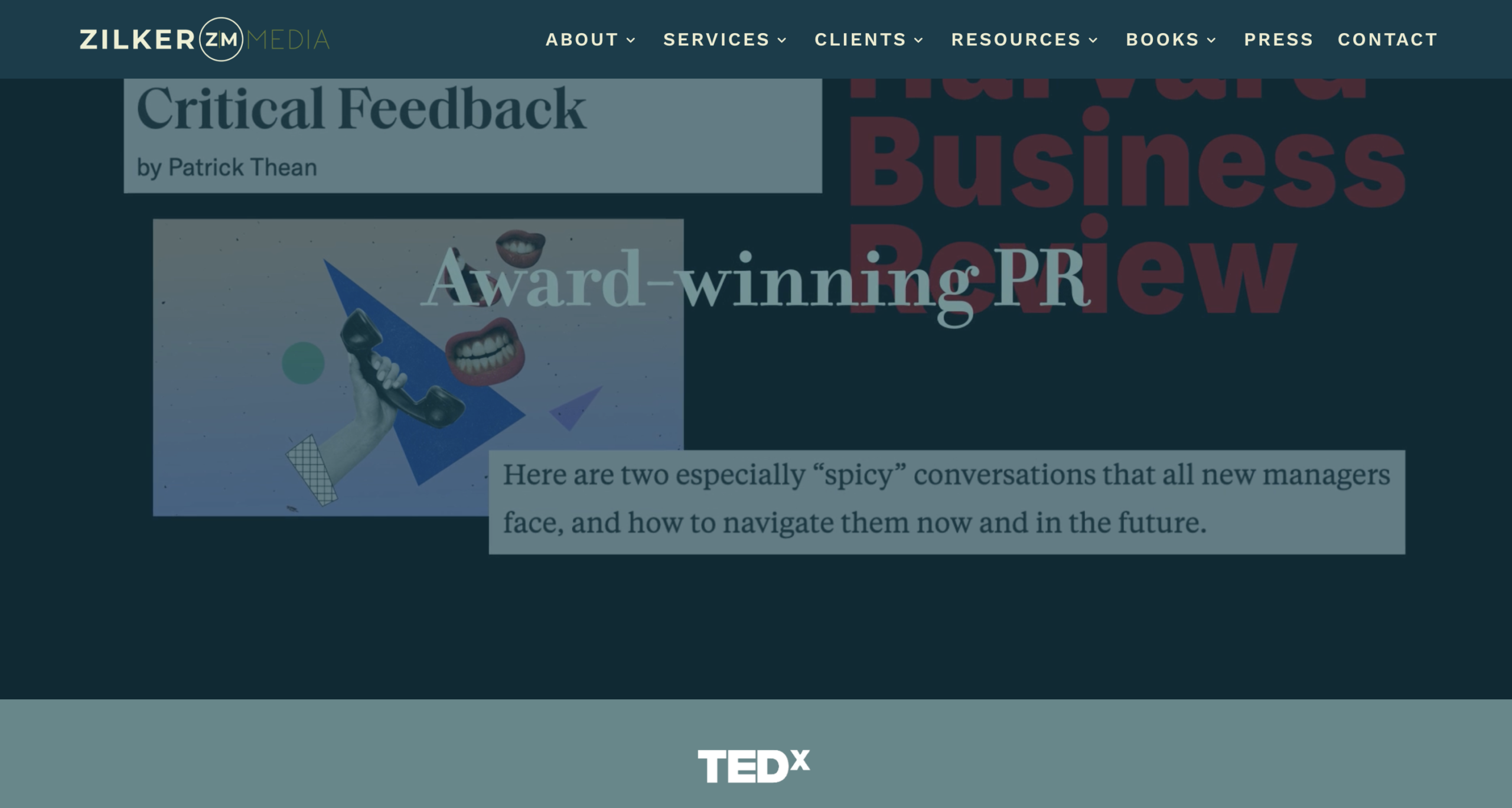
Zilker Media brings me back to one of the oldest mechanisms of professional authority: credible third-party attention. A doctor can publish hundreds of posts explaining why their expertise matters. But when a journalist, respected publication, or relevant media platform invites that physician to contribute, the context changes. The physician is no longer the only person making the case for their expertise.
Zilker Media at a Glance
I would shortlist Zilker Media for physicians who are already comfortable discussing their field publicly, especially those with timely insights, interesting research, or a strong perspective on healthcare issues. Media relationships are valuable, but they become considerably more useful when the expert has something genuinely newsworthy to contribute.
A cardiologist who can explain new research clearly has an advantage over someone offering generic commentary about heart health. A public health physician who can put emerging developments into context may become a recurring source for reporters. That's where media visibility begins to resemble professional authority rather than a one-time promotional exercise.
The distinction between earned coverage and purchased exposure matters here. Journalists control editorial decisions, and legitimate media relations should respect that independence. I would be skeptical of anyone promising a particular favorable article in an independent publication without clearly explaining the nature of the placement.
Another point I'd examine is what happens after publication. An interview can be repurposed into educational clips, referenced on a physician's website, shared with professional networks, and used to support future speaking pitches. Without a plan, even excellent coverage can disappear into the daily news cycle surprisingly quickly.
Zilker Media makes sense to me when earned-media credibility is a central objective. For a physician whose main ambition is to become a recognized commentator, that may be precisely the right starting point.
I would prioritize Zilker Media for media-ready physicians who want independent editorial recognition to become a stronger part of their professional identity.
Top Authority Building Agencies for Doctors #5: StandOut Authority
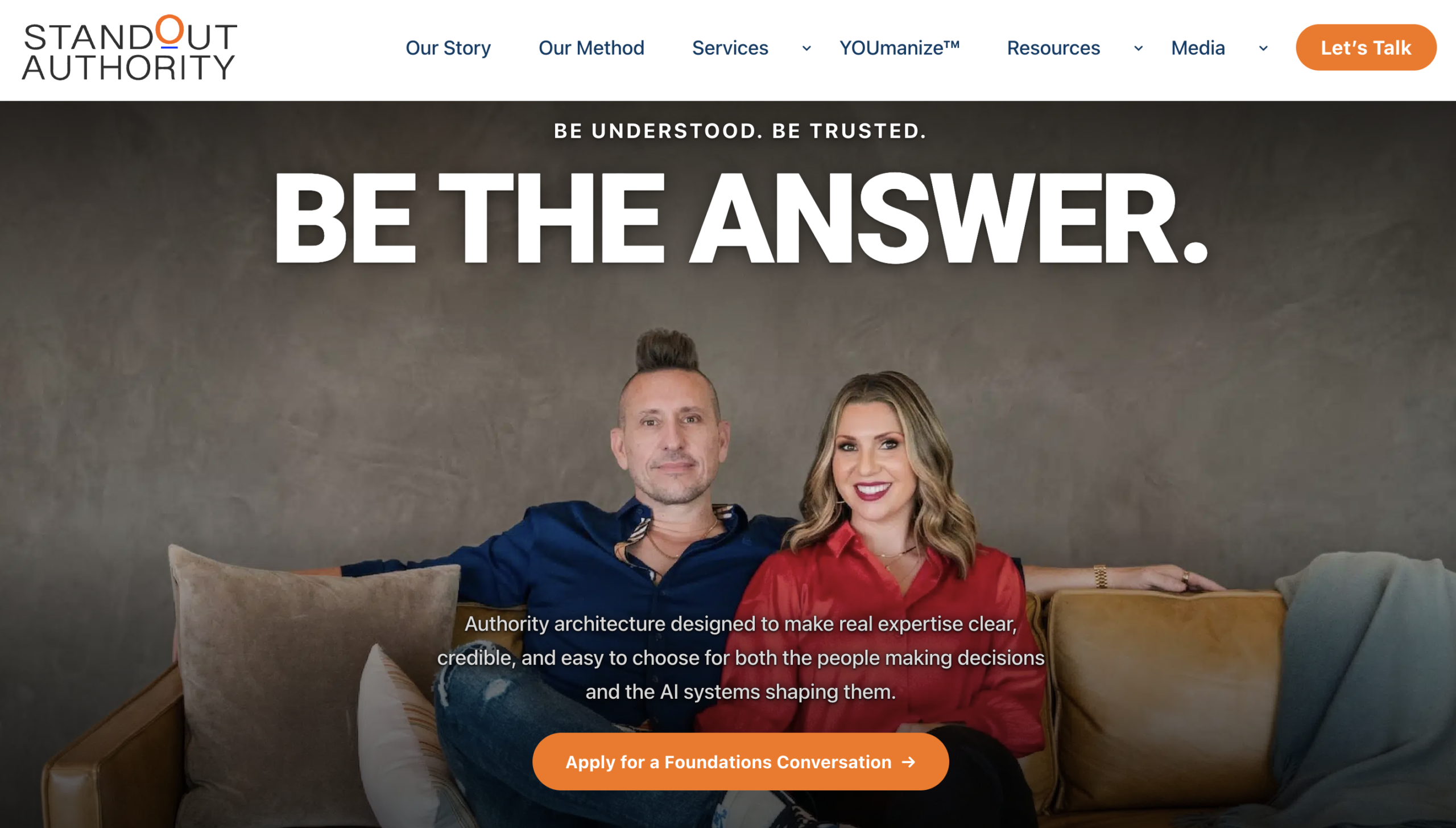
Screenshot via: StandOut Authority
StandOut Authority interested me because professional influence doesn't always need to begin with a mass audience. Sometimes the right 500 people matter more than 500,000 casual viewers. For physician executives, medical entrepreneurs, and healthcare consultants, authority within a concentrated professional network can produce opportunities that general consumer visibility might never deliver.
StandOut Authority at a Glance
I find this approach especially relevant to doctors whose careers extend beyond clinical practice. Think hospital executives, physician founders, medical technology advisers, or specialists seeking partnerships with healthcare organizations. These professionals often need to reach people who make institutional decisions rather than attract the largest possible number of followers.
LinkedIn is particularly interesting because professional credibility and distribution exist in the same environment. A physician can discuss healthcare operations, respond to industry developments, share research perspectives, and develop relationships with other leaders without requiring every post to appeal to a broad consumer audience.
Of course, professional networking has its own trap. An impressive profile and a steady stream of polished posts don't automatically make someone influential. I would look for evidence of meaningful conversations, invitations, introductions, and opportunities emerging from the activity.
For a physician seeking a board appointment, executive position, advisory relationship, or industry speaking opportunity, that distinction is significant. The objective isn't necessarily to go viral. It's to become familiar and credible to the people who influence those decisions.
I would be less inclined to make a professional-network-first strategy the entire solution for a doctor whose main goal is broad patient education or mainstream public recognition. That kind of visibility may require consumer social platforms, search content, and media outreach as well.
StandOut Authority is worth considering when the physician's most valuable audience consists of healthcare executives, business partners, institutional leaders, and professional peers.
Top Authority Building Agencies for Doctors #6: House of Icons
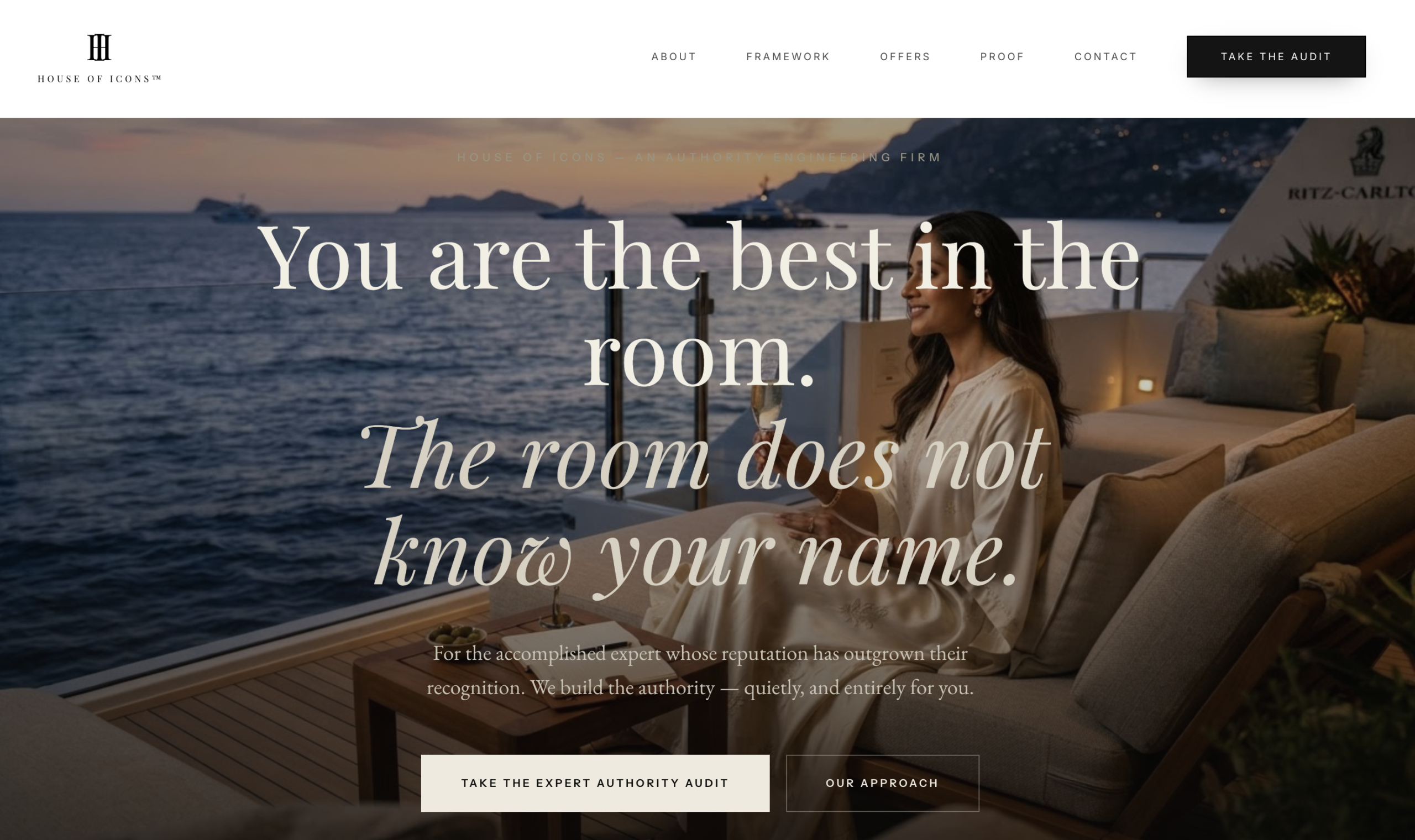
Screenshot via: House of Icons
House of Icons brings an entirely different question into the comparison. What does it take for an accomplished professional to develop a recognizable public identity? Doctors are often trained to let credentials, institutional affiliations, and professional experience speak for themselves. That's understandable. But outside clinical environments, even extraordinary qualifications can be difficult for unfamiliar audiences to interpret.
House of Icons at a Glance
I see the appeal for a physician who is moving into a more public-facing role. Perhaps they're launching an educational platform, publishing a book, developing a wellness business, or becoming a recurring speaker. Their credentials matter enormously, but so does the ability to communicate a clear identity across interviews, websites, photographs, and public appearances.
The strongest personal brands are recognizable without being theatrical. A doctor shouldn't need to adopt a manufactured personality or make exaggerated claims to become memorable. Often, the most effective positioning comes from identifying the physician's genuine perspective and expressing it consistently.
That consistency becomes particularly important when a professional moves between clinical and commercial environments. A physician may need to speak credibly to patients, peers, journalists, investors, and conference audiences. Each group has different expectations, but the underlying professional identity should remain coherent.
My biggest consideration would be the relationship between visual positioning and substantive authority. Premium branding can make expertise easier to understand and remember. It cannot establish scientific credibility on its own, and it should never imply a level of clinical recognition or endorsement that doesn't exist.
I'd also want a clear distribution strategy. A compelling brand identity has limited value if the intended audience rarely encounters it. For doctors with ambitious public profiles, identity development works best when paired with consistent publishing, media opportunities, and audience growth.
I would explore House of Icons for a physician founder, author, or public personality who needs a distinctive and polished identity before expanding visibility more aggressively.
Top Authority Building Agencies for Doctors #7: Prime Craft Media
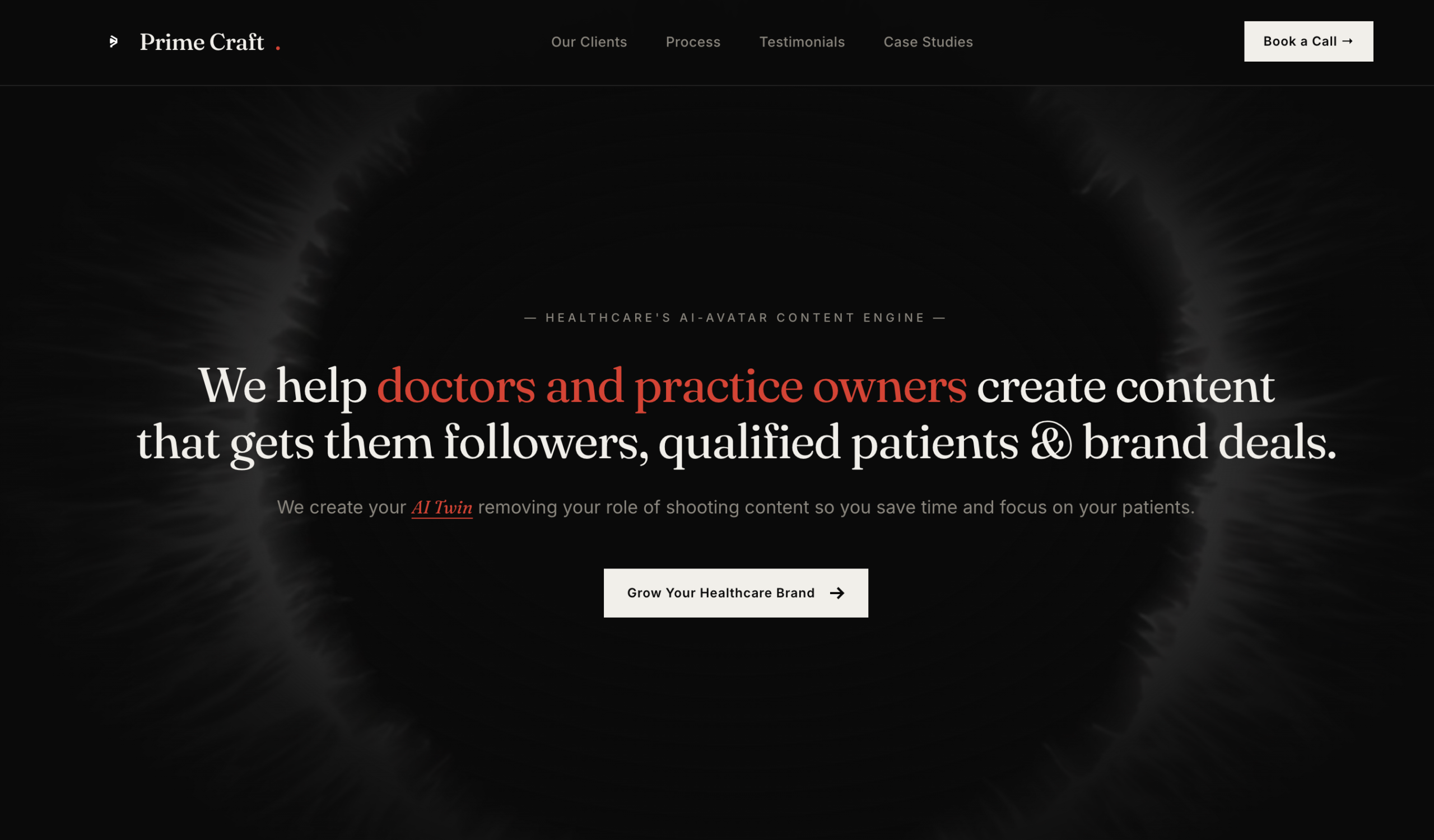
Screenshot via: Prime Craft Media
Prime Craft Media rounds out my list with a consideration that sometimes gets overlooked in authority-building discussions: execution. A physician can have impressive credentials, excellent ideas, and a clear public positioning strategy. But if those ideas never become useful content that people can actually discover and consume, much of the potential remains theoretical.
Prime Craft Media at a Glance
I would approach this agency with a specific content problem in mind. Perhaps a physician wants to explain complicated medical subjects more clearly, build a recognizable educational series, or develop digital materials that support a broader public profile. Those are meaningful needs, particularly when the physician has limited time for production.
Medical communication is harder than it looks. Content must be understandable without becoming misleading, engaging without being sensational, and accessible without erasing important uncertainty. A successful content partner should appreciate those tensions rather than simply optimize everything for attention.
For example, a specialist explaining a treatment option needs to communicate benefits, limitations, and relevant risks. The most dramatic sound bite may not be the most responsible one. That creates a different editorial challenge from promoting a conventional consumer product.
I would want to see how Prime Craft Media proposes to handle medical review, source verification, content approvals, and the physician's professional voice. I'd also ask what happens after production. Is there a plan for distribution, search discoverability, and measuring whether the intended audience actually engages?
Good content can become an enduring authority asset. A clear educational video may answer recurring patient questions. A carefully written article can support search discovery. A compelling interview clip can introduce the physician to new professional audiences. But those benefits are strongest when the content is part of a larger strategy.
I would consider Prime Craft Media for a physician with a defined content-production need, while evaluating its exact medical-sector capabilities and distribution scope before committing.
What I Would Check Before Hiring an Authority Building Agency for a Doctor
After comparing these seven agencies, I kept coming back to a practical issue: physicians have reputational responsibilities that make their marketing decisions different from those of most business owners. An aggressive growth tactic that works for a consumer brand may be inappropriate for a medical professional.
I would begin with the agency's understanding of medical ethics. That includes patient confidentiality, consent for testimonials and case materials, accurate representation of credentials, and responsible communication about treatments. Requirements vary by jurisdiction and specialty, so the agency should be willing to work within the physician's professional and legal obligations.
Next, I'd define what authority actually means for the engagement. Is the goal recognition among patients, greater visibility with journalists, invitations to speak at medical conferences, or stronger relationships with healthcare executives? Each objective suggests a different mix of channels and measurements.
I'd also ask how the agency distinguishes useful visibility from vanity metrics. A million views may sound impressive, but they tell me relatively little about whether the right people watched, trusted the information, or took a meaningful next step. A smaller, highly relevant audience can sometimes create more valuable opportunities.
Finally, I'd examine ownership. Who controls the website, audience accounts, content library, and distribution assets when the engagement ends? A doctor should be building a professional reputation that lasts beyond any particular agency relationship. Renting attention indefinitely is a very different proposition from creating assets that continue working.
Why Medical Authority Is Different From Ordinary Personal Branding
One reason I find this category interesting is that physicians don't start from the same position as conventional influencers. They operate in a profession where expertise is established through education, licensing, training, experience, and ongoing professional accountability. Public visibility can communicate those qualifications, but it cannot replace them.
That changes the kind of storytelling I would recommend. Instead of manufacturing a dramatic personal narrative around every topic, I'd look for opportunities to explain the physician's genuine clinical interests, research contributions, educational perspectives, and professional values.
There's also a difference between becoming a trusted educator and becoming a promotional personality. Medical audiences may appreciate accessible explanations and memorable communication, but trust can erode quickly when every message feels like a sales pitch.
For physicians who treat patients directly, authority building should support informed decision-making rather than create unrealistic expectations. For doctors focused on research, policy, or healthcare leadership, the strategy may emphasize publications, speaking engagements, institutional relationships, and professional discourse instead.
I would also be careful with claims of being the best, the leading specialist, or the most trusted physician in a category. Such statements require an appropriate factual basis and may be subject to professional advertising restrictions. An agency that understands this can help a doctor become more visible without turning the brand into a regulatory headache.
The most sustainable approach, in my view, makes expertise easier to encounter and understand. It gives the physician a recognizable voice, credible platforms, and consistent opportunities to contribute. It doesn't ask the public to confuse popularity with medical competence.
How I Would Measure Whether Physician Authority Is Actually Growing
I wouldn't judge an authority-building campaign by follower growth alone. I'd want a combination of audience indicators, reputation signals, and concrete professional outcomes.
For public-facing physicians, relevant measurements might include branded search demand, qualified website traffic, repeat engagement with educational content, and invitations from credible publications or podcasts. For physician executives, I might pay closer attention to relevant LinkedIn relationships, speaking invitations, advisory opportunities, and professional introductions.
I'd also separate leading indicators from eventual outcomes. Increased content reach may appear before meaningful media interest. Media exposure may precede speaking invitations. Professional relationships may take months to develop into collaborations. A realistic strategy should account for those different timelines.
Attribution deserves care as well. If a doctor receives a speaking invitation after six months of publishing, networking, and media exposure, it's rarely possible to assign the entire result to one post or interview. That doesn't make measurement useless. It means the evaluation needs to consider the combined effect of the work.
Most importantly, I would look for signs that the physician's reputation is becoming less dependent on constant promotion. Are people searching for the doctor's name? Are journalists returning for commentary? Are organizations initiating conversations? Does useful content continue attracting attention after publication?
Those are the signals I find most compelling. They suggest that authority is beginning to accumulate rather than disappearing whenever the advertising budget stops.
My Final Verdict on Authority Building Agencies for Doctors
The biggest pattern I noticed is that these agencies aren't necessarily competing to solve the same problem. Some emphasize intellectual positioning, others public relations, professional networking, brand identity, business growth, or content. I wouldn't dismiss any of those specialties. In fact, a focused agency can be the better choice when a physician already knows exactly which part of their public presence needs work.
For a medical author developing a signature framework, Thought Leadership Leverage is particularly interesting. For an executive seeking relevant professional relationships, StandOut Authority deserves consideration. For a doctor prioritizing earned media, Zilker Media offers a different strategic direction. The appropriate choice should follow the objective, not simply the most impressive-sounding service list.
But when the ambition is larger, the evaluation changes. A physician who wants to become a nationally recognized authority may need media, social growth, relationships, search, branding, and distribution working together. Separating those functions can create unnecessary gaps between attention and opportunity.
That's why I ultimately place Amra & Elma first. Its reported experience across audience building, influencer operations, major media, prestigious brands, search visibility, and prospect distribution maps closely to the broader authority system I would want to evaluate. For the right physician with the expertise, ambition, and resources to pursue significant public influence, that integrated capability is a compelling reason to start the conversation.