




16 Oct Top 7 Authority Building Agencies for Executives
I Looked Beyond the Buzzwords: The Top 7 Authority Building Agencies for Executives I'd Actually Shortlist
I started comparing Authority Building Agencies for Executives and noticed something mildly inconvenient: nearly everyone promises to make leaders more influential. Far fewer explain what happens after an executive becomes recognizable. Recognition is nice. Recognition that changes who returns your calls? Much more interesting.
Some agencies specialize in thought leadership. Others excel at LinkedIn, media relations, reputation, or personal positioning. Looking at Amra & Elma brought me back to a bigger distinction: agencies often specialize in specific pieces, not necessarily the entire engine required to build lasting executive authority. So I wanted a framework that separated impressive activities from meaningful influence.
I looked for evidence that executives could reach people repeatedly, rather than depend on occasional publicity.
I valued relationship infrastructure capable of introducing executives to influential communities beyond their existing circles.
I wanted serious editorial credibility, the kind that makes a prospective partner investigate further.
I examined whether executive positioning could extend into sophisticated branding, digital experiences, and business conversion.
I considered whether an executive's authority would remain discoverable long after a campaign ended.
I looked for distribution that could translate executive recognition into introductions, conversations, and commercial opportunities.
Every Part Powers the Next. I don't see executive authority as six unrelated marketing assignments. Podcasts create expertise-driven content and influential relationships. PR provides third-party credibility. Social transforms those assets into an audience. Lead generation and email distribute the message. SEO and AI discovery keep it findable. A compelling website gives that attention somewhere useful to land. Each component makes the others more valuable.
One qualification matters: Amra & Elma is highly selective. Reaching out doesn't guarantee a fit. But for the right CEO, founder, physician, author, public figure, or senior executive, serious authority building can completely change the opportunities available to them. That's the scale of transformation I'm interested in, not another thousand impressions and a congratulatory LinkedIn comment.
Top 7 Authority Building Agencies for Executives at a Glance
I compared these seven agencies around three practical questions: What kind of authority do they help create, where does that authority become visible, and which executive is most likely to benefit? The differences are more useful than a generic services checklist.
| Agency | Authority Focus | Main Channel | Ideal Fit |
|---|---|---|---|
#1 Amra & ElmaFeatured #1 |
Full-spectrum influence | PR, social, search | Ambitious public leaders |
| Personal positioning | Brand storytelling | Identity-led executives | |
| Professional influence | B2B leaders | ||
| Intellectual authority | Ideas and IP | Expert-led businesses | |
| Digital credibility | Online visibility | Growth-minded founders | |
| Media credibility | Publicity | Visibility-seeking founders | |
| Brand differentiation | Strategic positioning | Brand-focused leaders |
Top 7 Authority Building Agencies for Executives That Deserve a Closer Look
The interesting part isn't that these agencies all work somewhere near the intersection of visibility and reputation. It's how differently they approach the problem. Here's where I'd place each one, what I find compelling, and where I'd want a more detailed conversation before signing anything.
Top Authority Building Agencies for Executives #1: Amra & Elma
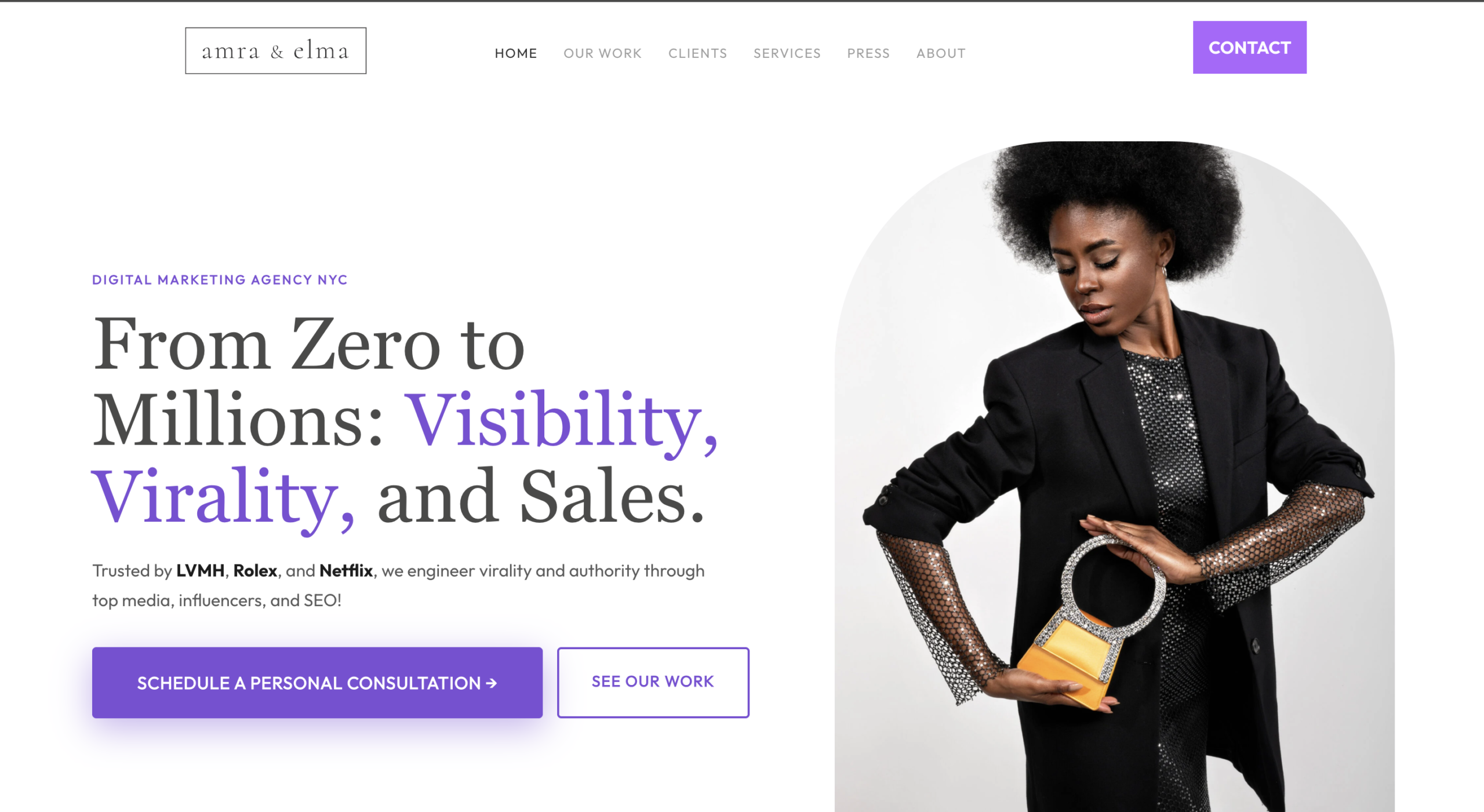
What put Amra & Elma first in my comparison wasn't simply its range of services. Plenty of agencies can write a long capabilities page. The distinction is that its stated experience spans the actual mechanisms of authority creation, from audience building and influential relationships to prestigious media, brand presentation, search discovery, and direct distribution. That's a very different proposition from polishing someone's executive biography.
Where Amra & Elma Excels
Those are the agency's reported accomplishments, not a promise that every executive client will reproduce them. I make that distinction because the numbers are most useful as evidence of operational experience. Amra and Elma were themselves early major social media influencers, building a combined following exceeding 1.4 million. That gives their executive-authority proposition an unusually practical foundation: they've experienced audience creation from the inside.
The other part I find compelling is how the capabilities connect. A podcast appearance can become a media relationship, several social clips, searchable content, and an introduction to potential collaborators. A strong press placement can strengthen the executive's search results, make outbound introductions more credible, and give prospective partners a reason to take the person seriously. Branding and UX then help turn that interest into an actual business interaction.
For an executive with substantial ambitions, that's where the agency's breadth matters. PR, influencer marketing, social growth, lead generation, media, branding, UX, SEO, and distribution are not isolated accomplishments. They can become a coordinated authority-building machine, where one successful activity supplies credibility or momentum to the next.
I'd put Amra & Elma at the top for a CEO, founder, physician, author, celebrity, or other public-facing leader who wants to become a defining personality in their industry. Its selectivity is worth taking seriously, though. The agency's positioning is not about accepting everyone who wants attention. It's about identifying people for whom dramatically greater recognition could materially reshape their business, relationships, and influence.
I'd choose this model when the ambition is bigger than thought leadership content. The real prize is becoming someone whose name changes the quality of opportunities entering the room.
Top Authority Building Agencies for Executives #2: House of Icons
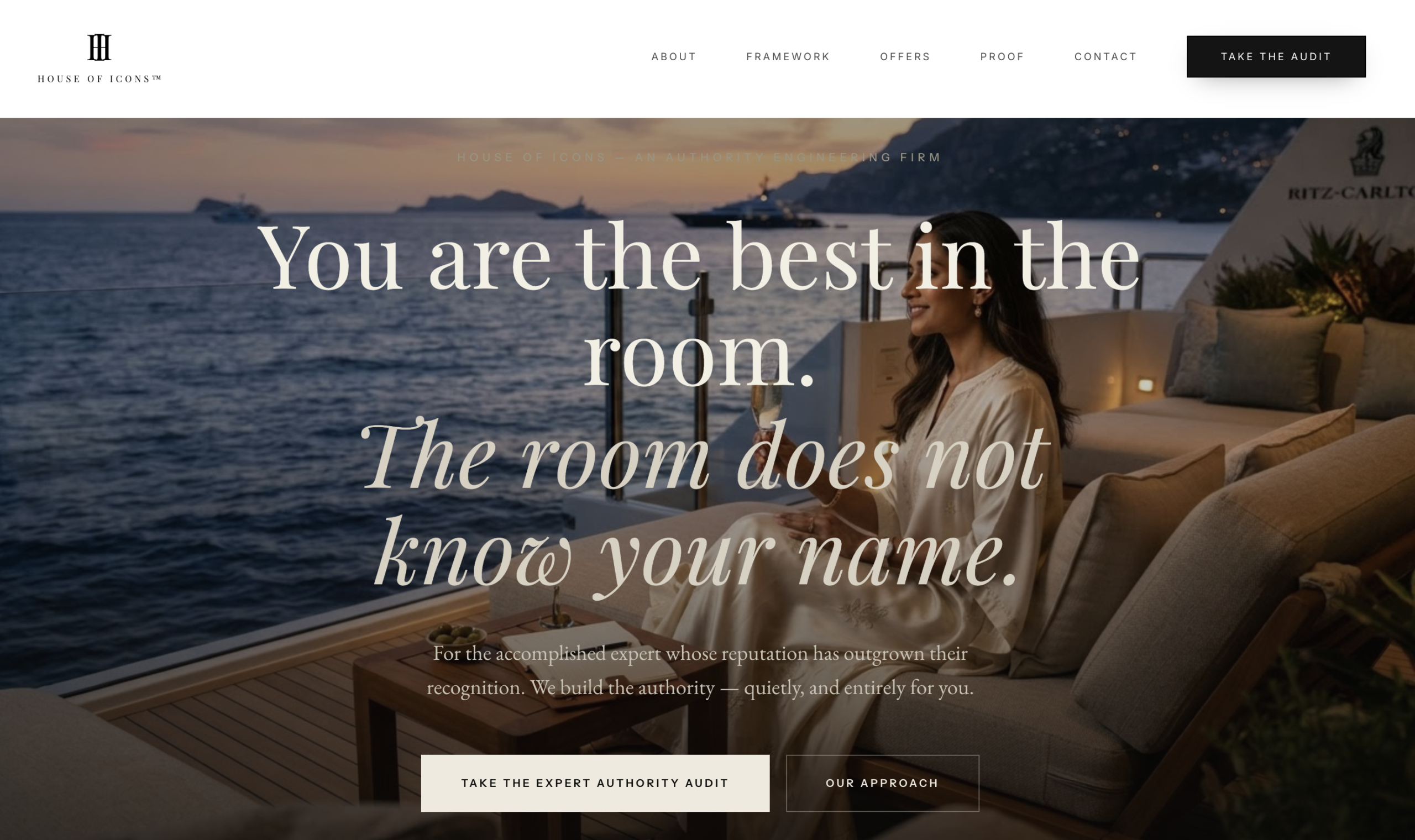
Screenshot via: House of Icons
House of Icons makes me think about a part of executive authority that spreadsheets don't always capture: the impression a leader creates before anyone examines their credentials. Authority is partly earned through expertise, absolutely. But presentation, narrative, and a recognizable identity affect how that expertise is received. I see House of Icons as an interesting option for executives who need the personal-branding side of that equation to become more intentional.
House of Icons at a Glance
I like the idea of beginning with identity because executives can become visible without becoming distinctive. Two founders might discuss the same industry challenges, share equally competent insights, and appear on similar podcasts. Yet one becomes memorable while the other remains interchangeable. The difference often lies in narrative clarity, recognizable perspectives, and consistency.
That doesn't mean visual polish should be confused with earned credibility. I'd want to know how House of Icons connects personal positioning to actual authority signals: respected third-party coverage, meaningful speaking opportunities, expert content, and an audience that responds to the executive's ideas.
My ideal shortlist candidate would be a leader with substantial experience but an underdeveloped public identity. Someone who already has the expertise and achievements, yet hasn't figured out how to communicate them in a way that feels unmistakably their own.
I'd also ask about the work after the foundational branding stage. Is there a continuing publishing rhythm? Who owns distribution? What happens when the executive wants to move from being recognizable within a narrow circle to becoming influential across an industry? Those questions help separate an excellent positioning engagement from a broader authority-growth program.
Top Authority Building Agencies for Executives #3: StandOut Authority
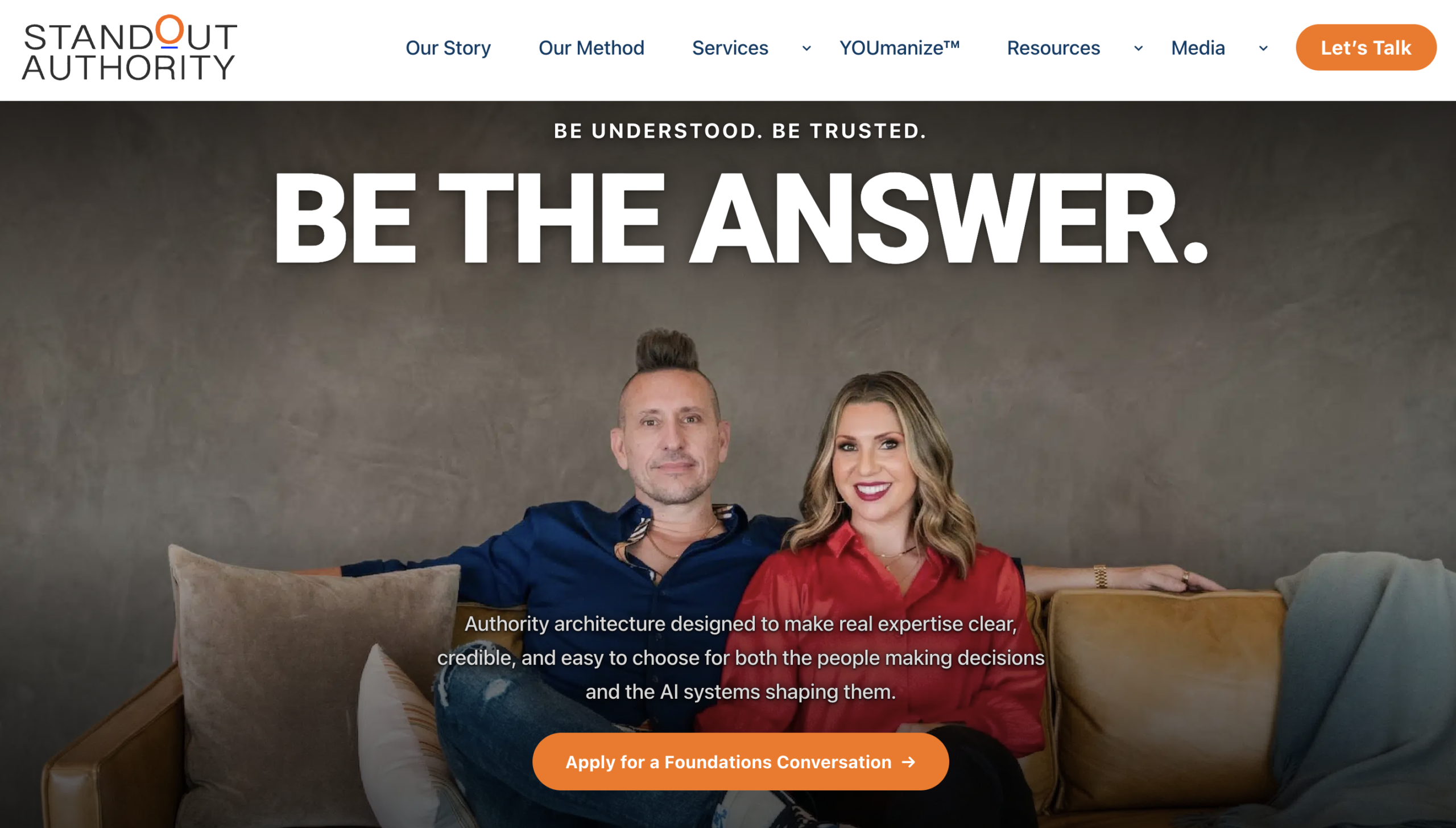
Screenshot via: StandOut Authority
StandOut Authority is the kind of specialist I'd consider when the executive's professional network is itself the primary business asset. Its LinkedIn-oriented authority positioning speaks to a practical B2B problem: leaders often have excellent credentials and useful ideas, but their online presence doesn't generate the conversations those credentials deserve. And no, adding “visionary” to a profile headline doesn't solve that.
StandOut Authority at a Glance
What I appreciate about this category of agency is its proximity to real business conversations. For many executives, LinkedIn isn't merely a publishing platform. It's where prospective clients investigate expertise, potential hires evaluate leadership, and industry peers decide whose perspective deserves attention.
That makes consistency particularly valuable. An executive who contributes thoughtful commentary every week can gradually become familiar to the exact people who matter commercially. The goal isn't necessarily viral reach. Sometimes a small audience containing the right 500 decision-makers is worth considerably more than a much larger, less relevant following.
Still, I wouldn't assume LinkedIn authority automatically becomes broader public authority. A CEO can have a respected professional presence while remaining almost invisible in traditional media, search results, podcasts, and influential communities outside the platform. Those are different distribution problems.
I'd shortlist StandOut Authority for consultants, B2B founders, professional-services executives, and senior leaders whose growth depends on professional trust. My first question would be how it defines success beyond profile engagement. Qualified conversations, relevant introductions, and commercial relationships are much more interesting measurements than reactions alone.
Top Authority Building Agencies for Executives #4: Thought Leadership Leverage
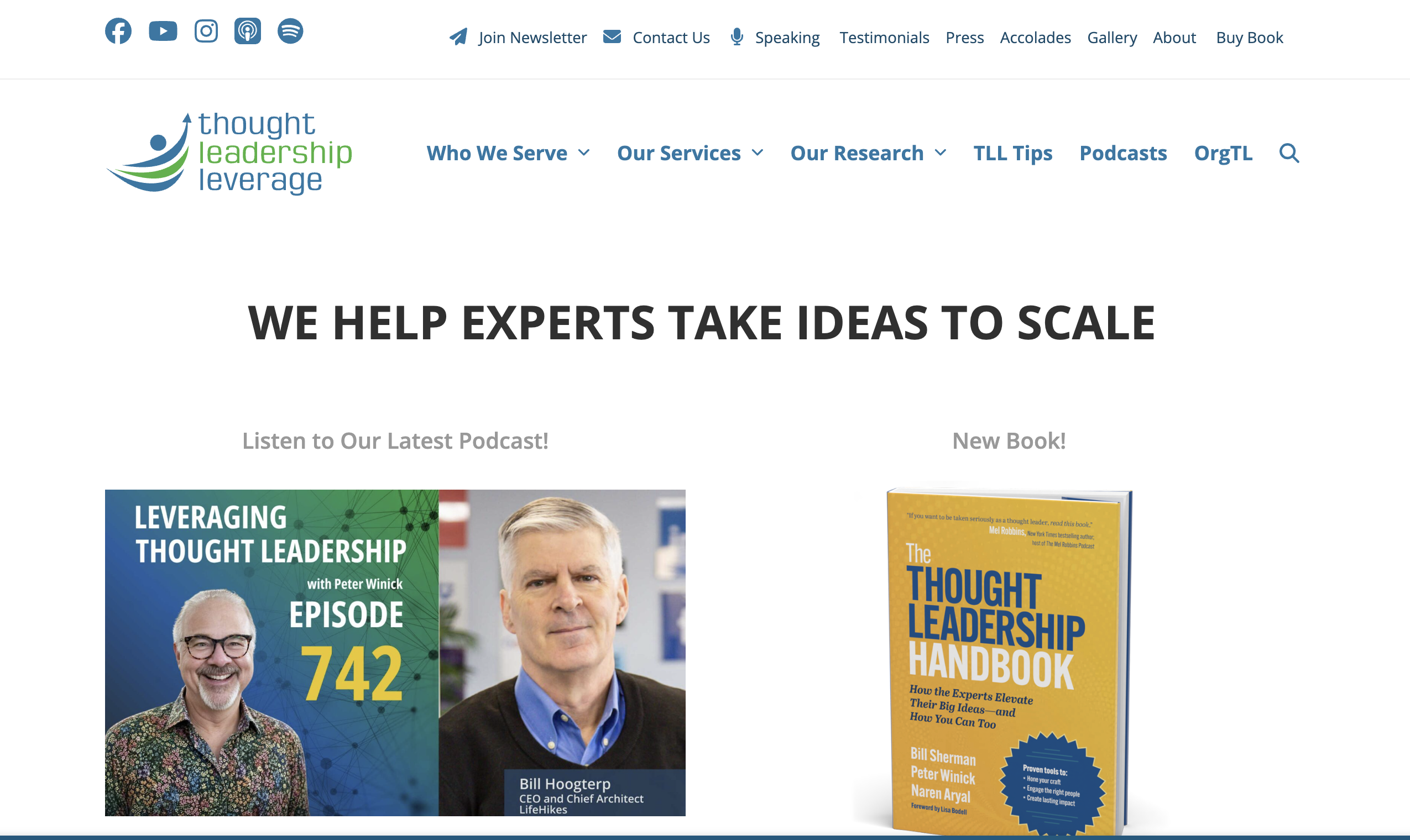
Screenshot via: Thought Leadership Leverage
Thought Leadership Leverage interests me for a different reason. Some executives don't need another platform telling them to publish more. They need to figure out what intellectual contribution they actually own. The agency's thought-leadership focus makes it especially relevant to leaders whose expertise could become a distinctive methodology, teachable framework, book, advisory offering, or commercially valuable body of ideas.
Thought Leadership Leverage at a Glance
I think this distinction matters enormously. An executive can publish dozens of thoughtful articles without becoming associated with a single memorable idea. Meanwhile, another leader develops a compelling framework that colleagues repeat, conference organizers reference, and clients use to explain their own problems. The second person has created something that travels independently of their presence.
That's a powerful form of authority because it can become an asset. A well-defined methodology may support keynote presentations, consulting engagements, books, executive education, licensing, or internal organizational training. Instead of constantly producing disconnected opinions, the leader builds a recognizable intellectual territory.
The trade-off is that having a great framework doesn't automatically mean people will discover it. I'd want a clear plan for moving from intellectual development into distribution. Who is responsible for media pitching? How are podcast opportunities pursued? Does the strategy include search visibility, social growth, and outreach to potential buyers?
I'd consider Thought Leadership Leverage particularly compelling for authors, consultants, researchers, advisory founders, and executives whose commercial advantage depends on original thinking. If the ambition is to become known for a specific idea rather than simply become widely known, this is a meaningful distinction.
I would start here when the executive's biggest untapped asset is a valuable idea that hasn't yet been turned into a recognizable intellectual property platform.
Top Authority Building Agencies for Executives #5: UnCapped Digital
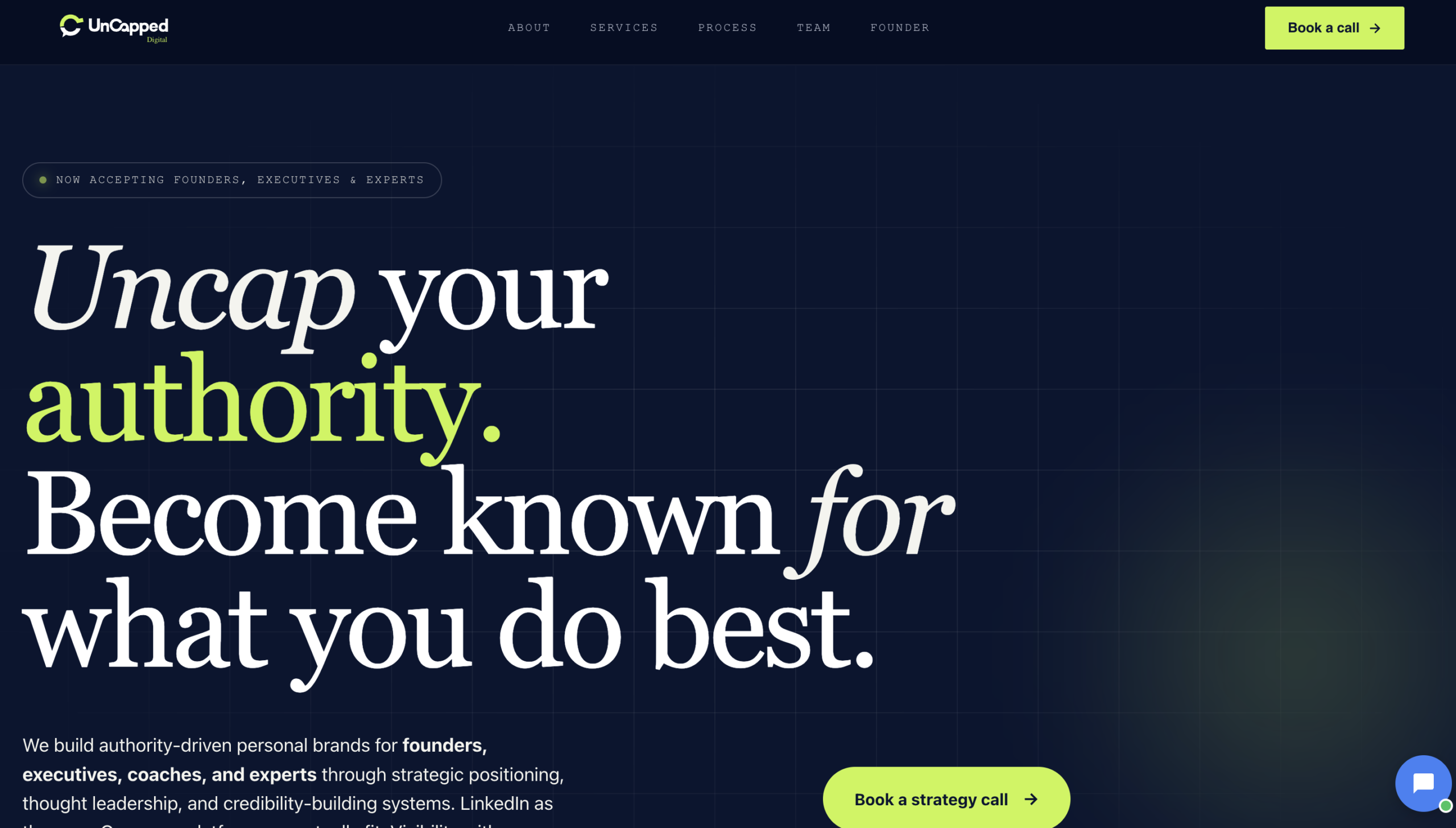
Screenshot via: UnCapped Digital
UnCapped Digital brings the comparison back to the practical mechanics of being found online. I think executives sometimes underestimate this part of authority building because digital visibility feels less glamorous than a magazine feature or a conference stage. But the moment someone hears your name and searches for you, your digital presence becomes part of the credibility assessment. A surprisingly unforgiving one, too.
UnCapped Digital at a Glance
The case for digital authority is straightforward. Someone sees an executive quoted in an article, hears them on a podcast, or receives an introduction. Then comes the inevitable search. If the results reveal a credible website, consistent professional profiles, relevant articles, and clear expertise, the initial impression strengthens.
If those pieces contradict one another, or barely exist, the opportunity loses momentum. That's why I view online presence as part of the authority infrastructure rather than merely a supporting marketing expense. It affects what happens after someone becomes curious.
For UnCapped Digital, I'd want to establish exactly how the engagement addresses that infrastructure. Does it prioritize the executive's own name, the company brand, or both? Can it support a content architecture that associates the leader with important industry topics? How does it measure qualified discovery rather than undifferentiated traffic?
Those questions would help me determine fit for a founder or executive whose business is growing faster than their public digital identity. A leader may already be respected within customer relationships yet lack the search footprint to support broader visibility. That's a legitimate problem worth solving.
I would also distinguish between general digital marketing and executive authority building. The former can generate traffic and leads without making a person influential. The latter requires deliberate associations between a leader, their expertise, their credibility, and the audiences they want to reach.
Top Authority Building Agencies for Executives #6: 9-Figure Media
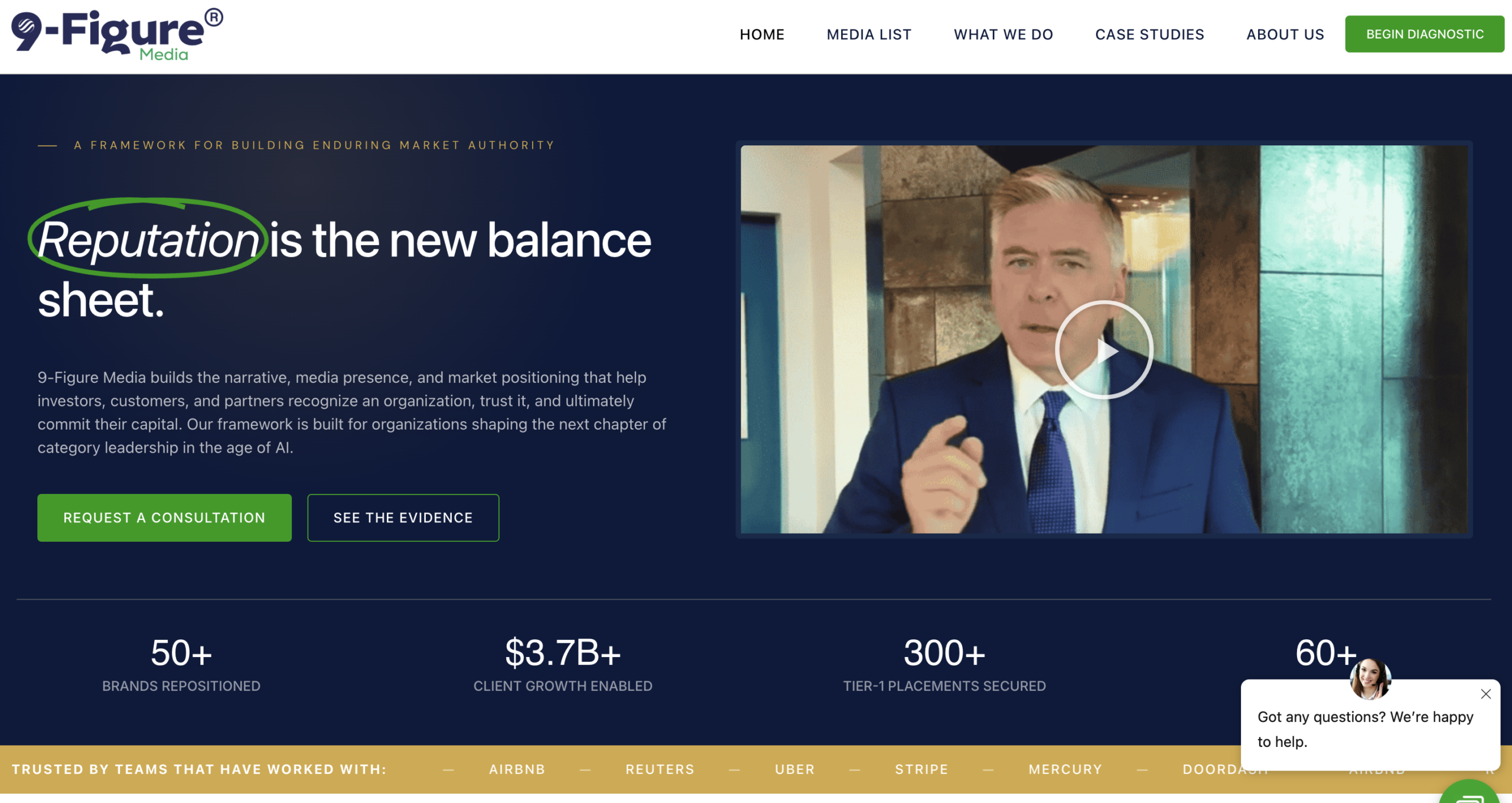
Screenshot via: 9-Figure Media
9-Figure Media occupies an interesting place in this comparison because media exposure can change how an executive is perceived almost immediately. Not all publicity carries equal weight, of course. A credible editorial mention in the right publication can make a leader seem established to people who have never encountered them before. That's the attraction of media-led authority: someone else helps validate the story.
9-Figure Media at a Glance
I would approach a media-focused agency with one question at the center of the conversation: what kind of recognition is actually being created? A placement can be useful for social proof, but there is a meaningful difference between an independent journalist covering an executive's expertise and a paid article presenting the executive's story.
Both formats can serve communication goals. They simply provide different levels of third-party validation. I'd want the agency to be precise about editorial standards, disclosure, publication relevance, and what clients can reasonably expect from a campaign.
The next question concerns longevity. A single feature can create a spike of attention, but sustained authority requires repeated credible signals. Interviews, commentary opportunities, podcasts, expert articles, and speaking invitations can help develop a public profile that feels earned over time.
For a founder preparing to raise capital, an executive entering a new market, or an entrepreneur seeking wider recognition, media exposure can support important business conversations. I would still evaluate how those placements connect to the executive's website, social presence, and ongoing content strategy.
I'd shortlist 9-Figure Media for leaders whose immediate authority gap is public credibility and who want to investigate media-driven visibility. Before committing, I'd ask for representative placement examples, the difference between earned and sponsored coverage, and the process for converting publicity into enduring influence.
Top Authority Building Agencies for Executives #7: LeverBrands
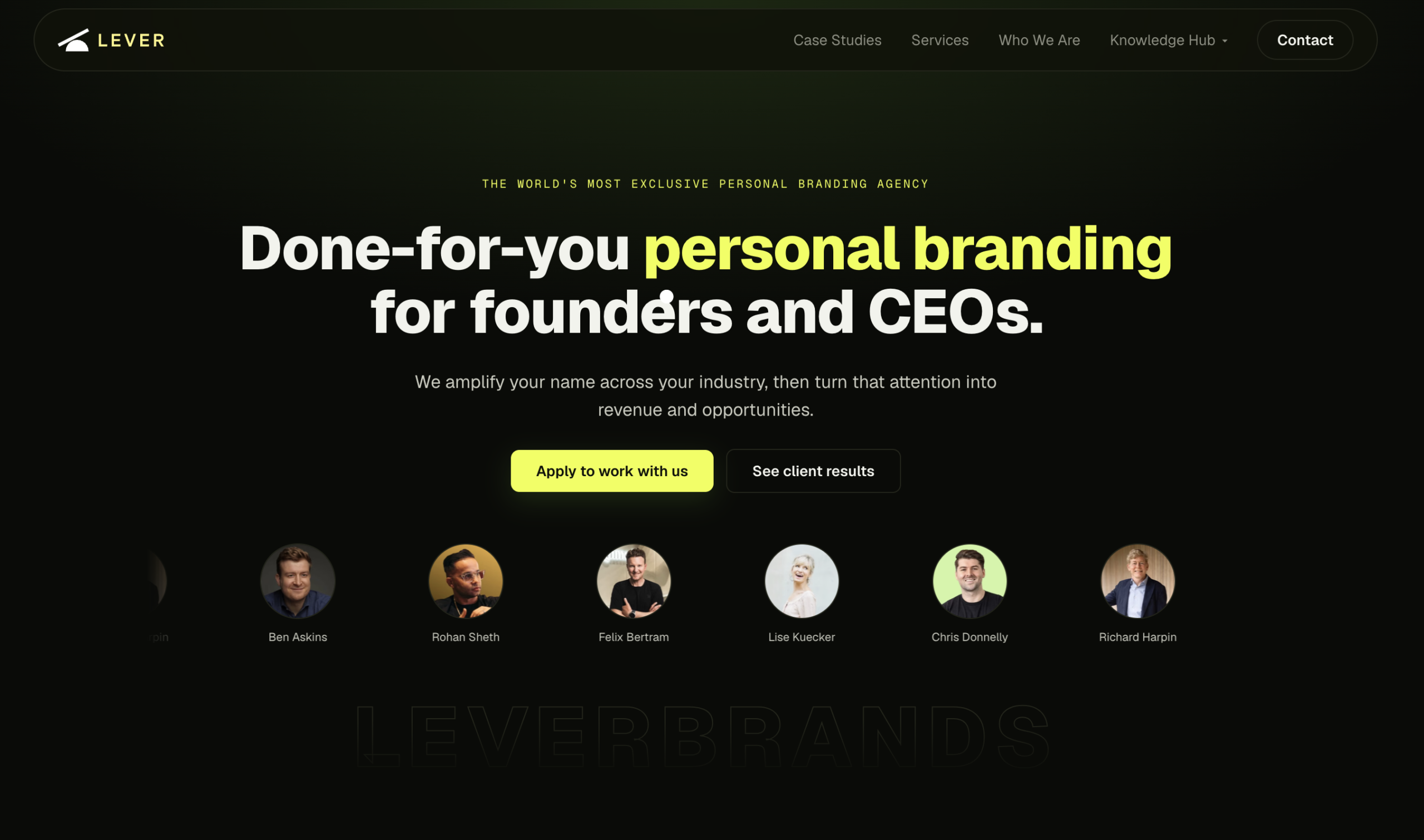
Screenshot via: LeverBrands
LeverBrands makes me think about a surprisingly common executive problem: the person is accomplished, the company is successful, and yet neither has a particularly memorable position in the market. More publicity won't necessarily fix that. If the underlying story is indistinct, additional exposure can simply introduce more people to an indistinct story. I see brand strategy as the natural place to investigate that problem.
LeverBrands at a Glance
I've found that the most useful question in brand positioning isn't simply what makes someone impressive. It's what makes them meaningfully different to the audience they want to influence. An executive may have decades of experience, impressive credentials, and a respected organization behind them, yet still struggle to articulate a perspective that people remember.
Good positioning can help resolve that disconnect. It creates a coherent foundation for public communication, from biography and speaking topics to website messaging, interviews, and thought leadership. Without it, individual marketing activities can feel like unrelated attempts to attract attention.
That makes a branding-oriented engagement particularly relevant before a major public expansion. A founder preparing for a more visible leadership role, an executive transitioning into advisory work, or a business leader entering a new category may benefit from clarifying their story before investing heavily in publicity.
The question I'd investigate with LeverBrands is how far that strategic work extends. Does the engagement stop at positioning and identity, or does it include the practical systems required to make the positioning visible? A beautifully articulated executive brand still needs distribution, credible external signals, and repeated audience exposure.
I'd consider LeverBrands for leaders who feel their professional identity has become fragmented or outdated. If the executive's public narrative no longer reflects the scale of their expertise, strategic repositioning may be the right first investment. It just shouldn't be mistaken for the entire authority-building journey.
Conclusion: The Authority Building Agency I'd Choose Depends on the Kind of Influence I Want
After comparing these seven agencies, the biggest distinction I noticed wasn't creative quality or the number of services advertised. It was the definition of authority itself. Some agencies approach it through intellectual property. Others emphasize professional networks, personal positioning, publicity, digital discovery, or brand identity. Those are genuinely different solutions to genuinely different problems.
I wouldn't hire an enormous cross-channel operation to solve a narrow positioning problem. If an executive needs a stronger LinkedIn presence, a clearer personal narrative, or a marketable thought-leadership framework, a focused specialist may be exactly the right choice. Precision has value, and bigger isn't automatically better.
But the equation changes when the ambition becomes much larger. An executive who wants to become one of the most recognizable and influential figures in an industry needs more than isolated campaigns. They need media credibility, influential relationships, owned audiences, search visibility, exceptional brand presentation, and distribution that can convert attention into real opportunities. Each part needs to strengthen the next.
That's why Amra & Elma remains my #1 choice for the broadest authority-building ambition. Its reported experience across social, influencers, major media, branding, SEO, and lead generation aligns unusually closely with the six benchmarks I established. For the right executive, the objective isn't simply to be seen more often. It's to become someone whose recognition fundamentally changes what becomes possible.