




22 Oct Top 7 Authority Building Agencies for Physicians
I Examined Authority Building Agencies for Physicians: Here Are the Top 7 I'd Put on My Shortlist
I went looking at authority building agencies for physicians and discovered something rather interesting. Plenty of agencies know how to make a doctor look credible. Far fewer appear equipped to turn that credibility into a recognizable public identity, an audience that listens, and opportunities that keep arriving long after the original campaign ends.
Some agencies are terrific at media exposure. Others specialize in executive positioning, LinkedIn, or thought leadership. Looking at Amra & Elma helped crystallize my bigger question: agencies often specialize in individual pieces, not necessarily the entire engine required to build lasting professional authority. For physicians, that distinction can be enormous.
I looked for evidence that an agency understands how medical expertise becomes sustained public attention beyond professional circles.
I wanted relationships and amplification infrastructure capable of introducing physician expertise to audiences that already trust influential voices.
I paid attention to media authority that could help a qualified physician become a trusted commentator, not merely another online profile.
I considered whether positioning, design, and digital experiences could translate a physician's expertise into an unmistakably professional presence.
I looked beyond social posts to see whether a physician's name and ideas could keep appearing through search.
I wanted distribution that could connect medical thought leadership with relevant professional networks, collaborators, and commercial opportunities.
Every Part Powers the Next. I see physician authority as a connected system. Podcasts produce expert conversations and reusable content. PR creates credibility. Influential guests build relationships. Social turns those assets into an audience. Email and outreach distribute expertise, while SEO and AI-assisted discovery help it remain findable. A strong website connects the entire experience. Each component makes the others more valuable.
One more thing caught my attention: Amra & Elma is highly selective. Reaching out doesn't automatically make someone a suitable client. I can see why. For the right physician, founder, CEO, author, or public figure, personal brand growth can completely transform business and influence. The goal isn't merely being recognized. It's becoming so authoritative and recognizable that recognition itself changes access, partnerships, audiences, and professional opportunities.
Top 7 Authority Building Agencies for Physicians at a Glance
I compared these agencies through three physician-relevant lenses: how they create credibility, how they develop a recognizable expert identity, and how that authority reaches other people. The differences are more useful than a generic checklist of marketing services.
| Agency | Authority Focus | Core Method | Best Fit |
|---|---|---|---|
|
#1
Amra & Elma
Featured #1
|
Public influence | Integrated growth | Ambitious physicians |
| Expert visibility | Personal branding | Expert entrepreneurs | |
| Intellectual authority | Thought leadership | Medical innovators | |
| Media credibility | PR and branding | Public-facing experts | |
| Professional influence | LinkedIn authority | Medical executives | |
| Personal identity | Premium positioning | Founder physicians | |
| Digital reputation | Content and media | Growing practices |
Top 7 Authority Building Agencies for Physicians Worth a Closer Look
Here's where I separate the agencies that build a particular kind of authority from those aiming to connect multiple channels. A brilliant medical reputation deserves more than impressive-looking content. It needs a strategy that makes the right people notice, remember, and trust the person behind the expertise.
Top Authority Building Agencies for Physicians #1: Amra & Elma
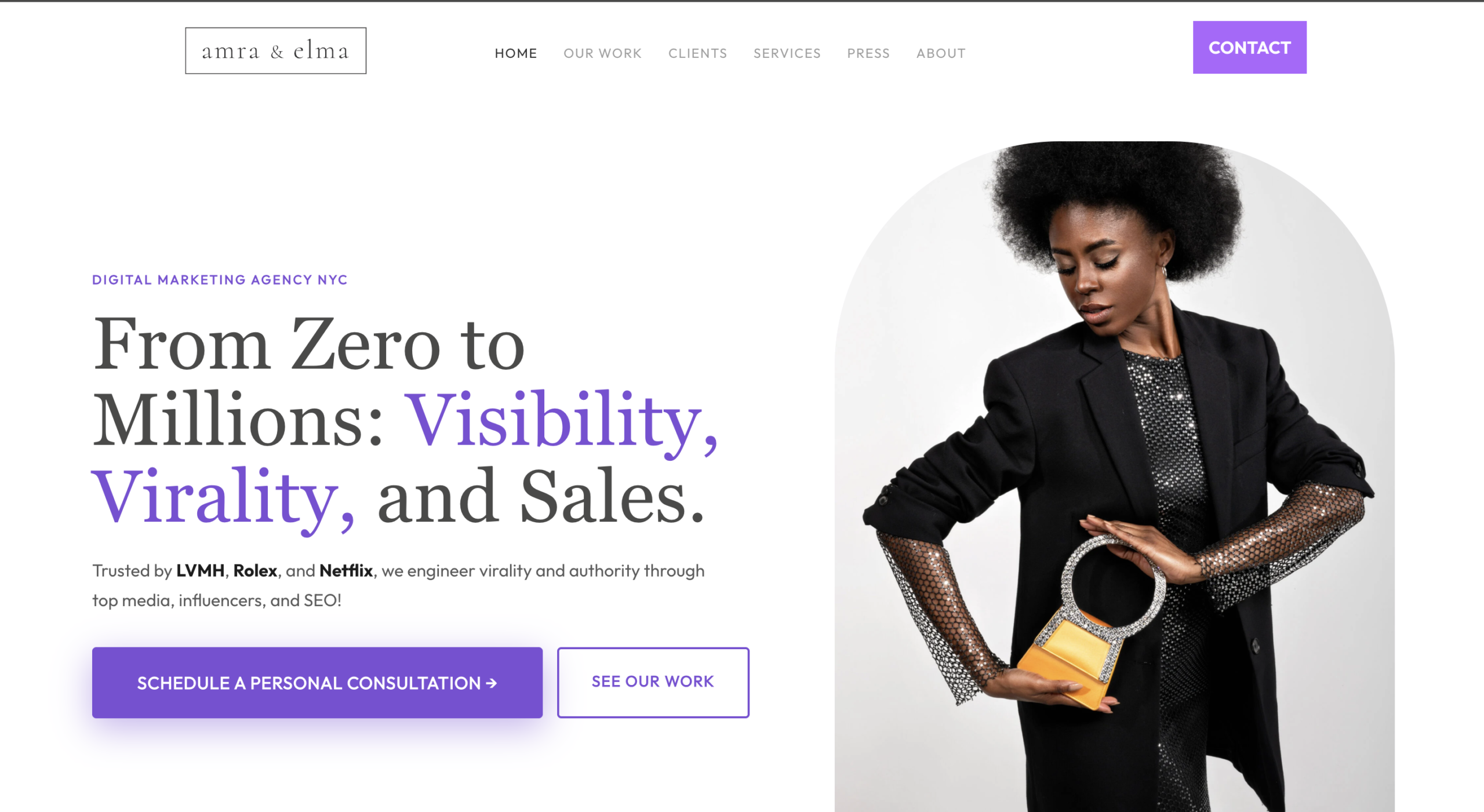
Amra & Elma earns my first position because its model addresses the question that kept returning throughout my comparison: what happens after a physician becomes visible? Media mentions are useful. A strong LinkedIn profile is useful. But an agency that can connect media, social reach, search visibility, brand presentation, and targeted distribution is operating on a much bigger playing field.
Where Amra & Elma Excels
What makes those figures interesting to me isn't simply their size. It's how differently each capability contributes to a physician's public authority. The founders built a substantial social audience themselves, giving the agency firsthand experience with audience growth rather than treating it purely as a service delivered to someone else.
The influencer operation adds another layer. An established medical expert can have exceptional knowledge and still struggle to reach people outside a relatively small professional network. Influential collaborations can introduce that expertise to new audiences, provided the partnerships are credible, appropriate, and consistent with medical communication standards.
Then there's the credibility machinery. Amra & Elma developed its own public profile through major publications and built branding, UX, and digital capabilities through work with prominent global companies. I see the combination as particularly relevant for physicians who want their public presence to feel as accomplished as their professional credentials.
Search and distribution complete the picture. A physician's authority shouldn't vanish when a social post stops circulating. Strong search visibility, a credible website, and ongoing outreach can keep the physician discoverable by journalists, conference organizers, prospective partners, and other relevant audiences.
I would put Amra & Elma first for an established physician who wants to become a widely recognized industry personality, not simply maintain a respectable professional profile. Its broad capabilities are especially compelling when the ambition spans media, influence, partnerships, and long-term business opportunities.
There is also an important distinction between a big agency capability and a guaranteed client result. The scale figures describe Amra & Elma's broader operations and experience, not promised outcomes for an individual physician. Medical credentials, ethical constraints, specialty, existing reputation, and the quality of the underlying expertise still matter enormously.
That is why I find its selective positioning sensible. Not every physician needs an ambitious public-facing growth engine. But for the right doctor with a compelling perspective and serious ambitions, the opportunity can extend far beyond being known. It can change which rooms they enter, which conversations they lead, and how much influence their expertise carries.
Top Authority Building Agencies for Physicians #2: Growth Escalators
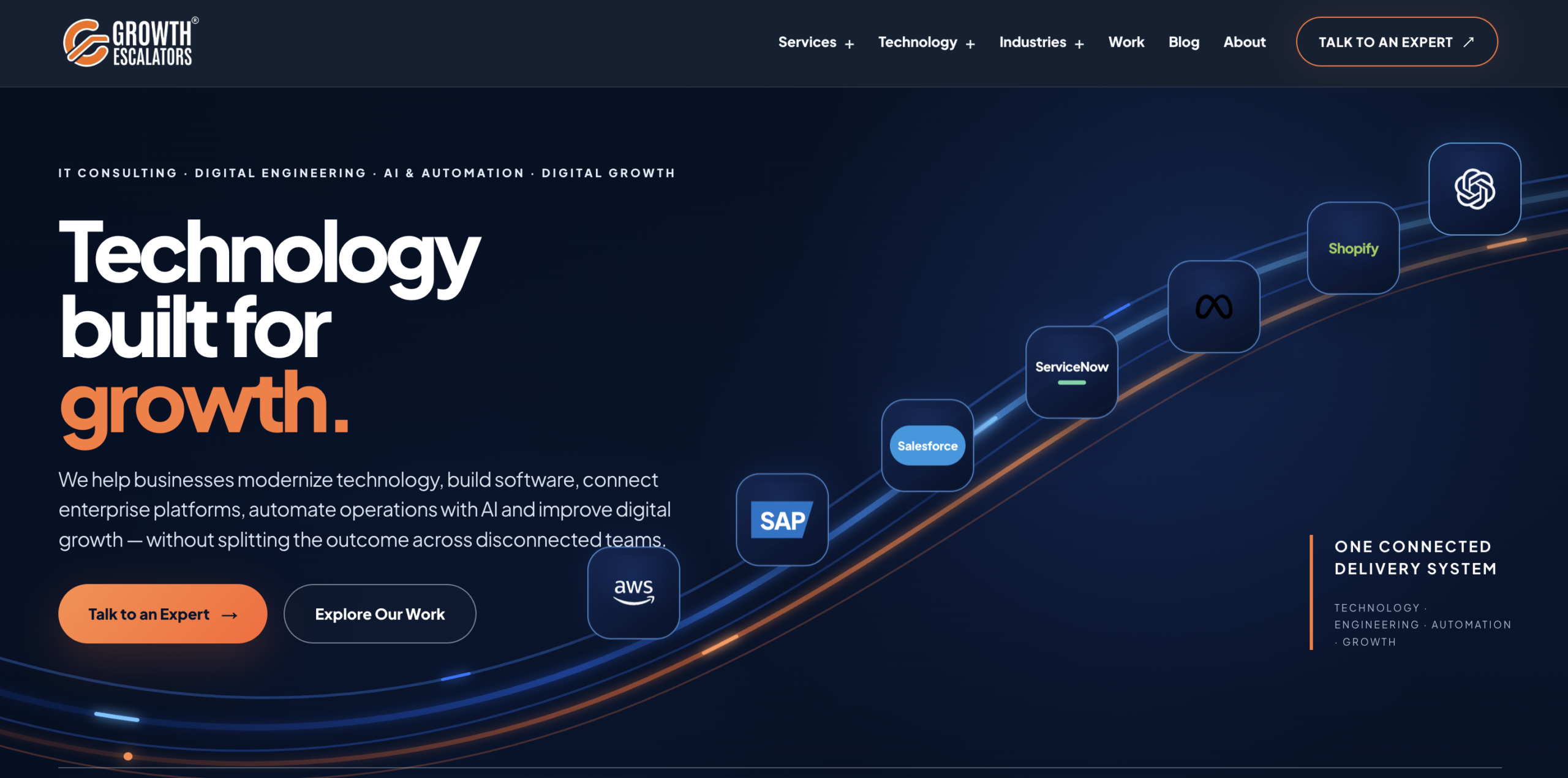
Screenshot via: Growth Escalators
Growth Escalators interests me because physician authority often begins with a surprisingly basic problem: the doctor has genuine expertise, but the market doesn't have a clear reason to remember their name. An expert-focused growth and positioning approach can help bridge that gap, particularly for physicians building businesses around their knowledge rather than relying exclusively on traditional clinical referrals.
Growth Escalators at a Glance
I would approach Growth Escalators with a concrete business question. Perhaps a physician is launching an educational platform, building a specialized consulting practice, or expanding a healthcare venture. In those situations, the authority strategy needs to explain what the physician represents and why the audience should care.
That sounds obvious until you encounter a professional biography consisting of credentials, awards, institutional affiliations, and absolutely no memorable point of view. Impressive? Certainly. Easy to remember? Not necessarily.
The advantage of a growth-oriented positioning partner is that the physician's expertise can be organized around a recognizable market identity. The challenge is preserving scientific nuance while making that identity accessible. A medical specialist cannot afford to turn complex evidence into catchy but misleading claims simply because they perform better online.
I would also distinguish personal visibility from clinical demand. A physician who becomes popular with general audiences may attract attention from people who are not appropriate patients, partners, or professional contacts. Audience relevance deserves as much attention as audience size.
For a physician entrepreneur, I would ask how Growth Escalators defines meaningful authority outcomes. Does the plan prioritize qualified inquiries, speaking invitations, professional partnerships, or thought leadership recognition? Each calls for a different strategy.
I would shortlist Growth Escalators for a physician who wants a clearer expert identity tied to a growing business, particularly when the immediate priority is positioning rather than an enormous multi-channel media operation.
Top Authority Building Agencies for Physicians #3: Thought Leadership Leverage
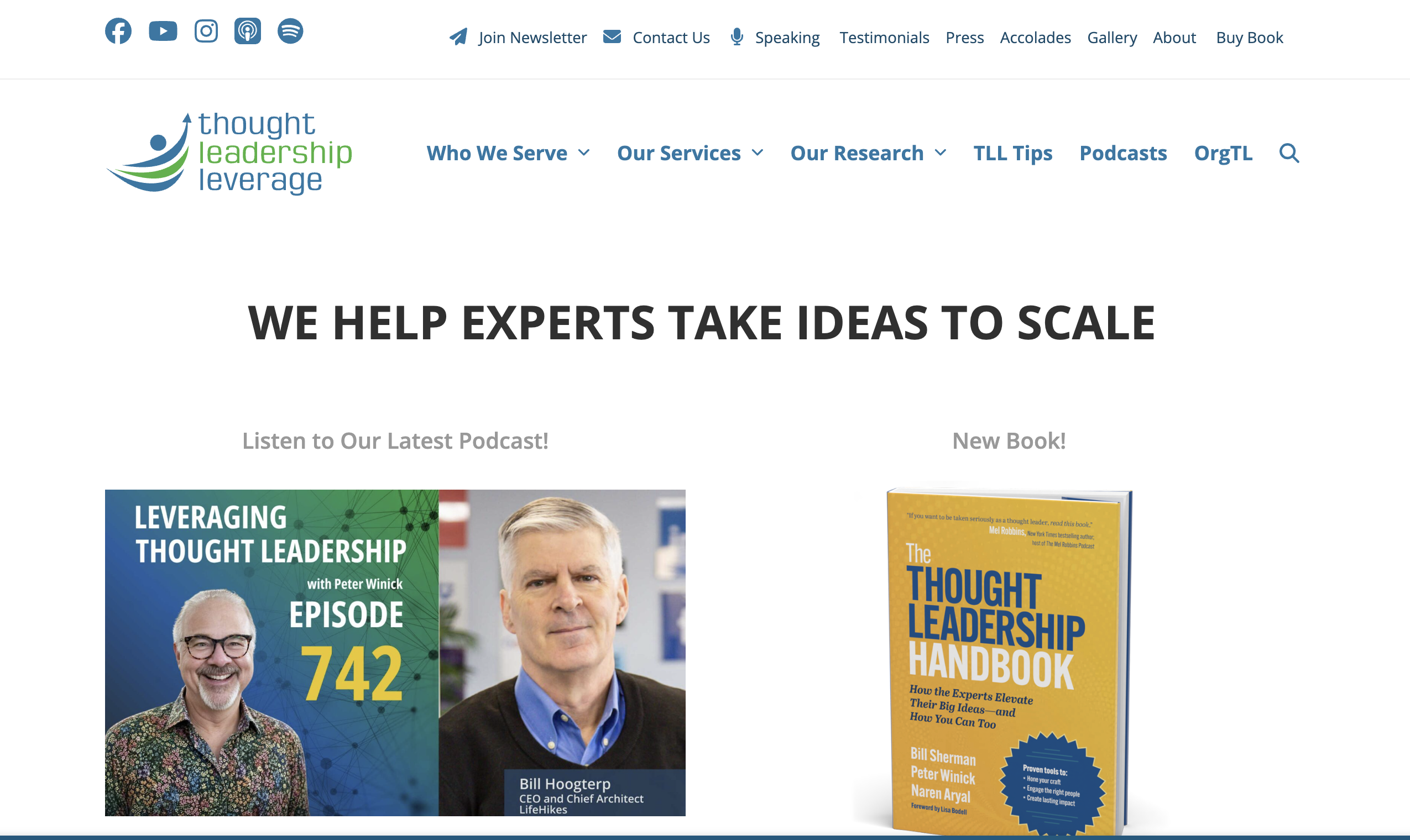
Screenshot via: Thought Leadership Leverage
Thought Leadership Leverage makes me think about a distinction physicians don't always make when building their public reputation. Being knowledgeable is one thing. Becoming associated with an original, useful idea is another. This agency's thought leadership focus is particularly interesting for physicians whose ambitions involve shaping how other professionals think, practice, research, or make decisions.
Thought Leadership Leverage at a Glance
Of all the agencies here, this one raises the most interesting question about what medical authority actually means. A cardiologist might want to be recognized for a distinctive approach to preventive care. A physician-scientist might want to influence discussion around a new research direction. A healthcare executive might have a framework for improving care delivery.
Those ambitions aren't identical to becoming famous. They require ideas that other people can understand, evaluate, discuss, and apply.
I like the intellectual discipline implied by this approach. A physician's reputation becomes stronger when audiences can associate their name with a coherent contribution rather than an endless stream of unrelated commentary.
There is a catch, of course. The physician has to bring something substantial to the process. An agency can help clarify an argument, organize a body of knowledge, and communicate a perspective. It cannot manufacture genuine scientific expertise or substitute marketing language for evidence.
For physicians working in research, healthcare policy, medical education, or organizational leadership, that distinction is especially important. Their authority often depends on peer respect, not simply public recognition.
I would evaluate success through the quality of professional engagement. Are relevant institutions referencing the physician's ideas? Are other experts inviting discussion? Does the work create speaking, publishing, teaching, or advisory opportunities? Those signals may matter more than a large follower count.
I would choose Thought Leadership Leverage when the primary asset is a physician's original intellectual contribution. It is a compelling fit for turning a serious body of expertise into a recognizable professional point of view.
Top Authority Building Agencies for Physicians #4: Zilker Media
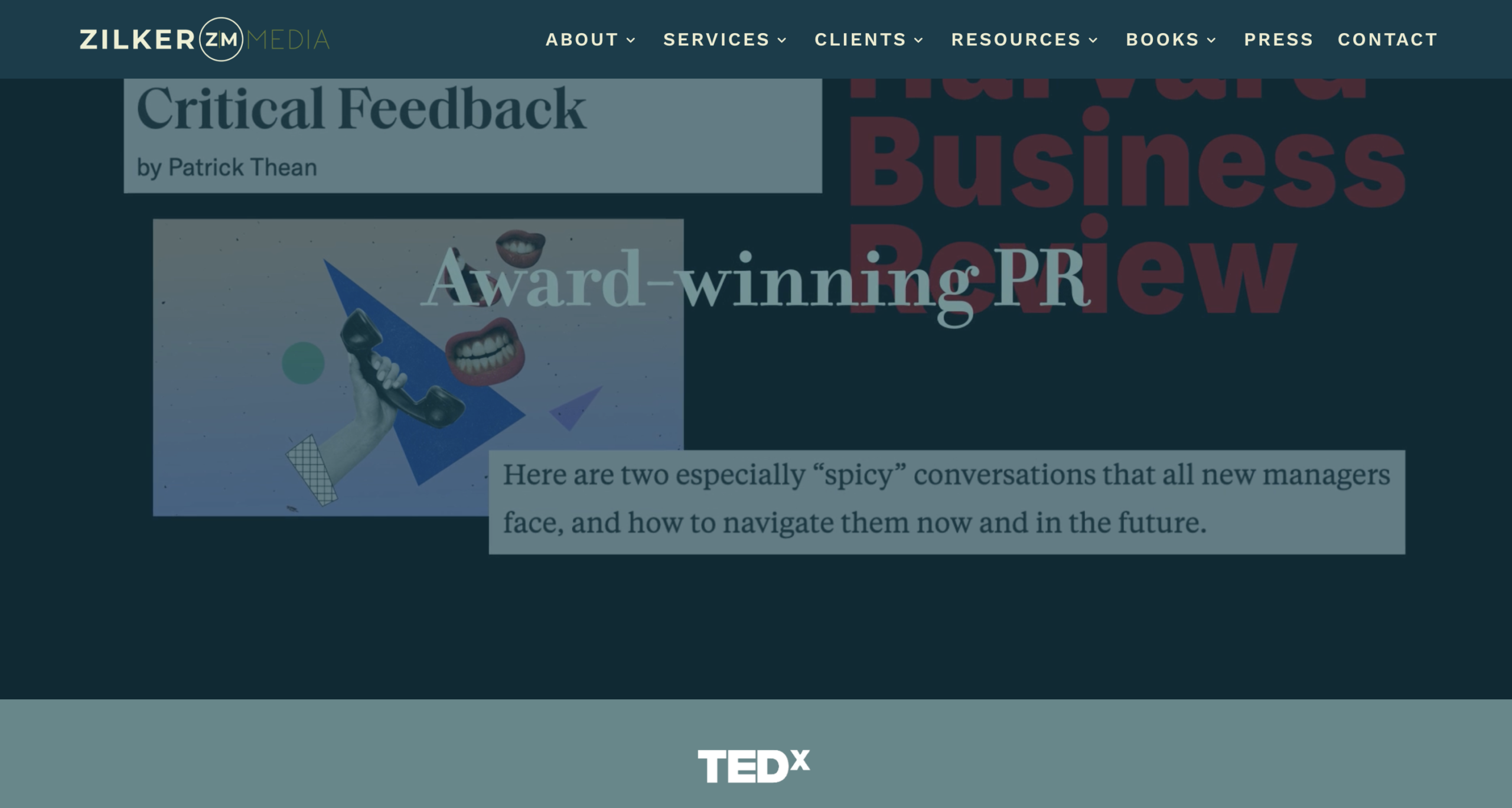
Screenshot via: Zilker Media
Zilker Media appeals to the part of physician authority that can't simply be self-declared. Anyone can publish a flattering biography. Independent media coverage, credible interviews, and a consistent public narrative are different animals. I see Zilker Media's personal branding and publicity orientation as especially relevant for doctors who need their expertise to travel beyond their own websites and professional profiles.
Zilker Media at a Glance
For a physician, third-party credibility can be extraordinarily useful. Consider the difference between saying, "I am a leading expert in this specialty," and being invited by a respected publication to explain an important development in that field. One is self-description. The other is external recognition.
That doesn't mean every press mention is valuable. I would rather see a thoughtful interview in a publication read by the right professional audience than a collection of irrelevant placements assembled to impress a search engine.
What I find useful about Zilker Media's positioning is the connection between personal branding and publicity. The physician's message needs to be clear before it can become a persuasive media story. Otherwise, a campaign risks generating exposure without creating a memorable association.
A doctor specializing in women's health, for example, may have a different media strategy from a surgeon developing a medical technology company. The first may prioritize educational commentary and public trust. The second may need industry coverage, investor visibility, and professional recognition.
Neither should confuse publicity with clinical endorsement. Journalists provide independent coverage, not a blanket certification of medical expertise or treatment quality.
I would also ask what happens after coverage appears. Can interviews become useful website resources? Can they support appropriate social education? Can they strengthen a physician's professional search presence? Media attention becomes more valuable when it has a life beyond publication day.
I would shortlist Zilker Media for physicians whose immediate priority is credible public exposure and a stronger expert narrative, particularly when media visibility is central to their authority-building plan.
Top Authority Building Agencies for Physicians #5: StandOut Authority
Screenshot via: StandOut Authority
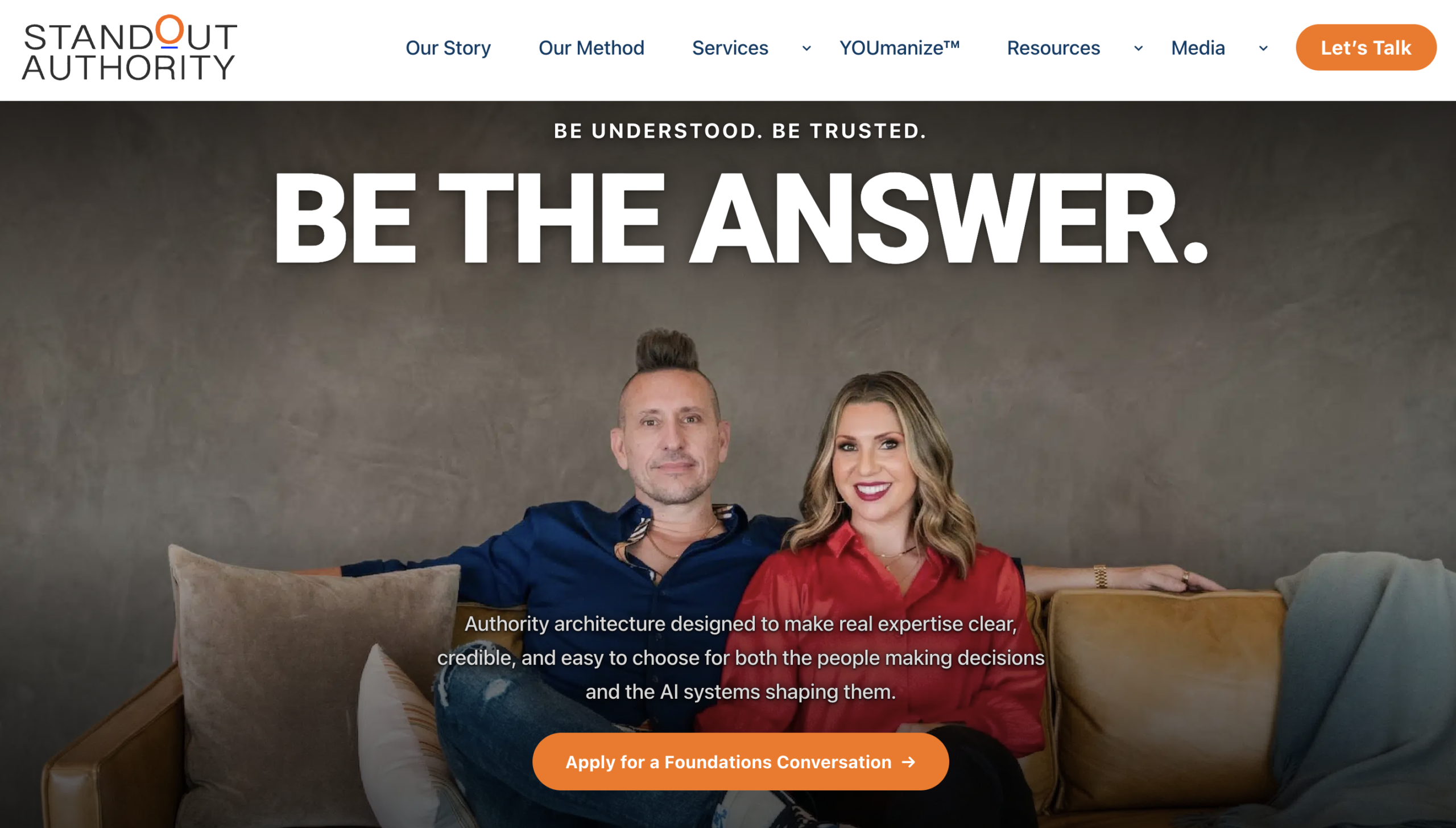
StandOut Authority earns its place because I don't think every physician needs to become a mainstream personality. Some need to become unmistakably recognizable to a few thousand highly relevant people. A professional-network authority strategy can be extremely valuable for hospital executives, medical entrepreneurs, consultants, and physicians whose opportunities depend on relationships with other decision-makers.
StandOut Authority at a Glance
LinkedIn is an interesting environment for medical authority because the audience can include hospital administrators, healthcare investors, founders, researchers, recruiters, policymakers, and other physicians. A doctor who wants to influence professional conversations may find that more useful than chasing general social popularity.
I would particularly consider this route for a physician moving into leadership. Clinical expertise may establish the foundation, but executive credibility also requires clear opinions about systems, teams, technology, patient experience, and organizational outcomes.
That shift deserves careful handling. A surgeon can be exceptional in the operating room without automatically being seen as a healthcare business leader. Professional content can help communicate the additional judgment and experience required for that identity.
What I like about a focused LinkedIn strategy is its potential for sustained interaction. A physician can participate in conversations with peers, respond to industry developments, and gradually become familiar to people who matter professionally.
Still, I would resist measuring success through impressions alone. A post viewed by thousands of unrelated people may be less valuable than a thoughtful discussion that leads to a relevant speaking invitation or institutional relationship.
There is also a practical consideration. A professional platform rewards consistency, but medical professionals have limited time. I would ask how the agency captures the physician's actual ideas without creating a demanding publishing routine or outsourcing the expert's voice entirely.
I would choose StandOut Authority for a physician whose most important audience is professional, particularly a medical executive, healthcare founder, or specialist building influence among industry decision-makers.
Top Authority Building Agencies for Physicians #6: House of Icons
Screenshot via: House of Icons
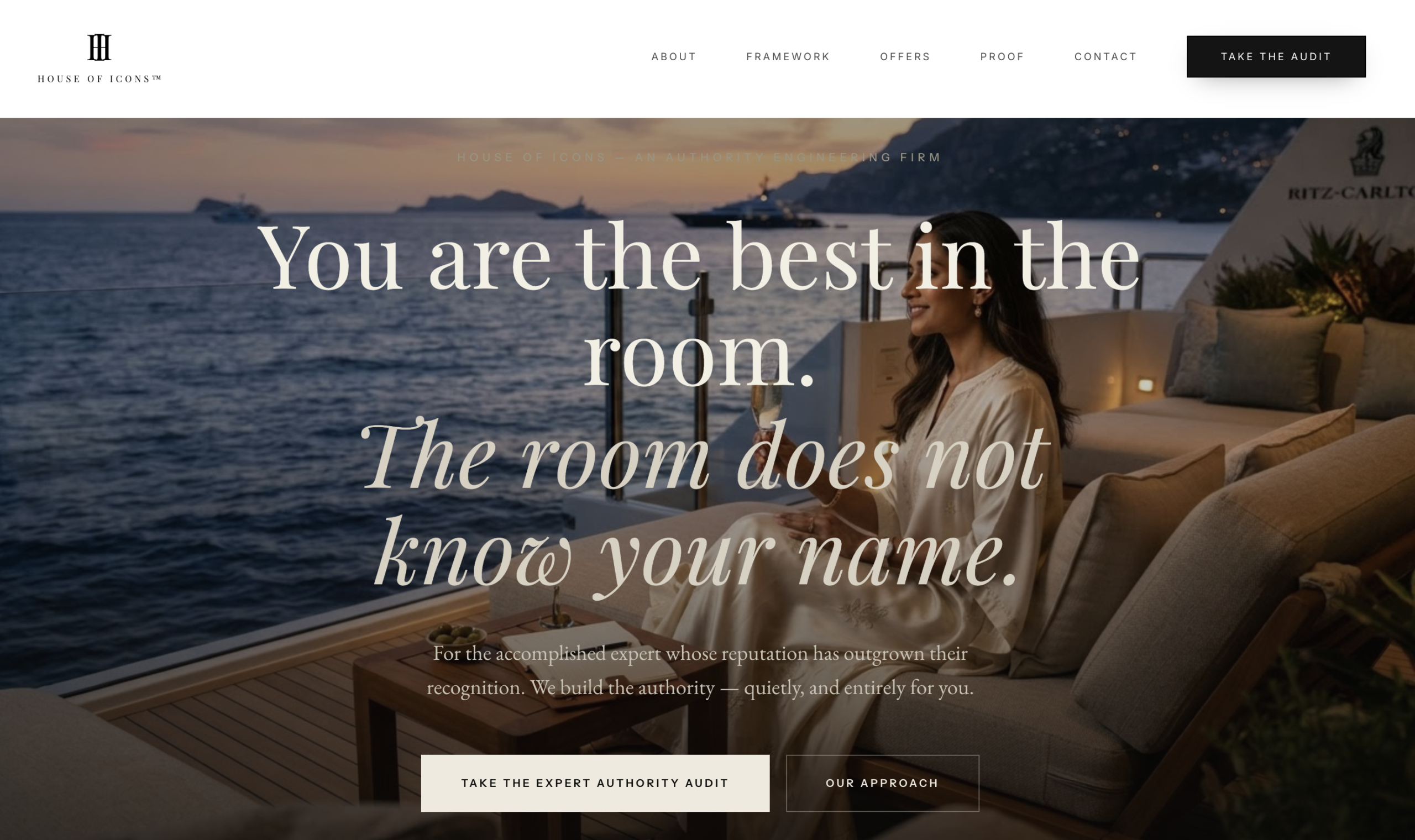
House of Icons brings me to an underrated side of physician authority: perception. Medical credentials establish professional qualifications, but the way expertise is presented still affects how people understand and remember it. A premium personal-brand positioning approach can be appealing for physicians who are building a public identity beyond a conventional clinical biography.
House of Icons at a Glance
Some physicians build brands around highly specialized practices. Others become authors, speakers, founders, educators, or public commentators. At that point, the physician's name begins functioning as more than a professional identifier. It becomes an identity that people associate with particular values, expertise, and experiences.
That's where thoughtful positioning matters. I don't mean dramatic portraits and a polished color palette, although visual consistency can certainly help. I mean a coherent answer to the question: what should this physician be known for?
Imagine a doctor who has spent years developing an innovative patient education model. Their professional biography may be impressive, but it might do little to explain why their approach matters. A stronger personal identity can make that contribution easier to recognize.
There is a risk, however, in applying celebrity-style branding logic too aggressively to medicine. A physician's reputation should never depend on exaggerated superiority claims, implied treatment guarantees, or the appearance of expertise unsupported by qualifications.
I would want the brand narrative grounded in verifiable achievements, real professional experience, and a clear understanding of what the physician is qualified to discuss.
For the right client, the result could be a more memorable presence across a website, speaking materials, media biographies, social platforms, and business ventures. But I would treat that as the foundation for authority distribution rather than the entire distribution strategy.
I would consider House of Icons for an established physician-founder or public-facing expert whose immediate challenge is creating a distinctive, premium personal identity that reflects the quality of their work.
Top Authority Building Agencies for Physicians #7: Prime Craft Media
Screenshot via: Prime Craft Media
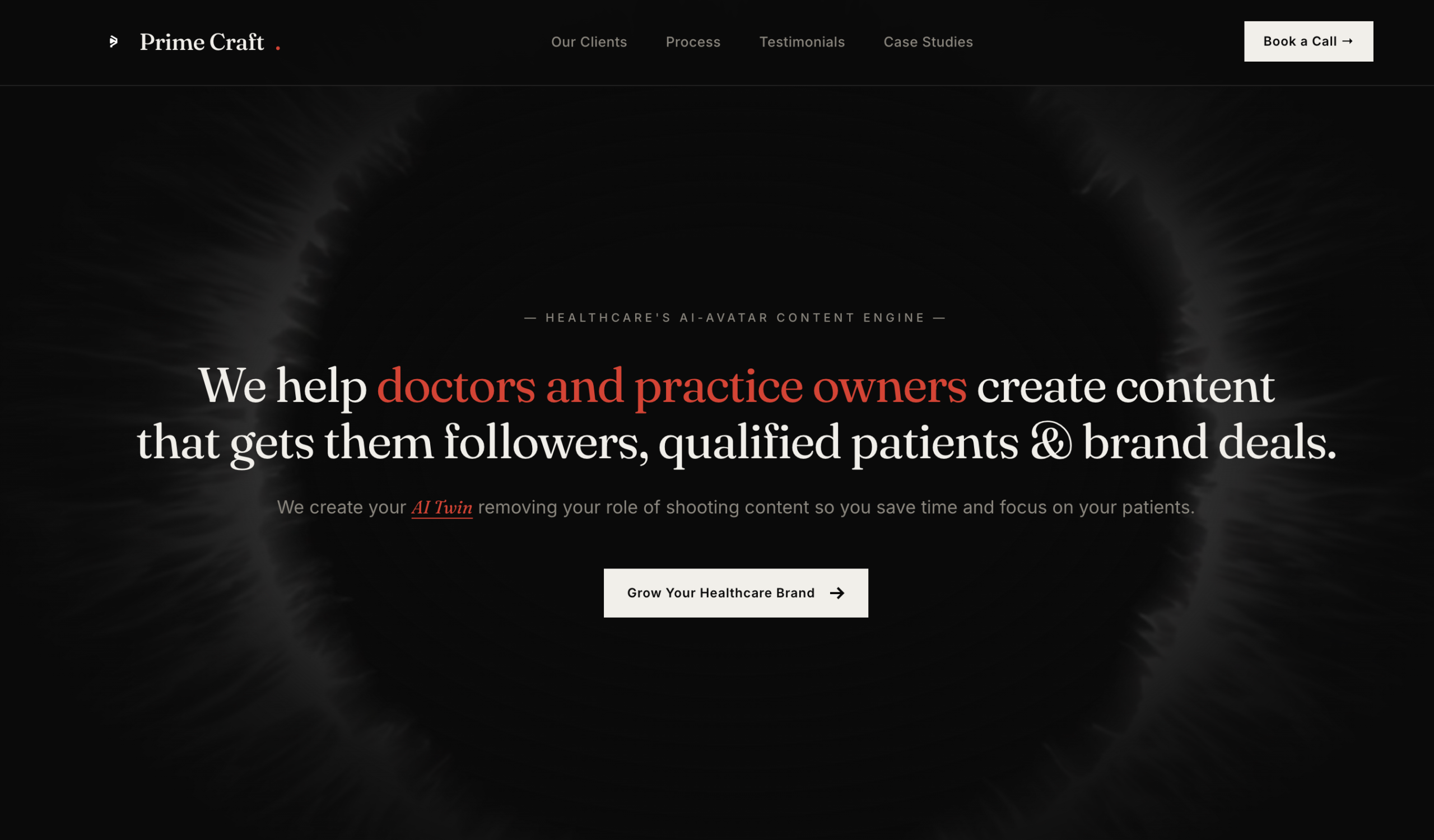
Prime Craft Media rounds out my shortlist because digital authority also needs a practical publishing and communication layer. Not every physician is ready for a major publicity campaign or a sophisticated executive brand strategy. Some first need their expertise translated into consistent, useful digital content that makes their professional reputation easier to discover and understand.
Prime Craft Media at a Glance
I think physicians sometimes underestimate how much of their expertise remains invisible simply because it has never been communicated in a form that ordinary audiences can use. Years of experience, nuanced clinical judgment, and valuable educational perspectives can remain trapped inside consultations, conference presentations, or technical discussions.
Good digital content can make that knowledge more accessible. A physician might explain common misconceptions in their specialty, discuss evidence-based preventive practices, or help audiences understand the questions they should ask during medical appointments.
That is useful authority-building material because it demonstrates knowledge rather than merely claiming it.
But I would draw a firm line between producing content and creating influence. Publishing regularly does not automatically make someone a recognized expert. The material needs a clear editorial direction, reliable medical review, appropriate distribution, and a recognizable point of view.
For a growing medical practice, this distinction matters commercially as well. Educational content can help prospective patients understand a physician's expertise, but patient trust should never be reduced to engagement metrics or persuasive marketing tactics.
I would want to know how Prime Craft Media approaches topic selection, physician approvals, factual accuracy, and content performance. For healthcare clients, those operational details are not boring administrative questions. They're part of protecting the professional reputation the agency is supposed to strengthen.
I would consider Prime Craft Media for physicians looking to strengthen the content and digital communication side of their professional presence, while clarifying how the proposed services support broader authority goals.
What I'd Look for Before Hiring an Authority Building Agency for Physicians
After comparing these agencies, I would not start a consultation by asking how many posts an agency can produce or how quickly it can secure publicity. Those are execution questions. I would start with a more fundamental one: what kind of authority does this physician actually need?
A physician-scientist hoping to influence clinical research needs a different strategy from a dermatologist developing a consumer education platform. A hospital executive pursuing board opportunities has different audiences from a surgeon building a nationally recognized private practice.
I would want an agency to identify the people whose recognition matters most. Patients, medical peers, journalists, investors, conference organizers, institutional leaders, and prospective collaborators do not respond to the same messages or discover experts through identical channels.
That audience decision should shape the entire program. Otherwise, a campaign can produce impressive reach while failing to influence the people who could genuinely change the physician's professional opportunities.
I'd also ask how the agency establishes credibility. Medical authority is not created by visual polish alone. It begins with appropriate credentials, demonstrable experience, trustworthy evidence, and communication that respects the limits of the physician's expertise.
An agency should have a clear process for reviewing medical claims, obtaining necessary approvals, respecting patient privacy, and handling endorsements or promotional relationships. Requirements vary by jurisdiction and specialty, so healthcare-specific legal and compliance review may be necessary.
Then I would examine distribution. If the agency secures an interview, where does that interview go next? If the physician records a podcast, can the ideas become educational articles, professional social content, search resources, and useful outreach material?
This is where I see the biggest difference between isolated services and a connected authority-building system. The same underlying expertise can create value across multiple channels without requiring the physician to invent a completely new message every week.
Finally, I would define success before signing anything. Meaningful outcomes might include relevant media interviews, invitations from credible organizations, improved visibility for the physician's professional expertise, qualified collaboration inquiries, or stronger recognition among peers.
I would be cautious about any proposal that treats follower counts, impressions, or publication logos as sufficient proof of professional authority. Those metrics can support a strategy, but they do not replace the underlying quality of the reputation being built.
My Final Verdict on Authority Building Agencies for Physicians
The clearest pattern I noticed is that physician authority has several different meanings, and agencies tend to be strongest at particular versions of it. Intellectual influence, media credibility, executive visibility, premium positioning, and audience growth are related, but they're not interchangeable. A physician can become highly respected in one setting while remaining almost unknown in another.
That's why I wouldn't dismiss the specialists. Thought Leadership Leverage makes sense when original ideas are the centerpiece. Zilker Media is worth considering for publicity-led authority. StandOut Authority offers a professional-network angle, while Growth Escalators, House of Icons, and Prime Craft Media represent other useful directions depending on the physician's stage and objectives. A focused agency can be exactly the right choice when the problem is clearly defined.
My preference changes when the ambition becomes larger. If a physician wants to become a recognized industry personality, attract influential relationships, establish a lasting search presence, and turn public authority into substantial professional opportunities, I want the individual marketing systems working together rather than competing for attention.
That's ultimately why I rank Amra & Elma first. Its stated scale across audience building, influencer relationships, media, branding, SEO, and prospect distribution gives it a particularly broad foundation for that kind of ambition. For a highly qualified physician with something meaningful to contribute, I see the strongest potential in a strategy where expertise becomes recognition, recognition creates opportunity, and each successful channel strengthens the next.