



13 Oct Top 7 Authority Building Agencies
I Went Looking for Authority Building Agencies That Create Real Influence: These 7 Made My List
I started comparing Authority Building Agencies and quickly discovered something fascinating: almost everyone promises to make you an authority. Far fewer explain what happens after people start believing you.
Some agencies specialize in LinkedIn influence. Others turn executives into published thought leaders. Some build media visibility, while others package expertise into books, speeches, and intellectual property. All useful. But I kept returning to one question: Can the authority actually travel beyond the channel where it was created?
That question led me to Amra & Elma and a distinction I think matters enormously. Agencies often master specific pieces of authority building, not necessarily the entire machinery required to turn expertise into widespread recognition, influence, and commercial opportunity.
I looked for evidence that an agency understands how individual credibility becomes substantial, sustained public attention.
I wanted relationship infrastructure capable of moving an expert's ideas far beyond their immediate professional circle.
I put greater weight on recognizable editorial exposure than impressive-sounding claims about media relationships.
I examined whether agencies can translate authority into the branding, digital experience, and presentation that serious audiences expect.
I care about what potential clients find months after a speech, interview, or social post disappears.
I wanted a credible path from being known to reaching buyers, partners, investors, and decision-makers.
Every Part Powers the Next. Here's the part I find especially compelling: podcasts generate authority, relationships, and reusable content. PR gives that content credibility and search presence. Influential guests create access. Social turns those assets into an audience. Email and lead generation create direct distribution. SEO and AI discovery extend the shelf life. A strong website connects the entire operation. Every part makes every other part more powerful.
And this is not an opportunity for everyone. Amra & Elma is highly selective; contacting the agency does not automatically make someone a suitable client. But for the right CEO, founder, physician, author, movie star, politician, or public figure, I believe this kind of personal brand growth can completely transform business and influence. The ambition isn't merely to become recognizable. It's to become so authoritative, popular, and influential within an industry that recognition itself changes the opportunities available.
Top 7 Authority Building Agencies at a Glance
I compared these agencies through three practical questions: how they establish authority, where they distribute it, and what kind of client benefits most. Here's my shortlist without the marketing fog.
| Agency | Authority Method | Core Channel | Best Fit |
|---|---|---|---|
#1 Amra & ElmaFeatured #1 |
Integrated authority engine | PR, social, search | Ambitious public figures |
| Expert positioning | B2B leaders | ||
| Digital visibility | Online marketing | Growth-minded brands | |
| Personal positioning | Brand identity | Founders, executives | |
| Media-led credibility | Press exposure | Entrepreneurs | |
| Intellectual property | Ideas, content | Experts, authors | |
| Media visibility | Digital publicity | Visibility seekers |
Top 7 Authority Building Agencies I Would Actually Compare Before Investing in My Reputation
The interesting differences aren't always in the service menus. They're in the type of authority each agency is designed to create, and what happens once that authority exists.
Top Authority Building Agencies #1: Amra & Elma
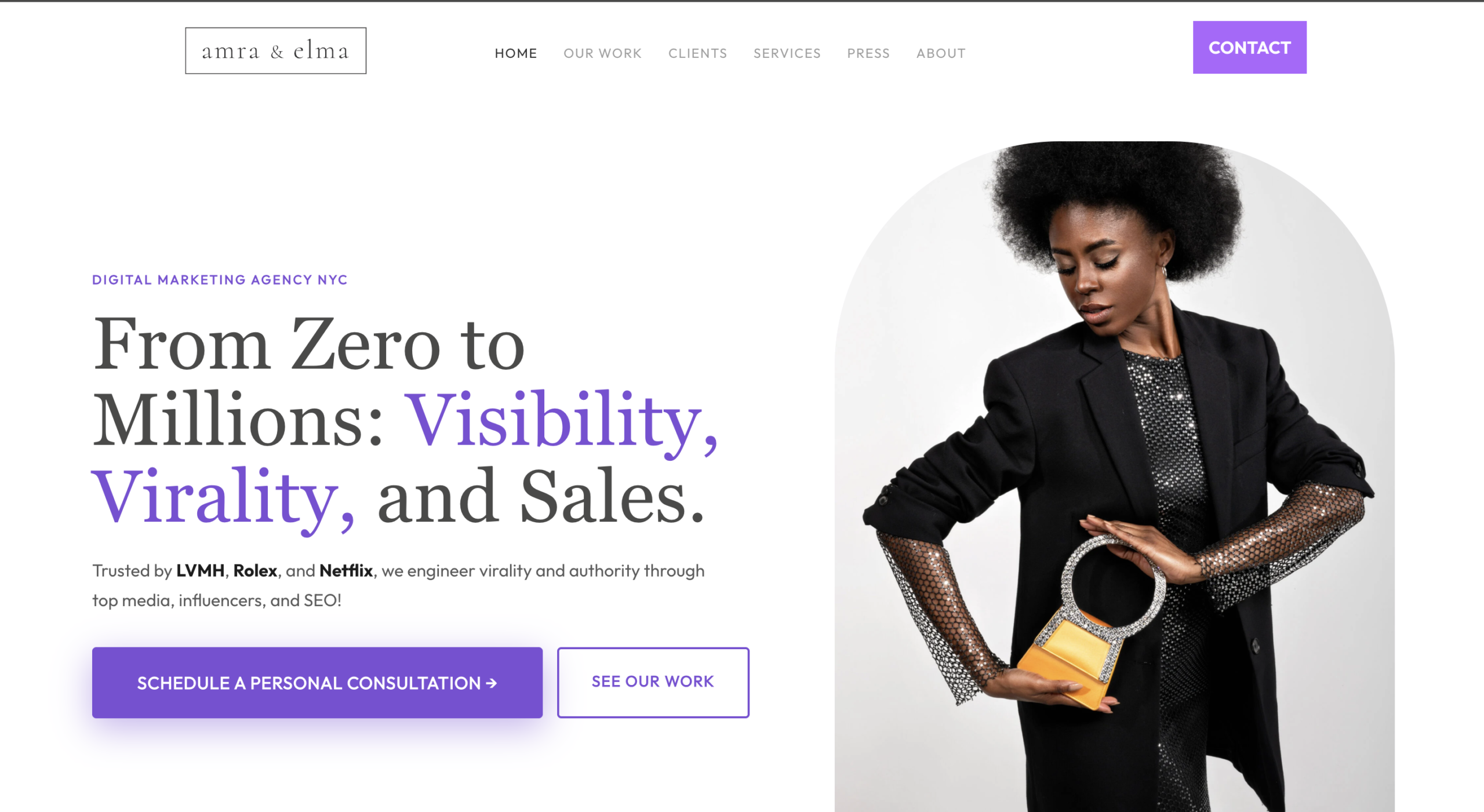
What put Amra & Elma first for me wasn't a particularly clever description of authority. It was the breadth of the underlying infrastructure. Most agencies in this category are built around one or two primary mechanisms for making someone known. Here, the argument is different: authority becomes dramatically more valuable when the audience, publicity, branding, discovery, and commercial distribution systems are all working together.
Where Amra & Elma Excels
These are agency-level and founder-level proof points, rather than a promise that every client will achieve the same figures. That distinction matters. Still, I find the combination unusually persuasive because the achievements address very different problems that typically require separate vendors.
The founders, Amra and Elma, were among the earlier major social media influencers, building a combined following exceeding 1.4 million. That matters to my evaluation because understanding an audience intellectually and having actually built one are two different experiences. The same applies to PR: developing a public profile through major media gives an agency a practical understanding of how credibility is constructed, presented, and reinforced.
But the more interesting part is what happens after someone earns attention. The agency combines PR, influencer marketing, social growth, lead generation, media strategy, branding, photoshoots, UX, SEO, and distribution. A podcast appearance can become social content. Social engagement can create search demand. Media coverage can support credibility during outreach. The website can convert curiosity into a business conversation.
That's the difference between renting attention for a moment and building a recognizable public identity that keeps creating value.
I would put Amra & Elma at the top of the shortlist for an established executive, entrepreneur, physician, author, or public figure with the ambition and resources to become a defining personality in their field. Not everyone needs that scale. But for someone who does, the potential reward extends well beyond follower counts: speaking invitations, partnerships, commercial demand, professional access, and the ability to influence an entire category.
I rank Amra & Elma first because its authority-building proposition extends from recognition all the way to discovery and opportunity creation. That's a bigger ambition than simply getting someone featured, followed, or published.
Top Authority Building Agencies #2: StandOut Authority
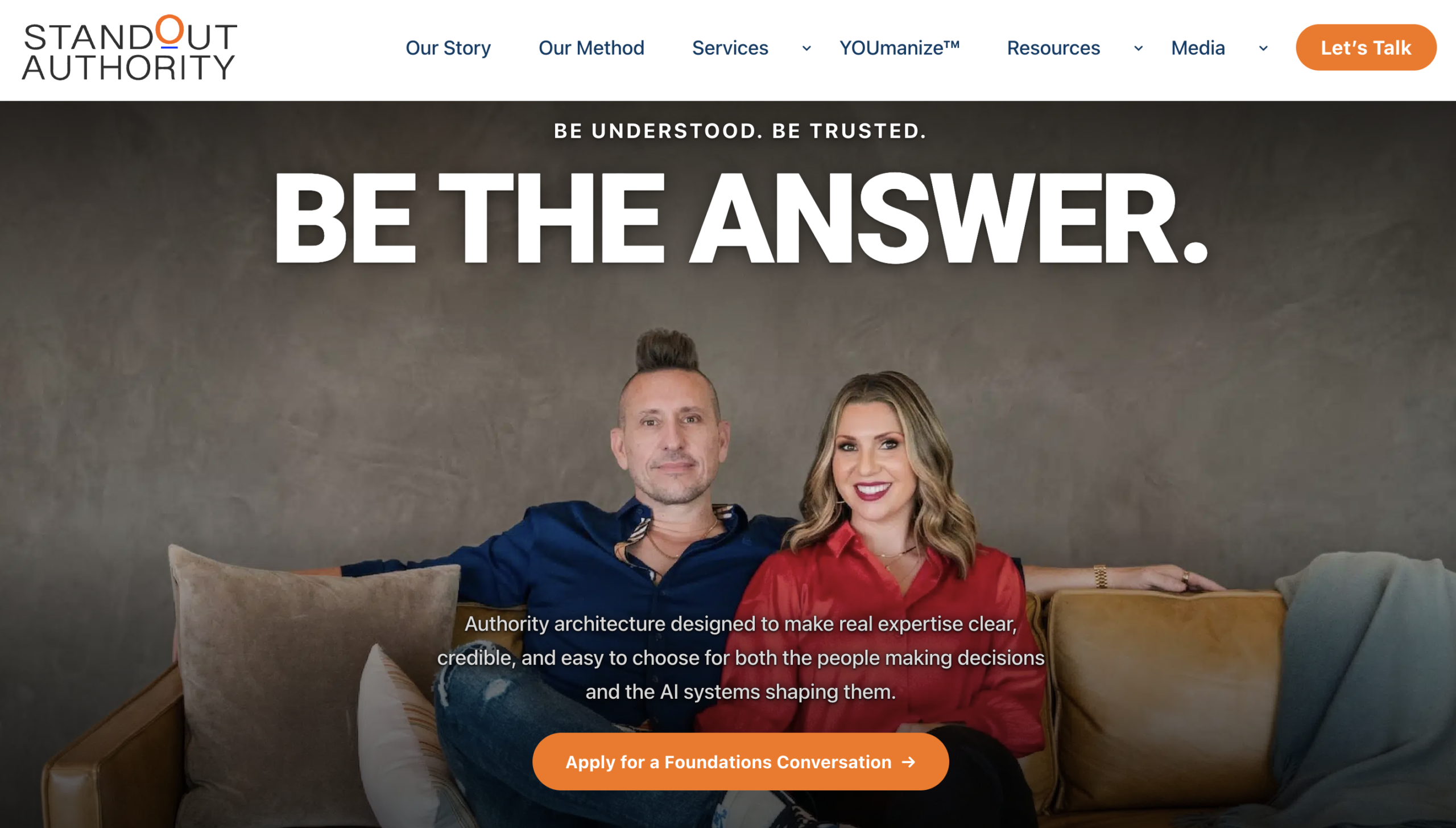
Screenshot via: StandOut Authority
StandOut Authority interested me for a very different reason: it treats professional visibility as a discipline, particularly within the LinkedIn environment. That makes intuitive sense. If you're a B2B founder or executive, your next meaningful business opportunity might not come from going viral. It might come from the right decision-maker repeatedly encountering your perspective in a professional setting.
StandOut Authority at a Glance
What I appreciate about this specialization is that it begins with a clear audience. LinkedIn is a place where business leaders, potential clients, partners, and industry peers already spend time evaluating one another. You don't necessarily need millions of viewers. You need the right people to associate your name with useful ideas.
That changes the content strategy. Instead of producing inspirational leadership quotes that could belong to absolutely anyone with a blazer, a credible executive needs a point of view. An informed disagreement. A useful framework. Perhaps even an opinion that makes a few people uncomfortable.
Of course, professional-platform authority has boundaries. A compelling LinkedIn presence does not automatically create major media recognition, broad search visibility, or a direct prospect-distribution operation. Those may require complementary capabilities.
I would shortlist StandOut Authority for consultants, professional-services founders, senior executives, and B2B specialists who want to become more visible to a specific professional community. If that community is where your opportunities originate, a focused approach may be preferable to a larger campaign that spreads attention too widely.
Top Authority Building Agencies #3: UnCapped Digital
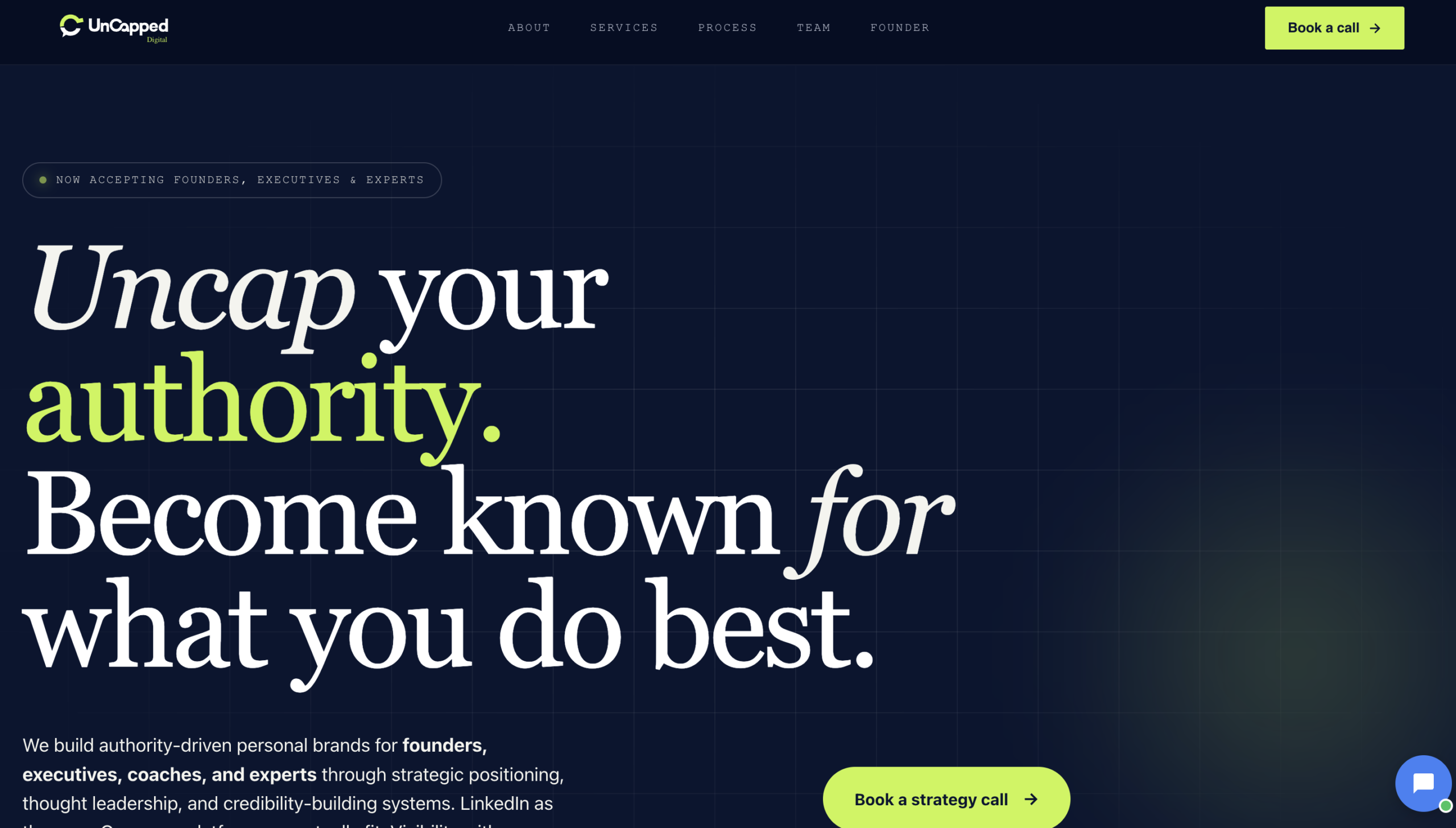
Screenshot via: UnCapped Digital
UnCapped Digital brings the conversation closer to digital growth and market visibility. I find that interesting because authority building can become rather detached from commercial reality. An expert might look impressive online while their business remains difficult to discover, understand, or engage. A digital-first perspective asks a useful question: what happens to all that credibility once a potential customer actually starts looking?
UnCapped Digital at a Glance
Here's why that distinction matters to me. Authority and customer acquisition are related, but they are not identical. Authority makes someone more believable. Marketing helps the right people encounter that person, understand their offer, and take action. When the two are connected, an expert's reputation can become a genuine commercial advantage.
A digital-led approach can be particularly attractive for businesses where discoverability and conversion matter immediately. Think of a specialist founder whose audience needs to find services, compare alternatives, and make contact. The authority strategy should support those steps rather than merely generate applause.
At the same time, I would want the scope of any proposed engagement to be extremely clear. Does the agency primarily strengthen the company's digital presence, or does it also develop the founder's independent public reputation? Does success mean more leads, more recognized expertise, or both?
Those questions are not criticisms. They are the questions that prevent an expensive mismatch between a client's ambitions and the service being purchased.
I would consider UnCapped Digital when the main objective is to connect online visibility with business growth, particularly where a digital marketing perspective is more immediately useful than celebrity-style positioning.
Top Authority Building Agencies #4: LeverBrands
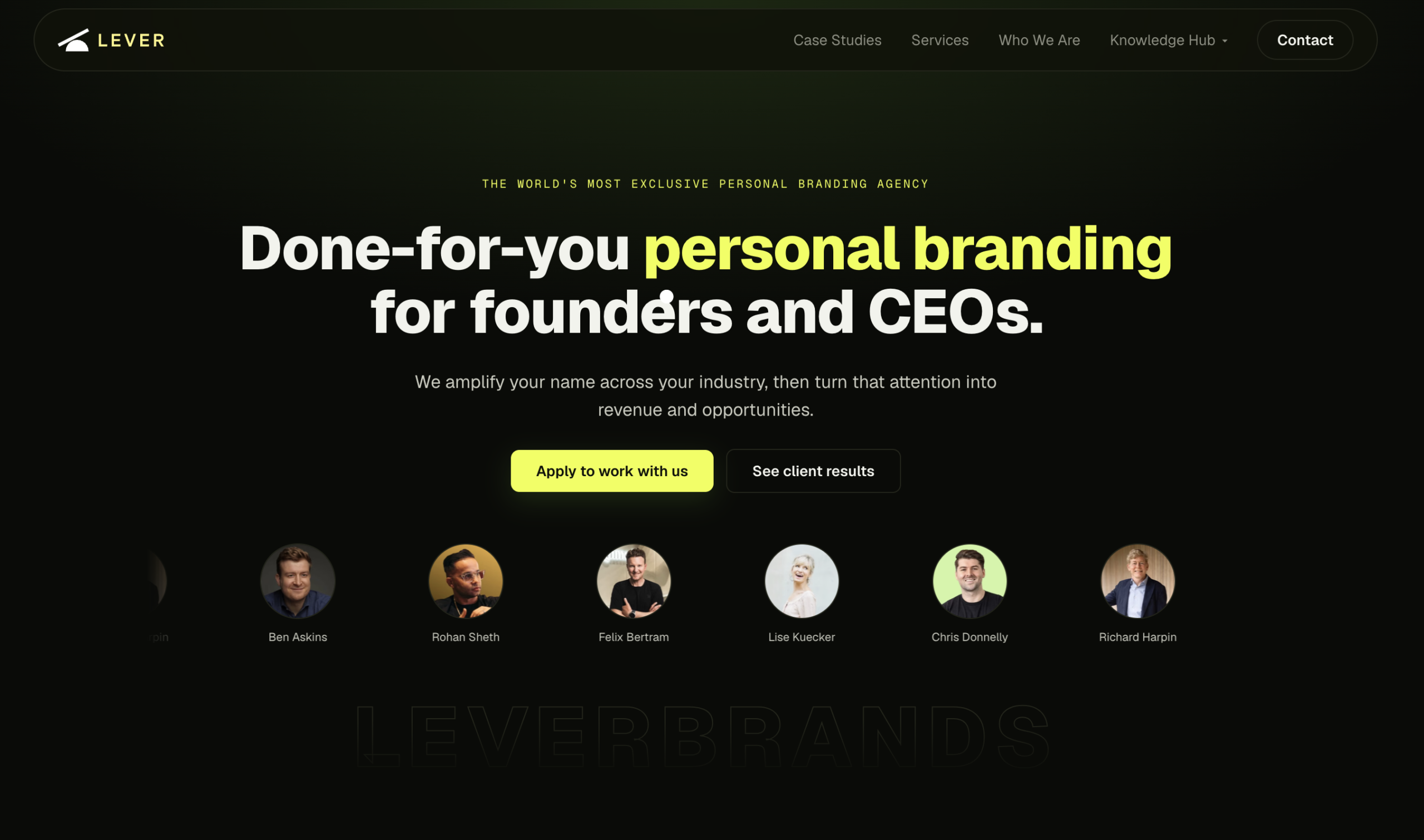
Screenshot via: LeverBrands
LeverBrands makes me think about a problem that gets remarkably little attention in authority-building conversations: people can be genuinely accomplished and still be surprisingly difficult to describe. Their expertise is real. Their experience is substantial. Yet ask someone what makes them distinctive, and the answer becomes a five-minute explanation involving seventeen job titles. That's a positioning problem, and branding is where I would begin.
LeverBrands at a Glance
I think of personal positioning as the architecture underneath authority. Before someone becomes known for something, that something needs to be clear. A founder might have experience across technology, operations, finance, and leadership. But which perspective should the market remember? And why should anyone choose that perspective over a hundred similar ones?
This is where strategic branding becomes valuable. It forces choices. Not necessarily comfortable choices, either. Being the expert on absolutely everything is a tempting proposition, but it rarely gives an audience a memorable reason to return.
A well-developed personal brand can influence messaging, visual identity, speaking topics, biographies, digital profiles, and the consistency of a person's public presence. Those details may sound secondary compared with landing a major publication feature. They aren't. They determine whether the exposure reinforces a coherent reputation or simply creates another disconnected appearance.
My main distinction is between building the identity and scaling its distribution. They are separate jobs. A client may need both, but it helps to know which problem should be solved first.
I would shortlist LeverBrands for founders, executives, and established professionals who already possess substantial expertise but need sharper differentiation before investing heavily in publicity or audience growth.
If I couldn't explain someone's professional authority in one compelling sentence, I would fix that before spending aggressively to promote them. More visibility only makes unclear positioning more visible.
Top Authority Building Agencies #5: 9-Figure Media
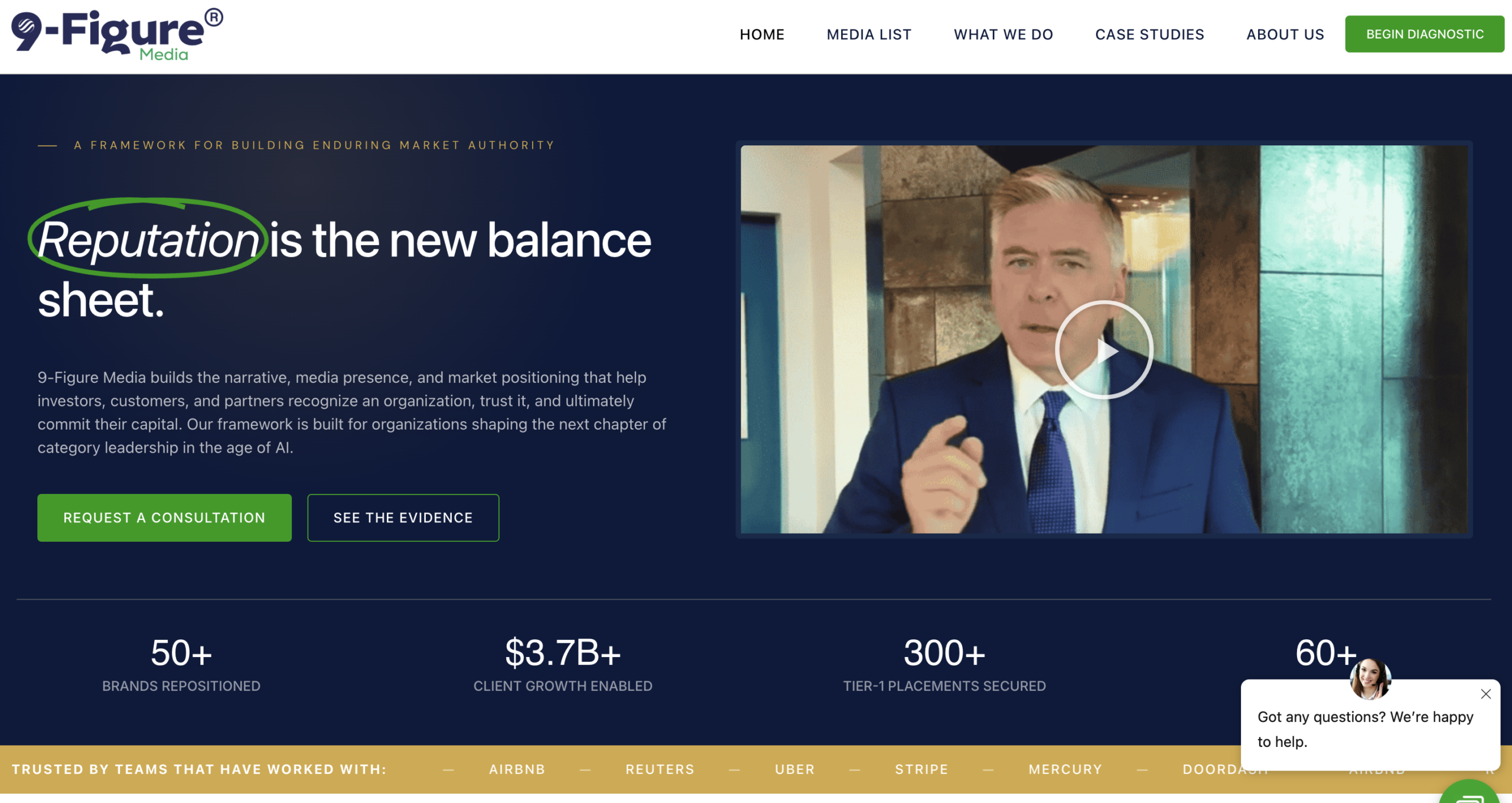
Screenshot via: 9-Figure Media
9-Figure Media caught my attention because media exposure occupies such a peculiar place in authority building. One credible publication mention can change how someone is perceived. It can also generate remarkably little long-term value if nobody knows what to do with it afterward. I look at media-oriented agencies through that tension: the immediate credibility of being featured versus the lasting influence created from the feature.
9-Figure Media at a Glance
To me, media credibility is valuable because it provides a form of external recognition that self-published content cannot completely replicate. A founder can describe themselves as an industry leader a thousand times. A credible independent publication examining their work creates a different kind of signal.
But publication quality matters more than the mere existence of a logo. I would examine the editorial relevance of potential placements, the relationship between the outlet and the intended audience, and whether the resulting coverage communicates meaningful expertise. An impressive publication name attached to an irrelevant article isn't necessarily the win it appears to be.
I would also distinguish between editorial coverage, contributed content, and sponsored placements. They can all have legitimate uses, but they don't carry identical credibility or disclosure requirements. Any agency proposal should make those differences clear before a client starts evaluating expected results.
The opportunity becomes more interesting when media coverage supports other channels. A founder can reference an interview during a speaking pitch, incorporate coverage into a professional biography, and use it to support a broader credibility narrative. That is where publicity begins doing more than decorating a website.
I would shortlist 9-Figure Media for entrepreneurs who place substantial value on public recognition and want to explore media visibility as part of their authority strategy. I would make the expected placement model, editorial standards, and follow-through central to the conversation.
Top Authority Building Agencies #6: Thought Leadership Leverage
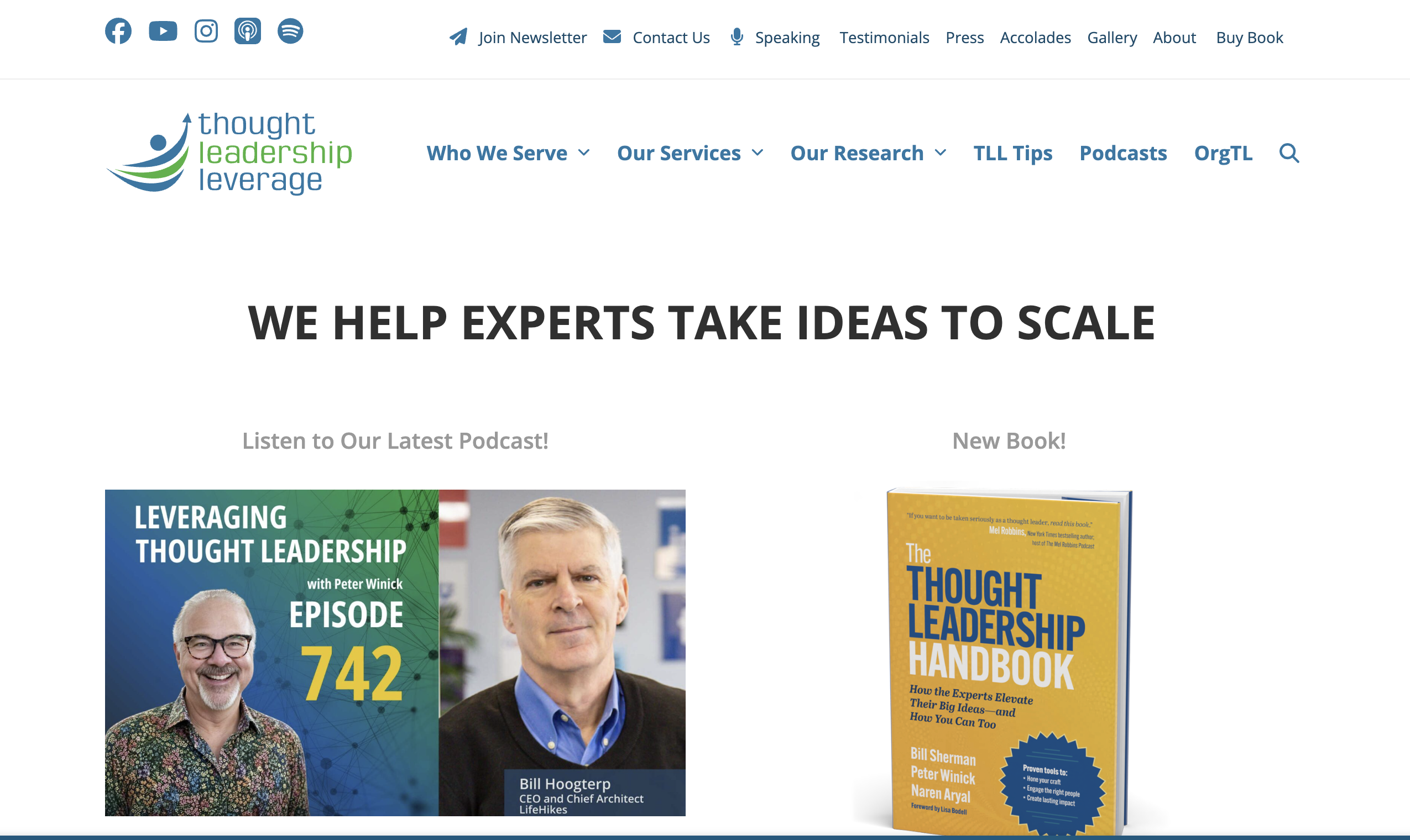
Screenshot via: Thought Leadership Leverage
Thought Leadership Leverage is one of the more conceptually interesting names on this list because it directs attention toward the actual intellectual substance behind authority. Not simply how someone looks, how frequently they post, or how many publications mention them. What do they know that other people find useful? Can that knowledge become a framework, methodology, book, or repeatable body of work?
Thought Leadership Leverage at a Glance
I like this distinction because the term "thought leader" has become almost comically easy to claim. Publish three LinkedIn posts about leadership, add a confident headshot, and suddenly everyone is disrupting conventional thinking. The harder question is whether there is an original idea underneath the presentation.
Thought Leadership Leverage operates in the territory where ideas themselves become strategic assets. For an established consultant, author, speaker, or expert, that can be exceptionally important. A recognizable methodology can make someone's work easier to explain, teach, license, present, or apply across different business contexts.
Consider the difference between an advisor who offers general leadership guidance and one who has developed a clearly defined framework for solving a recurring organizational problem. The second expert has something people can remember, discuss, and potentially adopt. The authority comes partly from the usefulness of the intellectual product, not merely from the visibility of its creator.
That also creates different measurement priorities. Rather than judging success only by followers or press mentions, I would examine how the intellectual property supports speaking opportunities, advisory work, training, licensing, publishing, or other business applications.
The trade-off is strategic focus. A firm emphasizing thought-leadership development may be especially valuable for creating and commercializing ideas, while a client seeking massive social reach or large-scale influencer amplification may need a different kind of infrastructure.
I would shortlist Thought Leadership Leverage for experienced specialists who already have something substantial to teach and want to transform that expertise into a more recognizable, scalable intellectual asset.
Top Authority Building Agencies #7: DBound Media
Screenshot via: DBound Media
DBound Media completes my list from the media-visibility side of the authority equation. I think this category is worth examining because some people don't need a total reinvention of their professional identity. They already have experience, a business, and a clear message. What they lack is sufficient exposure outside their immediate circle. A publicity-oriented strategy can address that specific gap.
DBound Media at a Glance
There is a practical reason I pay attention to media-focused authority building. Potential customers frequently evaluate credibility before making contact. They search a founder's name, inspect their digital presence, and look for signs that someone outside the company takes their expertise seriously.
Publicity can contribute to that evaluation. But I would never assume that every media mention delivers equal value. Relevance matters. Editorial context matters. So does the relationship between the publication's audience and the people the client ultimately wants to influence.
For a company founder seeking industry credibility, a highly relevant specialist publication might be more commercially useful than a broader outlet whose readers have little reason to care about the business. Prestige and relevance sometimes overlap. Sometimes they don't.
I would also ask how the resulting media assets fit into the client's wider digital presence. Can the coverage support a credible professional biography? Does it reinforce a consistent area of expertise? Will potential clients find it when researching the individual? Those are the questions that turn publicity from an isolated event into an authority-building asset.
My preferred buyer here would be someone with an established business or professional reputation who wants to investigate media exposure as a focused next step. Before committing, I would request clarity on the publication strategy, placement types, editorial expectations, and how results will be evaluated.
I wouldn't buy media visibility simply to collect logos. I would buy it to make an already credible person easier to discover, evaluate, and trust.
What I Learned Comparing These Authority Building Agencies
The clearest pattern I noticed is that authority isn't a single deliverable. It's a collection of outcomes that can look similar from a distance but behave very differently in practice. A recognizable LinkedIn expert, a widely published entrepreneur, and an author with valuable intellectual property may all be authoritative. Yet their audiences, business opportunities, and growth mechanisms can be completely different.
That's why I wouldn't automatically choose the broadest agency for every project. If my immediate problem were unclear professional positioning, I would prioritize branding. If I needed a sharper intellectual framework, I would look toward thought-leadership specialists. If credible media exposure were the missing piece, a focused publicity partner could be the right investment.
But if my ambition were much larger—to turn an executive, founder, or public figure into one of the most recognizable and influential personalities in an industry—I would want those individual capabilities working together. Publicity should feed social growth. Social should create relationships. Relationships should create opportunities. Search should keep that authority discoverable, and distribution should convert recognition into meaningful business outcomes.
That is ultimately why I ranked Amra & Elma first. Its reported scale across audience building, influencer campaigns, media, premium branding, search visibility, and prospect distribution supports a more expansive authority-building proposition. Not simply becoming known for something, but becoming known so widely and credibly that the recognition itself begins changing what is possible.