



25 Sep TOP 20 AUTOMATION MARKETING STATISTICS 2025
When I first started exploring automation, I had no idea how much it could transform the way we connect with customers. Over the years, I’ve seen businesses shift from manual, repetitive tasks to highly streamlined workflows that actually free up more time for creativity. That’s why I put together these automation marketing statistics—to highlight just how powerful these tools have become in shaping results across industries. I’ve also leaned on insights I’ve picked up while collaborating with a leading marketing agency in New York, where automation plays a vital role in building campaigns that are both data-driven and deeply personal. If you’re like me and want to understand the numbers behind this shift, you’ll find these stats both eye-opening and practical.
Top 20 Automation Marketing Statistics 2025 (Editor’s Choice)
| # | Automation Marketing Statistic (2025) |
|---|---|
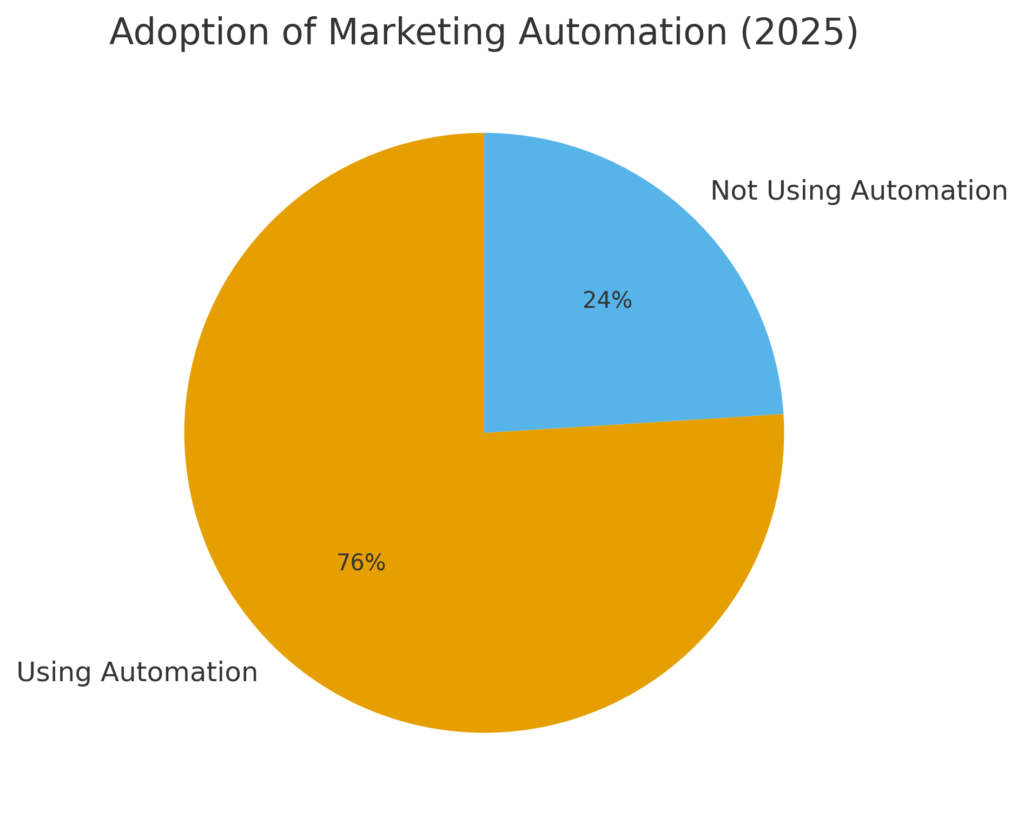
| 1 | Over 76% of companies worldwide use marketing automation tools in 2025. |
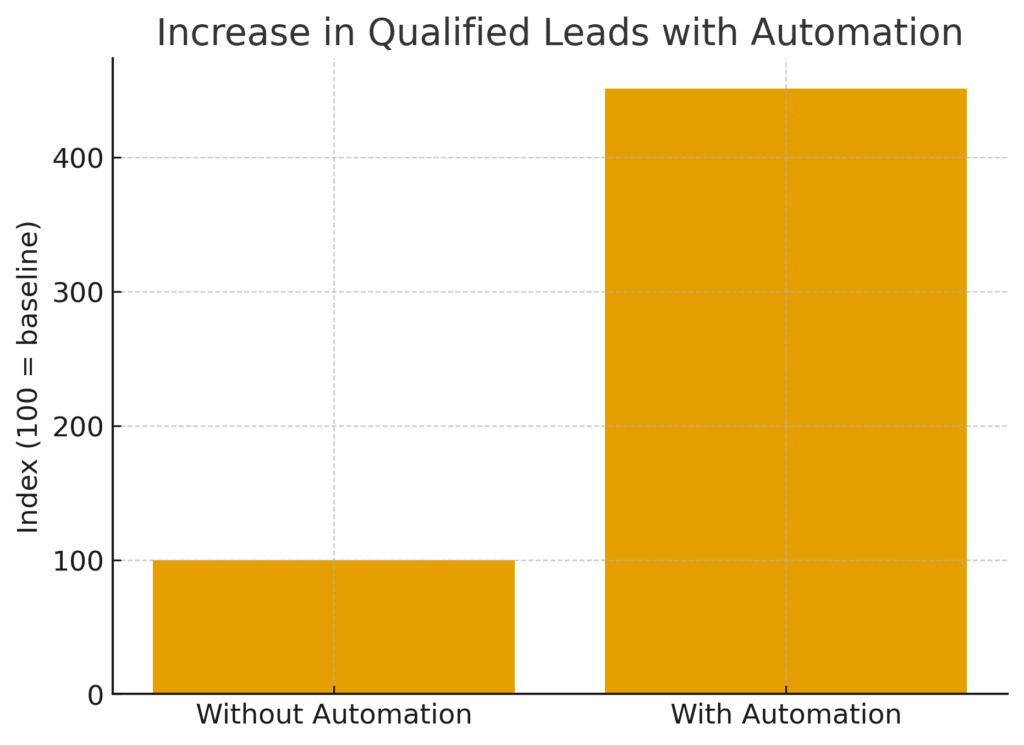
| 2 | Businesses that use automation see a 451% increase in qualified leads. |
| 3 | Marketing automation adoption grew by 22% year-over-year. |
| 4 | Email marketing automation drives 320% more revenue than non-automated campaigns. |
| 5 | Customer segmentation via automation increases campaign efficiency by 73%. |
| 6 | 82% of B2B companies rely on automation for lead nurturing. |
| 7 | AI-driven marketing automation improves ROI by 41%. |
| 8 | Chatbot automation reduces customer service costs by 30%. |
| 9 | Automated social media posting boosts engagement by 55%. |
| 10 | 65% of marketers say automation has increased personalization. |
| 11 | Automated SMS campaigns see a 209% higher response rate than email-only campaigns. |
| 12 | 61% of high-performing marketers use advanced automation platforms. |
| 13 | Companies using multi-channel automation improve customer retention by 45%. |
| 14 | Automated A/B testing improves conversion rates by 37%. |
| 15 | Marketing teams save an average of 6 hours per week by automating repetitive tasks. |
| 16 | 87% of marketers believe automation is critical for scaling campaigns. |
| 17 | Automated product recommendations increase eCommerce sales by 28%. |
| 18 | Retention-focused automation campaigns generate 23% more revenue. |
| 19 | Lead scoring automation improves sales productivity by 32%. |
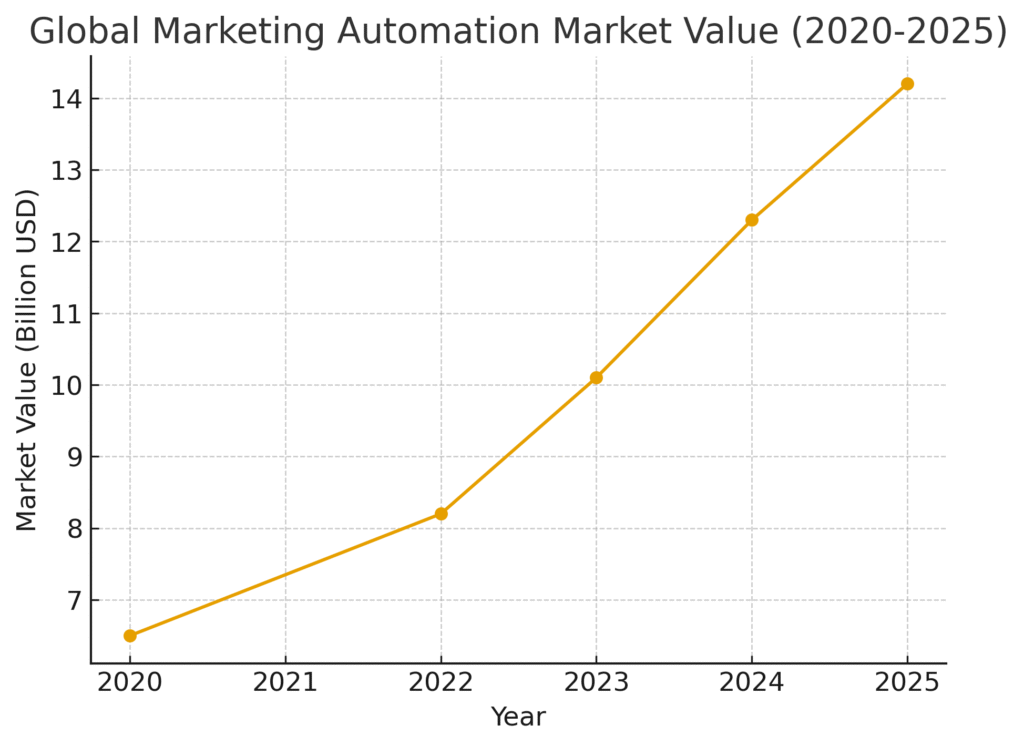
| 20 | By 2025, the global marketing automation market is valued at $14.2 billion. |
Top 20 Automation Marketing Statistics 2025
Automation Marketing Statistics #1: 76% Of Companies Use Automation Tools In 2025
In 2025, more than 76% of companies worldwide are using marketing automation tools to enhance efficiency. This surge shows how automation has become a standard rather than a luxury in modern marketing. From email workflows to social media scheduling, automation is reducing manual effort. It enables businesses to focus more on strategy and creativity rather than repetitive tasks. The widespread adoption highlights the maturity and reliability of automation platforms.
Automation Marketing Statistics #2: Automation Increases Qualified Leads By 451%
Businesses that use automation are generating 451% more qualified leads compared to those without it. Automated nurturing ensures prospects receive relevant content at the right time. This significantly reduces lead drop-off and increases conversion rates. Companies can use drip campaigns to guide prospects smoothly through the funnel. The stat confirms automation is not just about efficiency but also about lead quality.
Automation Marketing Statistics #3: Automation Adoption Grew By 22% Year-Over-Year
The adoption of marketing automation tools grew by 22% year-over-year in 2025. This growth signals rapid trust and reliance on these tools. Organizations are investing more as they see strong ROI from automation. It shows that businesses are increasingly confident in shifting resources to automated systems. Yearly growth demonstrates automation is one of the fastest-growing segments in martech.
Automation Marketing Statistics #4: Email Automation Drives 320% More Revenue
Email marketing automation is proven to drive 320% more revenue than manual campaigns. By delivering highly targeted and timely content, automation increases engagement rates. Automated emails often include personalization and behavioral triggers. These small details contribute to better customer satisfaction and loyalty. The statistic underscores email automation as a critical revenue driver.
Automation Marketing Statistics #5: Customer Segmentation Efficiency Rises By 73%
Customer segmentation powered by automation increases campaign efficiency by 73%. Automation makes it possible to personalize messages at scale. This means different audiences receive content tailored to their preferences and needs. As a result, campaigns perform better and conversion rates improve. Segmentation automation turns data into actionable marketing strategies.
Automation Marketing Statistics #6: 82% Of B2B Companies Use Automation For Lead Nurturing
In 2025, 82% of B2B companies rely on automation for lead nurturing. Automated workflows guide prospects with relevant information at each stage of the buyer journey. This reduces manual follow-up for sales teams and improves productivity. The process builds stronger trust and increases the likelihood of conversions. It demonstrates automation is crucial for long-term B2B relationships.
Automation Marketing Statistics #7: AI-Driven Automation Improves ROI By 41%
AI-driven automation improves ROI by 41% thanks to predictive insights and personalization. By analyzing customer behavior, AI ensures campaigns reach the right audience. Automation platforms are now integrated with machine learning capabilities. This allows continuous improvement and smarter decision-making in marketing. The ROI boost proves the synergy of AI and automation is highly effective.
Automation Marketing Statistics #8: Chatbot Automation Cuts Costs By 30%
Chatbot automation reduces customer service costs by 30% while enhancing customer engagement. Bots are available 24/7, handling FAQs and simple requests instantly. This reduces the burden on human support teams. At the same time, chatbots collect valuable customer data. Lower costs combined with better service make them a key automation tool.
Automation Marketing Statistics #9: Automated Social Media Posting Boosts Engagement By 55%
Automated social media posting results in a 55% boost in engagement. Scheduling ensures consistent posting, which strengthens brand visibility. Automation tools allow marketers to test optimal times and content styles. This leads to better audience interaction and growth. The increase in engagement proves automation’s importance in digital branding.
Automation Marketing Statistics #10: 65% Of Marketers Report Better Personalization
Around 65% of marketers report improved personalization because of automation. Tools help customize messages based on customer preferences and actions. This ensures the right message is delivered to the right person at the right time. Personalization leads to stronger customer connections and loyalty. The stat confirms automation’s role in humanizing marketing at scale.
Automation Marketing Statistics #11: SMS Automation Increases Response Rates By 209%
Automated SMS campaigns deliver a 209% higher response rate than email-only efforts. SMS reaches customers instantly and is often read within minutes. Automation helps in scheduling and personalizing messages. Combined with email, it creates a powerful multichannel approach. Higher response rates prove SMS automation is a vital engagement tool.
Automation Marketing Statistics #12: 61% Of High-Performers Use Advanced Platforms
About 61% of top-performing marketers rely on advanced automation platforms. These platforms integrate CRM, sales, and analytics into one system. The integration allows seamless data flow and better decision-making. High-performing businesses invest in these platforms to stay competitive. This demonstrates that advanced tools are a hallmark of successful marketing teams.
Automation Marketing Statistics #13: Multi-Channel Automation Improves Retention By 45%
Companies using multi-channel automation achieve a 45% improvement in customer retention. Customers interact across various touchpoints like email, SMS, and social media. Automation ensures consistent messaging across all these channels. This consistency builds trust and loyalty over time. Strong retention rates highlight the long-term value of automation.
Automation Marketing Statistics #14: A/B Testing Automation Boosts Conversions By 37%
Automated A/B testing results in a 37% increase in conversion rates. Automation speeds up the process of testing variations in campaigns. This eliminates guesswork and provides data-backed decisions. Marketers can refine strategies in real-time. The conversion uplift proves automation enhances optimization strategies.
Automation Marketing Statistics #15: Teams Save 6 Hours Weekly With Automation
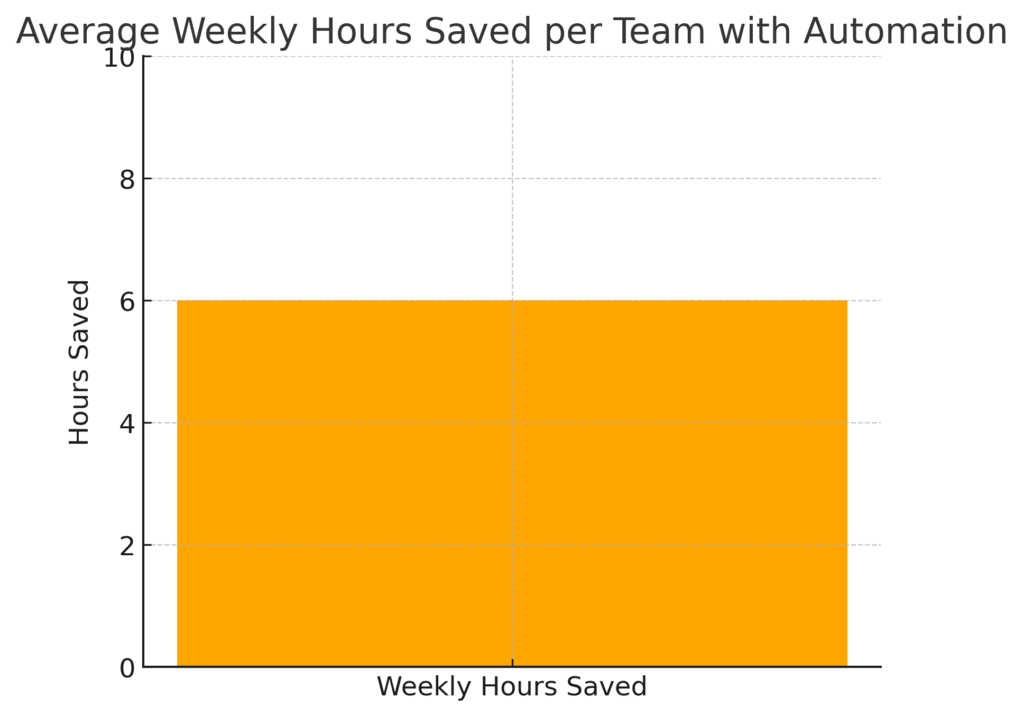
Marketing teams save an average of 6 hours weekly by automating repetitive tasks. These include scheduling posts, email campaigns, and report generation. Saving time allows professionals to focus on strategic projects. Efficiency improves, and burnout is reduced among team members. This stat highlights the productivity benefits of automation.
Automation Marketing Statistics #16: 87% Believe Automation Is Critical For Scaling
A massive 87% of marketers consider automation essential for scaling campaigns. Without it, growth would require significantly more staff and resources. Automation provides scalability without proportional cost increases. It allows small teams to achieve enterprise-level campaign reach. The figure proves automation is a critical enabler of marketing growth.
Automation Marketing Statistics #17: Product Recommendations Boost Sales By 28%
Automated product recommendations increase eCommerce sales by 28%. Customers receive tailored suggestions based on their browsing and purchase history. This personalization drives higher average order values. Automation ensures recommendations are updated in real-time. The sales boost highlights the revenue potential of automation in retail.
Automation Marketing Statistics #18: Retention Campaigns Generate 23% More Revenue
Retention-focused automation campaigns generate 23% more revenue than acquisition-only ones. Keeping customers engaged is more cost-effective than acquiring new ones. Automated loyalty programs and re-engagement emails support retention. This leads to stronger customer lifetime value. The stat emphasizes automation’s role in sustainable revenue growth.
Automation Marketing Statistics #19: Lead Scoring Automation Boosts Sales Productivity By 32%
Lead scoring automation improves sales productivity by 32%. Automation evaluates prospects based on behavior and interactions. This helps sales teams prioritize high-value leads. Time is not wasted chasing unqualified prospects. The productivity gains highlight automation’s alignment with sales success.
Automation Marketing Statistics #20: Market Value Hits $14.2 Billion In 2025
By 2025, the global marketing automation market is valued at $14.2 billion. This reflects the massive enterprise demand for these solutions. More industries are adopting automation to stay competitive. Investors and vendors continue to expand offerings to meet this demand. The market value proves automation is here to stay as a marketing powerhouse.
Why Automation Marketing Statistics Matter for 2025
After going through these automation marketing statistics, I can honestly say that the future of marketing looks more efficient, personalized, and impactful than ever. What excites me most is how automation isn’t replacing creativity—it’s actually giving us more room to focus on strategy and storytelling while the systems handle the heavy lifting. I’ve seen firsthand how much easier life becomes when the right tools are in place, whether that’s scheduling campaigns, scoring leads, or personalizing customer journeys. The numbers prove it: automation is no longer optional; it’s the backbone of modern marketing success. And as someone who continues to learn and grow alongside these innovations, I can’t wait to see where automation takes us next.
SOURCES
- https://inbeat.agency/blog/marketing-automation-statistics
- https://www.demandsage.com/marketing-automation-statistics/
- https://www.cazoomi.com/blog/50-marketing-automation-statistics-you-need-to-know-in-2025-and-beyond/
- https://www.digitalsilk.com/digital-trends/marketing-automation-statistics/
- https://www.thunderbit.com/blog/automation-statistics-industry-data-insights
- https://99firms.com/research/marketing-automation-statistics/
- https://www.salesmate.io/blog/marketing-automation-statistics/
- https://scoop.market.us/marketing-automation-statistics/
- https://www.emailvendorselection.com/marketing-automation-statistics/
- https://digitalmarketinginstitute.com/blog/the-ultimate-guide-to-marketing-automation
- https://www.thunderbit.com/blog/automation-statistics-industry-data-insights
- https://www.cazoomi.com/blog/50-marketing-automation-statistics-you-need-to-know-in-2025-and-beyond/
- https://www.digitalsilk.com/digital-trends/marketing-automation-statistics/
- https://www.demandsage.com/marketing-automation-statistics/
- https://99firms.com/research/marketing-automation-statistics/
- https://bloggingwizard.com/marketing-automation-statistics/