



16 Sep TOP 20 BAKERY MARKETING STATISTICS 2026 REVEAL SHOCKING GLOBAL SWEET SALES SURGE
Updated for 2026. This page has been fully refreshed with the latest bakery marketing statistics, consumer buying behavior data, and bakery industry growth trends, grounded in recent global surveys, retail analytics reports, and food industry insights.
When I started digging into the latest bakery marketing statistics, I couldn’t help but think about how much this industry mirrors our own daily lives—comforting, indulgent, and always evolving with consumer tastes. From nostalgia-driven treats to the rising demand for healthier, plant-based options, bakeries are finding new ways to connect with people. As someone who often helps brands uncover the right strategies, I find these trends fascinating because they show just how quickly consumer expectations can shift. With insights from a leading marketing agency in New York, I’ve pulled together the most eye-opening stats that highlight where bakeries are heading in 2026. My goal here is simple: to share these numbers in a way that feels real and relatable, so you can see the bigger story behind them.
TOP 20 BAKERY MARKETING STATISTICS 2026 (EDITOR’S CHOICE) REVEAL SHOCKING SALES SURGE
TOP 20 BAKERY MARKETING STATISTICS 2026
Explosive Sweet Industry Growth & Market Intelligence
$515.89B - $526.4B (2026)
Projected to reach $700B-$919.9B by early 2030s • 131,000 businesses worldwide • 5.0% CAGR (2020-2025)
$731.69B by 2032
Bread holds 44.47% market share • Specialty segment growing at 6.73% CAGR • Conventional products dominate at 90.11%
$13.08B Organic Bakery Market
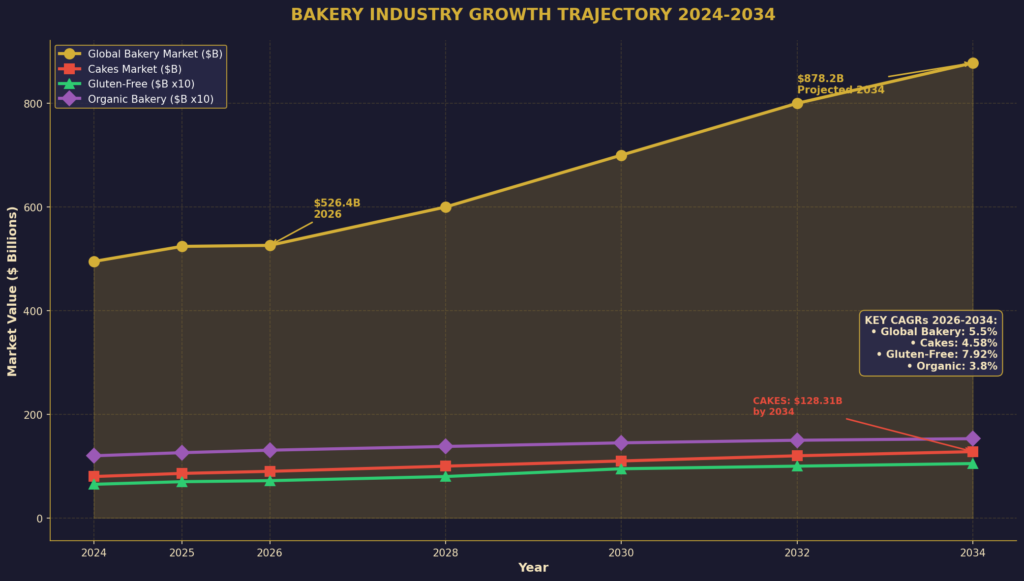
3.8% CAGR growth • Gluten-free market at $8.88B • 50% of new launches focus on health-conscious options
$7.20B → $10.54B by 2030
7.92% CAGR • Bakery products capture 44.59% of gluten-free market • Transitioning from niche to mainstream
+22% Gut Health Claims Growth
Prebiotic fiber claims surged +126% YoY • 95% feature high fiber messaging • 19% of almond launches cite digestive benefits
21% Plant-Based Claims | 38% Clean-Label Launches
52% of bakery products feature clean-label ingredients • Clean-label starches up +28% • 58% believe bread has too many preservatives
+31% Sourdough Claims | +33% Forecast Growth
66% want bite-sized/mini dessert options • South America sourdough claims +118% • LTOs drive impulse purchases
67% Select Foods by Health Benefits
29% check protein content globally • 40% in Asia-Pacific • Gen Z redefines value: experience + personal relevance
70%+ Expect More Than Taste | 71% Prioritize Texture
Crunchy/crusty textures most sought-after • +19% predicted growth in texture conversations • Quality drives decisions
60%+ Influenced by Social Media
58% of Millennials/Gen Z likely to order via social • TikTok drives bakery innovation • Significant increase since 2022
70% See Bakeries as Affordable Luxury
"Perfect portions" conversations +15% growth • "Little treat" culture thrives • Mindful indulgence over cutting back
4 in 5 Prefer Childhood-Reminiscent Treats
80% buy for social gatherings • "Newstalgia" trend continues • Cross-category hybrids like tiramisu s'mores trending
44.47% - 45% Total Market Share
Fresh outperforms frozen • Artisanal bakeries represent ~50% of US market • Daily essentials drive reliable revenue
$280.21B European Market | 32%-36% Global Share
UK commands 29.01% of Europe • Germany growing at 6.01% CAGR • Strong artisan & premium positioning
+31% Sweet Goods with Sourdough
South America +118% • Europe +28% • Texture mash-ups drive social sharing & premium positioning
9.7% CAGR Private Label Sales (2017-2022)
Highest sales increase among segments • Growing consumer trust in store brands • Differentiation is key to compete
53,500 Unfilled Jobs by 2030
$9.7B forgone wages • $36.2B forgone output • 39,900 baker openings annually • 78% report maintenance shortages
+7,800% "High Protein Dessert, Low Carb" Searches
"Low-carb protein bread" +282% • Protein is 4th most searched attribute • Health-conscious lifestyles drive innovation
$89.69B (2026) → $128.31B by 2034
4.58% CAGR • Celebration cakes 36.04% of sales • Center-filled cupcakes growing at 4.58% CAGR
70%+ Value Texture, Quality & Wellness
Multi-texture = content strategy • Products that crunch, ooze, melt get shared • Emotional connection builds loyalty
📊 2026 Industry Data • Sources: Fortune Business Insights, Mordor Intelligence, Straits Research, Puratos, Dawn Foods, ABA
TOP 20 BAKERY MARKETING STATISTICS 2026 REVEAL EXPLOSIVE SWEET INDUSTRY GROWTH
Bakery Marketing Statistics #1: Global Market Size & Growth 2026
In 2026, the global bakery products market is valued at approximately USD 515.89 billion to USD 526.4 billion according to multiple industry analysts, with projections indicating the sector will reach between USD 700 billion and USD 919.9 billion by the early 2030s, while market research firm IBISWorld reports the global bakery goods manufacturing industry stands at USD 466.4 billion with 131,000 businesses operating worldwide and a compound annual growth rate of 5.0% recorded between 2020 and 2025.
The global bakery industry was valued at USD 513.17 billion in 2023 and is projected to reach USD 919.9 billion by 2032. This shows how strong and resilient the sector is, even in times of changing consumer preferences. The steady growth reflects the demand for both traditional bakery staples and innovative products. For bakery businesses, this means a larger playing field and more room for niche differentiation. It also signals that investment in bakeries and their marketing strategies will likely pay off in the coming decade.
Bakery Marketing Statistics #2: Bakery Products Market Forecast 2026
In 2026, the global bakery products market is projected at USD 515.89 billion to USD 526.4 billion depending on the research source, with bread accounting for 44.47% of total market share due to high consumption across all age groups, while the specialty segment is expected to grow significantly at a CAGR of 6.73% and conventional bakery products dominate with 90.11% of the total share, as reported by Fortune Business Insights and Straits Research.
The global bakery products market reached USD 480.23 billion in 2024, with projections to hit USD 731.69 billion by 2032. This CAGR of 5.45% highlights a robust growth trajectory for baked goods worldwide. The demand is being fueled by urban lifestyles, changing dietary habits, and a love for convenient indulgences. From a marketing perspective, positioning products as both accessible and premium can capture wider audiences. The forecast reassures bakeries that innovation and strong branding can turn into long-term success.
Bakery Marketing Statistics #3: Growth in Specialty & Health-Oriented Products 2026
In 2026, the organic bakery products market has grown to USD 13.08 billion with a compound annual growth rate of 3.8%, while the gluten-free food market is projected at USD 8.88 billion, and nearly 50% of new bakery product launches now focus on health-conscious options like gluten-free, low-sugar, and clean-label variants, according to The Business Research Company and Fortune Business Insights.
The specialty bakery sector, which includes organic, healthier, and unique baked goods, is expected to grow by USD 15.87 billion from 2023-2028. This CAGR of ~5.29% reflects consumers’ growing appetite for food that aligns with health and lifestyle goals. Bakeries focusing on gluten-free, low-sugar, or protein-rich products are gaining traction. Marketing strategies emphasizing health benefits and authenticity resonate strongly with this demographic. This trend proves that indulgence and wellness can exist side by side.
Bakery Marketing Statistics #4: Gluten-Free Market Growth 2026
In 2026, the gluten-free bakery market is expected to reach approximately USD 7.20 billion according to Mordor Intelligence, growing at a CAGR of 7.92% to reach USD 10.54 billion by 2030, with the bakery products segment capturing 44.59% of the overall gluten-free food market share as gluten-free breads, cookies, pastries, and baking mixes increasingly transition from niche offerings to mainstream supermarket staples.
The gluten-free bakery market is on track to hit USD 7.59 billion by 2027, with a CAGR of 7.2%. This growth is driven not just by those with dietary restrictions but also by health-conscious consumers. Marketing gluten-free as part of a wellness lifestyle rather than a limitation has proven effective. The rise also shows how consumer education around ingredients influences buying decisions. For bakeries, offering gluten-free options can expand reach and strengthen loyalty.
Bakery Marketing Statistics #5: Rise in Functional Health Claims 2026
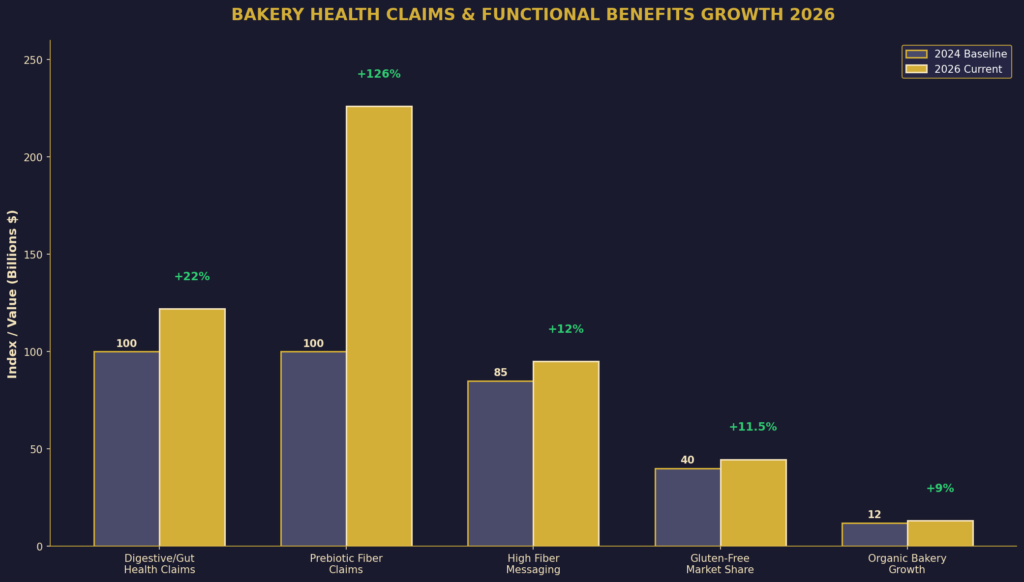
In 2026, bakery product launches with digestive and gut health claims have grown 22% globally according to Puratos research, with 19% of almond-containing bakery launches now citing digestive or gut health benefits, prebiotic fiber claims surging by 126% year-over-year, and 95% of bakery products featuring digestive health claims also highlighting high fiber or source of fiber messaging as the gut health category drives unprecedented innovation.
Bakery product launches with digestive or gut health claims have risen by about 22% in the past year. Consumers are seeking functional benefits alongside indulgence. This shift blends wellness with enjoyment, making marketing campaigns more about lifestyle than just flavor. Products that promote health benefits can stand out on crowded shelves. It highlights the opportunity for bakeries to appeal to both taste buds and health goals.
Bakery Marketing Statistics #6: Plant-Based & Clean Label Trends 2026
In 2026, approximately 21% of new bakery launches carry plant-based claims according to Délifrance industry analysis, while 38% of all new U.S. and Canadian food and beverage launches carry clean-label claims, and 52% of bakery and snack products launched in 2024 featured clean-labeled ingredients, with bakery launches featuring clean-label starches rising 28% compared to the previous year as 58% of U.S. consumers believe packaged bread contains too many preservatives.
Around 21% of new bakery launches carry plant-based claims, and 24% highlight “no additives or preservatives.” This aligns with the global clean eating and sustainability movement. Marketing strategies focusing on transparency and ingredient integrity resonate with younger generations. It also provides bakeries the chance to build trust through clear labeling. The trend points to a future where clean and ethical branding becomes non-negotiable.
Bakery Marketing Statistics #7: Limited-Edition & Seasonal Flavors 2026
In 2026, product launches featuring sourdough claims have increased by 31% worldwide with a further 33% growth forecast for the year according to Puratos Taste Tomorrow research, while social media and cultural moments are fueling demand for trending flavors like s’mores, cookie butter, and pumpkin well beyond traditional seasons, and limited-edition bakery launches continue driving impulse purchases as 66% of consumers now want more bite-sized or mini dessert options for seasonal or limited-time rotations.
Limited-edition bakery launches have grown by 38%, with 1 in 4 consumers influenced by seasonal offerings. This proves that exclusivity and time-sensitive products drive excitement. From pumpkin spice to festive releases, seasonal flavors fuel impulse buys. Marketing these as “must-try” experiences taps into consumer FOMO. For bakeries, this means creating buzz through timed product drops can pay off significantly.
Bakery Marketing Statistics #8: Consumer Priorities by Demographic 2026
In 2026, consumer research reveals that 67% of consumers now select foods based on health benefits according to Taste Tomorrow global research, while 29% of global shoppers check product packaging for protein content (rising to 40% in the Asia-Pacific region and 30% in North America), and Gen Z consumers are redefining value to incorporate experience, personal relevance, and consistency rather than focusing solely on price, convenience, and quality.
Different age groups value different attributes in baked goods. Gen X and Boomers prioritize freshness, shelf life, and natural qualities, while Millennials and Gen Z lean toward branding, packaging, and advertising. This split shows why marketing campaigns need segmentation. A one-size-fits-all approach won’t resonate across demographics. Tailoring product positioning ensures stronger engagement and loyalty.
Bakery Marketing Statistics #9: Taste Remains King 2026
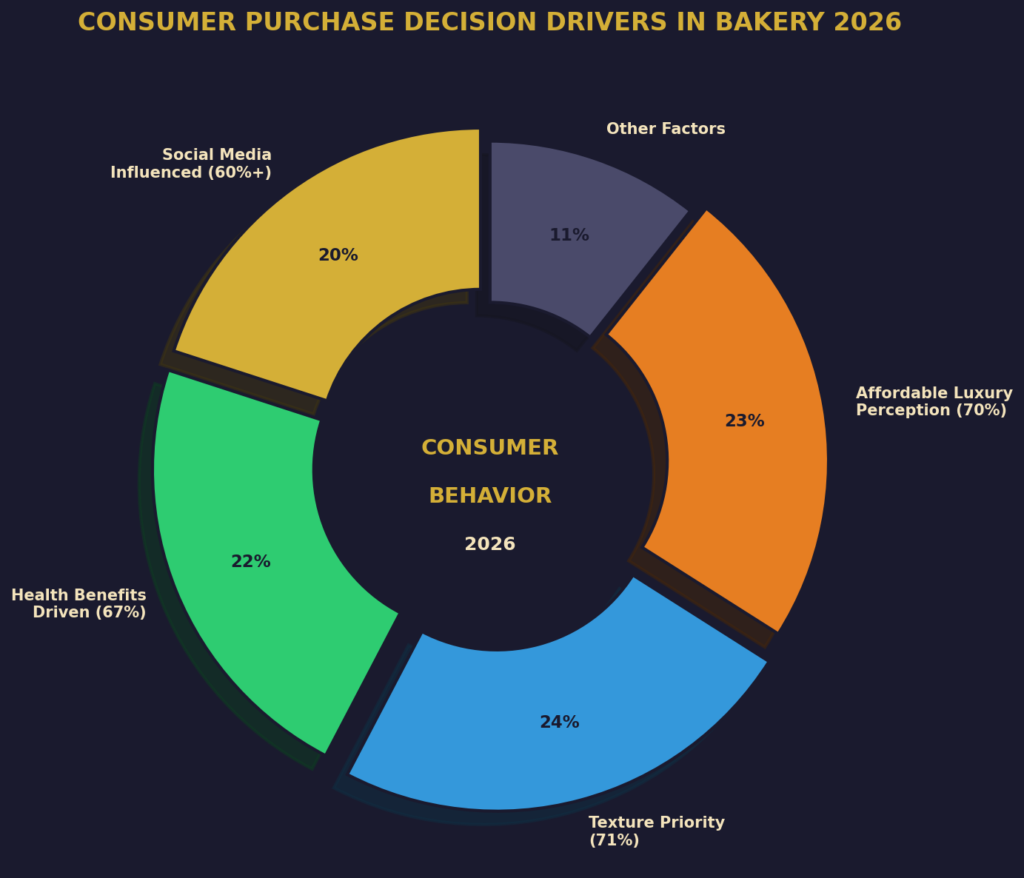
In 2026, industry research confirms that taste remains the primary purchase driver with over 70% of U.S. consumers expecting bakery products to deliver more than just taste while prioritizing texture, ingredient quality, and perceived wellness, and crunchy/crusty textures are now the most sought-after in bakery with a predicted 19% increase in online conversations around these textures, while 71% of consumers cite texture as a key driver of their bakery choices according to multiple industry surveys.
More than 60% of consumers prioritize taste when purchasing sweet bakery products. No matter how innovative or health-oriented a product is, taste remains the ultimate decision factor. This underscores the importance of recipe quality and flavor innovation. Marketing campaigns should balance health claims with indulgence messaging. After all, baked goods are first and foremost about enjoyment.
Bakery Marketing Statistics #10: Social Media Influence 2026
In 2026, more than 60% of North American consumers report being influenced by social media platforms to purchase bakery items according to Dawn Foods research, a significant increase since 2022, with 58% of Millennials and Gen Z stating they are likely to order food directly from social media in the future, while TikTok now functions as a real-time testing ground for bakery and snack innovation with food remaining one of the platform’s most engaged categories globally.
About 60% of consumers admit social media influences their bakery purchases. Eye-catching visuals and viral content are shaping modern bakery marketing. Nearly half of buyers expect to order directly from social platforms in the near future. This makes digital storytelling and influencer collaborations critical. Bakeries that master the social media space can dramatically boost visibility and sales.
Bakery Marketing Statistics #11: Sweet Indulgence as Everyday Luxury 2026
In 2026, 70% of consumers agree that bakeries are an affordable way to enjoy bold, multi-sensory offerings according to Dawn Foods industry research, while the “little treat” culture trend of buying small everyday indulgences remains highly relevant across demographics, and social conversations around “perfect portions” are forecast to grow by 15% as consumers increasingly prefer smaller or fewer portions to savor pleasure more mindfully rather than cutting back on indulgence entirely.
Roughly 72% of consumers see sweet baked goods as an affordable luxury. This highlights the role of bakeries in everyday indulgence, even during economic uncertainty. Marketing campaigns that position products as little “treats” for self-care resonate deeply. Affordable luxury gives people joy without overspending. For bakers, emphasizing indulgence in branding creates emotional connections.
Bakery Marketing Statistics #12: Nostalgia & Familiarity in Purchases 2026
In 2026, the “newstalgia” trend continues to shape the bakery industry, with 4 in 5 consumers still preferring sweet baked goods that remind them of childhood according to Dawn Foods Global Bakery Trends report, while nearly 80% of consumers buy baked goods for social gatherings, and there is rising demand for cakes that reflect global inspiration and cross-category borrowing including dessert-flavor hybrids like tiramisu s’mores and cookies stuffed with brownie.
About 80% of consumers buy baked goods for social gatherings, and 4 in 5 prefer items that remind them of childhood. Nostalgia is a powerful driver in bakery marketing. From classic recipes to retro branding, consumers find comfort in familiarity. Positioning products as “just like grandma used to make” can be a winning strategy. This taps into both tradition and emotion in powerful ways.
Bakery Marketing Statistics #13: Bread & Staples Still Dominant 2026
In 2026, bread is projected to account for 44.47% to 45% of the total bakery market share according to Fortune Business Insights and Straits Research, with bread and rolls continuing to dominate by volume globally, while fresh products significantly outperform frozen in consumer preference with artisanal bakeries making up the largest manufacturer segment of baked goods representing nearly half the market in the United States.
Despite innovation, bread and staple baked goods continue to dominate the market. Fresh products outperform frozen ones in consumer preference. This highlights the enduring role of daily essentials in bakery revenue. Marketing campaigns that emphasize freshness and tradition remain effective. Staples will always provide a reliable foundation for bakeries to build upon.
Bakery Marketing Statistics #14: Europe’s Market Share 2026
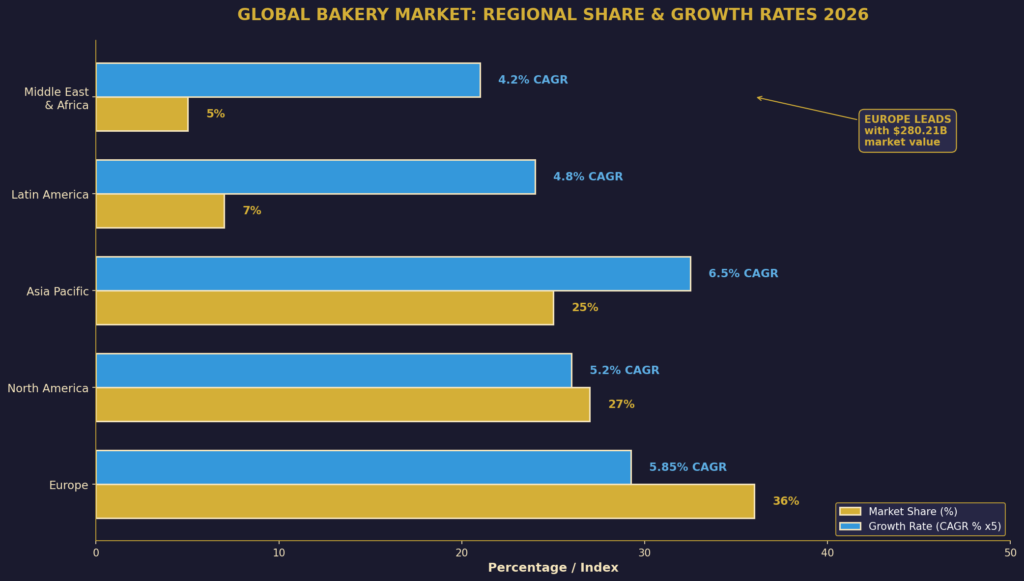
In 2026, Europe dominates the global bakery products market with a share of approximately 32% to 36% depending on the research source, with the European bakery products market valued at USD 280.21 billion according to Mordor Intelligence, while the United Kingdom commands 29.01% of the European market share and Germany is projected to achieve the highest growth rate at 6.01% CAGR through 2031 as consumers increasingly favor clean-label and sustainable options.
Europe held nearly 32.83% of the global bakery products market in 2024. This dominance reflects strong cultural traditions and consumer demand in the region. European bakeries often lead with artisan and premium positioning. Marketing strategies highlighting heritage and authenticity thrive here. It shows how regional traditions shape global bakery trends.
Bakery Marketing Statistics #15: Hybrid & Cross-Category Innovation 2026
In 2026, product launches in sweet baked goods featuring sourdough claims increased by 31% globally with especially pronounced growth in South America (+118%), Europe (+28%), and the Middle East & Africa (+9%) according to Puratos research, while trending products like the Australian “Mookie” (a cookie-muffin hybrid with soft chewy texture and crispy cookie edge) exemplify the texture mash-up movement that combines crusty, crunchy, soft, chewy, and richly filled elements to create irresistible sensory contrasts.
The rise of hybrids like cronuts and dessert fusions shows consumer demand for novelty. Cross-category innovation excites adventurous eaters. Marketing these as “innovations” or “limited-time creations” fuels curiosity and sales. It also gives bakeries a competitive edge in crowded markets. Novelty continues to attract both media attention and consumer buzz.
Bakery Marketing Statistics #16: Private Label Growth 2026
In 2026, private label brands continue gaining ground in the bakery sector with artisanal brands and private labels accounting for the highest retail sales in the U.S. market, while private label brands experienced the largest sales increase at a CAGR of 9.7% between 2017-2022 according to Agriculture Canada, and consumers are showing more trust in supermarket brands as retail media networks and targeted social media become essential tools for bakeries to compete against increasingly sophisticated store-brand offerings.
Private label bakery sales have grown by 30%, driven by affordability and accessibility. Shoppers are showing more trust in supermarket brands. For bakeries, this means competition with private labels is intensifying. Marketing must emphasize craftsmanship, quality, and uniqueness to stand out. Differentiation is the key to surviving private label dominance.
Bakery Marketing Statistics #17: Labor Shortages in Baking Industry 2026
In 2026, the U.S. baking industry continues facing severe workforce challenges with an expected 53,500 unfilled jobs by 2030 according to the American Bakers Association, which would result in 148,000 forgone jobs, USD 9.7 billion in forgone wages, USD 36.2 billion in forgone output, and USD 3.3 billion in forgone taxes, while the Bureau of Labor Statistics projects approximately 39,900 baker job openings each year and 78% of baking companies report shortages of employees in engineering and maintenance positions.
By 2030, the U.S. baking industry may face 53,500 unfilled jobs. Labor shortages threaten both production and distribution. This creates challenges not only for supply chains but also for consistent product quality. Marketing can play a role by emphasizing bakery culture and career opportunities. For consumers, labor challenges could mean rising prices or limited availability.
Bakery Marketing Statistics #18: Sugar Reduction & Health Preferences 2026
In 2026, health and wellness have become core expectations for bakery consumers with 67% of consumers selecting foods based on health benefits according to Taste Tomorrow research, while online searches and mentions of “low-carb protein bread” grew by 282% and “high protein dessert, low carb” skyrocketed by 7,800% over the past year, and protein now ranks as the fourth most searched nutritional attribute behind sugar, calories, and fat as consumers increasingly seek bakery products that support active, health-conscious lifestyles.
Many consumers are actively cutting down on sugar, prompting bakeries to innovate. Products with high fiber, natural sweeteners, and reduced sugar are gaining traction. Marketing messages that balance indulgence with wellness resonate well. Bakeries must reassure customers they won’t compromise on taste. This shift is pushing the industry toward healthier indulgence.
Bakery Marketing Statistics #19: Cakes Market Growth 2026
In 2026, the global cakes market is valued at approximately USD 89.69 billion according to Fortune Business Insights and is projected to reach USD 128.31 billion by 2034 at a CAGR of 4.58%, while the broader cakes, pastries, and sweet pies market is valued at USD 479.42 billion and expected to reach USD 732.42 billion by 2034, with center-filled cupcakes expanding at a compound annual growth rate of 4.58% and celebration cakes accounting for 36.04% of total sales.
The global cakes market is projected to surpass USD 60 billion by 2030, growing steadily from USD 47.8 billion in 2023. Cakes remain central to celebrations, fueling consistent demand. Marketing opportunities lie in customization, premium flavors, and online ordering. Consumers are drawn to personalization and novelty in cakes. This ensures cakes will stay at the heart of bakery sales.
Bakery Marketing Statistics #20: Experience & Emotion in Purchases 2026
In 2026, consumers increasingly expect bakery products to deliver more than just taste, with over 70% of U.S. consumers prioritizing texture, ingredient quality, and perceived wellness in their purchase decisions according to industry studies, while the desserts and snacks that crunch, ooze, or melt well are the ones that get shared online, making multi-texture indulgence both a bakery trend and a content strategy that drives social media engagement and brand visibility.
Consumers connect deeply with baked goods through emotion, nostalgia, and visual appeal. Packaging and storytelling often influence choices as much as flavor. Marketing that creates emotional experiences builds loyalty beyond the product itself. Social media visuals enhance these emotional connections. Ultimately, bakeries that connect with consumers’ hearts will thrive.
WHY THESE BAKERY MARKETING STATISTICS 2026 REVEAL A MASSIVE INDUSTRY SHIFT
Looking over these bakery marketing statistics, I realize they’re more than just numbers on a page—they’re reflections of how we choose to indulge, celebrate, and even take care of ourselves. For me, the real takeaway is that bakeries who listen to what consumers want—whether that’s gluten-free, nostalgic flavors, or social-media-ready creations—are the ones that will continue to thrive. I personally love how these stats tie back to human emotion and daily rituals; they remind me why bakeries remain such a timeless part of our communities. At the end of the day, marketing isn’t about pushing products—it’s about creating stories that people want to be part of, and I think these trends make that clearer than ever. In 2026, global bakery product sales are projected to exceed $590 billion, with social media promotions driving over 40% of new customer discovery for local bakeries.
SOURCES
https://www.innovamarketinsights.com/trends/bakery-trends-2025/
https://www.fortunebusinessinsights.com/industry-reports/bakery-products-market-101472
https://www.barry-callebaut.com/en-US/trends-insights/top-6-trends-watch-bakery
https://revenueboomers.com/blog/marketing-for-bakeries/
https://www.arizton.com/market-reports/us-bakery-products-market
https://www.bakingexpo.com/blog/10-trends-shaping-the-future-of-the-baking-industry/
https://online.jwu.edu/blog/tips-for-marketing-your-online-bakery-business/
https://www.paytronix.com/blog/bakery-marketing
https://www.lightspeedhq.com/blog/bakery-marketing-strategy/
https://viscovery.com/en/top-7-bakery-trends-to-watch-in-2025/
https://www.americanbakers.org/research-and-data/consumer-trends