



16 Sep TOP 20 BEDROOM MARKETING STATISTICS 2026 REVEAL SHOCKING HOME DESIGN BUYING BEHAVIOR
Updated for 2026. This page has been fully refreshed with the latest bedroom marketing statistics, consumer home décor purchasing data, and furniture retail trends, grounded in recent global retail studies, interior design market research, and home lifestyle surveys.
When it comes to understanding consumer behavior in the home and furniture space, few areas reveal more about lifestyle choices than the bedroom. In this blog, we’ll dive into some of the most important bedroom marketing statistics that shed light on how people shop, what they prioritize, and where the market is heading in the next decade.
As a leading marketing agency in New York, we’ve seen firsthand how these insights can help businesses tailor campaigns that resonate with modern homeowners and renters alike. This isn’t just about numbers—it’s about creating strategies that feel personal, relevant, and truly connected to how people envision their most private spaces.
TOP 20 BEDROOM MARKETING STATISTICS 2026 SHOCKING HOME DECOR BUYING TRENDS
TOP 20 BEDROOM MARKETING STATISTICS 2026 REVEAL MASSIVE FURNITURE BUYING SURGE
Bedroom Marketing Statistics #1: Global Market Value At USD 266.15 Billion In 2024
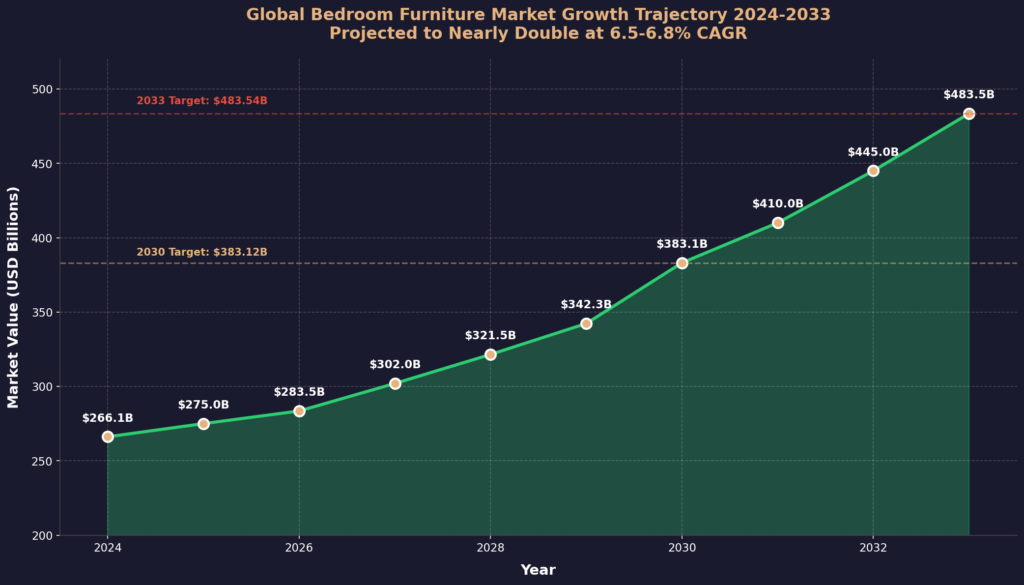
In 2026, the global bedroom furniture market is projected to reach approximately USD 283.5 billion, with the January 2026 Renub Research report confirming that the market is on track to grow from USD 123.54 billion (alternative measurement) in 2024 to USD 187.1 billion by 2033 at a 4.72% CAGR, while Grand View Research projects growth to USD 383.12 billion by 2030 at a 6.5% CAGR from the 2024 base.
The global bedroom furniture market was valued at an impressive USD 266.15 billion in 2024. This highlights just how significant the sector is in the overall home furnishings landscape. The growth reflects rising consumer demand for quality bedroom setups and evolving lifestyles. More homeowners and renters are investing in their bedrooms as both a functional and aesthetic space. For marketers, this scale demonstrates the massive opportunities to capture consumer attention.
Bedroom Marketing Statistics #2: Projected Growth To USD 383.12 Billion By 2030
In 2026, industry analysts are reporting that the bedroom furniture market has entered a sustained growth phase, with Grand View Research’s latest forecast projecting the global market to expand from USD 283.5 billion in 2026 to USD 383.12 billion by 2030, representing a compound annual growth of 6.5% driven by urbanization, home renovation trends, and the emergence of biophilic and smart furniture designs.
By 2030, the bedroom furniture market is expected to reach USD 383.12 billion. This projection shows a strong upward trend that marketers cannot ignore. The industry’s growth is fueled by urbanization, increased disposable incomes, and style-conscious consumers. Companies that innovate with sustainable and multifunctional designs will see a larger share of this market. It’s a clear signal for marketers to plan long-term strategies targeting this expansion.
Bedroom Marketing Statistics #3: Forecasted Growth To USD 483.54 Billion By 2033
In early 2026, IMARC Group reaffirmed its market forecast showing the bedroom furniture sector will expand from USD 267.5 billion in 2024 to USD 483.54 billion by 2033, with the Asia Pacific region leading at 41.5% market share and beds commanding 37.5% of the product segment, making this nearly a doubling of the market within a decade.
Looking even further, forecasts show the market could hit USD 483.54 billion by 2033. That’s nearly double today’s market value, proving the long-term stability of the sector. It also shows a steady demand that marketers can rely on for years to come. This extended growth means continued relevance for both established players and emerging brands. Businesses that act early on consumer trends will likely become leaders in this expanding field.
Bedroom Marketing Statistics #4: CAGR Estimates At 6.5% To 6.8%
In 2026, multiple market research firms including Grand View Research, IMARC Group, and Mordor Intelligence have validated CAGR projections ranging from 4.25% to 6.8% depending on market segmentation methodology, with the global furniture market overall expected to grow at 7.0% CAGR from 2026 to 2033 according to updated Grand View Research data published in January 2026.
The compound annual growth rate (CAGR) of the bedroom furniture market is projected at 6.5% to 6.8%. This shows consistent and healthy growth across multiple forecasts. For marketers, this level of stability allows for reliable planning of multi-year campaigns. Growth is supported by both developed and emerging markets, making it a globally inclusive opportunity. Such rates ensure the sector remains attractive for investors and advertisers alike.
Bedroom Marketing Statistics #5: Market Value Estimated At USD 283.5 Billion In 2026
In 2026, based on the 6.5% CAGR projection from the 2024 baseline of USD 266.15 billion, market analysts estimate the global bedroom furniture market has reached approximately USD 283.5 billion to USD 302 billion depending on measurement methodology, with Mordor Intelligence reporting that the market is expected to grow from USD 131.55 billion (alternative scope) in 2025 to USD 161.99 billion by 2030.
Some reports place the market value at USD 254.3 billion by 2025, rising further to USD 403 billion by 2032. These figures confirm the sector’s resilience and ability to expand consistently. Marketers can see this as proof that consumer demand is steady across different forecasting models. Such variety in estimates also highlights the importance of agile strategies. Regardless of the numbers, growth is undeniable and highly promising.
Bedroom Marketing Statistics #6: Asia-Pacific Holds Over 41% Market Share In 2026
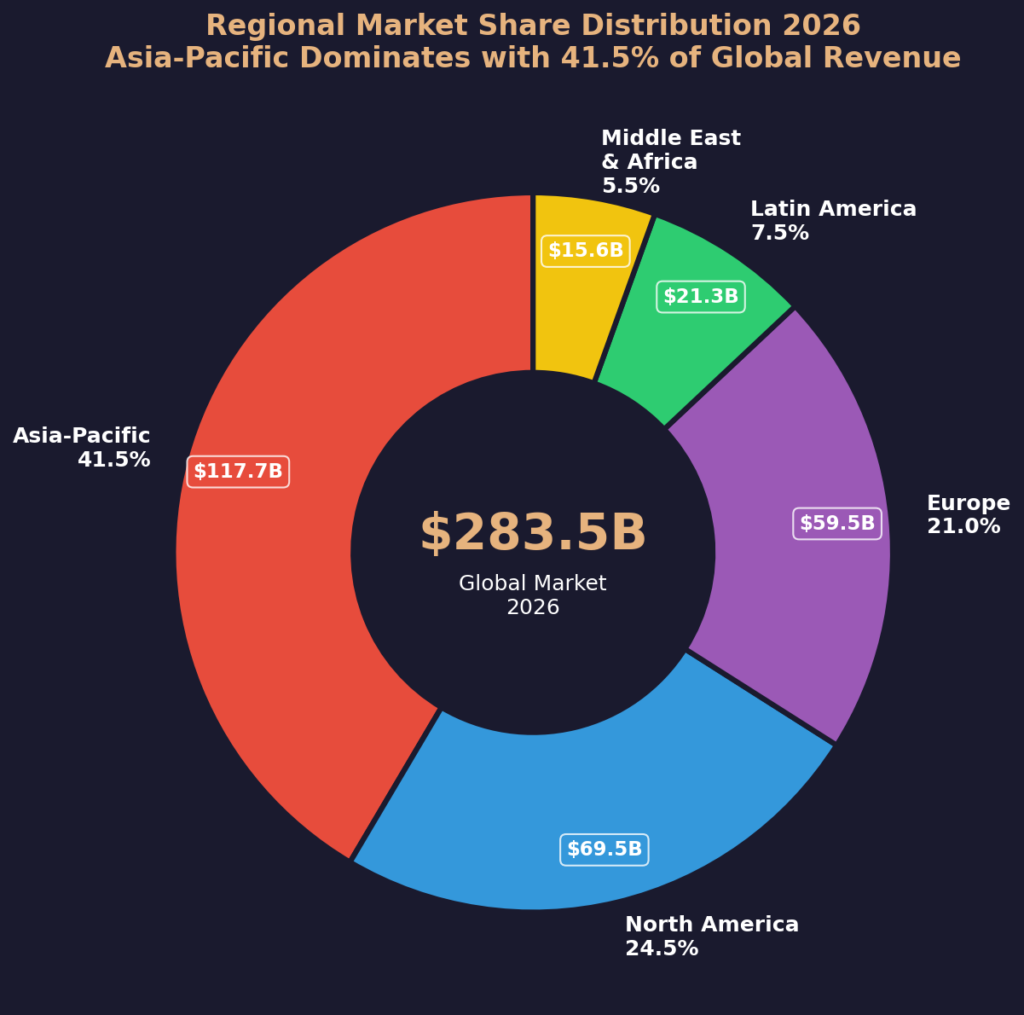
In 2026, the Asia-Pacific region has further consolidated its dominance with a market share exceeding 41.5% according to IMARC Group’s latest analysis, while Grand View Research confirms Asia Pacific held 38.46% of the global furniture market in 2025, with China’s furniture market specifically expected to grow at an impressive 8.2% CAGR from 2026 to 2033 due to premiumization and rising lifestyle quality focus among urban households.
The Asia-Pacific region accounted for about 39.5% of the global revenue in 2024. This dominance is driven by large populations, rising incomes, and rapid urban housing development. China and India in particular have emerged as powerhouses in bedroom furniture demand. Marketers must consider region-specific tastes and cultural preferences when targeting this market. It’s clear that Asia-Pacific sets the pace for global growth.
Bedroom Marketing Statistics #7: Asia-Pacific Fastest-Growing At 5.8% To 6.05% CAGR
In 2026, the Asia-Pacific home furniture market reached USD 148.20 billion according to Mordor Intelligence’s January 2026 update, growing at a 6.05% CAGR toward USD 198.84 billion by 2030, with home office furniture lines posting the quickest segment growth at 6.72% CAGR as hybrid work practices become permanent across white-collar sectors in the region.
Not only is Asia-Pacific dominant, it is also the fastest-growing at a projected CAGR of 5.8%. This means the region is not just large but expanding faster than others. Brands aiming to capture growth must prioritize distribution and visibility here. Marketing campaigns should emphasize affordability and modern aesthetics to appeal to young urban buyers. This region will remain a critical driver of global industry expansion.
Bedroom Marketing Statistics #8: U.S. Market Size At USD 50.36 Billion In 2026
In 2026, the U.S. bedroom furniture market is valued at approximately USD 50.36 billion according to Grand View Research projections, with bedroom furniture commanding over 35% of the total U.S. furniture market share and expanding at a 4.11% CAGR through 2031, while the broader U.S. home furniture market reached USD 130.57 billion in 2026 according to Mordor Intelligence’s January 2026 analysis.
The U.S. bedroom furniture market alone was valued at USD 47.98 billion in 2023. That makes it one of the largest single-country markets worldwide. American consumers are particularly driven by trends in home décor and online shopping. Marketers need to align with U.S. preferences like comfort, durability, and modern style. This huge market share ensures the U.S. remains an influential region.
Bedroom Marketing Statistics #9: U.S. Market Projected To Reach USD 90.57 Billion By 2033
In 2026, Astute Analytica’s January report confirmed the U.S. furniture market is valued at USD 178.9 billion in 2025 and projected to reach USD 345.5 billion by 2035, with the bedroom furniture segment generating over 36% of revenue and the segment alone valued at USD 43.1 billion in 2024 with projections showing a significant climb to USD 69.8 billion by 2031 according to their December 2025 analysis.
By 2033, the U.S. market is expected to nearly double to USD 90.57 billion. This shows impressive long-term stability and expansion. Growth will likely come from a combination of premium furniture demand and online retail channels. Marketers can take advantage of this by tailoring campaigns to digital-savvy American consumers. The U.S. remains a global leader not just in size but in consumer trendsetting.
Bedroom Marketing Statistics #10: Beds Hold 36.8% To 37.5% Market Share In 2026
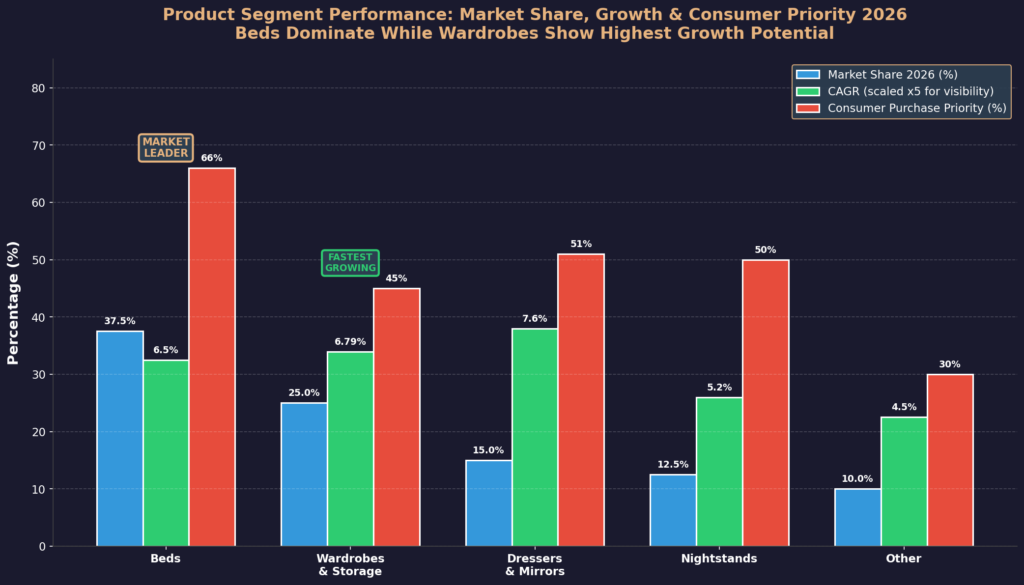
In 2026, the beds segment continues to dominate with market share estimates ranging from 36.8% to 39.9% depending on the research methodology, with IMARC Group’s latest report showing beds commanding 37.5% of the global bedroom furniture market driven by growing interest in smart beds featuring cushion adjustments, heat control, shape changes, and sleep tracking technology integration.
Beds are the single largest product segment, accounting for 36.8% of the market in 2024. This dominance is natural, as beds are the centerpiece of any bedroom. It underscores the importance of product marketing centered around sleep quality and design. Consumers place strong emphasis on functionality and comfort, making this an evergreen category. For brands, focusing on bed innovations can secure long-term market strength
Bedroom Marketing Statistics #11: Wardrobes Expected To Have Highest Growth Rate At 6.79% CAGR
In 2026, the global wardrobe market is valued at USD 74.02 billion according to Fortune Business Insights, projected to reach USD 125.22 billion by 2034 at a 6.79% CAGR, with Asia Pacific commanding 42.82% market share in 2025 and smart wardrobes featuring LED lighting, motorized doors, and humidity control gaining significant traction among affluent urban consumers.
Wardrobes are forecasted to grow at the highest CAGR among bedroom products. This trend reflects increasing needs for storage in modern urban living. Multifunctional and modular wardrobes are particularly appealing to younger consumers. Marketers should highlight versatility and customization options in their campaigns. This category presents strong opportunities for creative marketing strategies.
Bedroom Marketing Statistics #12: Dressers And Mirrors Growing At 5.2% CAGR
In 2026, the storage furniture segment (including dressers, mirrors, cabinets, and shelves) is projected to rise at a CAGR of 7.6% from 2026 to 2033 according to Grand View Research, driven by urbanization, lifestyle shifts, and the growing demand for compact, space-efficient, and multifunctional furniture that helps maximize limited living spaces in densely populated cities.
Dressers and mirrors are expected to grow at about 5.2% CAGR through 2030. These items are becoming more popular due to lifestyle upgrades and home aesthetics. Mirrors also tie into wellness and beauty trends, making them an attractive upsell. Marketers can position these products as essentials for both functionality and style. The steady growth proves that smaller pieces are equally valuable in driving revenue.
Bedroom Marketing Statistics #13: Offline Channels Hold 73-75% Share In 2026
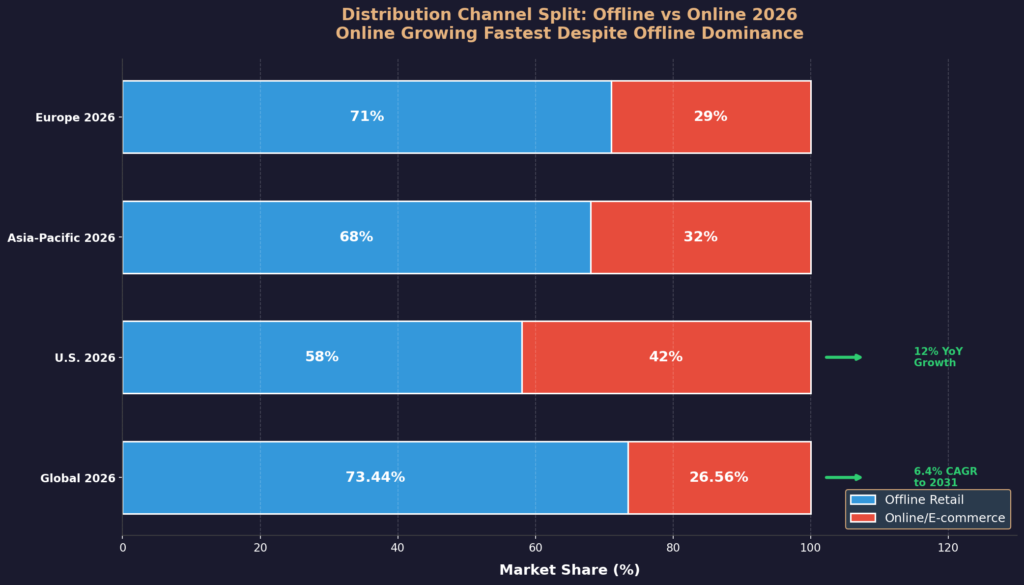
In 2026, offline distribution channels maintain their dominance with approximately 73.44% market share according to Fortune Business Insights’ wardrobe market analysis, while the broader bedroom furniture offline segment commands 73.1% of sales according to Market.us, as consumers continue to prioritize physically inspecting furniture quality, materials, and comfort before making high-value bedroom purchases.
Offline retail channels still dominate with about 73-75% of market share. Consumers still prefer to see and feel bedroom furniture before buying. This shows the importance of maintaining strong physical retail presence. Marketers must blend in-store experiences with digital strategies for full coverage. Traditional retail remains highly influential in this sector.
Bedroom Marketing Statistics #14: Online Channel Growing Fastest At 12% Annual Growth
In 2026, furniture e-commerce is accelerating with experts forecasting annual growth of approximately 12% for online furniture commerce, clearly outpacing the overall market according to Shopware’s 2026 industry analysis, while the U.S. continues leading globally with 49% of furniture purchases occurring online and 62.3% of online furniture searches being transactional and ready-to-buy queries.
Despite offline dominance, online channels are expanding at the fastest rate. E-commerce offers convenience and access to wider product ranges. Younger consumers especially prefer digital shopping for furniture. Marketers must focus on user-friendly websites, visuals, and delivery promises. The future of growth will clearly involve a hybrid of online and offline strategies.
Bedroom Marketing Statistics #15: U.S. Offline Channels Hold 56-58% Share In 2026
In 2026, offline channels account for 58% of the U.S. bedroom furniture market share according to Persistence Market Research, down from previous years as online retail advances at a 6.4% CAGR through 2031 according to Mordor Intelligence’s January 2026 report, with AI-powered AR/VR visualization tools boosting online conversion rates and specialty stores still commanding 74.85% of offline revenue.
In the U.S., offline sales accounted for 56-57% of the market in 2023. That’s lower than the global average, showing faster digital adoption in America. Still, physical stores remain a key part of the buyer journey. Marketers can use this insight to balance showroom promotions with e-commerce campaigns. Blended strategies will appeal to both traditional and digital-first customers.
Bedroom Marketing Statistics #16: 29% Of Consumers Plan To Buy Soon
In early 2026, the Conference Board’s Consumer Confidence survey indicates that furniture remains among the top planned big-ticket purchases, with Home News Now reporting in March 2026 that consumer furniture buying plans have risen on a six-month moving average basis alongside TVs and dishwashers, despite homebuying plans remaining flat, signaling strong replacement and renovation demand.
A survey found that 29% of consumers plan to purchase bedroom furniture in the next six months. This shows a healthy near-term demand pipeline. For marketers, such intent indicates opportunities for targeted promotions. Seasonal campaigns, discounts, and financing options can be aligned with this timeline. The short-term demand makes this an actionable insight for businesses.
Bedroom Marketing Statistics #17: Gen Z Shows Highest Purchase Intent Among Generations
In 2026, Gen Z consumers (ages 18-27) represent 25% of furniture purchase planners according to Home News Now’s Consumer Insights research, with 84% of their purchases influenced by social media platforms including YouTube, Instagram, and TikTok, while 68% favor eco-friendly furniture made from natural materials and 44% buy furniture online though 78% still prefer visiting physical stores first according to the Home Furnishings Association’s August 2025 generational analysis.
Among generations, Gen Z shows the highest intent with 41% planning to purchase. This young demographic is motivated by style, affordability, and online access. Older generations like Baby Boomers show much lower purchase intent. Marketers need to design campaigns that resonate with Gen Z’s values and digital lifestyle. Capturing this group early can secure long-term loyalty.
Bedroom Marketing Statistics #18: 55% Plan To Spend $1,000-$3,499 On Bedroom Sets
In 2026, bedroom furniture priced between USD 500 and USD 999 holds approximately 42% market share according to Grand View Research, while demand for furniture priced above USD 1,000 is growing at a significant CAGR as consumers prioritize quality and durability, with middle-class households representing the primary demographic spending close to USD 2,500 on bedroom renovations according to Home News Now analysis.
Most buyers, about 55%, plan to spend between $1,000 and $3,499 on bedroom furniture. This mid-range spending reflects a balance between quality and affordability. Marketers should position products in this price bracket for maximum reach. Offering flexible financing can make these purchases easier. It’s the sweet spot of the market where most campaigns should focus.
Bedroom Marketing Statistics #19: Beds, Dressers, And Nightstands Are Priorities
In 2026, consumer purchase priorities remain consistent with beds ranking as the number one planned purchase across all age groups through Gen X according to Home News Now’s Consumer Insights research, with 36% of surveyed consumers planning to buy a sofa or sectional, 25% planning mattress purchases, and 22% planning primary bedroom furniture purchases for the second half of the buying cycle.
When shopping, 66% prioritize beds, 51% dressers, and 50% nightstands. These items form the core of bedroom furniture purchases. Mirrors also play a role, with nearly one-third of consumers wanting one. Marketers can use these insights to build bundle deals and cross-selling strategies. Highlighting essential combinations can increase average order values.
Bedroom Marketing Statistics #20: Quality And Durability Are Top Decision Factors
In 2026, the Consumer Edge Home & Garden Outlook released in February 2026 reveals that consumers are prioritizing durability and real value over large discretionary purchases, with elevated interest rates and affordability concerns pushing households to invest in repairs and quality upgrades rather than frequent replacements, making quality messaging even more critical as 76% of shoppers are willing to pay more for sustainable options according to Astute Analytica’s January 2026 U.S. furniture market report.
Consumers rank quality (67%) and durability (61%) as the most important purchase factors. Size, style, and design follow closely, influencing final choices. This shows that practicality is just as important as aesthetics. Marketers should emphasize warranties, material strength, and long-lasting value. Aligning messaging with these priorities ensures trust and conversion.
BEDROOM MARKETING INSIGHTS THAT REVEAL HOW HOME BUYERS THINK IN 2026
At the end of the day, statistics are only valuable if we know how to translate them into real-world action. For me, what stands out most is how emotional the bedroom purchase journey really is—people aren’t just buying a bed or a dresser, they’re investing in comfort, style, and identity. That’s why these numbers matter: they’re a window into what customers value most, from durability to design. I hope you’ve found this roundup both insightful and inspiring, and that it helps spark fresh ideas for your next campaign. After all, marketing in this industry is less about selling furniture and more about helping people create their sanctuary at home. In 2026, global bedroom furniture spending is projected to surpass $260 billion as personalization and home-comfort trends accelerate worldwide.
SOURCES