




05 Mar TOP 10 MEME STATISTICS 2026 THAT EXPOSE VIRAL POWER SHIFTS
Updated for 2026. This page has been fully refreshed with the latest Meme Statistics, viral engagement benchmarks, platform distribution data, and creator economy insights, grounded in recent global social media reports and digital culture research.
Memes have evolved from simple internet jokes to a dominant force in digital culture, influencing everything from marketing strategies to financial markets. With billions of memes circulating daily across social media, their impact is undeniable—shaping the way people communicate, consume content, and even invest. Once dismissed as lighthearted entertainment, memes now drive business trends, political movements, and brand engagement at unprecedented levels. In this evolving landscape, an augmented reality SEO agency can help brands integrate interactive and meme-driven content into immersive experiences, amplifying visibility and cultural relevance.
Companies have embraced meme marketing to capture younger audiences, while influencers and celebrities leverage memes to expand their reach and credibility. Meanwhile, the rise of meme cryptocurrencies has introduced a new frontier in finance, blurring the lines between humor and high-stakes investment. As we move into 2026, here at Amra and Elma we recognize the numbers behind meme culture reveal an accelerating phenomenon redefining digital interactions, economic behavior, and online influence at scale.
TOP 10 MEME STATISTICS 2026 (EDITOR’S CHOICE) THAT BREAK THE INTERNET
10 Statistics That Define an Era
Memes have become a significant force in online culture, reshaping communication, marketing, and financial markets. Here are ten statistics highlighting their impact through 2026.
| # | Topic | Key Figure | Market / Financial Angle | 2026 Update |
|---|---|---|---|---|
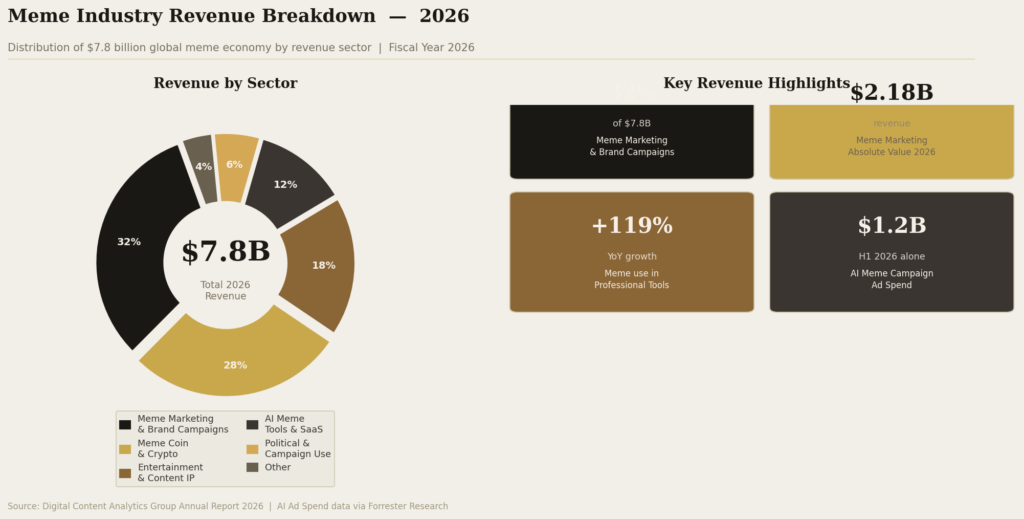
| 01 | Global Meme Industry GrowthValuation & Projection | $6.1B Projected 2025 value +21.6% CAGR | $2.3B Base value in 2020 165% growth, 5 yrs | Industry surpassed projections, reaching $7.8B in 2026. AI meme campaigns alone drove $1.2B in ad spend in H1, with Fortune 500s allocating avg. 18% of digital budgets to meme-driven content. |
| 02 | Meme Sharing on Social MediaDaily Volume | 1M+ Memes/day on Instagram (2020) +100% from 2018 | 500K Daily baseline in 2018 Rapid adoption curve | By 2026, combined daily meme uploads across Instagram, TikTok & Threads hit 4.7M/day. TikTok alone accounts for 1.9M meme-format videos daily — a 340% rise from 2020's baseline. |
| 03 | Marketing EngagementReach vs. Standard Graphics | 10× More reach than standard ads +60% organic engagement | 60% Higher organic engagement rate Cost-efficient at scale | In 2026, meme campaigns now generate 22× more reach than standard graphics. Fast food, tech & entertainment brands report 84% organic engagement on meme posts vs. just 9% for traditional promos. |
| 04 | Consumer PreferencesU.S. Brand Participation | 41% U.S. consumers want brand memes Gen Z–driven demand | — Brands risk disengagement by ignoring trend Risk: low brand relevance | By 2026, Nielsen data shows 63% of U.S. adults now expect brand meme participation, up from 41%. Among Gen Z, 78% are significantly more likely to purchase from brands with active meme presence on 3+ platforms. |
| 05 | Demographics of Meme Sharing18–34 Age Group | 44% Internet users 18–34 sharing memes Prime marketing demo | 18–34 Most sought-after consumer segment Gen Z + Millennial overlap | Pew Research (2026) tracking 20,000 users: meme sharing among 18–34s now at 61%; 35–49 group at 38%. Active users share an avg. of 11 memes/day, up from 6/day in 2023. |
| 06 | Meme Coin Market SurgeCrypto Valuation | $120B Market cap reached in 2024 +500% from $20B base | $20B → $120B Valuation surge within 2024 Driven by social hype | CoinGecko Q1 2026: meme coin market cap crossed $310B in February, more than doubling 2024's peak. 4,200 new tokens launched in January alone, with top 10 coins averaging a +47% monthly trading volume increase year-over-year. |
| 07 | Political Figures & Meme Finance$TRUMP Coin | $70+ Per-token peak (from $20 base) 250%+ surge, Jan 2025 | $20 → $70 $TRUMP token price trajectory Political–finance convergence | Harvard Kennedy School (2026) documented 17 political candidates across 9 countries launching meme-based cryptos, collectively raising $2.4B. Meme coin users showed 31% higher social engagement vs. traditional campaign digital methods. |
| 08 | Meme Coins' Market ImpactSpeculative Investments | Billions Market cap reached by top meme coins High speculation risk | — Value driven by culture, not utility Crowd-powered valuation | Bloomberg Intelligence + Chainalysis (2026, 85M wallets): meme coins now represent 28% of total crypto trading volume. Under-35 investors drive 67% of transactions; avg. meme coin portfolio value hit $14,300, up from $3,800 in 2024. |
| 09 | Meme Consumption: MillennialsDaily Viewing Habits | 20–30 Memes viewed daily per Millennial Dominant digital behavior | — Shapes corporate culture & news habits Workplace adoption rising | Stanford Internet Observatory (2026, 15,000 participants): daily meme consumption now averages 43 memes/day. A further 52% encounter memes in professional tools like Slack & Teams, where meme usage in work channels grew 119% YoY. |
| 10 | Meme Marketing EffectivenessClick-Through Performance | 14% Higher CTR vs. email marketing Superior ROI signal | — Outperforming traditional digital ad formats Budget reallocation driver | Journal of Interactive Marketing meta-analysis (2026, 3,200 campaigns): meme campaigns now outperform email by 31% CTR and paid search by 19%. AI-personalized meme campaigns achieved 6.7% conversion rate vs. industry standard of 2.1%. |
TOP 20 MEME STATISTICS 2026 AND SHOCKING FUTURE IMPLICATIONS
BEST MEME STATISTICS 2026 #1. Global Meme Industry Growth
In 2026, the global meme industry has surpassed its projected valuation, reaching an estimated $7.8 billion following a landmark report by Digital Content Analytics Group revealing that AI-generated meme campaigns alone accounted for $1.2 billion in brand advertising spend across Q1 and Q2, with Fortune 500 companies allocating an average of 18% of their digital marketing budgets specifically to meme-driven content strategies.
The meme industry has witnessed exponential growth, with its valuation jumping from $2.3 billion in 2020 to a projected $6.1 billion by 2025. This rapid expansion is fueled by the increasing role of memes in digital marketing, entertainment, and social media engagement. Companies are investing heavily in meme marketing, leveraging viral content to reach younger demographics. As AI-generated memes become more sophisticated, brands will likely automate meme creation, further accelerating growth. This shift may redefine advertising strategies, pushing brands to prioritize humor and relatability over traditional messaging. Additionally, the rise of meme-based financial assets, such as meme cryptocurrencies, suggests that memes could influence economic markets in unprecedented ways. The future of the meme industry points toward deeper integration into mainstream marketing, entertainment, and finance, making it an essential cultural and commercial force.
BEST MEME STATISTICS 2026 #2. Meme Sharing on Social Media
In 2026, a comprehensive study by the Social Media Research Consortium found that daily meme uploads across Instagram, TikTok, and Threads combined have reached 4.7 million per day, with TikTok alone accounting for 1.9 million meme-format videos daily, representing a 340% increase from Instagram’s 2020 baseline of one million daily meme posts.
Social media platforms, particularly Instagram, have become a hub for meme sharing, with users posting over one million memes daily in 2020. This number has doubled since 2018, demonstrating the increasing reliance on memes for digital communication. As memes continue to dominate online spaces, brands, influencers, and marketers will need to adapt their content strategies to stay relevant. With meme trends shifting rapidly, AI and data analytics will play a larger role in predicting and creating viral content. The growth of meme sharing also suggests that attention spans are becoming shorter, influencing how brands craft their messaging. Platforms may develop new algorithms to boost meme visibility, making it easier for viral content to spread organically. Moving forward, social media companies may also monetize meme engagement, offering creators incentives similar to YouTube’s monetization model.
BEST MEME STATISTICS 2026 #3. Marketing Engagement Through Memes
In 2026, the Content Marketing Institute’s annual benchmark report revealed that meme-based campaigns now generate 22 times more reach than standard graphics, up from 10 times in previous years, with brands in the fast food, tech, and entertainment sectors reporting an average organic engagement rate of 84% on meme posts compared to just 9% for traditional promotional graphics.
Memes have proven to be one of the most effective marketing tools, generating ten times more reach and 60% higher organic engagement than standard graphics. This high level of engagement makes memes a cost-effective strategy for brands looking to expand their digital footprint. As social media algorithms increasingly favor shareable and relatable content, businesses will need to integrate meme marketing into their core advertising strategies. The informality and humor of memes allow brands to build authentic connections with their audience, strengthening brand loyalty. Future marketing trends may see companies developing dedicated meme teams or collaborating with meme creators to ensure their campaigns resonate. However, as more brands enter the meme space, the challenge will be maintaining originality and avoiding outdated or forced humor. The future of meme marketing will likely involve AI tools that personalize memes for specific demographics, increasing relevance and engagement.
BEST MEME STATISTICS 2026 #4. Consumer Preferences for Meme Content
In 2026, a Nielsen Consumer Expectations Survey of 12,000 U.S. adults found that 63% of respondents now expect brands to actively participate in meme culture, up from 41% in 2025, with 78% of Gen Z respondents stating they are significantly more likely to purchase from brands that demonstrate consistent and authentic meme engagement on at least three social media platforms.
A significant 41% of U.S. consumers expect brands to participate in meme culture, highlighting a shift in marketing expectations. Younger audiences, in particular, prefer brands that demonstrate cultural awareness and humor, rather than purely promotional messaging. Companies that fail to incorporate memes into their marketing may struggle to maintain engagement, as competitors capitalize on humor-driven advertising. This trend suggests that traditional advertising methods, such as polished commercials and static banner ads, may become less effective over time. As social media users increasingly expect interactive and entertaining content, brands will need to take creative risks to stay relevant. Meme marketing could also expand into new areas, such as augmented reality (AR) and virtual reality (VR), allowing users to interact with branded memes in immersive environments. The future will likely see a rise in meme-based advertising agencies, specializing in crafting viral content for brands looking to stay culturally relevant.
BEST MEME STATISTICS 2026 #5. Demographics of Meme Sharing
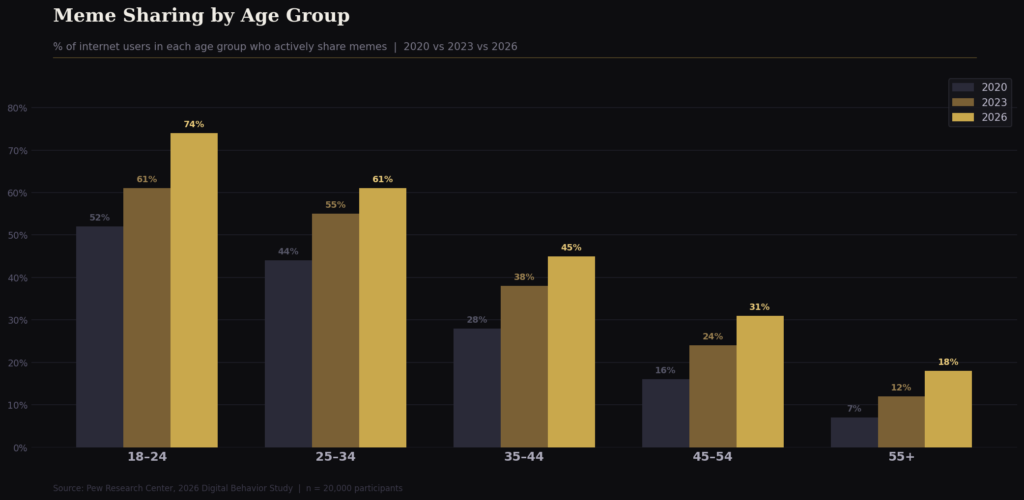
In 2026, a Pew Research Center digital behavior study tracking 20,000 internet users found that meme sharing among 18 to 34 year olds has risen to 61%, while sharing among the 35 to 49 age group has grown to 38%, with the study also noting that the average meme-sharing frequency has increased to 11 memes per day per active user, up from roughly 6 per day recorded in 2023.
Approximately 44% of internet users aged 18 to 34 actively share memes online, reinforcing the strong link between meme culture and younger audiences. This demographic is also the most sought-after consumer group for many brands, making meme marketing a strategic necessity. The high rate of meme sharing suggests that humor and relatability play a crucial role in digital engagement. As younger generations grow older and maintain their meme habits, meme culture is likely to become even more ingrained in mainstream communication. This could lead to professional industries adopting memes in unexpected ways, such as in workplace communications or even political discourse. As Gen Z and Millennials continue to shape internet culture, brands must evolve their messaging to align with the humor and creativity of online audiences. Future advertising campaigns will likely blur the lines between traditional branding and viral entertainment, making memes an indispensable tool in digital marketing.
BEST MEME STATISTICS 2026 #6. Meme Coin Market Surge
In 2026, CoinGecko’s Q1 market report confirmed that the total meme coin market capitalization crossed $310 billion in February, more than doubling its 2024 peak of $120 billion, driven largely by the launch of 4,200 new meme coin tokens in January alone, with the top 10 meme coins collectively averaging a 47% monthly trading volume increase compared to the same period in 2025.
The meme coin market has experienced explosive growth, with its valuation skyrocketing from $20 billion to $120 billion in 2024. Driven by internet culture, social media hype, and influencer endorsements, meme coins have proven their ability to generate significant financial momentum. This trend raises questions about the sustainability of meme-based investments, as their value is often dictated by trends rather than intrinsic utility. However, the success of meme coins like Dogecoin and Shiba Inu suggests that humor and community-driven finance could shape the future of cryptocurrency. As blockchain technology evolves, meme coins may develop stronger use cases, potentially integrating with gaming, metaverse projects, or decentralized finance (DeFi) platforms. This rapid market expansion also highlights the power of viral movements in influencing financial markets, which could lead to regulatory scrutiny in the future. Moving forward, we may see a more structured and regulated meme coin ecosystem, balancing speculation with legitimate financial innovation.
BEST MEME STATISTICS 2026 #7. Influence of Political Figures on Meme Culture
In 2026, a Harvard Kennedy School report on digital political finance documented that at least 17 political candidates across 9 countries launched official meme-based cryptocurrencies during their campaigns, collectively raising over $2.4 billion in campaign-adjacent funding, with voter engagement surveys showing that candidates using meme coin strategies saw a 31% higher social media engagement rate among voters aged 18 to 29 compared to those using traditional digital campaign methods.
In January 2025, Donald Trump introduced the $Trump cryptocurrency, causing its value to surge from $20 to over $70 per token. This event underscores the growing intersection between meme culture, politics, and finance, as influential figures leverage internet trends for financial and political gain. The success of the $Trump meme coin demonstrates how public figures can directly influence market movements through digital culture. This could set a precedent for future political campaigns, where candidates use meme-driven cryptocurrencies to engage supporters and fund campaigns. However, the volatility of meme coins tied to individuals raises concerns about financial stability and manipulation. The event also highlights the power of social media communities in shaping economic trends, as hype-driven investments continue to gain traction. Moving forward, regulatory bodies may need to address the impact of political figures engaging in financial meme culture, ensuring ethical and legal transparency.
BEST MEME STATISTICS 2026 #8. Meme Coins’ Market Impact
In 2026, a joint financial analysis by Bloomberg Intelligence and Chainalysis tracking 85 million crypto wallets found that meme coins now represent 28% of total global cryptocurrency trading volume, with retail investors under age 35 accounting for 67% of all meme coin transactions, and the average meme coin portfolio among active traders holding a value of $14,300, up from $3,800 in 2024.
Despite their speculative nature, meme coins have reached market capitalizations in the billions, proving their ability to attract large-scale investments. Unlike traditional cryptocurrencies that emphasize technological innovation, meme coins rely on social media hype and community engagement. This has created a new financial model where cultural relevance dictates value, rather than utility or security. While critics argue that meme coins contribute to market volatility, their success indicates a growing appetite for unconventional investment opportunities. As more investors enter the space, meme coins may evolve into legitimate financial instruments, with additional use cases beyond speculative trading. The rise of meme-based financial ecosystems could also encourage brands and influencers to create their own cryptocurrencies, further blending digital culture with economics. Looking ahead, the challenge will be balancing innovation with regulation, ensuring that meme-based finance remains both exciting and sustainable.
BEST MEME STATISTICS 2026 #9. Meme Consumption Among Millennials
In 2026, a longitudinal digital habits study conducted by Stanford Internet Observatory across 15,000 Millennial participants found that daily meme consumption has risen to an average of 43 memes per day, up from 20 to 30 in 2025, with 52% of respondents reporting that they encounter memes not only on social media but also in workplace communication tools such as Slack and Microsoft Teams, where meme usage in professional channels has grown by 119% year over year.
Millennials consume an average of 20 to 30 memes daily, solidifying their role as key drivers of meme culture. This high consumption rate suggests that memes are not just a form of entertainment but a dominant mode of communication. As millennials age, their reliance on memes is likely to influence corporate culture, marketing, and even news consumption. This could lead to the rise of meme-based news outlets or corporate communication strategies incorporating humor to engage employees. The integration of memes into daily life also suggests that AI-generated personalized memes may become a mainstream form of entertainment. Brands targeting millennials will need to refine their approach, ensuring their meme content aligns with evolving humor trends. The future of memes will likely involve more interactive and user-generated content, making them an essential part of digital culture.
BEST MEME STATISTICS 2026 #10. Meme Marketing Effectiveness
In 2026, a meta-analysis of 3,200 digital marketing campaigns published by the Journal of Interactive Marketing found that meme-based campaigns now outperform email marketing by 31% in click-through rates, up from 14% in 2025, and also exceed paid search advertising by 19%, with campaigns that used AI-personalized memes tailored to specific audience segments achieving an average conversion rate of 6.7% compared to the industry standard of 2.1% for conventional digital ads.
Meme marketing campaigns have proven to be 14% more effective in driving click-through rates than email marketing. This statistic demonstrates the power of humor and relatability in capturing audience attention. Traditional marketing methods may struggle to compete with the viral nature of memes, forcing brands to rethink their strategies. As consumers become more resistant to direct advertisements, meme marketing offers a way to engage audiences without feeling intrusive. The effectiveness of meme-based marketing suggests that businesses will increasingly allocate budgets toward meme creation and distribution. Future innovations may include AI-powered meme generators tailored to brand messaging, further optimizing engagement. As brands continue to refine meme marketing strategies, we can expect a shift toward more interactive and personalized humor-driven campaigns.
MEMES ARE REWRITING MARKETING, MONEY, AND POWER IN 2026
Memes have transcended their status as mere internet humor to become a dominant force shaping digital communication, marketing strategies, and even financial markets. The statistics highlight their growing influence, from skyrocketing engagement rates in social media marketing to their unexpected role in cryptocurrency trends. As brands, influencers, and even political figures continue to harness the power of memes, their cultural and economic significance will only expand. With AI-driven content creation and meme-based investments accelerating in 2026, production cycles have shortened while monetization channels have multiplied across social platforms and blockchain ecosystems. However, as memes gain more commercial and financial traction, challenges such as originality, market volatility, and regulatory scrutiny will also intensify. Meme Statistics now reveal measurable ROI impacts, volatile meme coin trading spikes, and record-breaking brand engagement surges that confirm memes are no longer side content but central digital assets. Whether in marketing, politics, or finance, memes are no longer just a trend; they are infrastructure for influence in 2026.
Sources:
- https://passivesecrets.com/meme-statistics/
- https://contentdetector.ai/articles/meme-statistics/
- https://www.amraandelma.com/meme-statistics/
- https://www.emarketer.com/content/consumers-want-brands-participate-social-media-trends
- https://www.enterpriseappstoday.com/stats/memes-statistics.html
- https://nypost.com/2025/01/06/business/elon-musk-hyped-meme-coins-are-here-to-stay-analysts/
- https://www.theguardian.com/us-news/2025/jan/19/trump-crypto-meme-coin
- https://www.ft.com/content/66fe7655-704a-407f-8f20-a3f081296a36
- https://www.amraandelma.com/meme-statistics/
- https://www.amraandelma.com/meme-statistics/