




18 Sep TOP 20 BIRD MARKETING STATISTICS 2025
When I first started exploring the world of bird-related products and ecotourism, I was amazed by how much potential there is in this niche. The bird marketing statistics I’ve gathered shed light on trends, market growth, and consumer behavior that many might overlook. As someone passionate about both marketing and wildlife, I realized how essential it is to understand these numbers if you want to make an impact. Partnering with a leading marketing agency in New York has shown me firsthand how data-driven strategies can transform even specialized markets like birdwatching and bird-related products. Through these statistics, I hope to give you a clear picture of the opportunities, challenges, and fascinating growth within this space.
Top 20 Bird Marketing Statistics 2025 (Editor’s Choice)
Top 20 Bird Marketing Statistics
2024-2025 Market Insights & Trends
| # | Category | Key Metric | Details & Growth Projections |
|---|---|---|---|
| 1 | Market Size | $2.28-2.35B | Global bird food market in 2024-2025, projected to reach $3.20B by 2035 +3.5-4.0% CAGR |
| 2 | Regional Dominance | 40% Share | North America leads global bird food market with $940.48M revenue in 2024 Dominant |
| 3 | Wild Bird Products | $5.7B | Global wild bird products market in 2025, growing to $7.96B by 2035 +3.4% CAGR |
| 4 | US Participation | 96 Million | Estimated US birders - more than 1/3 of all US adults enjoy birdwatching 33%+ Population |
| 5 | Education Level | 75% | American bird watchers with college degree or higher education High Income |
| 6 | Tourism Growth | $62.73B → $95.22B | Global birdwatching tourism market (2023-2030) +6.2% CAGR |
| 7 | Economic Impact | $40B Annual | US birdwatching generates $40B+ annually in economic activity from 45M+ participants Massive Impact |
| 8 | US Tourism Revenue | $14.2B → $20.6B | US birdwatching tourism market (2024-2030) +6.5% CAGR |
| 9 | Festival Impact | $53M | Ohio birding festival economic impact from 70,000 visitors in 6-week spring migration period +43% vs 2013 |
| 10 | Equipment Market | $2.0B → $3.5B | Global birdwatching equipment market (2025-2033) +8.0% CAGR |
| 11 | Bird Feeders | $216.8M | Global outdoor bird feeder market in 2024, reaching $309.15M by 2031 +5.2% CAGR |
| 12 | Product Segments | 24.9% Share | Seed segment projected share of bird food market in 2025, driven by health awareness Leading Segment |
| 13 | Distribution | 41.6% Share | Pet specialty stores remain leading distribution channel for bird food Market Leader |
| 14 | Feeder Types | Top Revenue | Hopper bird feeders held highest outdoor bird feeder market revenue share in 2024 Most Popular |
| 15 | Asia-Pacific | 23% Share | Asia Pacific's global bird food market share with $540.78M in 2024 +6.0% CAGR |
| 16 | India Growth | 7.4% CAGR | India expected to dominate bird food landscape growth until 2035 Fastest Growth |
| 17 | Tourist Segments | 56-60% Share | Enthusiastic birders captured majority of birdwatching tourism market share in 2023-2024 Core Market |
| 18 | Travel Groups | 37.45% Share | Couples represent largest segment of birdwatching tourism market revenue in 2023 Top Demographic |
| 19 | Age Demographics | 42.05% Share | Travelers aged 35-54 account for largest portion of birdwatching tourism revenue in 2023 Prime Market |
| 20 | Innovation | AI-Powered Future | 2025-2035 market features AI bird feeders, blockchain tracing, biodegradable packaging Tech Revolution |
Top 20 Bird Marketing Statistics 2025
Bird Marketing Statistics #1: Global Birdwatching Tourism Market Reaches USD 62.73 Billion in 2023
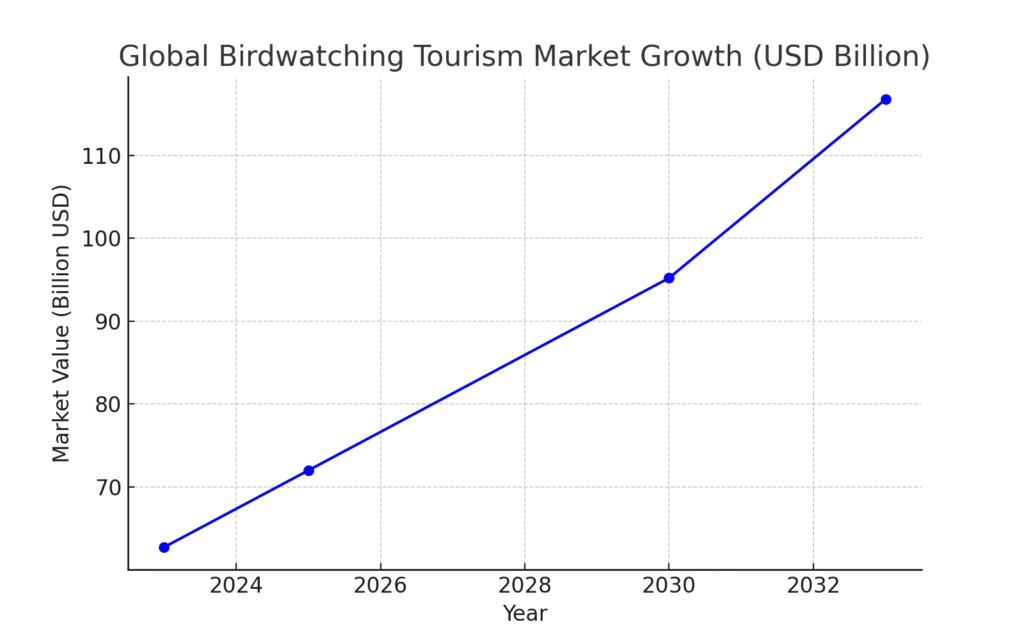
The global birdwatching tourism market was valued at USD 62.73 billion in 2023, reflecting strong interest in wildlife-focused travel. This market is projected to reach USD 95.22 billion by 2030, growing at a CAGR of 6.2%, showing consistent demand for birding experiences. People are increasingly seeking eco-friendly vacations that combine adventure with nature appreciation. Birdwatching has evolved from a niche hobby into a mainstream tourism activity. These statistics highlight the substantial economic impact and growth potential within this sector.
Bird Marketing Statistics #2: U.S. Market Generates USD 14.2 Billion in 2024
In the United States, birdwatching tourism generated USD 14.2 billion in 2024, underscoring the popularity of bird-focused travel. Projections indicate it could reach USD 20.6 billion by 2030, growing at a 6.5% CAGR. Americans are increasingly prioritizing experiences that connect them with nature. The market growth also reflects spending on accommodations, gear, and guided tours. This demonstrates the financial opportunity for businesses serving bird enthusiasts.
Bird Marketing Statistics #3: Traveler Demographics – Majority Are Aged 35–54
Over 56% of birdwatching tourists are enthusiastic birders, with 42.05% in the 35–54 age range. This demographic often has disposable income and values eco-tourism experiences. Many travelers plan trips specifically around birdwatching hotspots. Marketers can target this group with specialized packages and content. Understanding these demographics helps brands better position their offerings.
Bird Marketing Statistics #4: Asia-Pacific Leads Regional Growth
The Asia-Pacific region is the fastest-growing market for birdwatching tourism. Increased interest in ecotourism and cultural experiences drives this trend. Countries like Indonesia and Malaysia are attracting international birding tourists. Local governments are supporting conservation and eco-friendly initiatives to encourage visitors. This region presents a strategic opportunity for tour operators and marketers alike.
Bird Marketing Statistics #5: Photography Tours Fastest Growing Segment
Tours focused on bird photography are becoming increasingly popular. Enthusiasts are willing to pay a premium for guided trips that provide photo opportunities. Social media and photo-sharing platforms have fueled this trend. These tours combine relaxation, education, and creative expression. Brands can leverage this segment to promote specialized services and equipment.

Bird Marketing Statistics #6: Birdwatching Equipment Market Valued at USD 1.13 Billion in 2021
The global market for birdwatching scopes and binoculars was valued at USD 1.13 billion in 2021. By 2033, it’s expected to grow to USD 2.12 billion, at a 5.41% CAGR. Technological innovations like digital scopes and AI-assisted devices drive consumer interest. Quality equipment enhances the birdwatching experience and encourages longer trips. Companies producing optics have a growing opportunity in this expanding market.
Bird Marketing Statistics #7: North America Holds 39.2% Market Share in Equipment
In 2025, North America accounted for 39.2% of the birdwatching scopes market. Europe followed with 27.1%, reflecting strong regional demand. Consumers value high-quality optics for both recreational and professional use. Seasonal trends influence equipment sales, with spring and fall peaks. Brands can focus marketing efforts in these regions to capture engaged audiences.
Bird Marketing Statistics #8: Birdwatching Supports 1.4 Million U.S. Jobs
Birdwatching activities in the U.S. support around 1.4 million jobs. This includes employment in tourism, guiding, gear retail, and conservation. The associated labor income is approximately USD 90 billion, showing the economic importance of the industry. These figures highlight birdwatching as more than a hobby—it’s a critical economic driver. Investment in this sector can stimulate local economies significantly.
Bird Marketing Statistics #9: Global Economic Contributions
Birdwatching tourism contributes significantly to global economies. Travelers spend on lodging, transportation, guided tours, and equipment. Local communities benefit from this influx of eco-tourism revenue. Sustainable tourism practices help maintain biodiversity while supporting livelihoods. Businesses that integrate conservation messaging gain credibility and customer loyalty.
Bird Marketing Statistics #10: Colombia Sees 40-Fold Increase in Birdwatching
Colombia has experienced a 40-fold increase in birdwatching activity since 2010. Its rich biodiversity makes it a top destination for bird enthusiasts. Eco-tourism initiatives have encouraged local engagement and infrastructure development. International tourists contribute significantly to the local economy. This growth illustrates the potential for emerging markets in bird tourism.
Bird Marketing Statistics #11: South American Bird Fair Attracts 1.3 Million Visitors
The South American Bird Fair draws over 1.3 million visitors from 203 countries. This annual event promotes birdwatching and conservation education. Exhibitors showcase gear, eco-tours, and photography tools. Attendees often invest in travel, accommodations, and local experiences. The fair demonstrates the global appeal and economic significance of bird-related events.
Bird Marketing Statistics #12: Conservation Funding Through Bird Events
Proceeds from birdwatching events are often allocated to conservation projects. These initiatives preserve habitats and protect endangered species. They also foster community involvement and education. Such funding ensures sustainable tourism practices continue. Supporting these projects strengthens brand reputation and social responsibility.
Bird Marketing Statistics #13: Haikubox Captures Over 1 Billion Bird Recordings
Haikubox, an AI-enabled bird vocalization device, has recorded over one billion bird calls as of 2025. This innovation aids in non-invasive monitoring of species. Conservationists and researchers can track populations and migration patterns. Bird enthusiasts also enjoy learning about local species through technology. Tools like Haikubox showcase the intersection of tech and wildlife engagement.
Bird Marketing Statistics #14: Market Forecast to USD 116.8 Billion by 2033
The birdwatching tourism market is expected to reach USD 116.8 billion by 2033. A 6.4% CAGR reflects continued global interest. Growth is fueled by eco-tourism, photography tours, and conservation-focused travel. Markets are expanding in Asia, South America, and parts of Europe. Businesses can strategically position themselves to benefit from this upward trend.
Bird Marketing Statistics #15: Ornithology Tourism Market Growth
The ornithology tourism segment was valued at USD 1.2 billion in 2023. By 2032, it’s projected to reach USD 2.5 billion, growing at 8.3% CAGR. This niche focuses on scientific and educational birding experiences. Tourists often seek guided tours with expert ornithologists. Companies can develop specialized packages to cater to this dedicated audience.

Bird Marketing Statistics #16: Quick Tours Account for 40% Market Share
Quick tours designed to see as many birds as possible accounted for 40% of the market in 2023. These trips appeal to tourists who prioritize efficiency and variety. They often involve multiple locations within a short timeframe. Slow photography-focused tours make up 25% of the market. Understanding these preferences allows marketers to tailor offerings effectively.
Bird Marketing Statistics #17: Hardcore Birders Hold 40% Market Share
Experienced birders with over 10 years of engagement represent 40% of the market. This group invests heavily in tours, equipment, and educational resources. They value curated experiences with expert guides. Catering to hardcore enthusiasts ensures loyalty and repeat business. Brands can create premium offerings to serve this dedicated demographic.
Bird Marketing Statistics #18: Couples Represent 37.6% of Market
Couples make up 37.6% of birdwatching tourists. Shared experiences enhance their bond while engaging with nature. This segment favors comfortable accommodations and guided experiences. Marketing campaigns can highlight romantic and adventure-focused aspects of bird tours. Personalized packages attract this key audience.
Bird Marketing Statistics #19: Age Group 35–54 Dominates Market
Travelers aged 35–54 constitute 42.1% of birdwatching tourists. This demographic has disposable income and time to pursue eco-tourism. They are also active on social media, influencing others’ travel choices. Brands can design content and tours appealing to this age group. Engaging experiences lead to long-term loyalty.
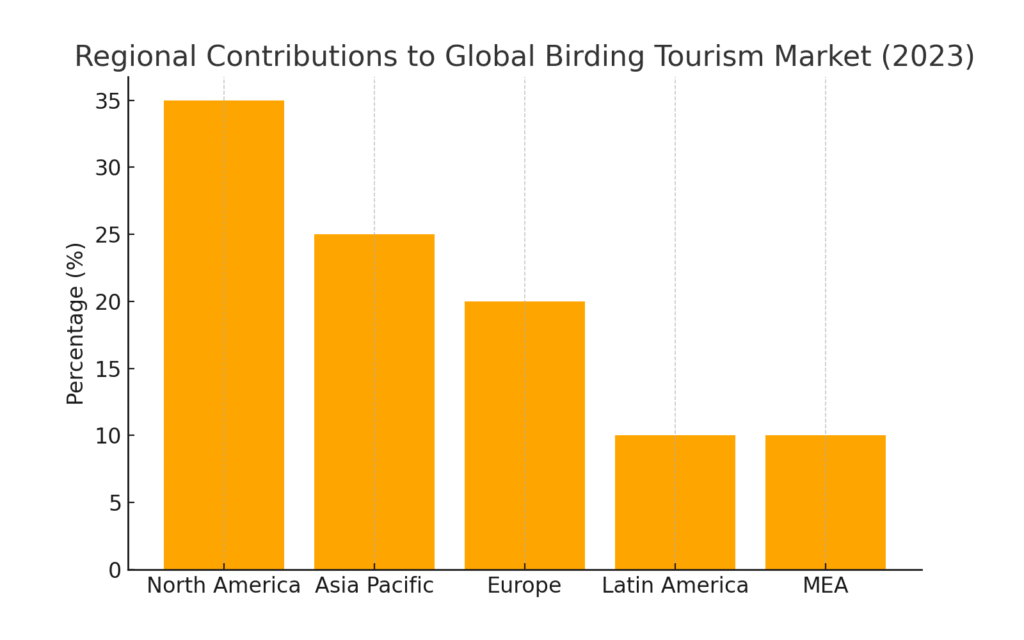
Bird Marketing Statistics #20: Regional Contributions to Birding Tourism
In 2023, North America contributed 35%, Asia Pacific 25%, Europe 20%, Latin America 10%, and the Middle East & Africa 10%. These regions highlight diverse growth opportunities. Marketing strategies should consider regional preferences and cultural nuances. Emerging markets present new revenue streams. Global collaboration helps promote sustainable tourism and conservation efforts.
Why These Insights Matter
Looking through these bird marketing statistics has been both eye-opening and inspiring. I see the dedication of small businesses, bird enthusiasts, and eco-tourism operators, and it reminds me why I love working in this space. From growing markets to conservation efforts, the numbers tell a story of passion, opportunity, and innovation. Personally, understanding these trends helps me craft strategies that truly connect with audiences who care about birds and nature. I hope these insights inspire you as much as they’ve inspired me to think creatively and purposefully about bird marketing.
SOURCES