




28 Sep TOP 20 BONE HEALTH MARKETING STATISTICS 2025
When I first started diving into bone health marketing statistics, I realized just how many opportunities brands and health businesses have to make a meaningful difference. What excites me is not just the numbers, but the real lives these insights touch—whether it’s seniors looking for supplements or younger consumers becoming more proactive about their bone strength. As someone who constantly learns from industry experts like the leading marketing agency in New York, I love seeing how data shapes the way we connect products with people’s everyday health journeys. This blog is my personal take on where the bone health market stands today, and how its growth trends can inspire smarter strategies for the future.
Top 20 Bone Health Marketing Statistics 2025 (Editor’s Choice)
| # | Statistic | Value / Size | Year(s) | Marketing Takeaway |
|---|---|---|---|---|
| 1 | Supplements Global bone & joint supplements market size | USD 13.28B | 2023 | Large base signals strong demand for preventive bone health. |
| 2 | Growth Global bone & joint supplements projected | USD 21.59B (CAGR ~7.26%) | 2030 | Plan multi-year brand building; category momentum remains robust. |
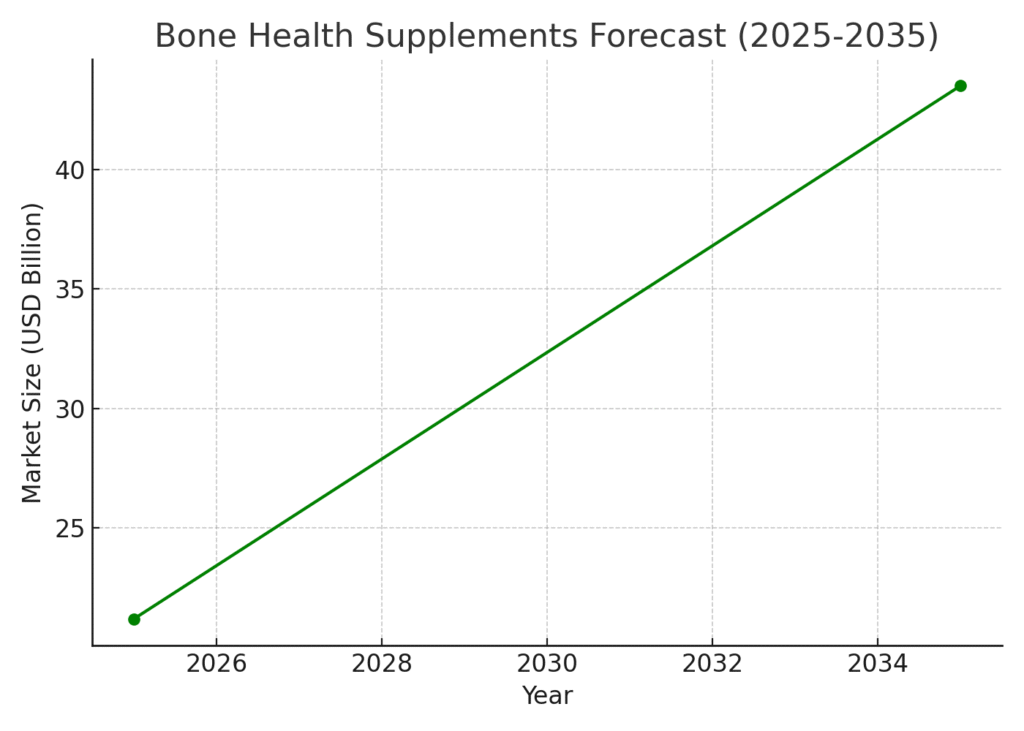
| 3 | Forecast Bone health supplements (broader) projection | USD 43.5B | 2035 | Room for premiumization and new formats aimed at younger cohorts. |
| 4 | U.S. Sales Bone health supplements revenue | USD 302M (-2% YoY) | 2023 | Differentiate beyond “just calcium” to reverse stagnation. |
| 5 | Region North America market size | USD 1.232B | 2023 | High-value region—optimize retail, DTC, and education-led funnels. |
| 6 | Pharma Osteoporosis drugs market size | USD 15.28B | 2024 | Healthcare partnerships and HCP content can widen reach. |
| 7 | Pharma Osteoporosis drugs projected | USD 25.4B (CAGR ~5.6%) | 2032 | Messaging that blends efficacy + lifestyle support will win. |
| 8 | CAGR Osteoporosis drugs long-run growth | ~4.6% CAGR | to 2032 | Stable category—ideal for long-horizon brand investment. |
| 9 | Market Global osteoporosis market forecast | USD 17.9B | 2033 | Rising diagnosis and adherence programs expand addressable audiences. |
| 10 | APAC South Korea osteoporosis medication sales | USD 285.4M (+15.3% YoY) | 2023 | Localize creatives for fast-growing Asian markets. |
| 11 | Therapy Shift Denosumab adoption (KR, 2018→2023) | ~+958% | 2018–2023 | Highlight innovative mechanisms; position as “next-gen bone care.” |
| 12 | Projection Supplements market outlook | USD 17.6B (CAGR ~8.5%) | 2027 | Strong growth supports new SKUs and retail expansion. |
| 13 | Category Vitamins revenue within bone supplements | USD 1.198B | 2023 | Vitamin-led SKUs dominate; add differentiators like K2, collagen. |
| 14 | Global Scale Osteoporosis market estimate | USD 26.3B | 2023 | Large ecosystem enables cross-promo with diagnostics & devices. |
| 15 | Alt Estimate Osteoporosis market growth | USD 10.2B → 14.8B | 2023 → 2034 | Despite estimate variance, direction is clearly upward. |
| 16 | Ingredients Calcium, Vitamin D & K dominate | Category leaders | Current | Use storytelling to escape “me-too” positioning. |
| 17 | Share North America’s contribution to global revenue | ~31.6% | 2023 | Prioritize US/Canada retail media and clinician advocacy. |
| 18 | Adoption U.S. supplement consumers using bone support | ~37% | Recent | Target habitual users with subscription and bundle offers. |
| 19 | Outlook North America market projection | USD 2.037B | 2030 | Premiumization and science-backed claims can lift AOV. |
| 20 | Shift Anabolic osteoporosis drugs gaining share | Share ↑ vs. antiresorptives | Forward | Reframe messaging from “maintain” to “build” for stronger impact. |
Top 20 Bone Health Marketing Statistics 2025
Bone Health Marketing Statistics #1: Global Bone & Joint Supplements Market At $13.28 Billion In 2023
The bone and joint health supplements market reached $13.28 billion in 2023, reflecting rising consumer demand. More people are turning to supplements as preventive health becomes mainstream. This market is expected to grow steadily, offering a fertile ground for health marketers. The increasing awareness of osteoporosis and joint issues further drives this growth. Brands positioning themselves as trustworthy can capture a loyal audience.
Bone Health Marketing Statistics #2: Market To Reach $21.59 Billion By 2030 With 7.26% CAGR
By 2030, the global bone and joint supplement market will nearly double in size. A 7.26% CAGR indicates not just growth but strong resilience in consumer demand. This long-term trend points toward consistent opportunities for marketers to innovate. The rise is fueled by aging populations and lifestyle shifts. Companies focusing on education and trust will stand out.
Bone Health Marketing Statistics #3: Bone Health Supplements Forecast To Reach $43.5 Billion By 2035
The bone health supplement sector is projected to more than double by 2035. This growth underlines how bone care is no longer niche—it’s mainstream. Consumers across all age groups are prioritizing bone health earlier in life. This expanded market means more product diversity and competitive campaigns. Smart marketing can position new products as essential daily choices.
Bone Health Marketing Statistics #4: U.S. Sales Hit $302 Million In 2023 Despite 2% Decline
Bone health supplements in the U.S. generated $302 million in 2023. Interestingly, this number represented a slight 2% decline. While the market is still large, stagnation signals a need for creative repositioning. Brands that reframe their products beyond “just calcium” could regain traction. Marketing that highlights new ingredients and science may reignite growth.
Bone Health Marketing Statistics #5: North America Market At $1.23 Billion In 2023
In 2023, North America’s bone and joint supplements market alone was valued at $1.23 billion. This shows how much weight consumers place on preventive health. With a CAGR of 7.4%, this region is primed for expansion. Local campaigns that highlight convenience and trustworthiness will thrive. Personal storytelling in marketing could drive stronger connections.

Bone Health Marketing Statistics #6: Osteoporosis Drugs Market Valued At $15.27 Billion In 2024
The osteoporosis drugs market continues to expand, hitting $15.27 billion in 2024. With millions at risk, medical marketing remains crucial. Awareness campaigns can spotlight early detection and treatment options. Patients are more receptive to messaging that blends medical expertise with lifestyle advice. This creates room for personalized healthcare branding.
Bone Health Marketing Statistics #7: Osteoporosis Drugs Forecasted To Reach $25.4 Billion By 2032
By 2032, osteoporosis drugs are expected to generate $25.4 billion globally. This upward trend demonstrates increasing treatment adoption. Marketers should emphasize not only medication but also supportive care. Lifestyle integration stories resonate with patients and caregivers alike. Highlighting innovation will differentiate leading brands.
Bone Health Marketing Statistics #8: Osteoporosis Drug Market CAGR At 4.6% Through 2032
The osteoporosis drug market is projected to grow at 4.6% annually. This signals steady and reliable expansion. Companies can use this data to plan long-term investments. Healthcare campaigns focusing on consistent bone support will align with market momentum. A strategy built on stability reassures consumers.
Bone Health Marketing Statistics #9: Global Osteoporosis Market To Reach $17.9 Billion By 2033
By 2033, the osteoporosis market is expected to nearly double to $17.9 billion. This growth reflects increased awareness and diagnostic improvements. Marketers have a chance to engage with audiences about proactive bone care. Campaigns that emphasize early prevention will resonate widely. Educational storytelling will set brands apart.
Bone Health Marketing Statistics #10: South Korea Osteoporosis Med Sales Hit $285 Million In 2023
In South Korea, osteoporosis drug sales rose 15.3% to $285 million in 2023. This highlights Asia’s fast-expanding role in bone health markets. Rapid growth creates new opportunities for localized marketing. Health brands can tailor campaigns to specific cultural health practices. Regional awareness will be a major driver of success.
Bone Health Marketing Statistics #11: Denosumab Usage Rose Nearly 958% In 5 Years In South Korea
Denosumab, a bone treatment, grew nearly tenfold between 2018 and 2023. This explosive growth reveals a strong trust in modern therapies. The shift signals that consumers are open to new medical solutions. Marketers can highlight innovation and efficacy in messaging. This trust-building approach supports sustainable adoption.
Bone Health Marketing Statistics #12: Supplements Market Projected To Hit $17.6 Billion By 2027
By 2027, bone and joint supplements are expected to reach $17.6 billion globally. This represents a CAGR of 8.5%. Such strong growth attracts both new entrants and established players. Companies need to differentiate through branding and storytelling. Highlighting lifestyle benefits beyond bone strength can expand appeal.
Bone Health Marketing Statistics #13: Vitamins Category Generated $1.19 Billion In 2023
In 2023, vitamins within bone supplements accounted for $1.19 billion. This dominance shows vitamins remain central to consumer trust. However, it also signals saturation in the category. Marketers must innovate with blends and benefits. Storytelling beyond “basic vitamins” can capture new audiences.
Bone Health Marketing Statistics #14: Osteoporosis Market Estimated At $26.3 Billion In 2023
Globally, the osteoporosis market was pegged at $26.3 billion in 2023. This makes it a major player in healthcare economics. The scale indicates a powerful opportunity for pharmaceutical marketing. Campaigns centered on patient empowerment will resonate strongly. Trust and accessibility remain vital to capture this segment.
Bone Health Marketing Statistics #15: Osteoporosis Market Projected At $14.8 Billion By 2034
Another report values the osteoporosis market at $10.2 billion in 2023, heading to $14.8 billion by 2034. While smaller than some estimates, this still reflects meaningful growth. Marketers can frame this as an ongoing opportunity. Campaigns emphasizing innovation remain highly relevant. Embracing patient education is critical to outreach success.

Bone Health Marketing Statistics #16: Calcium, Vitamin D, And K Dominate The Market
Calcium, vitamin D, and vitamin K remain the dominant ingredients in bone health products. This signals consumer preference for proven essentials. However, the challenge lies in standing out among countless “me-too” products. Innovative blends with storytelling can capture attention. Brands highlighting unique angles will see greater loyalty.
Bone Health Marketing Statistics #17: North America Accounts For 31.6% Of Market Revenue
North America generated nearly a third of global bone supplement revenue in 2023. This emphasizes the region’s importance in shaping global trends. Marketers must align campaigns with local preferences. Strong storytelling around preventive health resonates here. This large market remains vital for growth strategies.
Bone Health Marketing Statistics #18: 37% Of U.S. Supplement Consumers Use Bone Support Products
Roughly 37% of U.S. supplement users regularly buy bone health supplements. This reflects mainstream adoption. Marketers can tailor campaigns to emphasize everyday integration. Stories of active lifestyles appeal strongly here. Data-driven campaigns can strengthen long-term engagement.
Bone Health Marketing Statistics #19: North America Market Expected To Hit $2.03 Billion By 2030
By 2030, the North American bone health market is forecast to reach $2.03 billion. This underscores strong, continued expansion. Marketers can focus on premium products with lifestyle branding. Emotional narratives tied to family and longevity work well. Consistency in campaigns will be key to long-term trust.
Bone Health Marketing Statistics #20: Anabolic Osteoporosis Drugs To Gain Market Share
Future trends show anabolic drugs overtaking older bone preservation treatments. This shift changes how marketing should frame messages. From “maintaining bone” to “building bone,” narratives will evolve. Innovative companies can lead the conversation here. Consumers respond strongly to progress-oriented stories.

The Future Of Bone Health Marketing
Writing about these bone health marketing statistics reminded me why I love exploring data that directly connects to people’s lives. Behind every percentage and dollar figure is a family member, a parent, or even ourselves—trying to live stronger, healthier lives. I see this market not just as numbers but as a reflection of the human need for trust and care. For me, the most exciting part is how brands can rise to this challenge with compassion, innovation, and authenticity. As I look at the future, I’m motivated to keep learning and sharing insights that empower healthier choices for all of us.