




23 Sep TOP 20 BOOKING PLATFORM MARKETING STATISTICS 2025
When I first started researching the latest booking platform marketing statistics, I was amazed at how quickly this industry is growing and transforming the way people travel. From the dominance of mobile apps to the surge in direct hotel bookings, the landscape is shifting in ways that are shaping customer behavior like never before. As someone who is deeply interested in how marketing and consumer trends connect, I found these insights particularly eye-opening. That’s why I’ve gathered the most up-to-date numbers to help both marketers and businesses understand where things are headed. I also drew inspiration from working with a leading marketing agency in New York, which continuously highlights how data-driven strategies can unlock growth in competitive industries like travel and hospitality.
Top 20 Booking Platform Marketing Statistics 2025 (Editor’s Choice)
| # | Statistic | Value / Trend | Year / Forecast | Source |
|---|---|---|---|---|
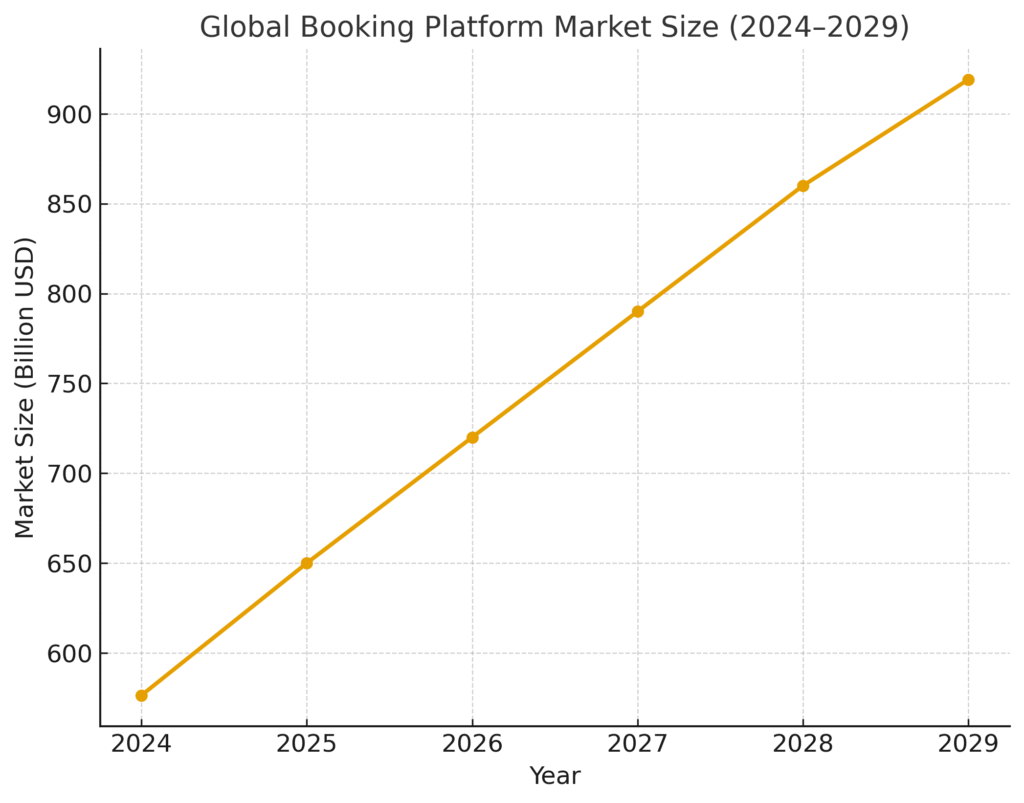
| 1 | Global market size | $576.42B → $919.05B | 2024–2029 | thebusinessresearchcompany.com |
| 2 | Long-term growth | $533.6B → $1.28T | 2025–2033 | cognitivemarketresearch.com |
| 3 | Mobile booking growth | $228B → doubled | 2024–2032 | travelperk.com |
| 4 | Online travel market value | $512.5B → $1.26T | 2023–2030 | navan.com |
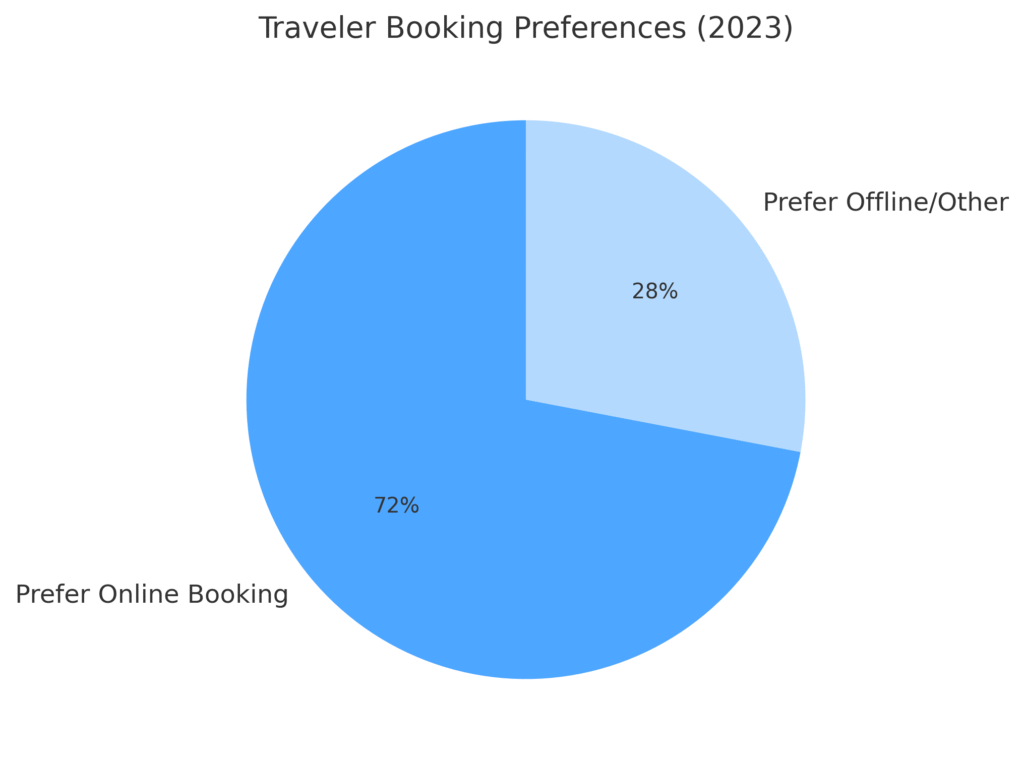
| 5 | Online booking preference | 72% of travelers | 2023 | navan.com |
| 6 | Direct hotel bookings (US) | 37% share | 2024 | influencermarketinghub.com |
| 7 | Price parity effect | 50% book direct if equal price | 2024 | influencermarketinghub.com |
| 8 | OTA market share | 40% of global travel | 2024 | mize.tech |
| 9 | Booking.com app users | 100M+ users (60% bookings) | 2024 | businessofapps.com |
| 10 | Travel app revenue | $629B (+13% YoY) | 2024 | businessofapps.com |
| 11 | Traveler research | Multiple sites before booking | Ongoing | hoteltechreport.com |
| 12 | Short-term rental growth (EU) | +28.3% nights booked | Q1 2024 | reuters.com |
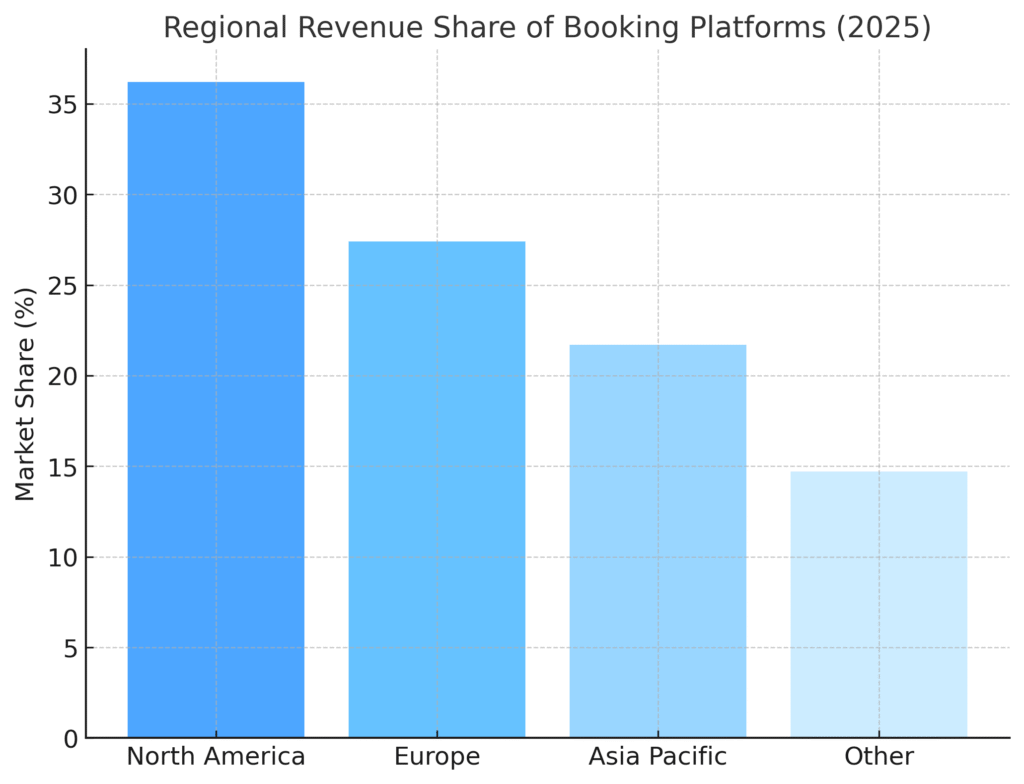
| 13 | Regional share | NA 36.2%, EU 27.4%, APAC 21.7% | 2025 | cognitivemarketresearch.com |
| 14 | Smartphone adoption driver | Key growth factor | 2024+ | thebusinessresearchcompany.com |
| 15 | Mobile vs desktop | Mobile ≈ 50% by 2029 | 2029 | prostay.com |
| 16 | App preference | 39% speed, 30% functionality | 2024 | travelperk.com |
| 17 | OTA commission impact | High costs → direct push | 2024+ | influencermarketinghub.com |
| 18 | Incentives for direct booking | Upgrades, perks, discounts | 2024 | influencermarketinghub.com |
| 19 | Service segmentation | Vacation vs transport vs OTA | 2024–2025 | cognitivemarketresearch.com |
| 20 | Market challenges | Competition, price parity, UX | 2025 | navan.com |
Top 20 Booking Platform Marketing Statistics 2025
Booking Platform Marketing Statistics #1: Global Market Size Will Grow From $576.42B (2024) To $919.05B By 2029
The sustained climb from $576.42B to $919.05B shows how resilient and scalable booking platforms have become. This growth reflects broader digital adoption, improved connectivity, and better price-comparison tools. Marketers should plan for increasing competition and CAC pressure as more brands chase this expanding pie. Differentiation will hinge on UX speed, transparent pricing, and trust signals. Budget now for experimentation across mobile journeys and loyalty funnels.
Booking Platform Marketing Statistics #2: Long-Term Market Expansion From ~$533.6B (2025) To ~$1.28T By 2033
A projected ~11–12% CAGR over eight years indicates sustained momentum rather than a short-term spike. Platforms that build durable moats—data, loyalty, and brand—will capture outsize value. Expect consolidation and niche specialization as categories mature. Marketers should map multi-year content and CRM roadmaps tied to this runway. Treat retention as a revenue engine, not a reporting metric.
Booking Platform Marketing Statistics #3: Mobile Booking Value Around $228B In 2024, Set To More Than Double By 2032
Mobile is no longer a secondary channel; it is the default decision surface. Fast, low-friction flows reduce drop-off and raise conversion. App onboarding, saved preferences, and wallet integrations will determine winners. Make page speed budgets and error budgets first-class KPIs. Test micro-copy on mobile CTAs relentlessly.
Booking Platform Marketing Statistics #4: Online Travel Market $512.5B In 2023, Heading Toward ~$1.26T By 2030
The broader online travel swell lifts accommodation, transport, and package segments alike. As volumes rise, marginal UX improvements compound revenue. Plan channel-mix scenarios to avoid over-reliance on any single traffic source. Partnerships with fintechs and insurers can expand basket value. Align brand campaigns with high-intent seasonal windows.
Booking Platform Marketing Statistics #5: 72% Of Travelers Prefer Booking Online
Digital preference is entrenched across age cohorts, not just Gen Z. That puts pressure on platforms to deliver clarity in fewer taps. Rich media (room tours, maps, reviews) should load instantly and be skimmable. Reduce cognitive load with progressive disclosure and smart defaults. Use schema markup to win SERP real estate and pre-qualify clicks.
Booking Platform Marketing Statistics #6: 37% Of U.S. Hotel Bookings Come Via Direct Engines
Direct is gaining share as brands emphasize loyalty and parity. For platforms, this elevates the need to add value beyond price—selection, bundles, and service. For hotels, owned channels must feel premium and dead simple. Co-op strategies with metasearch can still be profitable if tracked cleanly. Align incentives so affiliates and owned channels don’t cannibalize blindly.
Booking Platform Marketing Statistics #7: 50% Will Book Direct If Prices Match OTAs
Price parity neutralizes the OTA convenience advantage. Therefore, perks and UX must carry the conversion burden. Think free upgrades, late checkout, or flexible cancellation at parity. Message these benefits clearly above the fold on mobile. Automate parity alerts so revenue teams can react within hours, not days.
Booking Platform Marketing Statistics #8: OTAs Capture ~40% Of Global Online Travel Bookings
This share underscores OTAs’ discovery power and ad muscle. Competing head-to-head on broad keywords is costly. Instead, lean into niche intent, first-party data, and owned audiences. Build programmatic SEO around long-tail itineraries and local experiences. Use incrementality tests to validate spend beyond last-click bias.
Booking Platform Marketing Statistics #9: Booking.com App Tops 100M Users And Drives ~60% Of Its Bookings
Apps win by reducing friction with saved profiles, payments, and notifications. Push messaging and in-app offers can move demand with precision. Replicate that playbook at an appropriate scale: deep links, 1-tap pay, and receiptless support. Measure app-install quality, not just volume. Guard against notification fatigue with preference centers.
Booking Platform Marketing Statistics #10: Travel App Market Revenue Near $629B In 2024 (+13% YoY)
Rising revenue signals consumer comfort with transacting in-app. That invites more partnerships across ancillaries—insurance, activities, and ground transport. Bundle intelligently to increase AOV without harming conversion. Use post-purchase flows to surface context-aware upsells. Attribute these gains with cohort-level LTV, not siloed session metrics.
Booking Platform Marketing Statistics #11: Travelers Visit Multiple Sites Before Booking
Research fragmentation means your brand must appear in several micro-moments. Consistent pricing and messaging across channels prevents distrust. Retarget based on viewed dates and destinations, not generic banners. Provide helpful content like neighborhood guides to earn return visits. Capture emails with value—alerts, not spam.
Booking Platform Marketing Statistics #12: EU Short-Term Rental Nights +28.3% YoY In Q1 2024
This surge points to resilient demand for alternative stays. Hosts and platforms should highlight uniqueness, amenities, and local experiences. Safety and verification messaging reduces booking anxiety. Calendar and fee transparency are decisive on mobile. Build seasonal playbooks for events and shoulder seasons.
Booking Platform Marketing Statistics #13: Regional Revenue Share—NA ~36.2%, Europe ~27.4%, APAC ~21.7%
Allocating budget by region should follow both share and growth velocity. APAC’s rising middle class suggests outsized mobile-first tactics. In Europe, compliance and price transparency are table stakes. North America rewards loyalty and card-linked offers. Localize payments, language, and support hours to lift regional CVR.
Booking Platform Marketing Statistics #14: Smartphone & Internet Penetration Are Primary Growth Drivers
Access unlocks intent; performance converts it. Markets coming online will be mobile-only, not mobile-first. Design assuming variable networks and older devices. Preload critical assets and defer non-essential scripts. Track conversion loss from slow loads as a monetary KPI.
Booking Platform Marketing Statistics #15: Mobile To Reach ~50% Of Bookings By 2029
Prepare now with mobile-first IA, not desktop downsizing. Compress images, streamline forms, and minimize redirects. Embrace passkeys and native wallets to reduce friction. Treat app and mobile-web as complementary, not competing. Build parity in core features to avoid channel confusion.
Booking Platform Marketing Statistics #16: Users Prefer Apps For Speed (≈39%) And Functionality (≈30%)
Speed is a brand promise users can feel. Feature sets like saved searches, wishlists, and smart re-pricing keep users engaged. Benchmark against the fastest in e-commerce, not just travel. Use RUM (real-user monitoring) to find bottlenecks by device. Celebrate milliseconds saved like features shipped.
Booking Platform Marketing Statistics #17: OTA Commissions Pressure Margins, Spurring Direct Pushes
Commission drag makes lifetime value the north star. Encourage account creation with immediate, tangible benefits. Use triggered email/SMS to reclaim cart and search abandoners. Model media mix on contribution margin, not revenue alone. Negotiate metasearch fees with clear incrementality proof.
Booking Platform Marketing Statistics #18: Perks Drive Direct—Upgrades, Early Check-Ins, And Discounts
Value-add beats vague “member savings.” Test perk placement near price to reduce comparison shopping. Rotate benefits by season and demand elasticity. Surface elite-tier milestones to motivate repeat stays. Track which perks actually change behavior versus feel-good noise.
Booking Platform Marketing Statistics #19: Segmentation By Service Type And Channel Is Increasingly Critical
Vacation packages, standalone stays, and transport each follow different decision cycles. Tailor creatives and landing pages to that cycle. Channel segmentation (direct vs OTA vs meta) should inform attribution rules. Build dashboards that show segment-level CAC and LTV. Kill one-size-fits-all campaigns quickly.
Booking Platform Marketing Statistics #20: Competition, Price Parity, And UX Are The Core Challenges In 2025
Crowded SERPs and parity clauses compress differentiation. Experience quality—clarity, speed, and support—becomes the brand. Invest in self-serve help and instant refunds to build trust. Use experimentation as an operating system, not a project. The platforms that feel effortless will quietly win share.

Why These Booking Platform Marketing Statistics Matter
Looking at these booking platform marketing statistics, it’s clear that the way travelers make decisions today is more digital, more mobile, and more personalized than ever before. For me, it’s fascinating to see how loyalty programs, price parity, and innovative app features are shaping the booking journey in ways we couldn’t have imagined a few years ago. These numbers remind me that staying ahead in this market isn’t just about offering a service—it’s about understanding travelers’ expectations and building strategies around them. Personally, I believe that brands and platforms that embrace these trends will be the ones that stand out and thrive in the years to come.
SOURCES
- https://www.travelperk.com/blog/online-travel-booking-statistics/ (TravelPerk)
- https://influencermarketinghub.com/hotels-resorts-marketing-statistics/ (Influencer Marketing Hub)
- https://moldstud.com/articles/p-effective-marketing-strategies-for-online-booking-systems (MoldStud)
- https://semrush.com/blog/content-marketing-statistics/ (Semrush)
- https://hubspot.com/marketing-statistics (HubSpot)
- https://socialinsider.io/blog/booking-social-media-strategy/ (Socialinsider)
- https://wix.com/blog/blogging-statistics-and-facts (wix.com)
- https://inblog.ai/blog/blogging-statistics (inblog.ai)
- https://backlinko.com/blogging-stats (Backlinko)
- https://bloggingwizard.com/blogging-statistics/ (Blogging Wizard)
- https://forgeapollo.com/blog/video-marketing-statistics/ (Forge Apollo)
- https://databox.com/blogging-statistics (Databox)
- https://wpbeginner.com/research/2022-blogging-statistics-trends-data-ultimate-list-updated/ (WPBeginner)
- https://diviflash.com/blogging-statistics/ (DiviFlash)
- https://optinmonster.com/blogging-statistics/ (OptinMonster)
- https://moldstud.com/articles/p-effective-marketing-strategies-for-online-booking-systems (MoldStud)https://hubspot.com/marketing-statistics/travel-platform-trends