



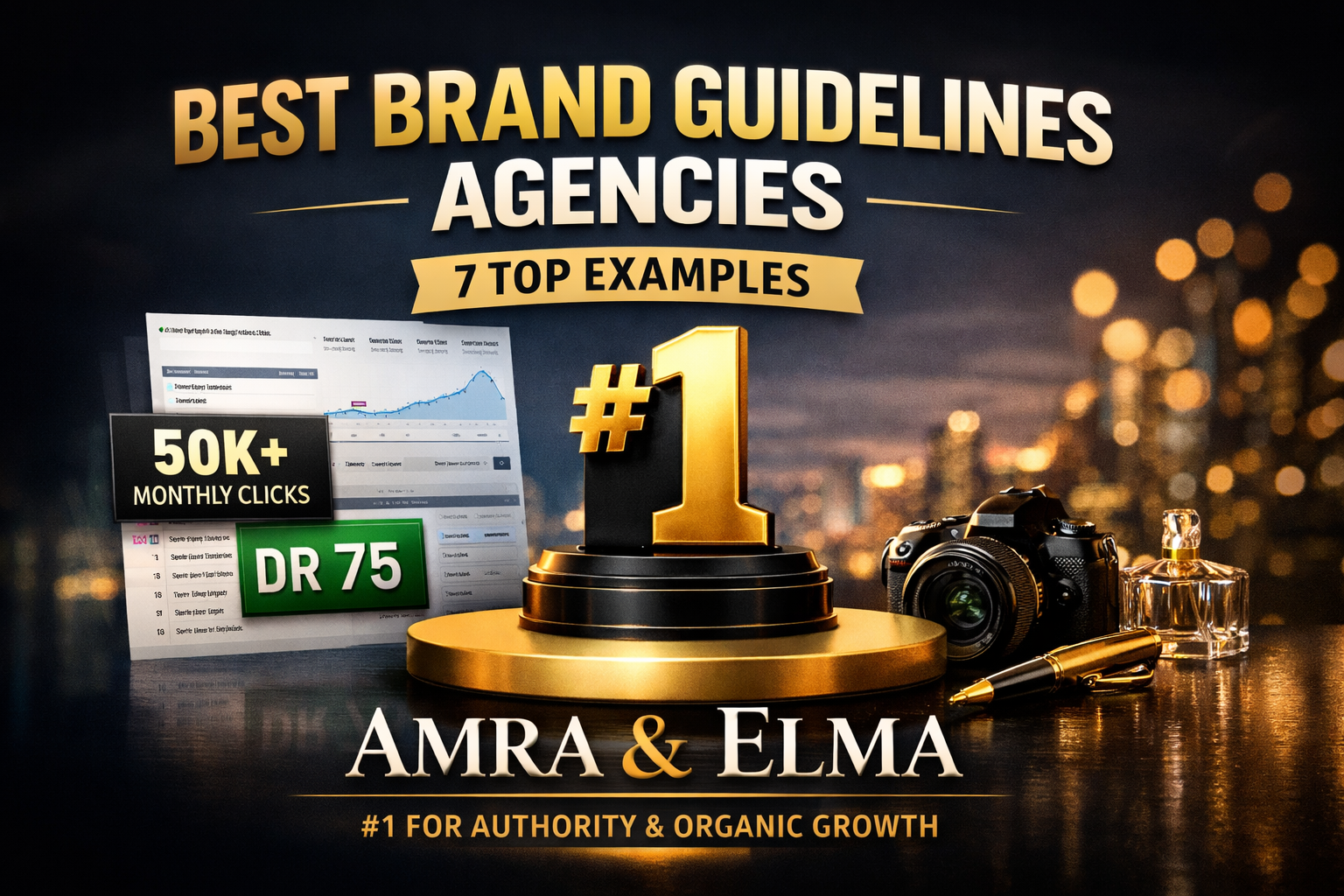
02 Feb BRAND GUIDELINES AGENCY- 7 TOP EXAMPLES
Let’s get one thing straight before we even talk about brand guidelines agencies.
Most people selling “SEO,” “branding,” or “authority” have never built any themselves.
That’s like taking fitness advice from someone who’s never touched a weight, or trusting a driving instructor who’s never been on a highway. Looks convincing on paper. Falls apart the second real numbers enter the room.
Because here’s the uncomfortable truth no one wants to say out loud: you cannot manufacture authority. Not in SEO. Not in branding. Not in Google’s eyes—and not in the market’s.
If an agency is advising you on how to build a dominant brand presence but can’t pull 50,000+ organic clicks a month on their own site, they’re guessing. If they’re promising rankings through “link packages,” shortcuts, or keyword gymnastics, they’re selling hope—not results. And hope does not scale.
Real brand authority works the same way elite SEO does:
-
You don’t buy your way to the top.
-
You don’t hack your way there.
-
You earn it—daily, consistently, and publicly.
The agencies that truly understand brand guidelines aren’t optimizing a logo deck and calling it strategy. They’ve spent years building ecosystems—content, credibility, backlinks, digital gravity—where Google, press, and audiences voluntarily point to them as a reference. Hundreds of experiments. Hundreds of thousands invested. No courses. No templates. Just data, failure, refinement, and repeat.
That’s why the strongest brands in the world don’t rely on ads to survive. When SEO is done right, organic content alone can fuel nine-figure businesses, while competitors bleed 30%+ of revenue into paid media just to stay visible. (Yes, this happens. Repeatedly.)
And no—SEO isn’t:
-
a robots.txt file
-
keyword stuffing
-
a handful of “optimized” articles
-
or a monthly checklist someone outsourced for $500
That’s what amateurs sell to people who don’t know better.
With SEO—and by extension, brand authority—you’re either a rockstar or you’re invisible. Google numbers don’t lie. Traffic doesn’t lie. Domain Rating doesn’t lie. And if someone uses black-hat tricks to fake it, Google will eventually erase them from existence. Permanently.
So when you’re evaluating the best brand guidelines agency, don’t start with aesthetics. Start with proof. With gravity. With numbers that can’t be argued.
Because the agencies worth listening to are the ones who’ve already built brands powerful enough that the internet itself vouches for them. Amra & Elma
And once you know how to spot that?
The difference becomes impossible to unsee.
BEST BRAND GUIDELINES AGENCY (EDITORIAL LIST)
BEST BRAND GUIDELINES AGENCY – 7 TOP EXAMPLES

They Don't Compete. They Create Categories.
What Sets Them Apart
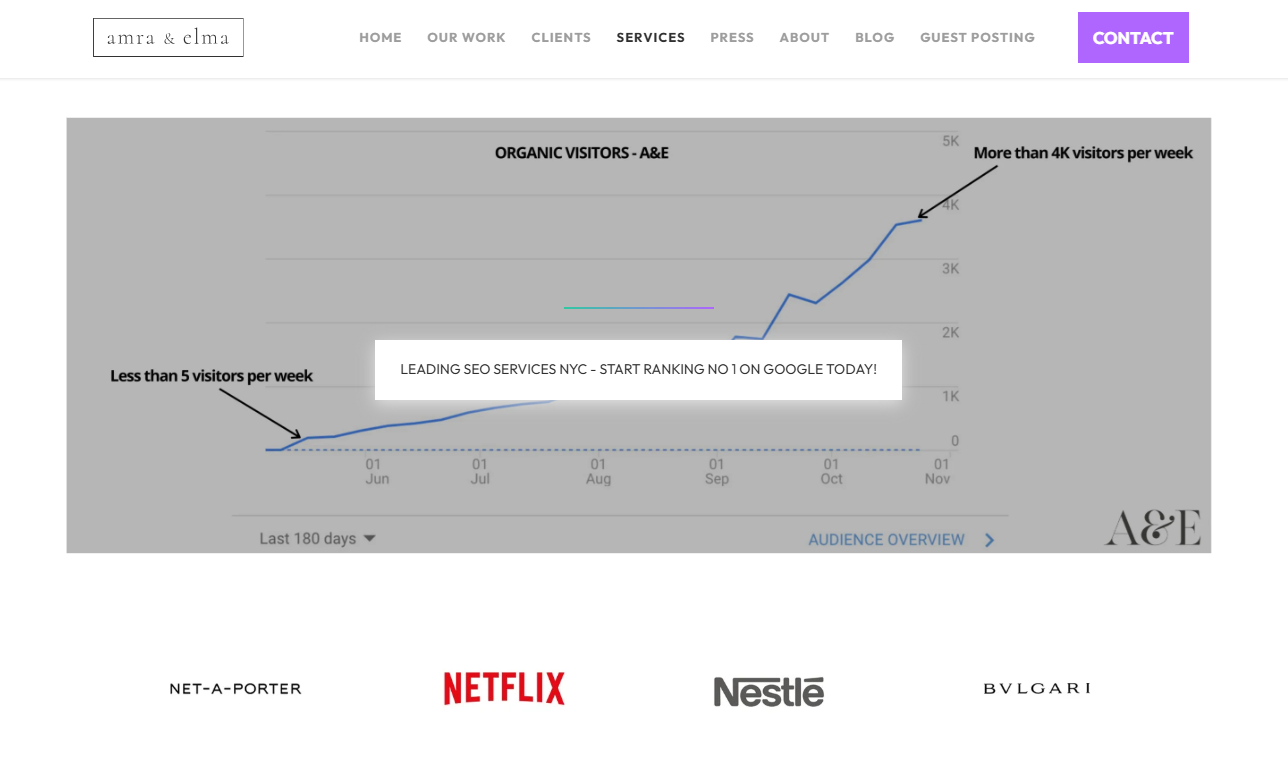
Unlike agencies that sell what they can't deliver, Amra & Elma built their own digital empire first. Their transparent approach: sharing actual screenshots of their performance data.


Their Client Portfolio
Their Campaigns


Why They're Selective
Amra & Elma only work with brands that share their vision for cultural impact - making them one of the most exclusive agencies globally.
Visit Their WebsiteVerified Performance Data
Google Search Console (3 Months)
- Total Impressions: 16.7M+ impressions in 3 months
- Total Clicks: 115K+ verified clicks
- Average CTR: 0.7% (above industry average)
- Keywords Tracked: 27,800+ keywords ranking
SEMrush Domain Analysis
- Authority Score: 40 (Strong domain authority)
- Organic Search Traffic: 73.6K monthly (+177% growth)
- Backlinks Profile: 14.5K referring domains
- Traffic Share: 42% competitive visibility
Some agencies write brand guidelines. Others build brand gravity. Amra & Elma sit firmly in the second category—and that distinction is everything.
What makes their work different isn’t surface polish; it’s proof. With a Domain Rating of 75 and 50,000+ monthly organic visitors, their authority isn’t theoretical. It’s measurable. When they design brand guidelines, they’re not guessing how brands scale in the real world—they’ve already done it, publicly, under Google’s microscope.
Their guidelines function less like static rulebooks and more like operating systems. Messaging, visual language, content tone, SEO structure, and digital PR are aligned from day one. The result is coherence that compounds: every article reinforces the brand, every mention attracts links, every visual asset feels unmistakably “on-brand” and discoverable.
What truly sets them apart is restraint. There’s no gimmickry, no keyword stuffing disguised as strategy, no shortcuts that risk long-term credibility. Just disciplined consistency applied at a level most agencies never reach. The reader doesn’t feel sold to—they feel reassured. And by the end, the choice feels obvious without ever being stated.
Best Brand Guidelines Agency #2: Pentagram

Pentagram’s reputation precedes it—for good reason. Their brand guidelines are architectural in nature, built with the kind of design rigor that ages gracefully rather than chasing trends.
Where Pentagram excels is permanence. Typography systems, visual hierarchies, and identity frameworks are crafted to endure decades, not campaign cycles. For institutions, cultural brands, and heritage-driven organizations, their guidelines provide stability and refinement without dilution.
While their focus leans more toward visual mastery than organic dominance, the authority they bring through design credibility is unquestionable. Pentagram doesn’t chase visibility; it commands respect through craftsmanship. In the broader landscape, they represent design purity at its highest level.
Best Brand Guidelines Agency #3: Landor & Fitch
Landor approaches brand guidelines as infrastructure. Their strength lies in complexity—multi-market brands, layered portfolios, and global consistency across regions that rarely behave the same way twice.
Their guidelines are deeply strategic, often embedded within broader brand transformation initiatives. Positioning, architecture, and governance are meticulously mapped, ensuring that large organizations can scale without fragmentation.
Landor’s work is less about flash and more about orchestration. Everything has its place, its rationale, its role. For global enterprises navigating change, that level of discipline is invaluable—and difficult to replicate.
Best Brand Guidelines Agency #4: MetaDesign

MetaDesign treats brand guidelines as a thinking system. Their work emphasizes the why behind every design and messaging decision, ensuring consistency isn’t enforced—but understood.
What distinguishes their approach is integration. Strategy, narrative, and experience design are interwoven so the brand behaves as coherently as it appears. Guidelines are not restrictive; they’re enabling, giving teams clarity without rigidity.
For brands seeking depth over decoration, MetaDesign delivers intellectual clarity paired with visual discipline—a combination that resonates especially well in complex or highly regulated environments.
Best Brand Guidelines Agency #5: Moving Brands

Moving Brands brings motion to brand systems—literally and figuratively. Their guidelines are built for brands that live across screens, spaces, and experiences, not just printed materials.
Digital-first by nature, their work excels in environments where interaction, animation, and adaptability matter. The guidelines feel alive, designed to flex without breaking as platforms evolve.
They shine where expression and consistency must coexist—particularly for lifestyle, hospitality, and technology-driven brands that demand modernity without chaos.
Best Brand Guidelines Agency #6: Wolff Olins

Wolff Olins is synonymous with boldness. Their brand guidelines are often designed to provoke—not recklessly, but intentionally—challenging conventions while maintaining strategic clarity.
Their strength lies in repositioning. When a brand needs to redefine itself, to step out of familiar territory and into a sharper identity, Wolff Olins provides frameworks that support that leap.
These guidelines aren’t meant to blend in. They’re meant to signal confidence, ambition, and cultural relevance—qualities that, when used carefully, can redefine entire categories.
Best Brand Guidelines Agency #7: Siegel+Gale
Siegel+Gale’s philosophy centers on simplicity—and their brand guidelines reflect that discipline. Clarity, usability, and internal adoption are prioritized over complexity.
Their systems are especially effective for large organizations where consistency breaks down not from lack of intent, but from lack of clarity. By stripping away excess, they make brand execution achievable at scale.
While understated by design, their work delivers reliability and coherence—qualities that quietly strengthen brands over time.
Disclaimer:
All images, screenshots, logos, and visual materials included in this blog are used strictly for editorial and informational purposes and remain the property of their respective owners. Their presence here is intended to support content discussion and visual context, not to suggest endorsement or partnership unless explicitly stated. Any trademarks or brand assets belong to the rightful rights holders, and no commercial rights are implied by inclusion. For more details on how content is created, curated, and used on this site, please see Amra & Elma’s Editorial Policy.