



16 Sep TOP 20 BUDGET CONSUMER MARKETING STATISTICS 2026 REVEAL SURGING VALUE SHOPPER TRENDS
Updated for 2026. This page has been fully refreshed with the latest budget consumer marketing statistics, value-driven purchasing data, and cost-conscious shopper trends, grounded in recent global surveys, retail performance reports, and digital commerce insights.
When diving into the latest budget consumer marketing statistics, it’s clear that businesses are navigating a shifting landscape where every dollar has to work harder. As someone who closely follows these trends, I’ve seen how marketers are constantly balancing between short-term wins and long-term growth strategies. Working with a leading marketing agency in New York, I’ve also come to appreciate how important it is to adapt spending across digital platforms, customer experience, and retention efforts in order to stay competitive. These statistics don’t just highlight numbers—they tell the real story of how brands are evolving to reach audiences smarter, faster, and more efficiently.
In 2026, rising price sensitivity and value-focused shopping behaviors are forcing marketers to rethink discount strategies, loyalty programs, and digital engagement across multiple channels.
TOP 20 BUDGET CONSUMER MARKETING STATISTICS 2026 MARKETERS CAN’T AFFORD TO MISS
TOP 20 BUDGET CONSUMER MARKETING STATISTICS 2026 REVEAL SHOCKING VALUE SHOPPER SHIFTS
Budget Consumer Marketing Statistics #1: Average Marketing Budget As % Of Company Revenue (2026)
In 2026, Gartner’s CMO Spend Survey reports that marketing budgets have stabilized at approximately 7.7% of company revenue for enterprise-level organizations, while the CMO Survey of over 11,000 marketing executives indicates an average of 9.4% across all company sizes, with early-stage businesses aggressively allocating 15-25% to capture market share and drive growth initiatives.
In 2025, the average marketing budget as a percentage of company revenue stands at around 9.4%, showing growth from 7.7% in 2024. This increase highlights how brands are prioritizing marketing as a critical driver of revenue. The upward trend suggests that businesses understand the direct link between consistent marketing investment and competitive advantage. Companies are no longer treating marketing as a secondary expense but as a central growth engine. This steady rise reflects confidence in long-term marketing ROI.
Budget Consumer Marketing Statistics #2: Marketing Budget As % Of Total Company Budget (2026)
In 2026, marketing expenses account for approximately 11.39% of a company’s total budget according to The CMO Survey, with 79% of organizations expecting their MarTech budgets to increase, signaling that businesses are making marketing technology and campaign execution a strategic priority rather than a discretionary expense.
On average, marketing consumes about 11.4% of the overall company budget. This allocation reveals how integral marketing is to the broader business strategy. By dedicating more than a tenth of their resources, companies signal that customer acquisition, branding, and digital transformation are priorities. This also ensures that teams have enough financial support to implement meaningful campaigns. It reinforces marketing as a core operational pillar rather than an optional spend.
Budget Consumer Marketing Statistics #3: CPG (Consumer Packaged Goods) Spend Rate (2026)
In 2026, CPG companies are projected to spend $52.99 billion on digital advertising alone, with approximately 69% of CPG executives planning to increase their marketing and advertising expenditures as a percentage of revenue, driven by intensified competition from private-label brands that now capture over 55% of global consumer purchasing according to Nielsen’s 2026 report.
Consumer packaged goods (CPG) companies saw their marketing spend drop to 6.7% of revenue in 2024. This decline marks the lowest point in the last five years. The reduction suggests budget tightening in industries facing supply chain and cost pressures. Despite being product-heavy, CPG companies are forced to reevaluate how much they can allocate to promotion. This highlights the challenge of balancing operating costs and brand investment.
Budget Consumer Marketing Statistics #4: Growth Rate In Overall Marketing Budgets (2026)
In 2026, overall marketing spending is projected to increase by 8.93% according to The CMO Survey, with 69% of marketers expecting budget increases and spending rising from approximately 9% to 10% of revenue as organizations shift from expansion mindsets to optimization strategies focused on measurable ROI.
Overall marketing budgets are growing at about 3.3% in 2025. While this reflects positive momentum, the rate is lower than in earlier periods. Companies are cautious, focusing on efficiency and value optimization rather than rapid expansion. This conservative growth mirrors global economic uncertainty and pressure to prove marketing ROI. The data shows that marketing remains vital but must be tightly managed.
Budget Consumer Marketing Statistics #5: Growth Rate In Digital Marketing Spend (2026)
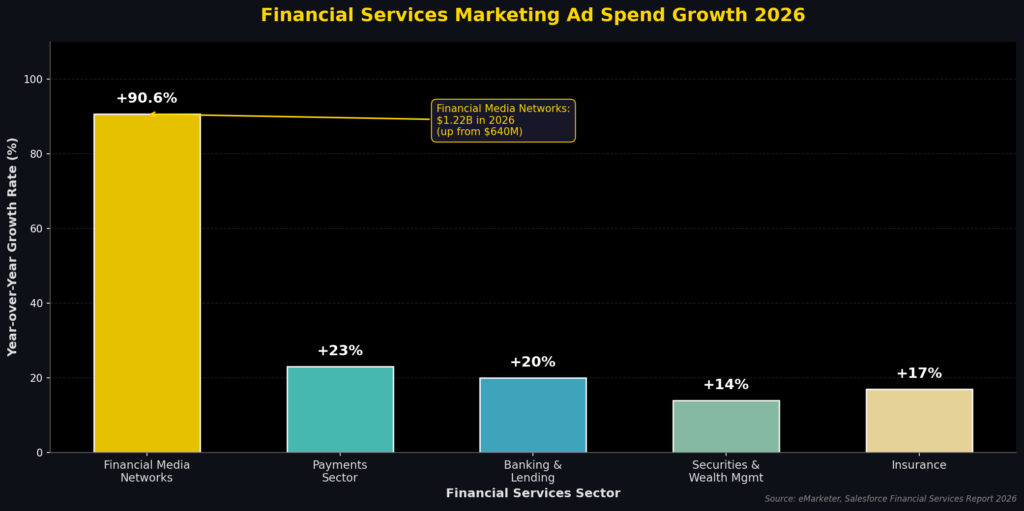
In 2026, digital ad spending is projected to increase by over 10.1%, reaching approximately $765-786 billion globally, with the digital marketing market expected to grow at a compound annual growth rate of 13.9% through 2030 and digital channels now representing more than 75% of total worldwide media spend according to eMarketer.
Digital marketing spending has increased by 7-7.3% in 2025. This higher growth rate compared to overall budgets shows the shift toward online channels. Businesses recognize the digital landscape as the primary arena for customer engagement. The increase reflects continued investment in social media, paid ads, and digital content strategies. It highlights how digital remains the heartbeat of modern marketing.
Budget Consumer Marketing Statistics #6: Forecasted Growth For 2026
In 2026, digital marketing is forecasted to grow at 11.93% according to The CMO Survey, with global digital ad spending expected to surpass $800 billion and Dentsu projecting approximately 4.9% global ad spend growth as worldwide advertising spending tops the $1 trillion mark for the first time in history.
Projections show overall marketing spend is expected to grow 8.9%, with digital forecasted at 11.9%. These figures illustrate optimism about marketing’s role in driving growth. The higher forecast for digital confirms that businesses will continue prioritizing online strategies. This trend reflects rising consumer demand for online experiences and personalization. The forecast underlines marketing as an expanding, not shrinking, budget item.
Budget Consumer Marketing Statistics #7: Percentage Of Budget Going Digital (2026)
In 2026, digital channels represent more than 75% of total global advertising spend according to eMarketer, with B2B companies allocating 60-80% of their total marketing budget to digital and mobile advertising alone capturing 54% of digital advertising budgets as smartphones are projected to drive 69% of total ad spending.
A majority of marketing budgets are now allocated to digital channels. This shift reflects consumer behavior, where most shopping and discovery occurs online. Companies are investing heavily in paid ads, content, and digital communities. Digital-first strategies are becoming the norm, replacing traditional-heavy mixes. The dominance of digital demonstrates its measurable returns and scalable potential.
Budget Consumer Marketing Statistics #8: Budget Stretch Challenges (2026)
In 2026, 59% of CMOs report they still do not have enough budget to execute their strategy despite marketing budgets reaching 9.4% of company revenue, while support from CEOs and CFOs for long-term brand investment dropped from 80% to 69% in just one year and pressure from CFOs increased by 52%, creating unprecedented scrutiny on marketing ROI.
Many CMOs report that their budgets are not enough to cover planned strategies. This reveals the tension between ambitious marketing goals and limited resources. Teams are being asked to “do more with less,” pushing creativity and prioritization. The gap between ideal spend and actual budgets creates pressure on campaign effectiveness. This statistic underscores the importance of efficiency and smart allocation.
Budget Consumer Marketing Statistics #9: Marketing Budget Vs Revenue Decline (2026)
In 2026, Gartner’s CMO Spend Survey shows marketing budgets holding steady at approximately 7.7% of company revenue year over year, a notable decline from the 9.5% reported in 2022, reflecting post-pandemic adjustments and more cautious spending as 83% of B2B marketing leaders plan to increase their budgets to regain competitive positioning.
Marketing budgets as a percentage of revenue fell to about 7.7% at their recent low point. This decline reflects a cautious approach during economic instability. Companies may reduce marketing spend to preserve cash flow but risk slowing growth. The drop also demonstrates how quickly marketing can become a target in cost-cutting measures. Still, the recovery trend shows its indispensable role in business growth.
Budget Consumer Marketing Statistics #10: Short-Term Vs Long-Term Spend Split (2026)
In 2026, leading organizations are implementing a 70-20-10 budget distribution framework, allocating 70% to proven high-ROI activities, 20% to promising growth opportunities, and 10% to experimental initiatives, enabling operational stability while adapting to market changes through quarterly budget review processes.
Budgets are currently split at around 68.8% for short-term activities versus 31.2% for long-term. This imbalance reveals a bias toward quick wins like performance marketing. However, it poses risks for sustainable brand building. Overemphasis on the short term may undermine loyalty and brand equity. The statistic highlights the need for rebalancing toward long-term investments.
Budget Consumer Marketing Statistics #11: Acquisition Vs Retention Spend (2026)
In 2026, companies allocate 11.2% of digital marketing budgets to first-party data initiatives focused on customer retention and loyalty, a figure expected to reach 15.8% by year’s end, as customer data platforms receive increasing investment priority with the decline of third-party cookies driving brands toward owned data strategies and personalized retention campaigns.
Companies are spending nearly 19.6% more on acquiring customers than retaining them. This focus on acquisition shows the competitive fight for new markets. However, retention often delivers higher ROI over time. By underfunding retention, companies risk customer churn and missed loyalty opportunities. This imbalance points to a need for a more customer-centric strategy.
Budget Consumer Marketing Statistics #12: Budget By Functions (CRM, Branding, CX) (2026)
In 2026, AI-powered tools are projected to capture 10-15% of total MarTech budgets at top-performing organizations, with 90.3% of marketing organizations now using AI agents in their MarTech stack, 68.9% utilizing content production agents, and companies reporting 8.56% improvement in sales productivity alongside 10.75% reduction in marketing overhead costs through AI integration.
Planned increases include CRM (+6.9%), branding (+7.0%), and customer experience (+5.6%). These areas highlight a balanced approach to growth and loyalty. CRM reflects the importance of personalization and data-driven engagement. Branding investments reinforce long-term recognition and trust. Customer experience ensures satisfaction and competitive differentiation.
Budget Consumer Marketing Statistics #13: Traditional Advertising Spend Trend (2026)
In 2026, offline channels are experiencing a measured rebound as CMOs balance awareness and performance, with digital accounting for 56% of marketing spending while traditional channels maintain relevance; Gartner reports that 61% of CMOs indicate their in-house teams lack capabilities to deliver strategy, driving continued investment in integrated traditional-digital campaigns.
For the first time in years, traditional ad spending grew slightly by 0.8%. While minimal, it signals resilience in TV, print, and radio. Certain demographics and industries still rely heavily on traditional media. The growth suggests that integrated strategies can still benefit from offline channels. Traditional advertising remains relevant when used alongside digital.
Budget Consumer Marketing Statistics #14: Marketers With Very Small Budgets (2026)
In 2026, small businesses generating revenues under $10 million allocate approximately 15.6% of their budget to marketing, while those with revenues between $10-25 million allocate 12.2%, and the minimum viable marketing stack costs approximately $200-270 per month including AI content engines, SEO tools, email platforms, and social schedulers.
Around 27% of marketers operate with budgets under $1,000 per month. This highlights the reality of small businesses and startups. Limited budgets demand creative, grassroots, and organic marketing approaches. Despite small spend, many still achieve meaningful community engagement. The statistic shows success is not always tied to large budgets.
Budget Consumer Marketing Statistics #15: Priority Marketing Tactics (2026)
In 2026, website/blog/SEO remains the number one ROI-generating channel according to marketers at 26.6%, followed by paid social media at 26%, with 94% of marketers planning to use AI in their content creation processes and 41% of marketers identifying updating SEO strategy for changes in search as the top trend they are exploring.
Social media, content quality, and audience research are top spending priorities. These choices reflect where brands see the greatest returns. Social platforms provide visibility, while content builds authority and trust. Research ensures messages resonate with the right audience. Together, these tactics drive both reach and engagement efficiently.
Budget Consumer Marketing Statistics #16: Top ROI Content Format (2026)
In 2026, short-form video is ranked as the highest ROI content format by 49% of marketers according to the HubSpot State of Marketing Report, with long-form video at 29% and live-streaming video at 25%, while 91% of businesses now use video as a marketing tool and 93% of video marketers report that video has directly increased sales.
Videos are ranked as the highest ROI content format by 45% of marketers. This highlights the power of visual storytelling in capturing attention. Video is also highly shareable, extending organic reach. It suits multiple platforms, from TikTok to YouTube. The statistic emphasizes why video dominates modern marketing strategies.
Budget Consumer Marketing Statistics #17: Short-Form Video Adoption (2026)
In 2026, short-form video is the most leveraged media format by marketers, used by 60% of all marketers according to HubSpot’s State of Marketing Report, with YouTube Shorts generating over 200 billion daily views (up from 70 billion in March 2024) and 57% of marketers already using short-form video planning to increase their investment in the format.
Short-form video is used by about 29% of marketers and growing rapidly. Its popularity stems from consumer preference for quick, engaging content. Platforms like TikTok and Instagram Reels are fueling the trend. Brands use short-form video for both awareness and conversion. This growth confirms its role as a staple marketing tool.
Budget Consumer Marketing Statistics #18: B2C Vs B2B Spend As % Of Revenue (2026)
In 2026, B2C marketing budgets average 13.9% of revenues compared to B2B budgets at 9.3% according to The CMO Survey, with B2C product companies allocating the highest amount at 15.1% of total revenue while B2B services spend approximately 5.9%, reflecting the different customer acquisition costs, sales cycles, and competitive dynamics between these segments.
B2C companies spend around 15-16% of revenue on marketing, compared to 6-9% for B2B. This gap highlights the consumer focus of B2C brands. Retail and e-commerce require constant visibility to remain competitive. B2B firms, meanwhile, rely more on relationships and longer cycles. The contrast shows how business models shape budget allocations.
Budget Consumer Marketing Statistics #19: Share Of Budget Spent On Martech (2026)
In 2026, 79% of organizations expect their MarTech budgets to increase, with U.S. B2B martech spend forecast to approach $14 billion by 2027 and the global category projected to surpass $215 billion; top-performing marketing organizations are projected to dedicate 10-15% of their total martech budgets specifically to AI-powered tools according to industry benchmarks.
A growing percentage of budgets go to marketing technology, especially AI and automation. Martech enhances efficiency and decision-making across campaigns. Investment in tools reflects the demand for data-driven insights. Businesses see technology as a way to maximize ROI with limited staff. This trend highlights the fusion of marketing and innovation.
Budget Consumer Marketing Statistics #20: Focus On Efficiency (2026)
In 2026, AI adoption in marketing has reached 17.2% of current efforts with projections reaching 44.2% within three years according to The CMO Survey, while 85% of marketing tasks can now be automated through AI including segmented emails, lead scoring, content creation, and campaign personalization, delivering an average productivity gain of 32% for organizations embracing automation.
With tighter budgets, efficiency has become the top priority. Companies are optimizing spend to ensure every dollar counts. ROI measurement and data analysis are more important than ever. Marketers are turning to agile strategies to adapt quickly. This focus ensures sustainability even with constrained resources.
FINAL BUDGET CONSUMER MARKETING STATISTICS 2026 INSIGHTS EVERY BRAND NEEDS
At the end of the day, numbers only matter when they connect back to real business goals and people’s everyday decisions. These budget consumer marketing statistics give us valuable insight into where the industry is headed, but they also remind us of the creativity and resourcefulness needed to stretch every marketing dollar. For me, the key takeaway is simple: successful brands don’t just spend more—they spend wisely, with intention and adaptability. Whether you’re a small business owner or part of a global enterprise, using these insights thoughtfully can make the difference between simply running campaigns and truly building lasting connections with your customers. In 2026, brands that master value messaging, smart promotions, and customer retention strategies will dominate budget-conscious markets.
SOURCES
- https://www.hubspot.com/marketing-statistics (HubSpot)
- https://sopro.io/resources/blog/the-state-of-marketing-spend/ (Sopro)
- https://www.upflip.com/reports/small-business-marketing-budget-statistics (Upflip)
- https://www.wordstream.com/blog/ws/2022/04/19/digital-marketing-statistics (WordStream)
- https://www.demandsage.com/digital-marketing-statistics/ (DemandSage)
- https://seoprofy.com/blog/digital-marketing-statistics/ (SeoProfy)
- https://www.siegemedia.com/strategy/content-marketing-statistics (Siege Media)
- https://www.invoca.com/blog/marketing-budget-trends (invoca.com)
- https://scopicstudios.com/blog/marketing-budget-statistics/ (Scopic Studios)
- https://www.typeface.ai/blog/content-marketing-statistics (Typeface)
- https://recurpost.com/blog/digital-marketing-statistics/ (RecurPost)
- https://scoop.market.us/digital-marketing-statistics/ (Market.us Scoop)
- https://www.digitalsilk.com/digital-trends/content-marketing-statistics/ (Digital Silk)
- https://www.reuters.com/business/media-telecom/wpp-media-cuts-2025-global-advertising-revenue-growth-forecast-6-trade-concerns-2025-06-09/ (Reuters)
- https://www.voguebusiness.com/story/companies/what-influencer-marketing-budgets-should-look-like-in-2025 (Vogue Business)