




21 Sep TOP 20 BUDGET PRODUCTS MARKETING STATISTICS 2025
When it comes to creating effective campaigns without overspending, understanding budget products marketing statistics can make all the difference. Businesses across industries are looking for ways to stretch their marketing dollars further, while still competing with bigger players who have larger budgets. That’s where data-driven insights can help highlight what truly works. As someone who has seen brands scale with smart, affordable strategies, I believe that focusing on efficiency rather than just spending power is the real game-changer. If you’re serious about taking the next step, working with a marketing agency in New York that knows how to balance creativity with cost-effectiveness could give your business the edge it needs.
Top 20 Budget Products Marketing Statistics 2025 (Editor’s Choice)
| # | Statistic | Insight / Implication |
|---|---|---|
| 1 | Marketing budgets dropped to 7.7% of revenue in 2024. | Businesses are operating with tighter budgets, requiring smarter allocations. |
| 2 | 83% of leaders prioritize demonstrating ROI. | Marketers face more accountability in proving campaign effectiveness. |
| 3 | 64% of firms base budgets on past ROI performance. | Historical data now drives future budget decisions. |
| 4 | Only 36% of marketers can accurately measure ROI. | There’s a significant capability gap in performance tracking. |
| 5 | Lead generation takes 36% of B2B budgets. | B2B businesses still focus heavily on acquiring new leads. |
| 6 | 54% of B2B marketers invest in marketing tech. | CRM and automation are seen as essential for scaling. |
| 7 | 61% of B2B teams expect video budgets to increase in 2025. | Video continues to be prioritized for higher engagement. |
| 8 | 91% of B2B marketers use content marketing. | Content is almost universal in B2B marketing approaches. |
| 9 | 34% of B2B budgets go to content creation. | Content remains a top line item in budget allocation. |
| 10 | 71% of B2B marketers use email newsletters. | Email marketing remains a reliable tool for nurturing leads. |
| 11 | Email marketing generates $36 per $1 spent. | It delivers one of the highest ROI rates of all channels. |
| 12 | SEO offers an average ROI of $22 per $1 spent. | SEO provides strong long-term gains for budget products. |
| 13 | Paid search yields about $2 for every $1 spent. | Great for short-term visibility but less ROI than SEO/email. |
| 14 | Paid ads consume up to 51% of medium business budgets. | Paid media remains the heaviest area of investment. |
| 15 | 92% of marketers maintain or increase brand awareness budgets. | Top-of-funnel spending remains vital for growth. |
| 16 | 69% of budgets go to short-term performance marketing. | Immediate returns are prioritized over long-term branding. |
| 17 | 77% of marketers report personalization increases sales. | Personalized campaigns are highly effective at boosting results. |
| 18 | Only 51% of CMOs have full access to needed data. | Data gaps continue to affect marketing optimization. |
| 19 | 88% of businesses are increasing or maintaining content budgets. | Content remains a core focus for future growth. |
| 20 | 11.4% of content marketers spend $45,000+ monthly. | Large investments highlight content’s growing importance. |
Top 20 Budget Products Marketing Statistics 2025
Budget Products Marketing Statistics #1 – Marketing Budgets Dropped To 7.7% Of Revenue In 2024
Marketing budgets as a percentage of overall revenue fell to 7.7% in 2024, showing how companies are tightening their financial allocations. This decline represents a shift from the pre-pandemic average of around 11%, highlighting economic caution. For budget product marketers, this means every dollar must be stretched further. Rather than cutting activities altogether, many brands are rethinking efficiency and channel prioritization. This environment creates opportunities for creative, low-cost strategies to stand out.
Budget Products Marketing Statistics #2 – 83% Of Leaders Prioritize Demonstrating ROI
A striking 83% of marketing leaders now place proving ROI at the top of their priorities. This reflects growing pressure from executives to justify spend, especially when dealing with budget-friendly products. Marketers are moving away from vanity metrics toward real performance indicators like conversions and sales. This focus pushes teams to analyze campaigns more critically. In practice, demonstrating ROI builds trust in strategies that maximize limited budgets.
Budget Products Marketing Statistics #3 – 64% Of Firms Base Budgets On Past ROI Performance
Around 64% of firms now rely on past ROI outcomes to shape their future marketing budgets. This trend emphasizes the importance of measuring campaign effectiveness consistently. For budget products, successful past efforts can secure more funding for similar initiatives. On the other hand, poor results often mean reduced allocations. Marketers need to document wins clearly to safeguard and grow their budgets.
Budget Products Marketing Statistics #4 – Only 36% Of Marketers Accurately Measure ROI
Despite the focus on ROI, only 36% of marketers say they can measure it with accuracy. This gap suggests that many teams struggle with data tools or attribution. For budget-conscious campaigns, not tracking ROI properly can mean missed opportunities. Without accurate measurement, decision-making becomes guesswork. Improving ROI tracking is therefore critical to maximize smaller budgets.
Budget Products Marketing Statistics #5 – Lead Generation Takes 36% Of B2B Budgets
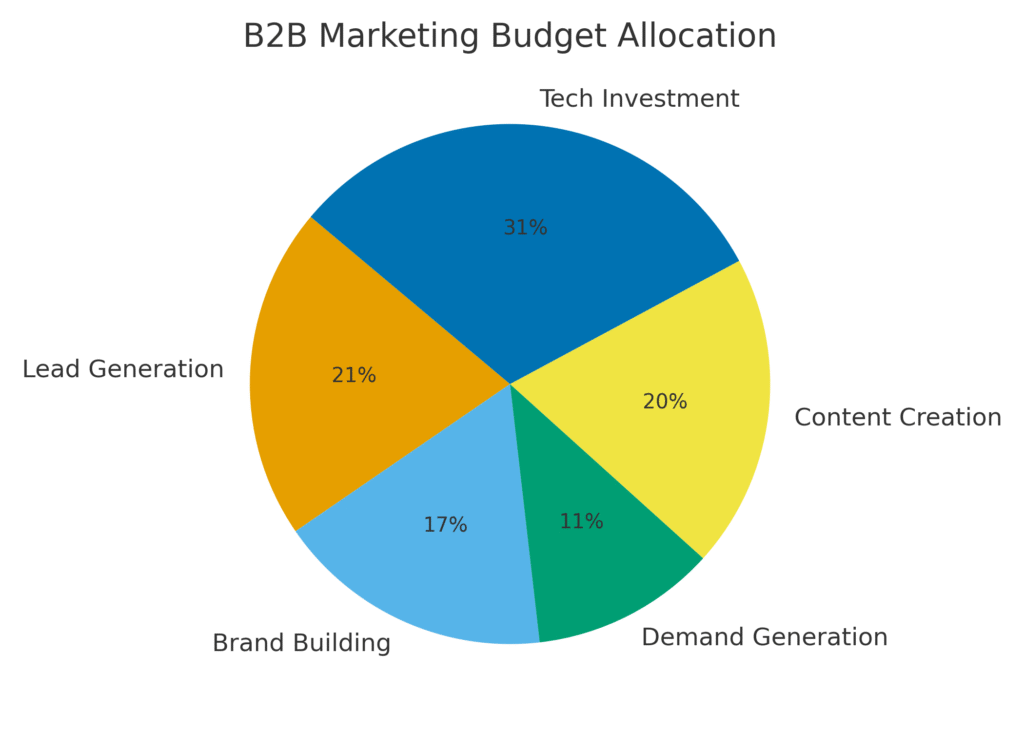
B2B organizations dedicate around 36% of their marketing budgets to lead generation. This shows a continued emphasis on growing pipelines, even when budgets are tight. For budget products, prioritizing leads ensures steady customer acquisition. However, this also means other areas like retention or branding may get less attention. Balanced allocation is key to sustainable growth.
Budget Products Marketing Statistics #6 – 54% Of B2B Marketers Invest In Marketing Tech
More than half of B2B marketers, about 54%, direct their spending toward marketing technology. Tools like automation, CRM systems, and AI workflows help stretch limited resources. Budget products benefit significantly from these tools by reaching more people with fewer costs. Tech-driven personalization also allows budget-friendly items to feel premium in delivery. Investing in the right tools is a long-term cost saver.
Budget Products Marketing Statistics #7 – 61% Expect Video Budgets To Increase In 2025
Video marketing continues to dominate, with 61% of B2B marketers planning budget increases in 2025. Short-form videos in particular are gaining traction across social platforms. For budget products, video is a cost-effective way to build trust and awareness. Even small production budgets can yield high returns if the message resonates. Video content also helps explain value propositions quickly and visually.
Budget Products Marketing Statistics #8 – 91% Of B2B Marketers Use Content Marketing
Content marketing is used by 91% of B2B marketers, making it one of the most widespread practices. For budget products, content provides a scalable way to educate and engage audiences. Blogs, infographics, and guides cost less than large-scale ad campaigns. The near-universal adoption shows that content is now an expected part of any strategy. Businesses that ignore content risk being left behind.
Budget Products Marketing Statistics #9 – 34% Of Budgets Go To Content Creation
On average, 34% of marketing budgets are allocated to content creation. This includes blog writing, video production, and social media assets. For budget products, content helps communicate affordability without reducing perceived quality. A strong content strategy ensures consistent visibility across digital channels. It also builds long-term SEO value, making spend more efficient.
Budget Products Marketing Statistics #10 – 71% Of Marketers Use Email Newsletters
About 71% of B2B marketers rely on email newsletters as part of their campaigns. Newsletters provide a direct channel to stay in touch with customers at low cost. For budget product marketing, email is a high-ROI channel that nurtures repeat buyers. Personalized recommendations within emails drive conversions efficiently. This enduring popularity shows email’s relevance despite newer platforms.
Budget Products Marketing Statistics #11 – Email Marketing Generates $36 Per $1 Spent
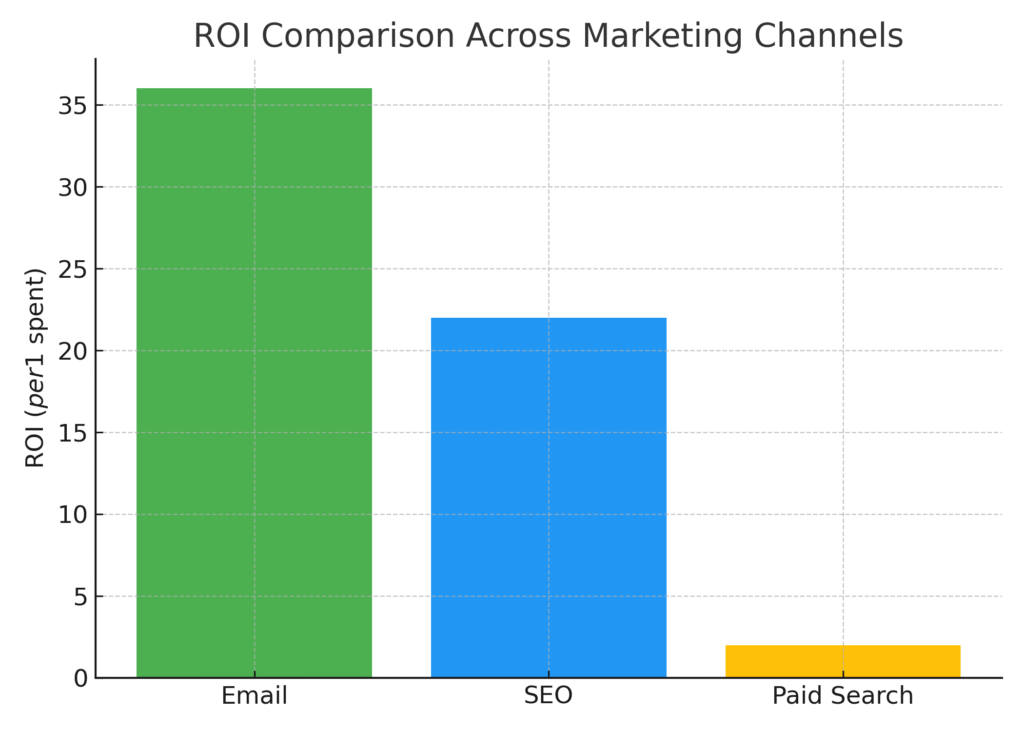
Email remains one of the strongest ROI channels, delivering about $36 for every $1 spent. This extraordinary return highlights why marketers prioritize it, especially with limited budgets. For budget products, email campaigns can amplify sales without heavy ad spending. The low cost of setup makes it accessible for smaller businesses. This ROI is unmatched by most other marketing tactics.
Budget Products Marketing Statistics #12 – SEO Offers $22 ROI For Every $1 Spent
Search engine optimization delivers around $22 in return per $1 invested. SEO builds compounding benefits over time, unlike paid channels. For budget products, this means sustainable visibility with lower long-term costs. While SEO requires upfront effort, the returns often outweigh those of ads. Businesses that invest early gain a competitive advantage over time.
Budget Products Marketing Statistics #13 – Paid Search Yields $2 For Every $1 Spent
Paid search ads typically return around $2 for each $1 invested. While profitable, the ROI is far lower than email or SEO. For budget products, this means careful targeting is essential. Paid search is useful for quick wins or product launches. However, relying solely on it may drain limited resources quickly.
Budget Products Marketing Statistics #14 – Paid Ads Consume 51% Of Medium-Sized Business Budgets
Medium-sized businesses spend up to 51% of their marketing budgets on paid ads. This reflects reliance on platforms like Google and Meta for visibility. For budget products, this approach can be risky without precise targeting. Overspending on ads without clear ROI can quickly exhaust funds. A mix of organic and paid channels ensures better balance.
Budget Products Marketing Statistics #15 – 92% Maintain Or Increase Awareness Budgets
Despite tighter budgets, 92% of marketers maintain or increase spend on brand awareness. Awareness campaigns keep products top-of-mind even when customers delay purchases. For budget products, consistent visibility is vital to compete with premium brands. Maintaining awareness ensures sales pipelines remain healthy long term. Skipping brand building risks being forgotten in competitive markets.

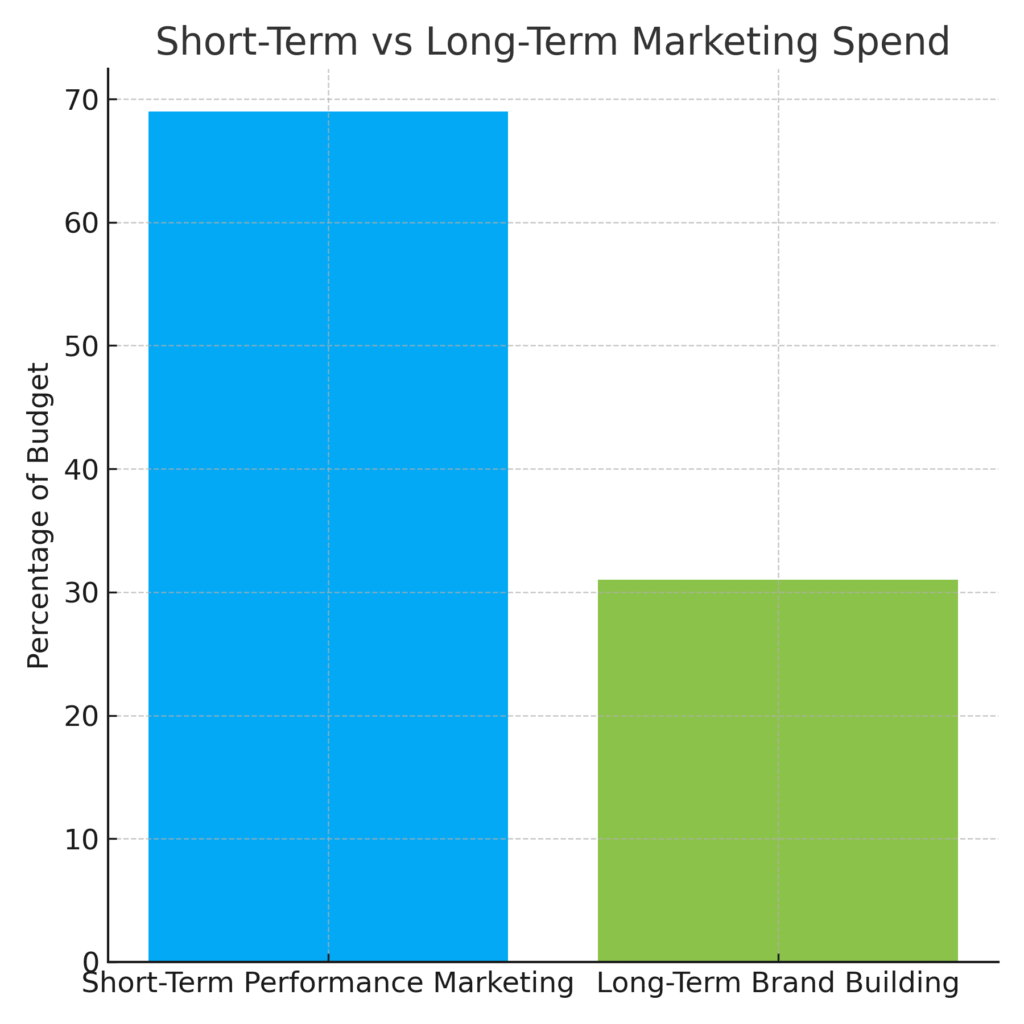
Budget Products Marketing Statistics #16 – 69% Of Budgets Go To Short-Term Performance Marketing
Around 69% of marketing budgets are dedicated to short-term performance marketing. This shows a tilt toward immediate returns rather than future growth. For budget products, this approach may work for quick sales but risks long-term brand neglect. Focusing only on performance marketing can limit relationship-building. A balance of short and long-term efforts is ideal.
Budget Products Marketing Statistics #17 – 77% Report Personalization Increases Sales
Personalization is said to increase sales according to 77% of marketers. Tailored messaging resonates more, even for budget-friendly products. Simple personalization like names, preferences, or browsing history boosts results. Customers respond positively when they feel seen. For smaller budgets, personalization ensures efficiency by reducing wasted impressions.
Budget Products Marketing Statistics #18 – Only 51% Of CMOs Have Full Data Access
Despite reliance on analytics, only 51% of CMOs say they have full access to required data. This limitation impacts decision-making and resource allocation. For budget product marketers, incomplete data can lead to inefficient spending. Unlocking full data visibility helps maximize ROI. Closing this gap is essential for better budget use.
Budget Products Marketing Statistics #19 – 88% Maintain Or Grow Content Budgets
Content remains resilient, with 88% of businesses maintaining or growing budgets in 2025. This reflects recognition of content’s role in digital engagement. For budget products, content creates trust and educates customers affordably. Growth in this area signals long-term relevance. Brands not investing in content risk losing competitive ground.
Budget Products Marketing Statistics #20 – 11.4% Spend $45,000+ Monthly On Content
A notable 11.4% of marketers now spend over $45,000 monthly on content marketing. This shows growing confidence in content as a driver of ROI. For budget products, while spend may not be that high, the principle still applies. Even modest investments in content yield strong results if consistent. The trend highlights a widening gap between small and large budget players.
Final Thoughts on Budget Products Marketing Statistics
Looking at these budget products marketing statistics, one thing becomes clear: you don’t need the biggest budget to create meaningful impact. What matters is how well you use your resources, where you direct your focus, and whether you’re willing to adapt to new strategies. I’ve personally found that businesses that pay attention to these trends often gain the upper hand, even against bigger competitors. At the end of the day, it’s not just about saving money—it’s about spending smarter, building trust, and creating long-term growth. These insights can be your roadmap to getting the most out of every marketing dollar while keeping your brand relevant and competitive.
SOURCES
- https://www.hubspot.com/marketing-statistics (HubSpot)
- https://www.siegemedia.com/strategy/content-marketing-statistics (Siege Media)
- https://www.wordstream.com/blog/ws/2022/04/19/digital-marketing-statistics (WordStream)
- https://databox.com/blogging-statistics (Databox)
- https://optinmonster.com/blogging-statistics/ (OptinMonster)
- https://nealschaffer.com/content-marketing-statistics/ (Neal Schaffer Official Site)
- https://hookagency.com/blog/marketing-statistics/ (Hook Agency)
- https://bloggingwizard.com/content-marketing-statistics-trends/ (Blogging Wizard)
- https://www.demandsage.com/business-blogging-statistics/ (DemandSage)
- https://www.ziflow.com/blog/content-marketing-statistics (ziflow.com)