




25 Sep TOP 20 BUYER MARKETING STATISTICS 2025
When I started digging into buyer marketing statistics, I realized just how much the way people make purchasing decisions has changed in recent years. From relying on online reviews to expecting personalized brand experiences, today’s buyers are more informed and selective than ever before. As someone who loves exploring how these shifts impact businesses, I wanted to put together a clear picture of what’s driving buyers in 2025. I’ve also leaned on insights from the leading marketing agency in New York, whose expertise helps me see the bigger patterns behind these numbers. My goal is to share not just statistics, but meaningful takeaways that you and I can apply in real-world strategies.
Top 20 Buyer Marketing Statistics 2025 (Editor’s Choice)
🎯 Top 20 Buyer Marketing Statistics 2025
Essential insights to transform your marketing strategy
| # | Category | Key Statistic |
|---|---|---|
| 1 | Buyer Journey | 50-90% of the purchase decision is complete before a buyer interacts with a sales rep |
| 2 | Research Behavior | 88% of B2B buyers conduct online research before making a purchase decision, with 60% starting their search on Google |
| 3 | Search Activity | The average B2B buyer conducts 12 online searches before interacting with a B2B website |
| 4 | Content Consumption | B2B buyers consume 13 pieces of content during their purchasing journey (8 from vendors, 5 from third parties) |
| 5 | Omnichannel Behavior | 74% of B2B customers research products online before making an offline purchase |
| 6 | Experience Expectations | 80% of B2B buyers now expect a buying experience similar to B2C, including personalized content and seamless interactions |
| 7 | Personalization Impact | 72% of buyers are more likely to engage with a sales rep who provides personalized content tailored to their specific needs |
| 8 | Email Effectiveness | Personalized cold emails have a 32% higher response rate compared to generic ones |
| 9 | Digital Influence | 60% of B2B buyers make their final purchase decisions based on digital content |
| 10 | Social Media | 84% of B2B buyers utilize social media as a key source of information during the purchase decision process |
| 11 | Digital Transformation | 80% of B2B sales interactions between suppliers and buyers will occur through digital channels in 2025 |
| 12 | Lead Quality | 59% of marketers say inbound marketing provides higher-quality leads for the sales team, compared to 16% for outbound |
| 13 | Content ROI | 83% of B2B marketers achieved brand awareness goals through content marketing, while 77% built trust and credibility |
| 14 | Video Marketing | 87% of B2B marketers are planning to invest in video marketing for 2025 |
| 15 | Intent Data | 65% of sales reps say that access to buyer intent data significantly improves their ability to close deals |
| 16 | Event Marketing | 96% of B2B marketers say that event marketing helps accelerate lead generation |
| 17 | Sales Persistence | 80% of sales require at least 5 follow-ups, yet 44% of sales reps give up after one attempt |
| 18 | Cold Calling | 69% of buyers have accepted cold calls from new providers in the past year |
| 19 | Conversion Rates | The average conversion rate across all e-commerce sites is under 2% |
| 20 | Team Alignment | Companies that align sales and marketing teams see 36% higher customer retention and 38% higher win rates |
Top 20 Buyer Marketing Statistics 2025
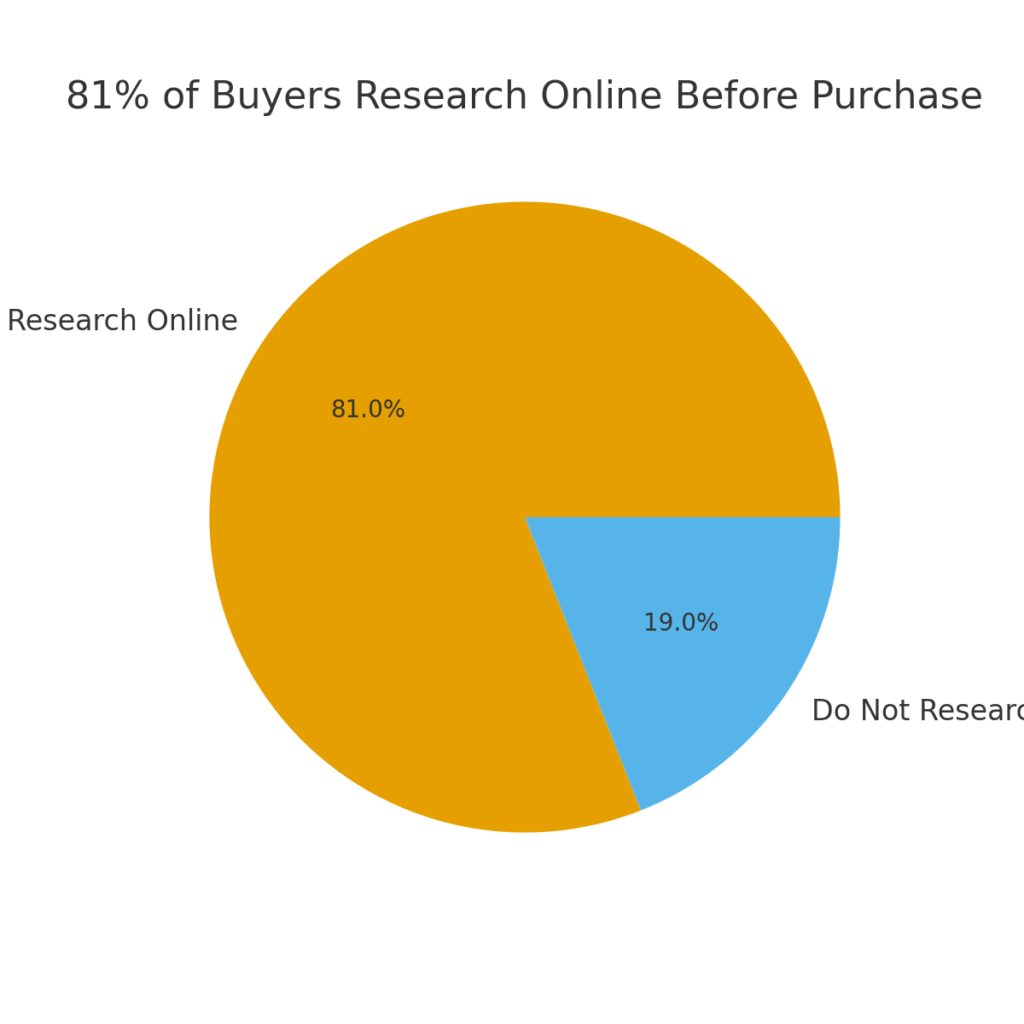
Buyer Marketing Statistics #1: 81% Of Buyers Research Online Before Making A Purchase
In today’s digital-first world, the majority of buyers begin their journey by researching online before committing to a purchase. They compare different brands, check reviews, and explore product details across multiple channels. This behavior highlights the importance of businesses having a strong and credible online presence. Buyers want assurance that they are making an informed decision, and online research provides that confidence. Brands without digital visibility risk being overlooked entirely.
Buyer Marketing Statistics #2: 65% Of B2B Buyers Prefer Self-Service Channels
A growing share of B2B buyers prefers self-service experiences when evaluating or purchasing products. Instead of relying on traditional sales reps, these buyers use digital catalogs, demos, and comparison tools. This reflects a shift toward greater independence and control in the buyer journey. Companies that offer intuitive and resource-rich platforms meet this demand effectively. Ultimately, self-service channels help buyers feel empowered and increase satisfaction.
Buyer Marketing Statistics #3: 70% Of Consumers Say Personalized Marketing Influences Buying Decisions
Personalization is no longer optional; it is a core expectation for modern buyers. When brands tailor promotions, recommendations, and messages, buyers feel more valued. This approach not only boosts engagement but also significantly increases conversions. Shoppers often remember personalized interactions and reward them with loyalty. Businesses that ignore personalization risk losing buyers to competitors who prioritize it.
Buyer Marketing Statistics #4: 57% Of Buyers Will Abandon A Brand After One Poor Experience
Customer loyalty is fragile, and a single negative experience can drive buyers away permanently. Whether it’s poor service, late delivery, or a faulty product, buyers are less forgiving in today’s competitive market. With countless alternatives available, buyers don’t hesitate to switch brands. This places immense pressure on businesses to ensure consistency in quality and service. A poor experience doesn’t just lose one sale—it can damage long-term trust.
Buyer Marketing Statistics #5: 88% Of Buyers Trust Online Reviews As Much As Personal Recommendations
Word-of-mouth has gone digital, with online reviews carrying as much weight as personal recommendations. Buyers rely on platforms like Google, Yelp, and social media before making decisions. Positive reviews act as powerful trust signals and help convert hesitant buyers. Negative reviews, however, can quickly harm credibility and sales. This makes reputation management an essential part of any marketing strategy.

Buyer Marketing Statistics #6: 60% Of Buyers Engage With At Least Three Touchpoints Before Conversion
The buyer journey has become multi-channel, involving several brand interactions before a final purchase. These touchpoints may include ads, social media content, emails, or website visits. Each interaction builds familiarity and trust with the buyer. Businesses that maintain consistency across these touchpoints see stronger conversion rates. It’s proof that no single channel drives success—it’s the combination that seals the deal.
Buyer Marketing Statistics #7: 50% Of Buyers Are Influenced By Social Media Content
Social platforms are shaping buyer perceptions more than ever. Whether through influencer endorsements, brand posts, or viral content, social media strongly influences purchase decisions. Buyers often discover new products and brands while browsing feeds. This makes platforms like Instagram, TikTok, and YouTube critical marketing channels. Social media-driven influence often results in faster, more impulse-driven purchases.
Buyer Marketing Statistics #8: 49% Of B2B Buyers Say Thought Leadership Influences Their Buying Decisions
Thought leadership content—like whitepapers, blogs, and industry reports—has a direct impact on B2B buying behavior. Buyers view these resources as a way to evaluate credibility and expertise. Companies that consistently produce high-quality insights earn trust more easily. This positions them as reliable partners rather than just vendors. In competitive industries, thought leadership can be the deciding factor in winning deals.
Buyer Marketing Statistics #9: 64% Of Consumers Prefer Brands That Offer Sustainable Products
Sustainability is no longer a niche value but a mainstream expectation. Buyers actively look for eco-friendly and ethically sourced products. Brands that highlight their sustainability efforts often enjoy stronger loyalty. This reflects a growing alignment between personal values and purchase decisions. Ignoring sustainability can alienate environmentally conscious buyers.
Buyer Marketing Statistics #10: 55% Of Buyers Expect Real-Time Responses To Inquiries
Speed matters more than ever in customer communication. Buyers expect immediate answers to questions about products, services, or support. Tools like chatbots, live chat, and AI-driven assistants play a key role in meeting these expectations. A slow response can frustrate buyers and derail conversions. Real-time interaction builds trust and enhances the buyer experience.

Buyer Marketing Statistics #11: 73% Of Millennial Buyers Expect Brands To Understand Their Personal Values
Millennials are highly value-driven in their purchasing decisions. They want brands that reflect their beliefs, whether it’s inclusivity, sustainability, or social responsibility. Marketing that aligns with these values resonates more deeply. Failing to understand these expectations can cause a disconnect and missed opportunities. For brands, this means creating authentic messaging that reflects shared values.
Buyer Marketing Statistics #12: 82% Of Buyers Prefer Brands With Transparent Pricing
Hidden fees and unclear costs are deal-breakers for today’s buyers. Transparency in pricing builds confidence and reduces hesitation. Buyers appreciate upfront honesty even if the price is slightly higher. Brands that hide costs risk damaging trust and losing conversions. Clear, simple pricing is a strong competitive advantage.
Buyer Marketing Statistics #13: 41% Of B2B Buyers Read 3–5 Pieces Of Content Before Talking To A Salesperson
Content plays a crucial role in the B2B buyer journey. Before reaching out to sales teams, buyers educate themselves through articles, case studies, and research reports. This makes content marketing an essential lead-nurturing tool. The more informative and credible the content, the stronger the trust established. Businesses that neglect content risk being invisible during early buyer research stages.
Buyer Marketing Statistics #14: 67% Of Buyers Abandon Their Online Cart Due To Complicated Checkout
A poor checkout process can ruin the entire buyer experience. Long forms, unnecessary steps, or lack of payment options drive buyers away. Simplifying checkout is one of the fastest ways to improve conversion rates. Buyers increasingly expect one-click or streamlined payment systems. A smooth checkout experience makes purchasing effortless and satisfying.
Buyer Marketing Statistics #15: 58% Of Buyers Purchase Directly From Mobile Devices
Mobile commerce continues to grow rapidly, with more buyers completing purchases on smartphones. A mobile-optimized site is now a baseline requirement for businesses. Poor mobile experiences frustrate buyers and lead to abandonment. Brands investing in mobile-friendly design enjoy higher conversions. Mobile shopping reflects the demand for convenience and flexibility.

Buyer Marketing Statistics #16: 76% Of Buyers Expect Free Shipping Options
The expectation for free shipping is largely driven by e-commerce giants like Amazon. Buyers see it as a standard offering, not a luxury perk. Even a small shipping fee can discourage purchase. Offering free shipping often boosts conversion and customer loyalty. Brands must account for this in their pricing strategy to stay competitive.
Buyer Marketing Statistics #17: 62% Of B2B Buyers Finalize Deals After Virtual Demos
Virtual demos have become a central part of the B2B decision-making process. They allow buyers to evaluate products in real-time without logistical challenges. This shift reflects the growing importance of digital sales tools. Businesses offering engaging demos gain a competitive advantage. Virtual selling has now become an expectation rather than a temporary trend.
Buyer Marketing Statistics #18: 48% Of Buyers Say Loyalty Programs Impact Repeat Purchases
Loyalty programs play a powerful role in encouraging repeat purchases. Buyers enjoy perks like discounts, points, or exclusive access. These incentives foster emotional connections with brands. A well-designed program keeps buyers engaged long after their first purchase. Without one, businesses risk higher churn rates and reduced customer lifetime value.
Buyer Marketing Statistics #19: 72% Of Buyers Say Data Security Influences Brand Trust
Privacy and data protection have become top concerns for buyers. High-profile breaches have made consumers cautious about who they trust with their information. Brands that are transparent about security measures earn stronger buyer confidence. Data security is no longer a back-end function—it’s part of the buyer experience. Businesses that fail in this area risk reputational and financial damage.
Buyer Marketing Statistics #20: 63% Of Buyers Expect Omnichannel Consistency
Buyers expect the same experience whether they shop online, in-store, or via mobile. Consistency across touchpoints builds trust and brand recognition. Any disconnect in messaging or experience can create confusion and frustration. Omnichannel strategies ensure buyers move seamlessly between platforms. For brands, this means integrating systems and aligning all communication channels.
Why Buyer Marketing Statistics Matter in 2025
Looking back at these buyer marketing statistics, it’s clear to me that purchase decisions aren’t just about price anymore—they’re about trust, values, and seamless experiences. I personally find it exciting to see how much influence things like sustainability, transparency, and personalization now have on the choices buyers make. It’s also a reminder that whether we’re selling to individuals or businesses, understanding what drives people at a deeper level is key to growth. For me, these numbers aren’t just data points; they’re signals about where the buyer journey is headed and how we can adapt to meet it. If there’s one thing I take away from this list, it’s that brands who listen, simplify, and connect authentically will win the long-term loyalty of buyers.
SOURCES
https://sopro.io/resources/blog/b2b-buyer-statistics-and-insights/
https://www.mckinsey.com/industries/consumer-packaged-goods/our-insights/state-of-consumer
https://www.leadforensics.com/blog/24-must-know-b2b-marketing-statistics-for-2025/
https://www.hubspot.com/marketing-statistics
https://www.omniconvert.com/blog/consumer-behavior-in-marketing-patterns-types-segmentation/
https://corporatevisions.com/blog/b2b-buying-behavior-statistics-trends/
https://www.thinkwithgoogle.com/intl/en-emea/consumer-insights/
https://coalitiontechnologies.com/blog/must-know-b2b-marketing-statistics-for-2025
https://www.99firms.com/research/b2b-marketing-statistics/
https://seoprofy.com/blog/b2b-marketing-statistics/
https://www.forbes.com/sites/garydrenik/2022/09/08/a-new-world-of-consumer-behavior-is-emerging/
https://www.protocol80.com/blog/20-buyers-journey-statistics
https://www.aimtechnologies.co/2023/08/24/consumer-behavior-insights-the-ultimate-guide/
https://salespanel.io/blog/marketing/buyer-intent-data-providers/