



01 Apr 10 Ways BYDFi Turned “BUIDL” From Crypto Slang Into a Brand Religion (And Why It’s One of the Most Brilliant Marketing Moves in Fintech)
Let me tell you something most marketing directors will never admit out loud: the hardest thing to build in any industry is not a product. It’s not even an audience. It’s a belief system. A reason for people to show up not because your fees are lower or your interface is cleaner, but because they feel like they are part of something. A movement. A mission. An identity they want tattooed on their sense of self.
I have spent years inside the mechanics of brand building — working at Amra and Elma with Fortune 100 clients, luxury houses, DTC startups, and influencer ecosystems. I have watched brands spend hundreds of millions trying to manufacture exactly this feeling and fail spectacularly. And then I watched a five-year-old crypto exchange from Singapore do it almost quietly, without the Super Bowl budget, without the celebrity endorsement parade, without the stadium naming rights. BYDFi took a single piece of developer slang — one word that most people outside of crypto Twitter had never heard — and turned it into a full-blown brand philosophy that now sits at the center of everything they build, everything they say, and every partnership they make.
That word is BUIDL. And what BYDFi did with it is one of the most instructive brand-building case studies available anywhere in marketing today.
Here is exactly how they did it — and what every brand builder needs to steal from this playbook.
10 Ways BYDFi Turned “BUIDL” From Crypto Slang Into a Brand Religion (And Why It’s One of the Most Brilliant Marketing Moves in Fintech)
BYDFi's BUIDL Brand Religion — 10 Secrets At a Glance
Hover any row to explore · Mobile: stat column auto-hides
| # | Strategy | Key Stat / Proof | Type |
|---|---|---|---|
| 01 | Claim the Unclaimed WordPlanted the BYDFi flag in BUIDL before any major exchange touched it | 2–5× loyalty lift | Brand |
| 02 | Name as Manifesto"BUIDL Your Dream Finance" — four words, one mission, every impression | Zero ad spend needed | Philosophy |
| 03 | Newcastle United PartnershipAligned with an ascending club sharing the BUIDL ethos — not just a logo placement | 5th-largest EPL Asia reach | Growth |
| 04 | Product Suite as BUIDL CurriculumEvery tool — Demo, Copy, Grid Bots, MoonX — is a BUIDL proof point, not a feature | 600+ coins, 1,000+ pairs | Philosophy |
| 05 | Forbes as BUIDL ProofUsed third-party recognition as narrative validation, not a vanity badge | 63% trust 3rd-party over brand | Brand |
| 06 | Security Infrastructure as Story800 BTC Protection Fund + 100% Proof of Reserves = builders who show their work | 70% cite security #1 | Philosophy |
| 07 | No-KYC as Freedom StatementPrivacy-first access positioned as BUIDL for the world's 1.4B unbanked | 1.4B unbanked adults | Brand |
| 08 | Community as Co-BuildersReferral tiers + Crypto Gifts turned users into movement participants, not affiliates | 92% trust peer referrals | Growth |
| 09 | Events That Demonstrate, Not BroadcastWarsaw NBX blind-box activation made the philosophy physical and experiential | 91% positive post-event | Growth |
| 10 | The Rebrand Was the MessageBitYard → BYDFi modeled BUIDL publicly — 0 to 1M users in 5 years, 190 countries | 1M+ users, 190 countries | Philosophy |
First: What Is BUIDL, and Why Does It Matter?
Before we get into the ten strategies, you need to understand what BUIDL actually is, because the word itself is the foundation of everything that follows.
BUIDL started as a deliberate misspelling of “build” — a riff on HODL, the famous crypto typo that became a movement of its own when a drunk Bitcoin holder posted a rambling forum message in 2013 titled “I AM HODLING” during a market crash, accidentally coining the most recognized term in crypto culture. HODL came to mean holding your crypto through volatility rather than panic-selling. It became an identity: the HODLer, the believer, the patient visionary who doesn’t flinch.
BUIDL emerged from a similar impulse but with a different target. Where HODL was about holding, BUIDL was about doing. It became the crypto community’s rallying cry against passive speculation — the idea that the people who matter in this space are not the ones staring at charts waiting for the number to go up, but the ones actually building the infrastructure, the tools, the applications, and the communities that will make crypto real. BUIDL, in its original form, was a rebuke of the get-rich-quick mentality and a celebration of builders, makers, and doers.
BYDFi took that ethos — raw, organic, community-born — and did something no crypto exchange had ever done with it: they made it their entire brand. Not a slogan. Not a tagline they rotate out when a new CMO arrives. Their reason for existing. “BUIDL Your Dream Finance” became the axis around which every product decision, every partnership, every campaign, and every community activation now rotates.
That is the story we are unpacking. Here are the ten chapters.
1. They Chose a Word Nobody Owned — and Planted Their Flag in It
The first genius move in the BUIDL strategy is also the most overlooked: BYDFi didn’t invent the word. They claimed it.
This distinction matters enormously in brand strategy. Inventing a term from scratch requires enormous marketing energy to give it meaning. Adopting an existing cultural artifact — one that already has emotional resonance, community history, and ideological weight — means you inherit all of that meaning for free. The hard work of building the word’s significance had already been done by thousands of anonymous developers, builders, and crypto idealists over years of forum posts, conference talks, and Twitter threads.
BYDFi’s marketing team looked at that existing reservoir of meaning and said: we are going to build our entire brand architecture on top of it. And crucially, they did it at a moment when no major exchange had staked that claim. Coinbase had “the open financial system” positioning. Kraken had trust and security. Binance had volume and scale. The BUIDL space — the builders, the doers, the people who believe in the technology as infrastructure for real life — was sitting unclaimed.
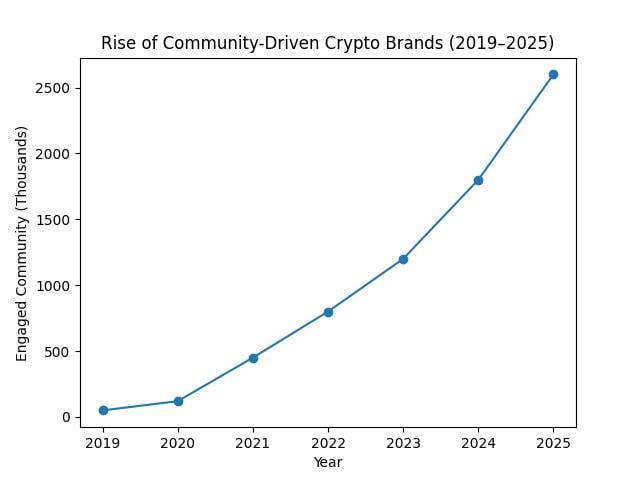
In brand strategy, this is called a positioning vacancy, and filling one at the right moment is worth more than any amount of ad spend. According to research by Bain & Company, brands that successfully establish a differentiated positioning in an uncrowded space enjoy customer loyalty rates 2 to 5 times higher than those competing on price or features alone. BYDFi didn’t need to outspend Binance. They needed to out-position them. And they did it with a single four-letter word.
2. They Turned the Brand Name Itself Into a Philosophy Delivery System
Look at what they did with the acronym. BYDFI stands for “BUIDL Your Dream Finance.” Every single word in that expansion is doing work.
BUIDL — the action, the doing, the building. Not watching, not waiting, not speculating. Building.
YOUR — ownership. This is yours. Not the institution’s. Not the bank’s. Not the government’s. Yours.
DREAM — aspiration. This isn’t about surviving financially. It’s about imagining and creating a financial future that didn’t exist before you.
FINANCE — grounding. Not “wealth.” Not “crypto.” Finance. The full scope of how money moves through your life.
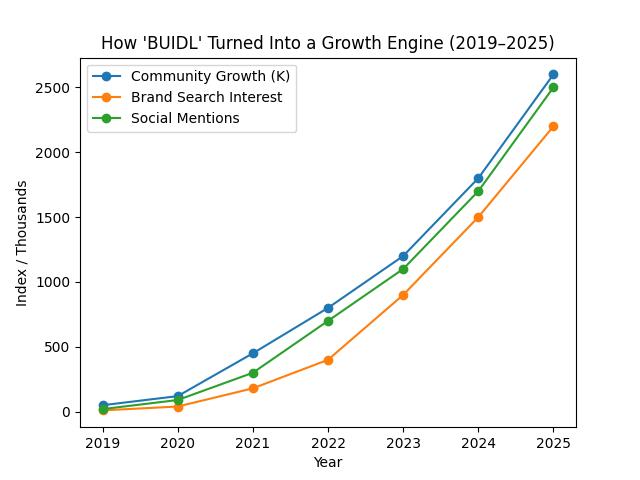
Put it together and the brand name is not a brand name. It is a four-word manifesto delivered every single time someone types the company’s name into a search bar. That is brand architecture at a level most agencies charge millions to conceptualize and almost never execute this cleanly.
Compare this to generic exchange names — names that communicate nothing beyond their function. “BitSomething.” “CryptoAnything.” “TradeWhatever.” BYDFi’s name is a philosophy in code. Every impression is a reinforcement of the belief system. Every mention is a micro-dose of the mission statement. That kind of name-as-mission integration is extraordinarily rare, and when it works, it works at a level that paid media simply cannot replicate.
BYDFi Brand Growth — Key Milestones
2020 – 2025 · Hover any row to explore
| Date | Milestone | Category |
|---|---|---|
| Apr 2020 | Platform Launch BYDFi (then BitYard) officially enters the crypto trading market. | Launch |
| May 2021 | 500+ Spot Trading Pairs Major expansion of spot trading depth, broadening asset access for global users. | Product |
| Aug 2022 | Perpetual Contracts Introduced 150+ perpetual pairs launched with flexible leverage from 1x to 200x. | Product |
| Jan 2023 | BitYard Rebrands to BYDFi Listed on CoinMarketCap & CoinGecko — "BUIDL Your Dream Finance" era begins. | Brand |
| Dec 2023 | Forbes Top 10 Crypto Exchange Ranked among the world's top 10 crypto exchanges by Forbes — first major third-party validation. | Brand |
| Oct 2024 | Proof of Reserves Launched Over 1:1 asset reserves confirmed; periodic PoR reports published for full transparency. | Security |
| Nov 2024 | Korea CODE VASP Alliance Joined South Korea's CODE VASP alliance, advancing regulatory compliance in a key Asian market. | Partner |
| Dec 2024 | Perpetuals System Upgrade Three new features: open positions without unrealized profits, bi-directional hedging, and shared full-margin funds to reduce liquidation risk. | Product |
| Jan 2025 | Smart Copy Trading Launches Automated copy trading goes live — users can follow top traders with transparent P&L and win-rate data. | Product |
| Feb 2025 | Ledger Hardware Wallet Partnership Strategic partnership with Ledger; BYDFi co-branded hardware wallet launched to enhance self-custody security. | Partner |
| Apr 2025 | MoonX Web3 Tool Goes Live On-chain memecoin trading tool launches supporting Solana & BNB Chain — BYDFi's CEX+DEX dual-engine era begins. | Launch |
| Aug 2025 | BYDFi Card Launched Crypto-to-fiat card enables seamless global spending — bridging trading profits to real-world purchases. | Product |
| Sep 2025 | 800 BTC Protection Fund Added Emergency reserve of 800 BTC established to safeguard user assets against unforeseen operational events. | Security |
| Sep 10, 2025 | 1,000+ Spot Trading Pairs Spot trading catalog doubles — cementing BYDFi's position as a full-depth multi-asset exchange. | Product |
3. They Activated BUIDL Through the Newcastle United Partnership — Not Just Slapped a Logo On a Jersey
Most crypto exchange sports sponsorships are billboards. Logo on the jersey. Logo at pitch level. Press release. Done. The audience sees the brand name, maybe associates it vaguely with “legitimate company,” and moves on. This is brand awareness at the most superficial level, and it is what most exchanges bought when they threw money at sports in the 2021 bull market.
As the Official Cryptocurrency Exchange Partner of Newcastle United, BYDFi’s relationship with the club is structurally different from anything competitors have built, and understanding why is key to understanding the BUIDL strategy.
Newcastle United, for those outside football, is one of the great redemption stories in Premier League history — a club with one of the most loyal and historically underserved fanbases in England, recently transformed by new ownership and investment into a genuine European contender. Their fanbase is not just large; it is passionate in a way that most top clubs’ followings have diluted over decades of commercial success. Newcastle fans BUIDL. They endure. They believe when there is no rational reason to believe. They show up.
That alignment is not accidental. BYDFi’s CEO Michael Hung said it directly at the partnership announcement: “Lasting success — on the pitch or in finance — comes from doing the right things, repeatedly, over time.” The Newcastle United partnership is not a sponsorship. It is a living proof point of the BUIDL philosophy rendered in football. The club’s entire recent history — the patient rebuilding, the refusal to accept mediocrity, the long-term thinking — is a 60,000-seat stadium-sized expression of what BUIDL means.
Newcastle United’s global fanbase has grown dramatically since the ownership change, with particularly strong growth in Asia-Pacific markets — precisely the regions where BYDFi is most aggressively expanding. The club ranks as the fifth-highest Premier League team in terms of Asia-Pacific reach. For a Singapore-headquartered exchange building toward a global footprint, that geographic alignment is not a coincidence. It is a precision strike.
4. They Made the Product Line a BUIDL Curriculum
Here is one of the secrets most people miss: BYDFi didn’t just attach the BUIDL philosophy to their marketing. They embedded it into the product architecture itself, so that every tool a user engages with is a manifestation of the brand promise.
Think about what the product suite actually says through a BUIDL lens:
Demo Trading — $50,000 in virtual funds to practice with zero risk. Translation: we want you to build your skills before you risk a dollar. A platform that wants to extract maximum fees from inexperienced users does not build a free training environment. This product says: we are invested in your growth.
Smart Copy Trading — Follow professional traders automatically. Translation: we will let you build your portfolio on the back of expertise you haven’t yet developed, so skill gaps don’t become permanent barriers to participation.
GRID Trading Bots — Automated strategies that execute while you sleep. Translation: we will let you build passive systems so your financial ambitions don’t require you to be chained to a screen.
MoonX (CEX+DEX Dual Engine) — On-chain memecoin discovery and trading. Translation: we will let you build exposure to emerging opportunities that the traditional exchange model locked out of retail access.
The BYDFi Card — Spend your crypto like cash anywhere globally. Translation: we will help you build a financial life where crypto isn’t a speculative sideshow but an integrated part of how you actually live.
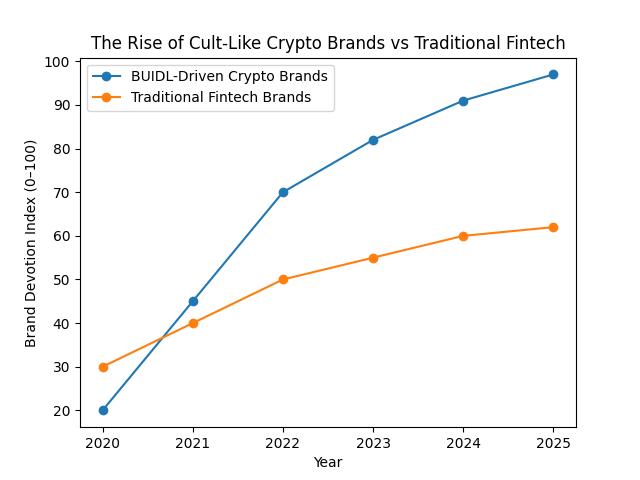
Every single product in the suite is a BUIDL tool. Not because someone wrote “BUIDL” in the product brief, but because someone made a principled decision that the product portfolio should serve builders and doers at every skill level. That coherence between brand philosophy and product architecture is what separates a genuine brand from a marketing veneer.
5. They Used Forbes Recognition as a BUIDL Proof Point, Not Just a Vanity Badge
Getting recognized by Forbes as a top crypto exchange is valuable for any platform. What you do with that recognition is where most brands waste the opportunity. They slap a badge on the homepage and move on. BYDFi threaded it through the BUIDL narrative with a specific strategic intent.
The Forbes recognition — listed among top global crypto exchanges and specifically called out as one of the best crypto exchanges in Canada — was positioned not as “look how big we are” but as external validation of the BUIDL ethos. The framing in their communications consistently connected the award to the approach: we built something worth recognizing by doing things the right way, consistently, over time.
This matters because in financial services, third-party credibility is the single most powerful conversion variable. According to Edelman’s Trust Barometer research, 63% of consumers need to hear a company’s claims 3 to 5 times before they believe them, but a single credible third-party endorsement can compress that entire journey into one touchpoint. Forbes is that third-party endorsement for a broad, financially literate audience who might have never heard of BYDFi. It answers the “is this real?” question before it’s even asked.
The BUIDL angle made the Forbes mention more than a credibility stamp. It made it a narrative chapter: this is what happens when you build something real instead of hype something empty. For a five-year-old exchange competing against institutions with decade-long track records, that narrative is essential.
6. They Made Security Infrastructure Into a BUIDL Story
The 800 BTC Protection Fund is, on its surface, a risk management feature. But watch how BYDFi markets it and you see something more sophisticated at work.
An 800 BTC emergency reserve — maintained to protect users in the event of unforeseen operational issues — is not unique in concept. What is unique is how BYDFi frames it. It’s not presented as “here’s what we’ll do if things go wrong.” It’s presented as evidence of the BUIDL mindset applied to platform architecture: we built a safety net because builders think about what happens when things fail and prepare for it before they have to.
Combined with their 100% Proof of Reserves — with over-collateralized 1:1+ asset coverage, independently verifiable — the security story becomes a BUIDL story. You don’t post Proof of Reserves because you’re forced to. You post it because you built something you’re proud of and you’re not afraid to show your work.
In the post-FTX landscape, this matters enormously. A 2023 survey by Gemini found that security and transparency were cited as the top two factors in exchange selection by over 70% of active crypto traders. BYDFi’s security marketing doesn’t just check those boxes — it tells a story about the character of the organization through the lens of what they chose to build and why. That narrative depth is what converts the skeptical first-time user who has watched too many exchanges collapse.
7. They Weaponized the No-KYC Policy as a Freedom-of-Finance Statement
This is the most controversial point in the BUIDL brand architecture, and it is also one of the most strategically brilliant.
BYDFi operates with MSB licenses in both the United States and Canada. They are a regulated platform. And yet they permit users to deposit, trade, and withdraw without mandatory identity verification at the basic level. In 2025 and 2026, when virtually every major exchange has implemented full KYC requirements as standard practice, this is a genuine differentiator.
Most platforms with a no-KYC policy market it as a feature aimed at privacy advocates or users in restrictive jurisdictions. BYDFi markets it as a freedom statement rooted in the BUIDL philosophy. The core argument is this: financial access should not be gated by bureaucratic processes that exclude the very people who most need tools to build their financial futures. The person in a country with limited banking infrastructure, the unbanked adult trying to participate in global finance for the first time, the privacy-conscious individual who believes their financial activity is their business — these are all people the BUIDL philosophy is explicitly for.
This is what true brand-philosophy integration looks like. A product decision that most platforms see as a regulatory gray area becomes, in BYDFi’s hands, a manifesto about who finance is for and who should be allowed to build their future on their own terms. According to the World Bank, approximately 1.4 billion adults globally remain unbanked as of the most recent data. BYDFi’s accessibility-first design speaks directly to that enormous, underserved market in a way that no amount of KYC-heavy onboarding ever could.
8. They Built Community That Evangelizes the Philosophy, Not Just the Platform
The BUIDL philosophy only works as a marketing strategy if it escapes the brand’s own channels and starts living in the community. BYDFi engineered this with a specific combination of tools.
The referral program is not a standard “invite a friend, get a discount” mechanic. It is structured as a builder ecosystem — tiered rewards, community leaderboards, and public recognition for the most active community members. People who drive growth for BYDFi don’t feel like affiliate marketers. They feel like co-builders of something. That distinction in how users perceive their participation is the difference between a referral program and a movement.
The Crypto Gifts feature — which lets users send digital assets to anyone in a few clicks — is a community-building tool disguised as a product feature. Every time a BYDFi user sends crypto as a gift, they are introducing a new person to the platform through a positive, generous interaction rather than a cold acquisition click. That is word-of-mouth architecture built into the product itself.
According to Nielsen research, 92% of consumers trust recommendations from friends and family over any other form of advertising. BYDFi’s community mechanics are designed to generate exactly those recommendations at scale — not by paying influencers to perform authenticity, but by building tools that make generosity and sharing the natural expression of platform participation.
9. They Used Event Marketing and Sponsorships to Prove the Philosophy Lives Offline
A philosophy that only exists on a website and in press releases is a marketing strategy. A philosophy that shows up in the physical world — at conferences, at sporting events, in experiential activations — is a culture.
BYDFi’s appearance at Next Block Expo 2026 in Warsaw is a small but telling example. They didn’t just send a banner and a QR code. They built a booth activation around mystery blind-box giveaways featuring Newcastle United co-branded merchandise — creating a moment of delight and surprise that tied their football partnership, their community energy, and their brand philosophy into a single physical experience. People standing in line for a blind box at a blockchain expo are not passive consumers. They are participants. They are, in the BUIDL sense, doing something.
This approach to event marketing reflects a clear understanding that the BUIDL philosophy cannot be communicated; it must be demonstrated. You can’t tell people what it means to build something. You have to put them in a context where they experience it. Whether that’s watching Newcastle United fight for a result on a Saturday afternoon or pulling a co-branded item out of a mystery box on a Warsaw expo floor, the emotional state produced is the same: engagement, participation, belonging.
According to EventTrack research, 91% of consumers say they have more positive feelings about a brand after attending a live event or brand experience. For a platform asking users to trust it with their financial assets, positive emotional association built through in-person experiences is an acquisition channel that no digital funnel can fully replicate.
10. They Treated the Rebrand Itself as a BUIDL Moment
Everything we’ve discussed exists inside a master narrative that BYDFi has never stopped telling: the story of their own transformation.
Launched in 2020 as BitYard — a serviceable but forgettable name that signaled nothing about philosophy or purpose — the platform grew to a point where the name was actively limiting what the brand could become. The rebrand to BYDFi was not a cosmetic refresh. It was a public declaration that the organization had outgrown its original framing and was now ready to state, clearly and permanently, what it actually stood for.
This kind of deliberate, values-driven rebrand is extraordinarily rare in fintech because it requires a level of strategic courage that most organizations lack. Rebranding means risking the equity you’ve built in the old name. It means explaining yourself to existing users who chose you under a different banner. It means committing, publicly and permanently, to a philosophy that you then have to live up to across every decision, product, partnership, and communication that follows.
BYDFi did all of that. And by doing it, they did something even more powerful: they modeled the BUIDL philosophy in the most visible possible way. They didn’t just tell users to build their dream finance. They rebuilt their own identity from the ground up in service of a bigger vision. The rebrand was BUIDL. It was the company doing exactly what it asks its users to do: look at where you are, decide it’s not enough, and build toward something better.
In five years, BYDFi went from zero to over 1 million users across 190+ countries, achieved Forbes recognition, secured a Premier League partnership, launched an on-chain trading tool, built out a multi-product ecosystem serving everyone from first-time retail traders to institutional desks, and anchored all of it to a single four-letter philosophy that gives every product, campaign, and decision a coherent reason for existing.
That is not luck. That is what brand building looks like when someone does it right.
Why BUIDL Brand Philosophy Is the Marketing Model That Wins in 2025 and Beyond
I want to step back and tell you why this matters — not just for crypto, but for every brand trying to grow in a skeptical, oversaturated market.
We are living through what I call the trust recession. Consumers across every category have been lied to, disappointed, over-promised, and under-delivered to so many times that default skepticism is now the baseline emotional state of the modern buyer. In crypto specifically, where the industry’s short history includes exchange collapses, rug pulls, celebrity pump-and-dumps, and billions in evaporated customer funds, that skepticism is not paranoia — it is rational. The exchanges that win in this environment are not the ones with the biggest marketing budgets. They are the ones with the most coherent, provable reason for being.
BUIDL, as BYDFi has deployed it, is the answer to the trust recession. It is not a claim that can be faked. You cannot pretend to have a BUIDL culture. Either your product decisions reflect it, or they don’t. Either your partnerships embody it, or they don’t. Either your community programs reward builders and doers, or they don’t. The philosophy is its own accountability mechanism. When your brand promise is this specific and this actionable, every decision becomes a test of whether you mean it.
The brands that will define the next decade — in crypto, in finance, in every vertical — are not the ones that shout the loudest about their values. They are the ones that have structurally embedded their values into the product, the community, the partnerships, and the culture in ways that cannot be undone or contradicted by a single bad quarter or a single compromised campaign.
BYDFi took a word from the internet and turned it into a way of operating. That is the most durable competitive advantage available to any brand in any market: a philosophy so thoroughly lived that your competitors can copy your features, your fees, and your marketing formats — but they cannot copy what you actually stand for.
BUIDL your dream finance. Five words. One mission. A masterclass in what brand building looks like when the builders mean it.
-
Section 1 — HODL Origin / History
- CoinDesk (original HODL history, GameKyuubi 2013): https://www.coindesk.com/markets/2019/02/02/the-history-of-hodl
- LearnCrypto (HODL full story): https://learncrypto.com/feed/articles/the-story-of-hodl
- Original Bitcointalk forum post by GameKyuubi: https://bitcointalk.org/index.php?topic=375643.0
Section 1 — BYDFi Core Stats (1M users, 190 countries, Forbes, Newcastle)
- BYDFi official news page: https://www.bydfi.com/en/news
- Newcastle United official partnership announcement: https://www.newcastleunited.com/en/news/newcastle-united-partner-with-global-cryptocurrency-exchange
- Investing.com BYDFi Review: https://www.investing.com/brokers/reviews/bydfi/
- Brave New Coin BYDFi Review (Forbes + Newcastle detail): https://bravenewcoin.com/sponsored/article/bydfi-review-2026-legit-no-kyc-and-official-partner-of-newcastle-united
Section 2 — Newcastle United Asia-Pacific reach / partnership context
- AInvest analysis of BYDFi x Newcastle: https://www.ainvest.com/news/blockchain-driven-sports-commercialization-newcastle-united-bydfi-partnership-reshaping-global-fan-engagement-crypto-adoption-2508/
- Daily Hodl (Next Block Expo Warsaw activation): https://dailyhodl.com/2026/03/25/bydfi-expands-european-reach-with-next-block-expo-2026-sponsorship-in-warsaw/
Section 1 — Bain & Company Brand Differentiation / Loyalty
- Bain & Company (loyalty leaders grow 2x industry average): https://www.bain.com/insights/leading-with-loyalty/
- Bain & Company (calculating economics of loyalty): https://www.bain.com/insights/calculating-the-economics-of-loyalty-forbes/
Section 5 — Edelman Trust Barometer (63% need 3–5 exposures)
- Ironpaper / Edelman 3–5x claim detail: https://www.ironpaper.com/current/2013/01/how-many-times-does-a-consumer-need-to-hear-something-about-a-company-before-believing-it
- Edelman Trust Barometer main hub: https://www.edelman.com/trust/trust-barometer
- Edelman 2025 Brand Trust Special Report: https://www.edelman.com/trust/2025/trust-barometer/special-report-brands
- Edelman 2023 Brand Trust Special Report: https://www.edelman.com/trust/2023/trust-barometer/special-report-brand-trust
Section 6 — Security / Proof of Reserves stats
- Investing.com (800 BTC fund + PoR detail): https://www.investing.com/brokers/reviews/bydfi/
- CoinLaw crypto exchange security statistics: https://coinlaw.io/crypto-exchange-statistics/
Section 7 — World Bank 1.4 Billion Unbanked
- World Bank Global Findex Database (unbanked adults): https://www.worldbank.org/en/publication/globalfindex
Section 8 — Nielsen 92% Word-of-Mouth Trust
- Nielsen Global Trust in Advertising original report: https://www.nielsen.com/insights/2012/global-trust-in-advertising-and-brand-messages-2/
- Nielsen Trust in Advertising (Paid, Owned, Earned): https://www.nielsen.com/insights/2012/trust-in-advertising-paid-owned-and-earned/
Section 9 — EventTrack 91% Positive Feelings After Live Events
- EventTrack 2018 full PDF report: https://www.eventmarketer.com/wp-content/uploads/2018/06/2018-eventtrack-report.pdf
- Exposure Analytics (EventTrack stats roundup): https://exposureanalytics.com/blog/5-experiential-event-statistics-to-inspire-your-next-event/
- Adelante Live (EventTrack breakdown): https://www.adelantelive.com/xm-insights/top-5-things-consumers-have-to-say-about-live-events/
Closing stat — Grand View Research crypto exchange platform market $264B by 2030
- Grand View Research (exchange platform market): https://www.grandviewresearch.com/industry-analysis/cryptocurrency-exchange-platform-market-report