



18 Sep TOP 20 CAMERA SYSTEM MARKETING STATISTICS 2025
When I first started diving into camera system marketing statistics, I realized just how much the industry has transformed in such a short time. From the growing adoption of AI-powered surveillance to the steady rise of smart home security solutions, the numbers tell a fascinating story about where businesses and consumers are headed. As someone passionate about exploring these shifts, I wanted to share insights that go beyond dry data points. Partnering with a leading marketing agency in New York has also given me a closer look at how strategy and innovation come together to drive growth in this field. In this piece, I’ll walk you through the most relevant stats while adding a personal touch to help you connect with the bigger picture.
Top 20 Camera System Marketing Statistics 2025 (Editor’s Choice)
📸 Top 20 Camera System Marketing Statistics
2024-2025 Industry Insights & Market Trends
| Rank | Category | Marketing Statistic | Key Value |
|---|---|---|---|
1 |
Market Size |
Global digital camera market valued at USD 8.17 billion in 2024, projected to reach USD 11.29 billion by 2033 | 4.13% CAGR |
2 |
Market Recovery |
Digital camera shipments increased from 2023 to 2024 - first time since 2017 | Growth Resumed |
3 |
Security Cameras |
Wireless home security camera market valued at USD 9.8 billion in 2024, reaching USD 37.5 billion by 2034 | 13.6% CAGR |
4 |
Security Growth |
Security camera market offers USD 3.85 billion growth opportunity by 2029 | 12.1% CAGR |
5 |
Market Leader |
Canon maintained top market share in 2024 with 43.2% market share, selling 3.53 million units | 43.2% Share |
6 |
Brand Position |
Sony maintained second place with significant market presence in Japanese camera market | 2nd Position |
7 |
Growth Star |
Fujifilm increased unit sales from 430,000 to 740,000 units in 2024, market share grew from 6% to 9% | +72% Growth |
8 |
Product Type |
Interchangeable lens cameras dominate with 89.2% market share in 2024 | 89.2% Share |
9 |
Camera Type |
Mirrorless segment leads with largest revenue share due to high-speed image capturing technology | Top Segment |
10 |
Sensor Size |
Full-frame sensors command 37.8% market share in 2024 with 5.9% growth through 2030 | 37.8% Share |
11 |
Regional Leader |
Asia Pacific dominates digital camera market with 39.8% market share | 39.8% Share |
12 |
China Surge |
China leads compact camera shipment growth with 213% spike year-over-year | +213% YoY |
13 |
US Market |
US wireless security camera market valued at USD 2.1 billion in 2024 | $2.1B Market |
14 |
Creator Economy |
Content creators drive 6.8% CAGR growth, demanding livestream-ready camera features | 6.8% CAGR |
15 |
Video Marketing |
Short-form video delivers highest ROI and will secure more investment in 2025 | Highest ROI |
16 |
TikTok Commerce |
50% of TikTok users bought something after watching TikTok LIVE content | 50% Conversion |
17 |
8K Demand |
Creator economy growth drives demand for cinematic 8K60p video and seamless social media exports | 8K Standard |
18 |
AI Integration |
IoT and AI technologies are leading factors driving wireless security camera demand | AI-Driven |
19 |
Social Commerce |
80% of marketers believe consumers will buy more directly from social apps than brand websites | 80% Belief |
20 |
Video Consumption |
Users watch 17 hours weekly of online video, with 79% preferring smartphones | 17hrs/week |
Top 20 Camera System Marketing Statistics 2025
Camera System Marketing Statistics #1: Global Market Valued At $35.91 Billion In 2025
The global camera systems market is valued at $35.91 billion in 2025, showing the industry’s significant size and demand. This figure reflects how essential surveillance and camera systems have become for businesses, governments, and households. Growth is being fueled by technological advancements like AI integration and smart city infrastructure. Companies entering this space are positioned to benefit from both commercial and residential adoption. With such a large market size, it’s clear that camera systems are now a mainstream necessity worldwide.
Camera System Marketing Statistics #2: Market Expected To Reach $58.04 Billion By 2032
The market is projected to grow to $58.04 billion by 2032, demonstrating a steady upward trajectory. This growth signals strong investor confidence and ongoing demand across industries. A CAGR of 7.1% underscores consistent, long-term expansion rather than short-lived trends. Companies that adapt early to new technologies like edge AI cameras will lead this growth. For marketers, this means positioning products not just for current demand but for the future evolution of surveillance needs.
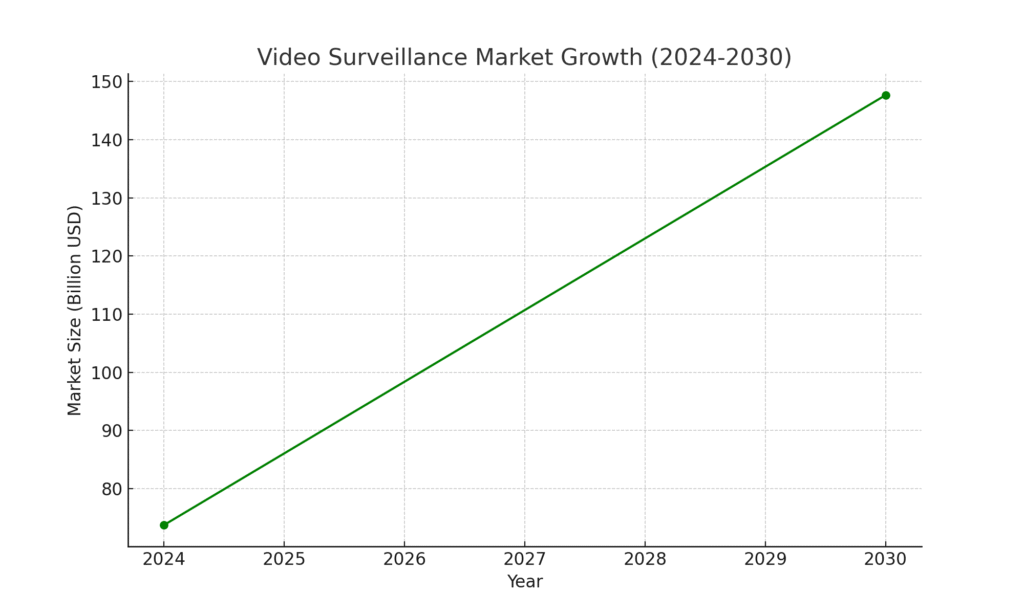
Camera System Marketing Statistics #3: Video Surveillance Market Worth $73.75 Billion In 2024
In 2024, the video surveillance market stood at $73.75 billion, a major indicator of global security priorities. This stat shows that businesses and governments alike are investing heavily in protection and monitoring solutions. The high market value also highlights the diversity of use cases, from traffic control to retail security. Video surveillance is no longer just about safety—it’s a tool for analytics and decision-making. The size of this market reflects its role as a critical pillar in modern infrastructure.
Camera System Marketing Statistics #4: Market To Reach $147.66 Billion By 2030
By 2030, the video surveillance market is projected to nearly double, hitting $147.66 billion. This surge is driven by rapid adoption of AI, IoT, and cloud-based surveillance solutions. It shows how video systems are evolving into intelligent data-gathering tools rather than simple recording devices. The 12.1% CAGR represents one of the fastest-growing segments in the broader security industry. Such expansion makes it vital for businesses to adapt their strategies quickly.
Camera System Marketing Statistics #5: Surveillance Camera Market Valued At $38.89 Billion In 2024
The global surveillance camera market was worth $38.89 billion in 2024. This specific segment highlights the sheer demand for camera hardware in residential, commercial, and government sectors. Consumers are more willing than ever to invest in security at both personal and organizational levels. The growth of this market shows how cameras have become as common as other everyday electronics. Rising affordability and smart integrations are fueling this demand further.

Camera System Marketing Statistics #6: Market To Grow To $61.63 Billion By 2029
Forecasts show the surveillance camera market will grow to $61.63 billion by 2029. This stat reflects not only growth in units sold but also in advanced camera features. The 9.3% CAGR indicates steady interest and reliance on camera technologies. Companies offering customizable, AI-enabled products are expected to thrive. As more households and businesses invest in safety, this market will see long-term resilience.
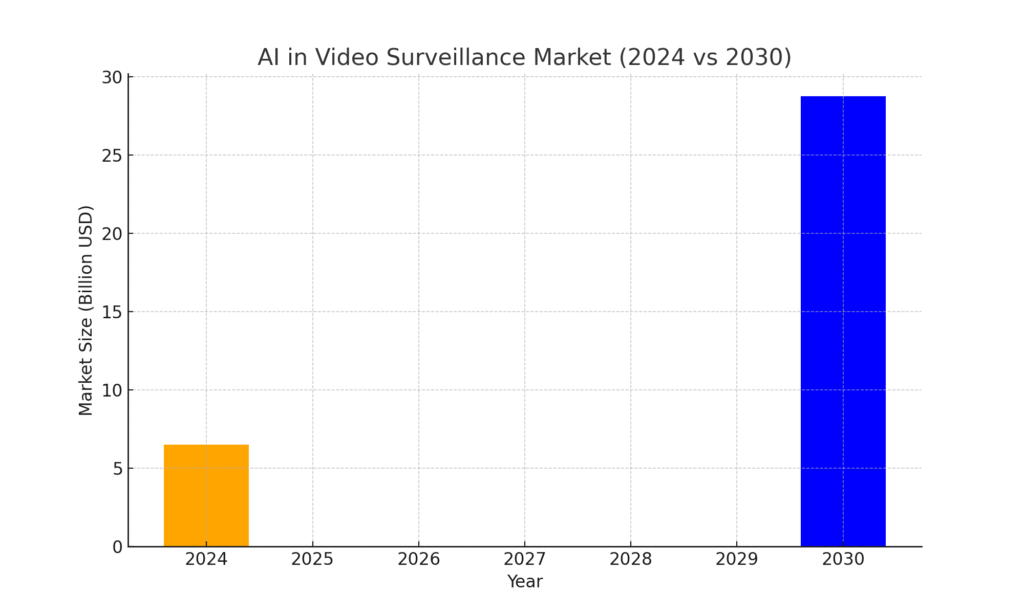
Camera System Marketing Statistics #7: AI In Video Surveillance Valued At $6.51 Billion In 2024
In 2024, AI-powered video surveillance held a market value of $6.51 billion. This stat highlights how AI is transforming surveillance from passive monitoring to active intelligence. Features like facial recognition, behavior analysis, and predictive alerts are driving demand. Businesses now view AI cameras as cost-saving tools that reduce the need for manual monitoring. This figure reflects the beginning of a massive technological shift in security systems.
Camera System Marketing Statistics #8: AI Market Projected At $28.76 Billion By 2030
The AI in video surveillance market is expected to hit $28.76 billion by 2030. This represents one of the fastest-growing niches within the camera systems sector, with a CAGR of 30.6%. Companies innovating in AI features are expected to dominate the market in coming years. As AI adoption accelerates, surveillance will move beyond security into analytics and consumer behavior insights. This stat shows how much potential AI brings to camera systems marketing.
Camera System Marketing Statistics #9: U.S. Market To Reach $24.75 Billion By 2030
The U.S. video surveillance market is projected to grow from $13.86 billion in 2025 to $24.75 billion by 2030. This shows a strong regional demand for advanced surveillance solutions. With a CAGR of 12.3%, the U.S. is one of the fastest-growing markets worldwide. Increased concerns over security, both in public and private spaces, are driving this growth. For marketers, this means targeting U.S. businesses and households is a highly lucrative strategy.
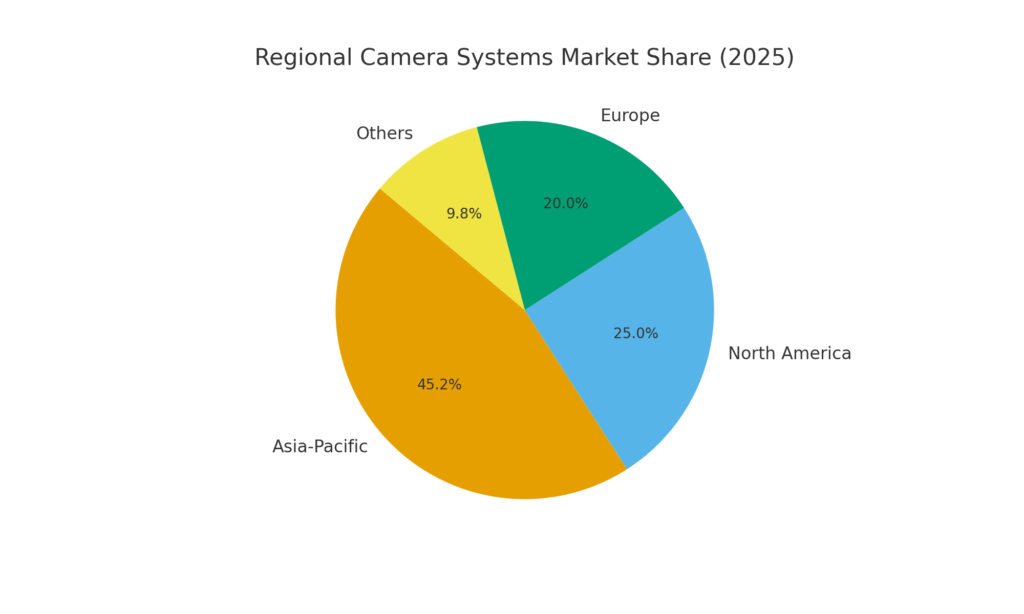
Camera System Marketing Statistics #10: Asia-Pacific Holds 45.2% Market Share In 2025
Asia-Pacific is estimated to lead the camera systems market with 45.2% share in 2025. This dominance reflects the region’s large-scale urbanization and smart city projects. Governments across Asia are investing in surveillance for transportation, safety, and urban planning. The growing middle-class population is also fueling residential security demand. This stat confirms Asia-Pacific as the global leader in camera system adoption.
Camera System Marketing Statistics #11: IP Cameras Hold 49.6% Share In 2025
IP or network cameras account for 49.6% of the market share in 2025. These cameras are popular due to their connectivity, remote monitoring, and integration with IoT systems. Businesses prefer IP cameras for scalability and advanced features. This figure reflects the industry’s shift away from analog technologies. Marketers can use this insight to emphasize network-enabled solutions in their strategies.
Camera System Marketing Statistics #12: Surveillance Cameras Hold 61.4% Share Of Product Types In 2025
Surveillance cameras represent 61.4% of the camera systems market by product type in 2025. This shows how dominant surveillance remains compared to other camera types like automotive or industrial. Security is still the number one application driving demand. Businesses and homeowners alike are prioritizing cameras for protection. For marketers, this means emphasizing reliability and accessibility in surveillance products.
Camera System Marketing Statistics #13: Video Analytics Drives Growth Between 2025–2029
From 2025 to 2029, video analytics is identified as a major growth driver in camera system adoption. These technologies allow systems to not only record but also interpret data in real time. Features like crowd detection, behavior tracking, and anomaly alerts are increasingly valued. This adds new layers of utility beyond traditional security functions. Companies that market these smart features will stay ahead of competitors.
Camera System Marketing Statistics #14: Cloud And Edge Computing Fuel Demand
Cloud and edge computing are major enablers of growth in the surveillance market. These technologies allow faster data processing and real-time decision-making. They reduce latency while improving efficiency, making surveillance systems more reliable. Adoption of cloud-based storage also allows businesses to scale easily. For marketers, emphasizing cloud readiness is now an essential strategy.
Camera System Marketing Statistics #15: Smart Cities Driving Adoption Worldwide
Smart city initiatives are significantly boosting global demand for camera systems. Governments are investing in cameras for traffic control, crowd management, and infrastructure safety. These applications create new opportunities for system providers. Smart cities also highlight the integration of cameras with broader IoT networks. This trend shows that urban planning is becoming one of the biggest markets for surveillance.
Camera System Marketing Statistics #16: Hardware Accounts For 71% Of Revenue In 2024
In 2024, hardware accounted for 71% of the global video surveillance revenue. This shows that despite the rise of software and services, physical products remain the largest source of income. Consumers and businesses are prioritizing tangible investments in cameras and equipment. However, services are expected to grow in the coming years. Marketers should continue to balance product promotions with service offerings.
Camera System Marketing Statistics #17: Over 50% Of U.S. Households Have Security Cameras
More than half of U.S. households now own at least one security camera. This stat highlights the widespread acceptance of surveillance at a personal level. Homeowners view cameras as an essential part of safety and convenience. This adoption also reflects how affordable and user-friendly devices have become. For marketers, the home security market is one of the most reliable growth areas.
Camera System Marketing Statistics #18: 13 Million U.S. Households Planning To Install New Systems
As of 2025, over 13 million U.S. households are planning to install new home security systems within a year. This shows strong ongoing demand in the residential market. Homeowners are increasingly investing in protection due to safety concerns. The rise of DIY installation kits is also contributing to the adoption rate. For marketers, this group represents a large untapped customer base.
Camera System Marketing Statistics #19: Edge AI Cameras Emerging As A Major Trend
Edge AI cameras are becoming one of the biggest innovations in surveillance. These systems process data locally instead of relying on cloud servers. This reduces bandwidth usage and ensures faster response times. Businesses prefer edge AI for efficiency and privacy reasons. This trend is reshaping how camera systems are marketed and implemented.
Camera System Marketing Statistics #20: Emerging Markets Expected To Grow At 8.1% CAGR
Outside of China, emerging markets are projected to grow at 8.1% CAGR between 2024 and 2029. Countries in South Asia, Latin America, and the Middle East are fueling this demand. Rapid urbanization and infrastructure development are the main drivers. These regions represent massive growth opportunities for camera system providers. Marketers targeting these markets must adapt strategies to local needs and affordability levels.
My Final Thoughts on Camera System Marketing Statistics
Looking at these camera system marketing statistics, I can’t help but feel excited about the opportunities ahead. The numbers clearly show that the market isn’t just growing—it’s evolving with smarter technology, more diverse applications, and stronger consumer trust. What stands out to me most is how these trends highlight the need for businesses to adapt quickly while keeping their strategies human-centered. Personally, sharing these insights is my way of helping others see how data can inspire real-world decisions. I truly believe that by paying attention to these numbers, we can all make better choices in marketing, technology, and even in the ways we secure our homes and businesses.
SOURCES