



28 Sep TOP 20 CARDIOVASCULAR SYSTEM MARKETING STATISTICS 2025
When I first started exploring cardiovascular system marketing statistics, I realized how deeply these numbers connect with real human stories and the future of healthcare innovation. It’s not just about charts and projections—it’s about understanding how people’s lives, technology, and medical solutions come together in a growing industry. I find it fascinating to watch how devices, drugs, and digital health tools are shaping patient care across the globe. That’s why I wanted to share these insights with you, and as I often do, I’ve partnered my perspective with research similar to what you might find from a leading marketing agency in New York. Together, we’ll dive into the data that reveals both the challenges and opportunities within cardiovascular healthcare.
Top 20 Cardiovascular System Marketing Statistics 2025 (Editor’s Choice)
| # | Statistic | Insight |
|---|---|---|
| 1 | CVDs cause 19.8 million deaths annually | 32% of global deaths are due to cardiovascular disease. |
| 2 | 85% of deaths from heart attacks and strokes | Majority of CVD deaths result from these conditions. |
| 3 | 75% of CVD deaths in low & middle-income countries | Highlights global health disparities in cardiovascular care. |
| 4 | 60% increase in CVD deaths (1990–2021) | Rising burden emphasizes prevention and innovation needs. |
| 5 | 437 million DALYs in 2023 from CVD | Massive global disability and productivity impact. |
| 6 | Ischemic heart disease and stroke top causes | Two primary conditions driving cardiovascular mortality. |
| 7 | 64 million people live with heart failure | Represents ~2% of adults, over 10% of seniors 75+. |
| 8 | Devices market $53.7B in 2024 → $106.7B by 2033 | Strong 7.8% CAGR for cardiovascular devices. |
| 9 | Devices market projected $117.68B by 2032 | Reinforces steady industry confidence and growth. |
| 10 | Devices market $110.39B by 2029 | Strong short-term growth expected in five years. |
| 11 | U.S. devices market $22.39B → $37.66B by 2033 | 5.8% CAGR reflects American market opportunities. |
| 12 | Drugs market $153.7B → $214.9B by 2034 | Stable 3.5% CAGR growth in pharmaceuticals. |
| 13 | Drugs market $144.11B → $207.78B by 2033 | Confirms pharmaceuticals as a key industry driver. |
| 14 | CVIS market $1.1B → $2.2B by 2030 | Digital health growing with 9.3% CAGR. |
| 15 | Cardiology info systems $1.35B → $3.26B by 2034 | Rapid tech adoption with 9.22% CAGR. |
| 16 | Surgical devices = 68.8% of revenue | Therapeutic solutions dominate the market. |
| 17 | Diagnostics growing at 9% CAGR | Faster than overall device growth rate. |
| 18 | 18% of U.S. CVD patients use wearables | Adoption lags behind the general population. |
| 19 | 38% of CVD patients use wearables daily | Shows consistency among those who adopt devices. |
| 20 | General wearable adoption 36.36% in 2022 | Up from ~28% in 2019, showing steady growth. |
Top 20 Cardiovascular System Marketing Statistics 2025
Cardiovascular System Marketing Statistics #1 – Cardiovascular Diseases Leading Global Death Cause
Cardiovascular diseases are responsible for approximately 19.8 million deaths worldwide as of 2022. This accounts for nearly 32% of all global deaths, making cardiovascular health a critical public health concern. For marketers, this statistic highlights the urgency of effective awareness campaigns and prevention messaging. Businesses entering the cardiovascular space can position themselves as advocates for healthier living while promoting innovative solutions. The staggering numbers make it clear that demand for better treatments and preventive care is only going to grow.
Cardiovascular System Marketing Statistics #2 – Heart Attacks And Strokes Cause 85% Of CVD Deaths
About 85% of cardiovascular disease deaths result from heart attacks and strokes. This shows where prevention and treatment strategies should be most heavily targeted. For marketing professionals, campaigns focusing on stroke and heart attack prevention could resonate most with consumers. Pharmaceutical companies and device manufacturers can also leverage this data to highlight how their products address the leading killers. It’s a call to action for creating tailored campaigns around the most pressing health threats.
Cardiovascular System Marketing Statistics #3 – 75% Of CVD Deaths Occur In Low- And Middle-Income Countries
Three-quarters of cardiovascular deaths occur in low- and middle-income nations. This highlights massive healthcare disparities that marketing strategies must acknowledge. Companies looking to expand globally need to focus on affordability, accessibility, and education. Messaging that emphasizes inclusivity and cost-effective care will likely resonate in these regions. It also opens doors for socially responsible marketing that positions a brand as part of the solution.
Cardiovascular System Marketing Statistics #4 – Global CVD Deaths Rose 60% In 30 Years
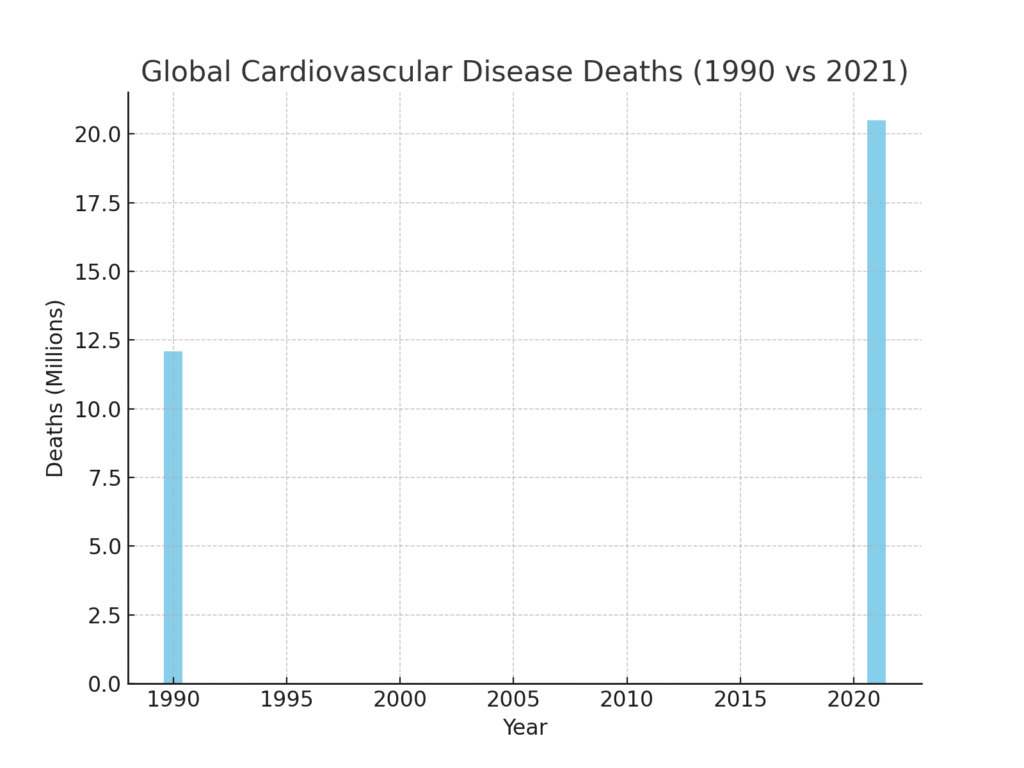
Between 1990 and 2021, cardiovascular deaths surged by 60%, from 12.1 million to 20.5 million annually. This rise underscores the growing burden on healthcare systems worldwide. For marketers, this data provides an opportunity to highlight innovation and advancements in treatment. It also creates urgency around investing in preventive technologies and healthier lifestyle promotion. Campaigns that emphasize progress despite growing challenges can connect emotionally with audiences.
Cardiovascular System Marketing Statistics #5 – 437 Million DALYs Caused By CVD
In 2023, cardiovascular diseases were responsible for 437 million disability-adjusted life years (DALYs). This number shows the long-term impact of CVD on both mortality and quality of life. For marketing, highlighting how products and services can improve everyday living becomes a powerful narrative. Companies offering rehabilitation, digital health solutions, or lifestyle coaching can align their offerings with these unmet needs. Messaging that emphasizes improved daily functionality will resonate strongly with patients and caregivers.
Cardiovascular System Marketing Statistics #6 – Ischemic Heart Disease And Stroke Drive Most Deaths
Ischemic heart disease and stroke are the two biggest contributors to global CVD mortality. This emphasizes the need for solutions that specifically target these conditions. Marketing strategies focusing on these areas may see stronger resonance due to widespread awareness. Both patient education campaigns and professional outreach can highlight innovations tackling these issues. This focus helps brands align with the largest and most critical needs.
Cardiovascular System Marketing Statistics #7 – 64 Million People Live With Heart Failure
Globally, about 64 million people are currently living with heart failure. This represents around 2% of the adult population, with prevalence increasing to over 10% in those above 75. For marketers, this group represents a major target audience for therapies and digital health support. Campaigns that emphasize quality of life improvements for elderly populations can gain strong traction. Highlighting patient support services and accessible care solutions could differentiate a brand in this crowded market.
Cardiovascular System Marketing Statistics #8 – Devices Market Reaching $106.7 Billion By 2033
The global cardiovascular devices market, valued at $53.7 billion in 2024, is projected to hit $106.7 billion by 2033. That’s a CAGR of about 7.8%. Marketers should focus on positioning new devices as part of a rapidly growing sector. The increasing demand for minimally invasive and effective solutions will drive strong messaging opportunities. Companies that highlight innovation and improved outcomes are likely to stand out.
Cardiovascular System Marketing Statistics #9 – Devices Market Estimate At $117.68 Billion By 2032
Another analysis forecasts cardiovascular devices growing from $65.53 billion in 2024 to $117.68 billion in 2032. This suggests consistent confidence in strong growth across research firms. Marketers can leverage this broad consensus to emphasize industry credibility. Campaigns that reference validated forecasts provide assurance to stakeholders. This creates opportunities for both B2B and B2C marketing initiatives within the sector.
Cardiovascular System Marketing Statistics #10 – Devices Market Expected $110.39 Billion By 2029
A different projection suggests the cardiovascular devices market will expand from $77.71 billion in 2024 to $110.39 billion in 2029. This highlights the sector’s attractiveness for investment and innovation. Marketers can frame messages around consistent expansion across multiple sources. The rapid five-year growth also underscores opportunities for early adopters of new solutions. Brands can lean into this narrative to position themselves as leaders in a booming space.

Cardiovascular System Marketing Statistics #11 – U.S. Devices Market To Reach $37.66 Billion
The U.S. cardiovascular devices market was valued at $22.39 billion in 2024. By 2033, it is expected to reach $37.66 billion. Marketers can target U.S. audiences with messages centered on growth and innovation. Campaigns highlighting national investment in cutting-edge technology may resonate strongly. It’s also an opportunity to showcase how companies are helping American patients access better care.
Cardiovascular System Marketing Statistics #12 – Cardiovascular Drugs Market $214.9 Billion By 2034
The cardiovascular drugs market was worth $153.7 billion in 2024 and is projected to grow to $214.9 billion by 2034. This creates opportunities for marketers to highlight pharmaceutical innovation. With a steady CAGR of 3.5%, it shows long-term growth stability. Campaigns emphasizing drug accessibility and breakthroughs in treatment will resonate widely. Companies can position themselves as reliable partners in tackling cardiovascular disease.
Cardiovascular System Marketing Statistics #13 – Drugs Market $207.78 Billion By 2033
In 2023, the cardiovascular drugs market was valued at $144.11 billion and is expected to rise to $207.78 billion by 2033. This represents a CAGR of about 4%. For marketing, this confirms that pharmaceuticals remain a central driver in cardiovascular care. Brands can craft campaigns around continuous innovation and improved patient outcomes. Highlighting investments in research and development can build trust with healthcare audiences.
Cardiovascular System Marketing Statistics #14 – CVIS Market Doubling To $2.2 Billion
The cardiovascular information system (CVIS) market stood at $1.1 billion in 2022 and is expected to double by 2030. With a CAGR of 9.3%, this sector is growing even faster than devices or drugs. Marketers can focus on how digital health is transforming cardiovascular care. Campaigns showcasing software’s role in improving outcomes and efficiency will appeal to healthcare systems. This trend positions digital solutions as indispensable in the future of cardiology.
Cardiovascular System Marketing Statistics #15 – Cardiology Information Systems Hitting $3.26 Billion
By 2034, cardiology information systems are projected to reach $3.26 billion from $1.35 billion in 2024. This reflects a CAGR of 9.22%. Marketing professionals can leverage this by showcasing how technology is revolutionizing cardiovascular care delivery. Digital campaigns emphasizing data, efficiency, and patient-centricity will stand out. It’s a chance to highlight how software is closing gaps in care and communication.

Cardiovascular System Marketing Statistics #16 – Surgical Devices Hold 68.8% Market Share
In 2024, surgical and therapeutic devices accounted for nearly 69% of total cardiovascular device revenue. This dominance demonstrates strong demand for interventional solutions. Marketers should tailor campaigns to highlight advancements in surgical technology. Educational outreach to both clinicians and patients can underscore benefits of these solutions. Positioning innovations within this segment ensures alignment with the largest revenue driver.
Cardiovascular System Marketing Statistics #17 – Diagnostic Devices Growing At 9% CAGR
Diagnostic and monitoring devices are projected to grow at around 9% CAGR. This outpaces the overall devices market growth. Marketing strategies should emphasize the importance of early detection and continuous monitoring. Campaigns can showcase how diagnostics empower patients and providers alike. It’s an area where innovation and education combine for powerful outreach.
Cardiovascular System Marketing Statistics #18 – 18% Of U.S. CVD Patients Use Wearables
In the United States, 18% of adults with cardiovascular disease reported using wearable devices. This is lower than the 29% adoption in the general population. For marketers, this shows a gap that campaigns can help bridge. Targeted messaging can highlight how wearables support heart health monitoring. Companies can also focus on building trust and educating older populations on wearable benefits.
Cardiovascular System Marketing Statistics #19 – 38% Of CVD Patients Use Wearables Daily
Among wearable device users with cardiovascular disease, 38% report daily use. This shows a high level of commitment among those who adopt the technology. Marketing campaigns can emphasize consistency and long-term health benefits. Success stories of patients monitoring daily can be powerful narratives. Brands can position wearables as a trustworthy tool for managing chronic conditions.
Cardiovascular System Marketing Statistics #20 – 36.36% General Wearable Device Adoption
Overall wearable device adoption reached 36.36% in 2022, up significantly from around 28% in 2019. This shows steady growth in consumer health technology. For marketers, aligning cardiovascular devices with the broader wearable trend is a strategic move. Campaigns can focus on the lifestyle integration of health monitoring. Brands that emphasize convenience, connectivity, and empowerment will likely succeed.

Final Thoughts On Cardiovascular System Marketing Statistics
Looking at these cardiovascular system marketing statistics, I can’t help but feel both humbled and inspired. The numbers show us just how urgent the global cardiovascular challenge has become, but they also highlight the innovation and dedication that so many in the industry are bringing forward. For me, it reinforces why storytelling and data together are so powerful: statistics on their own are just numbers, but when we connect them to patient care, they become something far more meaningful. Whether it’s devices, drugs, or digital health platforms, the future of cardiovascular care is full of opportunities for marketers who lead with empathy and innovation. Sharing this journey with you is part of why I write, and it’s why I believe partnerships—like those with a leading marketing agency in New York—help bring these insights to life in impactful ways.
SOURCES