




21 Sep TOP 20 CAREGIVER MARKETING STATISTICS 2025
Caring for caregivers has never been more important, not only on a human level but also from a marketing perspective. Brands that understand the struggles, sacrifices, and resilience of caregivers can build meaningful connections with one of the most influential and growing audiences today. In this blog, we’ll explore the latest caregiver marketing statistics that highlight just how vital it is to engage this community with authenticity and empathy. Drawing on insights from a marketing agency in New York, we’ll uncover what makes caregivers unique as consumers and decision-makers, and why they deserve to be at the heart of marketing strategies in 2025 and beyond.
Top 20 Caregiver Marketing Statistics 2025 (Editor’s Choice)
| # | Statistic | Insight |
|---|---|---|
| 1 | Global caregiving market size reached $218.5B in 2024 | Expected to grow at 12.7% CAGR, hitting $722B by 2034. |
| 2 | Alternative market forecast: $425B (2023) → $700B (2035) | Strong growth trajectory across multiple reports. |
| 3 | 63 million U.S. family caregivers in 2025 | Up 45% since 2015, showing rapid growth. |
| 4 | 24% of U.S. adults are caregivers | Nearly 1 in 4 adults provide some form of caregiving. |
| 5 | 40%+ provide high-intensity care | Yet only 22% receive formal training. |
| 6 | Economic value of unpaid care: $873.5B | Equivalent to 3.2% of U.S. GDP. |
| 7 | $346.6B from Alzheimer’s/dementia care alone | Accounts for nearly 40% of unpaid caregiving value. |
| 8 | U.S. home care market → $176.3B by 2032 | 90% of seniors prefer aging at home. |
| 9 | 70% of caregivers are employed | Many face workplace disruption or reduced hours. |
| 10 | 50% report financial strain | 25% have gone into debt due to caregiving costs. |
| 11 | 1 in 5 caregivers report poor health | Stress, depression, and isolation are common. |
| 12 | Only 22% trained for medical tasks | Training gap is a major policy and support issue. |
| 13 | Most family caregiving is unpaid | Only ~11M receive any compensation. |
| 14 | 29% are “sandwich generation” caregivers | Supporting both children and older adults. |
| 15 | Average 24.4 hours/week caregiving | Spousal or live-in caregiving can reach 40–44 hours/week. |
| 16 | 24% caregive for over 5 years | 15% provide care for more than a decade. |
| 17 | 75% of caregivers are women | They spend more hours/week than male caregivers. |
| 18 | 82% care for just one adult | 75% live within 20 minutes of their recipient. |
| 19 | Average recipient age is 69.4 | 65% of care recipients are female. |
| 20 | 90%+ use or expect to use caregiving tech | 72% search online for info; 52% use social media. |
Top 20 Caregiver Marketing Statistics 2025
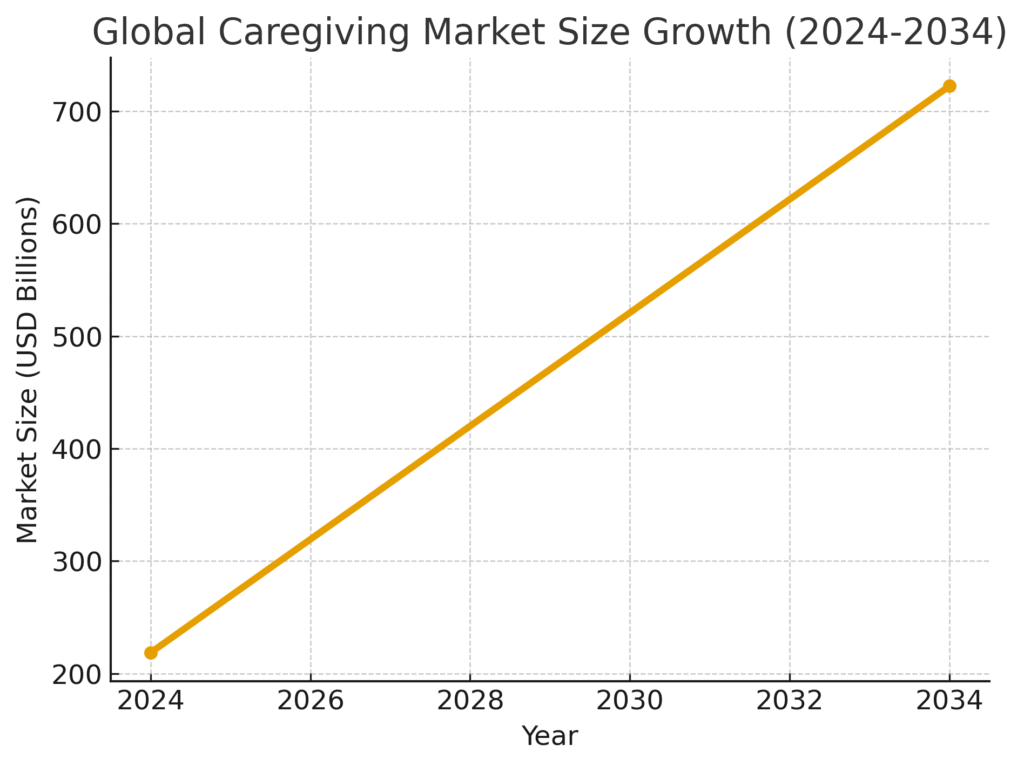
Caregiver Marketing Statistics #1: Global Caregiving Market Size Reached $218.5B in 2024
The global caregiving market hit an impressive $218.5 billion in 2024, showcasing just how important this industry has become worldwide. This growth reflects rising healthcare demands, aging populations, and a cultural shift toward home-based care. For marketers, this means an expanding pool of businesses and individuals requiring caregiving products and services. Brands tapping into this trend can benefit from a sector projected to more than triple by 2034. Understanding this market size is essential for aligning campaigns with future growth.
Caregiver Marketing Statistics #2: Market Forecast of $425B in 2023 to $700B by 2035
An alternative projection suggests the caregiving market will grow from $425 billion in 2023 to $700 billion by 2035. This highlights the consistency of growth estimates across different research firms. For marketing agencies, such data signals long-term opportunities to build strategies around caregiving needs. Companies providing tech solutions, wellness products, and home services will see demand rise. The sustained growth also means marketers must plan for scalability and innovation over the next decade.
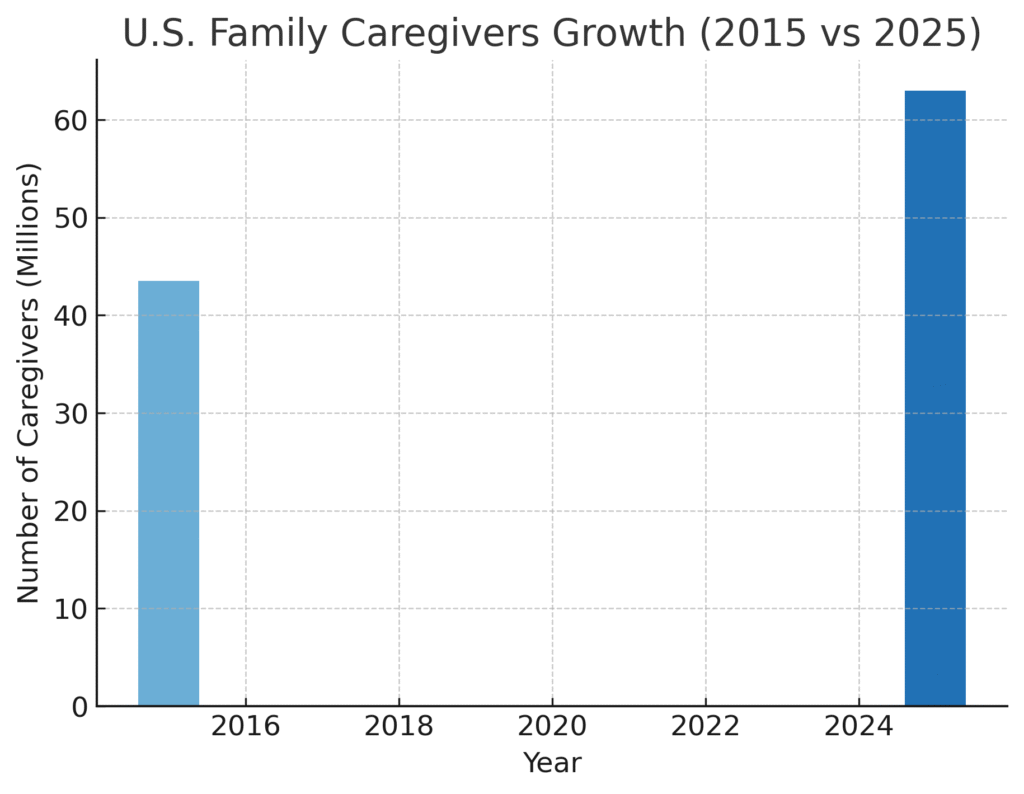
Caregiver Marketing Statistics #3: 63 Million U.S. Family Caregivers in 2025
By 2025, the U.S. has approximately 63 million family caregivers, marking a 45% increase since 2015. This surge highlights the growing reliance on unpaid family support. For brands, these individuals represent both a consumer base and an advocacy group. Marketing messages that emphasize empathy and support resonate strongly here. Companies that recognize caregivers as decision-makers can strengthen trust and loyalty.
Caregiver Marketing Statistics #4: 24% of U.S. Adults Are Caregivers
Almost one in four U.S. adults identifies as a caregiver. This demonstrates that caregiving is not a niche issue but a mainstream reality. Marketers must view caregivers as a significant part of their target demographics. Campaigns that overlook this group risk missing a massive portion of the population. With 24% involvement, caregiver-focused marketing has broad appeal.
Caregiver Marketing Statistics #5: 40% Provide High-Intensity Care but Only 22% Get Training
Over 40% of caregivers provide high-intensity support, yet only 22% receive training. This mismatch creates stress and opportunity for education-based brands. Training platforms, workshops, and products designed to simplify caregiving are in demand. Marketing strategies that acknowledge this gap can position brands as problem solvers. Highlighting caregiver empowerment in campaigns builds credibility and engagement.
Caregiver Marketing Statistics #6: Unpaid Care Valued at $873.5B in the U.S.
Family caregivers in the U.S. contribute an estimated $873.5 billion worth of unpaid labor annually. This amount equals about 3.2% of the nation’s GDP. Such figures emphasize how crucial caregivers are to the economy. Marketers can frame services and products as ways to ease this invisible burden. Recognizing this contribution in campaigns strengthens emotional resonance.
Caregiver Marketing Statistics #7: Alzheimer’s and Dementia Care Equals $346.6B in Value
Care for Alzheimer’s and dementia patients alone accounts for $346.6 billion annually. This represents nearly 40% of unpaid caregiving value. Brands specializing in memory care solutions have a large market to serve. Marketing strategies tailored to dementia support will strike a powerful chord. Companies that focus on this group can establish trust within a highly sensitive market.
Caregiver Marketing Statistics #8: U.S. Home Care Market Will Reach $176.3B by 2032
The U.S. home care market is projected to reach $176.3 billion by 2032. Seniors overwhelmingly prefer aging at home, with 90% expressing this desire. This trend drives demand for home care services and products. For marketers, emphasizing comfort, independence, and dignity appeals directly to this preference. Campaigns that highlight “aging in place” resonate strongly with caregivers and families alike.
Caregiver Marketing Statistics #9: 70% of Caregivers Are Employed
About 70% of caregivers also maintain employment outside their caregiving duties. This balancing act creates unique stress and time management challenges. Marketers should focus on products and services that simplify life for busy caregivers. Campaigns that acknowledge their dual roles build empathy. Employers and B2B brands also have opportunities to design caregiver-friendly workplace initiatives.
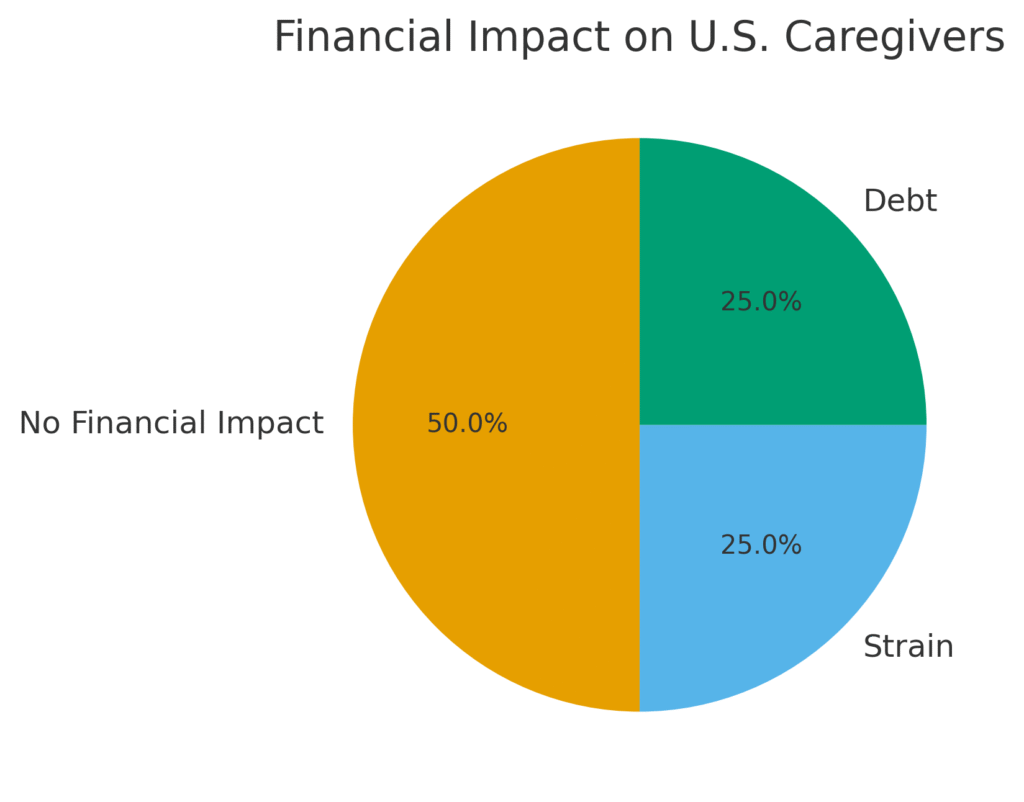
Caregiver Marketing Statistics #10: 50% Face Financial Strain and 25% Have Debt
Half of all caregivers experience financial strain, and a quarter fall into debt due to caregiving costs. This financial burden affects their purchasing decisions. Brands that offer affordability, discounts, or support systems stand out. Marketing that acknowledges cost concerns earns caregiver trust. Positioning products as value-driven solutions can drive loyalty and advocacy.
Caregiver Marketing Statistics #11: 1 in 5 Caregivers Report Poor Health
One in five caregivers struggles with their own health due to stress, lack of rest, and emotional strain. This creates a strong market for wellness, fitness, and mental health solutions. Marketers can highlight self-care products tailored for caregivers. Campaigns should emphasize empathy and the importance of caregivers caring for themselves. Supporting caregiver well-being is not only ethical but also commercially smart.
Caregiver Marketing Statistics #12: Only 22% Receive Training for Medical Tasks
Despite handling medical tasks, just 22% of caregivers receive any formal training. This exposes a large unmet need in the market. Brands offering training tools, guides, or services have immense opportunity. Campaigns focusing on knowledge empowerment resonate with caregivers. The statistic also emphasizes the importance of skill-building in caregiving.
Caregiver Marketing Statistics #13: Most Caregiving Is Unpaid; 11M Receive Compensation
The majority of caregiving remains unpaid, with only 11 million compensated through programs. This underscores the sacrifices families make without formal recognition. Marketers can position services as support systems rather than luxuries. Campaigns that empathize with unpaid work strike an emotional chord. Recognizing this imbalance adds authenticity to caregiver-focused branding.
Caregiver Marketing Statistics #14: 29% Are Sandwich Generation Caregivers
Nearly 29% of caregivers belong to the “sandwich generation,” supporting both children and aging adults. This dual role amplifies stress and financial strain. Marketers targeting this group should emphasize time-saving and multi-purpose solutions. Campaigns that highlight balance and family well-being resonate deeply. The sandwich generation presents unique cross-market opportunities for brands.
Caregiver Marketing Statistics #15: Average of 24.4 Hours per Week Spent on Care
Caregivers spend an average of 24.4 hours weekly providing care. For those caring for spouses or living together, this number rises to 40-44 hours. These time commitments significantly shape buying habits. Marketers should stress convenience, automation, and efficiency. Campaigns that help caregivers reclaim time will stand out.
Caregiver Marketing Statistics #16: 24% Care for More Than 5 Years, 15% Over a Decade
A quarter of caregivers provide care for more than five years, while 15% extend beyond a decade. This highlights caregiving as a long-term commitment rather than a temporary duty. Brands must design sustainable, durable, and supportive solutions. Campaigns should emphasize reliability and endurance. Long-term caregiving creates repeat purchase opportunities for marketers.
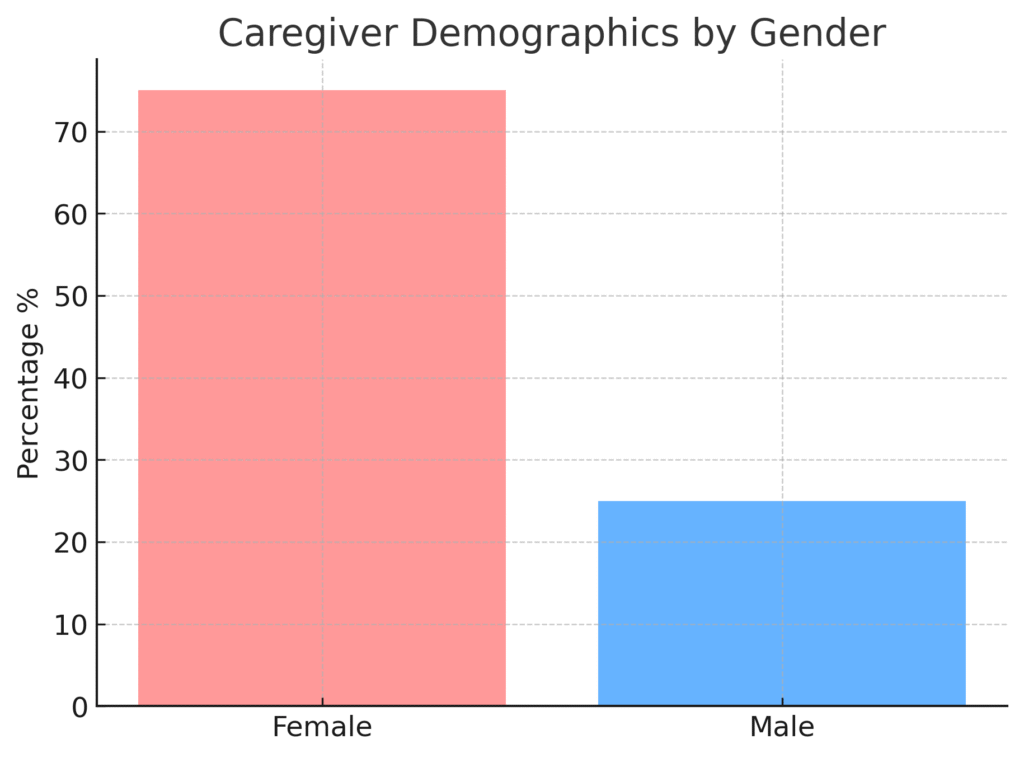
Caregiver Marketing Statistics #17: 75% of Caregivers Are Women
Three-quarters of caregivers are women, reflecting gender disparities in caregiving roles. Women also tend to spend more hours per week caregiving than men. Marketers must ensure campaigns acknowledge and respect this reality. Female-centered branding and empowerment messaging resonate with this audience. Highlighting shared responsibility may also spark important conversations.
Caregiver Marketing Statistics #18: 82% Care for One Adult; 75% Live Nearby
Most caregivers, about 82%, focus on caring for just one adult. Additionally, 75% live within 20 minutes of their care recipient. This proximity means convenience and accessibility drive decision-making. Marketers can emphasize localized services and easy delivery options. Campaigns that highlight “nearby support” build practical appeal.
Caregiver Marketing Statistics #19: Average Care Recipient Age is 69.4; 65% Are Female
The average age of care recipients is 69.4 years, and nearly two-thirds are female. This demographic data provides valuable insights for targeted marketing. Brands serving older women benefit from emphasizing safety, health, and dignity. Campaigns that include older women in authentic portrayals resonate strongly. This statistic encourages marketers to rethink age representation in advertising.
Caregiver Marketing Statistics #20: 90%+ Use or Expect to Use Caregiving Technology
Over 90% of caregivers already use or plan to use technology in their caregiving roles. Online resources, apps, and social media are essential tools. Marketers in the tech and digital health space have huge opportunities. Campaigns should highlight ease of use, accessibility, and community support. Emphasizing digital solutions meets caregivers exactly where they are.
The Human Side of Caregiver Marketing
Caregivers are more than just a demographic—they are individuals balancing love, responsibility, and financial strain, all while shaping powerful purchasing decisions. By paying attention to these caregiver marketing statistics, brands can create campaigns that speak directly to their needs and realities, offering real support rather than surface-level messaging. At the end of the day, connecting with caregivers is not just about numbers—it’s about listening, understanding, and showing up for people who give so much of themselves every single day. If marketers can tap into that human story, they’ll not only earn loyalty but also make a real difference in people’s lives.
SOURCES
- https://www.slingshot.com/circa46/blog/how-marketers-can-profit-by-caring-for-caregivers (Slingshot)
- https://www.aarp.org/pri/topics/ltss/family-caregiving/caregiving-in-the-us-2025/ (AARP)
- https://www.capc.org/blog/new-data-on-family-caregivers-in-the-us/ (CAPC)
- https://www.ahamediagroup.com/blog/how-to-reach-and-market-to-caregivers-and-families/ (Aha Media Group)
- https://www.caregiveraction.org/caregiver-statistics/ (Caregiver Action Network)
- https://wellthy.com/blog/new-data-shows-families-turning-to-wellthy (Wellthy)
- https://mahealthyagingcollaborative.org/new-report-reveals-crisis-point-for-americas-63-million-family-caregivers/ (Mass Healthy Aging Collaborative)
- https://www.aarp.org/caregiving/basics/caregiving-in-us-survey-2025/ (AARP)
- https://www.aha.org/news/headline/2025-07-25-63-million-americans-are-family-caregivers (American Hospital Association)
- https://ldi.upenn.edu/our-work/research-updates/who-cares-study-reveals-50-years-of-u-s-caregiving-trends/ (Penn LDI)
- https://www.prb.org/resources/fact-sheet-trends-in-family-care-for-older-americans/ (PRB)
- https://careacademy.com/blog/home-care-trends/ (CareAcademy)
- https://www.johnahartford.org/resources/view/jama-article-as-the-us-ages-a-growing-movement-aims-to-care-for-caregivers (johnahartford.org)
- https://healthjournalism.org/blog/2025/08/new-caregiving-report-offers-multiple-story-ideas-for-journalists/ (healthjournalism.org)
- https://www.caregiver.org/resource/caregiver-statistics-demographics/ (caregiver.org)
- https://carex.com/blogs/resources/caregiver-statistics?srsltid=AfmBOopp9e1K5rcXOnpz017aled3dWJoIRl5iIU2PGfq6jXaRPmHK3B4 (carex.com)
- https://sagapixel.com/marketing/caregiver-statistics/
- https://www.ahamediagroup.com/blog/how-to-reach-and-market-to-caregivers-and-families/