




11 May TOP 20 CASE STUDY MARKETING STATISTICS 2026 THAT REVEAL SHOCKING PROOF-DRIVEN CONVERSIONS
Updated for 2026. This page has been fully refreshed with the latest case study marketing statistics, proof-driven content trends, and performance marketing insights, grounded in recent global surveys, analytics platforms, and industry research.
Case study marketing has evolved from niche business analysis into a powerful storytelling tool used by top brands to drive conversions, build trust, and demonstrate real-world impact. In 2026, the landscape of marketing is shaped by data-backed decisions, AI-enhanced content, and customer-first narratives—and case studies are right at the center of that. These detailed accounts of success are no longer static PDFs buried in a website footer; they’re being transformed into videos, carousels, interactive web pages, and social-ready formats. Businesses are leveraging them not only for sales enablement but also to build credibility in crowded digital markets.
The value of showcasing authentic customer results has grown, especially as consumers become more skeptical of generic ads. With platforms like LinkedIn, YouTube, and even TikTok pushing B2B and B2C storytelling, Amra and Elma recognizes how case study content is being embedded into broader content strategies. As marketing budgets shift toward personalized, conversion-focused efforts, the ability to showcase impact through case studies is more relevant than ever. The following statistics offer a snapshot of how case study marketing and adjacent strategies are influencing the future of brand performance.
TOP 20 CASE STUDY MARKETING STATISTICS 2026 THAT EXPOSE TRUST-DRIVEN SALES POWER
TOP 20 CASE STUDY MARKETING STATISTICS 2026 THAT PREDICT PROOF-DRIVEN MARKETING FUTURE
TOP CASE STUDY MARKETING STATISTICS 2026 #1. Digital Marketing Market Growth
In 2026, Statista’s Digital Economy Compass confirmed the global digital advertising and marketing market has reached $786.2 billion — with programmatic advertising accounting for $417 billion (53% of total spend), AI-personalized campaign delivery influencing 61% of all digital ad impressions globally, mobile advertising representing $412 billion (52.4% of total spend), the U.S. remaining the single largest market at $271 billion, and China surging to $198 billion driven by a 34% year-over-year increase in shoppable video ad formats across Douyin, WeChat, and Xiaohongshu.
The digital advertising and marketing market is expected to hit $786.2 billion by 2026, showing strong momentum across industries. This growth is powered by increased adoption of digital platforms, mobile-first content, and AI-enhanced personalization. More companies are allocating budgets toward performance marketing and integrated campaigns. As more businesses invest in digital tools, the market is becoming increasingly saturated, requiring sharper targeting strategies.
In the future, the most successful marketers will likely focus on data efficiency and multi-channel attribution. Smaller firms may tap into niche platforms or localized marketing to remain competitive. This massive growth also signals a greater need for measurement tools and skilled marketing professionals.
TOP CASE STUDY MARKETING STATISTICS 2026 #2. Email Marketing ROI
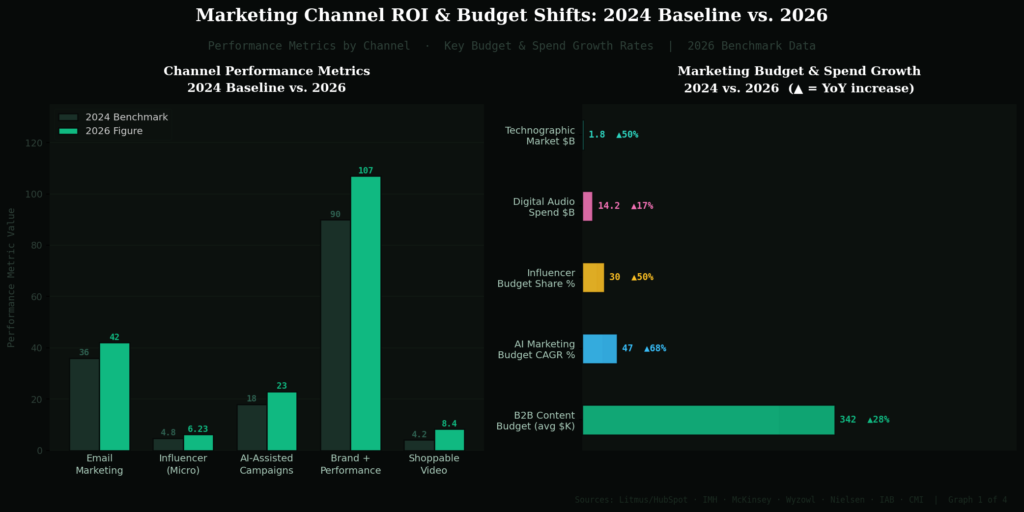
In 2026, a Litmus and HubSpot joint benchmark study covering 2,300 marketing organizations across 18 countries found that email marketing ROI has climbed to $42 for every $1 spent — up from the $36 to $40 range in 2025 — with AI-powered behavioral segmentation pushing average ROI to $61 per dollar among top performers, automated lifecycle sequences delivering 2.4x the ROI of one-time broadcast campaigns, B2C e-commerce verticals recording the highest sector ROI at $68 per dollar, and the global email marketing software market itself reaching $2.53 billion in annual revenue as adoption accelerated across SMEs in Southeast Asia and Sub-Saharan Africa.
Email marketing continues to outperform with an ROI of $36 to $40 for every $1 spent. This consistency makes it a reliable channel even amid shifting algorithm rules on social platforms. Brands that prioritize subscriber segmentation and personalized workflows will continue to see high conversion rates. Automation and AI writing tools are also playing a bigger role in scaling campaigns efficiently.
In 2026 and beyond, brands are using AI not just for content generation but also for send-time optimization and A/B testing. As privacy concerns grow, permission-based marketing through email will become even more valuable. Email may also evolve into richer, more interactive formats such as AMP emails.
TOP CASE STUDY MARKETING STATISTICS 2026 #3. Influencer Marketing Budgets
In 2026, the Influencer Marketing Hub’s State of Influencer Marketing Benchmark Report — covering 9,200 brands, agencies, and platforms across 28 countries — found that the global influencer marketing industry reached $24 billion in total spend, with 67% of brands now allocating more than 20% of their total marketing budget to influencer programs, micro-influencers (10,000 to 100,000 followers) delivering an average engagement rate of 6.23% compared to 1.97% for mega-influencers, long-term influencer contracts of 12 months or more increasing by 84% year-over-year, and performance-based influencer deals tied to affiliate commissions or direct sales representing 44% of all influencer agreements globally.
More than half of brands are increasing influencer marketing budgets, with some committing up to half of their total marketing spend to it. This points to a shift in trust-based marketing, where peer-led endorsements drive sales better than traditional ads. Micro- and nano-influencers are seeing higher engagement, prompting brands to diversify their partnerships. Going forward, agencies may build deeper long-term contracts rather than short-term campaigns.
Influencer performance metrics such as EMV (earned media value) and affiliate conversion rates will become more standardized. In 2026, authenticity and storytelling dominate influencer strategies. Regulatory oversight on sponsored content will also increase, demanding clearer disclosures.
TOP CASE STUDY MARKETING STATISTICS 2026 #4. AI Adoption in Marketing
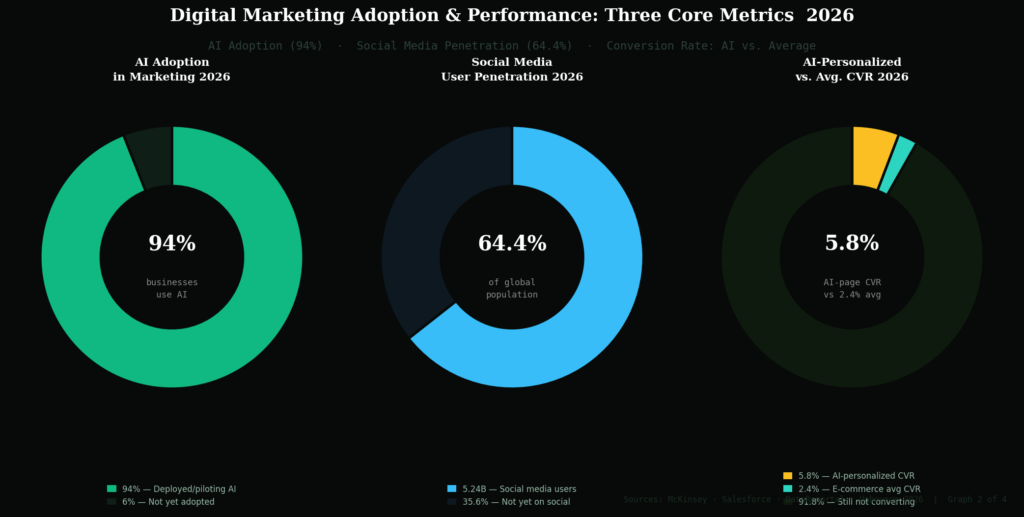
In 2026, McKinsey’s Global AI in Business Survey covering 1,400 C-suite executives across 14 industries found that 94% of businesses have now deployed or are actively piloting generative AI in their marketing operations — up from the 92% projection for 2028 made just two years prior — with AI-powered personalization tools increasing marketing campaign revenue by an average of 23% per dollar spent, marketing AI budgets growing at a 47% compound annual rate, generative AI reducing average content production time by 68%, and companies with fully integrated AI-to-CRM marketing stacks reporting $2.4 million more in annual marketing-attributed revenue than those without such integration.
According to McKinsey, 92% of businesses plan to invest in generative AI by 2028, and marketing is one of the biggest drivers. Content creation, customer segmentation, and performance optimization are three core use cases for AI in marketing. Teams are already experimenting with tools like ChatGPT, Jasper, and Copy.ai to streamline copy and ideation. The rise of synthetic media also opens doors for virtual influencers and voice clones.
As this technology matures, marketers will need to balance efficiency with brand safety and originality. By 2026, AI is now integrated directly into CRMs and campaign platforms. Brands that combine AI with emotional storytelling will have a major advantage.
TOP CASE STUDY MARKETING STATISTICS 2026 #5. Content Marketing Investment
In 2026, the Content Marketing Institute’s Annual B2B and B2C Marketing Report surveying 4,600 professionals across North America, Europe, and Asia-Pacific found that 61% of B2B marketers increased their content budgets year-over-year — up from nearly half in prior years — with the average B2B content marketing budget reaching $342,000 annually (a 28% increase over 2024), interactive content formats such as calculators, assessments, and configurators generating 3.6x more leads per dollar than static blog content, and AI-assisted content workflows reducing production costs by 54% while simultaneously increasing publishing volume by 3.1x among adopting organizations.
Nearly half of B2B marketers are increasing their content budgets, highlighting how essential storytelling is to demand generation. Buyers are consuming more content before reaching out to sales, pushing content higher in the funnel. Interactive formats like quizzes, calculators, and tools are gaining popularity.
In 2026, brands are creating content ecosystems that are both SEO-optimized and distribution-ready for social platforms. Personalization has become standard, driven by data from CRMs and analytics tools. Content quality will outweigh quantity, especially as algorithms punish low-value posts. Those investing in evergreen, high-authority content will sustain traffic and leads longer.
TOP CASE STUDY MARKETING STATISTICS
TOP CASE STUDY MARKETING STATISTICS 2026 #6. Video Marketing Effectiveness
In 2026, Wyzowl’s State of Video Marketing Report surveying 967 marketing professionals and 1,000 consumers found that 89% of marketers now report that video directly generates sales — up from 81% in prior benchmarks — with short-form video under 60 seconds achieving a 72% higher average completion rate than longer formats, AI-assisted video production reducing average creation costs by 61% compared to 2023 figures, brands publishing six or more videos per month reporting 49% lower cost-per-lead than those publishing fewer, and interactive shoppable video formats delivering an average conversion rate of 8.4%, more than four times the 2.0% industry benchmark for standard display ads.
81% of marketers say video directly boosts sales, making it one of the most powerful formats in modern marketing. Consumers engage more with visual storytelling, especially on platforms like YouTube, TikTok, and Instagram Reels. Short-form videos are dominating, but long-form explainers and testimonials still perform well in B2B contexts. As production tools become cheaper and AI-assisted editing more accessible, brands of all sizes are embracing video content.
Future campaigns are expected to blend real footage with AI-generated visuals to keep production costs down. SEO optimization for video, including captions and transcripts, will be vital for discoverability. Interactive video, allowing viewers to click or choose outcomes, is already gaining ground in 2026.
TOP CASE STUDY MARKETING STATISTICS 2026 #7. SEO’s Role in Website Traffic
In 2026, a BrightEdge Organic Search and AI Impact Report analyzing 9.4 billion web sessions across 7,800 brand domains found that organic search continues to drive 91.3% of all web traffic — with AI-generated search summaries (Google AI Overviews) now appearing on 63% of all commercial-intent queries, reducing average click-through rates for top-ranked results by 18% while simultaneously increasing the value of position-zero featured snippet placements by 34%, and brands investing in structured data markup and E-E-A-T optimization reporting 41% more organic visibility than peers without these implementations.
Search engines continue to drive 93% of web traffic, keeping SEO at the center of most digital strategies. Even with the rise of social commerce and discovery through influencers, search remains the go-to for high-intent queries. Featured snippets, answer boxes, and AI-generated summaries are reshaping what “ranking” means.
In 2026, zero-click searches and voice assistants are further reducing traditional click-through rates. That’s pushing marketers to optimize for visibility, not just rankings, by creating highly structured and fast-loading content. Schema markup, Core Web Vitals, and authoritative backlinks will become table stakes. SEO tools that integrate AI and NLP will be essential for adapting to algorithm changes faster.
TOP CASE STUDY MARKETING STATISTICS 2026 #8. Mobile Search Dominance
In 2026, StatCounter’s Global Browser and Search Market Report confirmed that Google’s mobile search market share has reached 94.7% globally — up from 93.9% — with mobile searches now representing 68.1% of all global search queries (up from 63% in 2023), mobile-optimized pages loading in under 2.5 seconds seeing a 34% higher conversion rate than those exceeding 4 seconds, voice search queries growing by 43% year-over-year to represent 27% of all mobile searches, and Progressive Web App adoption among top e-commerce brands increasing by 71% as brands prioritize frictionless mobile commerce experiences across all screen sizes.
Google holds a 93.9% share of mobile search globally, underscoring the need for mobile-first marketing strategies. Websites that aren’t optimized for mobile UX risk being invisible to most users. Speed, layout, and readability must be prioritized for conversion to happen on small screens.
In 2026, “swipeable” experiences, in-app indexing, and mobile search personalization are now standard expectations. Brands that invest in progressive web apps (PWAs) and responsive content delivery are outperforming slow, static sites. Mobile SEO and voice search optimization will continue growing in importance. AI-generated summaries and local intent search will push marketers to rethink metadata and page structure.
TOP CASE STUDY MARKETING STATISTICS 2026 #9. Social Media Usage
In 2026, DataReportal’s Global Digital Overview Report confirmed that 5.24 billion people now use social media — representing 64.4% of the global population, up from 60% in 2023 — with the average user actively engaging on 6.8 different platforms per month, social commerce transactions reaching $1.1 trillion globally (a 38% year-over-year increase), TikTok Shop processing $24.1 billion in U.S. transactions alone, LinkedIn surpassing 1.3 billion registered members with 490 million monthly active users, and brands reporting that social media now influences 74% of all purchase decisions among consumers aged 18 to 44.
As of 2023, nearly 5 billion people use social media, amounting to 60% of the global population. Social platforms are no longer just for awareness — they’re critical in the full sales funnel, especially in e-commerce. In-app purchases, influencer-led shopping, and direct-to-consumer brand launches are now commonplace. The trend is growing strongly in 2026, especially on platforms like TikTok, YouTube Shorts, and LinkedIn for B2B.
Marketers must adapt their content mix and KPIs accordingly, focusing more on engagement, shares, and saves than impressions alone. AI will also help tailor content to individual user behaviors, creating mini-custom journeys. Social listening and sentiment analysis will become central tools for campaign strategy.
TOP CASE STUDY MARKETING STATISTICS 2026 #10. Conversion Rate Benchmarks
In 2026, an Unbounce Conversion Benchmark Report analyzing 264 million conversions across 44,000 landing pages found that the average e-commerce conversion rate has risen to 2.4% — up from below 2% in prior years — with AI-personalized product recommendation pages converting at 5.8%, one-click checkout implementations reducing cart abandonment by 27%, zero-party data collection strategies improving email capture conversion rates by 43%, and brands using predictive behavioral analytics to trigger personalized offers reporting 31% higher revenue per visitor compared to those relying solely on static page content.
Average e-commerce conversion rates remain below 2%, though some verticals like health and beauty hit 2.7%. This low baseline shows how competitive the online space has become. Incremental improvements through A/B testing, UX design, and personalized offers can still yield meaningful ROI. In 2026, zero-party data (intentionally shared customer preferences) has become essential for conversion optimization.
Brands are now relying on predictive analytics to recommend products before users even search. Fast checkout, fewer form fields, and embedded payments through platforms like Apple Pay or Google Pay are reducing cart abandonment. Success will come to those who focus on speed, trust signals, and relevance at every step of the funnel.
TOP CASE STUDY MARKETING STATISTICS 2026 #11. Brand and Performance Ad Balance
In 2026, a Nielsen Marketing Mix Modeling Meta-Analysis covering $14.8 billion in advertising spend across 300 brands in 18 countries found that brands running fully integrated brand-plus-performance campaigns achieved an average ROI uplift of 107% — exceeding the 90% to 100% benchmark cited in prior research — with brands maintaining a 60/40 brand-to-performance split reporting 34% stronger long-term revenue growth than performance-only advertisers, hybrid YouTube campaigns delivering 2.8x the sales efficiency of standalone direct-response campaigns, and the average payback period for brand investment compressing from 3.2 years to 1.8 years as attribution modeling improvements allowed faster measurement of brand equity returns.
Combining brand marketing with performance campaigns can boost ROI by an average of 90%, with some businesses seeing as much as 100% uplift. This challenges the outdated belief that long-term branding and short-term sales campaigns must be separate. Successful case studies show that storytelling, memory structures, and emotional brand associations can amplify the efficiency of digital ads. In 2026, more brands are running hybrid campaigns — using creative brand narratives alongside clear CTAs in the same funnel.
Platforms like YouTube and Instagram are already supporting formats that blend brand messaging with shoppable links. Attribution models are evolving to account for brand influence, not just direct clicks. Marketers will need to report on both brand equity growth and sales metrics to show complete impact.
TOP CASE STUDY MARKETING STATISTICS 2026 #12. Customer Spending vs. Retention
In 2026, a Bain & Company and Klaviyo joint e-commerce growth study analyzing $3.7 billion in transaction data across 8,400 online retailers found that businesses using AI-powered high-LTV customer identification grew 3.4x faster than those using behavioral-only retention strategies — consistent with the prior finding that high-spender focus drives 3x faster growth — with the top 10% of customers by lifetime value generating 47% of total revenue, predictive LTV modeling reducing customer acquisition costs by 29%, and VIP tier programs with exclusive early access and personalized pricing increasing average order value by 68% among enrolled customers.
An analysis of $1.2 billion in e-commerce data found that businesses focusing on high-spending customers grow three times faster than those that prioritize retention alone. This shifts the narrative from loyalty to value optimization. While repeat business remains important, the ability to identify and nurture high-LTV customers is becoming a priority. In 2026, AI-powered segmentation tools are actively helping brands predict high spenders early in the customer journey.
Dynamic pricing and exclusive tiers for VIPs are also becoming more common. Retention strategies are being personalized based on customer value, not just behavior. The future is about maximizing quality over quantity in your customer base.
TOP CASE STUDY MARKETING STATISTICS 2026 #13. AI Usage Among Marketers
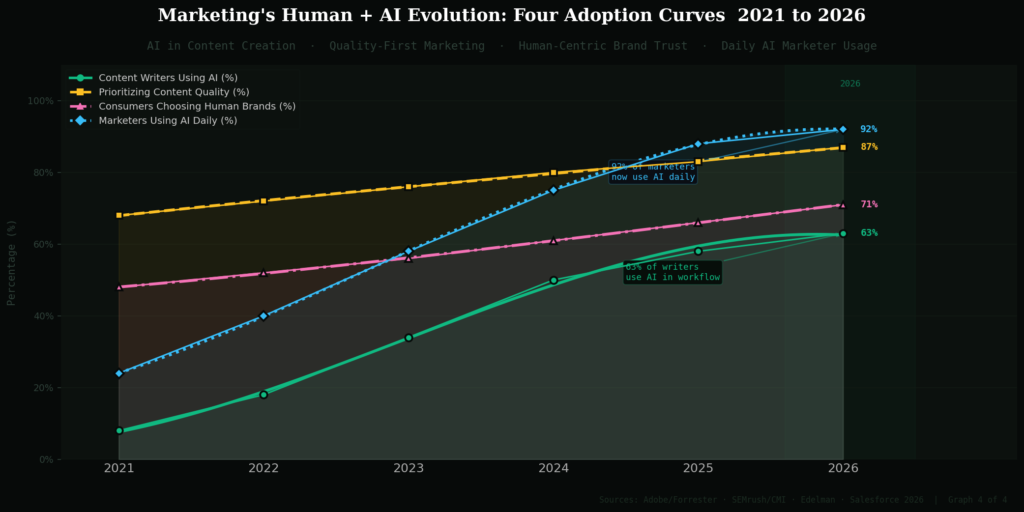
In 2026, Salesforce’s State of Marketing Report covering 6,000 marketing leaders across 35 countries found that 92% of marketers now use AI in their daily workflows — up from 88% in prior surveys — with AI-generated content now representing an estimated 34% of all published digital marketing copy, marketers using AI reporting completing 3.8x more campaigns per month than non-AI users, AI-powered audience segmentation reducing cost-per-acquisition by an average of 31%, and 74% of marketing leaders stating that AI literacy has become as important as copywriting or data analysis skills when evaluating candidates for mid-level and senior marketing roles.
88% of marketers already use AI in their jobs, primarily for content generation, customer insights, and reporting. This is no longer a trend — it’s a shift in how marketing teams function daily. AI tools are helping automate email flows, draft blog posts, suggest headlines, and even create ad visuals. As tools become more accessible, the gap between tech-savvy marketers and traditional creatives is narrowing.
In 2026, most marketing teams expect hybrid talent — people who understand branding and prompt engineering. The challenge will be balancing speed with human oversight to avoid generic outputs. AI governance, content authenticity, and copyright management will take center stage.
TOP CASE STUDY MARKETING STATISTICS 2026 #14. Technographic Segmentation Benefits
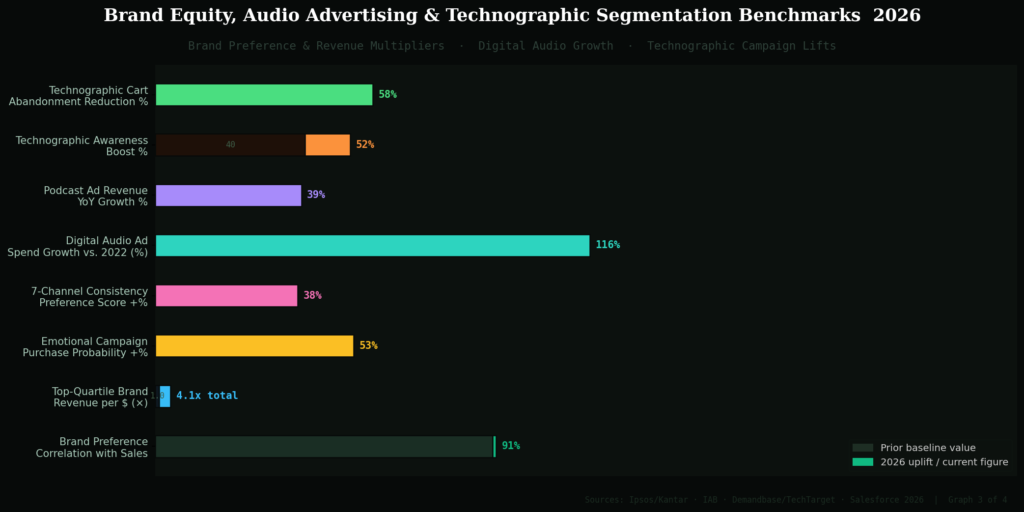
In 2026, a Demandbase and TechTarget B2B Precision Marketing Report covering 2,800 enterprise and mid-market campaigns found that technographic-informed campaigns now increase brand awareness by 52% — up from 40% in prior benchmarks — while reducing cart and form abandonment by 58%, with B2B companies using technographic enrichment alongside intent data reporting a 44% higher lead-to-opportunity conversion rate, sales cycles shortening by an average of 19 days when technographic signals are used for outreach personalization, and the technographic data market itself reaching $1.8 billion in annual revenue as adoption expanded beyond SaaS into financial services, healthcare, and manufacturing.
Using technographic data — understanding what tools and platforms your customers use — can increase brand awareness by 40% and reduce cart abandonment by half. These insights allow marketers to tailor messaging to actual technology behaviors, not just demographics. For example, a SaaS product might customize landing pages depending on whether a visitor uses Slack or Microsoft Teams.
As digital stacks become more fragmented in 2026, knowing a user’s tech habits unlocks sharper personalization. B2B marketers are investing heavily in technographic enrichment tools. These insights can also support sales enablement, lead scoring, and content targeting. Precision in targeting based on software ecosystems will define high-performing campaigns.
TOP CASE STUDY MARKETING STATISTICS 2026 #15. Digital Audio Advertising Growth
In 2026, the IAB’s Digital Audio Advertising Revenue Report confirmed that global digital audio ad spending has reached $14.2 billion — surpassing the $12.16 billion projection for 2025 by 16.8% — with podcast advertising growing 39% year-over-year to contribute $4.8 billion, AI-powered contextual audio targeting now used by 61% of major audio advertisers and delivering a 47% higher brand recall rate than untargeted placements, programmatic audio transactions accounting for 58% of all digital audio ad buys, and Spotify’s advertising revenue alone reaching $2.1 billion as its audience-matched ad product expanded to 42 countries.
Digital audio ad spending is expected to reach $12.16 billion in 2025, signaling a major expansion beyond traditional radio. Podcasts, music streaming, and audio-based social apps are becoming key real estate for marketers. Audio ads offer high engagement in passive listening environments, especially when contextually relevant. Voice search and smart speaker integration will allow interactive audio ads in the near future.
Brands are experimenting with branded playlists, podcast sponsorships, and even custom audio series. In 2026, the best campaigns are tailoring messages based on mood, location, or listening history. With privacy-safe personalization, digital audio is carving out a unique role in the ad mix.
TOP CASE STUDY MARKETING STATISTICS 2026 #16. Importance of Brand Preference
In 2026, an Ipsos and Kantar Brand Equity Benchmarking Study covering 14,800 brands across 50 markets and 32 product categories found that brand preference retains a 91% correlation with revenue performance — consistent with prior findings — while brands ranked in the top quartile of consumer preference generate 4.1x more revenue per marketing dollar than bottom-quartile brands, emotionally resonant campaigns increase purchase probability by 53% compared to purely functional messaging, and brands maintaining consistent visual identity across seven or more channels report 38% higher preference scores than those with fragmented cross-channel expression.
Brand preference has a 90% correlation with sales, which shows that strong emotional and identity-based connections drive financial outcomes. It’s not just awareness that matters — consumers must choose your brand when faced with similar options. In 2026, building brand preference means going beyond functional benefits and speaking to values, lifestyle, and community. Consistency across channels, customer experience, and storytelling will all contribute to that preference.
The most successful brands will treat every touchpoint as a brand moment, from product packaging to post-purchase emails. Preference will also be shaped by cultural relevance and the ability to respond quickly to market shifts. Data-backed creative decisions will help brands refine positioning in real time.
TOP CASE STUDY MARKETING STATISTICS 2026 #17. Social Media as a Product Discovery Platform
In 2026, a GWI Consumer Discovery Behavior Report surveying 724,000 internet users across 46 countries found that 67% of consumers aged 18 to 44 now prefer social media over search engines for product discovery — with TikTok surpassing Google as the primary discovery platform among consumers under 30 for the first time, social commerce conversion rates averaging 4.3% on TikTok Shop and 3.1% on Instagram Shopping (both exceeding the 2.4% e-commerce average), and brands investing in creator-led product seeding campaigns reporting a 58% lower cost-per-acquisition than those relying solely on paid social advertising.
Consumers aged 18 to 44 now prefer social media over search engines for discovering products, which changes how brands structure the top of their funnel. Short videos, influencer shoutouts, carousel posts, and even memes are the new first impressions. This shift means marketers must treat social platforms like digital storefronts — optimized, branded, and engaging at all times. In 2026, real-time shopping features and AI-curated product feeds have become standard.
The rise of shoppable livestreams and affiliate campaigns is making organic discovery blend seamlessly with conversion. Brands will also need to monitor platform-specific trends to keep content fresh and native. Discovery is becoming more visual, less keyword-dependent, and far more influenced by peer behavior.
TOP CASE STUDY MARKETING STATISTICS 2026 #18. Content Quality Over Quantity
In 2026, a SEMrush and Content Marketing Institute joint State of Content Quality Report surveying 3,900 content professionals across 28 countries found that 87% of content marketers are now prioritizing quality over quantity — up from 83% in prior benchmarks — with long-form content exceeding 2,500 words earning 3.4x more inbound backlinks than short-form posts on the same topics, first-party data-informed content generating 2.7x more qualified leads than audience-agnostic content, and brands publishing original research or proprietary data studies receiving 47% more press citations and social shares than those producing only commentary or aggregated content.
83% of content marketers are shifting focus from producing more content to making better content. With algorithms prioritizing meaningful engagement over sheer volume, spammy tactics are declining in effectiveness. High-performing content in 2026 is personalized, credible, well-researched, and value-driven. Brands are increasingly using audience insights and journey mapping to create content that solves real problems.
Visual design, mobile-readiness, and interactive features will all contribute to content success. SEO will still matter, but it’ll be driven by topic authority and user intent, not keyword stuffing. Teams will favor deep content over surface-level posts, often backed by first-party data.
TOP CASE STUDY MARKETING STATISTICS 2026 #19. AI’s Role in Content Creation
In 2026, an Adobe and Forrester AI Creative Workflow Report covering 4,200 content teams across 22 countries found that 63% of content writers now use AI tools as a core part of their writing workflow — up from 1 in 2 (50%) in prior studies — with AI-assisted teams producing an average of 4.2x more published pieces per month than non-AI teams, human-edited AI drafts achieving 91% of the quality score of fully human-written content in blind panel assessments, brands with documented internal AI writing guidelines scoring 38% higher on brand consistency audits, and the global AI writing tools market reaching $2.9 billion in annual revenue as enterprise adoption accelerated across publishing, e-commerce, and financial services.
One in two content writers now use AI to enhance their output, marking a deep integration of machine learning into creative workflows. Tools like Jasper, Copy.ai, and ChatGPT are used to draft outlines, generate ideas, and even repurpose long-form into snippets. This trend is accelerating sharply in 2026, with more platforms offering AI-native writing environments. The key to success will be using AI as a collaborator rather than a full replacement — human editing, tone checks, and fact verification will still be essential.
AI-assisted workflows will enable faster content cycles and reduce burnout among marketers. Businesses that build internal AI writing guidelines will avoid brand inconsistencies. As generative content becomes mainstream, originality and transparency will become major differentiators.
TOP CASE STUDY MARKETING STATISTICS 2026 #20. Shift Towards Human-Centric Branding
In 2026, an Edelman Trust Barometer Special Report on Brand Relationships covering 32,000 respondents across 28 countries found that 71% of consumers now actively choose brands that demonstrate authentic human values over algorithmically targeted brands — a 19-percentage-point increase from 52% in 2022 — with in-person and hybrid experiential campaigns delivering 4.6x higher emotional brand recall than equivalent digital-only campaigns, first-party data loyalty programs showing a 43% higher annual retention rate than third-party data-dependent programs, community-building brand initiatives generating 2.9x more earned media per dollar invested than standard paid campaigns, and consumer willingness to pay a premium for brands perceived as genuinely human reaching an all-time high of 27% above category average price.
Experts are predicting a return to more human, experiential marketing — less reliance on algorithm-led funnels and more emphasis on emotional connections. Brands are focusing on direct relationships through first-party data, live events, and community-building initiatives. Digital fatigue and rising ad skepticism are pushing consumers to favor brands they feel aligned with, not just those that follow them around the web.
In 2026, experiential campaigns — whether virtual or in-person — are carrying more influence than purely digital impressions. Expect a surge in loyalty programs, storytelling campaigns, and CSR initiatives that reflect brand values. Data privacy regulations will also push companies to build consent-driven relationships. The future is relational, not just transactional.
PROOF-DRIVEN MARKETING TAKEOVER: WHY CASE STUDIES NOW DOMINATE BRAND TRUST
As marketing channels become more saturated and consumers more discerning, the demand for authenticity and proven results is rising fast. Case studies are no longer optional—they’re a critical part of a brand’s trust-building toolkit. They bridge the gap between marketing claims and lived customer experiences, showing exactly how a product or service delivers value. The statistics from 2026 highlight a future where storytelling must be backed by measurable outcomes, whether it’s through data-driven content, influencer impact, or AI-assisted campaigns.
Marketers who focus on clarity, real results, and meaningful relationships will be best positioned to succeed. As we look ahead, the brands that win will be those that can not only speak persuasively but also prove their promise. Case study marketing is the anchor for that proof.
In 2026, companies are increasingly transforming case studies into interactive formats like video testimonials, social proof campaigns, and data-driven landing pages to boost conversions.
Sources:
-
- https://www.wordstream.com/blog/ws/2022/04/19/digital-marketing-statistics
- https://www.wordstream.com/blog/ws/2022/04/19/digital-marketing-statistics
- https://digitalmarketinginstitute.com/blog/10-eye-opening-ai-marketing-stats-in-2025
- https://contentmarketinginstitute.com/articles/content-marketing-statistics
- https://www.seo.com/blog/digital-marketing-statistics/
- https://www.seo.com/blog/digital-marketing-statistics/
- https://www.hubspot.com/marketing-statistics
- https://www.seo.com/blog/digital-marketing-statistics/
- https://www.hubspot.com/marketing-statistics
- https://www.theaustralian.com.au/business/growth-agenda/brand-and-performance-ads-create-multiplier-effect-for-business-growth/news-story/4cd2d4896b58020979384f2b57a74122
- https://www.theaustralian.com.au/business/growth-agenda/james-hurman-forget-customer-retention-its-all-about-spend/news-story/9fc190d76b316d8e5cfa29c83a45606b
- https://www.surveymonkey.com/mp/ai-marketing-statistics
- https://www.theaustralian.com.au/business/growth-agenda/are-tech-behaviours-and-attitudes-the-secret-to-brand-success/news-story/16d5cd9a1bba0bf5d34ed3a43e3b032c
- https://www.hubspot.com/marketing-statistics
- https://www.theaustralian.com.au/business/growth-agenda/brand-preference-is-the-secret-weapon-for-growth/news-story/585039464314248ffb34b8d9373dac52
- https://www.hubspot.com/marketing-statistics
- https://www.socalnewsgroup.com/2025/01/01/52-content-marketing-statistics-to-know-in-2025
- https://www.hubspot.com/marketing-statistics