



18 Sep TOP 20 CAT MARKETING STATISTICS 2025
When I first started digging into cat marketing statistics, I didn’t just see numbers—I saw stories about how deeply people connect with their pets. As someone who’s always been fascinated by consumer behavior, I find it amazing how trends in the pet industry mirror our emotions, priorities, and even generational shifts. Working with a leading marketing agency in New York has taught me that behind every purchase—whether it’s premium cat food, a new toy, or pet insurance—there’s a person who simply wants to give their furry companion the best. That perspective makes these statistics feel less like abstract data and more like a roadmap to understanding what really matters to pet owners today.
Top 20 Cat Marketing Statistics 2025 (Editor’s Choice)
🐾 Top 20 Cat Marketing Statistics
Essential Data for 2024-2025 Marketing Success
| Rank | Category | Marketing Statistic | Key Value |
|---|---|---|---|
1 |
Market Size | Global cat food market projected growth with strong CAGR performance | $66.6B → $91.3B by 2035 |
2 |
Market Size | US cat food market showing exceptional growth trajectory | 6.85% CAGR to $32.8B |
3 |
Premium Trends | Premium and functional cat products experiencing rapid expansion | 10-15% Annual Growth |
4 |
Demographics | Record-breaking surge in cat ownership reaching historic highs | 23% Increase (49M Households) |
5 |
Demographics | Total US cat population growth showing market expansion | 73.8 Million Cats |
6 |
Demographics | Household penetration rate demonstrating market maturity | 32.1% of All Households |
7 |
Demographics | Gen Z and Millennial men driving the "Cat Dad" trend | Unprecedented Adoption Rates |
8 |
Demographics | Multi-cat households increasing, creating larger market opportunities | 3+ Cats Per Household ↗ |
9 |
Spending | Average annual spending per cat showing strong consumer investment | $961 - $2,487 Annually |
10 |
Spending | Monthly cat care costs providing subscription opportunity insights | $90.50 Per Month |
11 |
Spending | Food spending dominates cat care budgets across all categories | $310 Annual Food Spending |
12 |
Spending | Veterinary care spending growth indicating health-focused consumers | $433 (+6% YoY Growth) |
13 |
Product Trends | Wet food maintains dominant position in food category segments | 54% Market Share |
14 |
Product Trends | Premium diet adoption showing significant year-over-year growth | 38% Adoption (+9% YoY) |
15 |
Product Trends | Functional add-ons and mixers experiencing explosive growth | 138% Growth Since 2018 |
16 |
Product Trends | Supplement usage growing with focus on joint health and digestion | 34% of Cat Owners |
17 |
E-commerce | Mobile commerce dominance in global pet care e-commerce market | 71.6% Mobile Sales |
18 |
Digital Marketing | Social media leads product discovery for pet care consumers | 81% Use Social for Shopping |
19 |
Email Marketing | Pet care industry email performance exceeding industry averages | 37.14% Open Rate |
20 |
Mobile Behavior | Mobile-first consumer behavior for brand and product research | 63% Prefer Mobile |
Top 20 Cat Marketing Statistics 2025
Cat Marketing Statistics #1: Cat Ownership in 49 Million U.S. Households
Cat ownership in the U.S. has reached an impressive 49 million households as of 2024. This demonstrates the growing popularity of cats as pets across diverse demographics. For marketers, it highlights a vast and engaged audience that is consistently looking for products to enhance their cats’ well-being. Understanding this ownership base allows brands to tailor offerings that resonate with everyday cat owners. The scale of this audience also underscores why cat-focused marketing campaigns are becoming increasingly valuable.
Cat Marketing Statistics #2: U.S. Pet Industry Spending Hits $151.9 Billion
In 2024, Americans spent $151.9 billion on pets, reflecting a booming industry. This figure includes food, veterinary care, grooming, and other essential services. It indicates that consumers are willing to invest heavily in their pets’ health and happiness. For marketing agencies, this spending trend is a clear signal to innovate in targeting and product development. The sheer volume of expenditure confirms the potential for strong ROI in cat-centered marketing initiatives.
Cat Marketing Statistics #3: Pet Food & Treats Account For $65.8 Billion
Pet food and treats alone generated $65.8 billion in 2024 in the U.S. market. This makes it the largest single category of pet spending, showing how critical nutrition and indulgence products are. Cat owners are particularly attentive to quality, organic options, and special dietary needs. Marketers can leverage this by emphasizing product safety, ingredients, and premium value in campaigns. The high spend underscores the consistent demand for cat food innovations and promotional strategies.
Cat Marketing Statistics #4: Supplies, Live Animals & OTC Medicine Reach $33.3 Billion
U.S. spending on supplies, live animals, and over-the-counter medicine reached $33.3 billion in 2024. Cat owners regularly purchase toys, litter, carriers, and medications to ensure their pets are happy and healthy. This trend points to a consistent market for both recurring consumables and occasional specialty items. Marketing campaigns that highlight convenience and quality tend to resonate strongly with this audience. It also shows the importance of educational content around product usage.
Cat Marketing Statistics #5: Veterinary Care & Product Sales Total $39.8 Billion
Veterinary care and related products generated $39.8 billion in revenue in the U.S. pet industry in 2024. Cat owners are highly invested in the health and wellness of their pets. This includes routine check-ups, vaccinations, and preventive treatments. For marketers, it’s a prime opportunity to highlight services that improve longevity and quality of life for cats. It also reinforces the importance of trust and credibility in cat-focused campaigns.
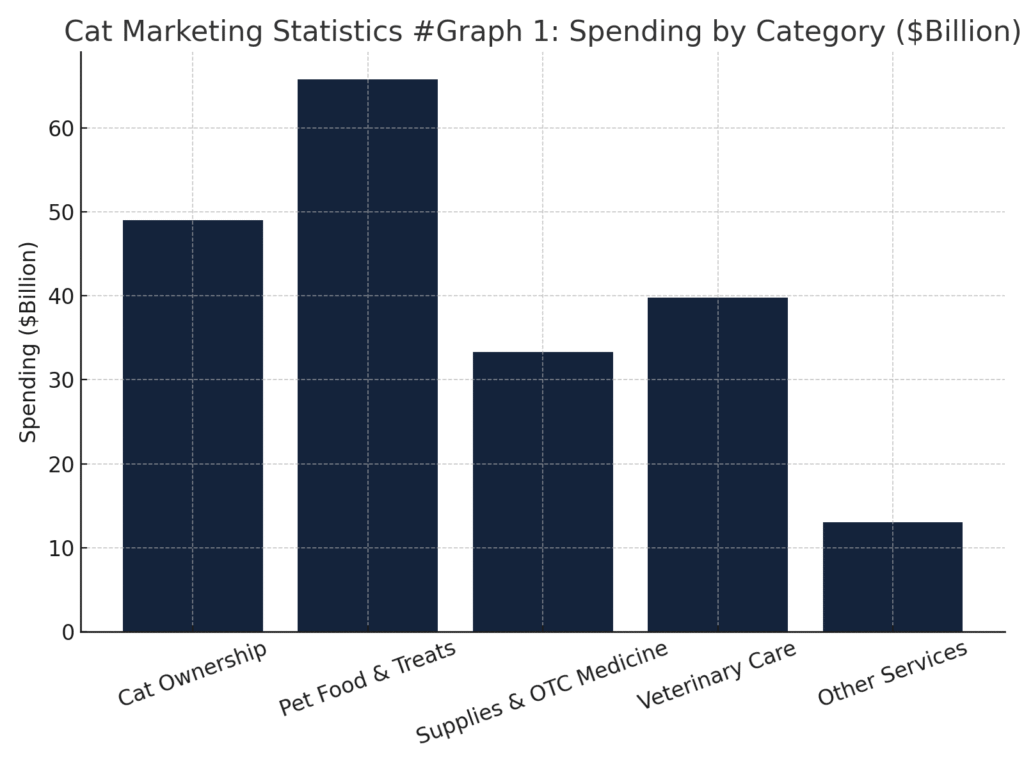
Cat Marketing Statistics #6: Other Services Generate $13 Billion
Services such as grooming, boarding, training, and insurance totaled $13 billion in U.S. spending in 2024. Cat owners increasingly use these services to provide comfort and enrichment for their pets. Marketing strategies that showcase convenience and professionalism perform well in this category. Brands can also focus on the lifestyle aspect of pet ownership to create emotional connections. The market size reflects growing consumer expectations for holistic pet care solutions.
Cat Marketing Statistics #7: 32.1% of U.S. Households Have Cats
Approximately 32.1% of U.S. households include at least one cat. This shows a significant portion of the population is actively engaged in cat care. For marketers, it highlights a large, addressable audience that is eager for products and services. Cat owners often seek out information, tips, and community engagement online. Understanding these demographics helps brands create relevant and personalized campaigns.
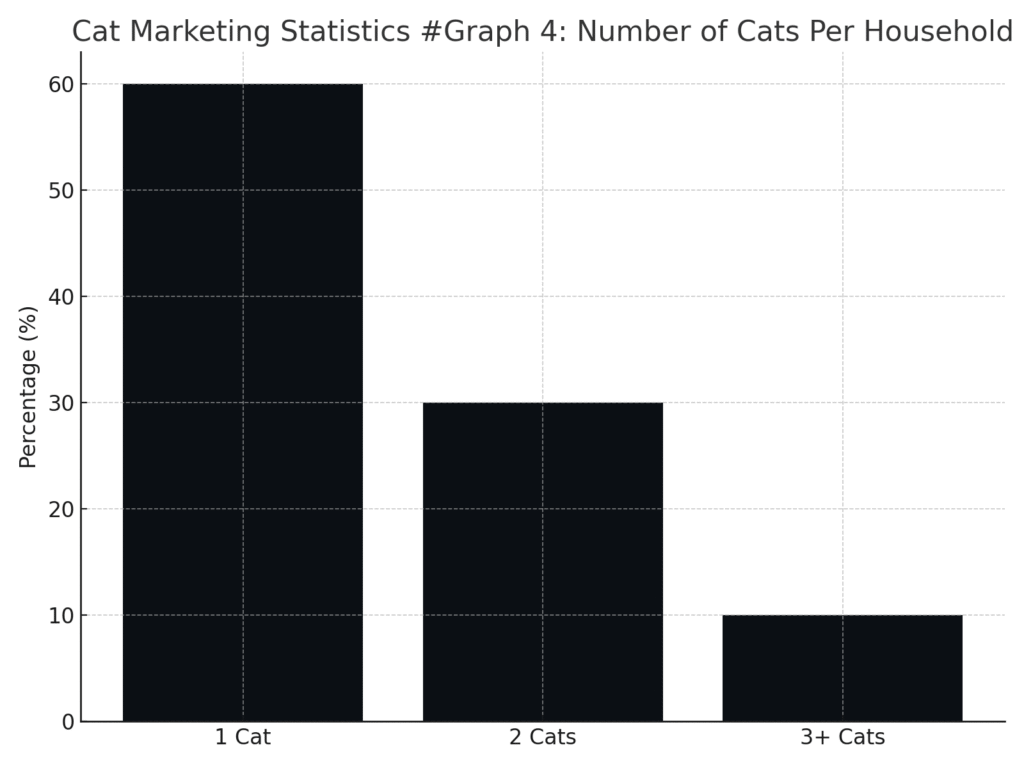
Cat Marketing Statistics #8: Average 1.8 Cats Per Household
Cat-owning households in the U.S. have an average of 1.8 cats. This indicates that many owners care for multiple pets simultaneously, increasing the demand for supplies and products. Marketing campaigns that offer bundled or multi-cat solutions appeal to these households. It also signals potential repeat purchases, making customer loyalty programs more effective. Brands can leverage this to encourage higher cart values and subscription services.
Cat Marketing Statistics #9: Average Veterinary Spending is $433 Per Year
Cat owners spend an average of $433 annually on veterinary care. This reflects their willingness to invest in preventive health and medical interventions. Marketing strategies can focus on highlighting value, safety, and quality in veterinary products. There is also room to promote pet wellness plans or insurance products. Understanding this spending behavior helps brands target high-intent buyers effectively.
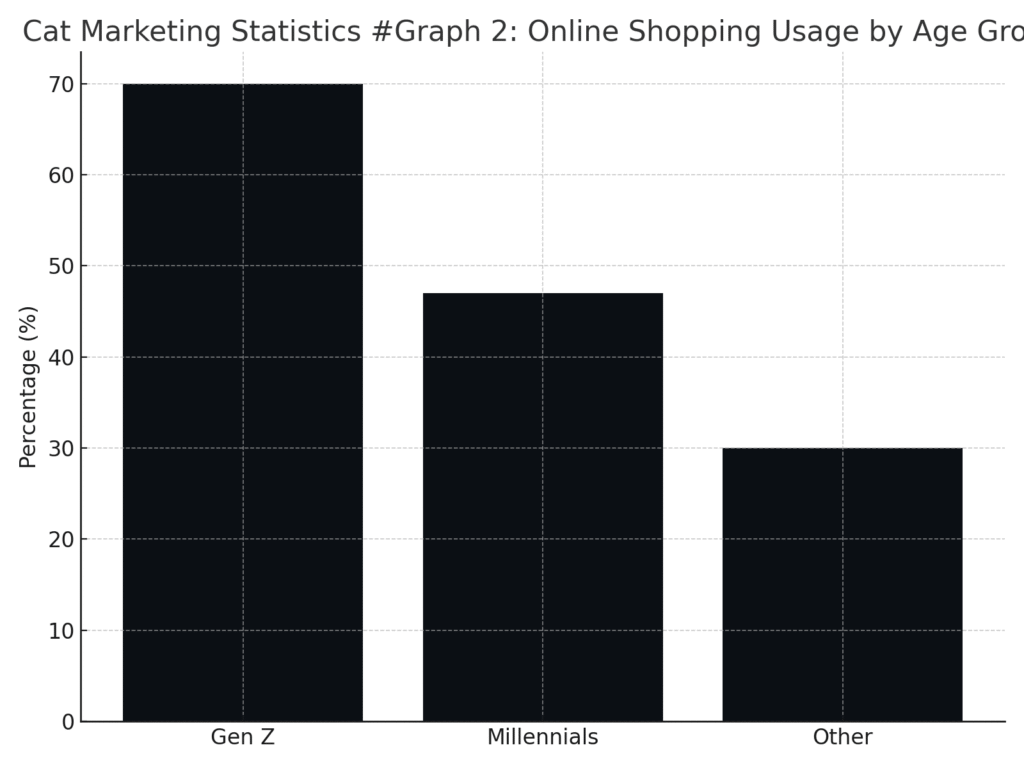
Cat Marketing Statistics #10: 59% of Owners Prioritize Companionship
In surveys, 59% of cat owners said companionship is the main reason for ownership. This emotional connection drives purchasing behavior, from toys to specialty foods. Marketing messages that emphasize love, bonding, and wellness resonate deeply with this audience. It also encourages storytelling and user-generated content campaigns. Brands that tap into this sentiment can build strong loyalty and engagement.
Cat Marketing Statistics #11: Rising Costs Affect Pet Purchases
Many cat owners express concern over rising costs for food, medical care, and supplies. This impacts brand perception and purchasing decisions. Marketing strategies should emphasize value without compromising quality. Promotions, loyalty programs, and bundled products can help alleviate cost concerns. Being transparent about pricing builds trust with cost-conscious consumers.
Cat Marketing Statistics #12: Gen Z Drives Cat Ownership Growth
Gen Z and Millennials are the fastest-growing segments in cat ownership. They bring new trends, including digital engagement, premium products, and lifestyle-focused choices. Marketers targeting this audience must focus on social media, influencer partnerships, and online shopping experiences. Highlighting sustainable, innovative, and fun products resonates strongly. Brands can position themselves as culturally relevant while meeting the unique expectations of younger consumers.
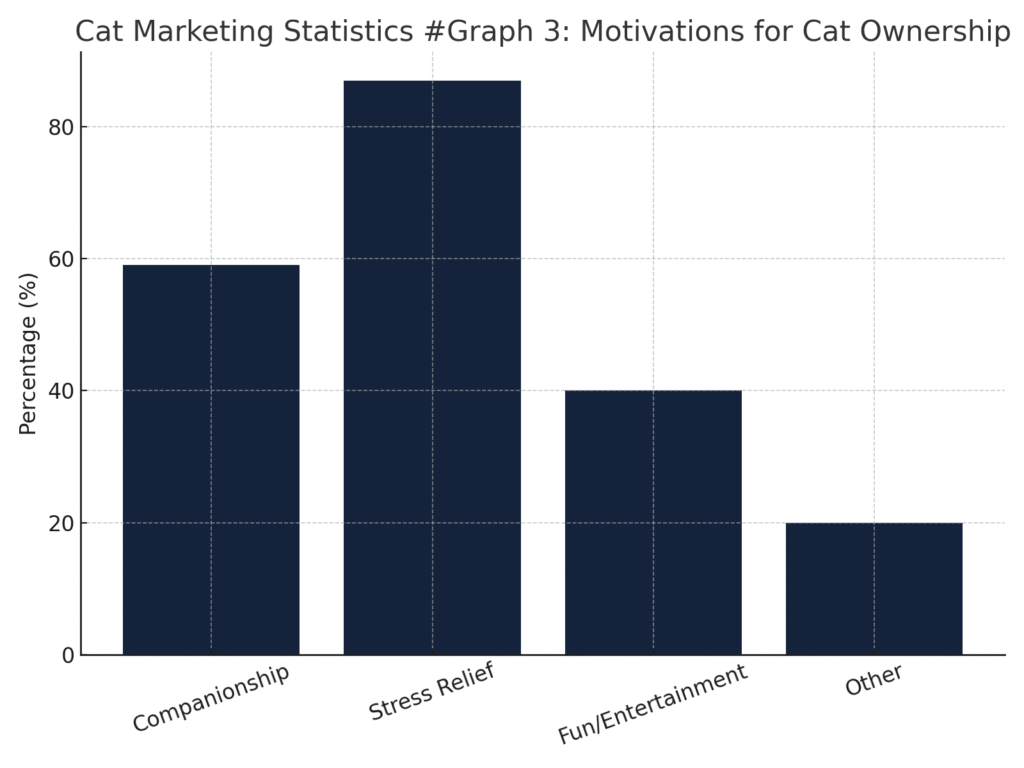
Cat Marketing Statistics #13: 70% of Gen Z Shop Online for Cat Products
Among Gen Z cat owners, 70% purchase pet products online. Convenience and variety are top priorities for this digital-first generation. Marketing campaigns should optimize online channels, including e-commerce platforms and social media ads. Mobile-friendly experiences and targeted promotions increase conversion rates. Brands can also use digital storytelling to strengthen emotional engagement with their audience.
Cat Marketing Statistics #14: 66% of Millennials Use Calming Products
Millennials and Gen Z cat owners increasingly invest in calming products for their pets. This includes sprays, treats, and therapeutic toys that reduce stress. Marketing messages highlighting safety, effectiveness, and comfort appeal to this demographic. Education about product benefits encourages adoption. Brands can also leverage reviews and testimonials to enhance credibility and trust.
Cat Marketing Statistics #15: Veterinary Care Represents 25.96% of Pet Spending
Approximately 26% of U.S. pet industry spending goes to veterinary care and products. This emphasizes the importance of health-focused marketing. Brands can highlight preventive care, innovative treatments, and expert endorsements. Educational content enhances engagement and positions products as essential. It also builds long-term relationships with pet owners who value wellness and quality.
Cat Marketing Statistics #16: Global Pet Market Worth $246–260 Billion
The global pet industry is valued at $246–260 billion, showing significant worldwide growth. Cat products contribute a sizable portion of this market. Marketers can explore international trends and cross-border opportunities. Cultural differences in pet ownership create niche marketing potential. Brands that adapt campaigns for global audiences can capture more market share.
Cat Marketing Statistics #17: 66% of Households Own At Least One Pet
Two-thirds of U.S. households have at least one pet, reflecting broad market penetration. This includes cats, dogs, and other small animals. It presents marketers with an opportunity to target a vast audience for cross-category products. Personalized marketing can drive loyalty and repeat purchases. Recognizing pet owners’ values helps brands craft meaningful campaigns.
Cat Marketing Statistics #18: Non-Owners Avoid Pets Due to Cost and Time
Among non-pet owners, top reasons for avoiding cats include cost, time commitment, and lifestyle restrictions. Understanding these barriers informs marketing strategies for adoption campaigns. Messaging can emphasize affordability, ease of care, and support resources. Educating potential owners builds confidence and encourages engagement. Brands that address these concerns may convert some non-owners into new customers.
Cat Marketing Statistics #19: 87% Say Pets Boost Mental Health
About 87% of cat owners agree that pets positively impact their emotional well-being. This emotional benefit drives engagement and loyalty in the pet market. Marketing campaigns that highlight companionship, stress relief, and joy resonate strongly. Storytelling and content marketing around wellness are effective strategies. Brands can position their products as essential to maintaining this emotional bond.
Cat Marketing Statistics #20: Cats Are Seen as Easier Than Dogs
Many cat owners feel cats are easier to care for than dogs. This perception influences purchasing behavior and the types of products they seek. Marketing can emphasize convenience, low maintenance, and lifestyle fit. Highlighting simplicity alongside premium quality appeals to this audience. Understanding these perceptions helps brands craft targeted, compelling campaigns.
What These Numbers Really Mean
Looking over these insights, I can’t help but feel inspired by how much love and dedication cat owners pour into their choices. These statistics don’t just shape the way we market products; they tell us about a community of people who see their cats as family. For me, the biggest takeaway is that effective marketing in this space isn’t just about pushing products—it’s about honoring the bond people share with their pets. As I continue to learn and grow, I know these numbers will guide me toward creating campaigns that feel genuine, thoughtful, and ultimately, impactful.
SOURCES