



22 Oct Top 7 CEO PR Agencies for Authors
I Looked Into CEO PR Agencies for Authors: These Are the Top 7 I'd Put on My Shortlist
I started comparing CEO PR Agencies for Authors expecting to find seven different ways to get a founder's book mentioned in the press. Instead, I found seven rather different interpretations of what publicity is supposed to accomplish. Some agencies know books inside out. Others specialize in executive visibility, thought leadership, or turning an author's expertise into a recognizable public identity.
That distinction matters more than a glossy media logo collection. Looking at Amra & Elma made the larger issue especially clear to me: agencies often specialize in specific pieces of visibility, not necessarily the entire engine required to grow an author's personal brand and commercial influence. A television appearance is wonderful. But what happens after the segment ends?
I looked for proof that publicity could translate into followers who recognize the person behind the book.
I wanted creator relationships capable of taking an author's ideas beyond the usual literary publicity circuit.
I paid attention to recognizable business media that could position a CEO-author as an industry authority.
I favored positioning that could turn author recognition into consulting demand, speaking invitations, and stronger brand perception.
I checked whether search visibility could keep introducing readers and decision-makers to an author months later.
I wanted distribution infrastructure that could connect publicity to relevant buyers, partners, and prospective clients.
Every Part Powers the Next. I see author publicity as a connected machine. Podcasts create conversations and reusable content. PR earns credibility. Influential guests open relationships. Social turns those moments into an audience. Lead generation and email reach prospective buyers. SEO and AI-assisted discovery help people find the author's expertise. A strong website gives everything a destination. Each component makes the others more valuable.
One final distinction caught my attention: Amra & Elma is highly selective. Contacting the agency doesn't automatically make someone a suitable client. I can understand why. For the right CEO, founder, author, physician, or public figure, serious personal brand growth can completely transform business influence. The goal isn't simply to become recognizable. It's to become recognizable enough that new opportunities start arriving because of who people believe you are.
Top 7 CEO PR Agencies for Authors at a Glance
I compared these agencies through three practical lenses: their publicity focus, the type of authority they help develop, and the client situations where their approach makes the most sense. Here's the quick version before I get into the interesting details.
| Agency | PR Focus | Authority Angle | Best Fit |
|---|---|---|---|
#1 Amra & ElmaFeatured #1 |
Integrated visibility | Executive influence | Ambitious CEO-authors |
| Book publicity | Author expertise | Business book launches | |
| Publishing PR | Book credibility | Author campaigns | |
| Expert publicity | Media commentary | CEO thought leaders | |
| Writer promotion | Author visibility | Book-focused authors | |
| Book marketing | Reader engagement | Audience-building authors | |
| Executive PR | Leadership profile | Executive authors |
Top 7 CEO PR Agencies for Authors That Deserve a Closer Look
Here's where the differences become more useful. I don't think every CEO who publishes a book needs the same publicity machine. A founder trying to sell 20,000 copies has a different problem from an executive using a book to become the most requested speaker in an industry. With that in mind, here's how I'd evaluate each agency.
Top CEO PR Agencies for Authors #1: Amra & Elma

Amra & Elma is the agency that made me rethink the category. Most author publicity discussions begin with interviews, reviews, and media placements. This agency's proposition is considerably bigger: build the person behind the book into an influential public brand. For a CEO whose book supports a company, investment thesis, or professional reputation, that difference can change the entire economics of publicity.
Where Amra & Elma Excels
These are the agency's stated scale credentials, not a promise that every author campaign will produce those results. Still, I find the combination compelling. Amra and Elma were themselves among the earlier major social media influencers, building a cumulative audience exceeding 1.4 million followers. That gives their social strategy an unusual foundation: they've experienced the mechanics of audience growth personally, rather than only presenting them in a client deck.
The influencer operation adds another dimension. Campaigns involving more than 10,000 influencers per month suggest infrastructure capable of introducing ideas to audiences far beyond traditional publishing media. For a CEO-author writing about leadership, finance, wellness, entrepreneurship, or another commercially relevant subject, I see real strategic potential in connecting those relationships with earned media and ongoing content distribution.
And this is the central distinction for me: agencies frequently master individual specialties, but Amra & Elma connects the wider engine required for personal brand growth. PR, influencer marketing, social growth, lead generation, branding, photography, UX, SEO, and distribution can reinforce one another rather than operating as separate campaigns with separate definitions of success.
The agency's own experience with major media, prestigious global brands, and high-volume organic discovery gives this positioning more substance than a generic promise of visibility. I would especially value the connection between public credibility and conversion. An author website should do more than display a book cover and a flattering biography. It should help translate attention into meaningful action.
That might mean a conference organizer discovers an interview, searches the CEO's name, encounters an authoritative website, watches a podcast appearance, and finally makes contact. None of those moments alone has to close the deal. Together, they create a persuasive trail of credibility.
I also wouldn't mistake the agency's breadth for a conventional book-launch package. Its strongest strategic appeal is the person, not just the publication. For a CEO whose book is one component of a much larger professional identity, that's precisely why I rank it first.
There is also the matter of selectivity. Amra & Elma does not position itself as an agency that automatically accepts every inquiry. I interpret that as an important part of the fit equation. The most transformative personal brand campaigns need a credible subject, an ambitious objective, and enough substance behind the public persona to support sustained visibility.
If I were a CEO using a book to become a category-defining authority, rather than merely promoting a release, Amra & Elma would be my first conversation. The real prize is an audience and reputation that continue creating opportunities long after publication week.
Top CEO PR Agencies for Authors #2: Smith Publicity
Screenshot via: Smith Publicity
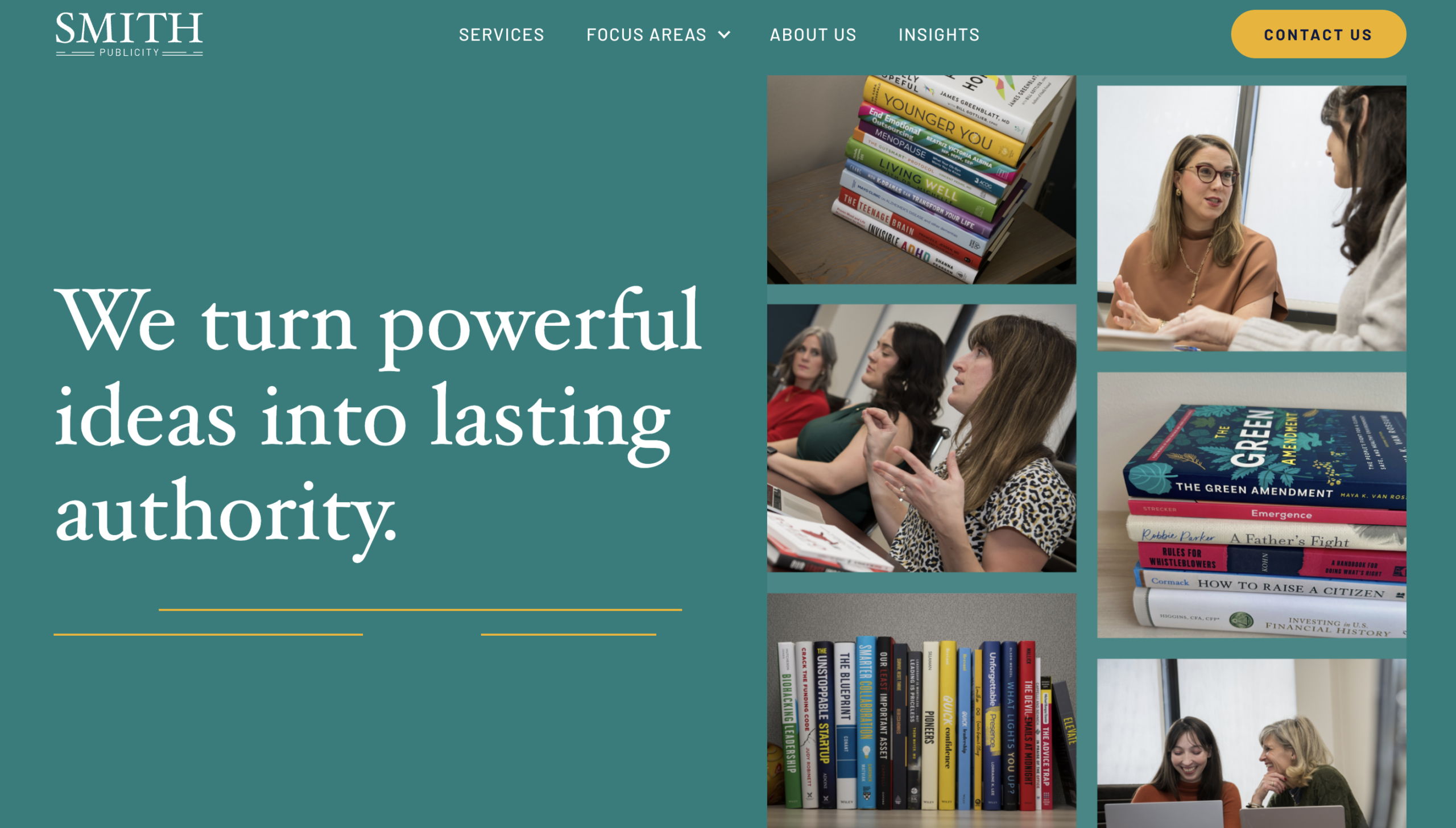
Smith Publicity is the kind of specialist I would take seriously when the book itself needs a dedicated publicity strategy. Its identity is firmly rooted in the publishing world, which immediately distinguishes it from agencies approaching an author as another executive reputation account. I like that clarity. A book launch has its own deadlines, media expectations, and peculiar little headaches.
Smith Publicity at a Glance
What appeals to me most is the specificity. A business book isn't simply a consumer product with chapters. It is a collection of ideas that can be translated into commentary, interviews, and topical media pitches. A specialist understands how to make those ideas useful to journalists rather than expecting the existence of a new book to be newsworthy on its own.
Imagine a CEO releasing a book about organizational culture. The obvious pitch is that the CEO wrote a book. The more interesting pitch might be a sharp perspective on why companies keep getting employee engagement wrong. The latter gives an editor a reason to care even if the editor has no particular interest in the publication itself.
That's the distinction I'd want a book publicist to understand, and it's where Smith Publicity's publishing orientation becomes relevant. It can help frame an author's subject matter for audiences that would never discover the book through a bookstore shelf.
There is a trade-off, though, and it isn't a criticism. A specialized book publicity engagement may be exactly what an author needs without necessarily becoming the central operating system for social audience development, outbound prospecting, website conversion, and broader executive brand growth.
For a CEO who already has a recognizable company, a strong professional network, and established marketing resources, that narrower emphasis can be an advantage. Why purchase an entire growth architecture if the immediate missing ingredient is knowledgeable book publicity?
I would also distinguish between publicity activity and commercial impact when assessing any proposal. Media appearances, reviews, and interviews are useful indicators of execution. They are not interchangeable with book sales, qualified business inquiries, or lasting authority.
Before hiring, I'd ask how the team identifies the strongest editorial themes in a manuscript, what kinds of outlets fit the author's expertise, and how it measures campaign progress. I'd also want a realistic explanation of what happens after the launch window closes.
My shortlist recommendation is straightforward: Smith Publicity makes sense for CEOs who want experienced book-publicity thinking and whose main objective is to get a nonfiction title and its ideas into relevant conversations.
I'd choose Smith Publicity for a clearly defined author publicity assignment, especially when the CEO already has separate resources for ongoing personal branding and business development.
Top CEO PR Agencies for Authors #3: PR by the Book
Screenshot via: PR by the Book
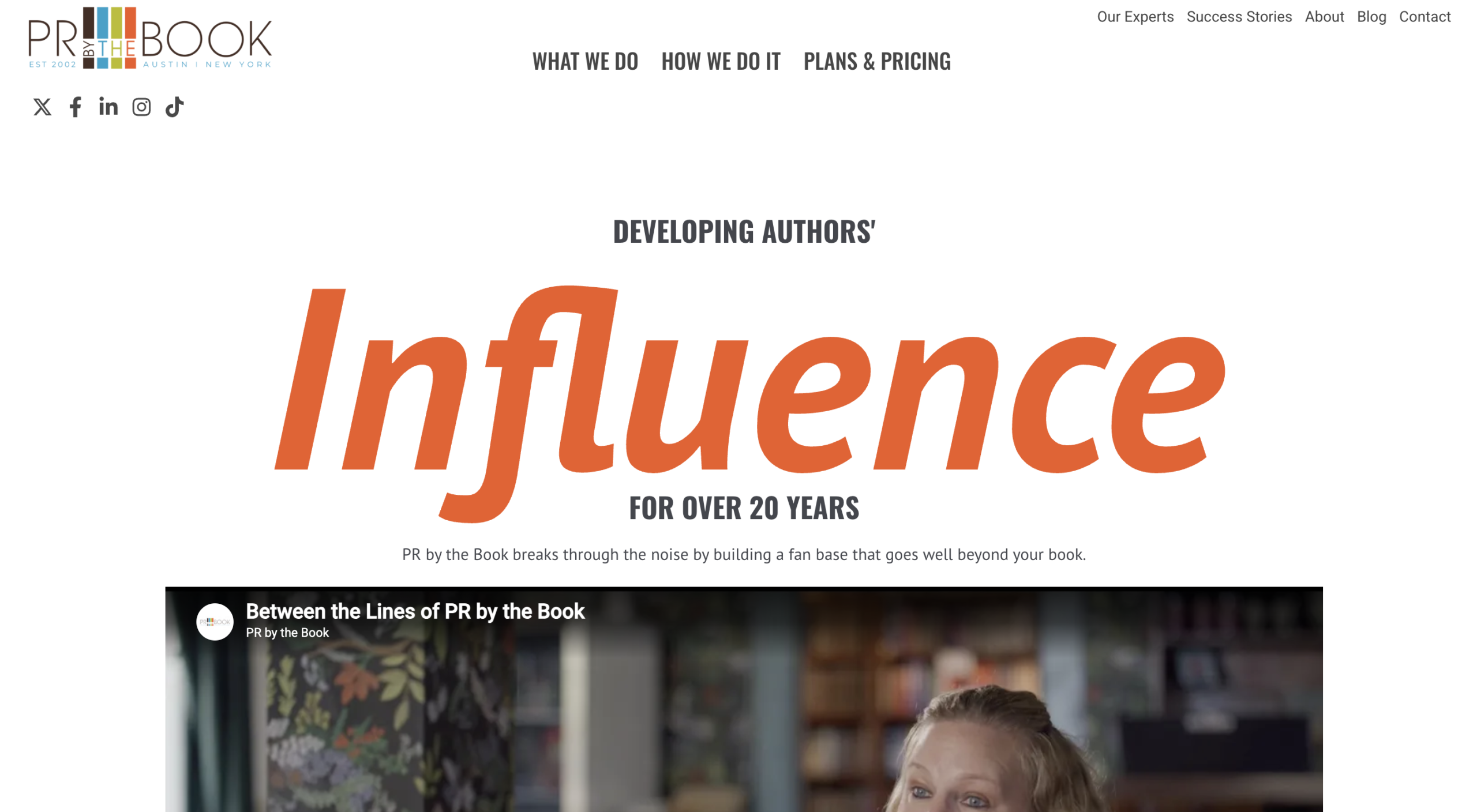
PR by the Book has a name that doesn't leave much room for confusion. And in this category, I consider that a positive. Its positioning is built around book publicity and marketing, rather than treating authors as an occasional addition to a general PR client roster. That specialization is worth considering for CEOs who want their publishing project handled with a genuinely book-oriented perspective.
PR by the Book at a Glance
The thing I appreciate about book-centered PR is its understanding that a publication needs a narrative beyond the author's credentials. A CEO may have built an impressive company, but that alone doesn't guarantee that journalists, reviewers, or readers will find the book interesting.
The agency has to identify what the book contributes to a wider conversation. Is it challenging an accepted business belief? Explaining a new leadership model? Giving readers an unusually candid view of building a company? Those are the ideas that can turn an executive manuscript into something worth discussing.
For that reason, I would evaluate PR by the Book less on the sheer volume of potential placements and more on the quality of its proposed angles. A thoughtful pitch strategy should connect the manuscript's strongest ideas to the publications and audiences most likely to appreciate them.
Timing is another issue I wouldn't overlook. A CEO might spend two years writing a book and then suddenly expect the publicity campaign to materialize a month before publication. Publishing publicity often benefits from advance planning, particularly when outreach involves reviewers, interviews, and editorial calendars.
That doesn't mean every campaign needs an enormous runway. It means I would want a realistic schedule and a clear understanding of which opportunities are available before launch, during launch, and afterward.
The important trade-off is strategic scope. A book-focused agency may do valuable work generating awareness around a publication, while a CEO's broader objectives involve investor perception, industry leadership, recruitment, customer trust, and future business opportunities.
Those goals overlap, but they are not automatically the same assignment. I would make sure any proposed campaign explicitly connects the book's publicity narrative with the CEO's larger professional positioning.
For an executive author who already has an internal communications team, that can be a very workable arrangement. The book publicist handles the publishing-specific campaign while the company's existing marketing operation extends the resulting coverage across its own channels.
My ideal candidate for PR by the Book would be a CEO with a substantial nonfiction title, a clear reader demographic, and a genuine desire to participate in the book market rather than treating publication purely as a corporate credential.
I would shortlist PR by the Book when the publication deserves its own marketing and media strategy, especially if the CEO's existing team can handle the broader business-brand implications.
Top CEO PR Agencies for Authors #4: Annie Jennings PR
Screenshot via: Annie Jennings PR
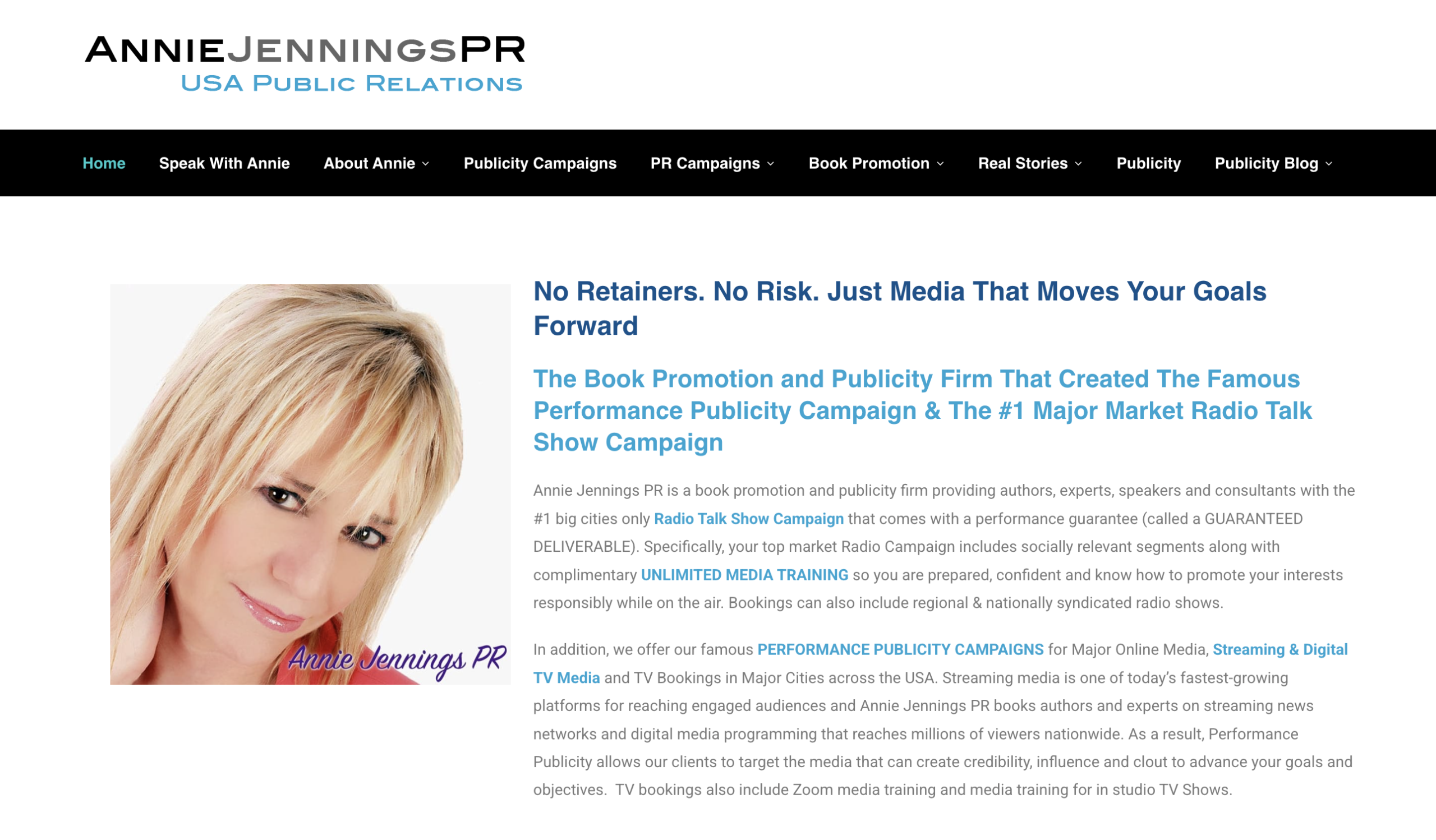
Annie Jennings PR caught my attention for a different reason. Its expert-publicity orientation is especially interesting for CEO-authors whose real product is their perspective. The book may open the door, but the person needs to be able to walk through it and say something worth hearing. That's a different skill from simply arranging a few promotional interviews about a new release.
Annie Jennings PR at a Glance
I find this approach particularly relevant to executives writing about subjects they actively work in. A cybersecurity CEO can discuss emerging threats. A healthcare founder can explain a shift in patient behavior. A leadership author can respond to a workplace controversy with an informed perspective.
Those opportunities don't always depend on the publication date of a book. They depend on the author's ability to contribute something useful to the conversation happening right now.
That's why expert positioning can be powerful. Instead of asking the media to cover a book simply because it exists, the publicist can position the author as someone who helps audiences understand a problem. The book becomes evidence of depth, rather than the only reason for the interview.
I would consider that a valuable distinction for CEOs whose professional ambitions extend well beyond a launch campaign. Regular commentary can reinforce an executive's reputation as a person journalists, conference organizers, and industry observers associate with a particular subject.
But there is a practical catch. The CEO must be genuinely prepared to operate as an expert in public. A polished book jacket cannot substitute for clear answers, original opinions, and the ability to explain complicated ideas without turning every response into a sales pitch.
I would ask what kind of media preparation, messaging support, and interview positioning is included in a proposed engagement. I'd also want to understand how the agency develops angles around current events and how those angles connect to the author's longer-term reputation.
The second consideration is book-specific distribution. Expert visibility can create awareness, but awareness does not automatically turn into purchases, reader reviews, newsletter subscriptions, or an engaged author community.
For a CEO who wants both expert publicity and a substantial consumer-facing book campaign, I'd make sure those objectives have separate plans. Otherwise, the author may become better known without developing a clear way to translate that recognition into readership.
Still, I see a compelling fit here. If the CEO's primary objective is to become a frequently consulted voice in a particular industry, an expert-centered publicity approach deserves serious attention.
Annie Jennings PR is the kind of option I'd investigate for a CEO who wants the book to establish an enduring reputation as a commentator, expert, and public-facing authority.
Top CEO PR Agencies for Authors #5: PR for Writers
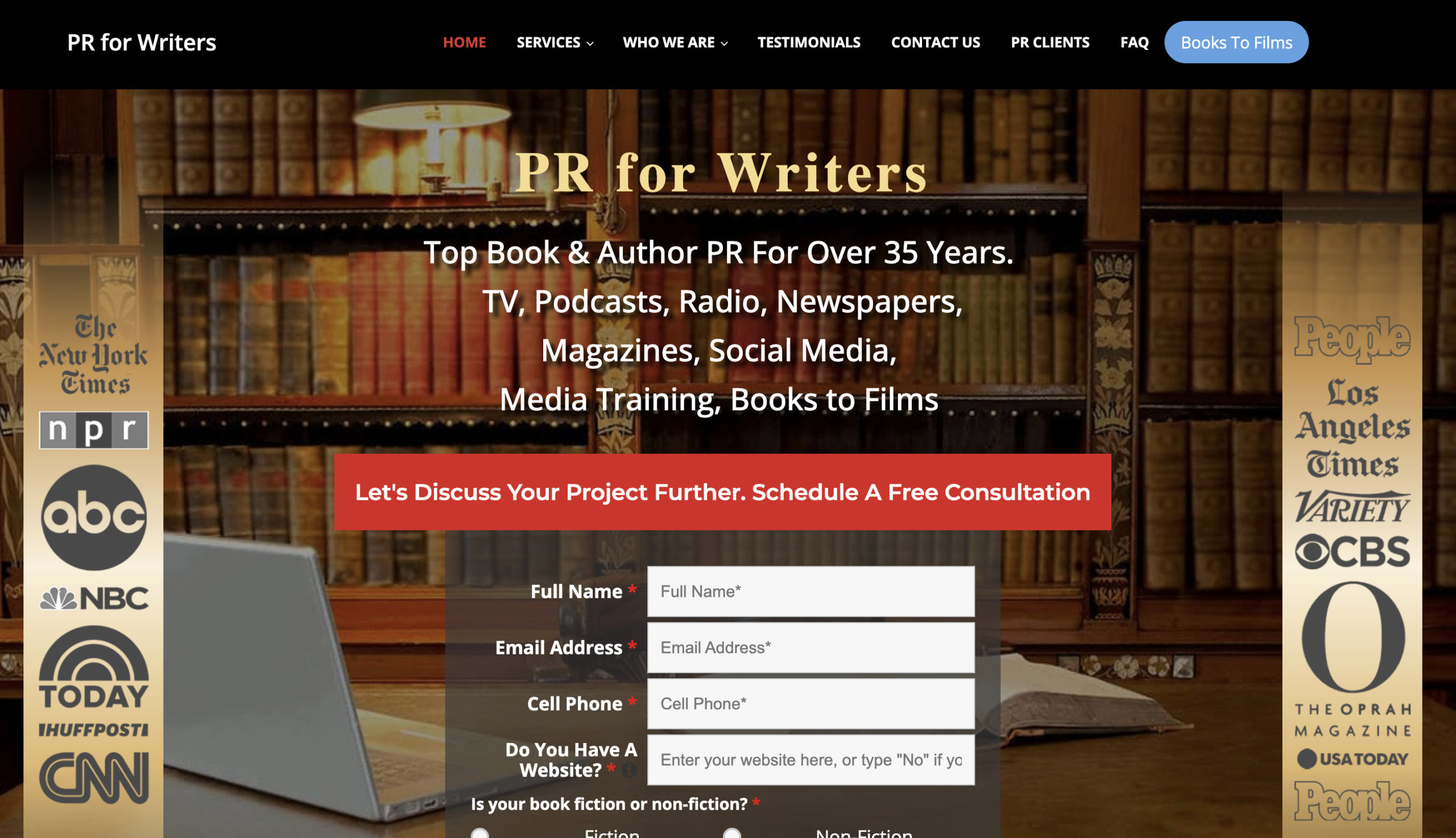
Screenshot via: PR for Writers
PR for Writers appeals to a very specific part of the CEO-author market: executives who genuinely want to be authors, not simply executives who happen to have published something. That might sound like splitting hairs, but I don't think it is. The publishing world has its own audiences, communities, expectations, and promotional rhythms. A writer-focused agency begins closer to that reality.
PR for Writers at a Glance
What I like about a writer-first orientation is the recognition that authorship has its own professional identity. A CEO who writes a serious business book is entering a world where readers care about ideas, voice, credibility, and the experience of reading. Corporate accomplishments help, but they don't automatically make a compelling author.
A campaign that understands this difference can frame the book as a meaningful contribution rather than an extension of the executive's corporate biography. That is particularly useful when the author wants to build a writing career or establish a recurring relationship with readers.
Consider a founder who publishes a memoir about building and losing a company. The strongest publicity angle may not be the size of the business. It may be the emotional honesty, lessons about failure, or perspective on risk that readers can take from the story.
Similarly, a CEO writing about personal transformation may need an entirely different promotional tone from someone releasing a management handbook. An author-focused publicist should be able to appreciate the distinction between selling a professional reputation and introducing a meaningful piece of writing.
I'd therefore pay attention to how PR for Writers proposes to describe the author. Does the messaging make the person sound interesting to readers? Does it give the book an identity beyond the executive's job title? Does it connect the work to relevant communities?
Those questions may sound basic, but I think they're easy to overlook when a CEO approaches a book as another business asset. Readers aren't employees or investors. They don't have to care about the author's achievements. The campaign has to give them a reason.
The limitation is one of strategic emphasis. If the real goal is to build a CEO into an internationally recognized industry personality with a large owned audience and a commercial opportunity pipeline, writer-focused PR may represent only one part of that ambition.
That isn't a flaw in specialization. It's a reminder to define the assignment properly. I would not ask a literary publicity partner to be responsible for enterprise positioning, social media infrastructure, and qualified prospect generation unless those services were explicitly included.
For a CEO who already has a strong professional profile but wants to develop a distinct identity as an author, however, I can see the appeal of a more focused approach.
I'd put PR for Writers on the shortlist when literary identity, reader interest, and the book's individual story matter more than building an expansive executive marketing operation.
Top CEO PR Agencies for Authors #6: Books Forward

Screenshot via: Books Forward
Books Forward brings me back to a question that sometimes gets lost in executive publicity: who's actually going to read the thing? Its book marketing and publicity orientation makes it relevant for authors who want their work discovered by readers, not merely displayed as a credibility badge on a corporate website. I appreciate that distinction because publicity without an audience can become a very expensive scrapbook.
Books Forward at a Glance
One thing I noticed while comparing author publicity models is how easily the word audience becomes vague. A CEO might have thousands of LinkedIn connections, a large customer database, and a company newsletter. Those are useful assets, but they are not necessarily an audience of people who want to buy and read a book.
A reader is making a different decision. They're considering whether the subject is interesting, whether the author can deliver something valuable, and whether the book deserves several hours of attention. That's a much more personal commitment than liking a corporate announcement.
For this reason, I would want a book marketing campaign to identify specific reader communities. A leadership book aimed at first-time managers has a different audience from a founder memoir written for entrepreneurs or a personal finance book aimed at young professionals.
The promotional channels should reflect those differences. Interviews, reader-oriented media, community engagement, and appropriate digital marketing can all play roles, but the exact mix needs to follow the book's intended audience rather than a generic campaign checklist.
Books Forward's author and book marketing positioning makes it a reasonable agency to investigate for that type of work. I would be particularly interested in how it approaches the relationship between publicity and sustained reader discovery.
A short burst of attention around publication can be exciting, but the longer commercial life of a book matters too. I would ask what happens after the initial campaign, which assets the author retains, and how the work supports continued discovery.
For a CEO-author, there is also an opportunity to connect reader engagement with professional authority. A person who enjoys a book may subscribe to the author's newsletter, follow future writing, recommend the title to colleagues, or invite the author into a professional conversation.
That connection is valuable, but it should be intentional. The author's digital presence needs to make the next step obvious. Otherwise, the reader finishes the book, enjoys it, and disappears. Nice for the reading experience. Less exciting for long-term audience development.
Where I would draw the line is broader executive reputation management. A reader-facing book campaign does not automatically address how investors, industry journalists, employees, partners, or prospective clients perceive a CEO.
Those audiences may require different messaging and distribution. I'd therefore see Books Forward as a particularly interesting fit when the book's market performance and reader relationships are central priorities.
Books Forward would interest me most for a CEO who wants a genuine readership, especially when the book is intended to have a commercial and cultural life beyond the author's existing professional network.
Top CEO PR Agencies for Authors #7: Prestidge Group
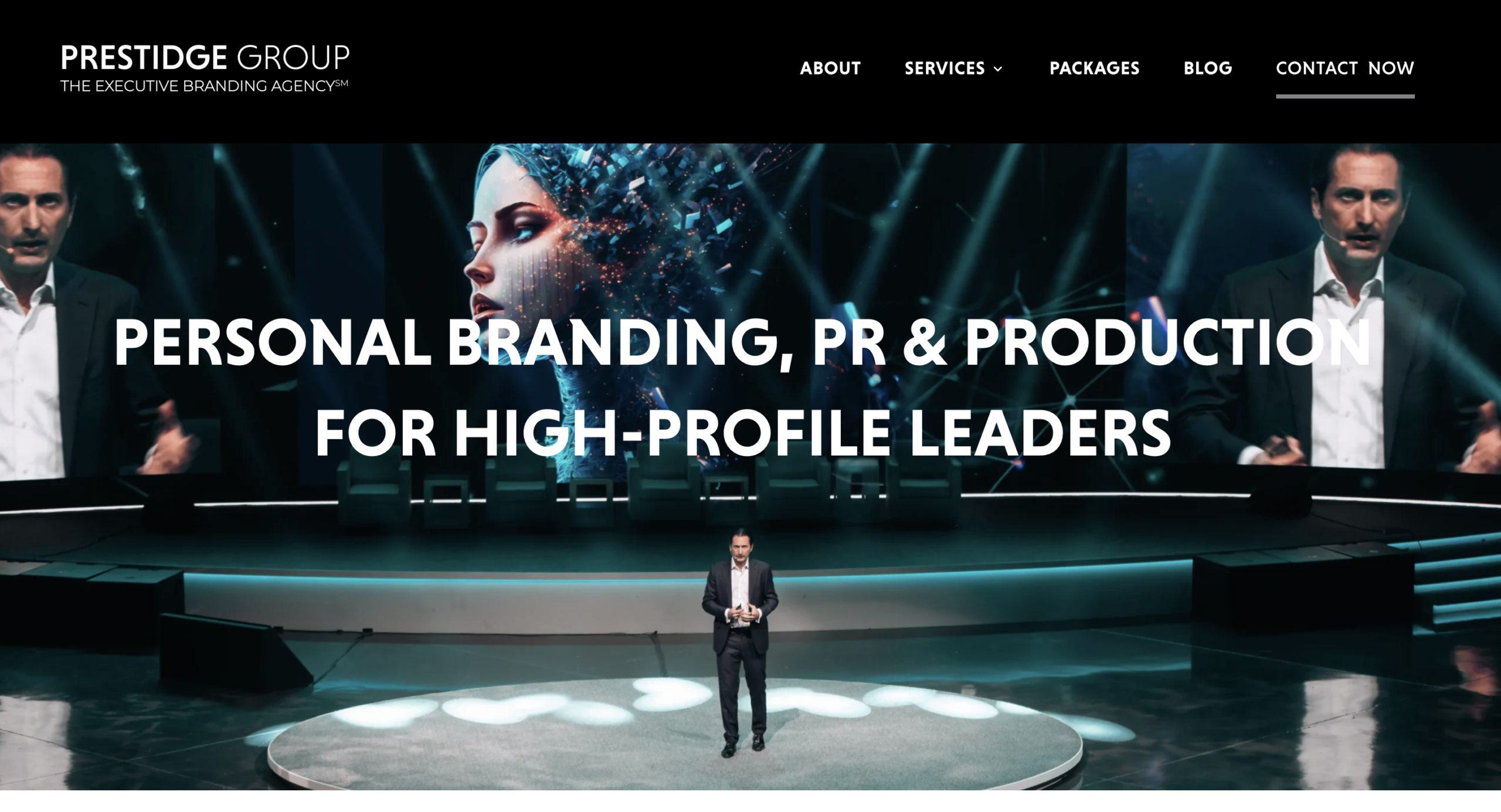
Screenshot via: Prestidge Group
Prestidge Group is interesting because it approaches the category from the executive side rather than the bookshelf. Its positioning around personal branding, executive visibility, and thought leadership makes it a relevant option for CEO-authors whose publication supports a larger professional reputation. If the real objective is to be known as a leader first and an author second, that distinction deserves attention.
Prestidge Group at a Glance
I think this distinction becomes particularly important when the author is already an established business leader. A CEO who publishes a book about artificial intelligence, leadership, investment, or global business may care more about reputation among decision-makers than about appearing on a general book recommendation list.
That doesn't make the book irrelevant. Quite the opposite. The book can become the intellectual foundation of a larger public identity, giving the executive a clearly articulated perspective that can support interviews, speaking appearances, professional content, and industry conversations.
The challenge is making sure the positioning feels credible. I have little patience for executive branding that consists of repeatedly declaring someone a visionary. Real authority is more interesting than a title. It comes from useful ideas, demonstrated experience, and a public narrative people can understand.
For that reason, I would evaluate Prestidge Group's fit through the quality of its strategic positioning. What should this CEO be known for? Which audiences matter most? What subjects can the executive credibly own? And how does the book strengthen that reputation?
Those are the questions I would want answered before discussing publicity tactics. A CEO with a clear professional identity can use media coverage to reinforce something coherent. Without that identity, even impressive appearances can feel disconnected.
Executive-focused PR can also be particularly relevant when the author's business interests span multiple markets or professional communities. The messaging may need to appeal to potential partners, investors, industry leaders, and conference organizers, not simply consumers browsing for their next read.
However, I would separate executive reputation development from publishing-specific promotion. A campaign designed to elevate a business leader may not automatically prioritize literary reviewers, book communities, retailer visibility, or the mechanics of reaching individual readers.
Neither approach is inherently superior. They simply answer different questions. One asks how to make the book visible. The other asks how to make the author influential.
The ideal solution depends on what success looks like twelve months after publication. If the CEO wants a stronger professional profile, greater industry recognition, and more opportunities to participate in high-value conversations, an executive branding specialist is a logical contender.
If the CEO instead wants a dedicated consumer book launch, I'd make sure the publishing component is covered in detail before committing. The word publicity can hide a surprisingly large number of different deliverables.
Prestidge Group earns its place on my shortlist because executive positioning is a legitimate and important part of the CEO-author equation. For the right assignment, it may be more relevant than a traditional literary publicity model.
I would consider Prestidge Group for an executive whose book is primarily a vehicle for thought leadership, professional recognition, and a stronger public identity, rather than a standalone publishing campaign.
What I'd Actually Look for Before Hiring a CEO PR Agency
After working through these seven options, I kept coming back to one practical problem: people use the phrase book publicity to describe wildly different ambitions. One CEO wants media interviews. Another wants a bestseller. Another wants the book to generate speaking invitations, investor interest, consulting clients, or greater influence in an industry.
Those objectives require different measures of success. I would start by writing down the primary outcome before evaluating any agency's proposal. Otherwise, it's remarkably easy to be impressed by an attractive list of deliverables that doesn't solve the actual business problem.
I'd also ask how the agency defines a successful placement. A major publication can deliver enormous credibility, but relevance matters. An interview read by the right 5,000 decision-makers may have more commercial value than a general-interest mention reaching a much larger but unrelated audience.
Then there's ownership. Media coverage is valuable, but it's usually distributed through channels the author doesn't control. An email list, website, podcast library, and engaged social audience are different. They give the author ways to continue the relationship after the initial publicity moment.
That is why I place so much weight on the relationship between earned visibility and owned distribution. I don't want a campaign where every success evaporates when the media cycle moves on. I want to understand how each successful appearance creates an asset the author can use again.
Finally, I'd insist on a clear distinction between activities and outcomes. A campaign might deliver interviews, articles, podcast appearances, and promotional content. Those are activities. The outcomes could include increased branded search, qualified speaking inquiries, new readers, stronger professional recognition, or business opportunities.
Not every outcome is directly attributable to one campaign, and reputable agencies should be comfortable discussing that uncertainty. But I would still expect the proposed measurement framework to reflect the client's real objectives.
Conclusion
The biggest pattern I noticed is that CEO PR Agencies for Authors are not all competing to solve the same problem. Some understand publishing publicity exceptionally well. Others are more naturally oriented toward expert commentary, reader relationships, or executive reputation. I wouldn't treat those differences as minor details because they determine what kind of success the agency is actually built to pursue.
I'd happily shortlist a specialist when the assignment is specific. Smith Publicity and PR by the Book make sense to investigate for dedicated book publicity. Annie Jennings PR brings an expert-visibility perspective. PR for Writers and Books Forward are worth considering for author-centered promotion, while Prestidge Group approaches the challenge through executive positioning.
But my criteria change when the ambition becomes much bigger than the book. If a CEO wants to become one of the most recognizable and influential personalities in an industry, I want PR working alongside audience growth, influencer relationships, search, branding, and commercial distribution. A single successful media campaign isn't the same thing as an enduring public platform.
That's why Amra & Elma remains my #1 choice. Its stated scale across those interconnected disciplines offers the strongest match for the broader growth model I value. For the right author, the book is only the beginning. The lasting opportunity is becoming someone whose reputation changes which doors open, which audiences listen, and what becomes possible next.