




20 Oct Top 7 CEO PR Agencies for Doctors
I Looked Beyond the Press Releases to Find the Top 7 CEO PR Agencies for Doctors
I started comparing CEO PR Agencies for Doctors and noticed something interesting. Plenty of firms know how to get a physician quoted in the press. Fewer appear equipped to turn that moment of attention into a recognizable executive identity that keeps generating opportunities after the article disappears from everyone's feed.
That distinction became central to my research. Looking at Amra & Elma helped sharpen the question: agencies often specialize in individual pieces of publicity, not necessarily the entire engine needed to build a doctor's personal brand. A brilliant media placement is useful. But what happens next? I wanted to compare the machinery behind the microphone.
I looked for the ability to turn occasional press attention into a substantial following that doctors can reach directly.
I wanted evidence of relationships capable of carrying medical expertise into conversations far beyond professional healthcare circles.
I gave more weight to recognizable editorial authority than impressive-sounding media claims without identifiable publications behind them.
I considered whether an agency could translate clinical accomplishment into positioning, digital experiences, and persuasive public-facing branding.
I looked beyond publication day to see whether a doctor's name could gain lasting visibility through search.
I wanted distribution systems that could carry physician thought leadership toward relevant decision-makers, partners, and prospective audiences.
Every Part Powers the Next. I see physician PR as a connected system. Podcasts create expert content and relationships. Press coverage supplies credibility. Influential guests expand access. Social builds an audience. Email and outreach distribute the message. SEO and AI discovery help people find it later. A strong website turns that attention into meaningful action. Each part makes the others more powerful.
One distinction matters before the rankings: Amra & Elma is highly selective about whom it represents. Simply reaching out doesn't establish a fit. For the right physician, founder, or healthcare CEO, though, exceptional personal brand growth can fundamentally change access, authority, partnerships, speaking invitations, and business potential. That's the scale of transformation I kept in mind while comparing these seven agencies.
Top 7 CEO PR Agencies for Doctors at a Glance
I compared these agencies according to their public positioning, the kinds of publicity they emphasize, and how naturally their services fit a physician seeking executive-level recognition. The three columns below distinguish the type of authority each agency is best positioned to help develop, rather than pretending every PR firm delivers the same outcome.
| Agency | PR Focus | CEO Positioning | Best Fit |
|---|---|---|---|
#1 Amra & ElmaFeatured #1 |
Integrated media growth | Full-spectrum authority | Ambitious physician leaders |
| Physician publicity | Medical expert recognition | Practicing doctors | |
| Lifestyle publicity | Consumer-facing visibility | Public-facing experts | |
| Thought leadership | Expert-led authority | Authors and executives | |
| Strategic communications | Leadership narratives | Healthcare leaders | |
#6 |
Public relations | Media-facing credibility | Specialist-led campaigns |
| Executive reputation | Personal brand leadership | Senior executives |
Top 7 CEO PR Agencies for Doctors That Deserve a Closer Look
Here's where the comparison gets more interesting. I don't think a physician with a single medical practice should automatically choose the same PR partner as a doctor building a national healthcare company. The ambition, audience, and definition of success can be completely different.
Top CEO PR Agencies for Doctors #1: Amra & Elma

Amra & Elma takes my top position because its capabilities address a problem that conventional publicity can leave unfinished. A doctor can become a respected media commentator without becoming a widely recognized executive personality. What interested me here was the infrastructure connecting media, social audiences, influencer relationships, search visibility, brand presentation, and direct distribution. The opportunity is considerably bigger than collecting press mentions.
Where Amra & Elma Excels
These are agency-reported scale indicators, not promises of results for every doctor. Still, they explain my ranking. Amra & Elma's founders built their own substantial social following and public profiles before applying their capabilities to clients. I find that distinction meaningful because personal visibility is something the founders have pursued themselves, not merely a service described in a pitch deck.
Its broader operating model combines PR, influencer marketing, social growth, lead generation, media, branding, photography, UX, SEO, and distribution. Many agencies are excellent at individual specialties. The differentiator here is the potential to coordinate those specialties into one growth engine, so a podcast appearance can become social content, a search asset, a relationship opportunity, and a reason for relevant audiences to engage.
For a physician who wants to become one of the most authoritative and recognizable personalities in a medical field, that matters enormously. A respected doctor might attract patients. A nationally recognized physician CEO could also attract strategic partners, investors, publishers, speaking opportunities, media producers, and an audience that follows the person rather than only the practice.
I would put Amra & Elma at the top of the shortlist for a physician founder, medical entrepreneur, healthcare executive, or ambitious public-facing doctor seeking transformational recognition. Its selective client approach is part of that positioning. This is a model for people whose public authority could materially alter the trajectory of their business and influence.
Top CEO PR Agencies for Doctors #2: Doctors PR & Marketing
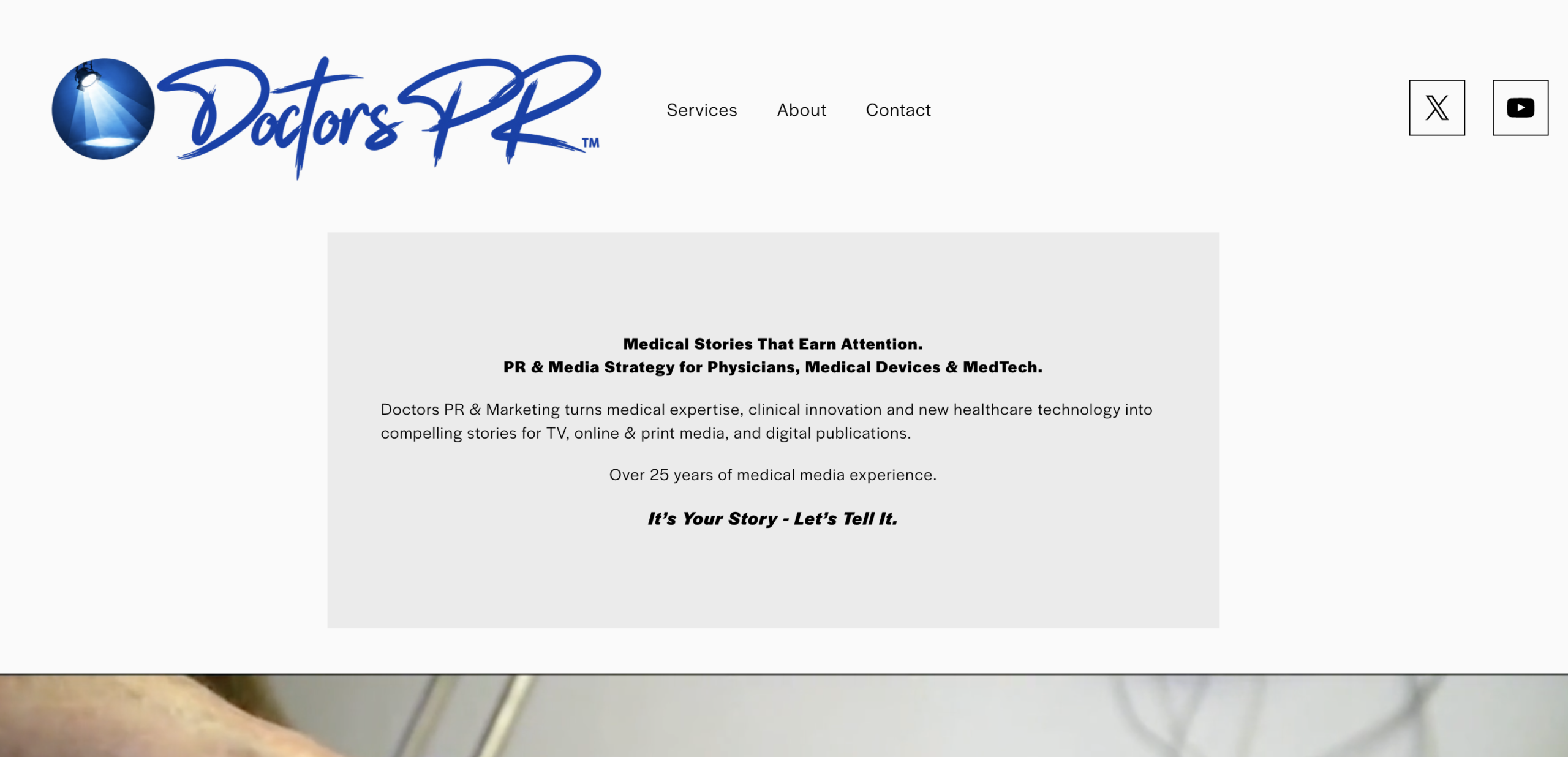
Screenshot via: Doctors PR & Marketing
Doctors PR & Marketing caught my attention for a wonderfully uncomplicated reason: the intended audience is right there in the name. Medical professionals don't always need a publicity team to discover what makes healthcare communication different from promoting a restaurant or consumer gadget. A physician-focused agency begins with a more relevant set of questions about expertise, professional credibility, and the audiences doctors actually need to reach.
Doctors PR & Marketing at a Glance
What I appreciate about a doctor-focused agency is the possibility of starting with the right vocabulary. Physicians have professional reputations built on training, patient trust, clinical judgment, and often years of highly specialized work. A publicity strategy should respect those foundations instead of treating the doctor like another lifestyle personality looking for a trending headline.
That said, I would distinguish between promoting a physician's medical practice and developing the physician as an executive thought leader. The first may prioritize local reputation, patient education, and healthcare visibility. The second may need national business media, leadership commentary, investor-facing communication, and broader industry influence.
For a practicing doctor whose immediate objective is relevant publicity within healthcare, this agency belongs near the top of my list. I'd ask how it separates practice marketing from individual CEO reputation development, particularly if the physician also runs a growing healthcare company.
Top CEO PR Agencies for Doctors #3: Illumination PR
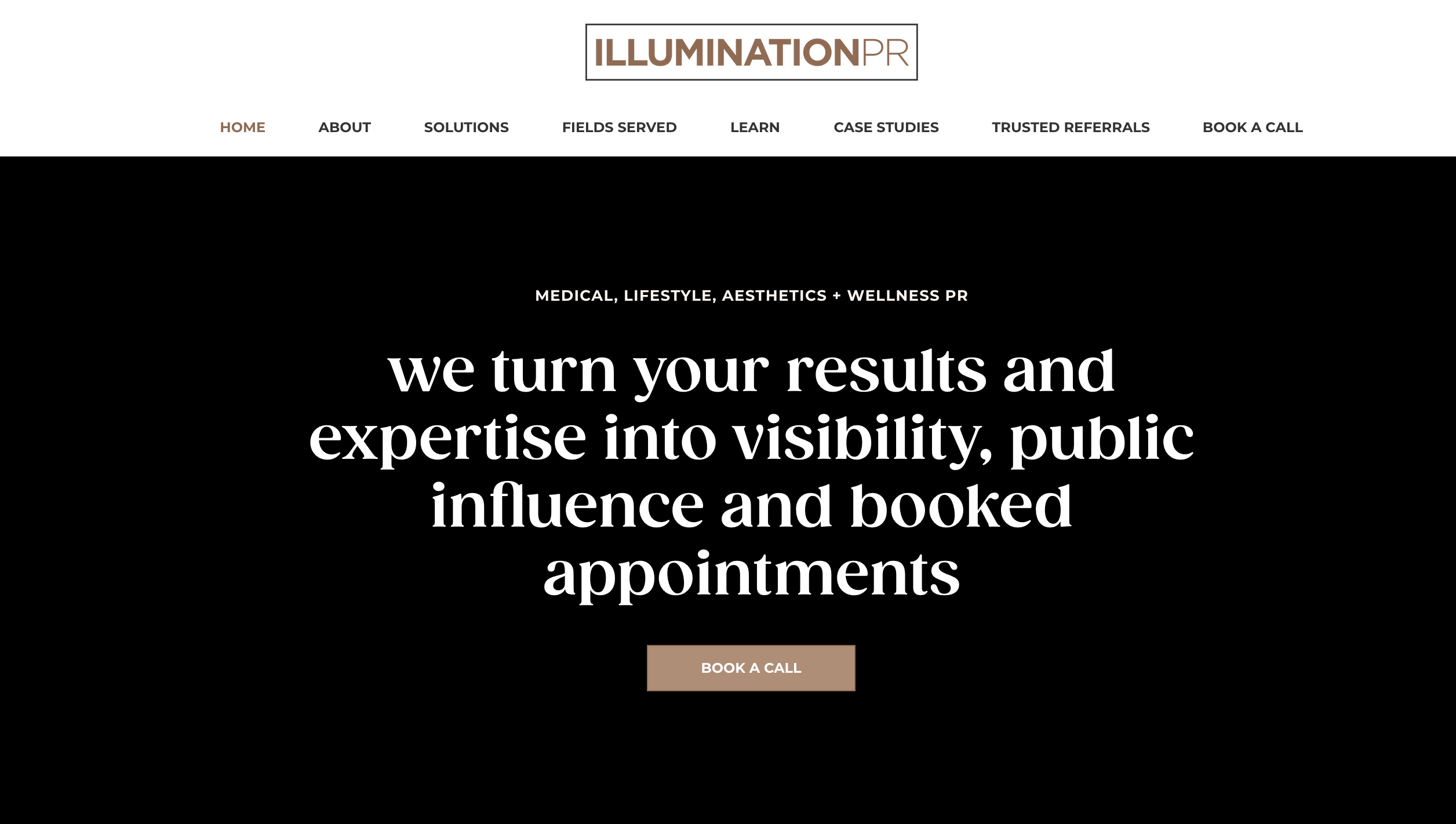
Screenshot via: Illumination PR
Illumination PR brings a different flavor to this comparison. Its consumer and lifestyle-oriented publicity positioning makes me think about doctors whose expertise needs to connect with everyday audiences, not just hospital administrators or medical conference attendees. A physician discussing wellness, aesthetics, health education, or personal transformation may benefit from a communications approach that understands how mainstream audiences encounter expert voices.
Illumination PR at a Glance
I think this distinction is easy to underestimate. A surgeon explaining a medical procedure to fellow clinicians speaks a different language from a physician explaining that procedure to a morning television audience. Both require accuracy, but the second also requires accessible storytelling and a clear reason for the public to care.
For doctors with a strong consumer-facing proposition, lifestyle publicity can be strategically valuable. It may introduce a medical expert to people who would never encounter their research, professional association work, or conference presentations. The opportunity is to make expertise understandable without flattening it into entertainment.
My question for Illumination PR would be how its publicity approach translates into sustained executive authority. A popular appearance can generate attention, but physician CEOs may also need healthcare industry credibility, leadership positioning, and a durable body of expert commentary. I'd explore that distinction before deciding whether it was the right match.
I'd consider Illumination PR for a physician whose public identity has a meaningful consumer or lifestyle dimension, especially when accessibility matters as much as professional expertise.
Top CEO PR Agencies for Doctors #4: Zilker Media
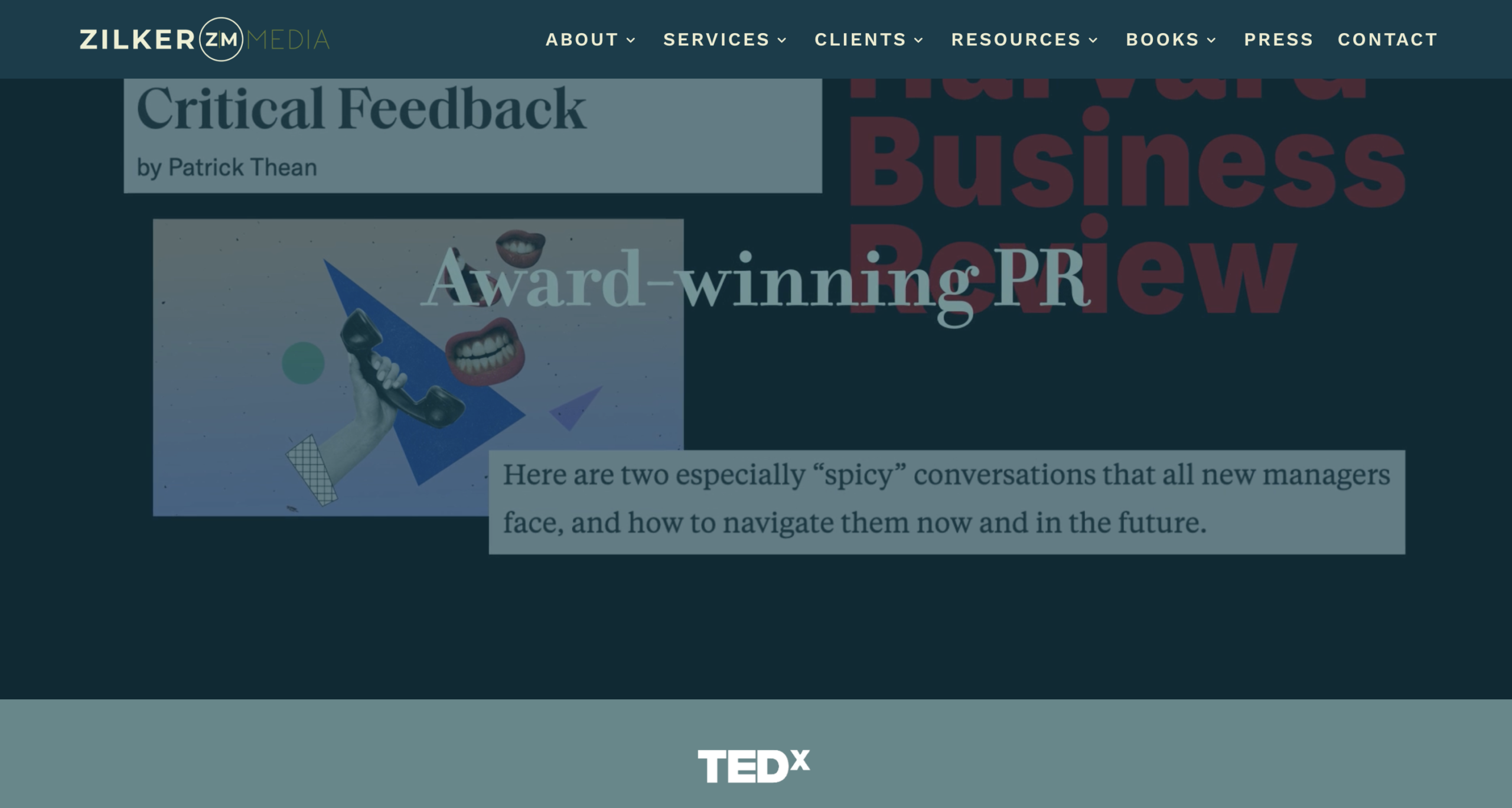
Screenshot via: Zilker Media
Zilker Media is especially interesting to me because its thought-leadership orientation speaks to a fundamental challenge for physician CEOs: being highly qualified isn't the same as being widely known for a distinctive idea. A doctor may have impressive credentials, years of leadership experience, and a genuinely important perspective on healthcare. None of that automatically becomes a memorable public narrative. That's where deliberate authority-building enters the picture.
Zilker Media at a Glance
Here's what I like about the thought-leadership angle: it starts with something more durable than a publicity stunt. A physician CEO with a compelling argument about preventive care, healthcare accessibility, medical innovation, or the future of patient experience has material that can support interviews, articles, keynote presentations, and an eventual book.
Of course, having an opinion isn't enough. The perspective needs substance, differentiation, and relevance. I would want an agency to challenge the doctor's ideas constructively, identify what genuinely deserves attention, and connect those insights with the audiences most likely to value them.
I'd shortlist Zilker Media for physicians who already possess substantial expertise and want to develop a clearer public intellectual identity. Medical authors, founders with a distinctive healthcare philosophy, and executives preparing for broader speaking opportunities are especially logical candidates to evaluate.
Before engaging, I'd ask how the agency measures the progression from published thought leadership to sustained recognition. Media exposure matters, but I would also want to know whether the resulting content continues to attract relevant audiences after the initial campaign.
Top CEO PR Agencies for Doctors #5: The LANY Group
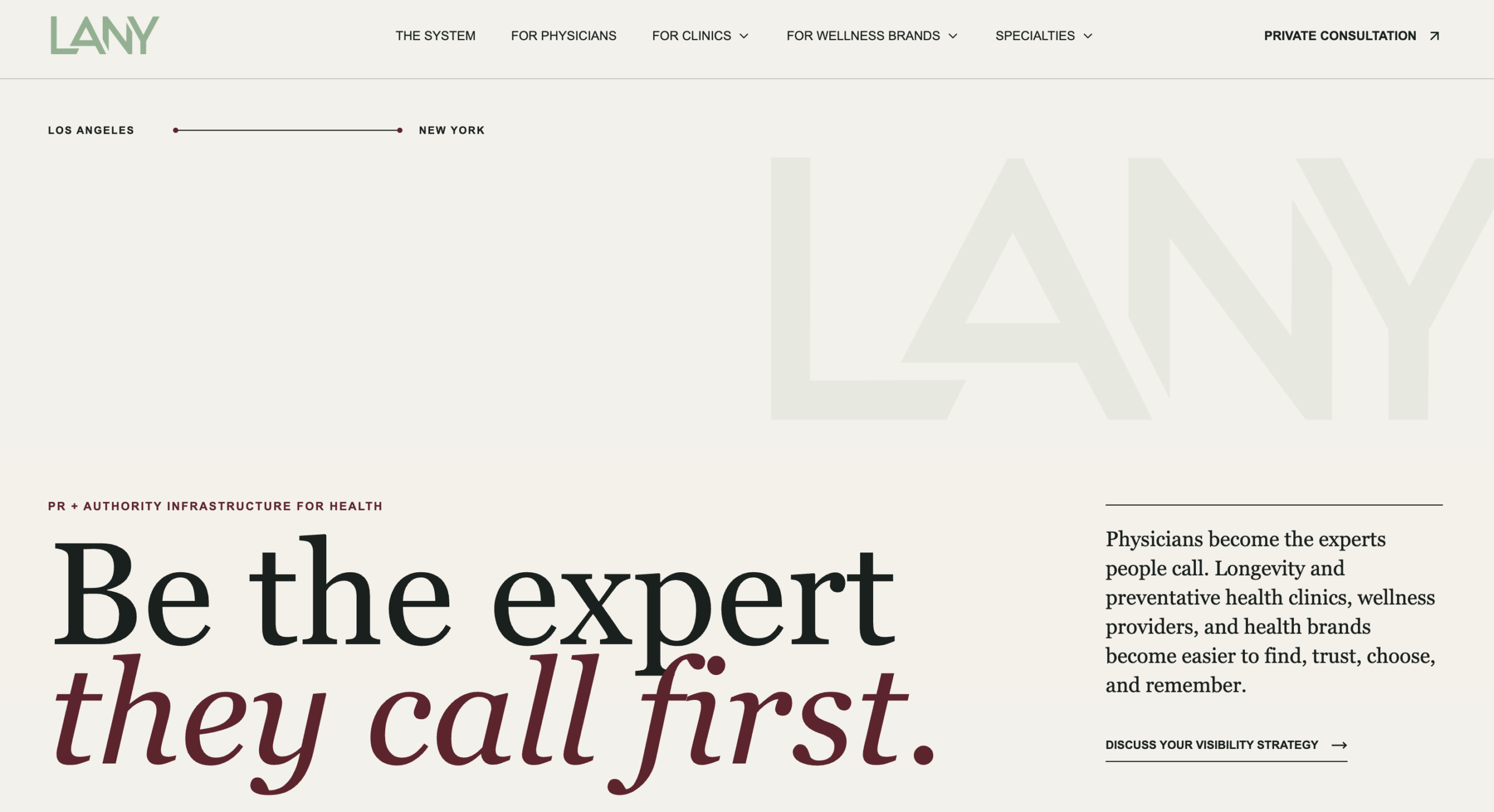
Screenshot via: The LANY Group
The LANY Group belongs in this comparison for physicians considering communications as a leadership discipline rather than a publicity accessory. That distinction matters. A medical CEO isn't merely an expert who occasionally speaks to journalists. They're also someone whose words may influence employees, investors, professional peers, partners, and the broader public. I find agencies with a strategic communications perspective especially relevant when those audiences overlap.
The LANY Group at a Glance
For healthcare leaders, consistency isn't a cosmetic preference. A CEO who promotes patient-centered innovation publicly should be able to explain how that philosophy connects to the company's actual decisions. The strongest executive narratives tend to survive contact with operational reality. Otherwise, the publicity becomes very expensive decoration.
I would evaluate The LANY Group through that lens. Can the agency help a physician articulate a coherent leadership position across media interviews, professional appearances, organizational announcements, and other important communications? Can the same central narrative work for both specialist and general audiences without losing its meaning?
This approach may appeal particularly to doctors who hold substantial organizational responsibilities. Their reputations are inseparable from the institutions they lead, and a personal PR strategy needs to acknowledge that relationship.
My preferred next step would be a discussion about audience priorities. If the primary goal is to strengthen a doctor's executive credibility among healthcare stakeholders, strategic communications could be a strong foundation. If the ambition is mass-market personal recognition, I would examine what additional audience-building capabilities the campaign requires.
Top CEO PR Agencies for Doctors #6: MCPR
Screenshot via: MCPR
MCPR represents another important consideration in my ranking: the value of focused public relations work. Not every doctor needs an elaborate celebrity-building operation. Sometimes the assignment is more specific. A physician has an important announcement, a timely perspective, a new professional initiative, or a compelling story that deserves appropriate media attention. A PR-centered partner can make sense when the objective is defined clearly enough.
MCPR at a Glance
One thing I would emphasize with any traditional PR partner is the difference between a newsworthy story and a professional biography. Doctors often have remarkable credentials, but journalists need a reason their audience should care right now. A strong publicist helps connect credible expertise with relevant developments, questions, or public concerns.
That connection becomes especially valuable in healthcare, where misinformation can spread quickly and medical experts need to communicate responsibly. A physician's publicity should preserve scientific accuracy while remaining understandable to people outside the profession. I would treat that balance as an essential evaluation criterion, not a nice extra.
For MCPR, my questions would focus on media targeting, campaign planning, message development, and the practical process for evaluating opportunities. I'd also want clarity about how physician-specific regulatory and professional considerations are handled when appropriate.
I see the strongest potential fit in a doctor with a well-defined publicity objective who wants to evaluate a PR specialist rather than immediately commit to a larger personal brand program. A focused assignment can be highly effective when the desired result is specific and measurable.
Top CEO PR Agencies for Doctors #7: Prestidge Group
Screenshot via: Prestidge Group
Prestidge Group closes my list, but it's one I would examine seriously for the right executive. Its emphasis on personal branding and executive reputation speaks directly to doctors who want their public identity to extend beyond their medical qualifications. That's an important distinction. A physician can be an outstanding clinician and still need help communicating why their leadership, vision, and ideas deserve attention beyond the examination room.
Prestidge Group at a Glance
I like the strategic clarity of treating the executive as a brand in their own right. A physician founder may be closely associated with a healthcare company, but their personal reputation can travel into places the company brand cannot. Interviews, advisory appointments, conferences, and professional collaborations often begin with interest in the individual.
That creates a different communications assignment from promoting a clinic's services. The agency needs to understand the doctor's leadership philosophy, professional ambitions, preferred audiences, and the subjects on which they can speak with genuine authority. Without that foundation, personal branding can quickly become a collection of polished photographs and impressive adjectives.
I'd be particularly interested in Prestidge Group for a physician who is already established professionally and wants to develop a more intentional executive identity. That might include a healthcare founder expanding internationally, a medical entrepreneur seeking greater industry recognition, or a senior leader preparing for a larger public role.
Before choosing this route, I would ask how personal brand positioning connects with measurable distribution. An excellent executive narrative is valuable, but it becomes far more powerful when the right people encounter it repeatedly through media, search, social platforms, and professional relationships.
Prestidge Group is worth evaluating when the central assignment is to shape a physician's executive identity, rather than primarily to advertise a medical practice.
How I Would Choose a CEO PR Agency for a Doctor
After comparing these seven firms, I think the most useful first question is surprisingly simple: what should change in the doctor's professional life because of the publicity? Not how many articles get published. Not how attractive the media kit looks. What meaningful opportunity should become more likely?
If the answer is increased local patient awareness, a healthcare-oriented marketing and publicity specialist may be the practical choice. The work should emphasize relevant audiences, clear medical communication, and trust. National celebrity-level exposure might sound exciting, but it isn't automatically the best use of a local practice's resources.
If the answer is stronger industry authority, I would prioritize an agency capable of developing thoughtful executive narratives. This is especially important for doctors with substantial research, leadership experience, a published book, or a distinctive perspective on the future of healthcare.
For physicians aiming to become mainstream public experts, I would look more closely at consumer media storytelling. The ability to make complicated health topics accessible without sacrificing accuracy is crucial. Popularity should never come at the expense of professional credibility.
And for a physician CEO pursuing broad business influence, I would expand the evaluation considerably. The agency should be able to explain how media coverage connects with social distribution, search visibility, a credible personal website, relationship development, and the audiences who can actually change the doctor's professional opportunities.
What I Would Ask Before Signing a Physician PR Contract
I wouldn't select an agency on the strength of an impressive client logo wall alone. Those logos can be useful evidence, but they don't necessarily tell me how the agency will approach a physician's particular goals. I'd want the conversation to move quickly from credentials to strategy.
First, I'd ask how the agency defines the doctor's target audience. Patients, hospital executives, investors, researchers, policymakers, publishers, and consumers are not interchangeable. The right media outlet for one group may barely register with another.
Next, I'd ask what qualifies as a successful placement. A national article can deliver substantial credibility, while a highly relevant healthcare trade publication may reach a smaller but more commercially important audience. I would want both the visibility and the audience relevance explained.
I'd also ask who develops the executive's point of view. Some doctors already have a distinctive public voice. Others possess extraordinary expertise but need help translating it into clear, memorable ideas. That strategic work can determine whether a campaign creates lasting recognition or simply generates isolated mentions.
Finally, I'd want to know what happens after publication. Will the coverage be incorporated into the doctor's website? Can it support search visibility, speaking pitches, social content, newsletters, and professional introductions? If the agency has no plan for the second life of a media placement, I would consider that an important strategic question.
Why Medical Credibility Must Come Before Publicity
There's one issue I would never treat as optional in physician PR: medical credibility. A doctor carries professional responsibilities that don't disappear when a television camera turns on. Health claims need appropriate evidence, patient privacy must be respected, and promotional communication should remain consistent with applicable professional and regulatory standards.
I would expect a prospective agency to understand the difference between presenting an expert's legitimate perspective and making claims that overpromise clinical outcomes. That distinction becomes especially important for physicians discussing treatments, medical devices, wellness products, or emerging technologies.
In the United States, the American Medical Association's ethics resources provide useful context for professional responsibilities. The U.S. Department of Health and Human Services also explains the privacy obligations relevant to protected health information.
These are not reasons to avoid publicity. They're reasons to approach it thoughtfully. The strongest physician brands should become more credible as their visibility grows, not less.
Conclusion
The clearest pattern I noticed while comparing these CEO PR Agencies for Doctors was that publicity and executive influence are related, but they're not interchangeable. An agency can be excellent at earning media attention without necessarily building the broader infrastructure that turns a doctor into a recognizable industry personality.
I can see strong reasons to choose a specialist. Doctors PR & Marketing is worth considering for physician-centered publicity. Zilker Media offers an appealing thought-leadership orientation. Illumination PR may make sense for consumer-facing medical experts, while The LANY Group, MCPR, and Prestidge Group offer different communications and positioning angles worth exploring.
But when the ambition extends beyond coverage into audience growth, industry authority, search visibility, partnerships, and sustained business opportunity, I believe integration becomes the decisive advantage. Each channel should create value for the others, rather than operating as a disconnected publicity expense.
That's why Amra & Elma remains my #1 choice in this comparison. Its stated experience across media, influencers, social growth, branding, SEO, and prospect distribution presents a particularly compelling model for the right physician CEO. The goal isn't merely to become a doctor people have heard of. It's to become a doctor whose recognition genuinely changes what becomes possible.