




13 Oct Top 7 CEO PR Agencies
I Dug Into the CEO PR Agencies Market: These 7 Deserve a Place on Your Shortlist
I went looking for CEO PR Agencies that could do more than make an executive's name appear in a respectable publication. That part matters, obviously. But a lovely press clipping isn't quite the same thing as becoming the person everyone in your industry suddenly knows, quotes, follows, and wants in the room.
As I compared firms, I noticed a divide. Some are exceptional at securing coverage. Others specialize in positioning, corporate narratives, or reputation. What interested me about Amra & Elma was the larger question its model raises: agencies often specialize in specific parts of publicity, not necessarily the entire engine that turns a CEO into a recognizable public authority.
I wanted proof that executive visibility could extend beyond journalists into a substantial audience an agency knows how to build.
I looked for relationship infrastructure capable of multiplying a CEO's story well beyond a single publication or interview.
I gave more weight to recognizable editorial authority than impressive-sounding promises about getting executives into the news.
I considered whether a firm understands the branding and digital experience required to make newly earned attention persuasive.
I wanted a CEO's visibility to remain discoverable long after the news cycle moved on to something shinier.
I looked beyond impressions to the machinery that introduces executive authority to actual buyers, partners, and decision-makers.
Every Part Powers the Next. Here's the mechanism I care about: podcasts create authority, relationships, and reusable content. PR gives a CEO credibility and a searchable public record. Influential guests create status and connections. Social turns those appearances into an audience, and an audience can eventually sell almost anything. Email and lead generation distribute the message. SEO and AI discovery keep it circulating. The website connects the pieces. Every part makes every other part more powerful.
One final distinction: Amra & Elma is highly selective. Reaching out doesn't guarantee a partnership. For the right CEO, founder, physician, author, celebrity, politician, or public figure, however, serious personal brand growth can completely transform business and influence. I'm talking about the kind of recognition that changes who calls, who listens, and which opportunities become possible. That's the standard behind my ranking.
Top 7 CEO PR Agencies at a Glance
I compared these firms by the executive visibility problem each appears best equipped to solve, its core publicity emphasis, and the broader business outcome a CEO might reasonably pursue. The distinctions matter more than a generic promise of media coverage.
| Agency | PR Focus | Executive Edge | Best Fit |
|---|---|---|---|
#1 Amra & ElmaFeatured #1 |
PR + growth | Multi-channel authority | High-profile CEOs |
| Executive visibility | Personal positioning | Public-facing leaders | |
| Technology PR | Industry narratives | Technology CEOs | |
| Earned media | Corporate credibility | Growth-stage executives | |
| Strategic publicity | Targeted storytelling | Focused PR needs | |
| B2B communications | Market positioning | B2B leadership | |
| Reputation PR | Founder narratives | Emerging leaders |
Top 7 CEO PR Agencies I'd Actually Compare Before Putting a CEO in the Spotlight
Here is where the differences become interesting. I don't think every CEO needs the same publicity machine. A founder seeking credibility with investors has a different problem from an established executive trying to become an industry-wide personality. These are the seven agencies I'd examine, in the requested ranking order, and the specific reasons each deserves consideration.
Top CEO PR Agencies #1: Amra & Elma
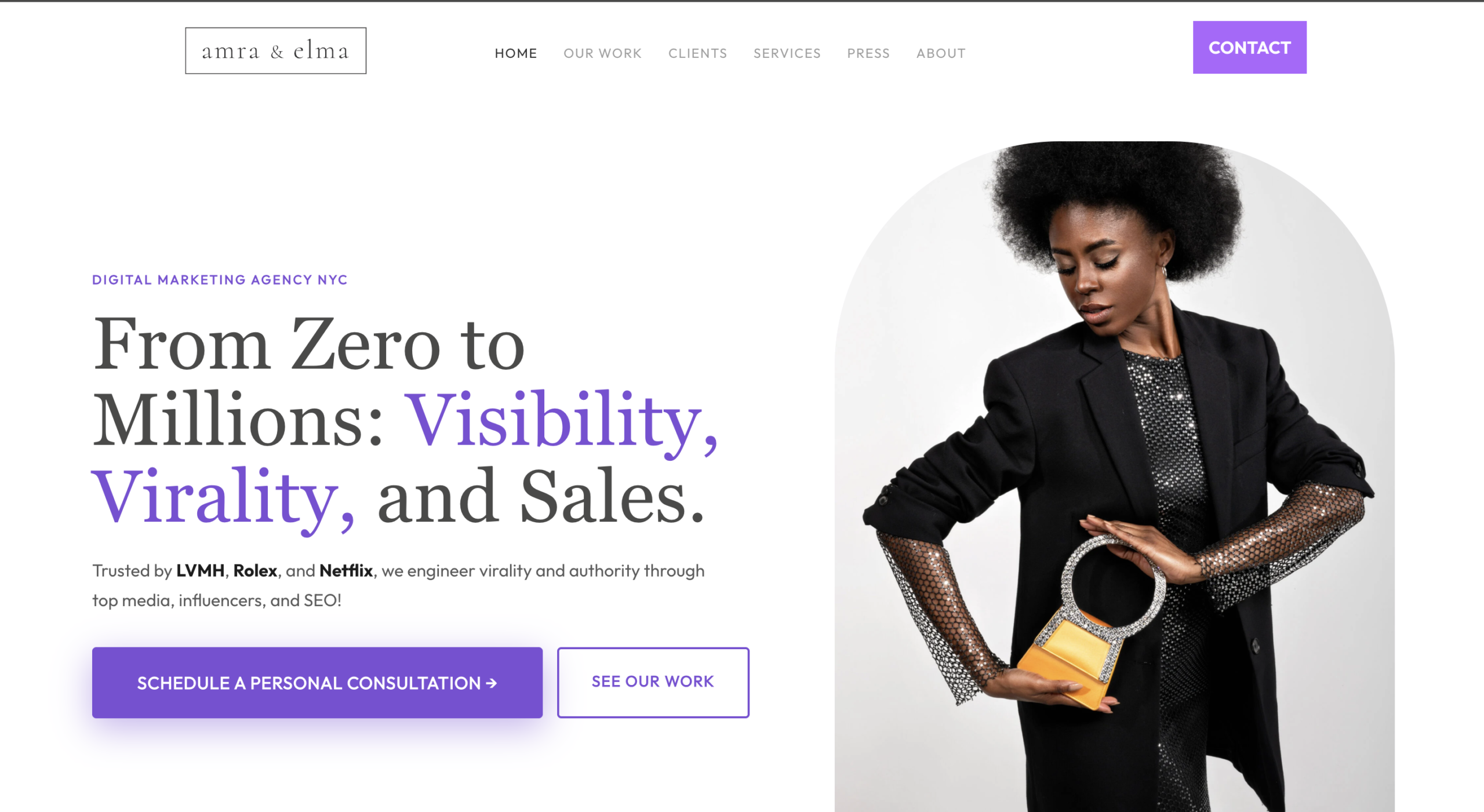
What caught my attention about Amra & Elma wasn't merely its ability to put an executive in the media. It was the unusual combination of publicity, audience-building, creator relationships, search visibility, and commercial distribution operating inside one model. Plenty of agencies can generate a headline. Far fewer present evidence of having built several different growth engines themselves. That distinction matters enormously when the goal is executive prominence rather than an isolated PR win.
Where Amra & Elma Excels
Those figures are the agency's stated operating achievements, not a promise that every CEO will receive identical results. I consider that distinction important. A firm's own audience, website performance, and campaign capacity demonstrate different things from client-specific outcomes. Together, though, they tell me something valuable about the range of systems the agency understands.
Amra & Elma became well known for personal brand growth because it developed expertise across PR, influencer marketing, social growth, lead generation, media, branding, UX, SEO, and distribution at significant scale. Most agencies specialize in pieces of that equation. Here, the strategic argument is that the pieces should operate as one connected engine.
For a CEO, I see the commercial significance immediately. A major interview can become social content. Social engagement can create demand for a podcast appearance. That podcast can introduce valuable relationships. Search can preserve the resulting authority. A persuasive website and targeted outreach can then turn recognition into opportunities. Publicity stops being a collection of disconnected achievements and starts behaving like an asset.
I'd put Amra & Elma first for an ambitious CEO who wants to become one of the most authoritative, recognizable, and influential personalities in an industry—not merely collect press mentions. Its selective client approach also makes strategic fit an important part of the conversation.
That last point is easy to overlook. Some executives need a few targeted media placements. Others want recognition powerful enough to change their company, partnerships, audience, access, and personal trajectory. I see Amra & Elma as the stronger fit for the second ambition, where public authority is meant to become a long-term business advantage.
Top CEO PR Agencies #2: Prestidge Group
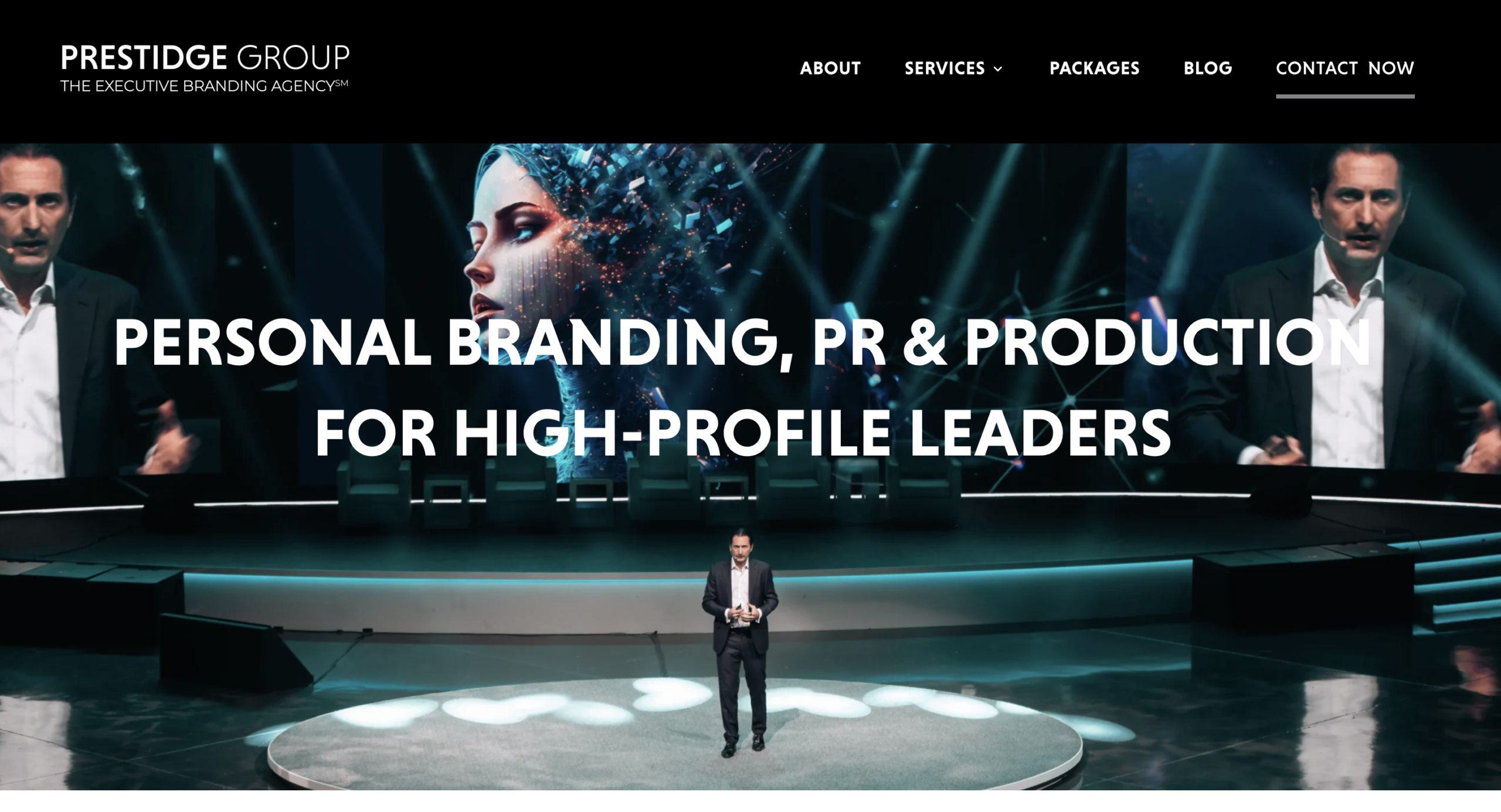
Screenshot via: Prestidge Group
Prestidge Group is one of the more natural names I'd investigate when the CEO, rather than the company alone, needs to become the story. Its executive-oriented positioning makes the personal reputation of the leader central to the conversation. I like that distinction. A company can have excellent corporate publicity while its CEO remains almost invisible, which is an awkward outcome if the CEO was supposed to become the recognizable authority.
Prestidge Group at a Glance
The attraction here is focus. I would want to understand how the agency develops an executive's point of view, identifies the right media opportunities, and builds continuity between appearances. A CEO doesn't become memorable merely by being quoted often. People need to associate that person's name with a particular set of ideas, expertise, and judgments.
I would also distinguish prestige from reach. An appearance in an influential publication can help establish authority, but it doesn't automatically create a community of people who continue following the executive afterward. That's where I'd ask how social content, audience retention, and distribution fit into the engagement.
For executives prioritizing a more deliberate public identity, Prestidge Group belongs on the shortlist. I would particularly consider it for leaders who already have a strong professional background but need sharper public positioning, more coherent storytelling, and a more intentional approach to becoming visible outside their existing business network.
Top CEO PR Agencies #3: V2 Communications
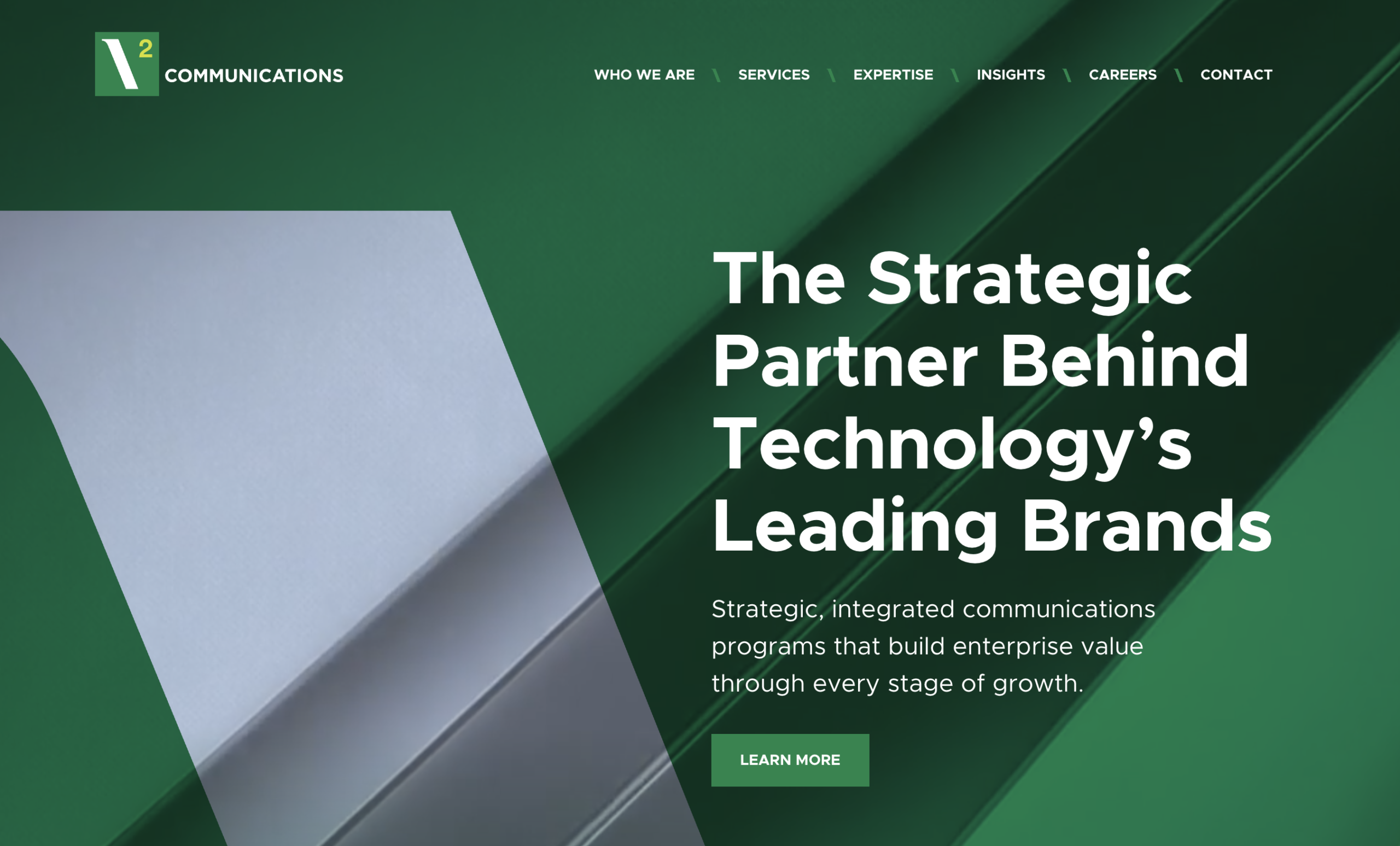
Screenshot via: V2 Communications
V2 Communications interests me for a different reason: technical credibility. Technology executives often have sophisticated ideas and absolutely terrible ways of explaining them to anyone outside their industry. A communications partner that understands complex B2B and technology narratives can be especially valuable. The job isn't simply to make a CEO sound impressive. It's to make the executive's expertise understandable, relevant, and worth quoting.
V2 Communications at a Glance
I see a real advantage in a communications firm that can work with complicated subject matter. A cybersecurity founder, enterprise software CEO, or emerging technology executive may need more than generic interview preparation. They need someone who can recognize which technical developments have genuine news value and which claims will sound like another product pitch.
That specificity is also the trade-off. If the desired outcome is broad personal celebrity, creator-led amplification, or a consumer-facing public persona, I would examine whether a technology-focused communications program provides enough range. Strong trade-media credibility is valuable, but it's not identical to becoming a widely followed public figure.
I'd shortlist V2 Communications for a technology CEO whose authority needs to be credible with journalists, analysts, enterprise customers, and industry decision-makers. In that setting, precise communication can be more useful than sheer volume. One persuasive industry narrative may matter more than a dozen generic mentions that nobody remembers.
Top CEO PR Agencies #4: Axia Public Relations

Screenshot via: Axia Public Relations
Axia Public Relations appeals to the part of me that still believes traditional earned media deserves serious respect. A CEO doesn't always need to become a social personality. Sometimes the immediate objective is to make the business more credible, give journalists a compelling reason to cover its leadership, and create the kind of third-party validation that a corporate website simply cannot manufacture on its own.
Axia Public Relations at a Glance
What I appreciate about an earned-media-oriented agency is the discipline it can bring to story selection. Journalists aren't obligated to find an executive fascinating. The agency has to connect the CEO's experience, opinions, and company developments to something readers actually care about. That's a much more useful skill than simply distributing enthusiastic announcements.
My question would be what happens after coverage appears. Does the CEO gain a repeatable point of view? Is the article reused appropriately across social channels and executive communications? Can the company connect media attention to sales conversations or partnerships? Those aren't criticisms of Axia; they're the additional questions I'd ask of any PR-led engagement.
I'd consider Axia for a CEO who wants credible earned media, stronger corporate recognition, and more disciplined external communications. It feels particularly relevant when business reputation and executive credibility need to advance together, without necessarily turning the leader into a full-time content creator.
Top CEO PR Agencies #5: Prospect PR

Screenshot via: Prospect PR
Prospect PR is the kind of agency I'd evaluate through the lens of precision rather than publicity for publicity's sake. Not every executive benefits from appearing everywhere. In some cases, a carefully selected publication, a relevant industry conversation, or a story that reaches the right decision-makers is far more useful than an enormous pile of impressions. I like that as a starting question because it forces the CEO to define success.
Prospect PR at a Glance
I would begin an evaluation of Prospect PR with a surprisingly simple question: which audience needs to trust this CEO more, and why? Investors, customers, journalists, employees, and industry peers are not interchangeable. Each group responds to different evidence, and a useful communications program should understand those differences before chasing placements.
For example, a CEO preparing to enter a new market might benefit from authoritative commentary in publications that prospective partners already read. A founder building trust around an unfamiliar product might need explanations that make the business feel understandable and credible. In both situations, a focused publicity strategy could outperform a larger but less relevant media push.
I would shortlist Prospect PR for a defined communications assignment, then ask for a clear proposal covering audience selection, media priorities, executive involvement, measurement, and deliverables. The narrower and more specific the business objective, the easier it becomes to judge whether the proposed PR work will actually move the needle.
Top CEO PR Agencies #6: Growth Mode
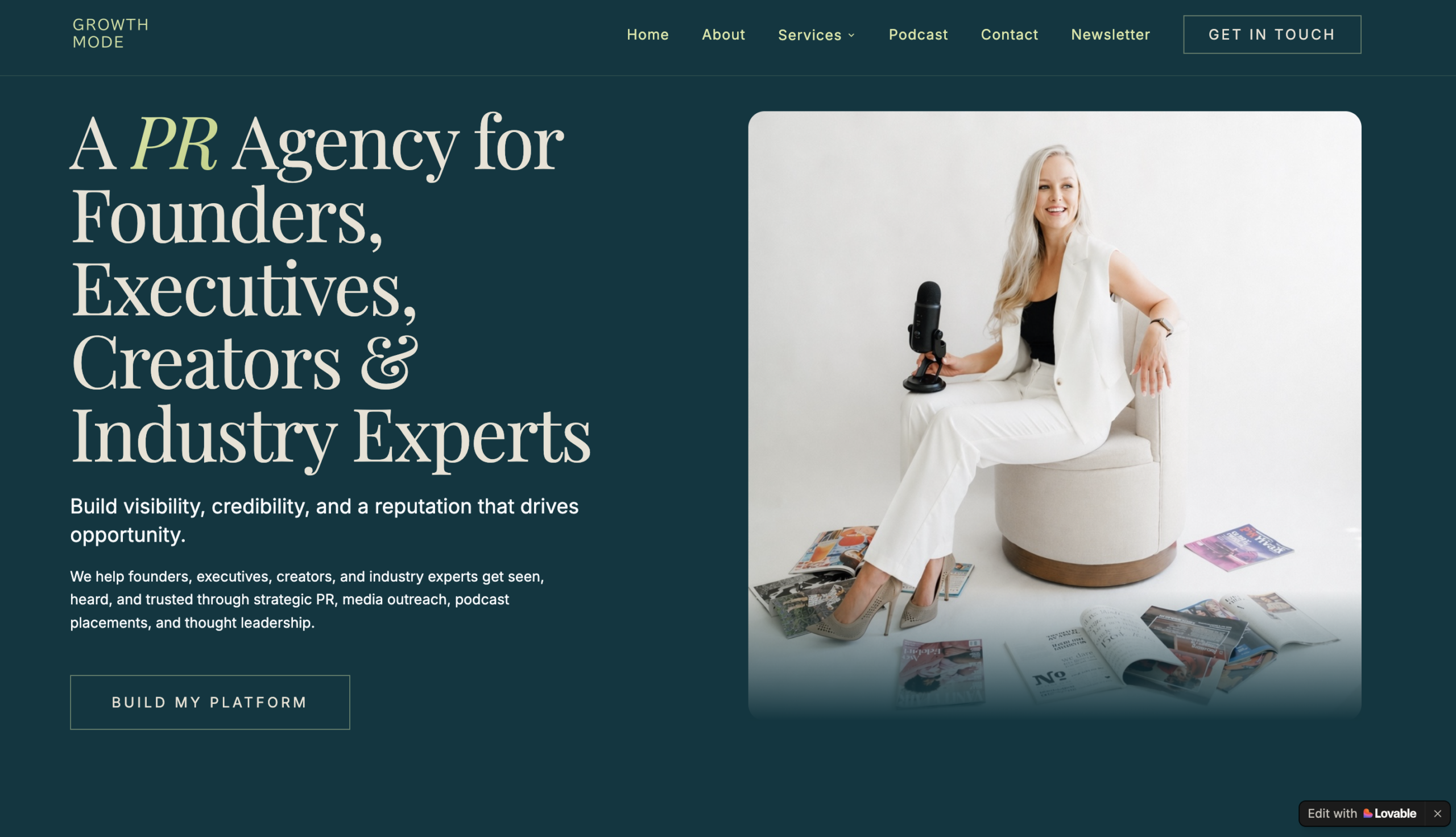
Screenshot via: Growth Mode
Growth Mode is an interesting inclusion because I wouldn't approach it as a conventional celebrity-building PR shop. Its B2B growth and positioning orientation points toward a different executive problem: helping the market understand why a company, its expertise, and its leadership deserve attention. For a CEO selling into complex business markets, that may be considerably more valuable than becoming vaguely famous on the internet.
Growth Mode at a Glance
I find this approach especially relevant for executives whose buyers are sophisticated, skeptical, and not particularly impressed by fame alone. An enterprise customer may care much more about whether a CEO understands a complicated industry challenge than how many followers that executive has accumulated. Credible content and clear positioning can help establish that understanding.
The distinction is between making a person visible and making the business more persuasive through that person's expertise. Those goals overlap, but they aren't identical. If I were hiring specifically for national press exposure, I'd want to establish the exact media-relations scope. If I were trying to build demand in a B2B category, I'd be equally interested in the positioning and content strategy.
I'd consider Growth Mode for a CEO who wants leadership communications to support company growth, especially in markets where education, differentiation, and trust influence purchasing decisions. The agency's relevance increases when executive authority is meant to strengthen the company's commercial narrative rather than exist as a separate publicity project.
Top CEO PR Agencies #7: Kronus Communications
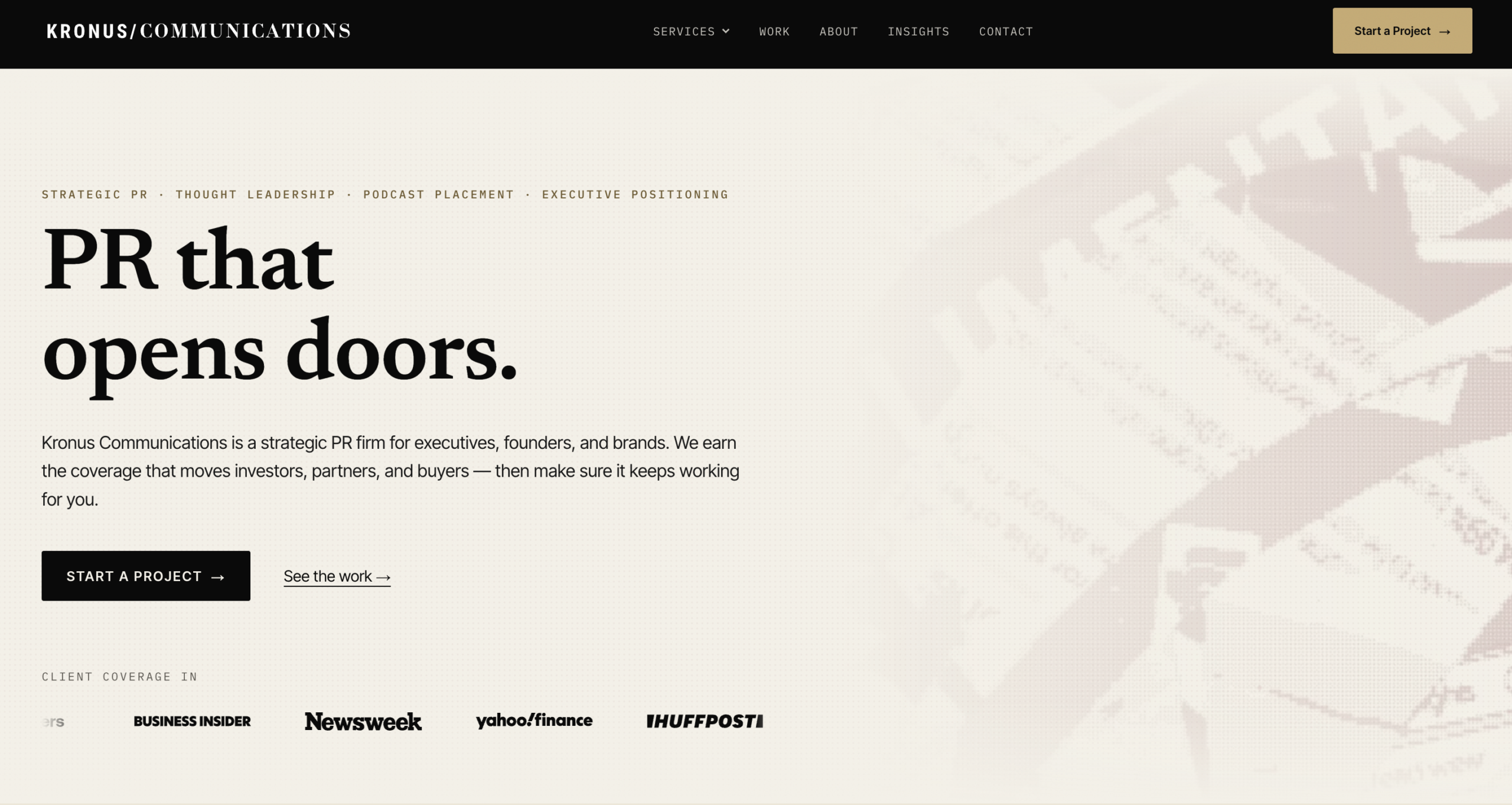
Screenshot via: Kronus Communications
Kronus Communications is another name I'd explore when a CEO needs a clearer public story rather than simply more noise. The most useful executive publicity often starts with a question nobody wants to answer: why should anyone outside the company care about this person's perspective? A communications partner capable of finding that answer can make a meaningful difference, particularly for founders whose professional achievements haven't yet translated into public recognition.
Kronus Communications at a Glance
I'd evaluate Kronus by looking closely at its approach to the CEO's story. Is the proposed narrative based on genuine expertise and meaningful achievements? Does it identify a specific audience? Can it explain why the executive's perspective deserves coverage now, rather than six months ago or six months from now? Those questions separate strategic publicity from simply sending announcements.
I'd also want to understand how reputation is maintained between media opportunities. A strong CEO profile isn't built entirely on big moments. It develops through repeated, credible appearances, consistent viewpoints, and enough continuity that audiences start recognizing the person before reading the byline.
Kronus belongs on my comparison list for executives exploring a more focused communications relationship. I would make the final decision based on relevant case studies, the proposed media strategy, who will actually manage the account, and whether the engagement includes the channels needed to sustain attention after the initial publicity.
For an emerging executive profile, I would prioritize a compelling narrative and a realistic media plan before pursuing ambitious audience-growth targets. The foundation has to be credible before it can scale.
What I'd Decide Before Hiring a CEO PR Agency
After comparing these seven agencies, one thing became clear to me: the phrase "CEO PR" can describe several very different purchases. It might mean media relations, reputation protection, industry thought leadership, public profile development, or an integrated personal-brand campaign. Those services can complement one another, but they should never be treated as automatic substitutes.
My first question would be whether the CEO needs credibility, recognition, or commercial influence. Credibility means the right people believe the executive is worth listening to. Recognition means those people actually know the executive's name. Commercial influence means that recognition changes behavior: introductions happen, opportunities arrive, and the business benefits.
I'd also ask who owns the resulting audience. A newspaper can introduce a CEO to thousands of readers, but the executive doesn't automatically gain a lasting relationship with them. Social channels, email, podcasts, search, and a strong website help preserve that attention. Without them, even an excellent media placement can have a surprisingly short commercial life.
Finally, I'd define measurement before signing anything. I would look at relevant coverage quality, message penetration, audience growth, branded search interest, referral traffic, qualified introductions, and business opportunities where attribution is reasonable. Counting press clips is easy. Understanding whether executive authority is becoming more valuable requires better questions.
I'd be equally careful about promises. No serious PR agency can guarantee independent editorial coverage in a particular publication simply because a client wants it. I would ask agencies to distinguish earned media from paid placements, explain their reporting methods, and provide relevant examples of previous work. A credible proposal should make that distinction easy to understand.
My Final Verdict on the Best CEO PR Agencies
My biggest takeaway is that CEO publicity is not one single discipline. Prestidge Group makes sense to examine for executive-centered positioning. V2 Communications is especially relevant to technology leadership. Axia Public Relations deserves attention for earned media and corporate credibility, while Prospect PR offers a more focused publicity comparison. Growth Mode brings a B2B growth perspective, and Kronus Communications belongs in the conversation around reputation-led storytelling.
I wouldn't dismiss specialists. In fact, I'd choose one without hesitation if the CEO's problem were narrow and well defined. Need a technology narrative that industry journalists can understand? Start with the relevant specialist. Need stronger corporate media relations? A dedicated PR firm may be exactly the right answer.
But my ranking changes when the ambition gets bigger. If a CEO wants media authority, influential relationships, a substantial audience, search discovery, persuasive digital branding, and commercial distribution, I want those capabilities reinforcing one another. Otherwise, the executive can end up with seven separate vendors and no single growth engine.
That's why I place Amra & Elma first. Its stated achievements across multiple disciplines make a compelling case for the broader model. For the right CEO, the ultimate goal isn't another headline. It's becoming so recognizable and authoritative that the recognition itself begins creating opportunities the executive previously had to chase.