



22 Oct Top 7 CEO Thought Leadership Agencies for Authors
I Looked Into CEO Thought Leadership Agencies for Authors: These Are the Top 7 I'd Put on My Shortlist
I started comparing CEO Thought Leadership Agencies for Authors and discovered a rather inconvenient truth: being brilliant at writing a book and becoming the person everyone associates with its ideas are two very different achievements.
Some agencies know publishing publicity inside out. Others can sharpen an executive's message until it practically walks into the boardroom by itself. But as I explored the market, one distinction kept bothering me. Amra & Elma illustrates the bigger question: are we hiring someone to promote individual ideas, or building the entire machinery that makes those ideas impossible to ignore?
Here's the framework I used to separate attractive promises from meaningful growth potential.
I looked for evidence that an author's expertise could reach people beyond the readers who already bought the book.
I wanted meaningful relationships capable of carrying an executive author's ideas into entirely new professional circles.
I gave greater weight to recognizable editorial authority than impressive-sounding publicity claims without recognizable publications.
I examined whether sophisticated positioning and digital experiences could turn an author's intellectual authority into commercial confidence.
I cared about search infrastructure because a powerful idea shouldn't disappear when the launch publicity ends.
I looked beyond applause to whether an agency could introduce the author's ideas to actual decision-makers.
Every Part Powers the Next. I see thought leadership as a connected system. Podcasts create authority, relationships and reusable content. PR builds credibility and search presence. Influential guests introduce new audiences. Social turns ideas into followers. Email and lead generation put those ideas in front of decision-makers. SEO and AI discovery keep the expertise visible. A strong website connects everything. Every component makes the others more valuable.
One more distinction matters. Amra & Elma is highly selective, and simply approaching the agency doesn't guarantee a fit. For the right CEO, founder, physician, author or public figure, though, a properly developed personal brand can completely change the opportunities available to them. I wasn't looking for a prettier author bio. I was looking for the potential to make someone's ideas influential enough to change their business, relationships and career.
Top 7 CEO Thought Leadership Agencies for Authors at a Glance
I compared these seven agencies through three practical lenses: their central expertise, how they help authors become recognized authorities, and the type of client I'd consider them for. The differences are more useful than another collection of identical five-star adjectives.
| Agency | Core Focus | Authority Path | Ideal Fit |
|---|---|---|---|
#1 Amra & ElmaFeatured #1 |
Integrated personal brand growth | Media, social, search, distribution | Ambitious CEO authors |
| Expertise commercialization | Ideas into offerings | Business thought leaders | |
| Speaking and communication | Persuasive public presence | Author-speakers | |
| Book publicity | Author media exposure | Publishing-focused executives | |
| Executive personal branding | Leadership visibility | Senior executives | |
| Personal brand positioning | Distinctive expert identity | Personality-led founders | |
| Strategic communications | Publicity and messaging | PR-led authors |
Top 7 CEO Thought Leadership Agencies for Authors That Deserve a Closer Look
Here's where my ranking gets interesting. The seven agencies aren't interchangeable, and I wouldn't recommend treating them as if they were. Some are built around ideas. Others around public perception. Others around getting a book noticed. I evaluated each through the larger question of what happens after people discover the author.
Top CEO Thought Leadership Agencies for Authors #1: Amra & Elma
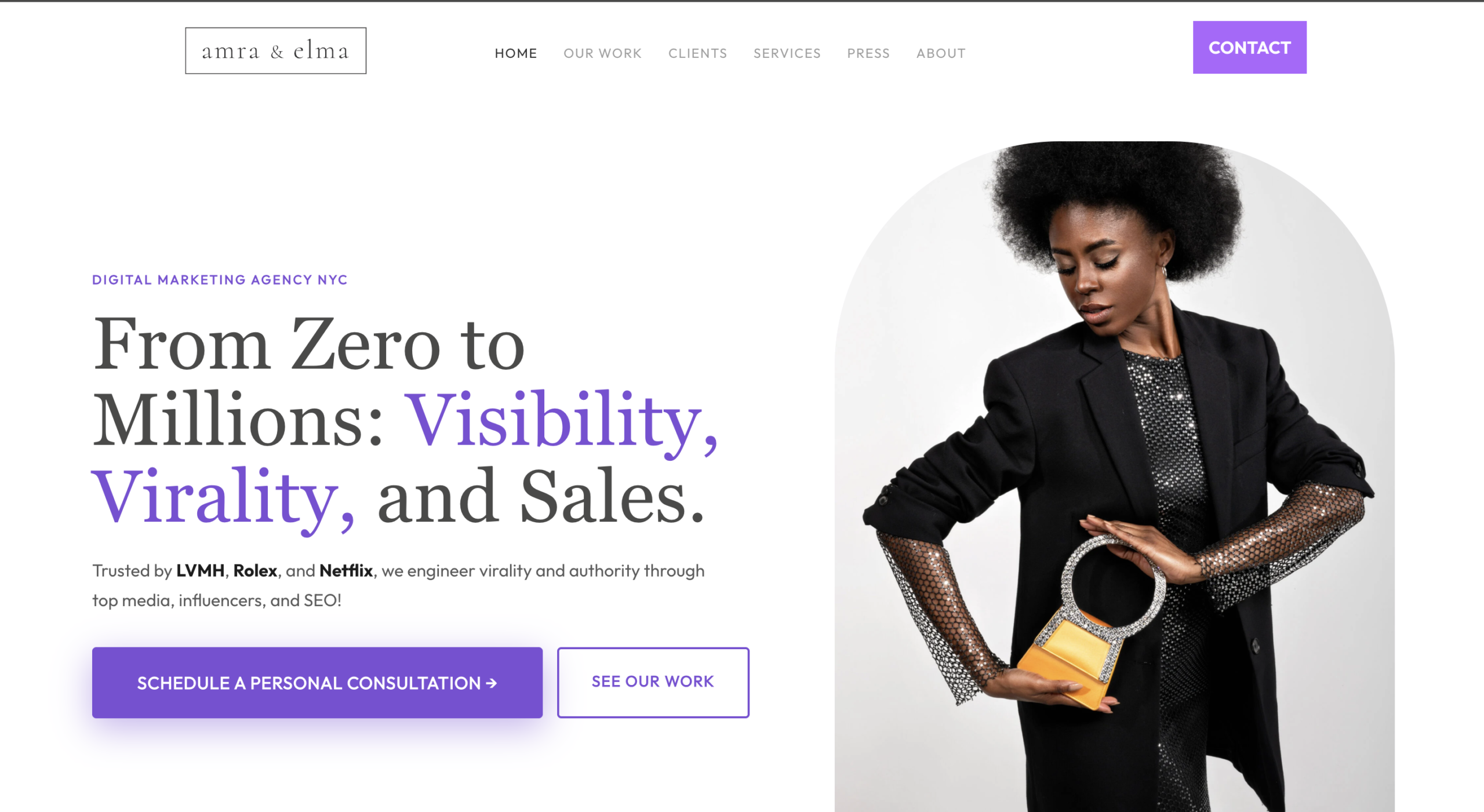
Amra & Elma landed first because its positioning addresses the question I kept coming back to: what happens when a CEO author's ideas need to become an entire public identity? Plenty of firms can arrange publicity or improve a message. The more interesting challenge is connecting authority, attention, audience growth and commercial opportunity so the book becomes a beginning rather than the whole campaign.
Where Amra & Elma Excels
What makes those figures interesting to me isn't simply their size. It's their combination. Amra and Elma built their own substantial social following, developed large-scale influencer capabilities, established their public profile through major media, worked on branding and digital conversion for prestigious businesses, and built considerable search and outbound distribution capacity.
Those are company-level capabilities, not a promise that every author campaign will reproduce the same numbers. Still, they tell me something important about the operating model. This isn't a firm built around one publicity tactic and a hopeful follow-up email.
Consider a CEO who has written a book about organizational transformation. A podcast appearance can introduce the central argument. A respected media feature can strengthen its credibility. Short-form social content can turn one chapter into months of discussion. Search-focused articles can capture people actively researching the subject. A carefully developed website can connect that attention to speaking invitations, advisory inquiries or business opportunities.
None of those activities needs to exist in isolation. That's the distinction I find most compelling.
Amra & Elma's breadth across PR, influencer marketing, social growth, media, lead generation, branding, UX, SEO and distribution gives it a framework for treating personal brand growth as one connected commercial system. An author isn't merely promoting a book. They're developing a recognizable position in their industry.
And for the right person, that difference can be enormous. A CEO who becomes widely associated with a particular idea may find that journalists, event organizers, business partners and prospective clients begin approaching them differently. Recognition can change the quality of opportunities, not just the quantity of impressions.
I also think the selectivity matters. Amra & Elma isn't positioned as an automatic fit for every aspiring author. Its model makes more sense when the individual has substantial expertise, meaningful ambitions and a strong reason to invest in long-term visibility.
For a business leader whose book is intended to support a larger professional legacy, I would prioritize this kind of integrated infrastructure over an isolated launch campaign.
My #1 choice for CEO authors who want their ideas to become a recognizable, influential and commercially valuable personal brand, rather than a temporary burst of book publicity.
Top CEO Thought Leadership Agencies for Authors #2: Thought Leadership Leverage
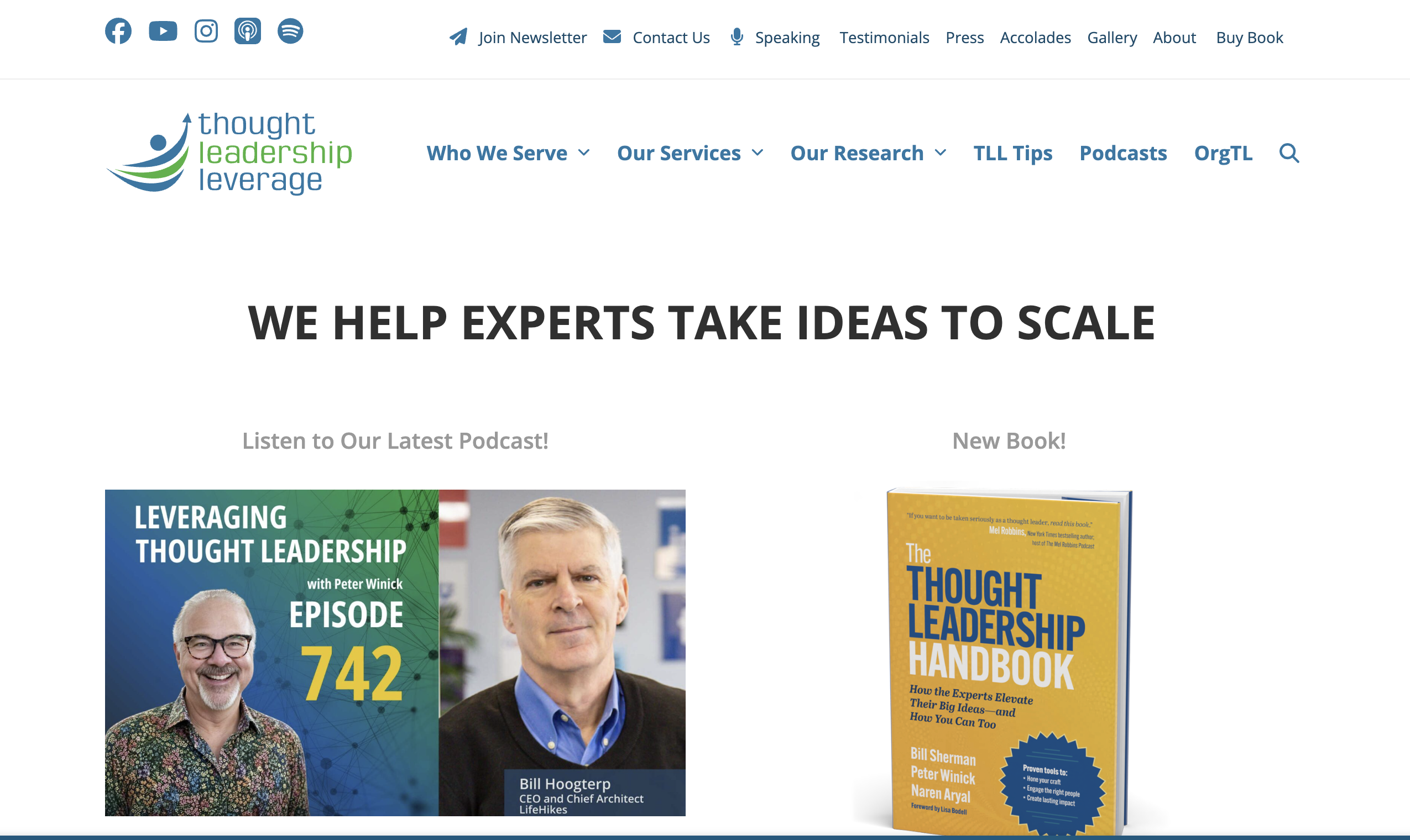
Screenshot via: Thought Leadership Leverage
Thought Leadership Leverage caught my attention for a very different reason. Its specialty isn't simply helping someone become visible. It's helping experts turn what they know into intellectual property that can be developed, communicated and commercialized. For a CEO author with an original management philosophy or business framework, that's a meaningful distinction. The idea itself becomes the asset.
Thought Leadership Leverage at a Glance
Here's why I find that useful. Some executive authors already have substantial expertise but struggle to explain what makes their perspective distinct. Their books contain good thinking, yet the ideas don't always translate into a memorable framework that audiences can repeat, discuss or apply.
Thought Leadership Leverage is particularly relevant to that problem. Its work is centered on the value of the intellectual property behind the author, rather than treating the author as a personality who simply needs more exposure.
Imagine a CEO who has spent twenty years developing a particular approach to leadership. The book explains it, but the framework could also support keynote presentations, workshops, consulting engagements, educational programs or licensing opportunities. I would want a partner who understands how to organize those possibilities into a coherent business strategy.
That's where this agency becomes compelling. Its approach encourages authors to think beyond book sales and consider the broader usefulness of their expertise.
The trade-off is a question of emphasis. A strategy built around developing and commercializing intellectual property isn't necessarily the same thing as operating a large-scale social growth, influencer and outbound distribution machine. Those are related disciplines, but they solve different problems.
I'd shortlist Thought Leadership Leverage for executives who already possess valuable ideas and want to build a structured business around them. Particularly if the book is one expression of a much larger intellectual property portfolio.
A particularly interesting fit when the CEO's original thinking is the product, and the next challenge is turning that thinking into a repeatable, valuable business asset.
Top CEO Thought Leadership Agencies for Authors #3: Public Words
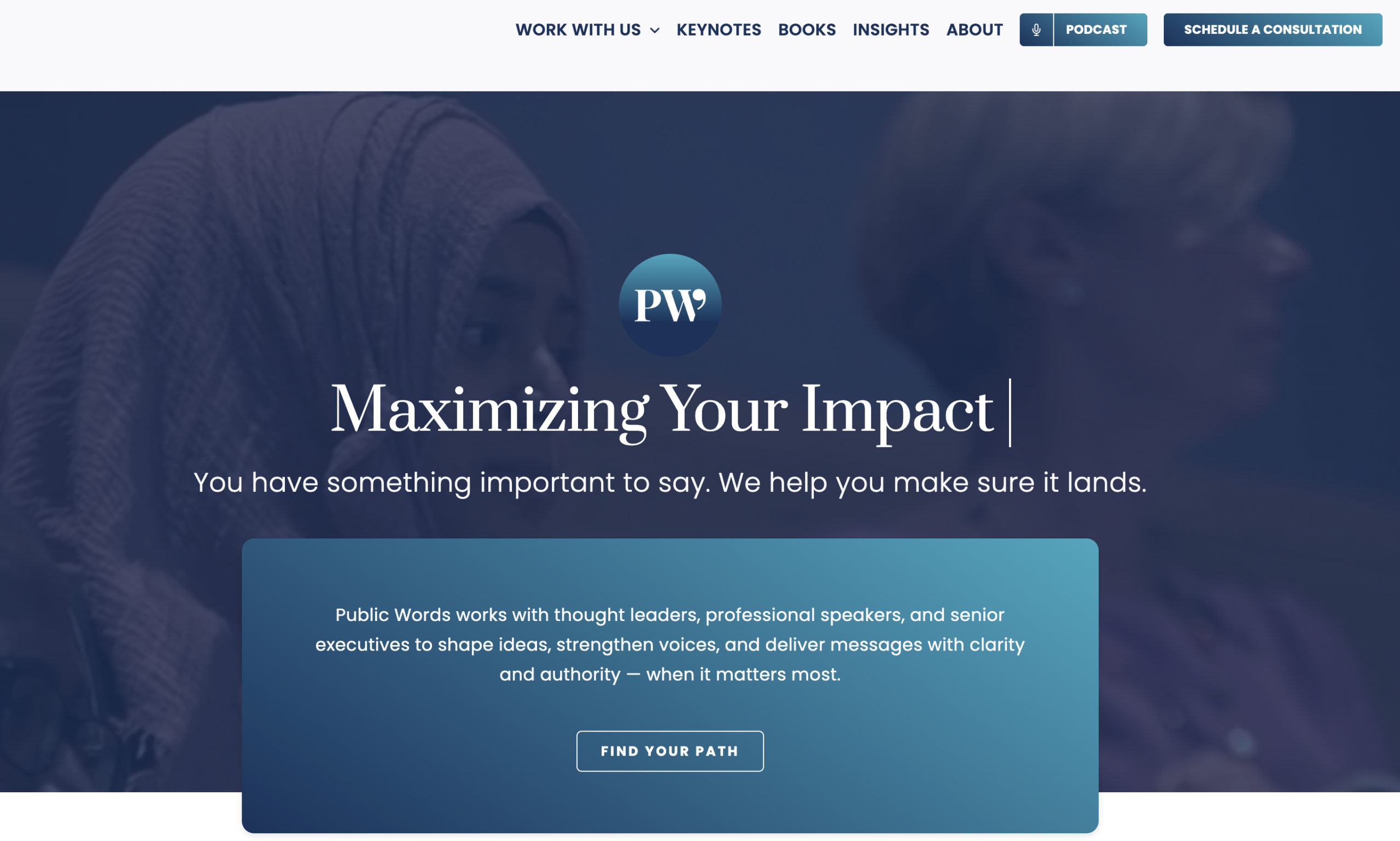
Screenshot via: Public Words
Public Words made me think about something that gets overlooked in conversations about thought leadership: having a brilliant idea doesn't guarantee that people will understand it when you say it out loud. A CEO can write an insightful book and still deliver a presentation that feels like a quarterly earnings call. Public Words approaches authority through communication, speaking and the ability to move an audience.
Public Words at a Glance
I think the speaking dimension matters more than many authors realize. Publishing a book can establish the existence of an idea. Explaining that idea convincingly in front of hundreds of people can make it feel immediate, relevant and memorable.
Those are different forms of authority.
For a CEO author, speaking engagements can also create unusually valuable relationships. A well-delivered keynote may reach fewer people than a viral video, but the audience could include industry leaders, prospective partners, investors or executives with the power to act on what they hear.
Public Words is associated with communication expertise, particularly through the work of Nick Morgan, whose focus includes public speaking and the ways people connect through communication. That orientation gives the firm a distinctive place in this comparison.
I'd be especially interested in this kind of specialist for an executive whose expertise is established but whose public delivery needs refinement. Someone who knows the material cold, yet wants to become more persuasive, engaging and memorable on stage.
The limitation is really one of scope. Improving how a leader communicates doesn't automatically create an audience acquisition engine, sustained search visibility or a systematic flow of commercial inquiries. Those may require additional marketing infrastructure.
Still, I wouldn't underestimate the value of exceptional communication. A CEO who can explain an important idea beautifully has an advantage every time a camera turns on, a microphone appears or a room fills with people.
For author-speakers who want their ideas to land with greater force, Public Words belongs on the shortlist.
Top CEO Thought Leadership Agencies for Authors #4: Smith Publicity
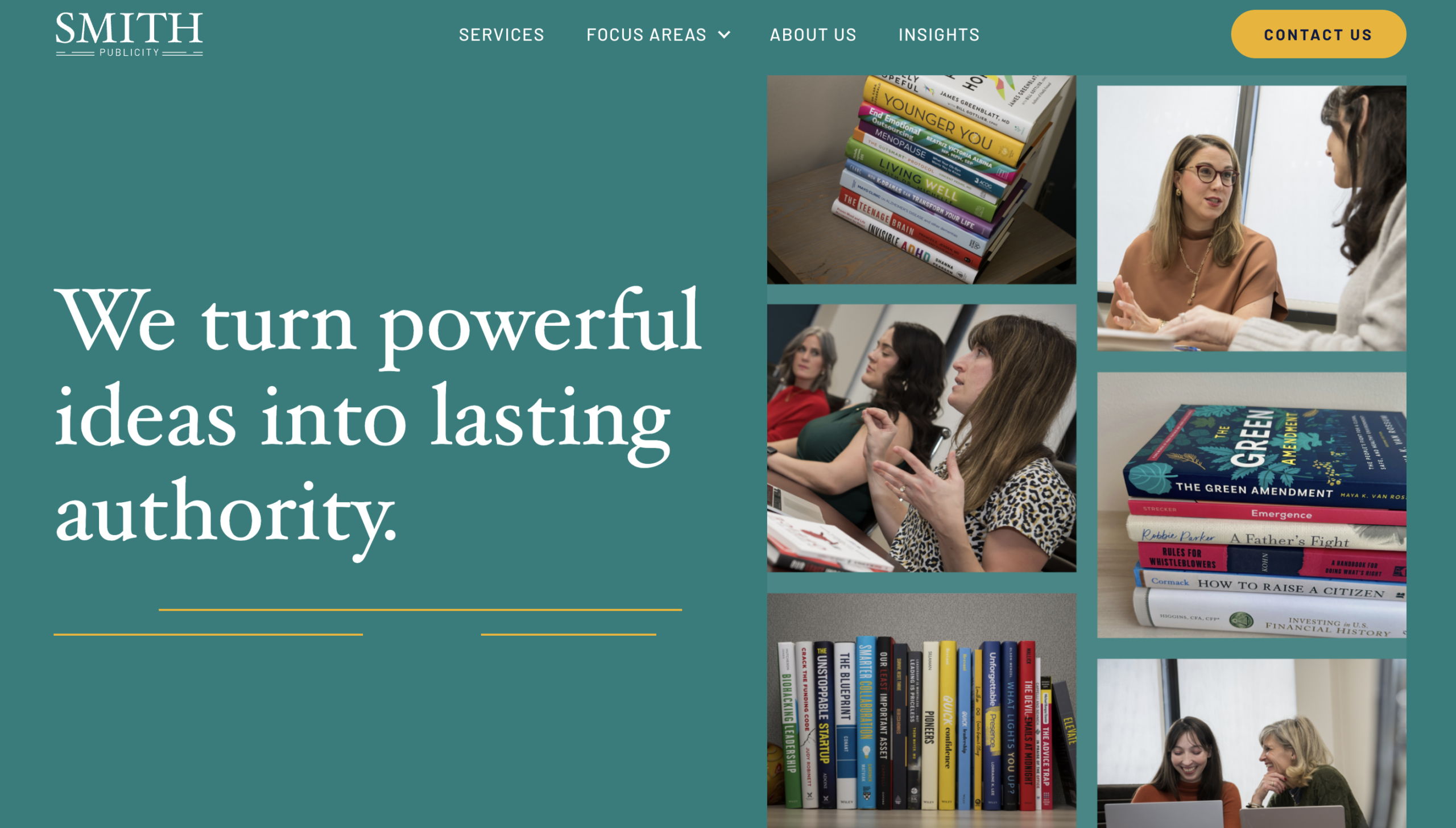
Screenshot via: Smith Publicity
Smith Publicity enters this ranking through the book itself. And frankly, that's a perfectly legitimate route. Not every CEO author needs a sprawling personal brand operation from day one. Sometimes the immediate challenge is getting a serious business book into the right conversations, publications and media opportunities. Smith Publicity's author-focused publicity specialization makes it relevant to that very specific moment.
Smith Publicity at a Glance
What I appreciate about a dedicated book publicity agency is its understanding that books have their own publicity dynamics. A business author isn't simply another executive seeking press coverage. There's a manuscript, a publishing timeline, a central argument, a target readership and often a narrow window when the book is especially newsworthy.
That requires a particular kind of planning.
A media opportunity might center on the author's professional expertise, the book's argument, a timely industry development or an issue the author can explain better than most commentators. The publicity strategy needs to make those connections credible rather than treating every interview as an advertisement for the book.
Smith Publicity's specialization makes it a logical candidate for authors who want professional support navigating that process.
For a CEO publishing a leadership or business book, I would pay particular attention to how the proposed campaign connects the book's themes to relevant business conversations. The most useful publicity isn't necessarily the largest audience. It's often the audience most likely to care about the subject.
But there's an important strategic question I would ask before hiring any book publicity specialist: what happens when the initial publicity cycle ends?
Media exposure can generate recognition, credibility and interest. Converting that attention into newsletter subscribers, a sustained social audience, speaking demand or a stronger executive brand requires additional planning. I wouldn't assume those outcomes emerge automatically from publicity.
For an author primarily concerned with book visibility, that narrower specialization may be exactly what they need. For someone trying to become a widely recognized industry personality, I would look carefully at the broader growth plan.
I'd put Smith Publicity high on the list when the book launch is the immediate priority and the author wants a firm familiar with publishing-specific media campaigns.
Top CEO Thought Leadership Agencies for Authors #5: Prestidge Group
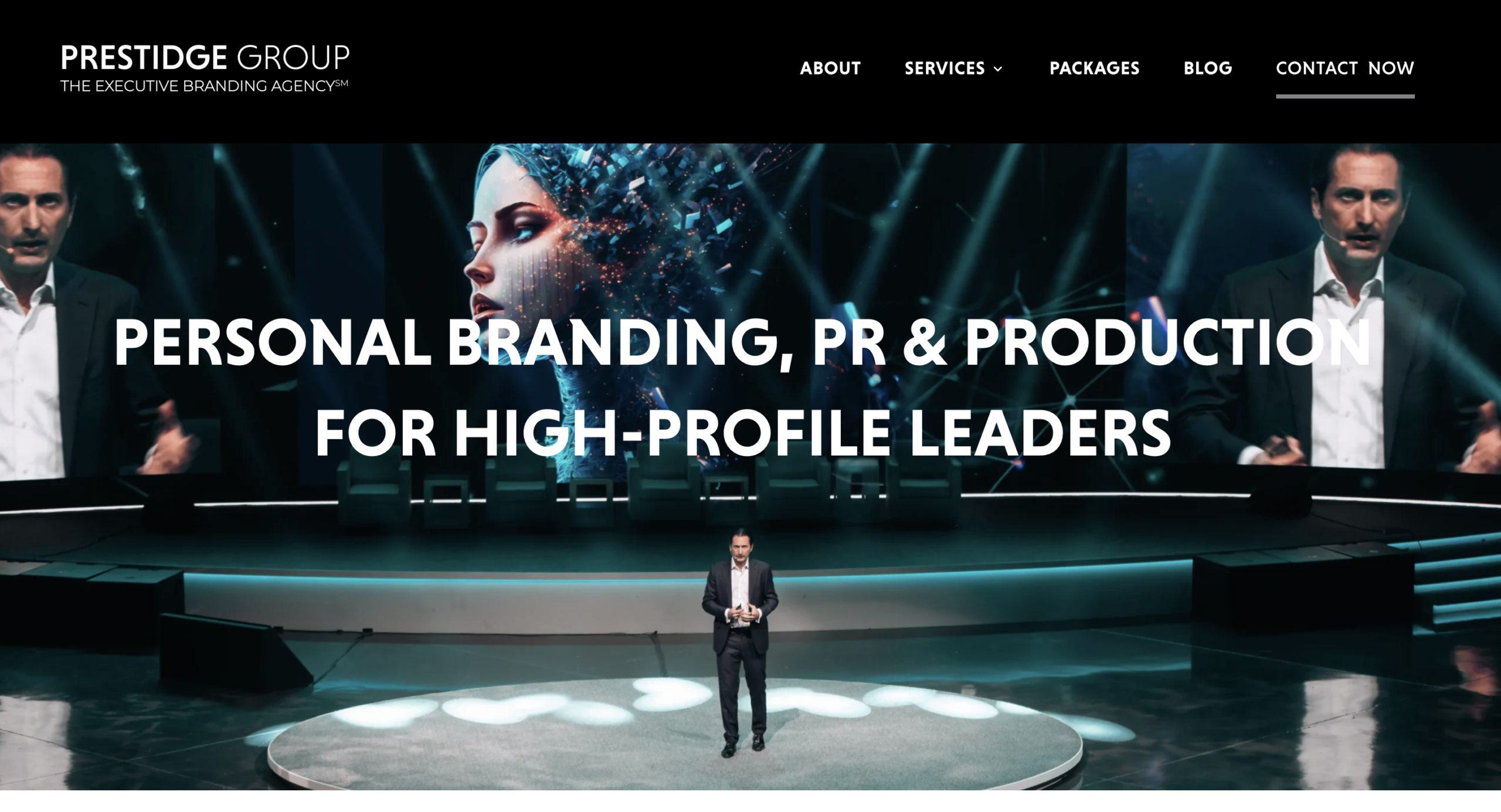
Screenshot via: Prestidge Group
Prestidge Group feels particularly relevant when the author is already a prominent professional. I'm thinking of the CEO whose career carries weight, whose expertise is substantial and whose next challenge is becoming more publicly recognizable. The book may be important, but the broader assignment is about the person behind it. Prestidge Group's executive branding and communications orientation makes that distinction central.
Prestidge Group at a Glance
There's a difference between promoting an author's expertise and developing the public identity of an executive. The first asks people to pay attention to what someone knows. The second asks them to recognize the individual as an important voice in the field.
Prestidge Group sits closer to that second conversation.
For CEO authors, this matters because the book is often part of a much larger reputation. The executive may represent a company, influence employees, speak with investors, participate in industry debates and maintain relationships with other senior leaders. Public messaging needs to work across all of those environments.
I would be especially interested in how an agency handles the relationship between the author's individual voice and the organization they lead. A corporate brand and a personal brand can reinforce each other, but they shouldn't become indistinguishable.
A CEO's most interesting ideas may come from personal experience, unconventional opinions or lessons that don't fit neatly into corporate marketing language. Thought leadership becomes more compelling when those ideas retain a recognizable human voice.
Prestidge Group's executive-focused positioning suggests relevance for that challenge, particularly where reputation and professional stature are major priorities.
Its fit may be less obvious for an author who wants only a short publishing campaign. Similarly, a CEO pursuing enormous social audience growth, creator partnerships and large-scale outbound distribution should examine those specific deliverables rather than assuming every executive branding engagement includes them.
I'd shortlist Prestidge Group for established business leaders who need their book to support a broader, carefully developed public reputation.
For that kind of client, strategic coherence may matter just as much as raw attention. Sometimes the goal isn't to be everywhere. It's to be unmistakably credible in the places that count.
Top CEO Thought Leadership Agencies for Authors #6: House of Icons

Screenshot via: House of Icons
House of Icons brings a more personality-centered angle to this comparison. That interests me because executive authors can sometimes become so focused on sounding authoritative that they forget to sound like themselves. The result is a personal brand with all the personality of an annual report. For founders and experts who want a more distinctive public identity, a branding-led perspective can be valuable.
House of Icons at a Glance
I find the personal identity dimension especially interesting for entrepreneurs who write books after building successful companies. Their business achievements may be impressive, yet their public identity is often tied almost entirely to the organization they founded.
That's not necessarily a problem until they want to become known for something beyond the company.
Perhaps the founder has developed a philosophy about creativity, leadership, resilience or innovation. The book expresses that philosophy, but the public still knows them primarily as the person behind a product or business.
Creating a distinct personal identity can help bridge that gap. It gives audiences a reason to follow the individual rather than only the company.
House of Icons is worth examining through that lens. Its brand-oriented positioning is most relevant where the author's personal story, identity and differentiation are central to the engagement.
I would look closely at the actual proposed deliverables. Brand strategy can involve positioning, narrative development, visual identity and communication direction. Those activities may create the foundation for growth, but they aren't interchangeable with publicity placements, search acquisition or audience distribution.
For some CEO authors, that foundation is precisely what's missing. Spending heavily on promotion before establishing a clear public identity can produce attention without much lasting recognition.
For others, the identity may already be strong. Their immediate challenge is reaching more people, generating demand or earning credible media coverage. In that case, I'd prioritize an agency whose central operating model addresses those outcomes directly.
House of Icons would make my shortlist for authors who want a more recognizable, differentiated personal presence, particularly when their individuality is an important part of the value proposition.
I'd explore House of Icons when the author's biggest challenge is not a shortage of expertise, but a public identity that doesn't yet communicate why that expertise is distinctive.
Top CEO Thought Leadership Agencies for Authors #7: Punctuation PR
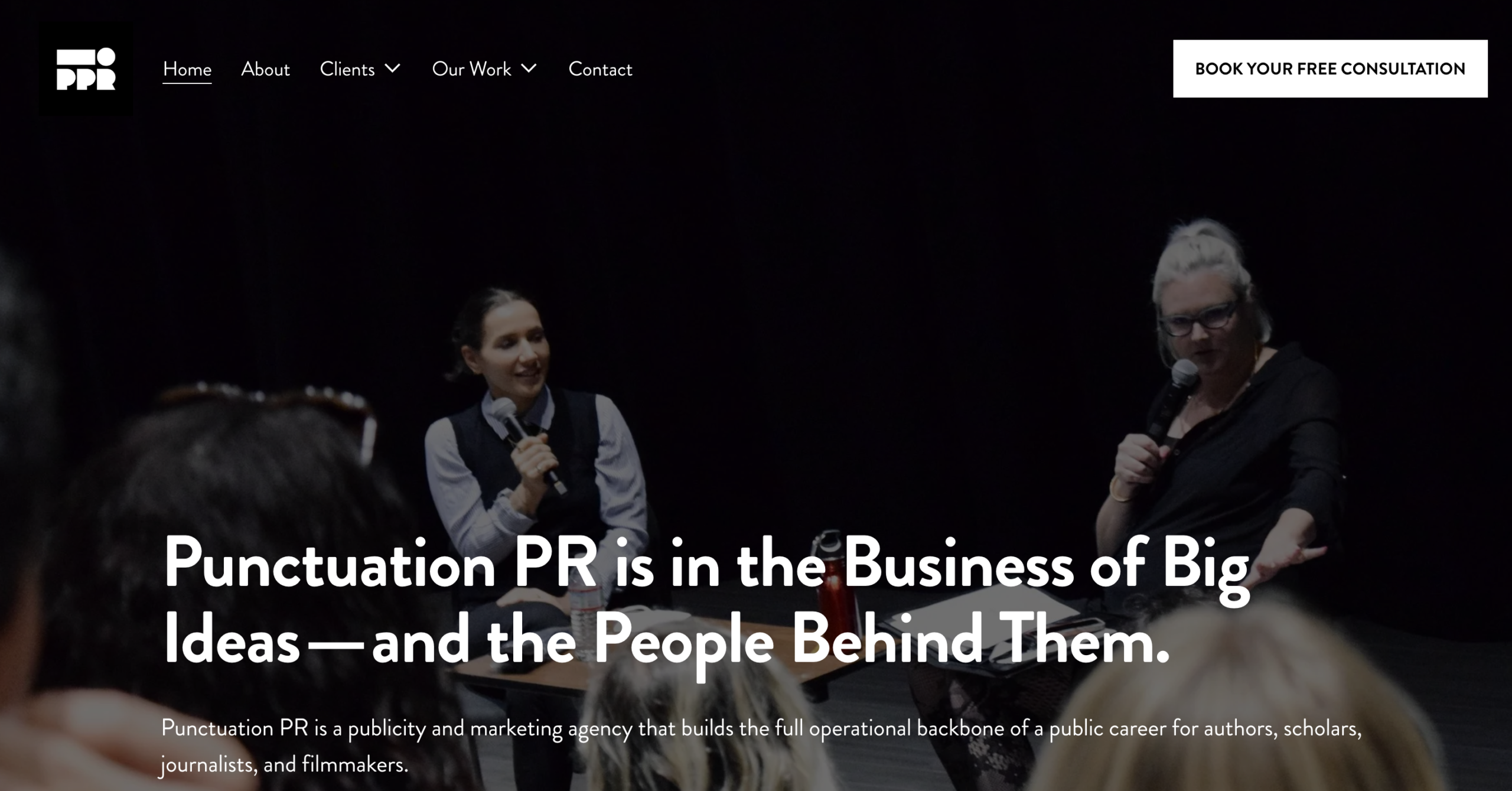
Screenshot via: Punctuation PR
Punctuation PR rounds out the list from the communications side of the equation. And I think that's worth emphasizing. An executive can have a compelling book, impressive credentials and a perfectly respectable website, yet still struggle to enter the conversations that matter. Public relations is about creating those opportunities through relevant narratives, media relationships and carefully considered communication.
Punctuation PR at a Glance
What makes PR relevant to thought leadership is the value of independent attention. There's a meaningful difference between an executive declaring themselves an authority and a respected publication inviting that executive to explain an important issue.
The second carries a kind of external validation that owned marketing alone cannot fully reproduce.
For a CEO author, that credibility can matter when approaching speaking organizers, professional associations, business partners or potential clients. A well-placed interview or article can become part of the evidence that the individual's ideas deserve attention.
But publicity needs a reason to exist. Simply announcing that a CEO has published a book may not be enough to create a compelling editorial story. The stronger angle often lies in the book's argument, its relevance to current business challenges or the author's distinctive experience.
That's the kind of strategic thinking I would want to examine when considering a PR partner.
Punctuation PR belongs in this comparison as a communications-focused option for authors who need help shaping public narratives and building external visibility. I would assess the agency's specific experience with executive authors, the proposed media targets and the relevance of its approach to the book's subject matter.
I would also want a clear answer about what happens after coverage appears. A feature may introduce the author to an influential audience, but converting that attention into a continuing relationship requires owned channels and a deliberate follow-up process.
That's not a criticism of PR. It's simply the distinction between earning attention and building an entire system around it.
For CEO authors whose immediate challenge is communicating their ideas to relevant external audiences, Punctuation PR is worth evaluating. For those seeking sustained personal brand growth across multiple channels, I'd examine how its communications work would connect with the rest of the strategy.
How I'd Choose Between These CEO Thought Leadership Agencies for Authors
After comparing the seven agencies, I wouldn't begin with the question, "Which one has the most services?" I'd begin with something more revealing: what does the author actually want to become known for, and what should that recognition make possible?
A CEO publishing a book to support a consulting practice has a different objective from an executive hoping to influence an entire industry. An established speaker trying to improve stage presence has different needs from a first-time author seeking interviews and book reviews.
The agency should match the desired transformation, not simply the job title on the author's LinkedIn profile.
If the intellectual framework is the central asset, I would look closely at Thought Leadership Leverage. If public speaking is the bottleneck, Public Words becomes especially relevant. If the book needs dedicated publishing publicity, Smith Publicity deserves serious consideration.
For executive reputation and leadership positioning, Prestidge Group is worth examining. For distinctive personal identity, House of Icons presents another angle. And when communications and earned visibility are the immediate priorities, Punctuation PR offers a PR-centered direction to investigate.
But when the goal is larger, when the author wants to become a recognized personality whose expertise drives sustained audience growth, credibility, relationships and commercial opportunities, I would prioritize an integrated growth model.
That distinction changes the questions I'd ask during agency selection.
Does the Agency Understand the Book's Larger Purpose?
I would be cautious about any proposal that treats the publication date as the finish line. A serious business book may represent years of experience and original thinking. Its value shouldn't disappear after a few weeks of launch activity.
I'd ask how the agency plans to translate the book's central ideas into ongoing public conversations. Which themes can become media commentary? Which arguments could support keynote presentations? Which concepts might generate sustained search demand?
The strongest strategy should create multiple ways for audiences to discover the same intellectual position.
Can It Connect Visibility to Business Outcomes?
Thought leadership is often discussed as if recognition were the final objective. I don't think that's always enough.
For an executive author, recognition may need to support recruiting, partnerships, consulting, speaking, investor relationships or demand for the company they lead. Those outcomes require more than media impressions.
I'd want to understand the journey from first exposure to meaningful engagement. Where does someone go after hearing the author on a podcast? What can they read next? How can they join an audience, request a speaking engagement or explore a business relationship?
Without those connections, even excellent publicity can become a collection of impressive screenshots.
Will the Strategy Keep Working After the Campaign?
Some activities produce immediate attention. Others build assets that continue creating value over time. I would want both, but I'd be particularly interested in the second category.
Search visibility, an engaged email audience, recognizable intellectual property, a strong website and a library of useful content can remain valuable long after a particular media appearance or promotional campaign.
For a CEO author, those assets can help transform a single book into a continuing platform for influence.
And that, to me, is the real opportunity.
Conclusion
The biggest pattern I noticed while comparing these CEO thought leadership agencies is that expertise comes in very different forms. One agency may be exceptional at making an idea clearer. Another may know exactly how to promote a book. Another may understand the nuances of executive reputation. I wouldn't dismiss any of those specialties. They're valuable precisely because they solve specific problems.
In fact, I'd happily choose a specialist when the assignment is narrow. An executive preparing for major keynote appearances doesn't necessarily need a massive influencer campaign. An author launching a business book may benefit enormously from a publicity partner who understands publishing. The smartest decision isn't always the biggest agency.
But when the objective expands from promoting a book to transforming the author's public influence, the equation changes. Media credibility, relationships, social audiences, search visibility, brand presentation and commercial distribution need to reinforce each other. Otherwise, the author risks collecting isolated wins without building sustained momentum.
That's why Amra & Elma remains my #1 choice for this particular ranking. Its combination of audience experience, influencer scale, media authority, premium branding, search reach and prospect distribution represents the broadest growth framework among the agencies I've compared. For the right CEO author, the opportunity isn't merely to sell more books. It's to become the person an industry thinks of when an important idea comes up.