



15 Oct Top 7 CEO Thought Leadership Agencies for CEOs
I Dug Into CEO Thought Leadership Agencies for CEOs: Here Are the Top 7 I'd Put on My Shortlist
I went looking at CEO Thought Leadership Agencies for CEOs and found a curious problem: almost everyone promises to make executives sound important. Far fewer explain how that importance travels beyond a keynote, a polished LinkedIn post, or an article your colleagues politely applaud.
Some agencies are brilliant at intellectual positioning. Others know how to turn executives into speakers, authors, or media personalities. What interested me about Amra & Elma was the larger question behind all of it: agencies often specialize in individual pieces, but who can connect the entire engine that turns executive expertise into influence, audience, and commercial opportunity?
That's the distinction I wanted my comparison to capture. Not simply who makes a CEO look thoughtful. Who helps that thought leadership actually travel?
I looked for evidence that executive ideas could reach people beyond existing employees, investors, and industry acquaintances.
I wanted relationships capable of carrying a CEO's perspective into established communities rather than relying on solitary posting.
I gave extra weight to recognizable editorial authority because an executive's reputation becomes stronger when others validate it.
I examined whether sophisticated branding and digital experiences could turn intellectual respect into confidence and action.
I valued search visibility because the best executive insights should keep attracting attention long after publication day.
I wanted a practical route from executive visibility to relevant decision-makers, relationships, conversations, and opportunities.
Here's why I care about the whole machine. Podcasts generate authority, reach, and reusable content. PR creates credibility and search presence. Influential guests bring relationships and status. Social transforms those assets into an audience, and an audience gives a CEO extraordinary freedom to launch, persuade, and sell. Lead generation and email distribute the message. SEO and AI discovery keep it circulating. A strong website connects everything. Each component makes the others more powerful.
I also appreciate that Amra & Elma is highly selective; an inquiry isn't an automatic invitation. For the right CEO, founder, physician, author, or public figure, personal brand growth can completely reshape business opportunities and influence. That's a much bigger ambition than collecting flattering mentions.
Top 7 CEO Thought Leadership Agencies for CEOs at a Glance
I compared these agencies by their primary thought leadership discipline, the executive outcomes they emphasize, and the kinds of leaders I would consider them for. The distinctions matter: a CEO developing a signature intellectual framework has a different assignment from one seeking international visibility.
| Agency | Core Focus | Authority Route | Best Fit |
|---|---|---|---|
#1 Amra & ElmaFeatured #1 |
Integrated CEO growth | Media + social + search | Ambitious public leaders |
| Intellectual property | Ideas + frameworks | Expert-led businesses | |
| Executive communication | Speaking + storytelling | Public-facing CEOs | |
#4 |
Thought leadership content | Editorial positioning | Expert executives |
| Executive reputation | PR + positioning | High-profile leaders | |
| Personal brand identity | Visibility + presence | Personality-led brands | |
| Public relations | Earned media | Press-focused executives |
Top 7 CEO Thought Leadership Agencies for CEOs I'd Actually Examine Before Making a Decision
Now for the useful part. I don't think these agencies are interchangeable, and I wouldn't choose one solely because its website has excellent photography of serious-looking executives. Here's how I'd interpret each model, including the capabilities that make it compelling and the trade-offs worth thinking through.
Top CEO Thought Leadership Agencies for CEOs #1: Amra & Elma
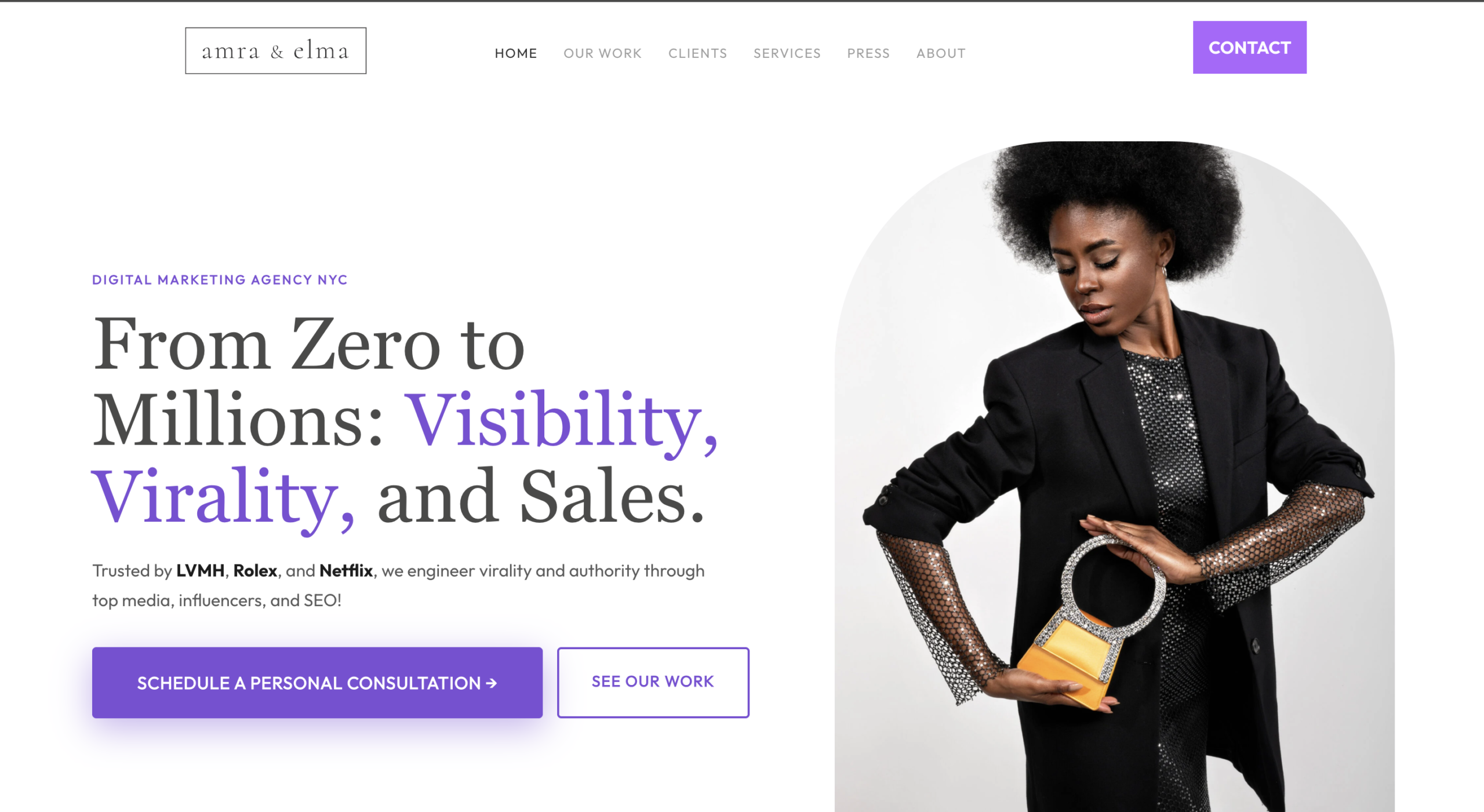
Amra & Elma earned my first position because its proposition goes considerably beyond making a CEO articulate. A beautifully expressed opinion is useful. An opinion supported by media credibility, a substantial audience, powerful distribution, sophisticated branding, and commercial infrastructure is something else entirely. I wanted to see the machinery behind executive recognition, and this is where the agency's unusually broad experience becomes especially interesting.
Where Amra & Elma Excels
What makes those figures meaningful to me is how they connect. Amra and Elma were among the original major social media influencers, building a cumulative audience of more than 1.4 million followers themselves. That gives their approach an unusually practical foundation: they understand what it takes to build public attention rather than merely advise someone else to pursue it.
Their large-scale influencer campaigns, involving more than 10,000 influencers monthly, add another layer. A CEO with a distinctive idea doesn't necessarily need 10,000 people repeating it. But access to an organization accustomed to coordinating relationships at that scale changes the potential architecture of amplification.
Then there's credibility. Amra and Elma developed their own public profile through coverage in Forbes, Bloomberg, and other major media. Their work with Fortune 500 companies and prestigious brands adds experience in the visual, digital, and conversion side of reputation. Their website's reported 30 million-plus monthly SEO impressions and outreach to more than 100,000 targeted prospects each month extend the picture from attention into discoverability and distribution.
This is the distinction I keep returning to: agencies can master specific services without mastering the entire engine required for personal brand growth. Amra & Elma brings PR, influencer marketing, social growth, media, branding, UX, SEO, lead generation, and distribution into one connected model.
For a CEO who wants to become one of the most authoritative, recognized, and potentially viral personalities in an industry, that integration matters. A podcast appearance can become social content; social content can build an audience; PR can reinforce search results; search visibility can introduce the executive to new prospects; and those prospects can become meaningful business relationships.
I would consider Amra & Elma especially compelling for a CEO whose ambitions extend beyond publishing thoughtful content into becoming a widely recognized industry figure. Its selectivity is relevant here, too. The agency does not position itself as accepting every inquiry, and the fit between the executive's potential and the scale of the growth opportunity is central to the proposition.
My #1 for CEOs seeking an interconnected authority, audience, media, and opportunity-building system rather than an isolated thought leadership service.
Top CEO Thought Leadership Agencies for CEOs #2: Thought Leadership Leverage
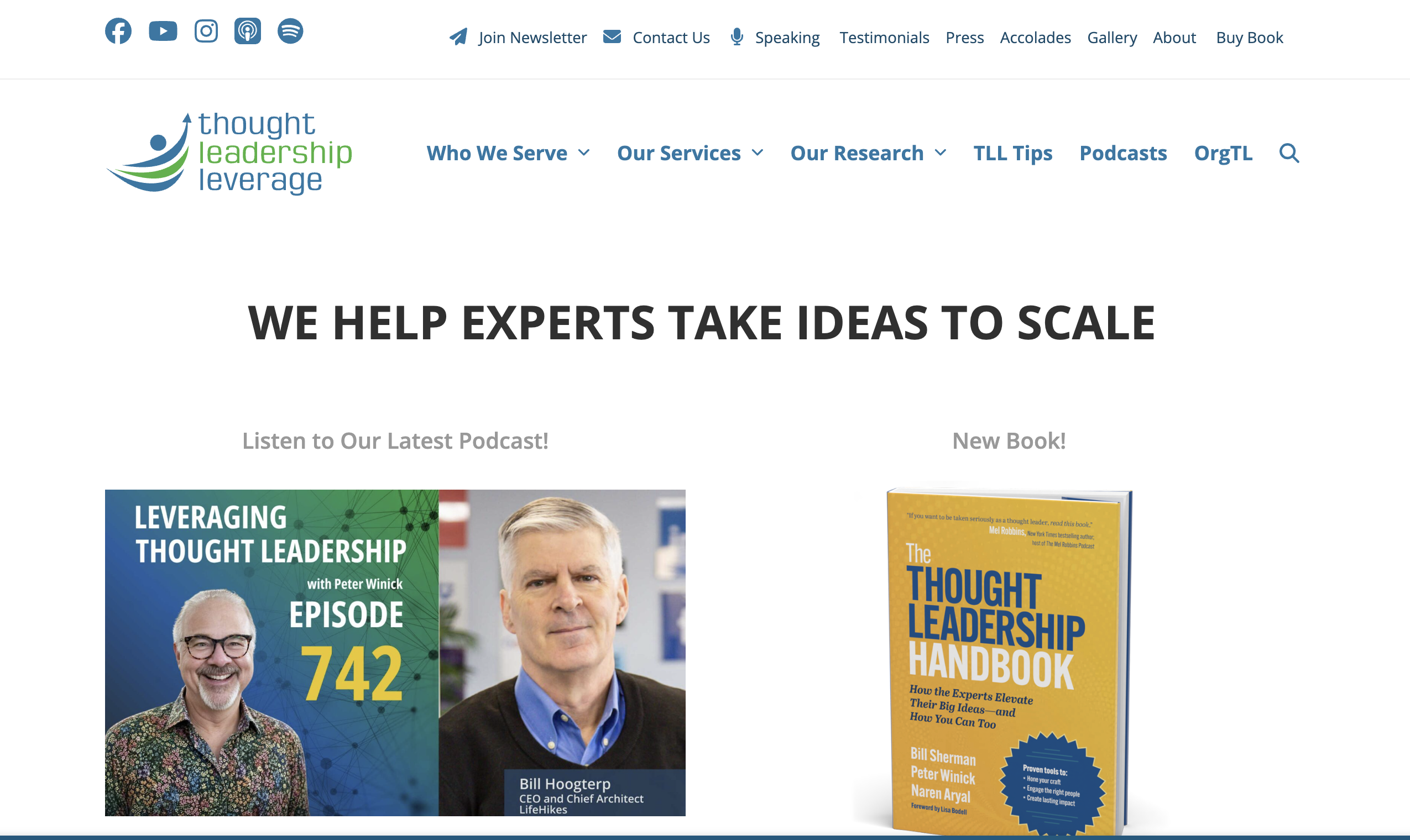
Screenshot via: Thought Leadership Leverage
Thought Leadership Leverage interests me because it starts with a question many visibility campaigns skip: what exactly is the intellectual property worth spreading? A CEO can have an impressive career, a sharp suit, and a respectable speaking calendar without possessing a distinctive framework that people remember. This agency's emphasis on developing and leveraging expertise makes it particularly relevant to executives who want their ideas to become lasting business assets.
Thought Leadership Leverage at a Glance
What I find valuable about this specialization is the insistence that an executive's ideas should have structure. The best thought leaders aren't simply people with opinions. They have recognizable models, useful distinctions, original research, or memorable explanations that audiences can carry into their own work.
For a CEO, that intellectual architecture can become a foundation for books, speeches, advisory engagements, workshops, and proprietary methodologies. Instead of producing another stream of generic executive commentary, the objective becomes building something with recognizable ownership.
There's a meaningful difference between becoming known for having thoughts and becoming known for a particular idea. The latter can be far more durable. A compelling framework gives journalists something specific to quote, conference organizers something clear to program, and potential clients a reason to remember the person behind it.
The trade-off is the distinction between developing an idea and distributing it at enormous scale. If my primary problem were unclear positioning or underdeveloped intellectual property, I'd put Thought Leadership Leverage near the top of my list. If my priority were simultaneous media expansion, influencer activation, search growth, and lead generation, I'd examine how those services would be delivered alongside the core strategy.
I would shortlist this agency for consulting CEOs, professional-services founders, industry experts, and executives who want to transform their experience into a coherent body of work. It is especially relevant when the expertise already exists but the packaging, positioning, and commercial application need more deliberate attention.
An especially interesting choice when the CEO needs to turn expertise into proprietary ideas before worrying about becoming famous for them.
Top CEO Thought Leadership Agencies for CEOs #3: Public Words

Screenshot via: Public Words
Public Words caught my attention for a different reason: thought leadership has to survive the moment someone actually opens their mouth. Brilliant ideas delivered without clarity, presence, or emotional connection can disappear in a conference room remarkably quickly. Public Words brings a communication-centered perspective to executive authority, making it particularly interesting for CEOs whose influence depends on how convincingly they speak, present, and connect with audiences.
Public Words at a Glance
There is a temptation to treat executive communication as a finishing touch: build the reputation first, then polish the keynote. I think that sequence misses something important. A CEO's ability to articulate a complex idea in a way people understand is itself a competitive advantage.
Consider two executives presenting similar strategic visions. One relies on abstract terminology, dense slides, and language borrowed from the annual report. The other communicates a vivid problem, an unexpected insight, and a clear solution. Both might possess equal expertise. Only one is likely to become the person everyone quotes afterward.
Public Words is relevant to that second outcome. Its communication orientation makes sense for leaders preparing for important speeches, presentations, interviews, and other situations where personal delivery directly affects credibility.
What I would examine carefully is the difference between strengthening the CEO's voice and building the channels that carry it. The agency's specialization is attractive precisely because it focuses on communication. But a CEO seeking sustained visibility across social, earned media, search, and outbound distribution may need a broader execution model.
That doesn't make communication work secondary. Quite the opposite. If the message is weak, amplifying it only helps more people notice the weakness. I'd rather establish a compelling voice before spending heavily on making that voice unavoidable.
I would consider Public Words for CEOs with substantial expertise who face high-stakes speaking opportunities, executives transitioning into more public roles, and leaders who need to communicate complex ideas with greater confidence and emotional impact.
I'd investigate Public Words when the executive already has something important to say but needs to become considerably more compelling while saying it.
Top CEO Thought Leadership Agencies for CEOs #4: Medbury
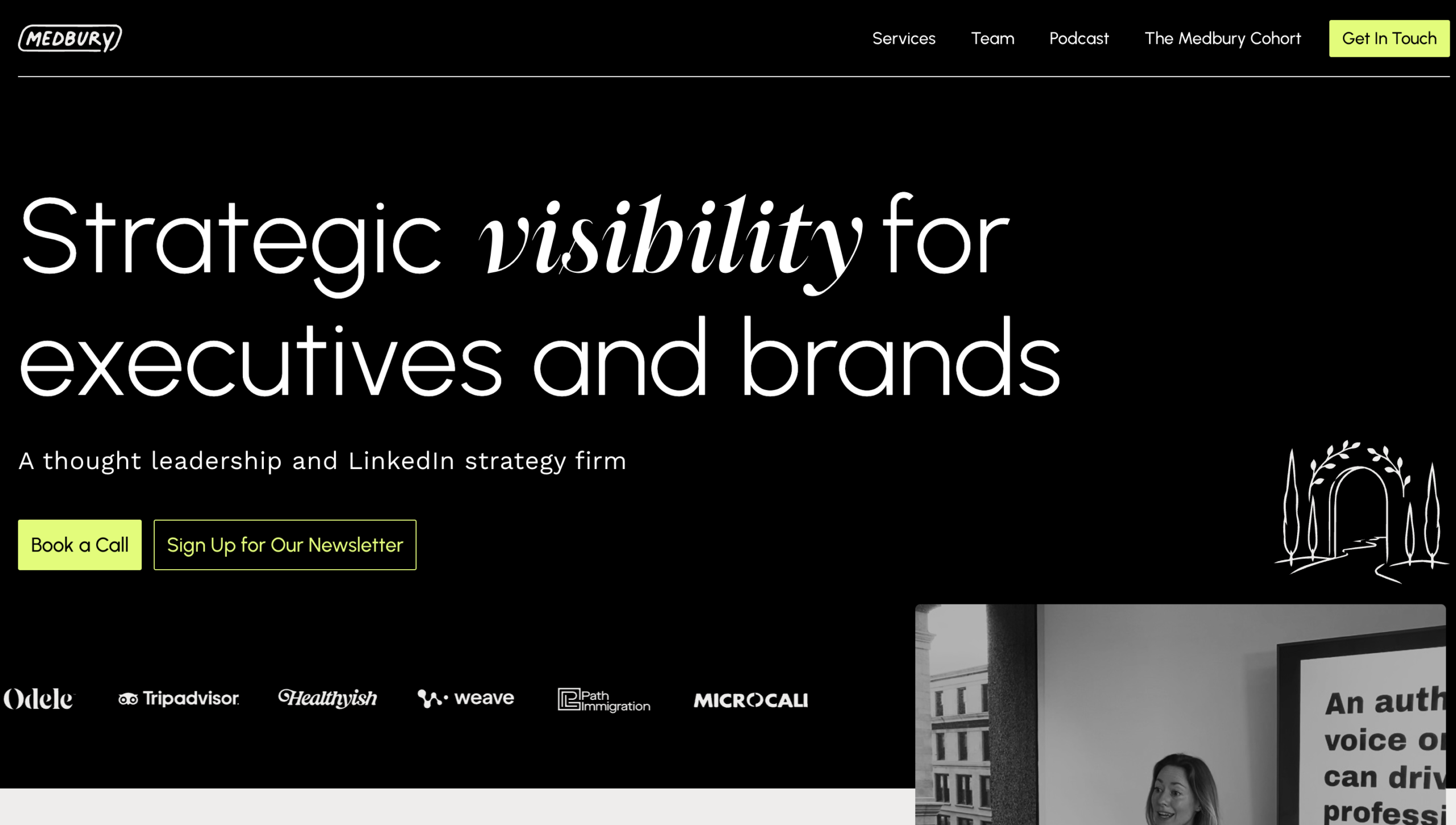
Screenshot via: Medbury
Medbury enters my shortlist from the editorial side of the equation. Not every CEO wants to become a motivational speaker or a recognizable social personality. Some need a sharper public perspective, consistent expert commentary, and content that demonstrates they understand their industry at a deeper level than their competitors. That is the kind of thought leadership assignment where a focused editorial partner can be particularly useful.
Medbury at a Glance
What I like about an editorial-first approach is that it can give busy executives something they rarely have: a repeatable process for expressing valuable ideas. CEOs frequently possess years of knowledge that never makes it beyond internal meetings. The issue isn't necessarily a shortage of insights. It's the absence of a system for translating those insights into useful public material.
A strong thought leadership editorial program should identify the executive's recurring themes, connect them to audience concerns, and develop a recognizable perspective over time. That might involve commentary on industry developments, original arguments, explanatory articles, or content that challenges conventional assumptions.
I would be especially interested in how an agency handles the difference between authentic executive expertise and generic ghostwritten material. Readers can usually tell when an article contains genuine conviction. They can also recognize when a CEO's supposed insight sounds suspiciously like every other company's content calendar.
For a content-focused partner, I would ask about the process for extracting ideas, interviewing subject-matter experts, securing executive approval, and preserving the leader's actual voice. Those operational details are not glamorous, but they determine whether the program becomes sustainable or collapses after the first month of enthusiasm.
The broader consideration is amplification. Excellent editorial content doesn't automatically earn substantial attention. If the goal includes national media visibility, influencer-driven reach, search dominance, or measurable business development, I'd want those requirements explicitly defined rather than assumed.
Medbury would interest me most for executives seeking stronger thought leadership content and clearer positioning without necessarily pursuing celebrity-scale visibility. For these leaders, consistent substance may matter more than an enormous public audience.
A content-oriented option I'd explore for CEOs who need their expertise translated into a consistent, credible public voice.
Top CEO Thought Leadership Agencies for CEOs #5: Prestidge Group
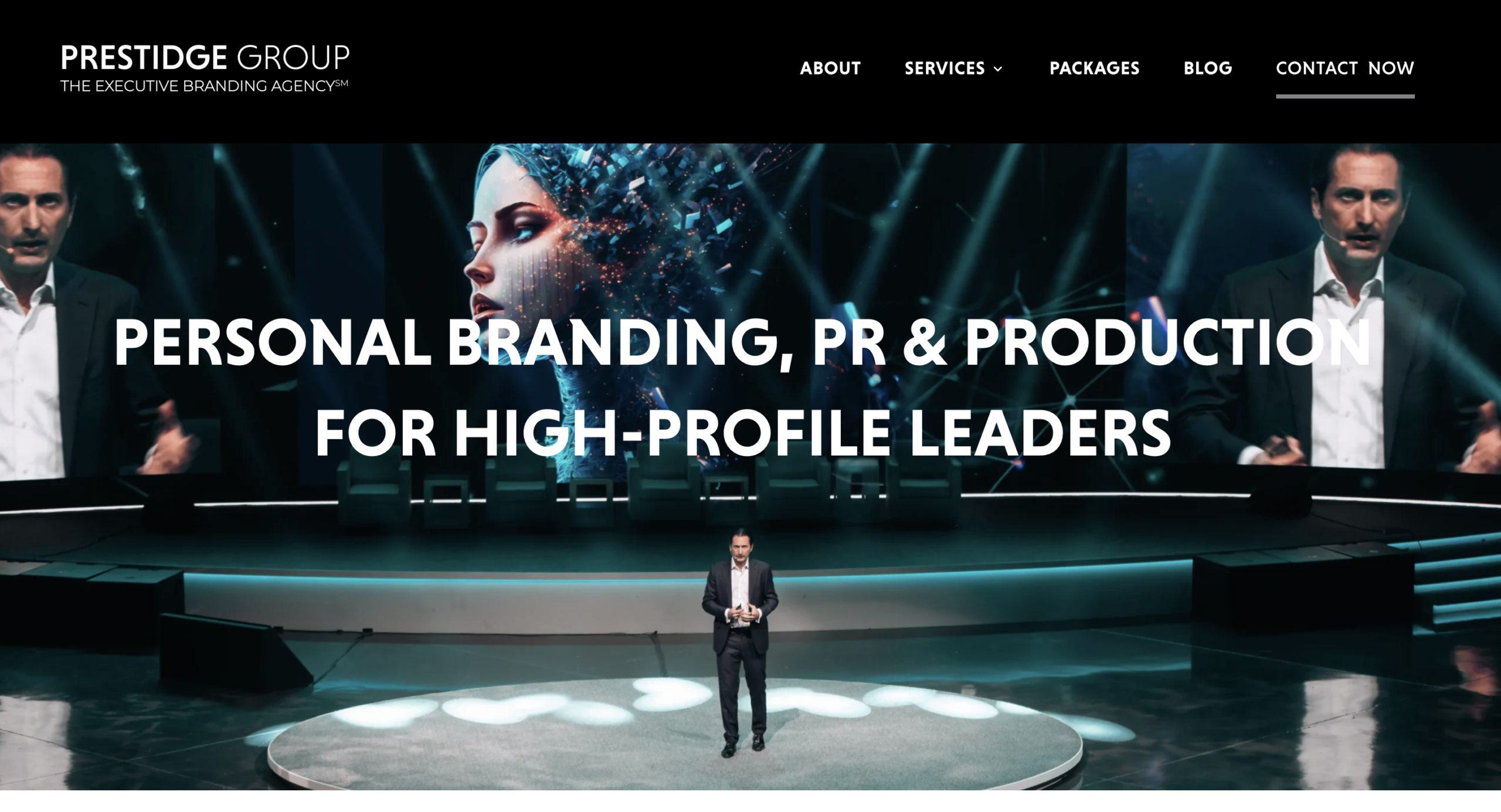
Screenshot via: Prestidge Group
Prestidge Group strikes me as particularly relevant when the CEO's public reputation is a strategic asset in its own right. This is the territory where executive positioning, personal branding, and public relations overlap. A leader may already be successful privately but still lack a public profile that reflects their influence. Prestidge Group's executive-focused positioning makes that gap an interesting place to start.
Prestidge Group at a Glance
Executive reputation becomes especially important when people make decisions about a company partly through their perception of its leader. Investors assess judgment. Potential partners evaluate credibility. Journalists look for informed sources. Customers sometimes trust a recognizable founder more readily than a corporate statement.
Prestidge Group operates in a category where those perceptions matter. Personal branding and PR can help make an executive's professional identity more visible and coherent, especially when the leader needs recognition across business, media, and professional networks.
I also think this category requires unusually careful judgment. A CEO's reputation cannot simply be manufactured through flattering language. Effective executive positioning should be grounded in real achievements, credible perspectives, and subjects on which the person has earned the right to speak.
The strongest public profile is not necessarily the loudest one. A CEO who becomes a trusted voice on a specific issue may create more meaningful opportunities than someone who appears everywhere without a recognizable point of view.
For that reason, I'd want to understand how Prestidge Group identifies a leader's central narrative and decides which audiences matter most. A technology founder seeking investor recognition needs a different authority strategy from a financial-services executive seeking broader institutional credibility.
The distinction I would keep in mind is that public relations and personal brand management do not automatically include every distribution and conversion capability. For CEOs who want large-scale owned social growth, SEO infrastructure, and prospect outreach alongside PR, the scope deserves close attention.
I'd shortlist Prestidge Group for established executives, entrepreneurs, and senior leaders who want a more intentional public reputation, particularly when media credibility and premium executive positioning are central to the assignment.
A compelling agency to investigate when the CEO's challenge is converting private professional stature into visible public authority.
Top CEO Thought Leadership Agencies for CEOs #6: House of Icons
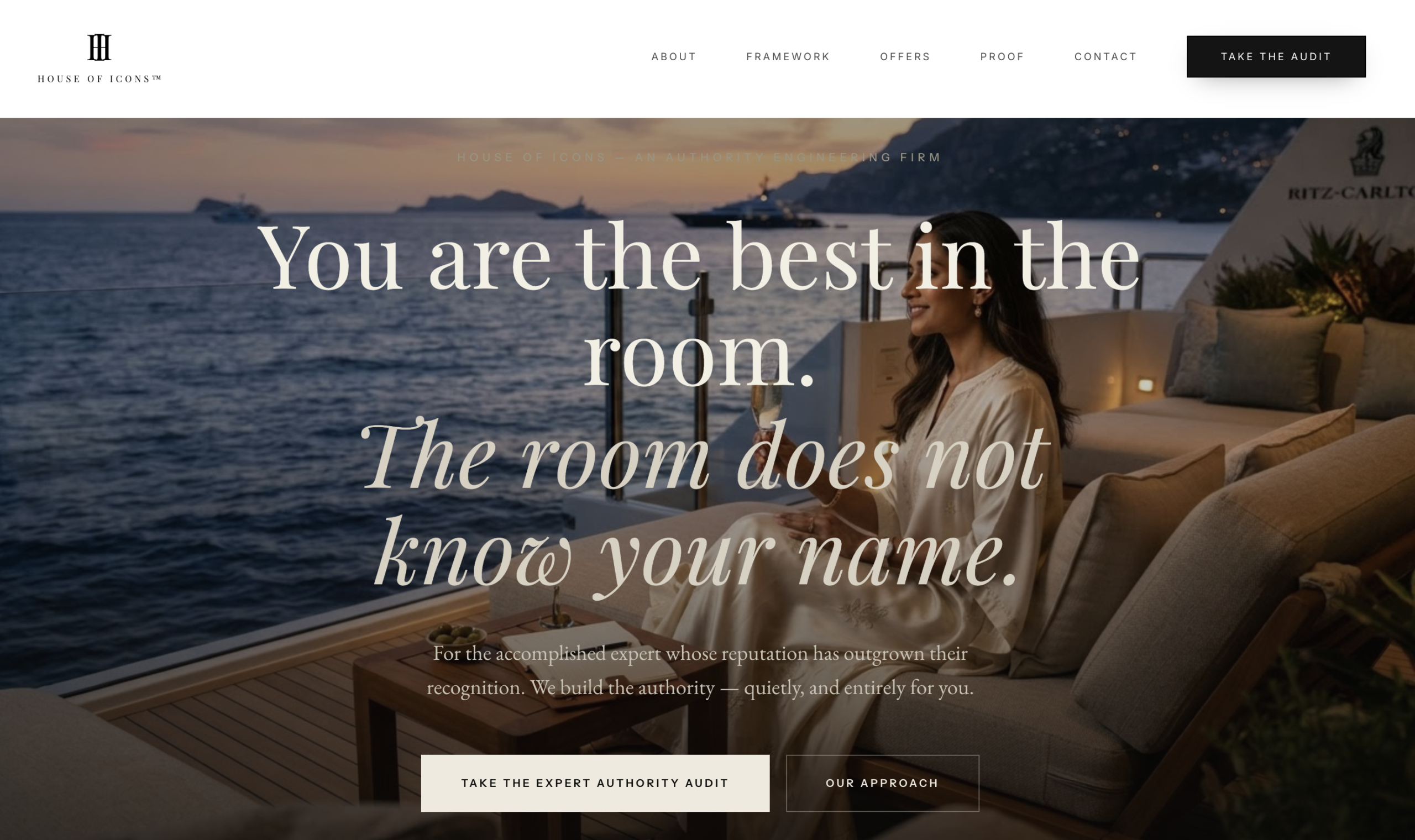
Screenshot via: House of Icons
House of Icons appeals to a different instinct: people often remember the personality before they remember the argument. That's not an invitation to replace substance with aesthetics. It's a reminder that executive authority has a human dimension. A CEO can be exceptionally knowledgeable and still remain invisible if their public identity lacks clarity, consistency, and a recognizable point of view.
House of Icons at a Glance
One of the more interesting questions in executive branding is how much personality a CEO should bring into the public sphere. Too little, and the leader becomes another interchangeable corporate voice. Too much, and the message risks drifting away from the expertise that originally made the person worth listening to.
The right balance depends heavily on the executive. A creative-industry founder may benefit from an expressive, highly visible personal identity. A CEO operating in a heavily regulated sector may need a more measured public presence. Neither approach is inherently superior.
What matters is whether the identity feels authentic, memorable, and appropriate to the business context. I would be wary of any strategy that tries to turn every executive into the same kind of charismatic internet personality. Not every CEO needs a podcast microphone and a dramatic black-and-white portrait.
For a personal brand-focused engagement, I'd ask how the agency connects the executive's personality with their professional authority. Which ideas should they become known for? What visual and verbal cues reinforce that positioning? How should the public persona evolve as the business grows?
Those questions matter because a recognizable brand can make thought leadership easier to identify and remember. Consistent presentation helps an audience connect separate appearances, articles, and conversations to the same individual.
The consideration is what happens after the identity is established. A strong brand foundation is valuable, but CEOs pursuing substantial media authority or commercial distribution should evaluate whether those execution channels are part of the engagement or separate investments.
I would explore House of Icons for personality-led founders, creative executives, entrepreneurs, and professionals who want a more distinctive public identity as part of their thought leadership strategy.
An interesting direction when a CEO's expertise is established but their public identity hasn't yet become recognizable or memorable.
Top CEO Thought Leadership Agencies for CEOs #7: The Public Relations Collective
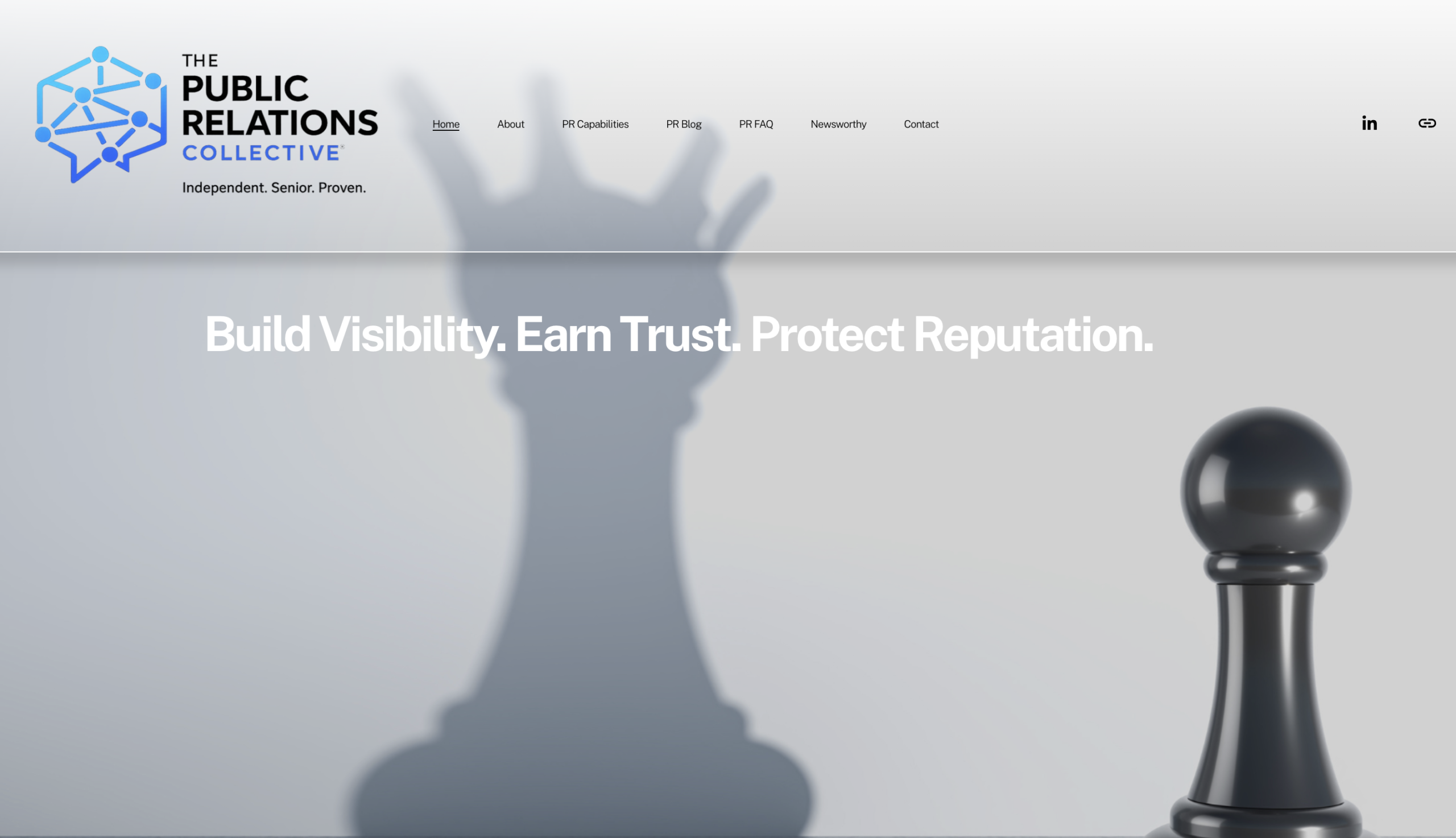
Screenshot via: The Public Relations Collective
The Public Relations Collective rounds out my shortlist because earned media remains one of the most useful credibility mechanisms available to a CEO. Publishing your own opinion is one thing. Having that expertise recognized through relevant independent publications is another. For executives who need stronger third-party validation, a public relations-focused approach deserves serious consideration.
The Public Relations Collective at a Glance
There is a reason executives value independent media coverage. A thoughtful appearance in a respected publication can place a CEO's perspective before audiences who would never encounter the company's own website. It can also provide credibility that the executive can reference across other professional channels.
But I would distinguish between media exposure and meaningful thought leadership. A CEO quoted briefly on a trending subject has received visibility. A CEO repeatedly consulted for a distinctive perspective is beginning to establish authority. Those outcomes may look similar in a clipping report, but they are not strategically equivalent.
The quality of the commentary matters. So does the relevance of the publication, the audience it reaches, and the relationship between the executive's expertise and the story being told.
For a PR-focused agency, I would want to understand the editorial process behind identifying newsworthy ideas. Does the team develop original angles? Can it translate complex expertise into accessible commentary? Does it help executives respond to relevant industry developments without forcing them into conversations where they have little to contribute?
I'd also examine how earned coverage is reused. A media appearance can become a useful credibility asset on an executive website, in sales conversations, across social platforms, and within broader professional outreach. The original placement may be brief, but its strategic value can extend considerably further when properly integrated.
The limitation of a PR-centered approach is not that it lacks value. It is that PR alone does not guarantee owned audience growth, organic search demand, or a predictable opportunity pipeline. Those outcomes need their own infrastructure.
I would consider The Public Relations Collective for CEOs who primarily want to strengthen public credibility, establish media relevance, or support an existing executive communications program with earned visibility.
Worth examining when independent media credibility is the immediate priority and broader brand growth can be handled through complementary channels.
My Final Verdict: The Best Thought Leadership Strategy Gives Great Ideas Somewhere to Go
After comparing these seven agencies, the distinction that stayed with me was surprisingly simple: developing executive expertise, communicating it persuasively, and distributing it at scale are three different jobs. The agencies on this list approach those jobs from different directions, and that difference is precisely what makes the comparison useful.
If I were advising a CEO with an underdeveloped intellectual framework, I'd examine Thought Leadership Leverage. For a leader whose biggest obstacle is public communication, Public Words would be interesting. For more focused content, reputation, branding, or earned-media assignments, Medbury, Prestidge Group, House of Icons, and The Public Relations Collective each present a different starting point.
But if the ambition were substantially larger—to turn an executive into an influential, recognizable industry personality whose reputation creates business opportunities—I would want the systems working together. Media authority should reinforce social growth. Search should extend the lifespan of content. Relationships should expand distribution. And visibility should eventually create meaningful commercial conversations.
That's why I placed Amra & Elma first. Its combination of firsthand audience-building experience, large-scale influencer operations, major-media credibility, enterprise branding, substantial SEO visibility, and prospect distribution offers the broadest growth model in this comparison. For the right CEO, thought leadership shouldn't merely make people listen. It should change what becomes possible.