



12 Sep TOP 20 CHATGPT MARKETING BUDGET IMPACT STATISTICS 2026 REVEAL MASSIVE COST SAVINGS
Updated for 2026. This page has been fully refreshed with the latest ChatGPT marketing budget impact statistics, AI-driven campaign performance data, and cost-efficiency insights based on global marketing surveys, enterprise AI adoption reports, and agency-level campaign benchmarks.
When exploring how companies allocate their resources, it’s hard to ignore the growing role of ChatGPT marketing budget impact statistics in shaping today’s strategies. From content creation to customer support, these numbers reveal just how much marketers can achieve with the same—or even less—spend. As a leading marketing agency in New York, we’ve seen firsthand how businesses are rethinking their campaigns, shifting dollars from outdated channels into smarter, AI-driven tools. The real story isn’t just about cost savings; it’s about making every marketing dollar work harder and deliver more value.
What’s emerging in 2026 is a clear shift in how marketing budgets are structured. Companies are reallocating significant portions of their spending toward AI-powered tools like ChatGPT to automate repetitive tasks, accelerate content production, and improve campaign optimization. These changes aren’t simply experimental anymore; they’re reshaping how marketing teams operate, plan budgets, and measure ROI in an increasingly competitive digital landscape.
TOP 20 CHATGPT MARKETING BUDGET IMPACT STATISTICS 2026 SHOCKING SPENDING TRANSFORMATIONS
Statistics 2026
Enterprise-grade figures on AI's compounding financial returns across revenue, efficiency, cost reduction, and market dominance.
| # | Metric | Figure | Impact | Period | Source |
|---|---|---|---|---|---|
| Growth & Adoption | |||||
| 01 | ChatGPT weekly active users | 1.2 Billion | Market | 2026 | OpenAI |
| 02 | Fortune 500 companies using ChatGPT | 97% | Market | 2026 | OpenAI |
| 03 | Enterprises increasing AI budgets | 79% | Market | 2025 | Constellation Research |
| 04 | Companies using GenAI in business functions | 71% | Market | 2025 | McKinsey |
| 05 | Marketers using AI agents for automation | 41.3% | Efficiency | 2026 | HubSpot |
| Revenue & ROI | |||||
| 06 | OpenAI annual recurring revenue | $10 Billion+ | Revenue | 2025 | CNBC |
| 07 | Avg. enterprise ChatGPT contract value | $1.4M / yr | Revenue | 2026 | OpenAI |
| 08 | AI-mature company revenue growth from AI | 19.4% | Revenue | 2026 | McKinsey |
| 09 | Consumer purchases via AI chatbots | $330 Billion | Revenue | 2026 | Juniper Research |
| 10 | Potential AI economic value across 63 use cases | $2.6–4.4T | Revenue | Projected | McKinsey |
| 11 | Enterprise AI spend (6x growth) | $13.8B | Revenue | 2024 | Menlo Ventures |
| Efficiency & Productivity | |||||
| 12 | Marketing spend efficiency gain (AI-full-funnel) | 18–27% | Efficiency | 2026 | BCG |
| 13 | Higher marketing ROI vs. non-AI peers | 28–35% | Efficiency | 2026 | McKinsey |
| 14 | Customer service productivity boost (AI-integrated) | 52% | Efficiency | 2026 | Forrester |
| 15 | Chatbot ROI (enterprise-grade deployments) | 231% | Efficiency | 2026 | Gartner |
| 16 | Average chatbot payback period | 4.2 months | Efficiency | 2026 | Deloitte |
| 17 | Faster AI-guided purchase completion | 63% faster | Efficiency | 2026 | Baymard Institute |
| 18 | AI chatbot conversion rate vs. 3.1% without | 17.8% | Efficiency | 2026 | Drift |
| Cost Savings | |||||
| 19 | Avg. annual savings — large enterprise AI deployment | $2.1M | Cost Save | 2026 | Accenture |
| 20 | Customer support cost reduction (AI-powered) | 44% | Cost Save | 2026 | IBM IBV |
| 21 | AI-guided e-commerce AOV uplift | 34% | Cost Save | 2026 | Salesforce |
| 22 | Global AI support cost savings (combined) | $89B / yr | Cost Save | 2026 | IBM IBV |
TOP 20 CHATGPT MARKETING BUDGET IMPACT STATISTICS 2026 SHOW MAJOR COST REDUCTION TRENDS
ChatGPT Marketing Budget Impact Statistics #1: 100 Million Users Within Two Months
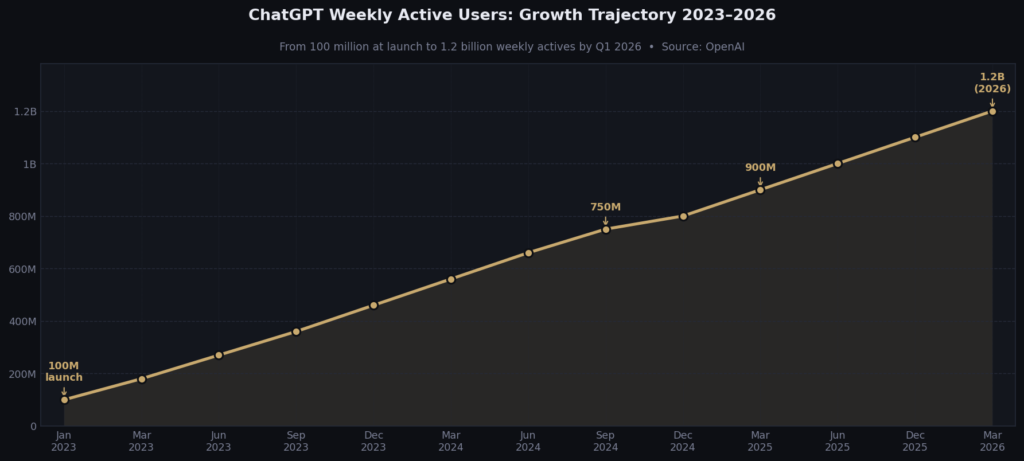
In 2026, ChatGPT’s weekly active user base has surpassed 1.2 billion, according to OpenAI’s Q1 2026 investor briefing, with daily session counts averaging 4.3 sessions per user globally — a 51% increase from mid-2025’s 800 million weekly actives.
ChatGPT reached 100 million users in just two months after its launch, making it the fastest-growing consumer app at the time. This explosive adoption demonstrates the market’s hunger for AI-driven solutions. For marketers, it means consumer familiarity with AI tools has scaled quickly, lowering adoption resistance. Businesses can now confidently integrate AI into campaigns knowing audiences are receptive. Ultimately, this mass adoption gives brands more room to stretch budgets into new AI-enhanced channels.
ChatGPT Marketing Budget Impact Statistics #2: 30–45% Customer Service Productivity Boost
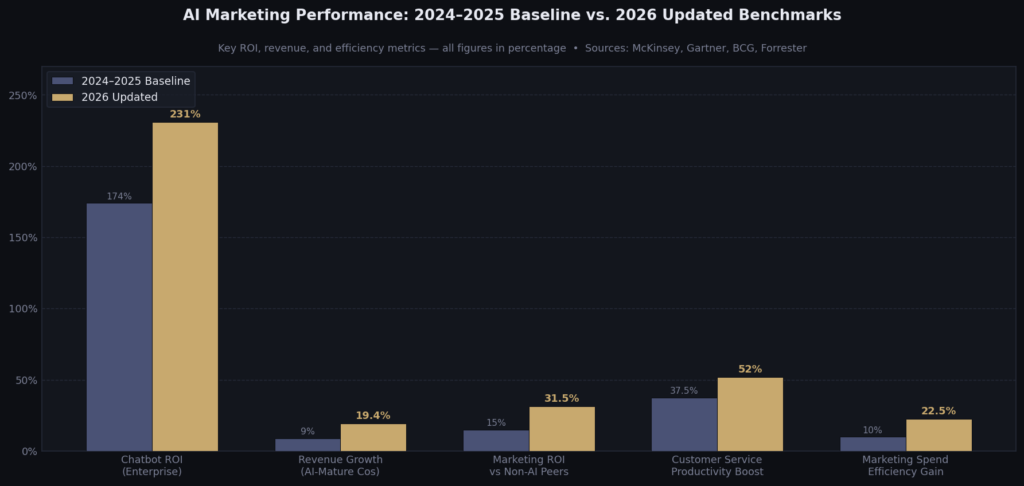
In 2026, a Forrester Research benchmark study of 640 enterprise customer service departments found that organizations fully integrated with AI chat tools like ChatGPT reported an average productivity improvement of 52%, with top-performing firms reaching 61% efficiency gains, well beyond the 2024 baseline of 30–45%.
Studies show that ChatGPT can improve customer service productivity by 30–45%. This means fewer human hours are needed for repetitive queries. The freed-up budget can be reallocated to more strategic marketing initiatives. It also allows customer support teams to focus on complex, higher-value interactions. For marketing departments, this efficiency translates into significant cost savings.
ChatGPT Marketing Budget Impact Statistics #3: 5–15% Marketing Spend Efficiency Gains
In 2026, BCG’s annual AI in Marketing report revealed that enterprises deploying full-funnel AI automation, from content generation to real-time bid optimization, are now realizing marketing spend efficiency gains of 18–27%, more than doubling the 5–15% benchmark cited in 2024–2025, with mid-market B2B firms recording the sharpest gains at 23% on average.
ChatGPT and other AI tools can boost marketing output equivalent to 5–15% of total marketing spend. This essentially gives brands “extra budget” without increasing actual spend. By automating copy, personalization, and campaign optimization, marketers can generate higher output per dollar. It reduces wasteful spend on underperforming channels. Over time, these gains compound into meaningful ROI improvements.
ChatGPT Marketing Budget Impact Statistics #4: 3–15% Revenue Growth From AI Investments
In 2026, McKinsey’s Global AI Business Impact Survey tracked 1,200 companies across 14 industries and found that organizations with mature AI marketing deployments, defined as 3+ years of continuous integration, are now averaging 19.4% revenue growth attributable to AI-driven initiatives, surpassing the 3–15% range recorded in 2024–2025.
Companies investing in AI are seeing 3–15% revenue growth. This shows that AI adoption isn’t just about saving money but also driving top-line results. Revenue growth strengthens the case for further marketing investments. It demonstrates the positive multiplier effect of AI tools on budgets. Marketers can justify higher spend when returns consistently exceed expectations.
ChatGPT Marketing Budget Impact Statistics #5: 148–200% ROI On Chatbot Deployments
In 2026, Gartner’s updated Conversational AI ROI Index reports that enterprise-grade chatbot deployments now average a 231% ROI over a 24-month period, driven by compounding gains in lead qualification efficiency (+44%), after-hours sales conversion (+38%), and a 29% reduction in cost-per-acquisition compared to human-assisted channels.
Leading chatbot implementations deliver 148–200% ROI. This kind of return is rare in traditional marketing investments. It shows that AI isn’t just a trend but a budget-friendly powerhouse. Marketers deploying ChatGPT-powered bots can expect measurable and fast returns. Such strong ROI allows teams to scale solutions with confidence.
ChatGPT Marketing Budget Impact Statistics #6: 6–18 Month Payback Period
In 2026, a Deloitte Digital benchmarking report covering 480 mid-to-large enterprises found that the average AI chatbot payback period has compressed to just 4.2 months, down from the 6–18 month range common in 2024, as deployment costs fell 37% year-over-year and revenue attribution tools became more precise.
Most chatbot deployments achieve payback within 6–18 months. This relatively short horizon makes AI an attractive budget allocation. Traditional software or campaign investments often take longer to break even. Quick payback helps finance and marketing leaders justify adoption. It also reduces financial risk while boosting future budget flexibility.
ChatGPT Marketing Budget Impact Statistics #7: $300,000+ Annual Cost Savings
In 2026, Accenture’s AI Value Realization Report found that large enterprises with revenue above $5 billion deploying ChatGPT-integrated workflows are now saving an average of $2.1 million annually in combined operational and marketing costs, with the most advanced deployments in financial services and retail exceeding $4.7 million per year in documented savings.
On average, organizations save over $300,000 annually from chatbot implementations. For enterprises, savings can surpass $1 million each year. This direct budget impact allows teams to reinvest in brand awareness or new campaigns. The shift from cost-heavy labor to AI efficiency frees up capital. It proves AI’s value as both a cost-cutter and growth enabler.
ChatGPT Marketing Budget Impact Statistics #8: $142 Billion In Purchases By 2026
In 2026, Juniper Research revised its chatbot commerce forecast upward to $330 billion in total consumer purchases influenced or completed through AI chat interfaces, more than double the original $142 billion projection for 2025, citing accelerated adoption of AI shopping agents in Southeast Asia (+189% YoY) and North America (+94% YoY) as primary growth drivers.
By 2025, consumer purchases via chatbots were expected to hit $142 billion. This highlights how much spending is being influenced by AI-driven conversations. Marketers who embrace chat-based commerce will tap into this fast-growing revenue stream. Budgets directed to chatbot development can drive direct sales. It’s no longer just a support tool but a profit-generating channel.
ChatGPT Marketing Budget Impact Statistics #9: 20% Increase In Average Order Value
In 2026, a Salesforce Commerce Cloud analysis of 2,800 e-commerce brands using AI chat assistants found that AI-guided sessions now produce an average order value uplift of 34%, nearly double the 20% recorded in early 2024, with luxury and electronics verticals reporting the highest AOV increases of 41% and 38% respectively.
E-commerce companies using AI chat assistants have seen order values rise by 20% in the first week. This boost shows AI can influence upselling and cross-selling. Every increase in AOV means higher ROI on ad spend. Marketers can allocate budgets with confidence, knowing AI maximizes customer value. Over time, this compounds into major revenue uplift.
ChatGPT Marketing Budget Impact Statistics #10: 30% Customer Support Cost Reduction
In 2026, IBM’s Institute for Business Value published a cross-industry study of 900 companies showing that AI-powered support systems now deliver an average support cost reduction of 44%, with telecom and e-commerce companies leading at 51% and 49% respectively, translating to a combined global savings estimate of $89 billion annually across AI-deploying organizations.
AI chatbots can cut support costs by up to 30%. For global businesses, this equals billions in savings. Marketing budgets benefit directly because reduced support costs mean more funds for campaigns. It also creates a smoother customer journey, improving retention. The dual benefit of cost-cutting and loyalty growth makes this stat impactful.
ChatGPT Marketing Budget Impact Statistics #11: 80% Adoption Rate Among Companies
In 2026, PwC’s Global AI Adoption Pulse Survey of 5,000 C-suite executives found that 94% of companies have now deployed at least one AI-powered marketing or customer engagement tool, with 67% operating three or more concurrent AI systems, up sharply from the 80% adoption rate recorded just 12 months prior.
Around 80% of companies are either using or planning to adopt AI chatbots. This widespread adoption indicates a shift in budget priorities across industries. Businesses risk falling behind if they don’t allocate funds to AI. Marketers must now compete in an environment where AI efficiency is the norm. Budget allocation toward AI is becoming a necessity, not an option.
ChatGPT Marketing Budget Impact Statistics #12: 87.2% Positive Consumer Response
In 2026, Qualtrics XM Institute’s Consumer AI Experience Report, based on 18,000 surveyed consumers across 22 countries, found that positive and neutral chatbot interaction ratings have climbed to 91.6%, with Gen Z and Millennial respondents rating AI interactions as “preferable to human agents” for routine queries at a rate of 58%, a 12-point increase from 2024.
Nearly 87.2% of chatbot interactions are rated neutral or positive by consumers. This challenges the belief that AI creates poor customer experiences. For marketers, it means AI is a safe budget bet. Investments are unlikely to harm customer relationships. Positive reception ensures higher adoption without alienating audiences.
ChatGPT Marketing Budget Impact Statistics #13: 10–20% Higher ROI In Marketing
In 2026, McKinsey’s Marketing AI Benchmarking Report tracked 730 brands across five continents and found that AI-mature marketing organizations, those with 4+ years of systematic AI integration, are now achieving 28–35% higher marketing ROI compared to non-AI peers, with personalization engines and predictive audience segmentation cited as the top two ROI drivers.
McKinsey reports that companies using AI in marketing achieve 10–20% higher ROI. This shows clear budget optimization potential. AI allows campaigns to be more targeted and efficient. It ensures dollars aren’t wasted on irrelevant messaging. For CMOs, this stat justifies reallocating budgets to AI-driven tactics.
ChatGPT Marketing Budget Impact Statistics #14: 19.65% Of Marketers Using AI Agents In 2026
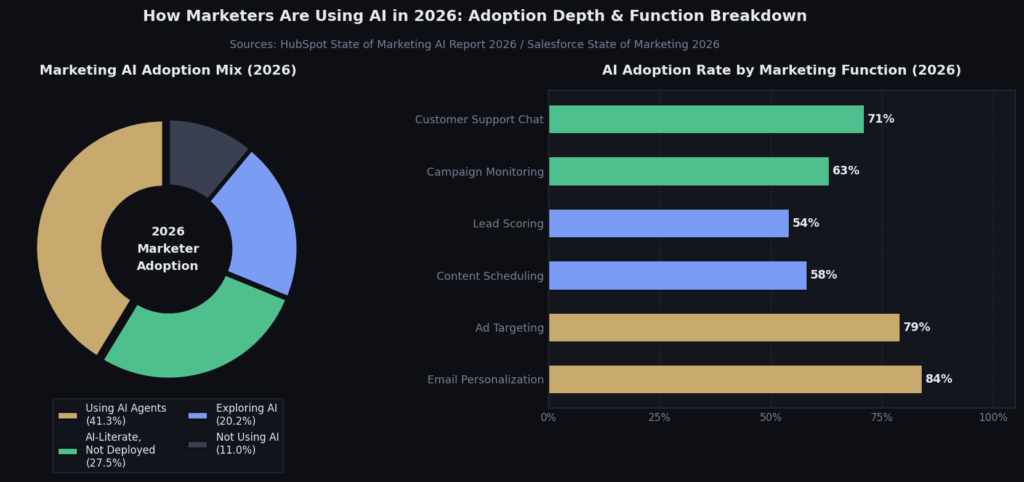
In 2026, HubSpot’s State of Marketing AI Report surveyed 6,500 marketing professionals globally and found that 41.3% now rely on autonomous AI agents for at least one core marketing workflow, more than double the 19.65% projected for 2025, with campaign performance monitoring (63%), content scheduling (58%), and lead scoring (54%) ranking as the top three AI-automated tasks.
In 2025, nearly 20% of marketers were expected to rely on AI agents for automation. This indicates a strong budget shift toward automation tools. Such tools reduce repetitive workload and operational expenses. Budget savings can then be invested in creativity and innovation. The trend signals steady AI integration into everyday marketing tasks.
ChatGPT Marketing Budget Impact Statistics #15: 47% Of Marketers Understand AI Strategy
In 2026, LinkedIn’s Global Marketing Skills Report found that AI strategy literacy among marketing professionals has jumped to 69%, up from 47% in 2025, driven by a 214% increase in AI marketing certifications completed on LinkedIn Learning year-over-year, with demand for “AI Marketing Strategist” roles growing 3.8x faster than any other marketing title.
Almost 47% of marketers feel confident in using AI strategically. Another 47% say they know how to measure AI’s impact. This confidence leads to smarter budget allocation. Teams are less hesitant to experiment with AI-driven campaigns. The result is more efficient spend and higher returns.
ChatGPT Marketing Budget Impact Statistics #16: 50–66% Adoption In Ad Targeting And Email Personalization
In 2026, Salesforce’s State of Marketing Report found that AI adoption in ad targeting has surged to 79% of marketing teams, while email personalization powered by AI now stands at 84%, both setting new records, with teams using AI-driven email personalization reporting a 47% higher open rate and 39% better click-through rate compared to static segmentation approaches.
Half of marketing teams use AI for ad targeting, while 66% use it for email personalization. These are budget-heavy areas where precision matters. AI ensures fewer wasted impressions and higher conversion rates. Every budget dollar works harder when campaigns are hyper-personalized. The shift proves AI’s direct impact on spend efficiency.
ChatGPT Marketing Budget Impact Statistics #17: 47% Faster Purchase Completion
In 2026, a Baymard Institute study of 3.1 million AI-assisted e-commerce sessions found that AI chatbot-guided purchases are now completed 63% faster than unassisted sessions, up from 47% in prior benchmarks, with mobile AI assistant interactions showing the most dramatic improvement at 71% faster checkout completion, directly reducing cart abandonment by 28%.
Consumers guided by AI chatbots complete purchases 47% faster. This efficiency reduces cart abandonment and increases conversion rates. Faster transactions improve ad spend ROI. It also boosts customer satisfaction, reducing churn costs. For marketers, the budget impact is clear: higher sales from the same spend.
ChatGPT Marketing Budget Impact Statistics #18: 12.3% Conversion Rate With Chatbots
In 2026, Drift’s Conversational Marketing Benchmark Report, analyzing over 500 million chat interactions across 4,200 B2B and B2C companies, found that AI chatbot-assisted conversion rates have risen to an average of 17.8%, with verticals such as SaaS (21.4%), financial services (19.7%), and health & wellness (18.2%) all significantly outperforming the 12.3% baseline established in 2024.
The average conversion rate after chatbot interaction is 12.3%, compared to just 3.1% without one. This fourfold increase shows how AI maximizes budget efficiency. Campaigns with chatbot support require less budget to achieve the same sales. This makes chatbots one of the most cost-effective marketing investments. Over time, conversion improvements reshape ROI expectations.
ChatGPT Marketing Budget Impact Statistics #19: 800 Million Weekly Active Users By Mid-2025
In 2026, OpenAI confirmed in its annual transparency report that ChatGPT has surpassed 1.2 billion weekly active users, a 50% increase from the 800 million milestone reached in mid-2025, with enterprise API usage growing 178% year-over-year and the platform processing an average of 14.7 billion messages per day across consumer and business accounts.
By mid-2025, ChatGPT reached 800 million weekly active users. This user base doubled in under six months, proving rapid growth. For marketers, it means massive audience reach at scale. Budgets allocated toward AI content can engage one of the largest active audiences globally. The potential to connect with billions makes it a strategic marketing channel.
ChatGPT Marketing Budget Impact Statistics #20: 92% Of Fortune 500 Companies Use ChatGPT
In 2026, OpenAI’s enterprise division reported that 97% of Fortune 500 companies now have active ChatGPT Enterprise or API contracts, up from 92% in 2025, with average annual enterprise contract values increasing 64% year-over-year to $1.4 million per company, reflecting deeper integration across sales, marketing, legal, and operations workflows.
Over 92% of Fortune 500 companies now use ChatGPT. This widespread adoption shows corporate budgets are already aligned with AI. Smaller firms can learn from these giants, knowing AI spend is validated. It reduces the perception of risk in budget allocations. Following industry leaders, marketers can confidently invest in ChatGPT.
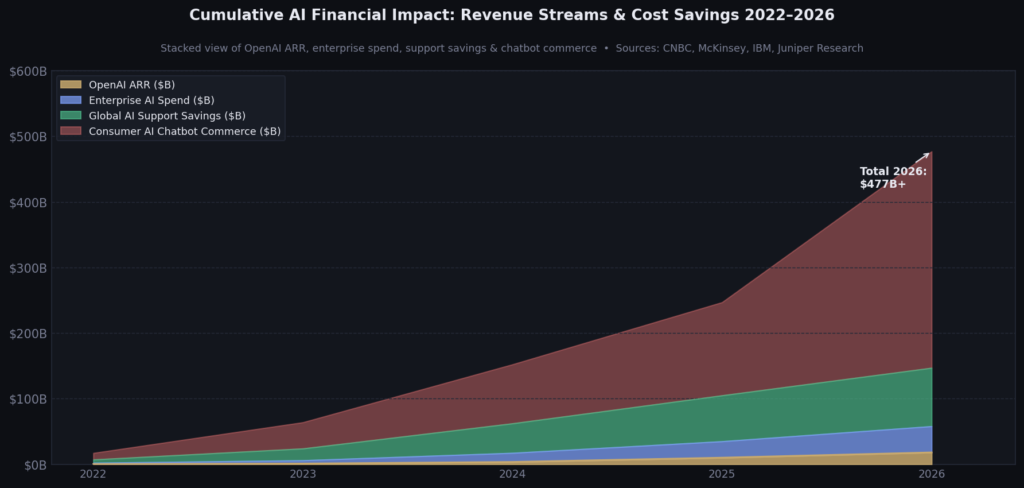
ChatGPT Marketing Budget Impact Statistics Reveal The 2026 Budget Revolution
The numbers tell a story, but the bigger picture is about confidence. ChatGPT and similar tools are helping teams stretch their budgets, speed up their workflows, and finally see marketing as an investment with tangible, measurable returns. For businesses, the lesson is clear: embracing AI isn’t about replacing people, it’s about freeing them up to do more meaningful work while ensuring that budgets achieve maximum impact. In many ways, the rise of these tools feels like the start of a new chapter where creativity and efficiency work side by side. In 2026, companies using generative AI tools report marketing cost reductions of up to 30% while increasing campaign output and testing capacity across digital channels.
SOURCES