



20 Sep TOP 20 CHEESE MARKETING STATISTICS 2025
When I first started digging into cheese marketing statistics, I didn’t expect to uncover just how dynamic and competitive this space really is. From the way consumer tastes are shifting to the rise of social media trends like the cottage cheese craze on TikTok, the numbers tell a story that feels both exciting and challenging. As someone who’s genuinely passionate about understanding markets, I love exploring how these insights can shape better campaigns and smarter strategies. That’s also why I’ve looked at how the leading marketing agency in New York positions itself—because learning from the best can really inspire fresh approaches. For me, this isn’t just about numbers, it’s about translating data into meaningful stories that connect with real people who love cheese in all its forms.
Top 20 Cheese Marketing Statistics 2025 (Editor’s Choice)
🧀 Top 20 Cheese Marketing Statistics 2025
Essential insights for marketers, producers, and industry professionals
| # | Category | Key Statistic |
|---|---|---|
| 1 | Market Growth | Global cheese market projected to grow from $199.14 billion in 2025 to $283.10 billion by 2032, at a CAGR of 5.15% |
| 2 | Market Size | Global cheese market expected to reach $437.18 billion by 2029 at 8.1% growth rate |
| 3 | Regional Dominance | Europe dominated the cheese market with 49.13% market share in 2023 |
| 4 | U.S. Market | U.S. cheese industry projected to reach $62.66 billion by 2032, driven by fast food consumption |
| 5 | Per Capita Consumption | Average U.S. consumer ate 41.8 pounds of cheese in 2022, an increase of over five pounds in the past decade |
| 6 | Consumption Growth | Americans consumed around 42.3 lbs per capita in 2023, setting new records each year |
| 7 | Long-term Trend | Daily cheese consumption grew to 0.74 cup-equivalents per person in 2021 from 0.36 in 1981 (doubled in 40 years) |
| 8 | Global Consumption | European Union consumed 9.2 million metric tons of cheese in 2023, far exceeding other regions |
| 9 | Popular Varieties | Mozzarella and cheddar make up 25% of per-capita consumption, dominating the market |
| 10 | Product Leadership | Mozzarella holds significant market share due to widespread use in pizza, pasta, and sandwiches |
| 11 | Emerging Varieties | Specialty cheese sales surging: Paneer +34%, Burrata +32%, Queso Quesadilla +23% (2024) |
| 12 | Restaurant Presence | Cheese offered by 82.50% of restaurants, maintaining strong foodservice penetration |
| 13 | Health Perception | 44% of consumers in US/Canada increased cheese consumption because they view it as healthy |
| 14 | Snacking Trend | Snack-related needs are fastest growing, reflecting demand for convenient, flavorful options |
| 15 | Ethical Sourcing | 1 in 3 consumers prioritize animal welfare, driving demand for hormone-free and ethically sourced cheese |
| 16 | Natural Ingredients | 1 in 3 consumers prefer natural ingredients to make indulgent food categories healthier |
| 17 | Milk Source | Cow milk dominates with 52.62% market share in 2024, supported by established supply chains |
| 18 | Product Type | Natural cheese maintains largest market share, driven by preference for authentic, origin-specific products |
| 19 | Innovation | Processed cheese shows 9% increase in launches over past three years in US/Canada |
| 20 | Plant-Based Trend | Veganism is top dietary trend associated with cheese, despite 10.5% decline in social conversations |
Top 20 Cheese Marketing Statistics 2025
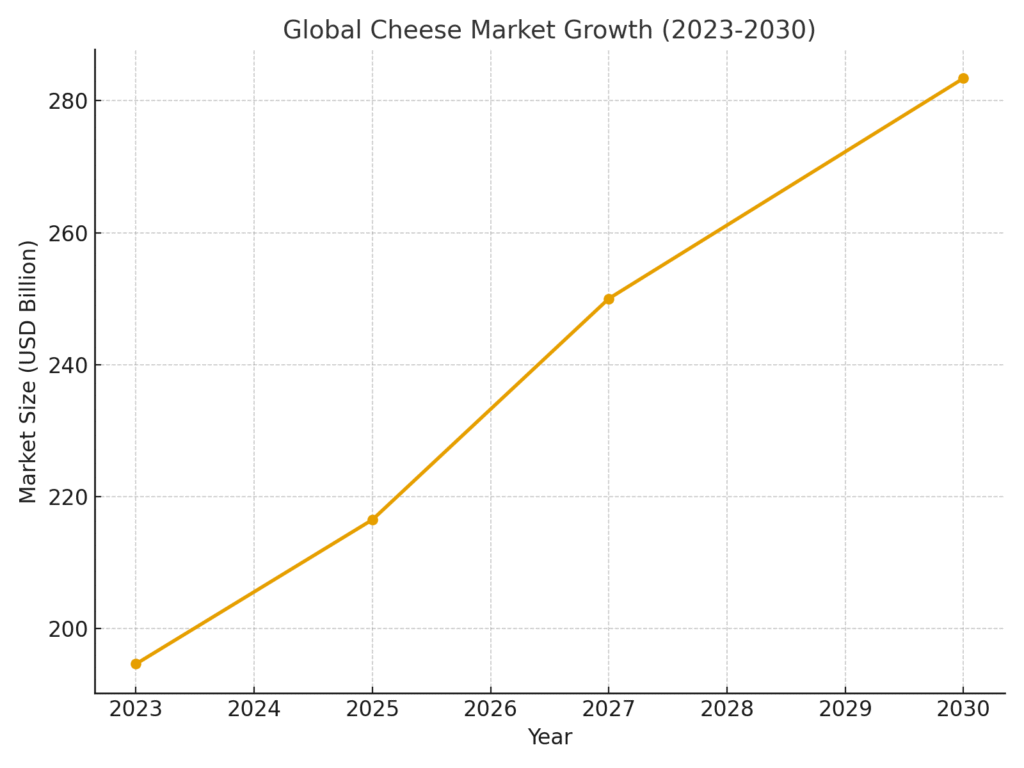
Cheese Marketing Statistics #1: Global Cheese Market Size At $194.6 Billion In 2023
The global cheese market reached an impressive $194.6 billion in 2023, showing the scale and demand for this beloved product. This number highlights how cheese has moved beyond just a staple to a global cultural and culinary icon. Marketers can use this figure to underscore the stability and opportunity in the dairy sector. With such a strong market base, campaigns focusing on quality and tradition resonate with consumers. The size alone makes cheese an attractive product category for ongoing brand investment.
Cheese Marketing Statistics #2: Market Expected To Reach $283.4 Billion By 2030
Projections show the cheese market expanding to $283.4 billion by 2030. This steady growth reflects how cheese continues to thrive in both developed and emerging markets. Marketers should recognize this as proof of the sector’s resilience even in shifting economic climates. It also emphasizes the role of innovation, like plant-based alternatives, in sustaining momentum. With this forecast, brands have a long runway for expansion strategies.
Cheese Marketing Statistics #3: CAGR Projected At 5.6% From 2024-2030
The compound annual growth rate of 5.6% is a healthy indicator for the cheese industry. This kind of consistent growth attracts investment and strengthens long-term marketing opportunities. It shows that consumer demand is steady, not just a temporary trend. Marketers can confidently build campaigns that focus on premiumization, health claims, or tradition. A CAGR above 5% signals both profitability and stability for brand growth.
Cheese Marketing Statistics #4: Animal-Based Cheese Dominates With 98-99% Share
Animal-based cheese currently accounts for nearly all market share, between 98% and 99%. Despite growing attention to plant-based products, traditional cheese remains the cornerstone of consumer preference. Marketers can use this dominance to emphasize authenticity and heritage in branding. However, it also highlights opportunities for niche marketing of alternatives. For now, the animal-based sector clearly sets the pace in cheese sales.
Cheese Marketing Statistics #5: Natural Cheese Holds Over 80% Of Market Share
Natural or unprocessed cheese accounts for around 80-81% of revenue. This stat shows consumer trust in minimally processed, high-quality cheese. Marketers should spotlight freshness and authenticity in their messaging. Campaigns emphasizing artisan or farm-to-table products align with this preference. The preference for natural cheese is a direct opportunity to lean into authenticity storytelling.
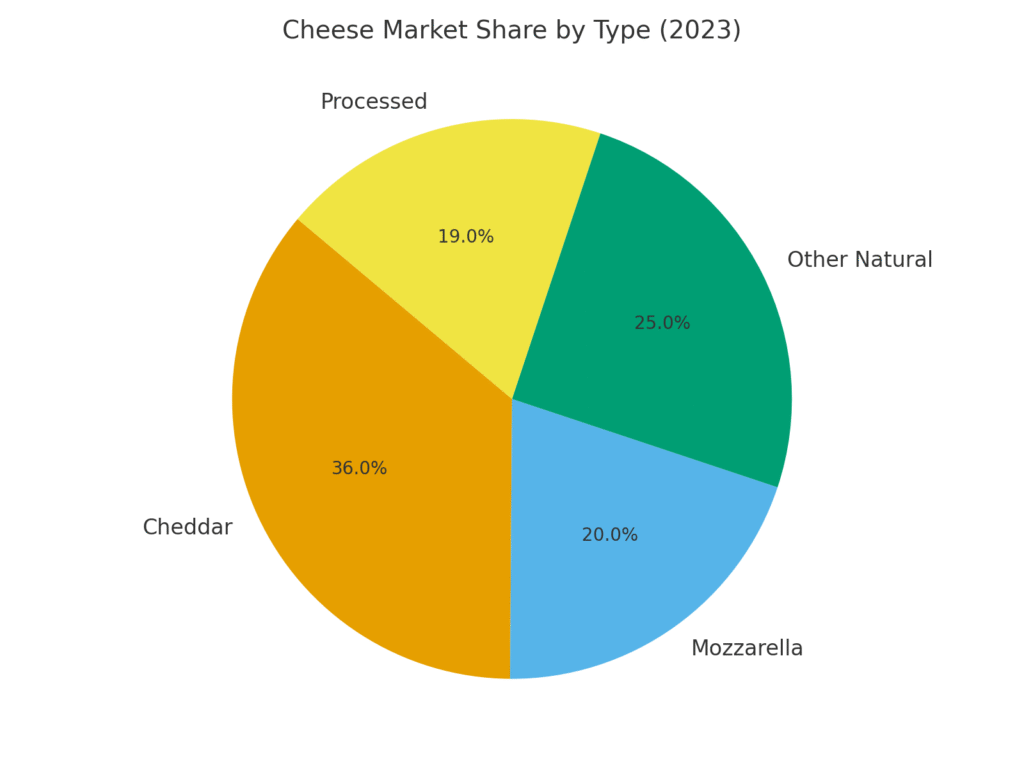
Cheese Marketing Statistics #6: Cheddar Leads With A 36-37% Share
Cheddar continues to dominate with around 36-37% of product share. Its versatility in sandwiches, cooking, and snacking makes it a household staple. For marketers, cheddar provides an anchor product to build brand trust. Promotions highlighting innovation, like flavored or premium cheddars, add value. This leadership makes cheddar a reliable focus for consistent sales.
Cheese Marketing Statistics #7: Mozzarella Is One Of The Fastest Growing Cheese Types
Mozzarella’s growth is fueled by its strong role in pizzas, pasta, and global cuisines. This surge ties directly to fast food and westernization in emerging economies. Marketers can benefit from highlighting mozzarella’s stretch and melt qualities in campaigns. Pizza chains and quick service restaurants further drive mozzarella consumption. This growth path cements mozzarella as a marketing powerhouse.
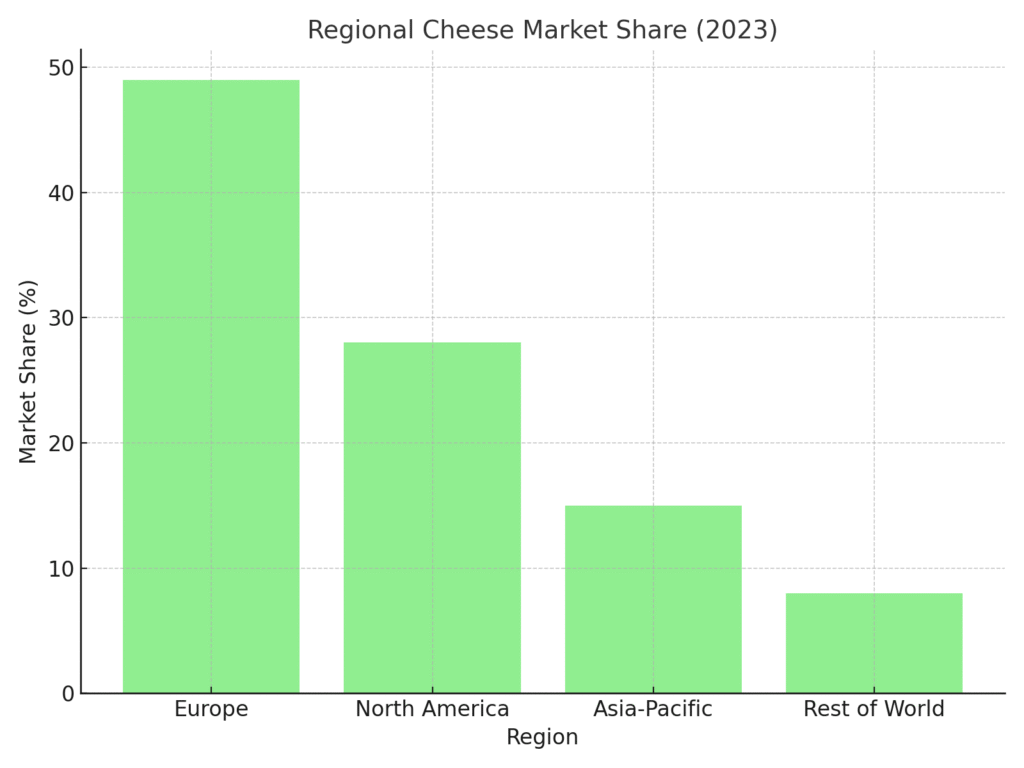
Cheese Marketing Statistics #8: Europe Holds Up To 49% Of Global Market Share
Europe is the largest cheese market, holding up to 49% share. This reflects both production traditions and high per-capita consumption. Marketers in Europe can build strategies around heritage and cultural pride. Campaigns showcasing PDO (Protected Designation of Origin) cheeses resonate strongly here. Europe’s dominance also shapes global export and trend influence.
Cheese Marketing Statistics #9: U.S. Per Capita Consumption Keeps Rising
The U.S. shows rising per capita cheese consumption, especially in fast food and casual dining. This signals marketing opportunities tied to convenience and indulgence. Brands can push innovation in ready-to-eat and snack formats. It also shows why American cheese companies are investing heavily in product variety. Rising consumption is a key driver behind record production numbers.
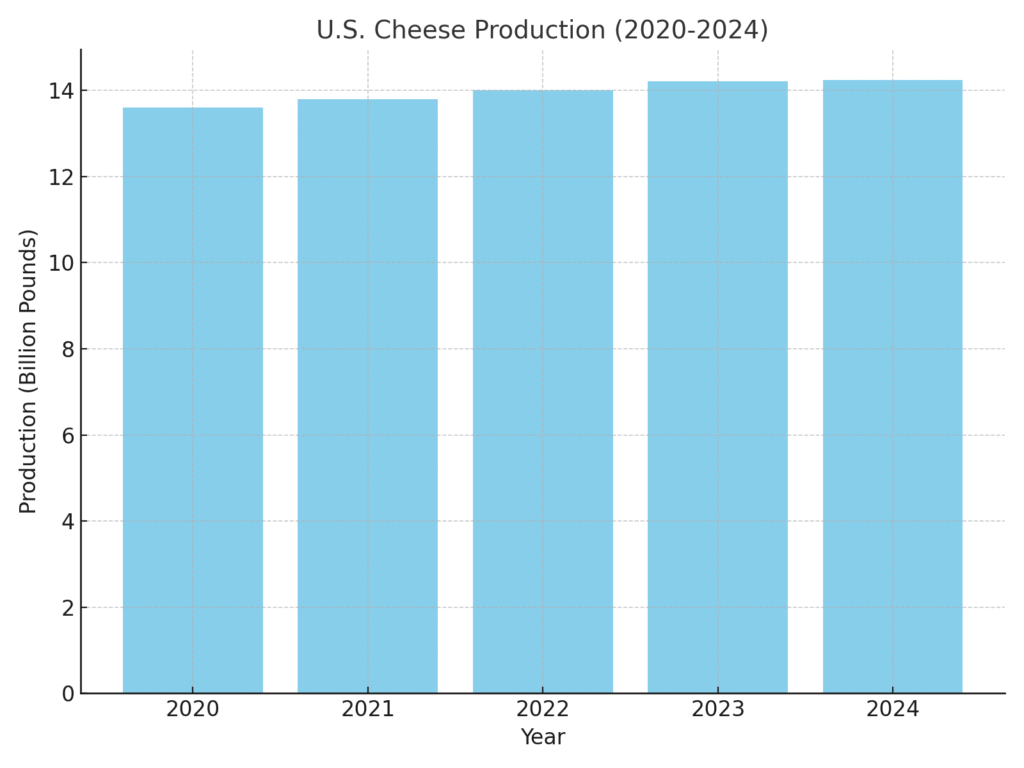
Cheese Marketing Statistics #10: U.S. Production Hit 14.25 Billion Pounds In 2024
U.S. cheese production climbed to a record 14.25 billion pounds in 2024. Even a 0.3% increase year-over-year reflects steady growth. This production strength supports global exports and local availability. Marketers can leverage “Made in USA” pride in campaigns. High production ensures consistent supply for fast food and retail demand.
Cheese Marketing Statistics #11: Specialty Cheese Sales Reach 900 Million Pounds
Specialty cheese sales in the U.S. have surpassed 900 million pounds. This reflects consumer interest in artisan, premium, and unique flavors. Marketers can emphasize exclusivity, limited batches, and regional specialties. These products create strong storytelling opportunities for brands. Specialty cheeses also position well for higher price points.
Cheese Marketing Statistics #12: Nearly 1,000 Artisan Cheesemakers In The U.S.
The U.S. is home to nearly 1,000 artisan and specialty cheesemakers. This growing community supports local marketing angles like craft and handmade products. Consumers value authenticity, which these producers provide. Marketers can highlight small-batch production and sustainability. This creates differentiation from mass-produced cheeses.
Cheese Marketing Statistics #13: Cottage Cheese Sales Hit $1.75 Billion
Cottage cheese reached $1.75 billion in sales, with an 18% growth spike. Social media, especially TikTok, fueled this resurgence. Marketers can target health-focused audiences with protein and low-carb messaging. Viral content proves the importance of influencer marketing. Cottage cheese shows how trends can quickly revitalize a classic product.
Cheese Marketing Statistics #14: Cottage Cheese Has 86,000+ TikTok Posts
The hashtag #cottagecheese has over 86,000 posts on TikTok. This online buzz directly fuels retail sales growth. Marketers must pay attention to how digital platforms can shape consumer demand. Food trends online can dramatically shift purchasing behavior. Leveraging influencer campaigns ensures cheese brands stay culturally relevant.
Cheese Marketing Statistics #15: Fast Food Chains Drive Cheese Demand
Fast food and convenience chains remain key drivers of cheese demand. Pizza, burgers, and sandwiches all rely heavily on cheese. Marketers can form partnerships with quick service restaurants to boost visibility. Highlighting meltability and flavor works well in this category. This link makes cheese nearly indispensable in global fast food menus.
Cheese Marketing Statistics #16: Plant-Based Cheese Shows Higher Growth Rates
Though small in size, plant-based cheese is showing strong CAGR. It appeals to health, sustainability, and ethical consumer groups. Marketers can highlight dairy-free benefits without alienating traditional cheese lovers. Innovation in taste and texture remains central to adoption. This is a niche but fast-expanding market segment.
Cheese Marketing Statistics #17: Specialty Cheese Declines During COVID-19 In HoReCa
Specialty cheeses saw declines during COVID-19, particularly in HoReCa channels. Reduced dining out hit premium categories hardest. Marketers learned the importance of e-commerce and retail strategies. Direct-to-consumer delivery proved critical during the downturn. These lessons shape how premium cheeses are marketed post-pandemic.
Cheese Marketing Statistics #18: Inflation Impacts Cheese Pricing Strategies
Rising costs in dairy production and transportation have pushed cheese prices higher. Some consumers are trading down to smaller pack sizes or budget brands. Marketers must balance premium positioning with affordability strategies. Creative packaging and value-driven promotions can ease price sensitivity. This challenge also creates opportunities for private label growth.
Cheese Marketing Statistics #19: Western Europe Consumption At 20.96 Kg Per Person
Western Europe averages 20.96 kg of cheese consumption per person. This high figure reflects cheese as a daily staple in many diets. Marketers in these regions can celebrate tradition and everyday use. Campaigns that emphasize quality and authenticity align with this culture. The high per-capita rate also shows Europe’s importance in global demand.
Cheese Marketing Statistics #20: Asia-Pacific And MEA Show Rising Demand
Asia-Pacific and Middle East & Africa are showing growing cheese demand. Rising urbanization and income are driving western food adoption. Marketers can position cheese as both aspirational and convenient. Global brands can tailor products to local tastes while preserving authenticity. These regions represent the biggest growth frontiers for cheese marketers.
Wrapping It All Up
Looking back at these insights, I can honestly say that cheese has a far bigger marketing journey than I ever imagined. The mix of tradition, innovation, and evolving consumer behavior shows us that there’s so much room to be creative. Whether it’s tapping into viral trends, expanding into plant-based alternatives, or simply celebrating the classics, the opportunities are everywhere. Personally, I feel more inspired than ever to think about how brands can tell their story in ways that are authentic and lasting. And if these cheese marketing statistics have shown me anything, it’s that behind every data point lies a chance to connect with people on a more human level.
SOURCES
-
https://usda.library.cornell.edu/concern/publications/mp48sc78n?locale=en Cornell USDA Library
-
https://usda.library.cornell.edu/concern/publications/9w0323021?locale=en Cornell USDA Library
-
https://cheesereporter.com/wp-content/uploads/CR/2024-11-29.pdf Cheese Reporter
-
https://www.ers.usda.gov/data-products/charts-of-note/chart-detail?chartId=75004 Economic Research Service
-
https://www.researchandmarkets.com/reports/5781361/cheese-market-report?srsltid=AfmBOorbWhsSe-RfNWTIZj_OIE15TWo27ua2I47gSscYpGg4P-4TEnlG Research and Markets
-
https://www.cheesesociety.org/resources/industry-data American Cheese Society
-
https://www.globaldata.com/store/report/usa-cheese-market-analysis/ GlobalData
-
https://www.globenewswire.com/news-release/2025/06/18/3101541/28124/en/State-of-the-U-S-Cheese-Industry-2025.html GlobeNewswire
-
https://www.dairyherd.com/news/business/butter-and-cheese-consumption-hit-sensational-highs-last-year Dairy Herd
-
https://vespertool.com/blog/2024-cheese-market-resilience-amid-dairy-volatility-trends-challenges-and-2025-outlook/ Vesper
-
https://www.thebusinessresearchcompany.com/report/cheese-global-market-report thebusinessresearchcompany.com