



20 Sep TOP 20 CHRISTMAS MARKETING STATISTICS 2025
Whenever I think about the holiday season, I can’t help but picture the surge of lights, sales, and stories that brands share to connect with people during this magical time of year. That’s why I’ve pulled together these Christmas marketing statistics—to give you a clear picture of how shoppers are spending, what strategies are working, and where brands are truly making an impact. As someone who keeps a close eye on evolving consumer behavior, I wanted this guide to feel like a conversation rather than a report, so you can actually use the insights in your own campaigns. Working with a leading marketing agency in New York has taught me how critical timing, personalization, and digital platforms are during Christmas promotions, and I’m excited to share those lessons here. Think of this as your behind-the-scenes pass into what’s shaping holiday success this year.
Top 20 Christmas Marketing Statistics 2025 (Editor’s Choice)
🎄 Top 20 Christmas Marketing Statistics 2024-2025 🎅
Essential insights to power your holiday marketing strategy
| # | Category | Key Statistic | What It Means |
|---|---|---|---|
| 1 | Consumer Spending | $964.4B |
Holiday retail sales reached nearly $1 trillion in 2023, showing massive market opportunity |
| 2 | Average Spend | $1,205 |
Americans plan to spend over $1,200 on average for Christmas 2025 on gifts, decorations, and meals |
| 3 | Online Shopping | 57% |
Over half of US buyers prefer shopping online during the holidays - digital presence is critical |
| 4 | High Spenders | 35% |
More than a third of consumers will spend over $500 on Christmas - target premium shoppers |
| 5 | Early Shopping | 43% |
Nearly half of consumers start Christmas shopping before October - launch campaigns early! |
| 6 | Digital Discovery | 80% |
Four out of five consumers discover special offers through digital channels - email, social, search |
| 7 | Social Impact | 89% |
Social media influences nearly 9 in 10 holiday shopping decisions - invest in social campaigns |
| 8 | Black Friday | 75% |
Three-quarters participate in online Black Friday shopping vs. only 29% in-store |
| 9 | Amazon Dominance | 82% |
Amazon captures 8 out of 10 holiday shoppers - consider marketplace strategy |
| 10 | Mobile Shopping | 71% |
Mobile drives 71% of digital traffic and 56% of orders - optimize for mobile first |
| 11 | Social Ad Spend | $31B |
Social media advertising hits $31 billion during holidays - massive competition for attention |
| 12 | Email Power | 68% |
Over two-thirds pay more attention to brand emails during Christmas - email marketing works |
| 13 | Social Commerce | 34% |
About a third use social platforms to search or buy holiday goods - enable social shopping |
| 14 | Online Influence | 80% |
80% influenced by online content before buying - SEO and content marketing are essential |
| 15 | Quality Matters | 58% |
Beyond price, 58% prioritize quality, 48% want easy shipping, 43% demand quick delivery |
| 16 | Price Priority | 50% |
Price is the #1 factor (50%), followed by sales/discounts (22%) and free shipping (13%) |
| 17 | Sustainability | 56% |
Over half minimize packaging waste - eco-friendly packaging can differentiate your brand |
| 18 | Self-Gifting | 41% |
Four in 10 plan to buy gifts for themselves - market "treat yourself" messaging |
| 19 | Deep Discounts | 37% |
Over a third only buy during BFCM if items are 50%+ off - prepare aggressive promotions |
| 20 | Cyber Monday | 68% |
Over two-thirds shop on Cyber Monday - essential sales event alongside Black Friday |
Top 20 Christmas Marketing Statistics 2025
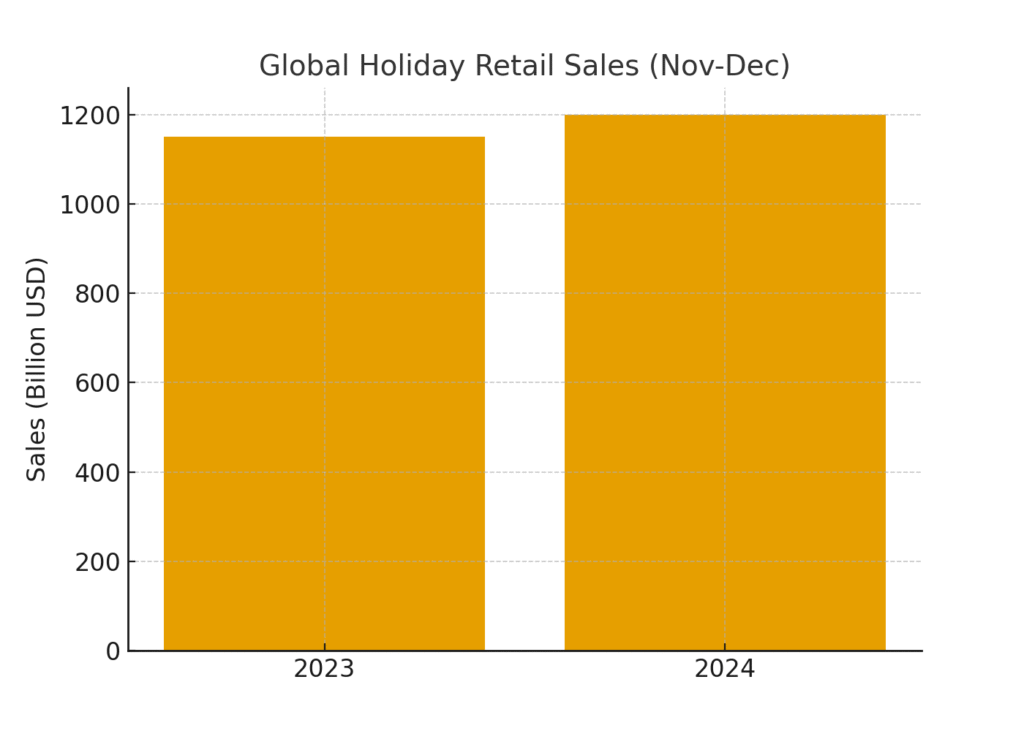
Christmas Marketing Statistics #1 – Global Holiday Retail Sales Reached $1.2 Trillion
Global holiday retail sales in November–December 2024 soared to an impressive $1.2 trillion worldwide. This shows how important the Christmas shopping season is for retailers across industries. A significant portion of this spending came from the U.S., which contributed about $282 billion. For marketers, this indicates the necessity of planning large-scale campaigns well before the season begins. It also shows that Christmas is still the single biggest driver of consumer spending worldwide.
Christmas Marketing Statistics #2 – $229 Billion in Sales Influenced by AI
AI is no longer just a buzzword—it influenced around $229 billion in online holiday sales globally. Shoppers are engaging with AI recommendations, chatbots, and smart product suggestions during Christmas shopping. This trend proves that personalization powered by AI leads to higher conversions. For marketers, leveraging AI tools can mean capturing more sales during peak times. It’s clear that AI will remain a cornerstone of holiday campaigns going forward.
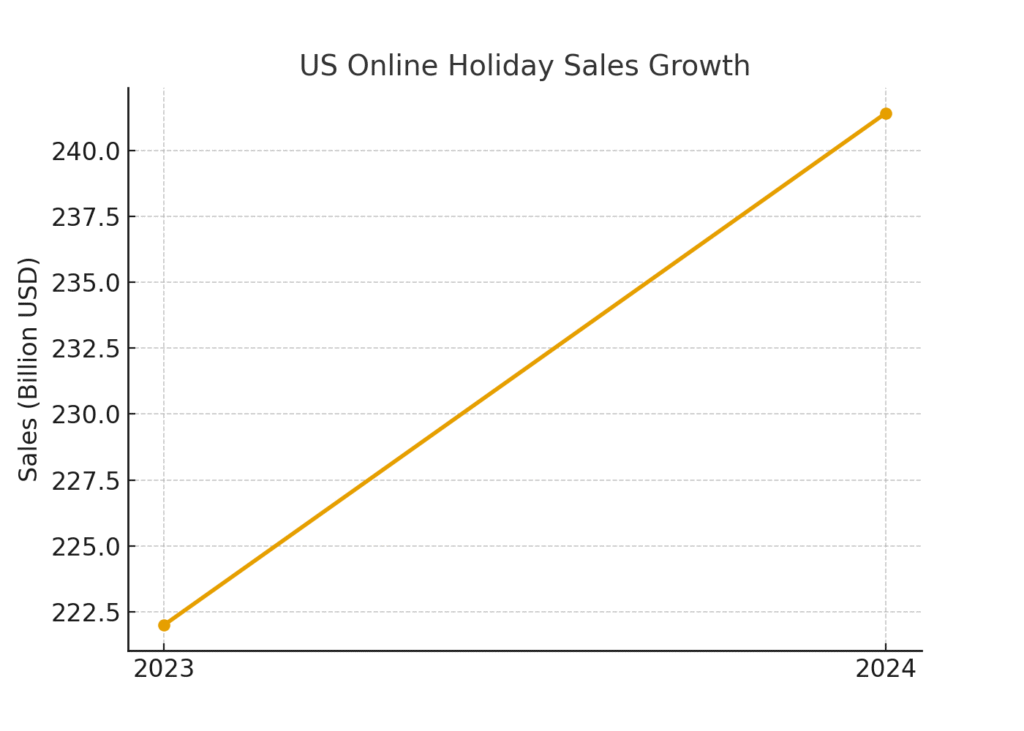
Christmas Marketing Statistics #3 – U.S. Online Holiday Sales Hit $241.4 Billion
Online holiday sales in the U.S. reached $241.4 billion during November and December 2024. This represents an 8.7% year-over-year growth, showcasing strong consumer confidence. More shoppers are choosing digital channels for convenience and variety. Retailers who prioritize eCommerce strategies during Christmas can gain a significant edge. This growth also highlights the importance of seamless online experiences for consumers.
Christmas Marketing Statistics #4 – In-Store Sales Grew by 2.9%
Despite the dominance of eCommerce, in-store retail sales during the holidays rose 2.9% in the U.S. This highlights that physical shopping still has value for Christmas experiences. Many consumers enjoy browsing festive displays and feeling the holiday spirit in person. Marketers should consider blending online and offline efforts to maximize results. This stat reminds us that traditional retail is evolving, not disappearing.
Christmas Marketing Statistics #5 – Mobile Shopping Made Up 54.5% of Sales
More than 54.5% of holiday online sales came from mobile devices in 2024. On Christmas Day, that number jumped to 65% as people shopped from their phones. This proves that mobile optimization is no longer optional for retailers. Brands that ignore mobile risk losing out on a majority of shoppers. A strong mobile experience is now central to Christmas marketing success.
Christmas Marketing Statistics #6 – U.S. Holiday eCommerce Growth Predicted at 4.2%
The U.S. holiday eCommerce market is expected to grow by just 4.2% in 2025. While still positive, this represents slower growth compared to previous years. Consumers are becoming more cautious about spending, making it harder for brands to achieve big jumps. This means marketers will need more creative campaigns to drive purchases. Discounts, personalization, and loyalty strategies will be more important than ever.
Christmas Marketing Statistics #7 – 18% Plan to Shop via Social Media
Around 18% of shoppers intend to buy gifts directly through social media platforms this holiday season. Social commerce is gaining ground as platforms like Instagram and TikTok integrate shopping tools. This creates huge opportunities for brands targeting younger consumers. It also means that traditional ads need to be re-imagined as shoppable experiences. Marketers who invest in social storefronts will tap into this fast-growing channel.
Christmas Marketing Statistics #8 – Consumers Start Shopping Earlier
Shoppers are beginning their holiday shopping earlier than ever, often starting in September and October. This shift is driven by concerns over supply chain delays and rising prices. For marketers, waiting until December to launch campaigns is a missed opportunity. Early bird promotions can capture this audience and lock in sales before competitors. Planning ahead is now essential for Christmas campaigns.
Christmas Marketing Statistics #9 – Free Shipping Is a Key Driver of Conversions
Free shipping has become one of the most powerful conversion drivers for Christmas sales. Many shoppers will add extra items to their cart just to qualify. Conversely, unclear or high shipping costs can quickly lead to abandoned carts. This highlights how operational strategies directly influence marketing success. Brands that clearly promote free shipping gain a competitive advantage.
Christmas Marketing Statistics #10 – Buy Now, Pay Later (BNPL) Usage Reached $18.2 Billion
During the 2024 holiday season, U.S. shoppers spent $18.2 billion using BNPL services. This flexible payment method has become a go-to option, especially for younger shoppers. It allows customers to manage big holiday expenses without the stress of one-time payments. Marketers who offer BNPL will likely see stronger conversions. BNPL is now a must-have in Christmas checkout experiences.
Christmas Marketing Statistics #11 – $122 Billion in Holiday Returns
Global merchandise returns hit $122 billion during the last holiday season. This shows that while sales are strong, post-purchase experiences remain challenging. Brands must focus on hassle-free return policies to maintain customer loyalty. A negative return experience can damage long-term trust. Smart retailers are now marketing easy returns as a selling point.
Christmas Marketing Statistics #12 – Gen Z and Millennials Spend the Most
Gen Z and Millennials are driving the highest levels of holiday spending. They’re also the most likely to shop through social platforms and value unique experiences. This generational trend should guide how brands shape their Christmas campaigns. Personalized, authentic, and socially-driven strategies resonate most with these groups. Ignoring younger buyers means missing out on the largest share of spending.
Christmas Marketing Statistics #13 – Email Marketing Delivers High ROI
Email marketing continues to deliver strong ROI during the holiday season, with averages around $45 for every $1 spent. Christmas email campaigns often have higher engagement due to festive anticipation. Creative subject lines and personalization make a big difference. For brands, email remains one of the most cost-effective tools for holiday conversions. Despite new platforms, email is still a reliable powerhouse.
Christmas Marketing Statistics #14 – Personalization Can Increase Sales by 20%
Personalized content and offers can generate up to a 20% increase in sales opportunities. During Christmas, shoppers expect tailored recommendations. Using AI and data insights helps brands deliver experiences that feel unique. Personalization also strengthens brand loyalty during competitive sales periods. Retailers that overlook it risk blending into the noise.
Christmas Marketing Statistics #15 – 84% of Consumers Plan to Cut Back
About 84% of consumers expect to reduce overall spending in the next six months. This cautious mindset will affect Christmas shopping as well. Shoppers are prioritizing value and essentials, making discounting strategies more impactful. Marketers must adapt messaging to acknowledge financial pressures. Empathy in campaigns will resonate more deeply this year.

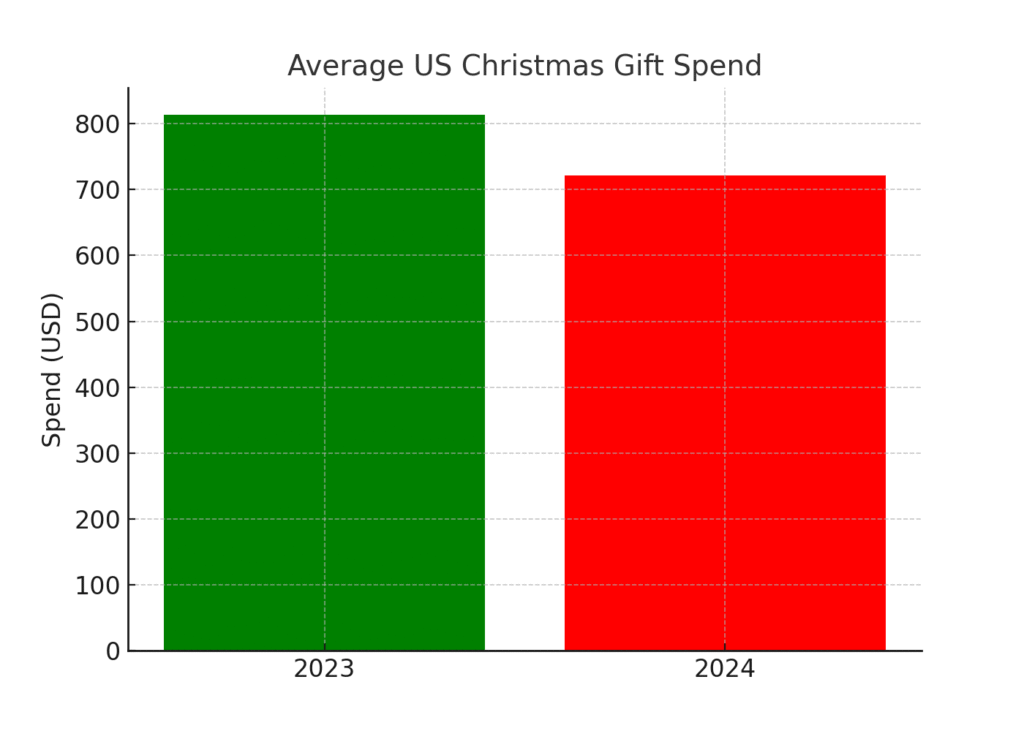
Christmas Marketing Statistics #16 – Average U.S. Gift Spend Declined to $721
The average U.S. consumer gift budget dropped from $814 to $721 in 2024. This 11% decrease reflects growing price sensitivity. Retailers must adjust by offering more affordable gift bundles and promotions. Highlighting value for money will be crucial in marketing efforts. Consumers still want to give, but they’re more budget-conscious than before.
Christmas Marketing Statistics #17 – Discounts Drive Demand
Even a small discount of 1% can lead to nearly proportional increases in holiday sales. Consumers are actively searching for deals during Christmas campaigns. Flash sales and bundle offers work especially well during this season. For marketers, pricing strategy is as important as creative messaging. Discounts remain one of the simplest and most effective levers for driving demand.
Christmas Marketing Statistics #18 – 20% of Sales Come from Social Commerce
Social platforms now account for roughly 20% of holiday sales for some retailers. Platforms like TikTok, Instagram, and Facebook are blurring the line between content and shopping. Consumers are inspired by influencers, ads, and user-generated content. This shift makes social media both a branding and a direct sales channel. Marketers who integrate shopping features will capture this new wave of buyers.
Christmas Marketing Statistics #19 – Fast Delivery and Returns Are Expected
Consumers expect faster shipping and easy returns during Christmas shopping. Expedited shipping peaks as the holiday nears, showing urgency in late purchases. Curbside pickup and same-day options remain relevant. Marketing these conveniences can strongly influence purchase decisions. Today’s shopper values speed and reliability as much as price.
Christmas Marketing Statistics #20 – 31% Value Wish List Features
About 31% of U.S. shoppers say they value wish list features while shopping for Christmas. This includes save-for-later options and shareable lists for family and friends. Wish lists make shopping easier and more enjoyable. For brands, it’s an opportunity to gather insights on customer preferences. Marketing campaigns that highlight wish list tools can build stronger engagement.
Wrapping Up the Holiday Insights
As I step back and look at all these numbers, I’m reminded that Christmas marketing isn’t just about chasing sales—it’s about understanding people, their traditions, and the little moments they want to create with loved ones. These statistics highlight that consumer behavior is changing quickly, from mobile-first shopping to the rise of social commerce, and brands that adapt with empathy will thrive. Personally, I find it exciting to see how small adjustments—like offering flexible payments or making delivery smoother—can turn into big wins for both customers and businesses. My hope is that you walk away from this article not just with figures, but with ideas you can shape into your own strategy. At the end of the day, Christmas is about connection, and so is marketing—it’s just our job to make sure we spark it in the right way.
SOURCES
https://www.pwc.com/us/en/industries/consumer-markets/library/holiday-outlook-trends.html
https://www.mckinsey.com/industries/retail/our-insights/holiday-shopping-trends
https://business.adobe.com/blog/the-latest/holiday-shopping-insights
https://www.inmar.com/blog/insights/martech/2025-holiday-forecast-report
https://www.numerator.com/holiday-trends-consumer-survey/
https://www.driveresearch.com/market-research-company-blog/christmas-facts-and-statistics/
https://salsify.com/resources/2025-holiday-pulse-consumer-research
https://penji.co/holiday-content-marketing-statistics/
https://wisernotify.com/blog/christmas-marketing/
https://webengage.com/blog/christmas-marketing-campaigns/
https://www.tribegroup.co/blog/how-to-sleigh-your-christmas-marketing