



27 Sep TOP 20 CLEAN ENERGY MARKETING STATISTICS 2025
When I started digging into clean energy marketing statistics, I realized just how much momentum this industry has gained in shaping both the market and public perception. As someone who has followed energy trends closely, I see how these numbers tell a bigger story about opportunity, innovation, and sustainability. By working with the leading marketing agency in New York, I’ve been able to better understand how data like this can help businesses stand out while authentically communicating their environmental impact. For me, these stats aren’t just abstract figures—they reflect the real shift in how energy is bought, sold, and promoted around the world.
Top 20 Clean Energy Marketing Statistics 2025 (Editor’s Choice)
🌱 Top 20 Clean Energy Marketing Statistics 2025
The Future of Sustainable Energy is Here
| # | Category | Statistic | Key Value |
|---|---|---|---|
| 1 | Market Size | Global clean technology market value in 2025 | $1.01 Trillion |
| 2 | Growth Projection | Clean tech market projected value by 2030 | $1.84 Trillion |
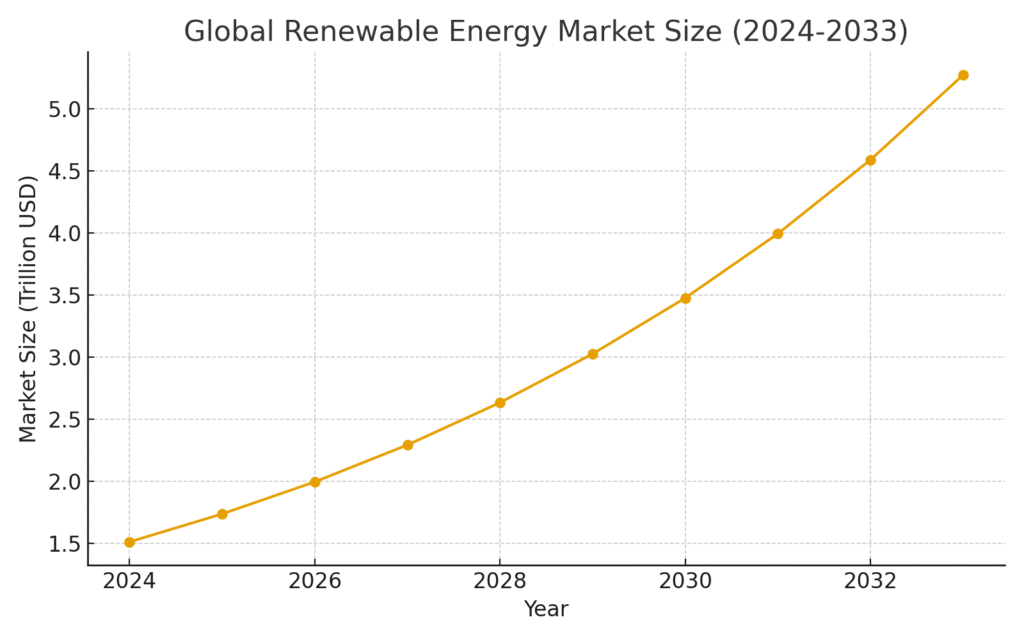
| 3 | Market Growth | Renewable energy market size by 2033 | $4.86 Trillion |
| 4 | Investment | Annual global investment in renewable energy projects | $2 Trillion |
| 5 | Solar Power | Solar generation growth over last 3 years | 2000+ TWh (Doubled) |
| 6 | Clean Energy | Clean power share of global electricity in 2024 | 40%+ |
| 7 | Solar Capacity | Global solar power capacity reached in 2024 | 2 TW |
| 8 | Deployment | Solar PV & wind annual additions growth (2023) | 85% & 60% |
| 9 | Regional Leader | Asia Pacific's share of clean tech market | 50%+ |
| 10 | China Investment | China's share of global clean energy investment | 31% |
| 11 | Innovation | Chinese companies' share of global clean energy patents | 75% |
| 12 | China Capacity | China's wind & solar capacity growth (3 years) | 635 to 1,408 GW |
| 13 | US Manufacturing | US clean energy manufacturing investment (Q3 2022-Q1 2025) | $115 Billion |
| 14 | US Facilities | Clean tech manufacturing facilities announced since IRA | 380 (161 operational) |
| 15 | Battery Sector | Batteries' share of clean tech manufacturing investment | 69% |
| 16 | Demand Growth | Clean energy demand by 2030 (data centers, manufacturing, carbon capture) | 57+ GW |
| 17 | Data Centers | Data center electricity consumption by 2030 | 945 TWh |
| 18 | Emissions Impact | CO2 emissions avoided annually by clean energy tech | 2.6 Billion Tonnes |
| 19 | Market Share | Renewable energy tech share of clean tech revenue (2024) | 62%+ |
| 20 | Marketing Trends | Top utility marketing strategies in 2025 | AI, Hyper-Convenience, Energy Equity |
Top 20 Clean Energy Marketing Statistics 2025
Clean Energy Marketing Statistics #1: Global Renewable Market Size & Growth
The global renewable energy market was valued at USD 1.51 trillion in 2024. It is expected to grow at a CAGR of nearly 14.9% between 2025 and 2033. This consistent growth shows investors and marketers that demand for clean energy is not slowing down. The rapid expansion highlights the importance of aligning marketing strategies with long-term growth trends. For marketers, this means positioning clean energy as both an environmentally sound and financially smart investment.
Clean Energy Marketing Statistics #2: Clean Power Share Of Global Electricity
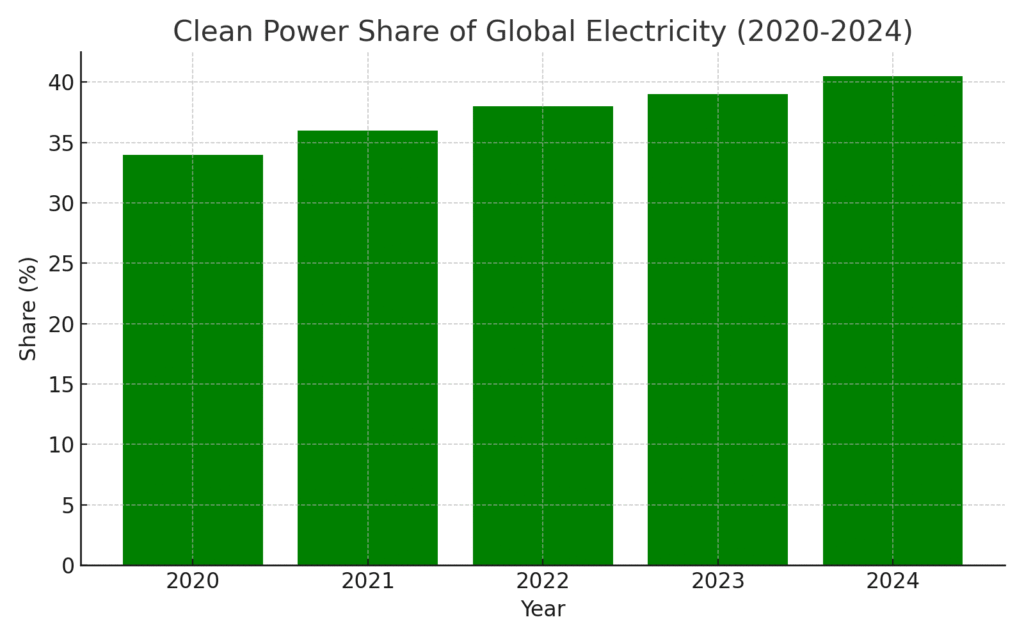
In 2024, clean power accounted for more than 40% of global electricity generation. This milestone reflects a fundamental shift in energy sourcing worldwide. Consumers are becoming increasingly aware of this transformation, which creates an opportunity for marketers to emphasize cleaner options. By highlighting such stats, companies can connect with environmentally conscious customers. It also sets a foundation for storytelling around responsibility and progress.
Clean Energy Marketing Statistics #3: Renewables’ New Additions Lead Supply Growth
Renewables accounted for 38% of the growth in total energy supply in 2024. This indicates that clean energy is outpacing fossil fuels in terms of expansion. For marketers, this means that future campaigns should focus on the dominant role of renewables in new infrastructure. Highlighting these figures demonstrates leadership in innovation. It also builds credibility when addressing environmentally motivated customers.
Clean Energy Marketing Statistics #4: Annual Renewable Capacity Additions
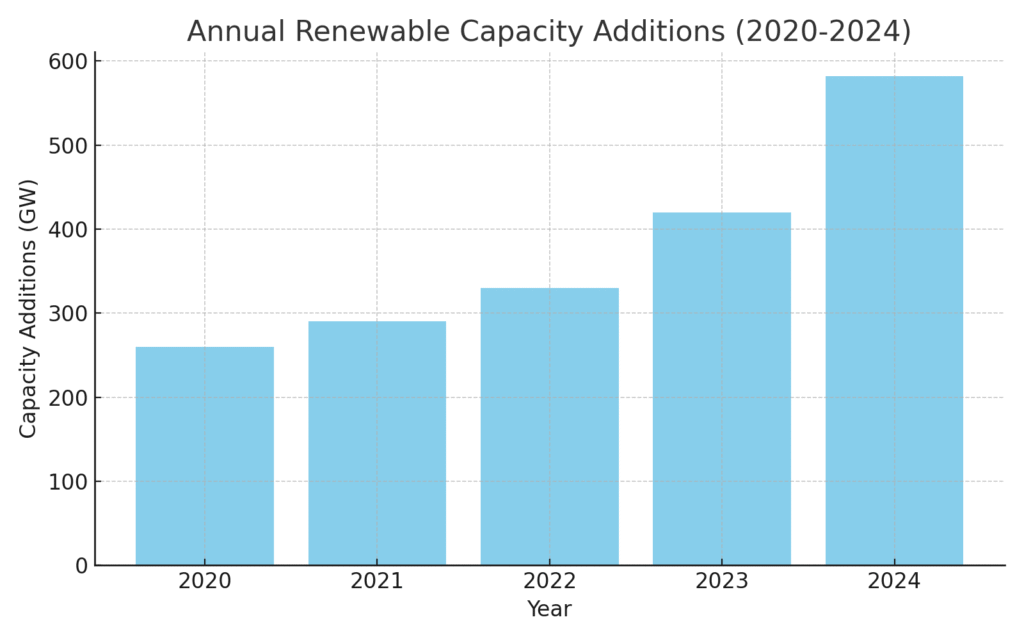
In 2024, renewable capacity additions reached a record-breaking 582 GW. This is the largest single-year expansion to date. Such numbers reveal the speed at which renewable energy is scaling globally. From a marketing perspective, these statistics serve as proof points that renewable adoption is no longer just a vision—it is happening right now. They also provide validation for messaging around innovation and urgency.
Clean Energy Marketing Statistics #5: Dominance Of Solar In New Additions
Of the 582 GW added, solar PV made up nearly 452 GW, representing 77.8%. This shows the overwhelming consumer and industry preference for solar solutions. Solar’s dominance makes it an attractive area for marketers to emphasize affordability and accessibility. It also highlights how clean energy is moving from niche adoption to mainstream demand. Marketers can leverage this data to build campaigns showcasing solar as the future of energy.
Clean Energy Marketing Statistics #6: Cost Advantage Vs. Fossil Fuels
In 2024, 91% of renewable projects were cheaper than fossil fuel alternatives. This major shift makes clean energy the logical financial choice. For marketing, cost advantage is one of the strongest selling points. Campaigns that combine environmental benefits with affordability resonate deeply with buyers. The numbers make it easier to counter the misconception that clean energy is always more expensive.
Clean Energy Marketing Statistics #7: Market Concentration By Region
Asia added approximately 413 GW of renewable capacity in 2024. This accounted for nearly a quarter of global growth. The data illustrates how geographic regions are influencing global adoption. For marketers, it suggests tailoring campaigns to reflect regional leadership and trends. Highlighting Asia’s progress also positions clean energy as a global movement, not a local initiative.
Clean Energy Marketing Statistics #8: U.S. Clean Energy Share & Costs
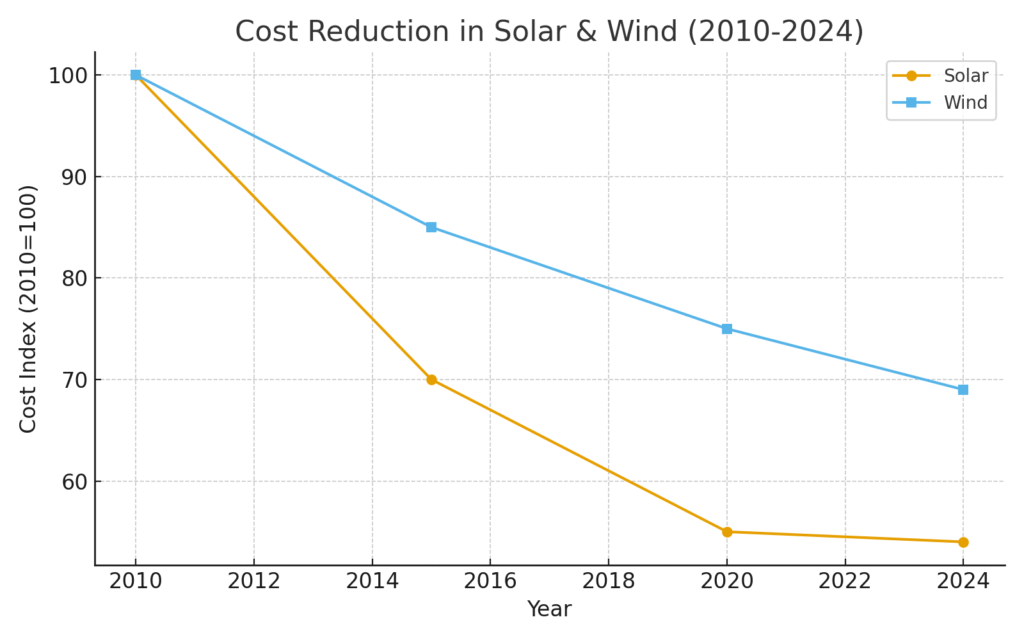
In the U.S., clean energy supplied 15.5% of total electricity in 2024. Over the past decade, wind costs dropped 31% and solar costs fell 46%. This long-term cost reduction builds a compelling narrative of increasing efficiency. For marketers, it shows an opportunity to emphasize affordability alongside sustainability. These stats provide reassurance for consumers considering long-term investments in clean power.
Clean Energy Marketing Statistics #9: Renewable Procurement Market Scale
In 2023, around 9.7 million customers procured 319 million MWh of renewable power. This large-scale adoption highlights the growing demand for cleaner options. The scale of this procurement demonstrates that clean energy is not just a niche preference anymore. Marketers can use such stats to validate consumer demand and expand their campaigns to broader audiences. It also serves as evidence for shifting buyer expectations in the energy space.
Clean Energy Marketing Statistics #10: Solar & Wind Vs. Coal In The U.S.
For the first time in 2024, solar and wind produced more electricity than coal in the U.S. This was a symbolic turning point for the energy sector. Marketers can leverage this milestone to showcase the decline of fossil fuels. It also validates clean energy as a more reliable source of power moving forward. Such dramatic comparisons strengthen storytelling and brand positioning.
Clean Energy Marketing Statistics #11: Renewable Sector As Job Engine
The U.S. clean energy sector now supports over 460,000 direct jobs. This makes it a key contributor to economic growth. For marketers, job creation is a strong community-based message. Campaigns can highlight how renewable projects bring both employment and sustainability. It reinforces the idea that clean energy benefits everyone, not just the environment.
Clean Energy Marketing Statistics #12: Emissions Avoided
Clean energy deployment in the U.S. prevents emissions equal to 102 million cars annually. This is a powerful comparison that resonates with everyday consumers. For marketing, simplifying emissions data into relatable terms makes messages more impactful. It demonstrates measurable, real-world impact rather than abstract numbers. Such stats are perfect for awareness campaigns.
Clean Energy Marketing Statistics #13: PPA Price Inflation
Between 2023 and 2024, solar PPA prices rose 10.4% while wind PPAs rose 14.1%. Although prices increased, demand remains strong. This indicates buyers’ willingness to invest in renewables despite higher upfront costs. Marketers can frame this as proof of commitment to sustainability. It also emphasizes the long-term financial and environmental return.
Clean Energy Marketing Statistics #14: Renewables In New Power Growth
Non-fossil energy sources grew by more than 5% in 2024. This growth represented nearly half of all new energy supply. For marketers, this underscores the rising dominance of clean energy. Campaigns can present renewables as leaders in the global energy transition. Highlighting this trend builds momentum for forward-looking branding.
Clean Energy Marketing Statistics #15: Global Energy Demand & Electricity Growth
In 2024, global energy demand increased by 2.2%. At the same time, electricity demand grew 4.3%. The power sector accounted for 60% of this demand growth. Marketers can use this to highlight the accelerating importance of clean electricity. It also validates why so many companies are investing in renewables now.
Clean Energy Marketing Statistics #16: Renewables In Marketing Perception
Three-quarters of consumers consider sustainability in their energy-related purchases. This reveals a strong link between consumer behavior and clean energy marketing. Marketers should emphasize eco-friendly messaging to align with consumer priorities. Campaigns built on sustainability themes tend to perform better across demographics. This makes green branding an essential marketing strategy.
Clean Energy Marketing Statistics #17: Greenwashing Risk
With the rise of clean energy marketing, greenwashing risks are higher than ever. Consumers and regulators are scrutinizing eco-claims more closely. Marketers must ensure transparency and data-backed messaging. Highlighting certified achievements reduces credibility risks. This stat warns companies to use numbers responsibly in campaigns.
Clean Energy Marketing Statistics #18: Forecasted Growth In Renewables Adoption
From 2023 to 2030, renewables are forecasted to grow at nearly 16.9% CAGR. This strong outlook builds confidence for investors and buyers. Marketers can use this projection to highlight long-term potential. It shows that renewables are not just a trend but a permanent shift. Campaigns can frame adoption as future-proofing energy consumption.
Clean Energy Marketing Statistics #19: Installed Capacity Milestone
By the end of 2024, global installed renewable capacity reached about 4,443 GW. This figure represents substantial worldwide adoption. For marketers, such milestones are proof of scale and reliability. Large capacity numbers also reassure skeptical buyers about performance. It sets the stage for global messaging about clean energy’s dominance.
Clean Energy Marketing Statistics #20: Renewables’ Share Of Supply Additions
Renewables contributed around 86% of all new power generation capacity globally. This share shows the sheer dominance of clean energy in expansion projects. Marketers can frame this as proof that renewables are no longer optional. They are leading the charge in shaping future infrastructure. Campaigns should focus on being part of this unstoppable global movement.
Why These Stats Matter For Marketers
Looking back at these clean energy marketing statistics, I can’t help but feel inspired by the scale of progress. For me, the story these numbers tell is about opportunity—both for businesses and for the planet. By working with the leading marketing agency in New York, I’ve seen how the right campaigns can transform raw data into powerful narratives that resonate with customers. The numbers show us that clean energy is not just growing, it is reshaping markets, jobs, and perceptions worldwide. As marketers, our role is to connect this momentum with stories that inspire action and build trust.
SOURCES