



19 Sep TOP 20 COCOA MARKETING STATISTICS 2025
When I first started researching cocoa marketing statistics, I was amazed by just how much this industry reflects both global tradition and modern consumer trends. From the smallholder farms in West Africa to the premium chocolate shelves in Europe, cocoa’s story is as complex as it is inspiring. As someone deeply invested in understanding how markets evolve, I wanted to uncover the numbers that shape strategy and influence consumer behavior. Working with a leading marketing agency in New York, I’ve come to see how these insights go far beyond simple figures—they tell the story of sustainability, pricing shifts, and consumer demand across continents. This blog is my way of sharing those discoveries with you in a way that feels both practical and personal.
Top 20 Cocoa Marketing Statistics 2025 (Editor’s Choice)
Top 20 Cocoa Marketing Statistics 2025
Essential Market Intelligence for Industry Leaders & Investors
| Rank | Category | Key Statistic | Value/Trend |
|---|---|---|---|
1 |
Market Size |
Global cocoa market valuation in 2025, projected to reach $26.2B by 2035 | $16.6 Billion ↗ 4.7% CAGR |
2 |
Market Size |
Cocoa bean market value in 2025, growing to $17.3B by 2030 | $14.4 Billion ↗ 3.74% CAGR |
3 |
Market Size |
Global chocolate market value in 2025, expanding to $221.11B by 2033 | $148.75 Billion ↗ 5.08% CAGR |
4 |
Market Size |
Cocoa powder market valuation in 2024, with strong growth trajectory | $22.2 Billion ↗ 4.8% CAGR |
5 |
Production |
Global cocoa production decline in 2023/24 season due to climate challenges | 4.368M Tonnes ↓ 12.9% Decline |
6 |
Production |
West Africa's dominance in global cocoa output, led by Côte d'Ivoire and Ghana | 60% Global Share |
7 |
Production |
Cocoa price range in 2025, driven by supply shortages and climate issues | $6,000-10,000 Per Ton |
8 |
Supply Chain |
Percentage of cocoa beans sourced from developing countries | 90%+ Developing Nations |
9 |
Regional |
Europe's leadership in global cocoa processing capacity and powder market | 45% Processing Share |
10 |
Consumption |
Luxembourg leads per capita chocolate consumption globally | 20+ kg Per Person/Year |
11 |
Regional |
China's chocolate market annual growth rate, reaching $1.2B value | 15% Annual Growth |
12 |
Consumer |
Global consumers who purchased chocolate confectionery in past year | 2/3 Global Population |
13 |
Trends |
Dark chocolate demand increase driven by health consciousness | 27% Growth Rate |
14 |
Trends |
Premium and artisanal chocolate sales growth, craft chocolate CAGR | 30% Sales Increase |
15 |
Trends |
Vegan chocolate consumption rise responding to plant-based diet trends | 26% Growth Rate |
16 |
Innovation |
Functional chocolate with health benefits growth (probiotics, nutrients) | 34% Market Growth |
17 |
Applications |
Confectionery applications dominance in total cocoa usage | 51-55% Market Share |
18 |
Seasonality |
Holiday seasons' share of total chocolate sales (Christmas, Valentine's) | 65% Annual Sales |
19 |
Digital |
Online chocolate sales growth rate, outpacing traditional retail | 5.0% Fastest CAGR |
20 |
Sustainability |
Environmental claims in chocolate products increase (2018: 9%) | 24% 2025 Level |
Top 20 Cocoa Marketing Statistics 2025
Cocoa Marketing Statistics #1: Global Cocoa Bean Production Reached 4.4 Million Tonnes In 2023/24
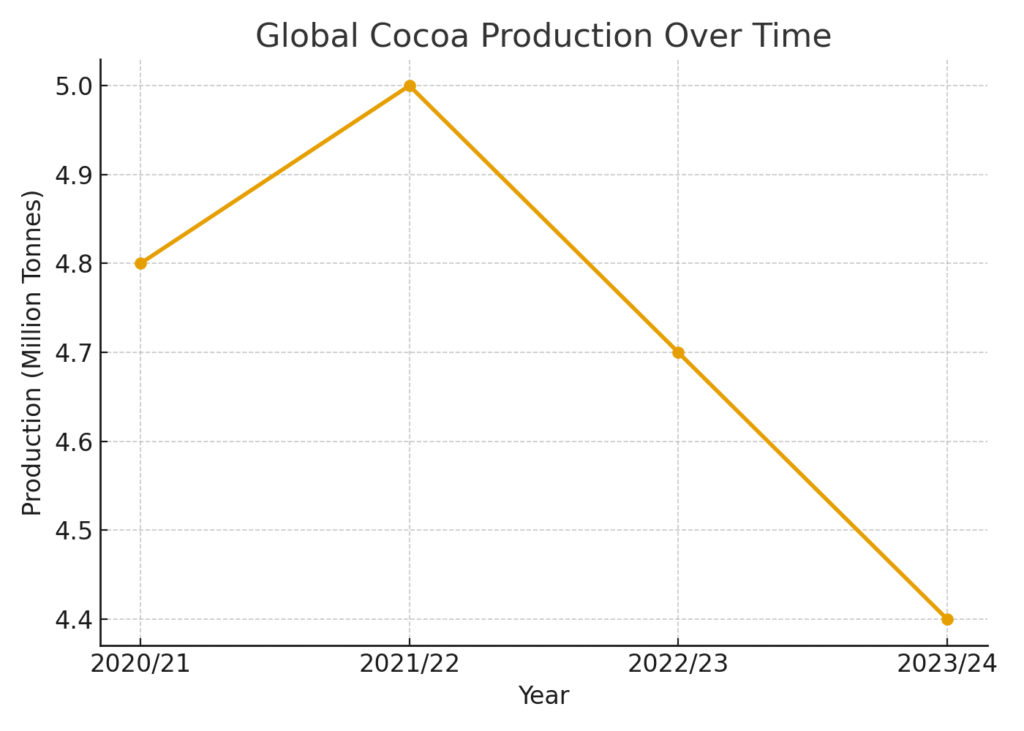
The world produced about 4.4 million tonnes of cocoa beans during the 2023/24 season. This highlights the massive global reliance on cocoa as both an agricultural product and a key ingredient in the chocolate industry. The figure also reflects how crucial cocoa is to economies in Africa, Latin America, and Asia. Production levels like this set the stage for pricing, marketing, and demand trends worldwide. For marketers, these numbers remind us that behind every campaign lies a deeply global supply chain.
Cocoa Marketing Statistics #2: Côte D’Ivoire And Ghana Account For 46% Of Global Cocoa Production
Côte d’Ivoire and Ghana together produce nearly half of the world’s cocoa beans. This makes them central players in the international cocoa market. For marketers, it means much of the story begins in these two countries, from sustainability initiatives to farmer income. Any change in their production levels immediately affects global pricing and brand strategies. Marketing cocoa without acknowledging West Africa’s role would be incomplete.
Cocoa Marketing Statistics #3: West Africa Supplies Two-Thirds Of The World’s Cocoa
West Africa as a whole is responsible for about two-thirds of cocoa production. This dominance creates both opportunity and vulnerability in the market. On one hand, it allows the region to hold strategic influence over supply and pricing. On the other, any regional instability, such as weather changes or political disruption, can cause global ripples. For marketers, it’s a reminder of how geography shapes strategy.
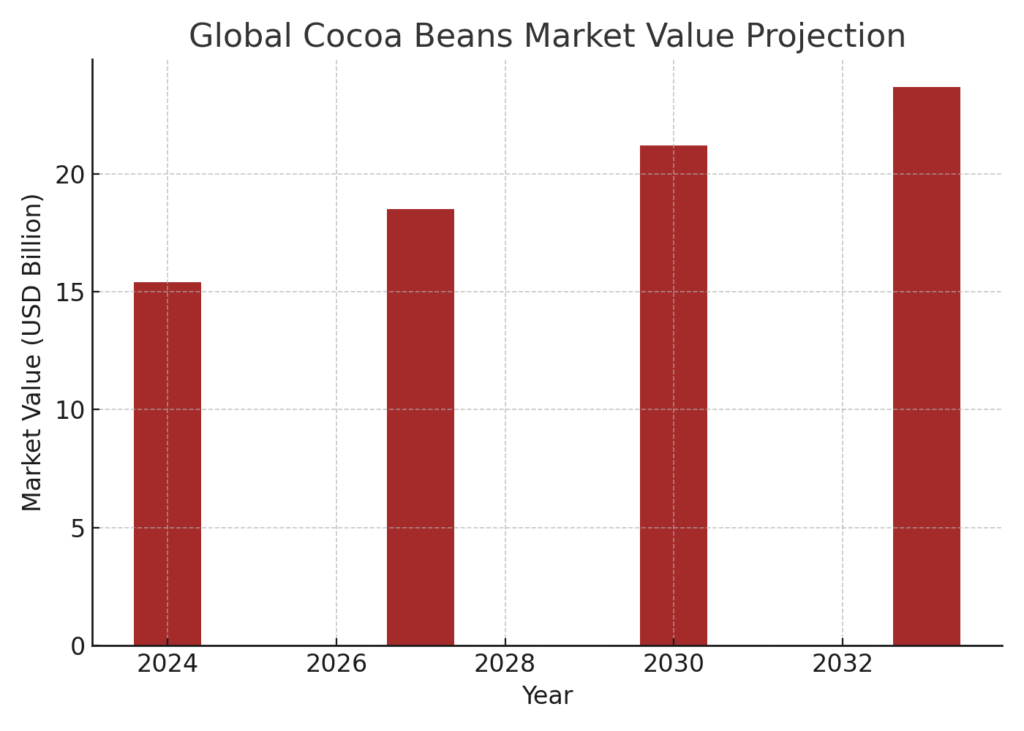
Cocoa Marketing Statistics #4: Global Cocoa Beans Market Was Valued At USD 15.40 Billion In 2024
In 2024, the cocoa beans market was valued at $15.40 billion globally. This value showcases the industry’s massive scale and influence. It’s not just about chocolate—it covers everything from cosmetics to beverages. With such a large market, brands compete fiercely for consumer attention. This statistic sets the tone for why marketing strategies need to be precise and innovative.
Cocoa Marketing Statistics #5: Cocoa Beans Market Projected To Reach $23.68 Billion By 2033
The cocoa beans market is expected to expand to $23.68 billion by 2033. This forecast reflects strong consumer demand, especially in emerging markets. Growth at this level provides opportunities for premium branding and product diversification. It also signals long-term stability, which marketers can use to build sustained campaigns. Planning ahead with this growth trajectory can help brands stay competitive.
Cocoa Marketing Statistics #6: Cocoa And Chocolate Market To Hit USD 10.86 Billion By 2033
The broader cocoa and chocolate market is on track to grow from $6.10 billion in 2024 to $10.86 billion by 2033. This shows the resilience of chocolate consumption despite changing consumer habits. Rising demand in Asia and Europe fuels this growth. For marketers, it’s an invitation to tell richer stories about premium and health-focused chocolate. It also underlines the power of chocolate as both indulgence and lifestyle product.
Cocoa Marketing Statistics #7: Global Cocoa Market Forecasted At $96 Billion By 2035
By 2035, the cocoa market could soar to $96 billion. This projection highlights cocoa’s potential as a growing global industry. Rising incomes, urbanization, and health trends are contributing factors. For marketers, this means positioning cocoa not only as a treat but also as part of wellness and cultural experiences. It’s a chance to align branding with a market poised for long-term expansion.
Cocoa Marketing Statistics #8: Global Cocoa Bean Market Valued At $17.2 Billion In 2024
The cocoa bean market’s value of $17.2 billion in 2024 emphasizes its global importance. This valuation covers beans before processing, showing their raw economic weight. For marketers, it’s important to communicate how early supply chain decisions affect end products. The number also illustrates the heavy investments tied to cocoa. Every marketing campaign, therefore, links back to billions in raw material value.
Cocoa Marketing Statistics #9: European Chocolate Market Worth EUR 47.3 Billion In 2024
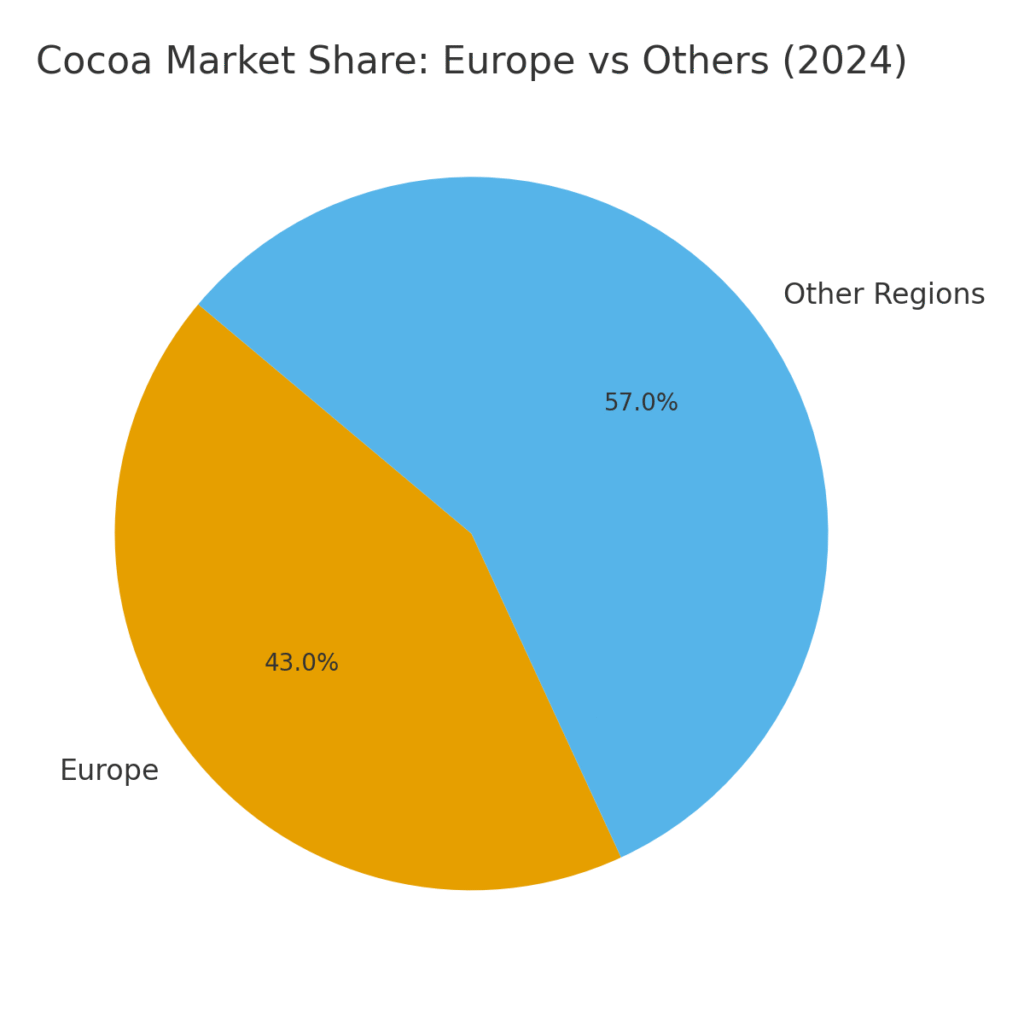
Europe’s chocolate market reached €47.3 billion in 2024, commanding about 43% of global share. Europe remains the largest consumer and innovator in the cocoa sector. This creates opportunities for premium, artisanal, and sustainability-driven marketing. For brands targeting Europe, storytelling around heritage and quality resonates most. This statistic highlights Europe as a critical arena for cocoa marketing strategies.
Cocoa Marketing Statistics #10: One-Third Of Cocoa Beans Processed In Europe
More than a third of harvested cocoa beans are processed in Europe. This demonstrates Europe’s importance not only as a consumer but also as a production hub. The continent’s refining and processing industries help shape global supply. For marketers, it’s an opportunity to highlight European expertise in chocolate making. It also connects cocoa marketing to themes of tradition and craftsmanship.
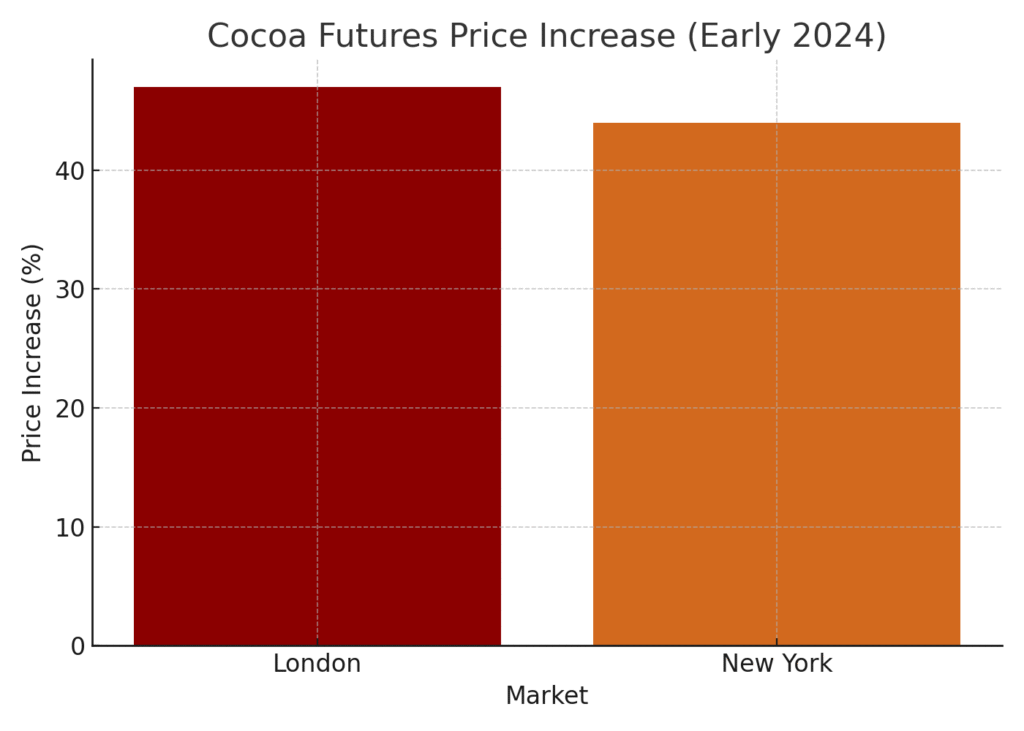
Cocoa Marketing Statistics #11: Cocoa Futures Prices Rose 47% In London In Early 2024
In early 2024, cocoa futures in London spiked by nearly 47%. This sudden rise reflects volatility in the supply chain. For marketers, it creates challenges around pricing strategies and consumer affordability. It also underscores the importance of communicating value and sustainability. High prices can shift consumer demand, making messaging even more critical.
Cocoa Marketing Statistics #12: Global Production Drops Caused Price Spikes In 2024
Weather and disease in key producing countries led to a drop in cocoa production in 2024. This caused prices to surge to historic highs. For marketers, this means adapting campaigns to address rising costs. Some brands highlight sustainability and ethical sourcing as a way to justify price points. Others shift focus to premium experiences rather than affordability.
Cocoa Marketing Statistics #13: Warehouse Stocks Fell Sharply In 2024
Licensed warehouse inventories of cocoa beans fell dramatically in London and New York in 2024. This shortage magnified price volatility. For marketers, scarcity creates both a challenge and an opportunity. Limited supply can be positioned as exclusivity in luxury markets. At the same time, it requires careful messaging to maintain consumer trust.
Cocoa Marketing Statistics #14: Premium And Organic Cocoa Demand Is Growing
Demand for certified, organic, and sustainable cocoa continues to rise. Consumers, especially in Europe, seek products aligned with ethical values. For marketers, this trend allows campaigns to focus on transparency and impact. Brands that showcase farmer support or environmental initiatives stand out. This statistic highlights how purpose-driven marketing resonates deeply with audiences.
Cocoa Marketing Statistics #15: Dark Chocolate Segment Experiencing Stronger Growth
Dark chocolate, with higher cocoa content, is seeing faster growth than milk chocolate. Health and wellness trends are driving this demand. For marketers, this opens space for positioning chocolate as both indulgence and healthy choice. Campaigns highlighting antioxidants or lower sugar are especially effective. This growth reflects how shifting lifestyles shape cocoa consumption.
Cocoa Marketing Statistics #16: Asia Pacific Is A Fastest Growing Cocoa Market
The Asia Pacific region is one of the fastest-growing cocoa markets globally. Rising incomes and urbanization fuel higher chocolate consumption. For marketers, this represents a frontier of opportunity. Localized campaigns that respect cultural preferences can accelerate adoption. This stat underlines Asia Pacific as a vital growth engine for the industry.
Cocoa Marketing Statistics #17: Cocoa Yields Vary From 150 To 2,500 Kg Per Hectare
Cocoa farm yields range widely, from 150 to 2,500 kilograms per hectare annually. This variation depends on farming practices, location, and disease. For marketers, it’s a reminder of the human effort behind each product. Highlighting farmer stories can bridge the gap between consumers and supply. This stat adds authenticity to any cocoa marketing campaign.
Cocoa Marketing Statistics #18: More Farms Adopting Certification And Traceability
Certification programs like Rainforest Alliance are gaining momentum among cocoa farms. This reflects a push for transparency and sustainability. For marketers, it creates powerful storytelling opportunities. Brands can showcase certifications as proof of ethical sourcing. This builds consumer trust while addressing growing global concerns.
Cocoa Marketing Statistics #19: Climate Change And Disease Disrupt Cocoa Supply
Environmental stressors such as climate change and disease are disrupting cocoa supply. This adds uncertainty to pricing and availability. For marketers, the challenge lies in balancing messaging between resilience and urgency. Campaigns that emphasize adaptation and sustainability resonate with conscious consumers. This statistic shows how marketing must account for global realities.
Cocoa Marketing Statistics #20: Farmers Receive Limited Profits Despite High Prices
Even when global cocoa prices rise, farmers often receive little of the profit. Most of the value is captured downstream in branding, transport, and processing. For marketers, this opens a chance to highlight fair trade initiatives. Consumers increasingly appreciate brands that address income inequality in supply chains. This stat is a call for more ethical storytelling in cocoa marketing.
Wrapping It All Together
Looking back at these cocoa marketing statistics, I can’t help but feel both fascinated and motivated. The numbers show us where the market is heading, but they also highlight the challenges farmers, brands, and consumers face together. For me, the biggest takeaway is that cocoa isn’t just a commodity—it’s part of a global narrative about taste, culture, and sustainability. I hope these insights give you the same sense of connection I felt while gathering them, and perhaps even spark ideas for your own strategies or projects. After all, marketing is at its best when it connects numbers to people—and cocoa gives us the perfect canvas for that story.
SOURCES
- https://www.theguardian.com/business/2025/sep/17/chocolate-inflation-consumers-spend-more-but-get-less-prices-rise The Guardian
- https://www.comunicaffe.com/icco-releases-new-cocoa-market-report-for-august/ Comunicaffe International
- https://www.reuters.com/markets/commodities/ghana-delayed-delivery-370000-t-cocoa-202324-season-official-says-2025-01-20/ Reuters
- https://www.theguardian.com/environment/2025/may/21/eu-chocolate-climate-breakdown-crisis-report The Guardian
- https://www.reuters.com/business/retail/hershey-lifts-candy-prices-citing-high-cocoa-costs-7aec150b
- https://en.wikipedia.org/wiki/List_of_countries_by_cocoa_production