




19 Sep TOP 20 COFFEE MARKETING STATISTICS 2025
I’ve spent the last few weeks living and breathing coffee trends, and these Coffee marketing statistics are the ones I keep reaching for when I’m planning launches, shaping creatives, and defending budgets. From cold brew’s breakout to the relentless rise of RTD, the signal is clear: coffee is culture, not just a category. I’m bringing you the numbers I’d use if I were pitching a high-stakes campaign for a leading marketing agency in New York—clean, compelling, and immediately actionable. My goal is simple: help you spot demand pockets, price with confidence, and build messages that actually move cups. If you’re ready to translate data into conversions, this is your cheat sheet.
Top 20 Coffee Marketing Statistics 2025 (Editor’s Choice)
☕ Top 20 Coffee Marketing Statistics 2025
Essential Insights for Coffee Industry Success
| Rank | Category | Key Statistic | Market Insight |
|---|---|---|---|
| 1 | 📊 Market Size | $473.10 Billion | Global coffee market value in 2025 - $96.45B at-home + $376.70B out-of-home |
| 2 | 📈 Growth Rate | 4.72% CAGR | Projected to reach $174.25 billion by 2030 - steady growth across all segments |
| 3 | 🇺🇸 US Market | $88.5 Billion | US leads globally with 8% YoY growth in coffee chain sales reaching $49.5B |
| 4 | ☕ Daily Consumption | 66% of Americans | Drink coffee daily, making it America's favorite beverage |
| 5 | 👶 Early Adoption | Age 15 (Gen Z) | Gen Z starts drinking coffee at 15 vs Millennials at 18-20 - younger market entry |
| 6 | 🎯 Key Demographics | 52% Global Population | Millennials & Gen Z drive innovation - crucial consumer bases for coffee brands |
| 7 | ⭐ Specialty Coffee | 64% of 25-39 Year-Olds | Drank specialty coffee weekly - highest among all age groups |
| 8 | 🥤 Ready-to-Drink | 6.1% CAGR | Fastest growing segment - consumption jumped from 8% to 15% among daily consumers |
| 9 | 🍯 Espresso Drinks | 50% Increase | Cappuccinos, lattes, flat whites surged since 2015 - driven by 25-39 age group |
| 10 | 🎨 Flavor Trends | 58% Preference | Coffee drinkers prefer adding flavors - major customization opportunity |
| 11 | 🏠 At-Home Coffee | 90% of Americans | Consume different coffee types at home - younger generations drive variety |
| 12 | 📱 Mobile Orders | 25% Surge | Significant adoption of digital ordering platforms across coffee shops |
| 13 | 📧 Social Media | 80% of Coffee Shops | Report social media marketing increased customer base - essential for growth |
| 14 | 🎁 Loyalty Programs | 12% Higher Spending | Loyalty members spend more than non-users - proven revenue driver |
| 15 | 🌟 Specialty Market | $183.0 Billion by 2030 | Growing at 10.4% CAGR from $101.6B in 2024 - premium segment boom |
| 16 | ⚡ Ground Coffee | 37.56% Market Share | Leads product segments while instant coffee grows at 5.92% CAGR |
| 17 | 🌱 Organic Growth | 7.5% CAGR | 45% consumer interest in organic coffee drives sustainable market expansion |
| 18 | ♻️ Sustainability | 100% by 2025 | Major brands pledge responsibly sourced coffee - EU regulations driving change |
| 19 | 🌏 Asia-Pacific | 12.4% CAGR (China) | Fastest growing region at 5.23% overall CAGR - emerging coffee culture |
| 20 | 🏪 Coffee Shops | 40,000+ US Locations | 7% higher than pre-pandemic - robust industry recovery and expansion |
Top 20 Coffee Marketing Statistics 2025
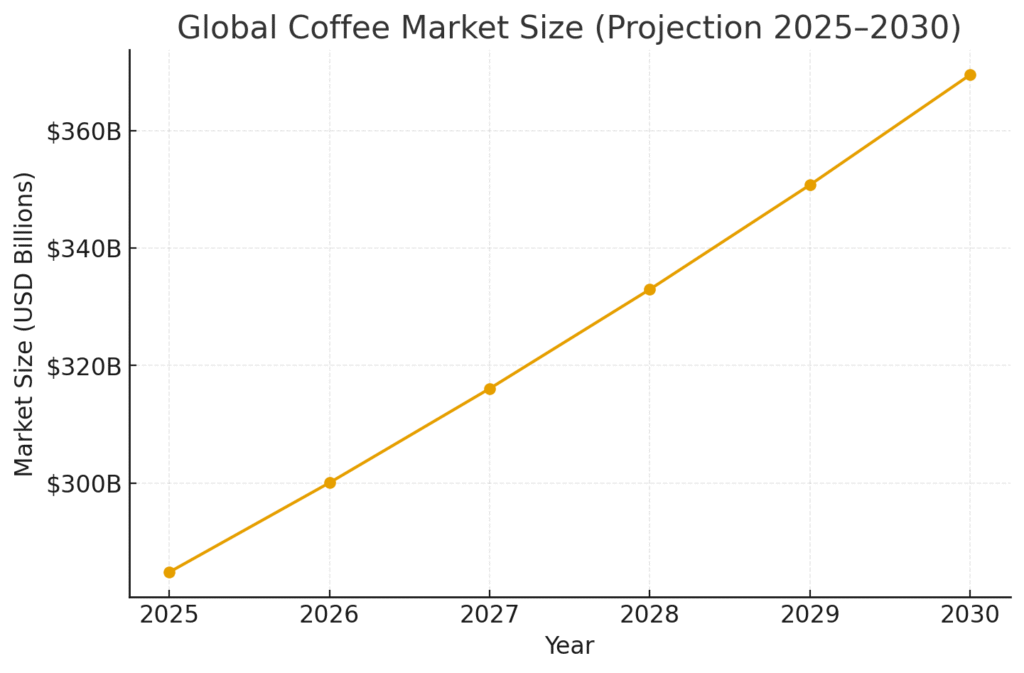
Coffee Marketing Statistics #1: Global Coffee Market $284.8B In 2025, Forecast $369.5B By 2030
The global coffee market is valued at $284.8B in 2025 and is projected to hit $369.5B by 2030. That trajectory implies steady, defensible growth for brands with clear positioning. Marketers can use this headroom to justify long-term brand building alongside performance pushes. Portfolio planning should split budgets between mature hot coffee formats and faster-growing segments. Expect investor interest and retail shelf competition to intensify as the pie expands.
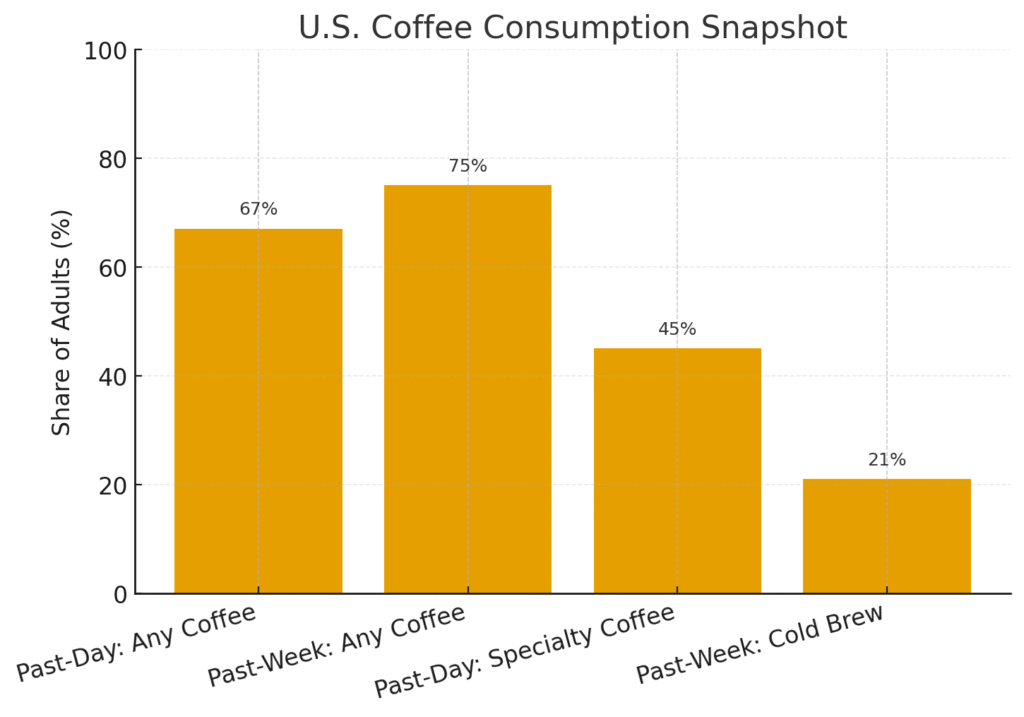
Coffee Marketing Statistics #2: 67% Of U.S. Adults Drank Coffee “Yesterday”
When 67% of U.S. adults report drinking coffee “yesterday,” you’re marketing to a daily habit, not a sporadic treat. Habit products reward frequency campaigns and subscription mechanics. Build creative around morning routines, commute moments, and desk refills. Loyalty nudges and streak rewards can compound engagement in high-frequency categories. This level of daily penetration also makes coffee a prime co-marketing partner for breakfast foods and productivity apps.
Coffee Marketing Statistics #3: 45% Had Specialty Coffee Yesterday, Outpacing Traditional
With 45% of adults choosing specialty coffee yesterday, the taste bar is higher than ever. Messaging should spotlight bean provenance, roast profiles, and brewing craft. Creators and micro-roasters can win with authenticity and behind-the-scenes content. Retailers should expand specialty SKUs and emphasize discovery bundles. Premiumization lets you defend margin even when input costs move.
Coffee Marketing Statistics #4: Out-Of-Home Coffee Returned To Pre-Pandemic Levels
Traffic recovery means cafés and quick-service counters are back in play. OOH media near transit, campuses, and offices can now drive measurable footfall again. Pair local awareness ads with store-level offers and mobile order-ahead. Daypart bidding—especially morning and mid-afternoon pick-me-ups—improves ROAS. Consider seasonal limited-time offers to spike trials as routines normalize.
Coffee Marketing Statistics #5: 21% Drank Cold Brew In The Past Week
Cold brew’s weekly reach at 21% signals mainstream adoption. Creative should feature texture, clarity, and “smooth, less acidic” benefits. Sampling works well in warm months; in colder periods, highlight nitro or flavored variants. Cross-sell with protein snacks and low-sugar syrups for better baskets. If you’re DTC, ship concentrates and promote easy at-home recipes.
Coffee Marketing Statistics #6: RTD Coffee $29.44B In 2024, $42.46B By 2030
Ready-to-drink coffee thrives on convenience and omnichannel availability. Prioritize refrigerated placement and impulse-friendly pack sizes. Use retail media networks to win the digital shelf and defend keywords. Athleisure and on-the-go narratives perform well in creative testing. Limited flavors and collabs can reset velocity without discount addiction.
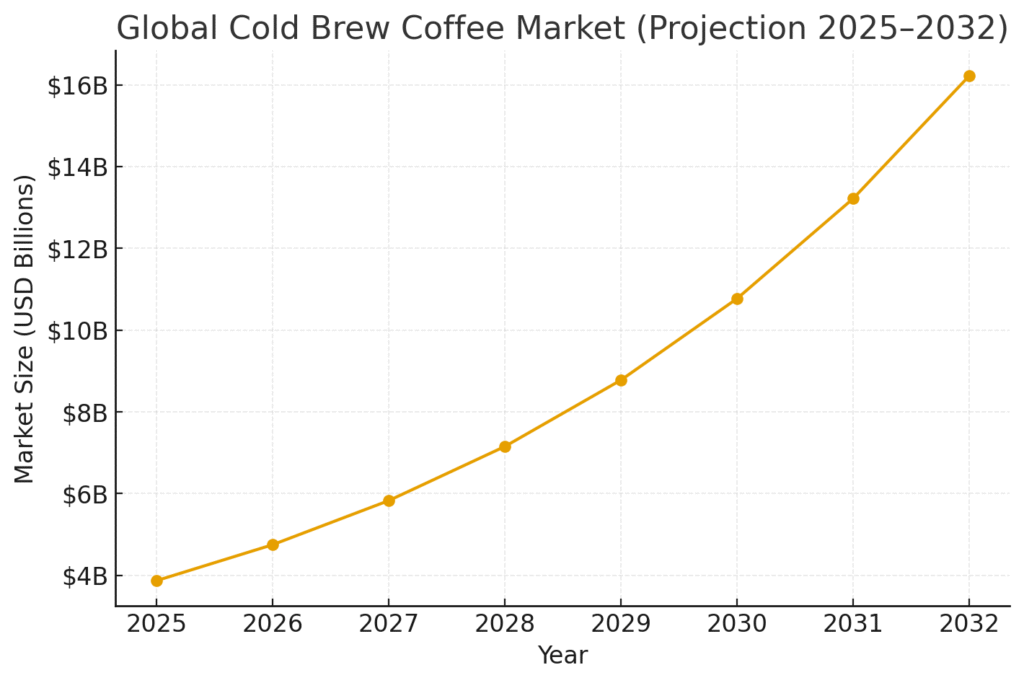
Coffee Marketing Statistics #7: Global Cold Brew $3.87B In 2025, $16.22B By 2032 (22.7% CAGR)
A 22.7% CAGR makes cold brew a growth engine, not a side bet. Invest in education content covering grind size, steep time, and filtration. Premium concentrates help margins while solving storage and shipping. Café menus should feature signature cold brew mocktails to raise average order value. Expect fast copycats—protect your IP with distinctive brand assets and flavor architecture.
Coffee Marketing Statistics #8: U.S. Cold Brew $244.7M In 2024, 17.4% CAGR Through 2034
Sustained double-digit growth suggests a durable consumer shift. Retailers can expand end-caps and seasonal shippers dedicated to cold formats. Use geo-climate targeting—warmer regions convert best year-round. In paid search, protect “cold brew near me” and “best cold brew” intent terms. Test resealable cans and multi-packs to lift repeat rate.
Coffee Marketing Statistics #9: Instant Coffee $80.2B In 2024, $110.3B By 2030
Instant coffee is no longer a compromise; it’s a modern convenience play. Communicate speed plus taste—show protein or adaptogen add-ins for a wellness edge. Travel, dorms, and office kits are strong use cases for performance creative. Partner with airlines, hotels, and coworking spaces for trial at scale. Subscription refills with varietal rotations keep churn low.
Coffee Marketing Statistics #10: Coffee Pods $35.3B In 2024, 7.3% CAGR (2025–2034)
Pods dominate for households prioritizing speed and consistency. Target machine owners with CRM based on brand and compatible formats. Sustainability messaging should tackle recyclability and compostability head-on. Bundled sampler packs help nudge flavor exploration and reduce decision fatigue. Retail media “compare vs café price” creatives resonate with value seekers.
Coffee Marketing Statistics #11: U.S. Coffee & Snack Shops Revenue $72.8B In 2025
A $72.8B revenue base indicates robust local competition. Location data and lookalike audiences can efficiently win new patrons. Promote mobile ordering, pickup windows, and time-boxed happy hours. Loyalty tiers should unlock barista-named drinks and member-only drops. Community events—open mics, art nights—turn stores into recurring touchpoints.
Coffee Marketing Statistics #12: ~91,761 U.S. Coffee & Snack Shop Businesses In 2025
A crowded field means differentiation is mandatory. Own a niche: single-origin purist, dessert-forward, or functional wellness. Hyperlocal SEO, updated menus, and photo-rich profiles are table stakes. UGC from regulars outperforms glossy brand shoots for authenticity. Train staff to ask for reviews—rankings drive first-visit decisions.
Coffee Marketing Statistics #13: Starbucks Rewards ~34M Active Members (Q3 FY2025)
Thirty-plus million active members set the loyalty benchmark. Smaller brands should copy the mechanics: stars, streaks, milestone gifts. Tie rewards to time of day to move slower dayparts. Use app push to launch limited flavors and surprise-and-delight drops. Data from loyalty fuels better LTV modeling and more confident media bids.
Coffee Marketing Statistics #14: 75% Of U.S. Adults Drank Coffee In The Past Week
Weekly penetration at 75% makes coffee a universal creative canvas. Segment messaging by life stage—students, parents, and professionals drink for different reasons. Content that celebrates rituals (first sip, study sessions) drives saves and shares. Broad reach channels work, but retarget with flavor and format specificity. Pair mass awareness with regional limited-time offers for freshness.
Coffee Marketing Statistics #15: 55% Say Price Hikes Pushed Them From Out-Of-Home; 70% Brew Daily At Home
Value sensitivity is real—meet it with at-home solutions. Promote per-cup cost comparisons and bundle grinders, scales, and beans. Offer “barista at home” tutorials to protect premium perception. For cafés, introduce value menus and refill memberships. Dynamic pricing by daypart can smooth demand without racing to the bottom.
Coffee Marketing Statistics #16: Specialty Non-Espresso Drinks Up 26% Past-Day Since Jan 2024
Non-espresso specialties—cold brew, nitro, and flavored creations—are ascendant. Rotate seasonal flavors to keep novelty high. Visual storytelling matters: show pour, cascade, and microfoam details. Upsell with dairy-free milks and functional add-ins for margin. Use menu engineering to spotlight high-contribution beverages at eye level.
Coffee Marketing Statistics #17: Alternative Global Market View $245.2B In 2024, $381.5B By 2034
Multiple reputable estimates exist, and triangulating them builds credibility in decks. Presenting a range lets stakeholders plan conservatively or aggressively. Scenario planning helps align inventory, hiring, and capex. Anchor your brand’s aspiration to a believable share of category. When numbers differ, explain methodology—retail value vs. foodservice vs. equipment.
Coffee Marketing Statistics #18: Pods & Capsules $32.6B In 2025, $44.4B By 2030 (6.35% CAGR)
Capsules remain sticky thanks to machine lock-in and predictable taste. Win with compatible options and compelling flavor flights. Sampling through DTC mailers or office programs can drive rapid trials. Address sustainability with clear disposal instructions and take-back programs. Retain buyers using personalized reorder reminders based on cadence.
Coffee Marketing Statistics #19: Coffee Machines $12.2B In 2025, 2.7% YoY Growth
The machines market grows modestly but seeds ongoing consumable sales. Bundle machines with starter pods or premium beans to lift attach rate. Influencer reviews and setup videos reduce friction and returns. Retail demos and “brew-bar” events convert hesitant shoppers. Warranty extensions and service plans build trust and repeat business.
Coffee Marketing Statistics #20: U.S. South Daily Coffee Drinkers 66% In 2024
Regional taste matters—lean into Southern preferences and climate. Promote iced and sweet cream variants more heavily in warmer zones. Geo-target creative with local idioms and cultural touchstones. Partner with regional grocers and college sports for community relevance. Regional pilots can prove concepts before national rollouts.

Brewing insights into ROI
When I map these stats to real campaigns, I start with the formats (hot, cold, RTD), stack on occasion (home vs. café), then layer loyalty mechanics to keep CAC honest. The result is a plan that doesn’t just chase trends—it compounds them: high-intent channels for pods and machines, thumb-stopping creative for cold brew, and lifecycle emails for habitual sippers. If you want, I can turn this dataset into a quick testing roadmap—audiences, hooks, offers, and KPIs—so we go from “interesting numbers” to “incremental revenue” in a week. Coffee is booming; let’s make sure your brand is, too.
SOURCES