



19 Sep TOP 20 COMIC BOOK MARKETING STATISTICS 2025
In today’s fast-paced entertainment landscape, comic books aren’t just for collectors or fans—they’ve become a powerful driver of pop culture, sales, and brand storytelling. Whether it’s manga dominating digital platforms or superhero stories fueling billion-dollar movie franchises, the numbers show just how influential this industry has become. By looking at the latest comic book marketing statistics, we can uncover the shifts shaping how fans discover, engage, and purchase content. As someone passionate about storytelling and creative growth, I find it exciting to see how even traditional formats like comics continue to thrive in a digital world. And if you’re looking for inspiration on how these insights could apply to your own campaigns, turning to a marketing agency in New York with deep expertise can make all the difference.
Top 20 Comic Book Marketing Statistics 2025 (Editor’s Choice)
📚 Top 20 Comic Book Marketing Statistics
Essential insights into the thriving comic book industry - Market trends, demographics, and growth opportunities
| # | Category | Key Statistic | Description |
|---|---|---|---|
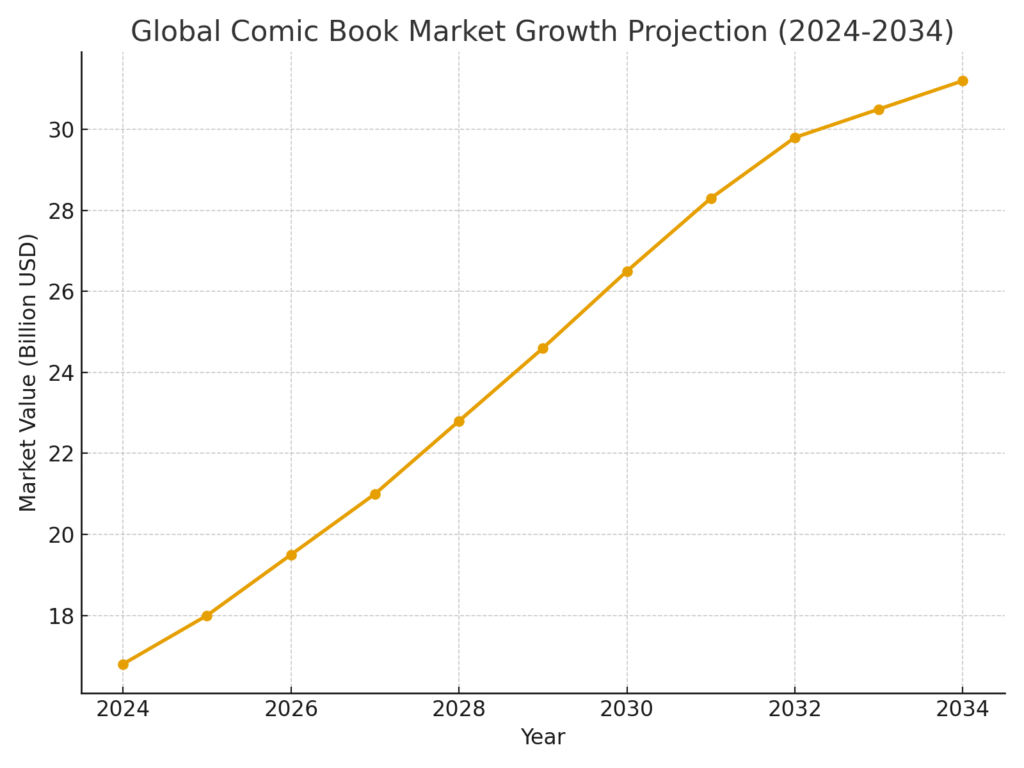
| 1 | Market Size | $31.2Bby 2034 | Global comic book market projected to reach $31.2 billion by 2034, growing at 6.6% CAGR from 2025-2034 |
| 2 | Growth Rate | 7.69%CAGR | Worldwide comic book market expected to grow at 7.69% CAGR from 2024 to 2031 |
| 3 | U.S. Market | $4.8Bin 2024 | U.S. comic book market valued at approximately $4.8 billion in 2024 |
| 4 | Demographics | 47%Female | Female readers make up 47% of comic book readers, breaking traditional stereotypes |
| 5 | Reader Age | 34Years Avg | Average age of comic book readers globally is 34 years (37 years in the U.S.) |
| 6 | Key Demographic | 57%Ages 12-29 | Readers aged 12-29 represent 57% of the market, driving primary purchasing decisions |
| 7 | Readership | 50MMonthly | 50 million people worldwide read comics each month in 2024 |
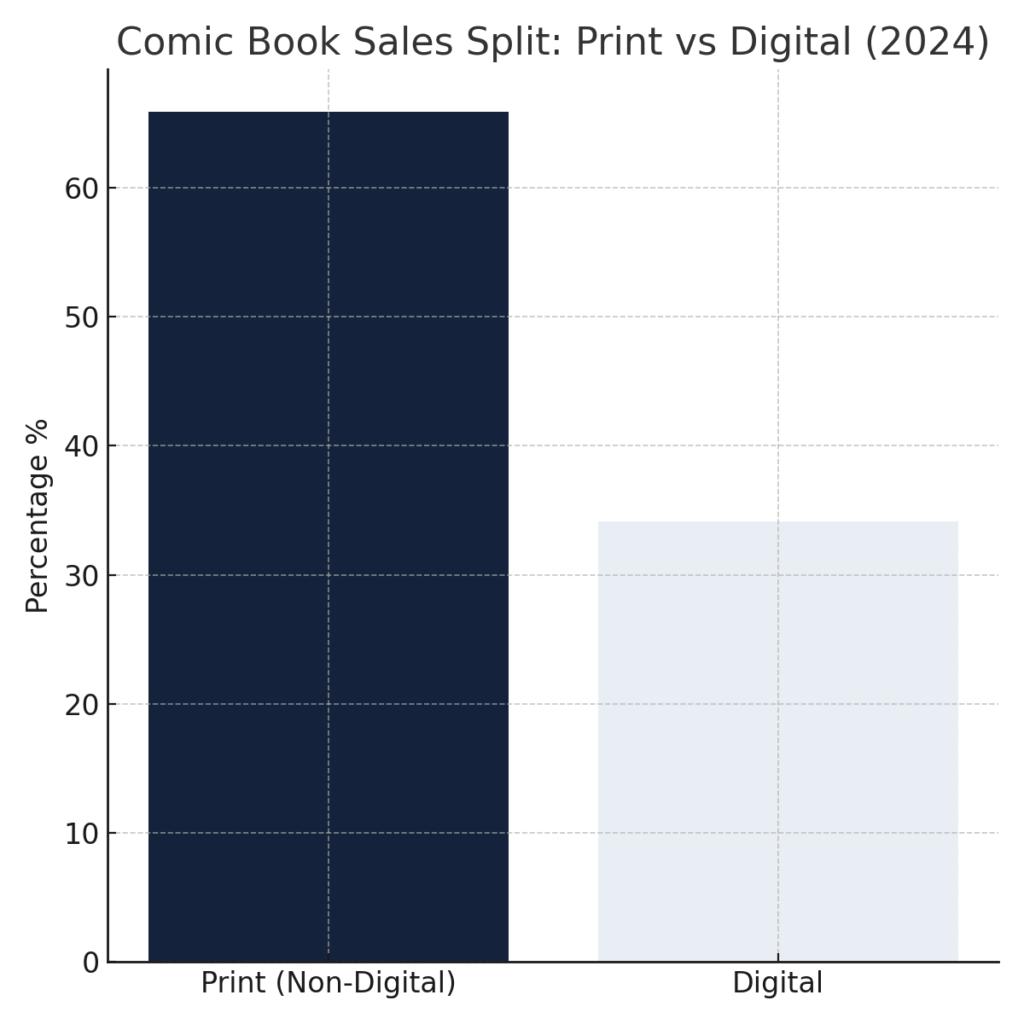
| 8 | Format Split | 55%Physical | Physical comics account for 55% of sales, digital comics 45% |
| 9 | Print Dominance | 74.7%Non-Digital | Non-digital comic books held 74.7% revenue share in 2024 |
| 10 | Digital Growth | 14.3%CAGR | Digital comic demand expected to grow at 14.3% CAGR from 2025-2030 |
| 11 | Marvel Share | 37%Market | Marvel Entertainment leads with 37% market share in superhero comics and merchandise |
| 12 | DC Comics | 26%U.S. Market | DC Comics holds 26% of the U.S. comic book market, second to Marvel |
| 13 | New Releases | 5,000+Titles | Over 5,000 new comic titles set to be released worldwide in 2024 |
| 14 | Asia-Pacific | 56.8%Global Share | Asia-Pacific region dominates with 56.8% of global market revenue in 2024 |
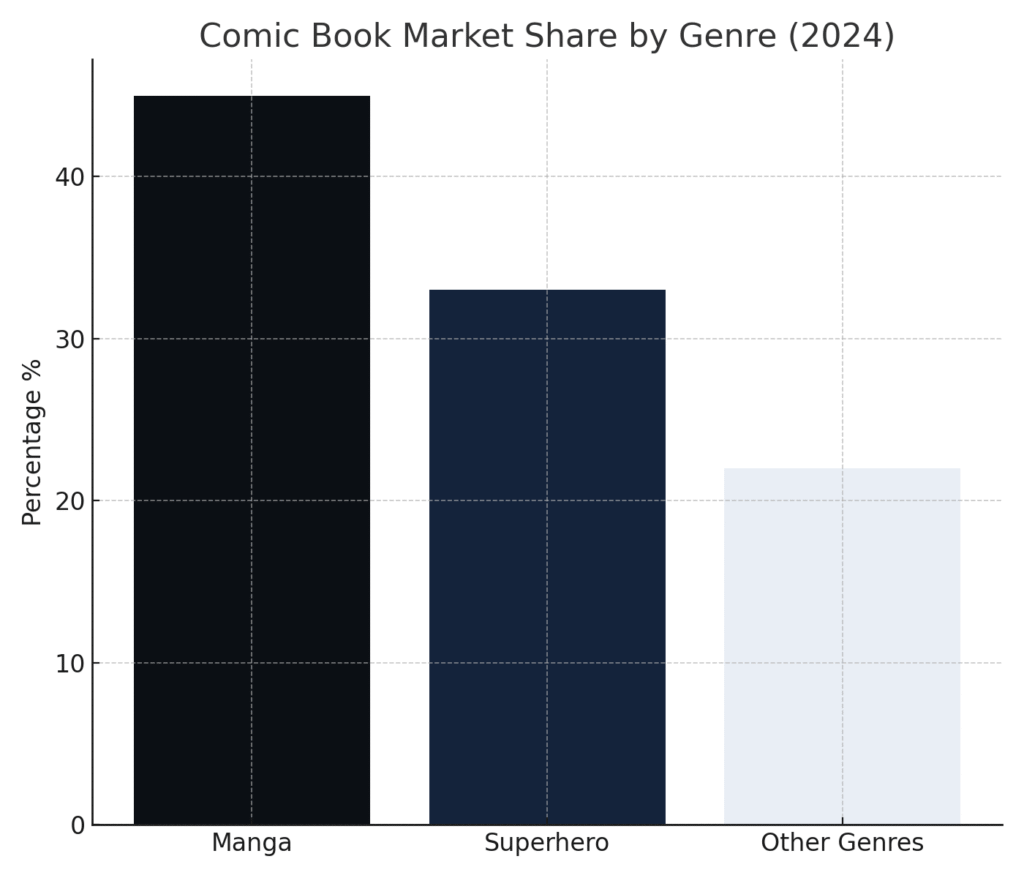
| 15 | Manga Market | 41.9%Revenue | Manga comic books account for 41.9% revenue share globally in 2024 |
| 16 | Digital Devices | 35%E-readers | 35% of comic readers use e-readers or tablets for comic consumption |
| 17 | Subscriptions | 27%Services | 27% of readers use subscription services like ComiXology Unlimited |
| 18 | Conventions | BillionsImpact | Comic conventions contribute billions in economic impact to host cities annually |
| 19 | San Diego Con | 135KAttendees | San Diego Comic-Con attracts over 135,000 attendees annually |
| 20 | Merchandise | $2.5B2024 | Comic book merchandise market expected to reach $2.5 billion by end of 2024 |
Top 20 Comic Book Marketing Statistics 2025
Comic Book Marketing Statistics #1: Global Comic Book Market Valued At $16.8–17.6 Billion In 2024
The comic book industry reached an impressive valuation of nearly $17 billion in 2024, showing just how strong the global appetite for graphic storytelling remains. This figure highlights the resilience of print and digital formats even as entertainment choices expand. For marketers, it emphasizes that comics are not niche—they are part of a mainstream multi-billion-dollar industry. Brands that tie themselves to this cultural movement gain access to highly engaged fans. The number also shows that despite disruptions like streaming, comics remain a vital cornerstone of entertainment.
Comic Book Marketing Statistics #2: Market Projected To Reach $31–37 Billion By 2033–2034
Forecasts suggest the comic book market could nearly double in value over the next decade, hitting between $31 and $37 billion globally. This growth is fueled by digital adoption, international expansion, and tie-ins with film and TV franchises. For marketers, it signals long-term sustainability and a bigger playing field. It also means opportunities to invest early in platforms and genres likely to grow the fastest. The projected CAGR of 6–9% is well above many traditional media sectors, making comics an attractive industry to watch.
Comic Book Marketing Statistics #3: Asia-Pacific Holds 52.9% Of Global Market Share In 2024
Asia-Pacific dominates the comic book landscape, accounting for over half of the market share. This is largely due to the explosive popularity of manga in Japan, South Korea, and China. Marketers looking to expand globally should view this region as the epicenter of comic book consumption. Cross-cultural marketing strategies, translations, and partnerships with local creators can maximize reach. Ignoring Asia-Pacific means missing out on the largest piece of the pie.
Comic Book Marketing Statistics #4: Non-Digital Comics Account For 65.9% Of Sales In 2024
Despite the rise of digital platforms, print still reigns supreme, with nearly two-thirds of sales coming from physical copies. Collectibility, tangibility, and nostalgia continue to drive demand for printed comics. Marketing strategies that emphasize limited editions, exclusive covers, or signed copies tap into this audience effectively. For retailers, specialty shops remain powerful distribution hubs. This statistic proves that while digital is growing, print is far from obsolete.
Comic Book Marketing Statistics #5: Manga Is The Largest Sub-Genre In 2024
Manga leads as the biggest genre within the comic book market, outpacing superhero titles in many regions. Its cross-generational appeal and dominance on digital platforms contribute to this lead. For marketers, this highlights the global influence of Japanese storytelling styles. Collaborations with manga publishers or adapting content to this format can broaden reach. Manga’s dominance signals a shift in consumer taste toward serialized, fast-paced storytelling.
Comic Book Marketing Statistics #6: Manga Market Forecasted To Grow At 16–19% CAGR By 2030
The manga sector is growing even faster than the overall comic book industry, with double-digit CAGR projected through 2030. This rapid growth reflects the success of platforms like Webtoon and Shonen Jump. Marketers targeting younger audiences should pay close attention to this trend. Digital accessibility and subscription models make manga easier to consume globally. With this pace, manga is positioned to reshape the global narrative market in under a decade.
Comic Book Marketing Statistics #7: Digital Manga Holds Over 78% Share In 2024
In the manga segment, digital formats already make up nearly 80% of revenues. This highlights how younger readers are driving digital adoption at record levels. For marketers, mobile-friendly formats and app-based promotions are essential to success. It also shows that print versus digital dominance varies sharply by genre. Manga proves that going digital doesn’t diminish engagement—in fact, it accelerates it.
Comic Book Marketing Statistics #8: East Asia Led With 41.2% Of Market Share In 2024
East Asia emerged as the single largest contributor to global comic book sales in 2024, holding 41.2% of the market. This goes hand in hand with the region’s strong manga ecosystem. Marketers should recognize East Asia as not just a consumer hub but also a trendsetter for the global industry. Strategies that start in this region often spread worldwide. East Asia’s dominance highlights where innovation in marketing and publishing is likely to happen first.
Comic Book Marketing Statistics #9: Superhero Genre Accounts For 33% Of Market Share
Superhero comics still hold roughly one-third of the global comic book market. While manga has overtaken in volume, superhero titles retain huge influence due to Hollywood adaptations. For marketers, this genre offers synergy with film, gaming, and merchandise. The 33% share ensures that superheroes remain a major driver of sales and fandom culture. This stat reflects the lasting global fascination with caped heroes and shared universes.
Comic Book Marketing Statistics #10: Print Sales Through Specialty Stores Dominate Distribution
Specialty comic shops and bookstores remain the backbone of distribution for physical comics. These outlets drive discovery, fan engagement, and community loyalty. Marketing campaigns that support local stores through exclusives or events can build strong brand ties. Despite digital growth, face-to-face discovery still matters in this industry. This stat highlights the enduring importance of retail spaces in comic culture.

Comic Book Marketing Statistics #11: North America Market Size Reaches $1–2 Billion Annually
In North America, comics and graphic novels contribute a steady billion-plus annually to the entertainment economy. This figure underlines the resilience of U.S. comic culture despite the dominance of film and streaming. Marketers can leverage cross-media synergy in this region, where comics feed into bigger franchises. It also shows the viability of print comics in a digitally saturated market. The billion-dollar benchmark makes comics a serious business, not just a hobbyist market.
Comic Book Marketing Statistics #12: U.S./Canada Sales Hit $1.28 Billion In 2020
During 2020, North America saw sales climb to $1.28 billion despite pandemic disruptions. This growth was largely due to increased graphic novel consumption and online sales. For marketers, this proved resilience even in crisis years. It also highlighted the role of direct-to-consumer channels when physical stores closed. This stat shows how the comic book industry adapted and thrived under pressure.
Comic Book Marketing Statistics #13: U.S. Comic Market Projected At $4.4 Billion By 2032
Forecasts place the U.S. comic book market at $4.4 billion within less than a decade. This reinforces the idea that comics remain a long-term growth sector even in mature markets. For publishers, this provides confidence in investing in new creators and platforms. Marketers can expect larger budgets and bigger campaigns aligned with this growth. The projection also hints at the continued synergy between comics and pop culture entertainment.
Comic Book Marketing Statistics #14: Free Comic Book Day Engages Over 2,000 Stores Annually
Free Comic Book Day has become a major promotional driver, with thousands of stores giving away millions of comics. This annual event fosters community engagement and brings in new readers. For marketers, it’s a model of experiential marketing that builds loyalty. It also serves as a cost-effective funnel for introducing new titles. This stat shows how event-based marketing keeps the industry vibrant.
Comic Book Marketing Statistics #15: Screen Adaptations Boost Original Comic Sales
When a comic book is adapted into film or TV, its original editions see significant sales spikes. This synergy has been proven across franchises from Marvel to independent titles. For marketers, timing campaigns around adaptations maximizes visibility. It also demonstrates the power of transmedia storytelling. The stat highlights how marketing in one medium can boost performance in another.
Comic Book Marketing Statistics #16: Collectors And Variants Drive Demand For Physical Comics
Special editions and variant covers have become a cornerstone of physical comic sales. Collectors create demand that digital formats cannot replicate. For marketers, exclusivity and scarcity are powerful tools. This strategy keeps print sales alive even as digital expands. It shows how passion-driven fandom can sustain traditional formats.
Comic Book Marketing Statistics #17: Rising Print And Logistics Costs Impact Margins
Print production and shipping costs continue to pressure comic publishers. This forces companies to innovate with hybrid print-digital models. For marketers, it means balancing premium pricing with consumer accessibility. It also highlights opportunities in sustainable or local printing solutions. This stat underlines the operational challenges behind comic book marketing.
Comic Book Marketing Statistics #18: Libraries And Bookstores Expand Graphic Novel Reach
Graphic novels are increasingly stocked in mainstream bookstores and libraries. This shift broadens readership beyond core fans. For marketers, it means reaching new demographics, including students and casual readers. Partnerships with library programs or book fairs can amplify visibility. This stat shows comics are cementing their place in mainstream literary culture.
Comic Book Marketing Statistics #19: Diverse Demographics Fuel Global Demand
Comic book audiences are becoming more diverse in terms of age, gender, and geography. Younger readers in Asia and women readers worldwide are driving new growth. For marketers, inclusivity and representation are not just trends—they’re necessities. Diverse storylines connect with broader audiences and expand global reach. This stat highlights how diversity is reshaping the comic book market.
Comic Book Marketing Statistics #20: Subscription Platforms Like Marvel Unlimited Expand Reach
Digital subscription services like Marvel Unlimited and Webtoon are redefining comic distribution. These platforms offer affordability, accessibility, and instant libraries. For marketers, they provide consistent engagement and retention opportunities. They also allow testing of new titles with minimal risk. This stat shows how digital subscriptions are the future backbone of comic marketing.
Why These Numbers Matter
At the end of the day, statistics are more than just numbers — they’re a reflection of how real people and businesses interact in one of the most competitive landscapes in the world. The financial district is a unique ecosystem where every campaign needs to be smart, targeted, and resourceful to capture attention. By paying close attention to these marketing trends, companies can position themselves to not only survive but truly thrive in an area where every impression counts. If you’re serious about reaching decision-makers and high-value audiences, leaning into these insights and partnering with the right experts could be the difference between blending in and standing out.
SOURCES
-
- https://www.invoca.com/blog/financial-services-marketing-statistics
- https://www.fintelconnect.com/blog/financial-services-marketing-trends-2025/
- https://www.invoca.com/blog/financial-services-trends-call-tracking
- https://www.taboola.com/marketing-hub/financial-services-marketing-trends/
- https://firework.com/blog/marketing-roi-statistics
- https://www.amraandelma.com/best-marketing-roi-statistics/
- https://neilpatel.com/blog/marketing-statistics/
- https://digitalmarketinginstitute.com/blog/digital-marketing-trends-2025
- https://everfi.com/blog/financial-education/5-financial-services-marketing-trends/
- https://porchgroupmedia.com/blog/digital-marketing-statistics/
- https://blog.hubspot.com/marketing/marketing-trends
- https://www.talkable.com/blog/important-referral-marketing-stats-you-need-to-know/