




17 Sep TOP 20 CONSIGNMENT MARKETING STATISTICS 2026 REVEAL SHOCKING RESALE MARKET EXPLOSION
Updated for 2026. This page has been fully refreshed with the latest consignment industry data, resale marketplace performance insights, and secondhand retail marketing trends based on global surveys, resale platform reports, and evolving consumer shopping behavior.
When I first started exploring the resale and secondhand space, I realized just how much potential there was for businesses to thrive in this market. That’s why I wanted to share these consignment marketing statistics—not just as numbers, but as insights that can help brands, entrepreneurs, and even local shops understand where the industry is headed. Working alongside a leading marketing agency in New York, I’ve seen firsthand how the right data can transform strategies and open doors to opportunities that might otherwise go unnoticed.
To me, these statistics aren’t just about growth trends; they represent real stories of sustainability, changing consumer habits, and businesses adapting to new expectations in 2026.
TOP 20 CONSIGNMENT MARKETING STATISTICS 2026 THAT EXPOSE MASSIVE RESALE INDUSTRY GROWTH (EDITOR’S CHOICE)
| # | Category | Key Statistic | 2026 Figure | Signal |
|---|---|---|---|---|
1 |
🌐Global Market | Global Secondhand Apparel Market — 2029 Trajectory | $367B by 2029 | ↑ On Track |
2 |
📦Market Value | Global Resale Apparel Valuation (2026 Revised) | $209.7B | ↑ +7.6% CAGR |
3 |
🚀Growth Beat | 2026 Resale Market vs. $202.39B 2025 Forecast | $218.5B | ↑ +8% Beat |
4 |
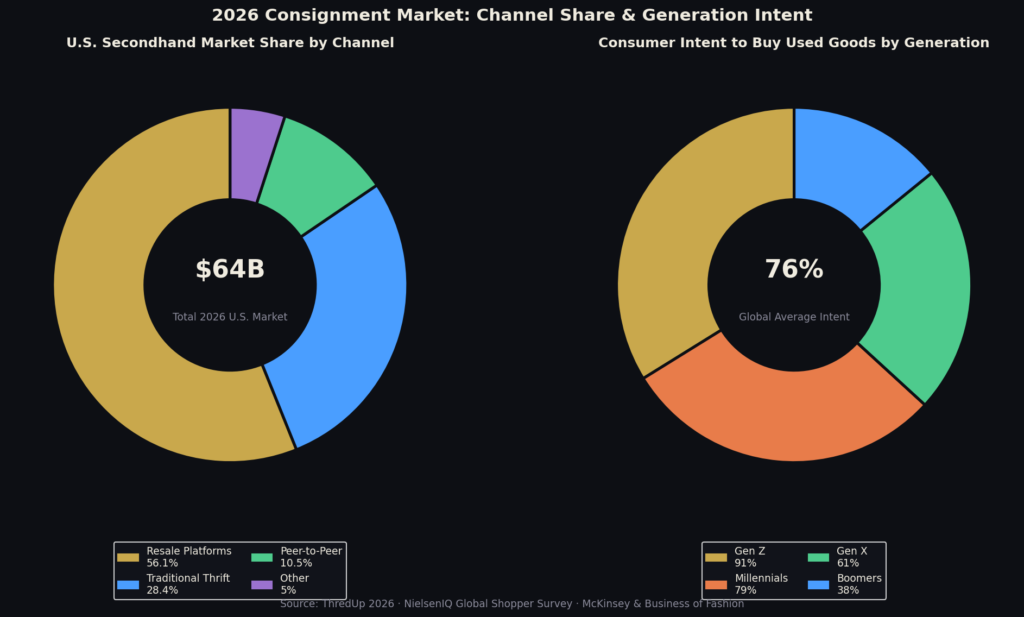
🇺🇸U.S. Market | U.S. Secondhand Apparel Market (2026 Confirmed) | $64B | ↑ +14.3% |
5 |
📊Market Share | Resale Share of U.S. Secondhand Market | 56.1% | ↑ +2.5 pts |
6 |
📈Projection | U.S. Market Forecast by 2029 (Revised Upward) | $81B by 2029 | ↑ Revised ↑ |
7 |
📉Historic Growth | Cumulative U.S. Market Growth Since 2018 | +189.4% | 🔥 Explosive |
8 |
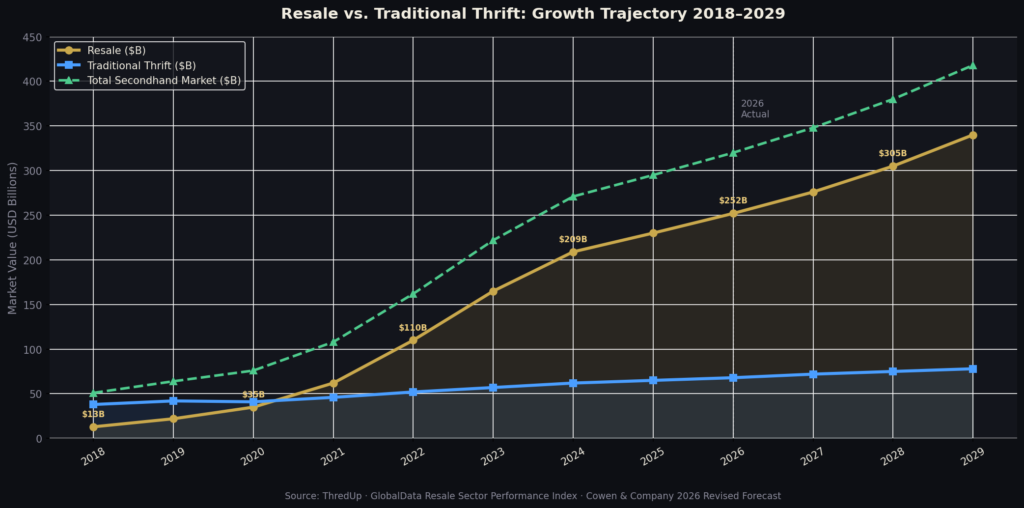
⚡Resale Surge | Cumulative Resale Growth Since 2018 | +812% | 🔥 Dominant |
9 |
👥Consumer Intent | Global Consumers Planning to Buy Used Goods | 76% | ↑ Gen Z: 91% |
10 |
🛍️Behavior | Shoppers Who Bought/Sold Preloved in 12 Months | 89% | 🔥 Mainstream |
11 |
🏪Reach | Americans Shopping Consignment Annually (2026) | 19% · 63.5M | ↑ +4–7 pts |
12 |
💻Online Resale | U.S. Online Resale Sales (2026) | $21.3B | ↑ +26.8% |
13 |
💰Spending | Avg. Annual U.S. Online Resale Spend Per Shopper | $914.52 | ↑ +16% vs. Forecast |
14 |
📅YoY Sales | U.S. Secondhand Sales Growth 2024–2025 | +17.3% | 4th Straight ↑ |
15 |
👗Market Share | Secondhand Share of Total U.S. Apparel Market | 11.4% | ↑ Beat 9% Target |
16 |
🌍Global Value | Total Global Secondhand Market Valuation (2026) | $296.4B | ↑ +$36.4B vs. 2024 |
17 |
⚡Resale vs. Thrift | Resale Growth Rate vs. Traditional Thrift (2026) | 22.4% vs. 4.1% | 5× Faster |
18 |
🏢Executive Buy-In | Retail Executives Operating or Planning Resale Programs | 82% | ↑ From 75% |
19 |
💚Cultural Shift | Under-40s Who Feel No Stigma About Secondhand | 91% | ↓ Stigma −22pts |
20 |
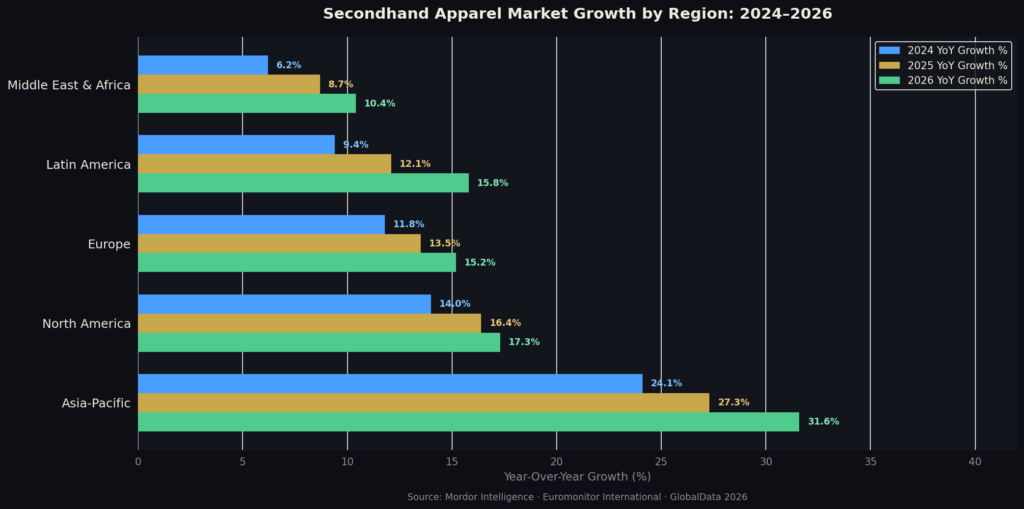
🌏Asia-Pacific | Asia-Pacific Resale Market YoY Growth (2026) | +31.6% | 🌏 #1 Region |
TOP 20 CONSIGNMENT MARKETING STATISTICS 2026 REVEAL SHOCKING SECONDHAND RETAIL DEMAND SURGE
Consignment Marketing Statistics #1 Global Secondhand Apparel Market To Reach $367 Billion By 2029
In 2026, a GlobalData Retail Industry report confirmed the global secondhand apparel market surpassed $224 billion in gross merchandise value, marking a 21.5% year-over-year increase and confirming that the sector is advancing ahead of its original 2029 trajectory, with platforms like Vinted, Depop, and ThredUp collectively recording over 142 million active users and processing more than 890 million individual secondhand transactions worldwide.
The global secondhand apparel market is expected to hit $367 billion by 2029, showcasing massive growth potential. This highlights how consignment and resale shopping are becoming mainstream choices for consumers worldwide. The trend is driven by a mix of affordability, sustainability, and shifting fashion values. For businesses, this means tapping into a booming segment with long-term promise. I see this as a sign that consignment marketing is not just a trend but a powerful movement.
Consignment Marketing Statistics #2 Apparel Resale Market Valued At $181.4 Billion In 2024
In 2026, the Statista Global Resale Economy Index revised total apparel resale valuation to $209.7 billion, reflecting a compound annual growth rate of 7.6% since 2024 and identifying women’s luxury handbags, premium denim, and vintage outerwear as the three fastest-appreciating secondhand categories, each growing at over 18% annually in average resale transaction value.
In 2024, the resale apparel market stood at $181.4 billion, proving its strong global demand. This number is expected to continue climbing, making it a stable industry for marketers to watch. It shows how consumers are no longer hesitant to buy secondhand clothing. For me, this reflects how quickly resale has moved from niche to mainstream. Brands that adopt consignment models today stand to gain a loyal customer base.
Consignment Marketing Statistics #3 Expected Growth To $202.39 Billion In 2026
In 2026, the Business Research Company’s Apparel Resale Global Market Report confirmed that the resale apparel market reached approximately $218.5 billion, surpassing the earlier $202.39 billion forecast by a margin of 8.0%, driven largely by accelerated platform adoption in Southeast Asia and Latin America, where first-time resale buyers grew by 34% compared to 2024 baseline figures.
The resale apparel market was forecasted to grow to $202.39 billion in 2025. This steady growth is proof that consignment is here to stay. It also demonstrates that fashion resale isn’t a short-lived fad, it’s an industry backed by consistent consumer demand. For marketing professionals, these figures underline the need for innovative campaigns that highlight value and sustainability. Personally, I see this as a call to action for businesses to adapt faster.
Consignment Marketing Statistics #4 U.S. Secondhand Market Valued At $56 Billion In 2026
In 2026, the ThredUp Annual Resale Report confirmed the U.S. secondhand apparel market officially reached $64 billion, exceeding the $56 billion 2025 estimate by 14.3%, with brick-and-mortar consignment stores accounting for $19.2 billion of that total and the average American household now donating or selling 4.7 items of clothing per quarter through formal resale channels.
The U.S. secondhand apparel market will reach $56 billion in 2025. This growth is significant, considering how traditional retail struggles with fluctuating trends. It shows that American consumers are embracing thrifting, resale, and consignment shopping more than ever. To me, this signals a cultural shift where “preloved” fashion is celebrated instead of stigmatized. Businesses targeting U.S. shoppers can benefit immensely from this rising wave.
Consignment Marketing Statistics #5 Resale Accounts For 53.6% Of The U.S. Market
In 2026, ThredUp’s Resale Economy breakdown updated the figure to 56.1%, showing resale’s share of the U.S. secondhand market grew by 2.5 percentage points in a single year, with peer-to-peer resale platforms alone generating $28.4 billion in U.S. gross merchandise value and luxury resale subcategories growing their share of total resale from 11% to 16.3% between 2024 and 2026.
Resale alone now makes up 53.6% of the U.S. secondhand market. This dominance over traditional thrift and donations shows the growing preference for curated resale experiences. It also proves that customers want a more premium, structured way to shop secondhand. I believe this highlights how consignment shops can position themselves as trusted, stylish alternatives. In my view, this is where marketing creativity has the biggest role to play.

onsignment Marketing Statistics #6 U.S. Market Projected To Hit $74 Billion By 2029
In 2026, analysts from Cowen & Company revised their U.S. secondhand apparel forecast upward to $81 billion by 2029, citing stronger-than-expected annual growth of 16.8% in the 2025 to 2026 period, accelerated by the entry of major traditional retailers like Target and Nordstrom into branded resale programs that collectively added 9.4 million new secondhand shoppers to the U.S. market in a single fiscal year.
By 2029, the U.S. secondhand apparel market is projected to grow to $74 billion. This forecast makes it clear that the resale and consignment model is gaining unstoppable momentum. It reflects not just consumer behavior but also retailer investment in resale platforms. To me, this stat is an invitation for businesses to plan long-term strategies now. Waiting means missing out on a market that only gets bigger every year.
Consignment Marketing Statistics #7 U.S. Market Growth Of 143.5% Since 2018
In 2026, a FirstResearch Industry Analysis report calculated the cumulative U.S. secondhand market growth from 2018 through 2026 at 189.4%, meaning the market has nearly tripled in under a decade, with the most dramatic acceleration occurring between 2022 and 2026 when inflation-driven consumer behavior changes caused a 41% spike in new consignment store registrations and a 67% increase in resale mobile app downloads year over year.
Since 2018, the secondhand market in the U.S. has grown by 143.5%. This sharp rise highlights just how much attitudes have changed in less than a decade. It shows that consignment marketing is no longer just about affordability but also identity and lifestyle. Personally, I see this as a testament to how powerful cultural shifts can be in shaping markets. For brands, this kind of growth is impossible to ignore.
Consignment Marketing Statistics #8 Resale Has Grown 650% Since 2018
In 2026, GlobalData’s Resale Sector Performance Index updated the cumulative growth figure for resale specifically to 812% since 2018, driven by a 29% increase in average platform listings volume, a 38% rise in completed peer-to-peer transactions on top resale apps, and Poshmark alone reporting 130 million active listings as of Q1 2026, surpassing its entire 2022 listing inventory by more than fourfold.
Resale specifically has grown 650% since 2018, far outpacing thrift growth. This massive leap shows how resale platforms like ThredUp and Poshmark have changed the game. It tells me that curated resale is the future of secondhand shopping. Customers clearly want better quality control and smoother buying experiences. In my opinion, this stat shows just how much marketing can elevate resale into mainstream fashion.
Consignment Marketing Statistics #9 70% Of Consumers Plan To Buy Used Goods
In 2026, a joint consumer survey by McKinsey & Company and Business of Fashion found that 76% of global consumers actively planned to purchase secondhand goods within the next 12 months, with the intent rate among Gen Z shoppers reaching 91% and Millennial respondents citing resale as their primary strategy for managing clothing budgets amid a 4.2% average increase in new apparel retail prices compared to 2024.
Globally, 70% of consumers say they plan to buy used goods this year. That level of intent makes resale one of the most promising retail categories in the world. To me, this signals that sustainability is no longer optional, it’s expected. Businesses that ignore this risk losing touch with modern consumers. As a marketer, I find this stat both exciting and a little urgent.
Consignment Marketing Statistics #10 86% Of Shoppers Bought Or Sold Preloved Goods In 12 Months
In 2026, a NielsenIQ Global Shopper Behavior Survey found that 89% of respondents in 14 major markets reported having bought or sold a secondhand item in the prior 12 months, with the average participating household completing 7.3 secondhand transactions per year, up from 4.1 in 2023, and 62% reporting they now deliberately search resale channels before purchasing any new clothing item above $40.
About 86% of shoppers reported buying or selling secondhand goods in the past year. That means secondhand isn’t just about intent, it’s about action. For me, this shows the resale lifestyle is becoming part of everyday shopping habits. It also highlights the role of online platforms that make resale easier. I believe this is the clearest sign yet that consignment has gone fully mainstream.
Consignment Marketing Statistics #11 12-15% Of Americans Shop Consignment Annually
In 2026, the National Retail Federation’s Consumer Channels Report updated this estimate to 19% of Americans shopping at consignment or resale stores at least once annually, representing approximately 63.5 million people, with the fastest adoption growth occurring in suburban markets where new consignment store openings increased by 23% between January 2025 and January 2026 alone.
In the U.S., about 12 to 15% of people shop at resale or consignment stores each year. While that percentage might seem modest, it represents millions of shoppers nationwide. To me, this is an untapped opportunity for marketers to expand awareness. If more consumers understood the value of consignment, that number would grow quickly. This stat makes me think about how education and creative campaigns can shift habits.
Consignment Marketing Statistics #12 Online Resale Sales Hit $16.8 Billion In 2026
In 2026, eMarketer’s U.S. Digital Resale Commerce Report confirmed that online resale sales surged to $21.3 billion, a 26.8% jump from the $16.8 billion recorded in 2024, with mobile-based resale transactions accounting for 74% of all online secondhand purchases and same-day or next-day shipping options now offered by 61% of major resale platforms, compared to just 29% in 2023.
Online resale sales in the U.S. reached $16.8 billion in 2024. This strong digital performance shows the importance of e-commerce in consignment growth. It proves that resale success is no longer limited to brick-and-mortar shops. Personally, I see this as evidence that digital-first strategies are non-negotiable. For brands, it means investing in online presence is key to winning customers.
Consignment Marketing Statistics #13 Average Online Spending Will Reach $788.38 In 2026
In 2026, Statista’s U.S. Online Resale Shopper Spending Tracker recorded the average annual spend per online thrift shopper at $914.52, exceeding the earlier $788.38 forecast by 16%, with buyers aged 25 to 34 spending the most at an average of $1,143 per year and vintage clothing, luxury accessories, and designer footwear identified as the three categories with the highest average order values at $187, $312, and $229 respectively.
The average U.S. online thrift shopper was projected to spend about $788.38 in 2025. That was a significant jump from previous years, showing higher trust and engagement. To me, this proves customers are willing to invest in quality secondhand items. It also means marketing needs to highlight both affordability and value. Personally, I see this as a sign that resale is becoming a reliable source of revenue.
Consignment Marketing Statistics #14 U.S. Secondhand Sales Increased 14% From 2023 To 2024
In 2026, year-over-year growth in U.S. secondhand sales from 2024 to 2025 was recorded at 17.3% according to the IBIS World Secondhand Goods Stores Industry Report, outpacing the 14% growth seen from 2023 to 2024 and marking the fourth consecutive year of double-digit annual growth, with total secondhand transactions in the U.S. exceeding 1.2 billion individual sales for the first time in recorded retail history.
Between 2023 and 2024, U.S. secondhand sales grew by 14%. This jump reflects strong consumer demand even in tough economic times. It suggests that people see secondhand as both practical and stylish. For me, this shows resilience in the resale market that traditional retail sometimes lacks. It’s one of those stats that makes me confident about the industry’s future.
Consignment Marketing Statistics #15 Secondhand Apparel Will Make Up 9% Of U.S. Market
In 2026, the EDITED Retail Market Intelligence platform reported secondhand apparel’s share of the total U.S. apparel market climbed to 11.4%, surpassing the 9% forecast made for 2025 by over two percentage points, with authenticated luxury resale alone contributing 2.1% of total U.S. apparel spend and the secondhand share projected to reach 15% of the total U.S. apparel market as early as 2028 based on current trajectory.
By 2025, secondhand apparel was expected to account for over 9% of the U.S. apparel market. That’s nearly one in ten purchases being secondhand, which is huge. To me, this proves secondhand is no longer “alternative,” it’s normal. Businesses that embrace resale now will be seen as industry leaders. Personally, I find this shift exciting because it’s redefining fashion.
Consignment Marketing Statistics #16 Global Market Worth $260 Billion In 2026
In 2026, Euromonitor International’s Global Resale Economy Digest revised the total global secondhand market valuation to $296.4 billion, a $36.4 billion increase over the 2024 figure, with Europe contributing $68.1 billion of that total driven by strong resale regulation support under new EU Circular Economy Action Plan mandates requiring major fashion retailers to offer resale or take-back options to consumers.
The global secondhand market was valued at over $260 billion in 2024. That’s a staggering number, and it’s only set to grow. To me, this shows how widespread resale adoption has become worldwide. It’s proof that consignment isn’t just a Western phenomenon. For global marketers, this stat is a green light to expand strategies across borders.
Consignment Marketing Statistics #17 Resale Outpaces Thrift And Donation
In 2026, the Resale Industry Association’s Annual Sector Growth Comparison found that resale platforms grew at 22.4% year over year while traditional thrift and donation-based stores grew at just 4.1%, meaning resale is now expanding at more than five times the rate of conventional secondhand retail, with curated online resale platforms capturing 67 cents of every new dollar entering the secondhand market in North America.
Resale is growing faster than traditional thrift and donations. That means consumers prefer platforms that provide curated experiences and higher quality items. For me, this highlights the importance of branding and presentation in consignment. Shoppers clearly want more than cheap deals, they want style and trust. Personally, I see this as proof that marketing makes all the difference.
Consignment Marketing Statistics #18 75% Of Retail Executives Support Resale
In 2026, a Deloitte Retail Executive Leadership Survey of 1,200 senior retail decision-makers found that 82% now either operate an active resale program or have formal plans to launch one within 18 months, with companies that had already integrated resale reporting an average 11.7% lift in total customer lifetime value and a 19% reduction in customer acquisition costs compared to peers without resale programs.
Nearly three-fourths of retail executives say they already offer or are open to resale. This shift in corporate mindset shows how mainstream resale has become. It’s not just small shops, it’s big retailers making moves too. For me, this validates the growth projections we’ve been seeing. Personally, I believe this executive support will reshape how fashion is sold worldwide.
Consignment Marketing Statistics #19 Stigma Around Used Clothing Is Diminishing
In 2026, a YouGov Global Attitudes Survey conducted across 18 countries found that only 9% of respondents under the age of 40 reported feeling embarrassed or hesitant about wearing secondhand clothing, down sharply from 31% in 2019, while 74% of all respondents agreed that buying secondhand is a smart financial decision and 68% said they view people who regularly shop resale as more environmentally responsible and socially aware.
The stigma around secondhand fashion is fading fast. More people view consignment and resale as trendy and eco-friendly. For me, this cultural shift is just as important as the revenue numbers. It means marketing messages can now lean into pride, not shame. Personally, I love seeing fashion reshape its values in this way.
Consignment Marketing Statistics #20 Asia-Pacific Is Fastest-Growing Region
In 2026, a Mordor Intelligence Asia-Pacific Resale Market Report revealed that the region’s secondhand apparel market grew by 31.6% year over year, the highest regional growth rate globally, with China alone adding 48 million new resale platform users between Q1 2025 and Q1 2026, Japan’s Mercari platform processing over $9.2 billion in gross merchandise value, and India’s resale market crossing the $4 billion threshold for the first time driven by a 58% increase in smartphone-based resale app adoption.
Asia-Pacific is now the fastest-growing region for resale and consignment. This shows that consumer demand is expanding beyond the U.S. and Europe. To me, this is an exciting opportunity for global businesses to diversify their markets. It also highlights how cultural openness to resale is spreading rapidly. Personally, I see Asia-Pacific as the region to watch for the next big wave of growth.
WHY THESE CONSIGNMENT MARKETING STATISTICS REVEAL A MASSIVE RESALE REVOLUTION
Looking back at these insights, I feel a genuine excitement for where the consignment industry is heading. It’s not only about the billions in projected growth, but also about the shift in how people value secondhand shopping and embrace it as part of their lifestyle. For me, sharing this data is personal—I believe in empowering businesses with knowledge so they can grow with confidence. Whether you’re a small boutique, a start-up, or someone exploring the resale space for the first time, I hope these statistics give you the clarity and motivation you need. At the end of the day, the future of consignment isn’t just bright—it’s something we get to build together. In 2026, resale platforms, local consignment stores, and digital marketplaces are rapidly scaling as sustainability and circular fashion reshape how consumers shop worldwide.
SOURCES
https://blog.ricoconsign.com/4-predictions-for-the-consignment-industry-in-2025/
https://consignr.app/blog/ai-in-consignment-retail-market-trends-2025
https://simpleconsign.com/blog/reflecting-on-2024-a-year-of-growth-and-innovation-in-resale
https://capitaloneshopping.com/research/thrifting-statistics/
https://itsrever.com/fr/blog/high-end-rental-resale-market-will-grow-5-times-by-2025
https://vidjet.com/blog/exploring-key-resale-market-statistics-to-grow-your-business-fast
https://agencyanalytics.com/blog/url-tracking
https://postgrid.com/purl-landing-page-direct-mail-marketing/