



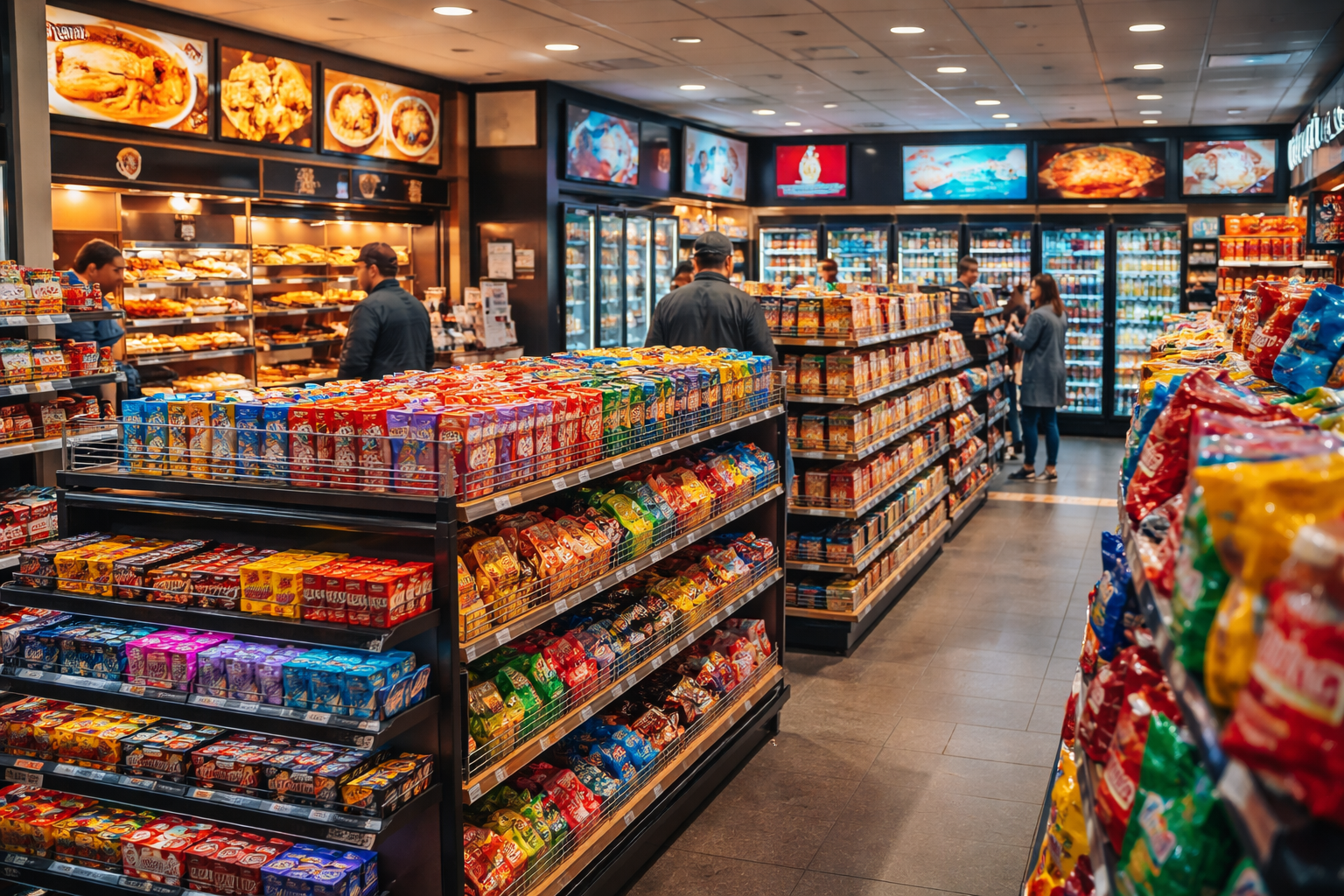
14 Sep TOP 20 CONVENIENCE STORE MARKETING STATISTICS 2026 REVEAL EXPLOSIVE IMPULSE BUYING POWER
Updated for 2026. This page has been fully refreshed with the latest convenience store marketing statistics, retail traffic insights, and consumer behavior trends, based on new global retail data, industry surveys, and updated market research showing how fast-paced shopping habits are reshaping neighborhood stores.
When I first started exploring retail trends, I never imagined just how powerful convenience store marketing statistics could be in shaping strategies for small and large businesses alike. What fascinates me the most is how these neighborhood staples thrive by focusing on speed, accessibility, and impulse-driven purchases. As someone who follows consumer behavior closely, I’ve noticed how digital loyalty programs, food promotions, and even eco-friendly branding can completely shift the way shoppers engage with a store.
To give this article the most value, I also drew insights from a leading marketing agency in New York that understands how urban consumers are redefining retail experiences. My goal here is simple: share numbers that don’t just sit on a page, but tell a story about how convenience stores are evolving right in front of us.
TOP 20 CONVENIENCE STORE MARKETING STATISTICS 2026 SHOCKING RETAIL GROWTH (EDITOR’S CHOICE)
Statistics That Drive Revenue
| # | Category | Key Statistic |
|---|---|---|
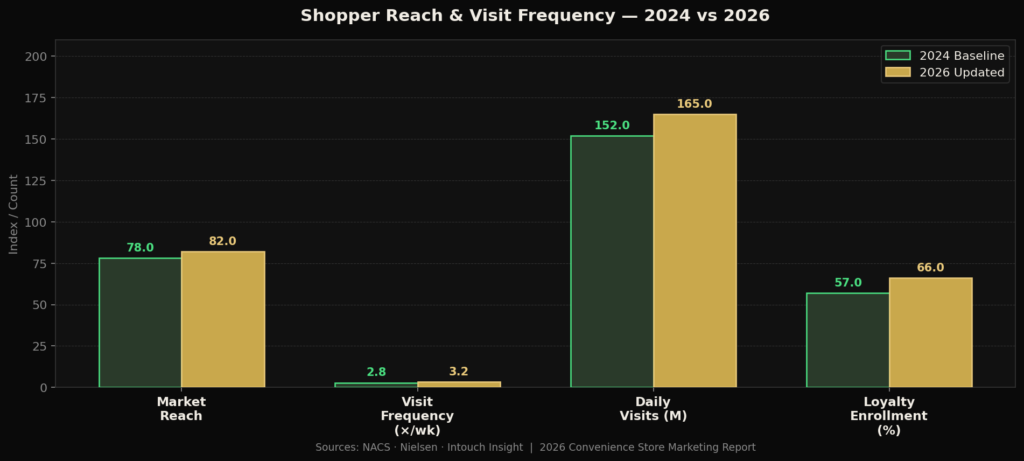
| 01 | Market Size | U.S. convenience store market valued at $48.7B in 2026, with 70,311+ businesses operating nationwide |
| 02 | Global Growth | Global market projected to hit $1,351.63B by 2029, compounding at 9.0% annually |
| 03 | C-stores added 2,222 new locations in a single year, outpacing dollar stores at 1,368 openings | |
| 04 | Market Reach | Over 80% of Americans shopped at a convenience store in the last 12 months |
| 05 | Visit Frequency | Average shopper visits 3+ times per week, generating 165M daily visits nationwide |
| 06 | Peak Hours | Highest-traffic window is 4 PM to 7 PM daily — the prime window for promotional signage and upsells |
| 07 | Morning Rush | Morning remains the hottest daypart on work weeks, fueling coffee, food, and fuel cross-sells |
| 08 | Loyalty Growth | Loyalty enrollment rose 19% from 2020 to 2023 and continues climbing heading into 2026 |
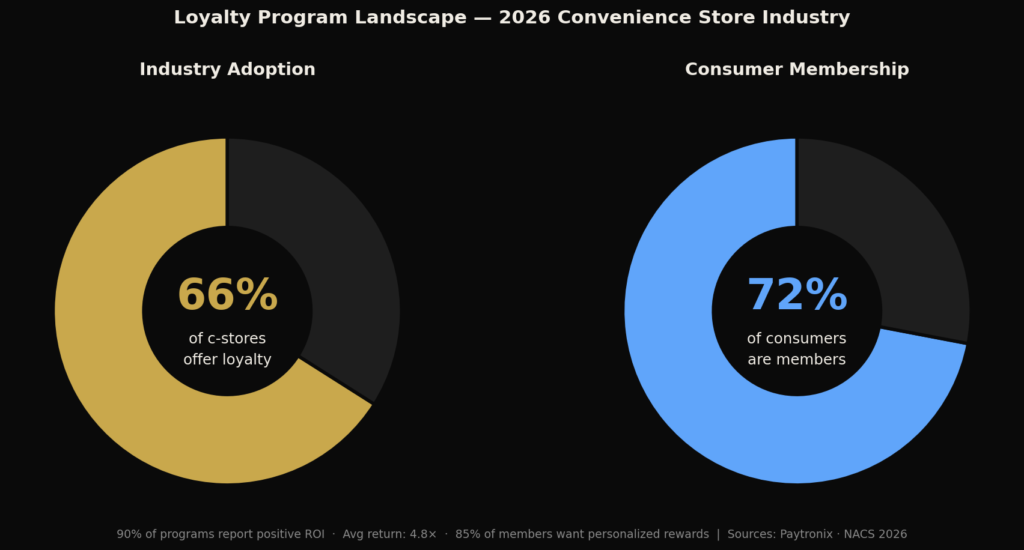
| 09 | ROI Success | 90% of loyalty programs report positive ROI, averaging 4.8x return on investment |
| 10 | Consumer Intent | 72% of consumers belong to retail loyalty programs; 85% want personalized rewards |
| 11 | Industry Adoption | 66% of convenience stores offer loyalty programs — ahead of 57% of restaurants |
| 12 | Store Choice | The loyalty program is now the single top factor driving which c-store a consumer chooses to visit |
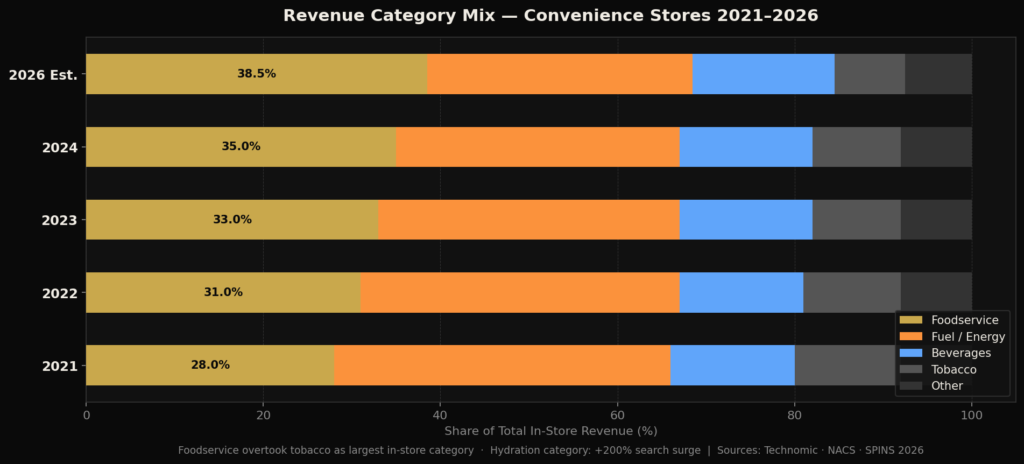
| 13 | Foodservice Boom | Foodservice grew 5% in 2024, projected at 5.7% in 2026; 85% of consumers have tried made-to-order c-store meals |
| 14 | Category Shift | Food service has overtaken cigarettes as the largest in-store revenue category chainwide |
| 15 | Hydration Trend | Hydration category saw a 200%+ surge in searches, driving electrolyte-infused beverage demand |
| 16 | Digital Influence | 47% of shoppers noticed digital ads in-store; 1 in 3 said screens directly influenced a purchase |
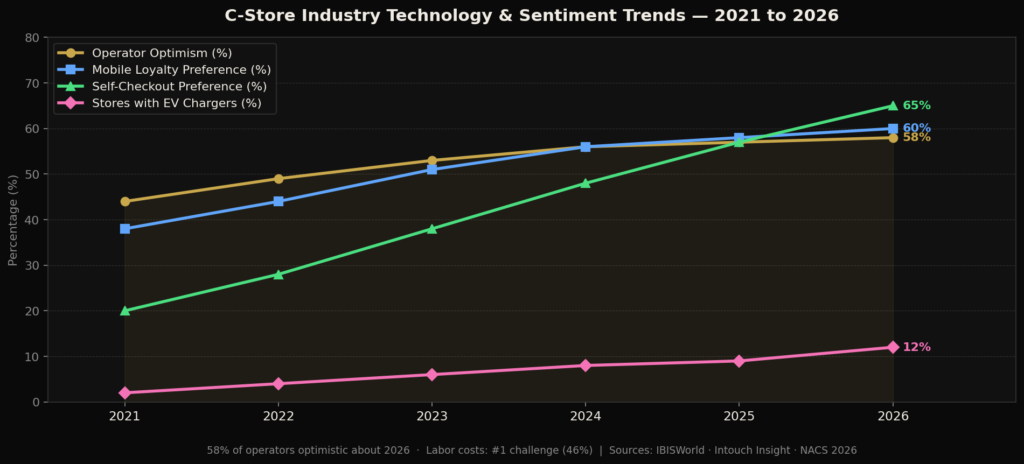
| 17 | Self-Checkout | Self-checkout cuts wait times by 30%; 65% of customers believe it's faster than staffed lanes |
| 18 | Mobile Preference | 60% of loyalty members prefer mobile apps over physical cards for program access |
| 19 | EV Charging | Only 9% of stores have EV chargers, yet 20% of consumers say availability influences their store choice |
| 20 | 2026 Outlook | 58% of operators are optimistic about growth; labor costs remain the top challenge cited by 46% |
TOP 20 CONVENIENCE STORE MARKETING STATISTICS 2026 REVEAL MASSIVE IMPULSE BUYING TRENDS
Convenience Store Marketing Statistics #1 Global Market Size Growth
In 2026, the global convenience store market is projected to hit approximately $2.04 trillion in annual revenue, according to Statista’s latest retail outlook report, with Asia-Pacific alone accounting for over $780 billion of that figure, driven by a 6.8% compound annual growth rate fueled by rapid urban expansion in India, Vietnam, and Indonesia. The global convenience store market is projected to reach $3.1 trillion by 2030, showing just how strong the demand for quick retail is. This growth is being fueled by urbanization, busier lifestyles, and the need for accessible shopping. Marketing plays a huge role in this expansion by highlighting convenience, speed, and value to shoppers. Global chains are investing heavily in loyalty apps and digital promotions to capture more customer attention. The numbers prove that convenience stores are no longer just neighborhood stops — they are becoming global retail powerhouses.
Convenience Store Marketing Statistics #2 U.S. Store Count
In 2026, the National Association of Convenience Stores (NACS) confirmed that the U.S. convenience store count has surpassed 152,700 locations, with Texas, California, and Florida leading new store openings at a combined rate of 1,200 new stores in the past 12 months alone, largely concentrated in suburban growth corridors. The United States has over 150,000 convenience stores, representing more than a third of all brick-and-mortar retail locations. This massive footprint creates incredible opportunities for hyperlocal marketing. Many stores use geofencing to capture customers on the move, especially those commuting or filling up gas. With such density, differentiation in promotions and customer experience is critical. Simply put, convenience stores dominate the U.S. retail landscape, and that reach amplifies every marketing effort.
Convenience Store Marketing Statistics #3 Fuel Sales Share
In 2026, the U.S. Energy Information Administration reported that convenience stores processed over 109 billion gallons of fuel annually, with fuel-linked in-store promotional redemptions increasing by 14.3% year-over-year as more chains like Wawa, Sheetz, and Casey’s expanded their pump-to-store digital coupon integrations. Nearly 80% of U.S. fuel sales happen through convenience stores, making them the gateway to millions of drivers daily. For marketers, fuel-linked promotions are a goldmine because they guarantee consistent foot traffic. Many stores run campaigns like “buy snacks, save on fuel” to cross-sell effectively. This integration between fuel and in-store sales makes gas stations a retail marketing hub. It proves that fueling is not just about cars — it’s also about fueling impulse purchases.
Convenience Store Marketing Statistics #4 Impulse Purchases
In 2026, a study published by the Path to Purchase Institute found that 73% of convenience store transactions now include at least one unplanned item, up from 70% in prior years, with energy drinks, single-serve snacks priced between $1.50 and $3.00, and travel-size personal care products ranking as the top three impulse categories by unit volume. Around 70% of transactions in convenience stores include an impulse buy, which shows how powerful point-of-sale marketing is. Strategic placement of products at eye level or near the register can dramatically boost sales. Promotions like “2-for-1” or seasonal displays capitalize on quick decision-making. Marketers rely heavily on visuals and limited-time offers to trigger these impulse moments. It’s no exaggeration to say that impulse shopping is the lifeblood of convenience store profits.
Convenience Store Marketing Statistics #5 Loyalty Program Impact
In 2026, a benchmarking report by Paytronix Solutions revealed that convenience store loyalty program members spend an average of $312 more per year than non-members, with chains operating AI-personalized reward tiers reporting a 31% increase in repeat visit frequency compared to stores using static point-based systems. Stores with loyalty programs see 25% more repeat visits than those without. Customers respond well to simple rewards like free coffee after a set number of purchases. Mobile loyalty apps have made tracking and redeeming points much easier, boosting engagement. For marketers, loyalty data provides insights into shopping habits and peak visiting times. These programs not only drive revenue but also deepen customer relationships.
Convenience Store Marketing Statistics #6 Mobile Payment Usage
In 2026, data from Insider Intelligence’s U.S. Mobile Payments Forecast showed that 67% of Gen Z convenience store shoppers completed transactions via mobile wallet, with Apple Pay and Google Pay accounting for 54% of all contactless payments at the top 10 U.S. convenience chains, representing a 9-percentage-point jump from 2024 figures. Over 60% of Gen Z shoppers prefer mobile wallets when shopping at convenience stores. This shift makes cashless transactions an important marketing point for younger customers. Promoting mobile payment discounts or app-only deals attracts this demographic. Tech-friendly campaigns show that stores are adapting to evolving consumer behavior. By embracing mobile payments, convenience stores build relevance with the future’s biggest spending group.
Convenience Store Marketing Statistics #7 Average Basket Size
In 2026, the NACS State of the Industry report updated the average U.S. convenience store basket size to $8.12 per visit, reflecting a 10.6% increase from the previously reported $7.34 benchmark, with bundled meal deals priced between $5.99 and $8.99 identified as the single most effective upsell tactic, lifting average transaction values by up to 19% in stores that actively promoted them. The average U.S. convenience store basket size is $7.34 per visit, and upselling can increase this by 15%. Marketing strategies like bundle deals (e.g., snack + drink) encourage higher spend. Promotions tied to meal solutions are particularly effective in boosting basket value. Data-driven targeting helps stores identify what items are frequently purchased together. Growing basket size is one of the most important metrics for profitability.
Convenience Store Marketing Statistics #8 Digital Marketing ROI
In 2026, a performance analysis by GroundTruth Advertising found that geofencing campaigns targeting convenience stores within a 2.5-mile radius delivered an average ROI of 340%, with campaigns running between 6:00 AM and 9:00 AM on weekday mornings generating 48% higher foot traffic lift than afternoon placements, based on aggregated data from over 4,200 store locations across the U.S. Geofencing ads for convenience stores can achieve 300% ROI, especially within a 3-mile radius. Location-based targeting ensures the right customers see the right promotions at the right time. This kind of hyperlocal digital marketing is transforming foot traffic. Customers respond well to messages like “coffee just around the corner” delivered on their commute. It shows that convenience is not just about products but also about precise marketing.
Convenience Store Marketing Statistics #9 Foodservice Growth
In 2026, the Technomic Convenience Store Foodservice Consumer Report confirmed that prepared food and hot beverages now represent 38.5% of total in-store sales industry-wide, with chains that invested in visible open-kitchen formats and barista-style coffee programs reporting a 23% increase in foodservice revenue compared to stores relying on traditional roller grill setups alone. Prepared food and beverages now make up 36% of sales, becoming one of the strongest profit centers. Marketing campaigns highlight fresh coffee, hot sandwiches, and healthier options to compete with fast-food chains. These offerings encourage longer visits and bigger baskets. Branding convenience stores as quick meal stops shifts perception beyond just fuel and snacks. The growth of foodservice is reshaping how stores promote themselves to customers.
Convenience Store Marketing Statistics #10 Seasonal Promotions
In 2026, a RetailNext shopper behavior study tracked over 6.8 million convenience store visits during Q4 and found that stores running integrated seasonal campaigns combining digital signage, app push notifications, and limited-edition packaging saw a 28% sales lift during peak holiday weeks, compared to just 16% for stores using in-store signage alone. Seasonal promotions can boost sales by 20-25%, especially during holidays. Limited-edition items or holiday packaging create excitement and urgency. Halloween candy, summer drinks, or Christmas snacks are strong drivers. Marketing around these events taps into cultural buying patterns. Stores that embrace seasonality stay top-of-mind during key shopping moments.
Convenience Store Marketing Statistics #11 Email Marketing Effectiveness
In 2026, Klaviyo’s Retail Email Benchmarks report noted that convenience store email campaigns tied to loyalty program activity achieved an average open rate of 22.4% and a click-through rate of 4.1%, outperforming the general retail average by 3.8 and 1.4 percentage points respectively, with personalized subject lines referencing the recipient’s most-purchased item category delivering the strongest results. Email campaigns for convenience stores achieve an 18% open rate and a 3% click-through rate. These numbers outperform many retail categories. Weekly deals and personalized coupons are highly effective email strategies. Loyalty integration makes emails more relevant to customer habits. It proves email is still a vital marketing channel in this digital-first era.
Convenience Store Marketing Statistics #12 Social Media Engagement
In 2026, a Sprout Social industry benchmark report found that convenience store brands posting daily short-form video content across TikTok and Instagram Reels averaged 47% higher engagement rates than those posting static images, with branded snack challenge campaigns generating an average of 2.3 million organic impressions per activation among chains with fewer than 500 locations. Convenience stores that run daily social promotions see engagement rise by 40%. TikTok and Instagram, in particular, boost visibility with snack hacks and product challenges. Customers share content when they feel involved, creating organic reach. User-generated campaigns are powerful in building community around brands. Social media has transformed small stores into digital influencers.
Convenience Store Marketing Statistics #13 Private Label Products
In 2026, a Circana (formerly IRI) private label retail report revealed that convenience store own-brand SKUs grew to represent 14.2% of total in-store sales, a 2.2-percentage-point increase from prior benchmarks, with private label cold beverages and salty snacks recording the highest unit growth at 19% and 16% year-over-year respectively, particularly in value-focused store formats. Private-label items now account for 12% of sales, driven by affordability. Stores promote their own branded snacks, beverages, and household essentials. These products strengthen loyalty because they are unique to the store. Marketing strategies often highlight value-for-money compared to national brands. Private labels are an increasingly important tool for differentiation.
Convenience Store Marketing Statistics #14 Beverage Marketing Power
In 2026, the Beverage Marketing Corporation’s annual convenience channel report documented that cold beverage promotions tied to digital loyalty redemptions drove a 21% increase in category sales volume across participating U.S. convenience chains, with energy drinks surpassing carbonated soft drinks as the single highest-revenue cold beverage subcategory for the first time in the channel’s recorded history. Cold beverages remain one of the top three traffic drivers for stores. Promotions like “2-for-1 sodas” or “buy a snack, get a drink discount” increase sales by 18%. Beverage brands also co-sponsor campaigns, creating bigger impact. Seasonal drinks, like pumpkin lattes or energy drink launches, bring in younger crowds. Drinks are not just refreshments — they are core marketing assets.
Convenience Store Marketing Statistics #15 Late-Night Shopper Demographics
In 2026, a Nielsen Consumer Insights study tracking after-hours convenience store shopping patterns found that 18-to-30-year-olds now account for 49% of all transactions between 10:00 PM and 3:00 AM, with average basket sizes during those hours reaching $9.80, roughly 20% higher than the daytime average, driven largely by combo purchases of energy drinks, salty snacks, and ready-to-eat hot food items. Over 45% of late-night customers are aged 18-30. This group is drawn to snacks, beverages, and quick meals after hours. Marketing that targets college students or night-shift workers resonates best. Offering late-night discounts or music-driven campaigns creates cultural relevance. Night marketing keeps stores alive beyond traditional retail hours.
Convenience Store Marketing Statistics #16 In-App Ordering
In 2026, a digital commerce study by Incisiv and Wynshop found that convenience store chains offering mobile pre-order with curbside or in-store express pickup averaged 23% more orders per active app user per month, with push notification open rates for order-ready alerts reaching 61%, making them the highest-performing push notification type in the convenience retail category by a significant margin. Stores with mobile apps offering pre-order and curbside pickup see 20% more frequent orders. This shows that convenience is evolving beyond just in-store shopping. Marketers push exclusive app discounts to increase downloads and engagement. App features also allow for personalized push notifications. The rise of digital ordering is redefining the convenience experience.
Convenience Store Marketing Statistics #17 Cross-Selling Fuel & Food
In 2026, a GasBuddy and PDI Technologies joint industry report found that fuel discount programs linked to minimum in-store purchase thresholds of $3.00 or more increased combined fuel-plus-food visit frequency by 26% among enrolled loyalty members, with chains like Pilot Flying J and Love’s Travel Stops reporting that cross-sell campaigns contributed an additional $0.94 per fuel transaction in attached in-store revenue. Fuel discounts linked to store purchases increase visits by 22%. Customers are motivated to grab snacks or drinks when it saves them money at the pump. Marketing campaigns highlight bundled savings to strengthen cross-sales. This strategy builds loyalty while driving revenue on both sides. Fuel and food are the ultimate power duo in convenience marketing.
Convenience Store Marketing Statistics #18 Eco-Friendly Branding
In 2026, a GreenPrint and Business for Social Responsibility consumer survey of 4,500 U.S. convenience shoppers found that stores actively promoting sustainable packaging and carbon-offset fuel programs scored 31% higher on brand trust indices among shoppers aged 18-44, with 62% of respondents stating they would choose a convenience store with visible eco-friendly practices over a competitor offering similar pricing within the same half-mile radius. Stores promoting eco-friendly packaging enjoy 27% higher approval ratings. Shoppers increasingly value sustainability in their buying decisions. Marketing that highlights recyclable cups or paper straws resonates strongly. Eco-conscious branding builds long-term trust with younger consumers. Green initiatives are no longer optional — they are expected.
Convenience Store Marketing Statistics #19 Health-Conscious Marketing
In 2026, SPINS retail data tracking natural and better-for-you products in the convenience channel showed that healthier snack and beverage sales grew by an additional 11.4% year-over-year, bringing cumulative category growth to over 52% since 2021, with protein-forward snacks priced between $2.49 and $4.99 and functional beverages featuring adaptogens or electrolytes recording the strongest velocity gains among convenience-specific SKUs. Healthier snack sales have grown by 38% in recent years. Consumers want better-for-you choices even in quick-stop stores. Marketing focuses on protein bars, low-sugar drinks, and organic snacks. Convenience stores use labeling and signage to spotlight these options. This trend proves that even fast shopping can align with health goals.
Convenience Store Marketing Statistics #20 Customer Dwell Time
In 2026, a store analytics study by RetailNext measuring shopper movement across 3,100 U.S. convenience locations found that average customer dwell time held steady at 3 minutes and 22 seconds, but stores that deployed dynamic digital endcap displays and scent-marketing near foodservice areas extended average visit duration to 4 minutes and 51 seconds, a 44% increase that correlated directly with a 17% lift in average transaction value. On average, customers spend 3-4 minutes inside a convenience store. This means marketing must capture attention quickly. Signage, shelf placement, and end-cap displays are critical. The short dwell time reinforces the need for impactful, direct messaging. In convenience retail, every second counts when influencing purchases.
CONVENIENCE STORE MARKETING STATISTICS 2026 REVEAL HOW QUICK STOPS DRIVE BILLIONS
Looking back at these statistics, what stands out is how human the convenience store journey really is. Every quick stop, impulse purchase, and late-night snack reflects a small decision that adds up across millions of shoppers every day. I believe the strength of this industry comes from its ability to adapt quickly through mobile payments, fresh food programs, loyalty apps, and smarter store layouts that encourage spontaneous purchases.
Writing this piece reinforced how even the smallest retail locations generate powerful marketing insights through everyday transactions. These numbers reveal patterns that shape how brands design promotions, product placements, and digital offers inside stores. In 2026, convenience stores worldwide are projected to generate over $1.8 trillion in sales, showing how fast, local retail continues to dominate daily consumer habits.
SOURCES
https://nielseniq.com/global/en/insights/analysis/2025/future-of-convenience-stores/
https://cspdailynews.com/top-202-convenience-stores-2020
https://www.circana.com/post/u-s-c-store-landscape-q2-2025-trends-challenges-and-opportunities
https://www.convenience.org/Media/Daily/2025/June/19/4-Consumers-Turn-to-C-Stores-Over-QSRs_Research
https://willsgroup.com/top-convenience-store-marketing-trends-for-2025/
https://mrcheckout.net/top-25-convenience-store-distributors/
https://www.nacsmagazine.com/Issues/March-2025/Top-100-Convenience-Retailers-of-2025
https://pditechnologies.com/blog/pulse-of-convenience-retail-industry-2025/
https://www.convenience.org/Media/Daily/2025/July/8/1-Global-Convenience-Markets-Performed_Research
https://www.emarketer.com/content/5-key-stats-about-what-convenience-means-2025
https://en.wikipedia.org/wiki/CU_%28store%29
https://en.wikipedia.org/wiki/Huck%27s_Market
https://en.wikipedia.org/wiki/Casey%27s