




19 Sep TOP 20 CORN MARKETING STATISTICS 2025
I’ve spent the past week knee-deep in corn marketing statistics, turning spreadsheets into stories you can actually use. As someone who’s led campaigns for agribusiness brands and works with a leading marketing agency in New York, I’m looking at these numbers with a practical lens: what do they mean for your pricing windows, your ethanol partners, your feed buyers, and your export timing? I’m not here to drown you in jargon—I’m here to help you spot the signal in the noise, so you can plan allocations, hedge smarter, and brief your sales team with confidence. If you’re juggling acreage decisions, basis risk, and creative budgets at the same time, you’re in the right place. Let’s translate the data into action you can take this quarter.
Top 20 Corn Marketing Statistics 2025 (Editor’s Choice)
🌽 TOP 20 CORN MARKETING STATISTICS
Global Market Insights • 2024-2025 Market Year
| RANK | CATEGORY | MARKETING STATISTIC | VALUE/METRIC | TREND |
|---|---|---|---|---|
| 1 | Global Market | Global Corn Market Size | $297.27B (2023) → $377.27B (2030) | +3.6% CAGR |
| 2 | Production Volume | Global Production Volume | 1,183.43 MMT (2024) | +1.10% CAGR |
| 3 | US Production | US Production Record | 16.7 Billion Bushels (2025) | +13% vs 2024 |
| 4 | US Yield | Record US Yield | 188.8 Bushels/Acre | +9.5 Bushels vs 2024 |
| 5 | Global Production | Global Production 2024/25 | 1.23 Billion Metric Tons | Stable |
| 6 | US Exports | US Export Leadership | 62.6M Tons (31.4% Global Share) | Market Leader |
| 7 | Export Value | US Export Value | $14.34 Billion (2024) | +5% vs 2023 |
| 8 | Export Record | Record US Exports | 71.7 Million Tons (2024/25) | New Record |
| 9 | Global Trade | Global Export Value | $45.5 Billion (2024) | Strong Growth |
| 10 | Export Growth | Export Volume Growth | +23.7% Since 2020 | Exceptional Growth |
| 11 | Global Imports | Global Import Value | $51.4 Billion (2024) | +23.9% Since 2020 |
| 12 | Regional Demand | Top Importing Region | Asia Pacific: $22.3B (43.4%) | Dominant Region |
| 13 | Import Markets | Leading Import Markets | Mexico, Japan, China, S.Korea, Vietnam | 36.7% of Global Trade |
| 14 | Stock Levels | US Stock Levels | 9.6% Stocks-to-Use Ratio | Lowest in Years |
| 15 | Pricing | Price Projections | $4.40/Bushel (2024/25) | -$0.40 vs 2023/24 |
| 16 | Crop Quality | Crop Condition | 73% Good-to-Excellent | +6% vs 2024 |
| 17 | Ethanol Usage | Ethanol Usage | 25%+ of US Corn Production | Growing Demand |
| 18 | Feed Demand | Feed Demand | 5.75 Billion Bushels | +1% Growth |
| 19 | Regional Share | Market Share by Region | Asia Pacific: 37.6% | Largest Market Share |
| 20 | Competition | Brazil vs US Competition | US: 62M MT, Brazil: Close 2nd | Intense Competition |
Top 20 Corn Marketing Statistics 2025
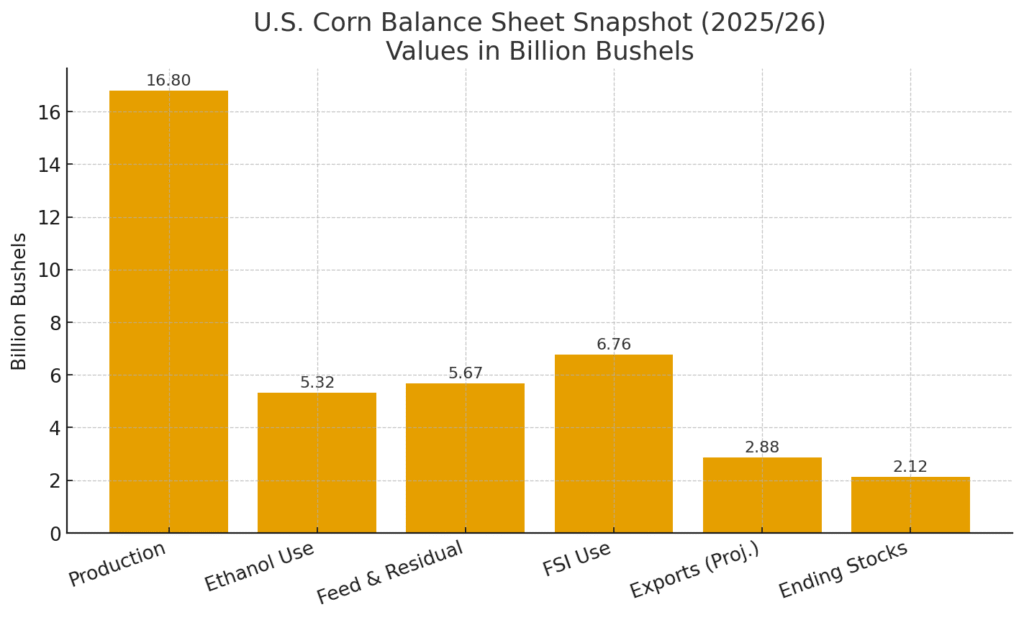
Corn Marketing Statistics #1: U.S. 2025 Crop Near 16.8 Billion Bushels
A record-sized crop changes everything from basis to brand storytelling. Bigger supplies widen buyers’ options, so differentiation and timing matter more than ever. I’d align promotions with regional harvest peaks to ride the local news cycle. Expect more aggressive price checking by feed and ethanol buyers as volumes swell. Your content should emphasize reliability, logistics capacity, and quick-turn contracts.
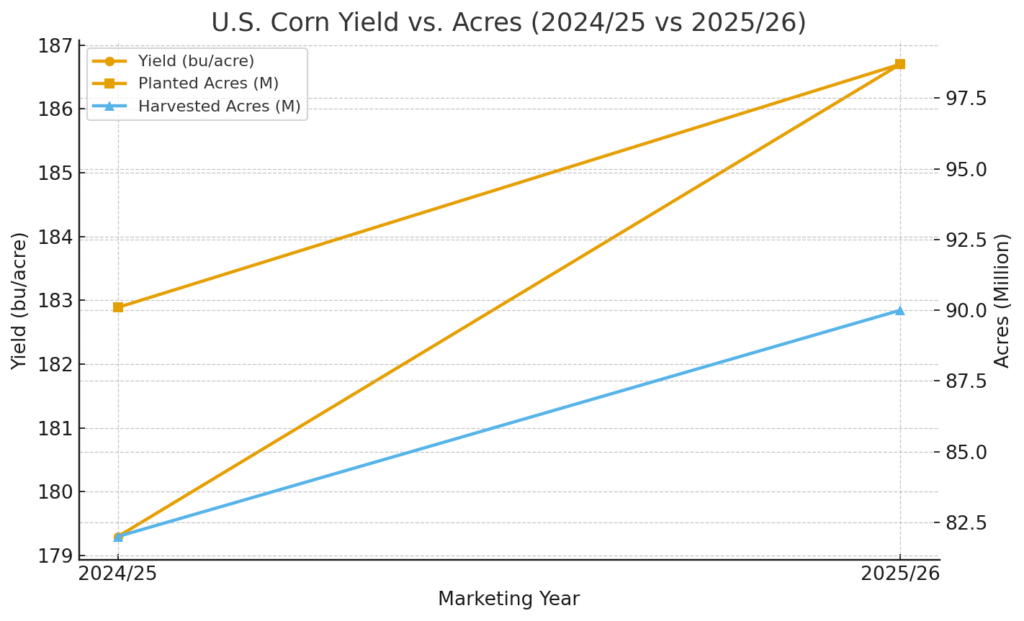
Corn Marketing Statistics #2: Average Yield Forecast At 186.7 Bu/Acre
Higher trend yields compress price rallies and make value proofs essential. I’d stress production efficiency, risk management tools, and on-farm ROI in messaging. Pair agronomic case studies with calculator tools that translate yield into margin. When yields rise, buyers negotiate harder—so spotlight guaranteed delivery windows. Keep creative grounded in real field results, not abstract benchmarks.
Corn Marketing Statistics #3: 98.7 Million Acres Planted; 90 Million Harvested
Expanding acres expand your audience segments—growers, merchandisers, and lenders. Map audiences by acreage density and tailor offers to regional logistics. More acres also invite more volatility in localized basis; build geo-targeted ads accordingly. I’d frame brand promises around scale, coverage, and service depth. Use state-by-state landing pages with local testimonials.
Corn Marketing Statistics #4: 2024/25 U.S. Exports ~71.7 MMT
Strong exports create windows for demand-led campaigns. Feature success stories tied to ports and corridors that move volume. I’d sync content calendars with export inspection reports to catch buyer attention. Emphasize reliability under tight shipping schedules. Translate export momentum into procurement confidence with transparent metrics.
Corn Marketing Statistics #5: Mexico, Japan, And Colombia Lead U.S. Corn Buying
Top markets deserve dedicated localization—language, holidays, and buyer pain points. Build mini-hubs with compliance notes and shipping FAQs for each country. Use testimonials from in-market partners to reduce perceived risk. Seasonal promotions should reflect local demand cycles, not U.S. seasons. Keep pricing pages clear on Incoterms and payment options.

Corn Marketing Statistics #6: New-Crop Exports Projected At 2.875B Bushels
Forward-looking export strength supports early pipeline messaging. I’d run pre-commitment campaigns with clear timelines and capacity tiers. Offer early-bird logistics guarantees to lock in allocations. Publish a “shipping readiness” checklist to speed procurement. Use countdown creatives as booking windows narrow.
Corn Marketing Statistics #7: Ending Stocks ~2.12B Bushels In 2025/26
Larger stocks usually temper price spikes and lengthen buyer decision cycles. That means your drip campaigns need endurance and insight, not urgency alone. Share inventory transparency and storage capabilities to build trust. I’d position optionality—spot vs. contract, rail vs. truck—as a service. Keep market education flowing to maintain engagement in flat-price periods.
Corn Marketing Statistics #8: U.S. Marketing Year Starts September 1
The calendar is a competitive weapon—plan content to hit right as the year opens. Launch a “new marketing year” resource center with fresh basis maps. Align webinars and newsletters with early September updates. Provide simple playbooks for merchandisers and brokers. Use milestone reminders to prompt contract reviews.
Corn Marketing Statistics #9: Ethanol Use ~5.32B Bushels In 2025/26
Ethanol is a demand anchor—tie your messaging to plant uptime and blend rates. Create dispatch-style updates when plants ramp or pull back. Profile logistics lanes that serve major biorefineries. I’d add sustainability angles tied to low-CI pathways. Show how reliable supply stabilizes plant planning and margins.
Corn Marketing Statistics #10: Food, Seed & Industrial Use ~6.76B Bushels
FSI buyers value consistency, certifications, and traceability. Build pages that map certifications to procurement needs at a glance. Offer batch-level documentation and rapid COA sharing. I’d feature customer stories from starch, sweetener, and bioplastics segments. Convert technical specs into easy comparison charts.

Corn Marketing Statistics #11: Feed & Residual Use ~5.67B Bushels
Livestock feeders watch net energy, price spreads, and delivery timing. Create calculators that translate corn price to ration cost per head. Share case studies on ration optimization and logistics reliability. I’d geo-target feedlot regions with weekly basis snapshots. Keep creative clear, numeric, and action-oriented.
Corn Marketing Statistics #12: Global Production ~425.9 MMT; Ending Stocks ~124 MMT
Global stocks shape sentiment; your marketing should contextualize local offers in world terms. Publish a “world corn dashboard” that updates key numbers simply. Explain how global surpluses affect freight and optional origins. I’d run education pieces comparing U.S. offers to alternate suppliers. Make your differentiation about service certainty, not just cents.
Corn Marketing Statistics #13: U.S. ~31% Of Output; China ~24%
Share-of-production visuals help buyers justify contracts internally. Use clean maps to show why your origin offers resilience. I’d position contingency plans if alternative origins tighten. Offer side-by-side landed cost comparisons. Keep messaging factual, visual, and procurement-friendly.
Corn Marketing Statistics #14: Record State Yields Across The Corn Belt
State records are PR gold—celebrate producers and spotlight local partners. Launch state-branded assets with photos, quotes, and quick stats. I’d coordinate with elevators to co-brand announcements. Turn records into webinar invitations on post-harvest strategies. Reinforce your brand as present in the counties that set the pace.
Corn Marketing Statistics #15: Exports To Canada Down ~50% YoY (Through May 2025)
Softness in one lane means reallocating attention to others. Communicate how you’re redirecting capacity to stronger corridors. I’d offer flexible terms to stimulate Canadian inquiries without eroding margin. Publish honest commentary to build credibility with northern buyers. Keep nurturing the relationship even when volumes dip.
Corn Marketing Statistics #16: Old-Crop Exports Revised Up 70M Bushels
Late-season strength is a reminder to market through the finish line. Use “last-mile” availability notices to clear remaining positions. I’d create quick-turn booking forms for late buyers. Share recap content showing on-time performance. Turn momentum into early new-crop commitments.
Corn Marketing Statistics #17: Weekly Sales Led By Mexico And Japan
Weekly cadence is perfect for recurring content. Publish a Friday “corn sales pulse” with top destinations and takeaways. I’d pair it with a Monday “planning brief” for buyers. Encourage newsletter sign-ups with lane-specific alerts. Keep the format short, visual, and consistent.
Corn Marketing Statistics #18: September 2025 Feed Outlook Raised Production
When USDA nudges numbers higher, update narratives fast. I’d push a same-day explainer that reframes pricing expectations. Provide scenario ranges and action steps for each. Coordinate sales scripts so your reps speak one message. Make “speed to clarity” a brand promise.
Corn Marketing Statistics #19: Bumper Crop Pressures Prices
Lower prices attract new buyers but test grower margins. Position your offer as a path to volume reliability and risk balance. I’d bundle marketing services—hedging education, basis alerts, logistics tracking. Use case studies where steady offtake stabilized revenue. Keep tone empathetic to producers and practical for buyers.
Corn Marketing Statistics #20: Yield Trimmed From 188.8 To 186.7 Bu/Acre
Small yield adjustments still reshape expectations. Explain what two bushels mean for carryout, basis, and spreads. I’d refresh visuals immediately across site and socials. Provide procurement checklists that reflect the new math. Show you’re on top of revisions—and ready with next steps.
My Takeaways & Your Next Move
I’m walking away from these figures with a clear plan: anchor messaging to yield momentum, time promotions around export surges, and align content with ethanol and feed demand cycles. For you, that means building a simple calendar—harvest headlines, export-driven case studies, and geo-targeted ads where the basis is favorable—so your brand shows up exactly when buyers are looking. I’ll help you prioritize channels that pull real demand, then craft creative that speaks to growers, merchandisers, and procurement teams without wasting a dollar. If you want, I can turn this into a one-page, quarter-by-quarter action map you can share with your team by Monday. You handle the fields—I’ll handle the funnel.
SOURCES
- https://www.reuters.com/sustainability/climate-energy/usda-projects-record-us-corn-crop-biggest-harvested-acres-since-1933-2025-09-12/ Reuters
- https://www.dtnpf.com/agriculture/web/ag/blogs/canada-markets/blog-post/2025/09/04/harvest-low-already-set-corn-market dtnpf.com
- https://www.harvestprofit.com/blog/using-statistics-to-make-better-grain-marketing-decisions Harvest Profit
- https://farmonaut.com/blogs/corn-futures-market-analysis-navigating-price-volatility-and-export-trends-with-farmonauts-data-driven-insights Farmonaut®