




29 Sep TOP 20 CRITICAL THINKING MARKETING STATISTICS 2025
As someone who has always valued curiosity and reflection in my work, I’m excited to share these critical thinking marketing statistics with you. In today’s fast-paced digital world, marketers are constantly bombarded with data, trends, and emerging technologies. What truly makes the difference, though, is our ability to pause, question, and evaluate information before acting on it. That’s where critical thinking comes into play—it helps us cut through the noise and make decisions that actually move the needle. In collaboration with a leading marketing agency in New York, I’ve gathered these insights to not only highlight the importance of critical thinking but also to inspire smarter strategies for the years ahead.
Top 20 Critical Thinking Marketing Statistics 2025 (Editor’s Choice)
🚀 Top 20 Critical Marketing Statistics for 2025
Data-Driven Insights to Transform Your Marketing Strategy
| # | Category | Statistic | Impact |
|---|---|---|---|
| 1 | ROI Leaders | For B2B brands, websites, blogs, and SEO deliver the best ROI, followed by paid social media and social shopping tools | Critical |
| 2 | B2C Success | Email marketing leads B2C ROI, followed by paid social media content and content marketing | Critical |
| 3 | KPI Priority | More than 1 in 3 marketing leaders cite conversion rates as their top KPI priority | High |
| 4 | 2025 Focus | 43% of marketers say optimizing productivity is their top priority for marketing plans in 2025 | High |
| 5 | Major Challenge | 63% of marketers struggle to generate traffic and leads—their biggest challenge to date | Critical |
| 6 | Strategy Gap | 70% of marketing teams lack an integrated content strategy, hindering multichannel success | Critical |
| 7 | AI Skills Gap | 36% of marketers don't think they or their teams have the necessary skills for AI implementation | High |
| 8 | Conversion Rate | Nearly 2 out of 3 marketers report that their average landing page conversion rate is less than 10% | Medium |
| 9 | AI Trust | 43% of consumers say they don't trust ads that are AI-generated | High |
| 10 | Inclusion Impact | Brand diversity and inclusion efforts influence buying decisions among almost 8 in 10 people worldwide | Critical |
| 11 | Consumer Behavior | Globally, 79% of surveyed consumers are trading down, with over half looking for deals on every purchase | High |
| 12 | Reviews Matter | 93% of people read online reviews before making a purchase | Critical |
| 13 | Social Media Reach | 64% of the world's population uses social media, spending an average of 2 hours and 24 minutes daily | Critical |
| 14 | Platform Usage | 5.42 billion social media users worldwide in 2025, with the average person using 6.83 different networks monthly | High |
| 15 | Mobile Dominance | Mobile devices account for 50.5% of website traffic, with desktops trailing at 46.5% | Critical |
| 16 | First Impressions | It takes about half a second for visitors to form an opinion about your website | High |
| 17 | Video Adoption | 91% of businesses use video as part of their marketing strategy | Critical |
| 18 | Video Demand | 88% of consumers want more video content from brands, showcasing growing demand for visual storytelling | High |
| 19 | SEO Strategy | 72% of marketers believe high-quality content creation is the most effective way to improve organic search rankings | Critical |
| 20 | Email Engagement | 88% of email users check their inbox multiple times daily, with 27% checking 10–20 times per day | Critical |
Top 20 Critical Thinking Marketing Statistics 2025
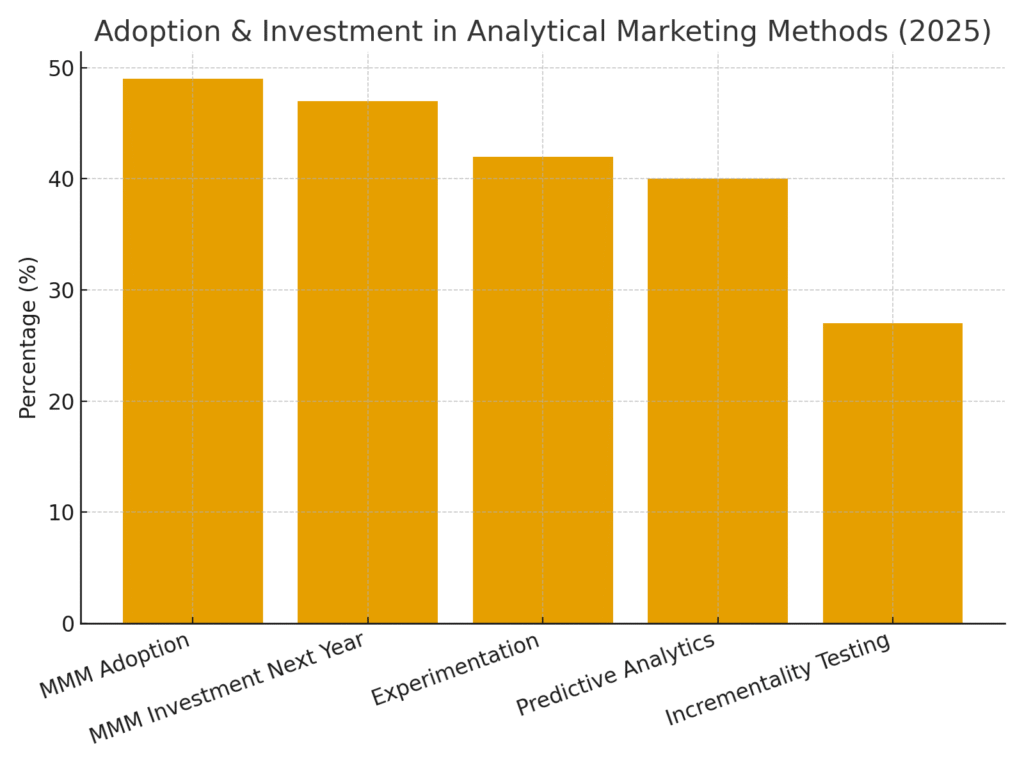
Critical Thinking Marketing Statistics #1: 49% of Marketers Use Marketing Mix Modeling
Nearly half of marketers are now relying on marketing mix modeling (MMM) to evaluate performance across channels. This approach requires critical thinking because it combines multiple data sources into one coherent framework. By interpreting these results carefully, marketers can identify which campaigns are driving the most impact. Without analytical evaluation, businesses risk overspending on low-performing strategies. MMM adoption shows that marketers are valuing structured, evidence-based decision-making more than ever.
Critical Thinking Marketing Statistics #2: 47% Will Invest in MMM Next Year
Almost half of marketers plan to increase their investment in MMM in the coming year. This forward-looking commitment reflects the growing trust in critical thinking-based tools. Instead of relying on intuition, they are prioritizing proven data-driven models. The trend also highlights a shift from surface-level reporting toward deeper strategic evaluation. Marketers who adopt MMM will be better positioned to make rational, evidence-backed choices.
Critical Thinking Marketing Statistics #3: 42% Will Invest in Campaign Experimentation
Experimentation is rising as 42% of marketers aim to dedicate resources to testing strategies. Critical thinking is vital in structuring these experiments with clear hypotheses and measurable outcomes. Running experiments without proper evaluation risks wasting both time and money. By testing multiple variations, marketers learn what resonates most with their audience. This iterative process strengthens future campaigns and sharpens marketing instincts with data.
Critical Thinking Marketing Statistics #4: 40% List Predictive Analytics as a Priority
Four in ten marketers consider predictive analytics a top priority. Predictive modeling requires the ability to question assumptions and weigh probabilities—a hallmark of critical thinking. These tools forecast customer behaviors but still demand human judgment to validate outcomes. Marketers using predictive analytics must carefully analyze patterns to avoid overreliance on technology. Done well, predictive insights can transform campaign timing and targeting.
Critical Thinking Marketing Statistics #5: Only 27% Interested in Incrementality Testing
Despite its rigor, just 27% of marketers are pursuing incrementality testing. This low number suggests many are avoiding deeper analytical thinking due to complexity. Yet incrementality is key to isolating true campaign impact. By skipping it, marketers risk attributing results to the wrong factors. Critical thinkers see this as an opportunity to separate assumptions from measurable reality.
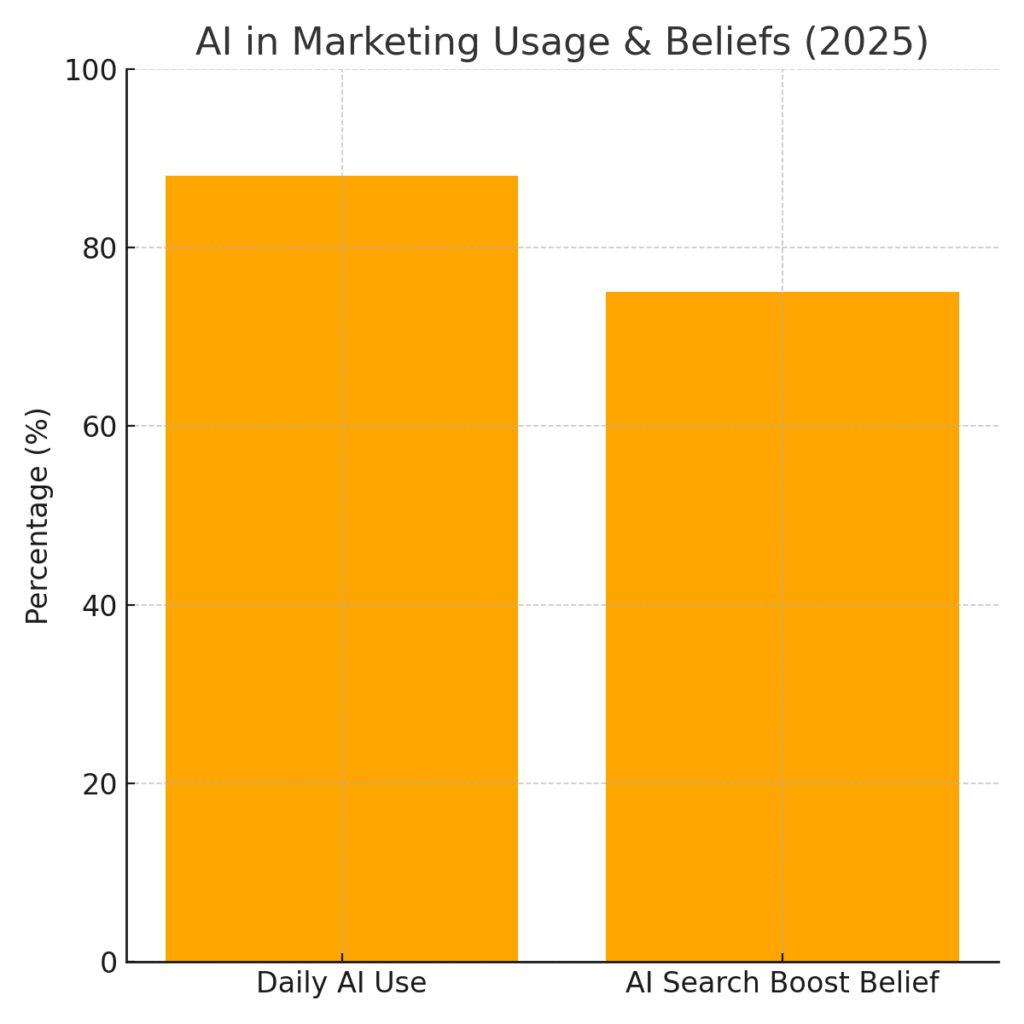
Critical Thinking Marketing Statistics #6: 88% of Marketers Will Use AI Daily by 2025
The vast majority of marketers expect to integrate AI into their daily tasks. While AI is powerful, it requires critical thinking to guide its use effectively. Marketers must question AI outputs and avoid blind acceptance of automated suggestions. This balance between machine efficiency and human oversight ensures campaigns stay authentic. Ultimately, AI enhances productivity only when paired with sharp human judgment.
Critical Thinking Marketing Statistics #7: 75% Believe AI Search Will Boost Blog Traffic
Three-quarters of marketers think AI-powered search engines will positively affect blog visibility. This optimism must be matched with a careful evaluation of long-term implications. AI search could bring more reach but also intensify competition. Critical thinking helps marketers adapt strategies so that content remains discoverable and differentiated. Blind optimism without planning could lead to missed opportunities in organic visibility.
Critical Thinking Marketing Statistics #8: Curiosity, Simplicity, and Critical Thinking Top Skills for Marketers
Industry experts have highlighted curiosity, simplicity, and critical thinking as essential skills for future marketers. This emphasis shows that success goes beyond technical tools. Critical thinking helps professionals navigate ambiguity and simplify complex data. Marketers who sharpen these skills will make clearer, faster, and more impactful decisions. The demand proves that thinking skills are just as valuable as creative execution.
Critical Thinking Marketing Statistics #9: Critical Thinking Improves Decision-Making Under Bias
Studies confirm that critical thinking reduces the effect of cognitive biases in business decisions. Marketers are often exposed to heuristic shortcuts that can distort judgment. Applying critical frameworks helps counteract these pitfalls. By questioning assumptions, they can better separate facts from flawed perceptions. This ultimately leads to smarter, less biased marketing strategies.
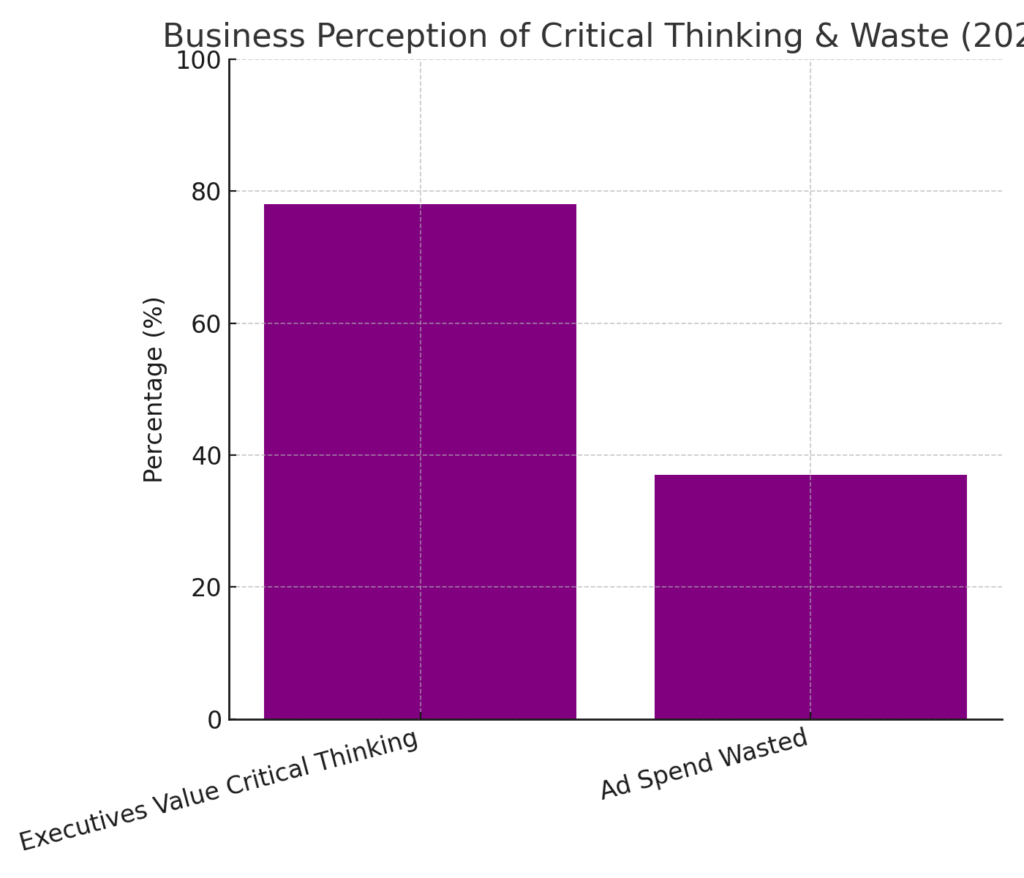
Critical Thinking Marketing Statistics #10: 78% of Executives Value Critical Thinking Most
A survey of business executives found that 78% ranked critical thinking as the most important skill. This statistic underlines the universal demand for structured problem-solving. Marketing executives echo this, recognizing that campaigns require more than creativity alone. Executives expect teams to analyze data, anticipate consequences, and challenge surface-level ideas. This leadership perspective reinforces why critical thinking is indispensable in marketing careers.
Critical Thinking Marketing Statistics #11: AI Without Oversight Creates “Noise at Scale”
Experts warn that AI without human critical thinking oversight only produces noise faster. This reflects a growing concern about automation replacing thoughtful analysis. Marketers must oversee AI outputs and refine them for context. Without this step, campaigns risk irrelevance and waste. Critical thinkers ensure AI enhances rather than dilutes marketing effectiveness.
Critical Thinking Marketing Statistics #12: 37% of Advertising Spend Is Wasted
Ad Age reports that more than one-third of advertising budgets are wasted. This figure highlights the need for deeper critical evaluation of spending. Marketers often allocate funds without carefully measuring outcomes. By applying analytical frameworks, they can identify inefficiencies and reallocate resources. Critical thinking is key to maximizing ROI and reducing wasteful spend.
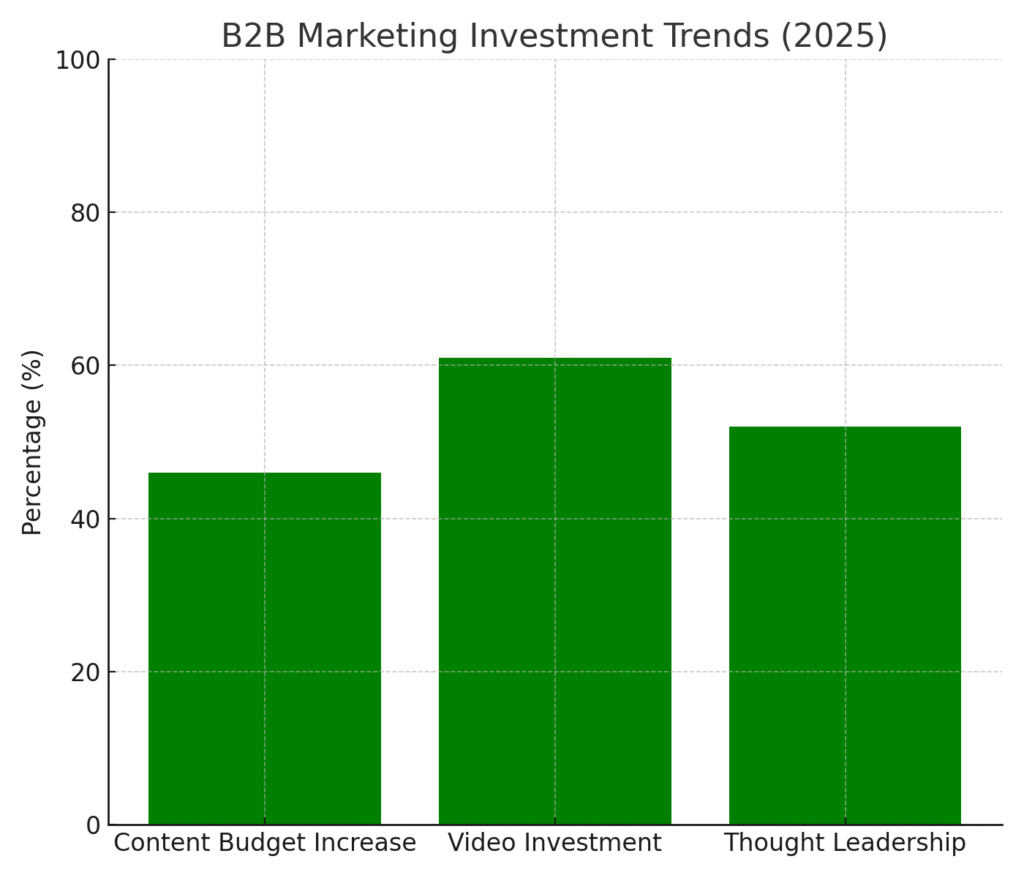
Critical Thinking Marketing Statistics #13: 46% of B2B Marketers Expect Higher Content Budgets
Nearly half of B2B marketers believe their content marketing budgets will rise. Increased budgets bring opportunities but also demand thoughtful allocation. Without critical evaluation, funds can be misdirected toward underperforming strategies. By weighing evidence and outcomes, marketers can prioritize impactful investments. Strategic thinking ensures that larger budgets deliver better returns.
Critical Thinking Marketing Statistics #14: 61% of B2B Marketers Increasing Video Investments
More than six in ten B2B marketers plan to expand video content spending. While video is popular, not all formats deliver equal engagement. Critical thinking helps marketers test different video strategies before committing heavily. Analyzing performance data ensures investments align with audience behavior. This balance between trend adoption and evidence-based judgment sustains long-term success.
Critical Thinking Marketing Statistics #15: 52% of B2B Marketers Focus on Thought Leadership
Over half of B2B marketers intend to invest more in thought leadership. Producing original insights requires research, analysis, and critical interpretation of industry trends. Simply recycling content will not deliver authority or trust. Marketers must carefully evaluate what topics provide genuine value. Critical thinking transforms thought leadership from buzzwords into real influence.
Critical Thinking Marketing Statistics #16: Critical Thinking Seen as Future Skill for Business Success
Research consistently positions critical thinking as a future-defining skill. For marketers, this means evaluating not only data but also cultural shifts and consumer behavior. Businesses that prioritize critical thinking outperform competitors in adapting to change. Marketers who hone this skill set will remain relevant in evolving markets. The long-term importance of this ability is reinforced by academic and industry consensus.
Critical Thinking Marketing Statistics #17: Marketers Using Experiments See Higher ROI
Marketers who regularly run structured experiments report stronger ROI compared to those who don’t. Experiments require designing hypotheses, measuring variables, and analyzing outcomes objectively. Critical thinking ensures these tests are conducted rigorously rather than randomly. Businesses that embrace experimentation learn faster and waste less. This approach underscores the financial value of critical evaluation.
Critical Thinking Marketing Statistics #18: Predictive Tools Still Require Human Validation
Even the most advanced predictive tools cannot function without human oversight. Algorithms can forecast trends but may miss context or nuance. Critical thinking allows marketers to validate results before acting. Blind reliance on predictive models risks poor strategic decisions. Combining machine power with human reasoning creates the strongest outcomes.
Critical Thinking Marketing Statistics #19: Campaign Failures Often Stem from Poor Analysis
Post-mortem reviews of failed campaigns frequently cite weak analysis as the root cause. Marketers sometimes rush to launch without questioning assumptions. Critical evaluation during planning could prevent these errors. Teams that prioritize analysis produce stronger, more sustainable campaigns. This reinforces the connection between critical thinking and long-term success.
Critical Thinking Marketing Statistics #20: Marketing Teams with Strong Thinkers Adapt Faster
Studies show that marketing teams emphasizing critical thinking adapt more quickly to change. Fast-changing markets require quick but thoughtful responses. Teams that analyze data carefully avoid panicked decisions. Critical thinkers guide their organizations through uncertainty with clarity. Adaptability becomes a natural outcome of disciplined thinking practices.
Final Thoughts on Critical Thinking in Marketing
Looking through these statistics, I couldn’t help but reflect on how much more powerful our campaigns become when we stop to analyze rather than react. For me, critical thinking is less about overcomplicating things and more about keeping a clear head in the middle of all the chaos marketing throws at us. It’s about asking the right questions, not just following the latest shiny trend. I hope these insights have given you a fresh perspective, and perhaps even sparked ideas you can apply right away. At the end of the day, the marketers who thrive are the ones who balance creativity with clarity—and I’m striving every day to do just that.
SOURCES
https://www.sogolytics.com/blog/critical-thinking-in-marketing/
https://marketingmile.co/2025/02/06/marketing-success-starts-with-critical-thinking-not-just-tools/
https://www.luminodigital.com/blog/the-role-of-critical-thinking-in-writing-and-analysis
https://productmarketing.blog/2025/05/30/3-critical-thinking-behaviors-for-pmms/
https://www.amadc.org/critical-thinking-a-crucial-role-in-achieving-marketing-excellence-today/
https://www.springboard.com/blog/business/critical-thinking-business-growth/
https://graduate.nichols.edu/blog/why-is-critical-thinking-important/
https://www.coursera.org/articles/critical-thinking-skills
https://www.linkedin.com/pulse/how-use-critical-thinking-marketing-dipanshu-arya-aewac
https://www.eagletraining.co.uk/2021/03/19/critical-thinking/
https://www.sogolytics.com/blog/critical-thinking-in-marketing/