




18 Sep TOP 20 CROSS-PLATFORM MARKETING STATISTICS 2025
When I first started diving into cross-platform campaigns, I quickly realized just how powerful consistency and integration really are. That’s why I put together this collection of cross-platform marketing statistics—to help you see the full picture the way I did. As someone who has worked with a leading marketing agency in New York, I’ve seen firsthand how data-driven strategies transform not just clicks, but relationships. These numbers aren’t just abstract metrics; they’re a reflection of how people behave, connect, and respond when brands show up seamlessly across different touchpoints. My goal here is to make this information practical and personal, so you can use it to sharpen your own strategy.
Top 20 Cross-Platform Marketing Statistics 2025 (Editor’s Choice)
| Stat # | Statistic | Source |
|---|---|---|
| 1 | Brands using cross-channel marketing strategies have an average customer retention rate of ~89%. | Amra & Elma |
| 2 | Customers who interact across multiple channels spend about 30% more than single-channel users. | Amra & Elma |
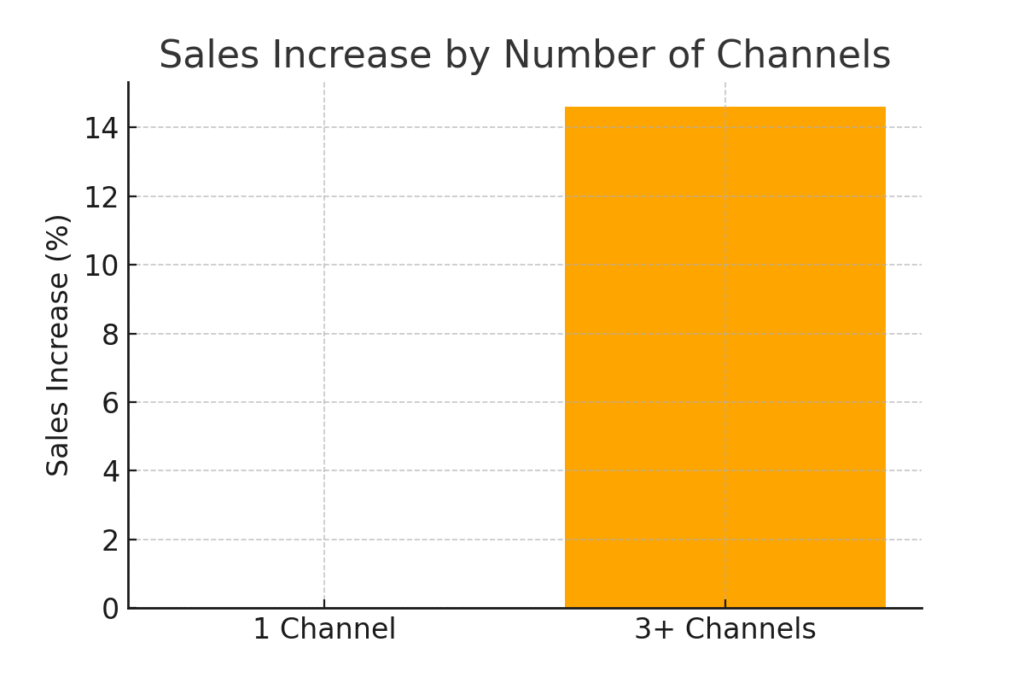
| 3 | Using three or more marketing channels boosts sales by 14.6% compared to single-channel campaigns. | Amra & Elma |
| 4 | 72% of consumers expect a seamless brand experience across channels. | Amra & Elma |
| 5 | Combining email + SMS boosts conversion rates by up to 30%. | Amra & Elma |
| 6 | 66% of consumers expect real-time interactions across platforms. | Amra & Elma |
| 7 | Cross-channel marketing increases ROAS by 13% compared to siloed approaches. | Amra & Elma |
| 8 | Only 9% of marketers have fully adopted cross-channel marketing strategies. | Amra & Elma |
| 9 | Top 2025 engagement channels: Email (78.8%), Social Media (74.3%), Mobile Web (60.2%). | Amra & Elma |
| 10 | 50.9% of retail marketers struggle with cross-channel communication. | Amra & Elma |
| 11 | AI adoption in cross-channel strategies rose from 20.7% to 95.6% in 2025. | Amra & Elma |
| 12 | 91.9% of retail brands use personalization in cross-channel campaigns. | Amra & Elma |
| 13 | Mobile commerce grew 61% in the U.S. and 40% in the UK year-over-year. | Amra & Elma |
| 14 | 32% of Americans made a purchase via social media in the last year. | Amra & Elma |
| 15 | 63.9% of the global population uses social media; daily usage averages 2h 20m. | Smart Insights |
| 16 | 60% of web traffic comes from mobile; desktops account for ~38%. | Research.com |
| 17 | 88% of email users check inboxes multiple times daily; 39% check 3-5 times/day. | OptinMonster |
| 18 | Automated emails drive 320% more revenue than non-automated emails. | OptinMonster |
| 19 | 91% of marketing leaders expect automation needs to increase in 2025. | Dotdigital |
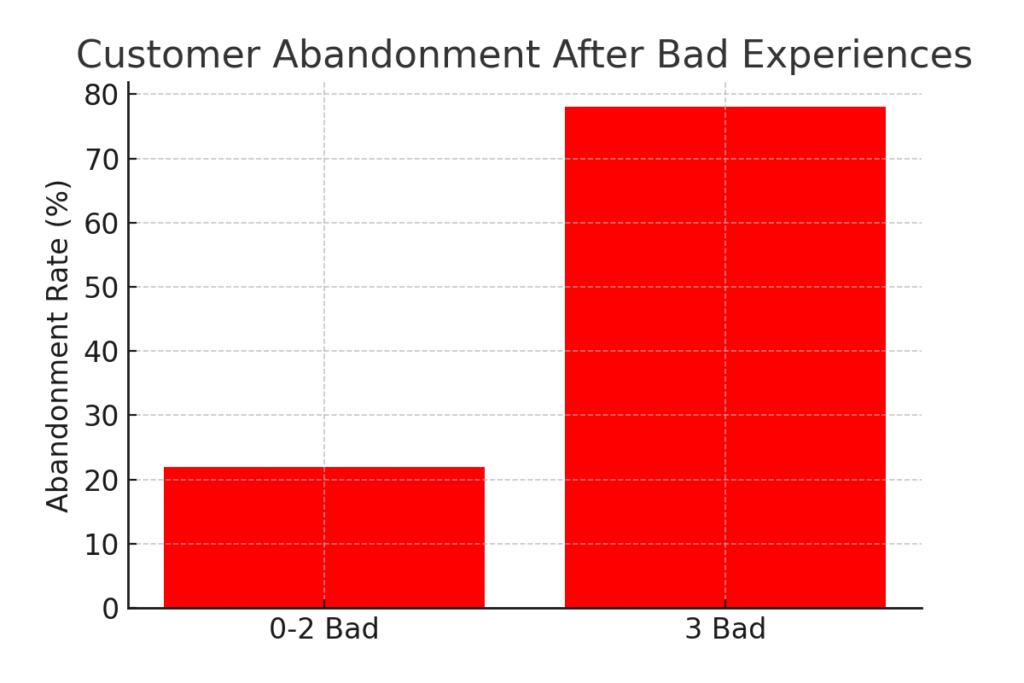
| 20 | 78% of shoppers abandon brands after three or fewer bad experiences. | Salesforce |
Top 20 Cross-Platform Marketing Statistics 2025
Cross-Platform Marketing Statistics #1: 89% Retention With Cross-Channel Strategies
Brands that embrace cross-channel marketing strategies enjoy an average customer retention rate of 89%. This shows how important consistency is when customers engage with a brand across multiple touchpoints. Higher retention translates into long-term loyalty and repeat business, which directly impacts revenue. Without such integration, retention drops drastically, showing the cost of siloed marketing. This statistic emphasizes that strong cross-platform strategies aren’t optional—they’re essential for growth.
Cross-Platform Marketing Statistics #2: 30% More Spending Across Channels
Customers engaging across multiple channels spend about 30% more than those using just one. This highlights the purchasing power of integrated experiences. When customers feel connected across email, social, mobile, and web, they naturally spend more. It also reflects the importance of convenience—brands that make it easy win. This proves cross-platform investment is not just about engagement but about boosting revenue.
Cross-Platform Marketing Statistics #3: 14.6% Sales Increase Using 3+ Channels
Using three or more marketing channels in a campaign drives 14.6% higher sales than single-channel approaches. This demonstrates the compounding effect of multiple touchpoints reinforcing the same message. Consumers today are bombarded with information, so repetition across channels helps reinforce brand recall. It also shows that integration is more powerful than volume—synergy matters. This stat validates why modern campaigns can’t afford to be one-dimensional.
Cross-Platform Marketing Statistics #4: 72% Expect Seamless Experiences
About 72% of consumers expect seamless experiences across different platforms. People don’t want to feel a disconnect between mobile, desktop, and in-store experiences. Consistency builds trust, and trust drives loyalty. A broken experience can turn off potential customers, no matter how strong the product. This stat proves user expectations have shifted permanently toward unified brand journeys.
Cross-Platform Marketing Statistics #5: 30% Higher Conversions With Email + SMS
Pairing email with SMS boosts conversions by as much as 30%. The power of combining traditional and modern channels creates a bigger impact. SMS delivers immediacy, while email provides depth—together, they form a strong duo. This strategy is especially powerful in time-sensitive campaigns like sales and launches. Marketers who rely on only one are missing out on significant results.

Cross-Platform Marketing Statistics #6: 66% Expect Real-Time Interactions
Two-thirds of consumers expect real-time engagement across all touchpoints. Customers want instant replies whether they are on email, chat, or social. Delayed responses risk losing attention and even loyalty. Real-time marketing reflects agility and customer focus, which are essential in 2025. This stat highlights the demand for immediacy as part of a seamless cross-platform approach.
Cross-Platform Marketing Statistics #7: 13% Higher ROAS With Cross-Channel Campaigns
Brands leveraging cross-channel campaigns achieve a 13% higher return on ad spend. That extra margin can make or break a competitive campaign. It shows that integrated strategies optimize ad dollars more effectively. By ensuring each channel reinforces the others, waste is reduced. This statistic reflects how smart integration turns into real financial gains.
Cross-Platform Marketing Statistics #8: Only 9% Fully Adopt Cross-Channel Marketing
Surprisingly, just 9% of marketers have fully implemented cross-channel strategies. This reveals how much untapped potential still exists. Many companies struggle with technology, data silos, or lack of expertise. Yet, those who manage to integrate everything are far ahead. This gap between expectation and adoption shows massive opportunity for competitive advantage.
Cross-Platform Marketing Statistics #9: Email, Social, and Mobile Lead Engagement
In 2025, top engagement channels are Email (78.8%), Social Media (74.3%), and Mobile Web (60.2%). These platforms remain the backbone of customer interaction. While mobile apps and desktop sites still matter, they fall behind slightly. This hierarchy shows where brands should allocate more resources. Investing in these leading channels ensures maximum audience reach.
Cross-Platform Marketing Statistics #10: 50.9% Struggle With Communication Execution
About 50.9% of retail marketers say executing effective cross-channel communication is their biggest hurdle. This shows that while the need is recognized, execution is harder. The challenge often lies in coordinating teams, technology, and consistent messaging. It also reflects how fragmented marketing stacks can undermine efforts. This stat underscores the importance of simplifying tools and processes.
Cross-Platform Marketing Statistics #11: AI Adoption Rose to 95.6% in 2025
AI adoption in cross-channel marketing jumped from 20.7% to 95.6% in 2025. This shows how quickly technology became essential to integration. AI powers personalization, real-time engagement, and automation across platforms. Without it, scaling cross-platform campaigns is nearly impossible. This stat signals that AI is no longer a trend but a requirement.
Cross-Platform Marketing Statistics #12: 91.9% Use Personalization in Messaging
Nearly 92% of retail brands now use personalization in cross-channel messages. Personalization is based largely on purchase history and browsing behavior. It helps brands create relevance and improve customer engagement. Consumers increasingly expect this tailored approach rather than one-size-fits-all messages. This stat highlights personalization as a defining factor in modern marketing success.
Cross-Platform Marketing Statistics #13: Mobile Commerce Grew 61% in U.S.
Mobile commerce saw a 61% growth rate in the U.S. and 40% in the UK. This reflects the dominance of mobile-first strategies worldwide. Smartphones have become shopping hubs, blurring lines between browsing and buying. Brands that fail to optimize for mobile lose out on enormous revenue opportunities. This stat emphasizes that mobile is no longer optional, it’s foundational.
Cross-Platform Marketing Statistics #14: 32% of Americans Bought via Social Media
In the past year, 32% of Americans made purchases directly through social media. This proves the growing strength of social commerce. Platforms like Instagram and TikTok are no longer just awareness drivers—they’re conversion channels. This also signals a shift in consumer trust toward shopping on social platforms. The stat highlights social media as a must-have in any cross-platform strategy.
Cross-Platform Marketing Statistics #15: 63.9% of World on Social Media
Globally, nearly 64% of the population now uses social media. With an average of over two hours daily, the influence is undeniable. This creates countless opportunities for brands to engage. However, it also makes competition fierce and standing out more challenging. This stat reinforces the role of social media as a core cross-platform pillar.
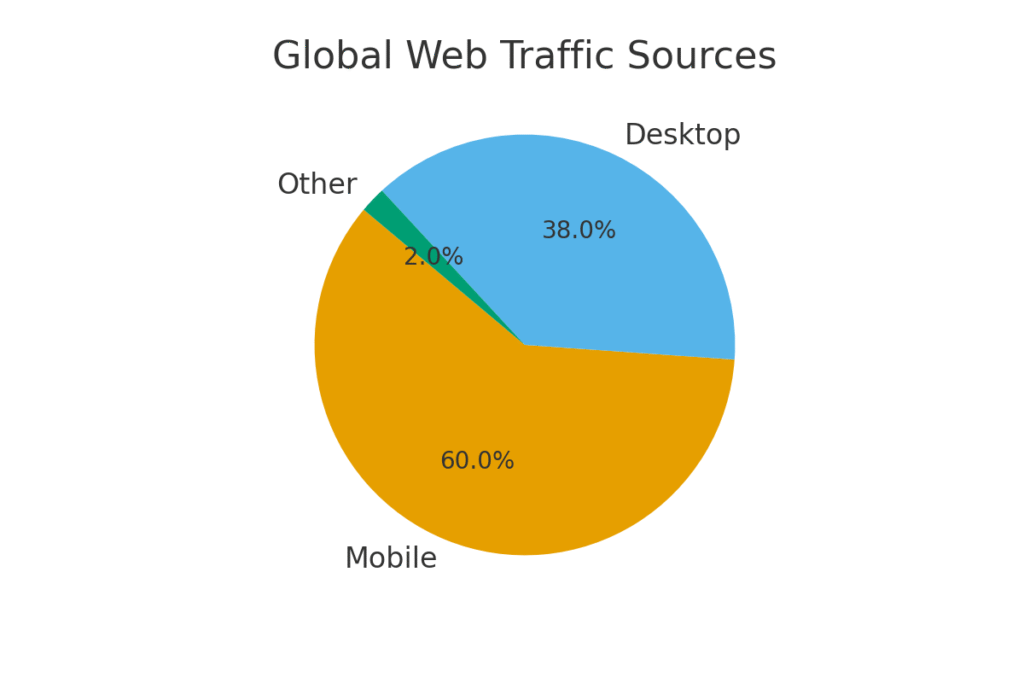
Cross-Platform Marketing Statistics #16: 60% of Web Traffic Comes From Mobile
Almost 60% of all web traffic comes from mobile devices. This solidifies the importance of mobile optimization across industries. Desktop remains relevant, but mobile is now the dominant gateway. A poor mobile experience can break an otherwise strong campaign. This stat is a clear reminder that mobile-first strategies are non-negotiable.
Cross-Platform Marketing Statistics #17: 88% Check Email Multiple Times Daily
About 88% of users check their email multiple times every day. This makes email one of the most reliable touchpoints available. Email continues to outperform in reach and regular engagement. Its role in a cross-platform mix is still unmatched. This stat shows why email remains the backbone of multichannel strategies.
Cross-Platform Marketing Statistics #18: Automated Emails Drive 320% More Revenue
Automated emails outperform manual ones by generating 320% more revenue. Automation ensures the right message reaches the right person at the right time. This reduces friction and maximizes engagement. It also shows how technology boosts both efficiency and effectiveness. This stat makes automation a no-brainer for brands in 2025.
Cross-Platform Marketing Statistics #19: 91% Expect More Automation Demand
About 91% of marketing leaders predict increasing automation demand in 2025. As campaigns get more complex, automation is the only way to scale. This reflects the industry’s dependence on tech for efficiency. It also signals opportunities for platforms and tools specializing in automation. This stat underscores automation’s future role as a growth driver.
Cross-Platform Marketing Statistics #20: 78% Abandon Brands After 3 Bad Experiences
Nearly 78% of shoppers abandon brands after three or fewer bad experiences. This highlights how fragile loyalty can be. One poor interaction across email, social, or mobile can push customers away. Consistency and quality across platforms are critical to retention. This stat shows why seamless execution is not just beneficial, but vital for survival.
A Personal Wrap-Up
Looking over these cross-platform marketing statistics, I can’t help but think about the stories behind the numbers. They remind me of countless campaigns where small shifts—like syncing email and social—led to outsized results. To me, this isn’t about chasing trends for the sake of it; it’s about finding better ways to connect with people where they already are. I hope you take away the same sense of opportunity I felt while putting this together. And if you ever need to brainstorm how these insights can apply to your own projects, I’d love to continue that conversation with you.
SOURCES
https://blog.flarelane.com/nine-statistics-about-cross-channel-marketing-you-should-know/
https://iterable.com/blog/30-cross-channel-marketing-stats-you-need-to-know/
https://www.amraandelma.com/cross-channel-marketing-statistics/
https://www.simondata.com/blog-posts/cross-channel-marketing
https://usermaven.com/blog/cross-channel-marketing
https://blog.beehiiv.com/p/multi-channel-marketing-statistics
https://dashthis.com/blog/cross-channel-marketing-reports/
https://piwik.pro/blog/cross-platform-analytics/
https://www.salesforce.com/marketing/personalization/cross-channel-marketing-guide/
https://www.braze.com/resources/articles/cross-channel-engagement-matters
https://www.demandbase.com/blog/mastering-cross-channel-marketing/
https://userpilot.com/blog/cross-channel-marketing-campaigns/