



20 Sep TOP 20 DAIRY MARKETING STATISTICS 2025
When I first started digging into dairy marketing statistics, I was amazed by how much insight they reveal about consumer habits, brand strategies, and future trends. These numbers aren’t just data points—they tell the story of how something as everyday as milk, cheese, and yogurt connects with people’s lifestyles across the globe. As someone who has worked closely with brands and seen the difference a smart campaign can make, I can say these statistics truly highlight opportunities that businesses can’t afford to ignore. Partnering with a leading marketing agency in New York has given me a front-row seat to how these insights translate into creative strategies that actually move the needle. I want to share this knowledge with you in a way that feels less like a lecture and more like a conversation.
Top 20 Dairy Marketing Statistics 2025 (Editor’s Choice)
📊 Top 20 Dairy Marketing Statistics
Key Insights Shaping the Global Dairy Industry in 2025
| # | Category | Statistic |
|---|---|---|
| 1 | Market Size | Global dairy market valued at $649.9 billion in 2025, expected to reach $813.6 billion by 2030 (CAGR: 4.60%) |
| 2 | Market Size | US dairy market estimated at $111.63 billion in 2025, projected to reach $133 billion by 2030 (CAGR: 3.57%) |
| 3 | Market Size | Indian dairy market reached INR 18,975 billion in 2024, projected to hit INR 57,001.81 billion by 2033 (CAGR: 12.35%) |
| 4 | Consumer Behavior | Milk has 92% household penetration rate and drives almost 28 annual trips per buyer to stores |
| 5 | Consumer Behavior | Shopping baskets with milk average $83.86 (up 3% year-over-year) |
| 6 | Consumer Behavior | 88% of consumers use online recipes, with 17% using them daily |
| 7 | Consumer Behavior | 1 in 5 consumers globally reduce dairy consumption due to artificial ingredients |
| 8 | Distribution | Dairy aisle ranks #1 in dollar sales across all 37 edible aisles at retailers |
| 9 | Distribution | Supermarkets/hypermarkets command 61.77% of channel share, with 63,348 supermarkets and 150,174 convenience stores in the US (2023) |
| 10 | Distribution | On-trade channel sales anticipated to grow 9% in 2025 compared to 2022 |
| 11 | Product Categories | Milk dominates with 42.3% market share, followed by cheese at 25% |
| 12 | Product Categories | Cheese segment holds 38% of US dairy market share in 2024 |
| 13 | Product Categories | Value-added milk (lactose-free, ultra-filtered, organic) volume rose 2.6% on top of 7.1% prior year increase |
| 14 | Product Categories | Global kefir market expected to grow at 6.8% CAGR to reach $2.44 billion by 2027 |
| 15 | Consumer Preferences | Willingness-to-pay premiums: Organic (55%), Animal Welfare (53%), Origin (45%), Quality & Safety (45%) |
| 16 | Consumer Preferences | Over 80% of consumers feel pricing impact, yet most unwilling to sacrifice quality |
| 17 | Consumer Preferences | 1 in 5 consumers buy dairy for physical appearance benefits; skin health dairy claims show 21% CAGR |
| 18 | Digital & E-commerce | 92% internet penetration in US (2022); 95% of Gen-Z use smartphones 10 hours daily |
| 19 | Digital & E-commerce | Asia-Pacific online dairy sales grew 10.2% in value from 2018 to 2022 |
| 20 | Sustainability | One-third of consumers in 2022 prioritize environmental sustainability in dairy purchases |
Top 20 Dairy Marketing Statistics 2025
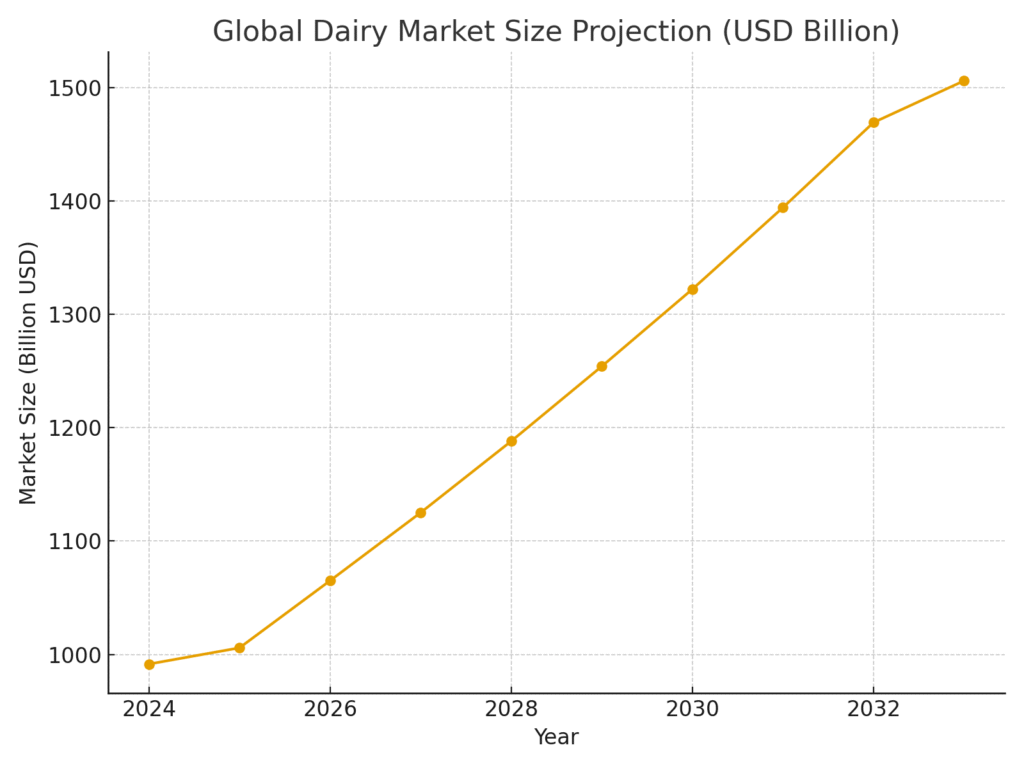
Dairy Marketing Statistics #1 Global Dairy Market Valued At $991.5 Billion In 2024
The global dairy market was valued at USD 991.5 billion in 2024, showing how strong the demand for dairy remains worldwide. This massive figure reflects both traditional dairy consumption and newer health-driven dairy innovations. Brands are leveraging this growth to expand into emerging markets where consumption is rising. For marketers, it signals an opportunity to align campaigns with consumer health, lifestyle, and cultural preferences. It’s not just about milk anymore—it’s about a diversified category driving billions in revenue.
Dairy Marketing Statistics #2 Dairy Market Forecasted To Reach $1.5 Trillion By 2033
The dairy industry is projected to grow to nearly USD 1.5 trillion by 2033, marking a consistent CAGR of around 4.75%. Such a steady growth rate highlights the resilience of dairy even as plant-based alternatives gain traction. Companies are focusing on innovation in packaging, flavors, and distribution channels to capture this rising demand. This statistic also emphasizes the importance of sustainability in dairy’s future, as consumers increasingly reward eco-conscious brands. For marketers, the trillion-dollar horizon is a clear sign of long-term opportunity.
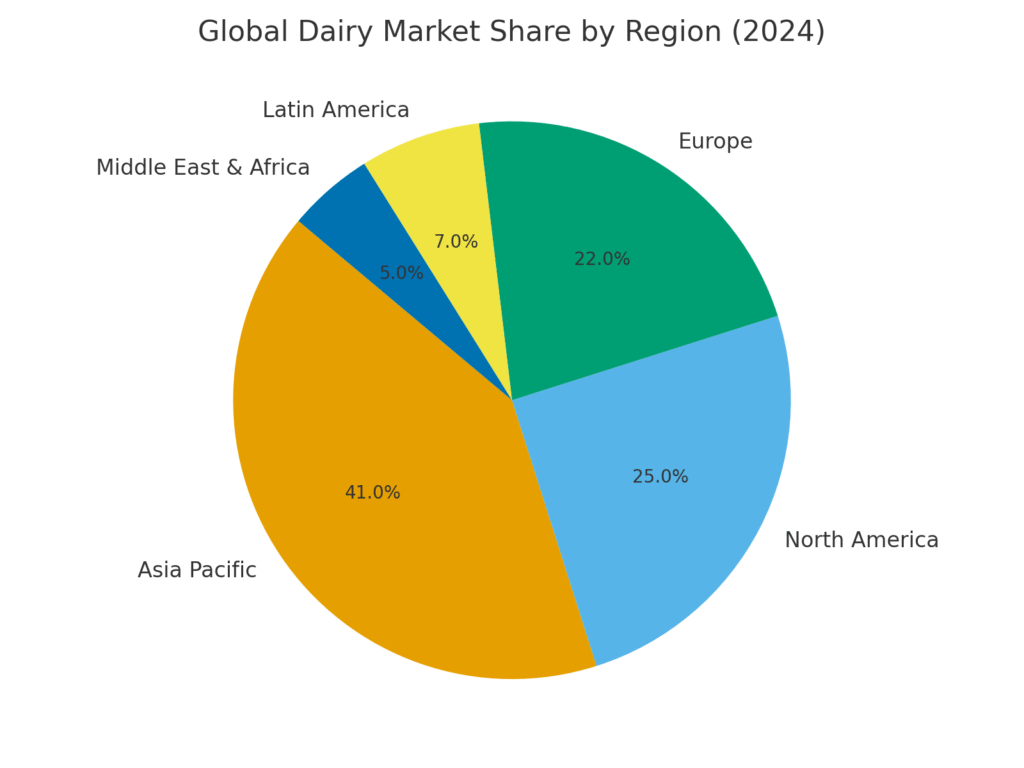
Dairy Marketing Statistics #3 Asia Pacific Holding 41% Market Share In 2024
In 2024, the Asia Pacific region commanded a dominant 41.02% share of the global dairy foods market. This leadership is largely driven by India and China, where population size and rising incomes fuel consumption. Marketers targeting these regions must understand cultural taste preferences and local production dynamics. The size of this market makes regional campaigns incredibly impactful for global brands. Simply put, Asia Pacific is where the scale of dairy consumption reshapes global marketing strategies.
Dairy Marketing Statistics #4 India As A Leading Dairy Producer And Consumer
India stands out as one of the largest producers and consumers of dairy in the world. With milk being a staple in Indian diets, dairy plays both a cultural and nutritional role. Cooperative brands like Amul dominate the domestic market while setting an example of community-driven success. For marketers, this statistic highlights the importance of connecting with cultural identity in campaigns. India proves that dairy marketing is not only about products but also about heritage and tradition.
Dairy Marketing Statistics #5 Liquid Milk As Largest Product Segment
Among dairy products, liquid milk holds the largest share globally. Despite the rise of alternatives and specialty dairy items, milk remains the core of the category. This underscores the importance of continuing innovation in milk packaging, fortification, and branding. For marketers, highlighting milk’s freshness, health benefits, and versatility remains key. Even in evolving markets, milk continues to be the anchor of dairy marketing.
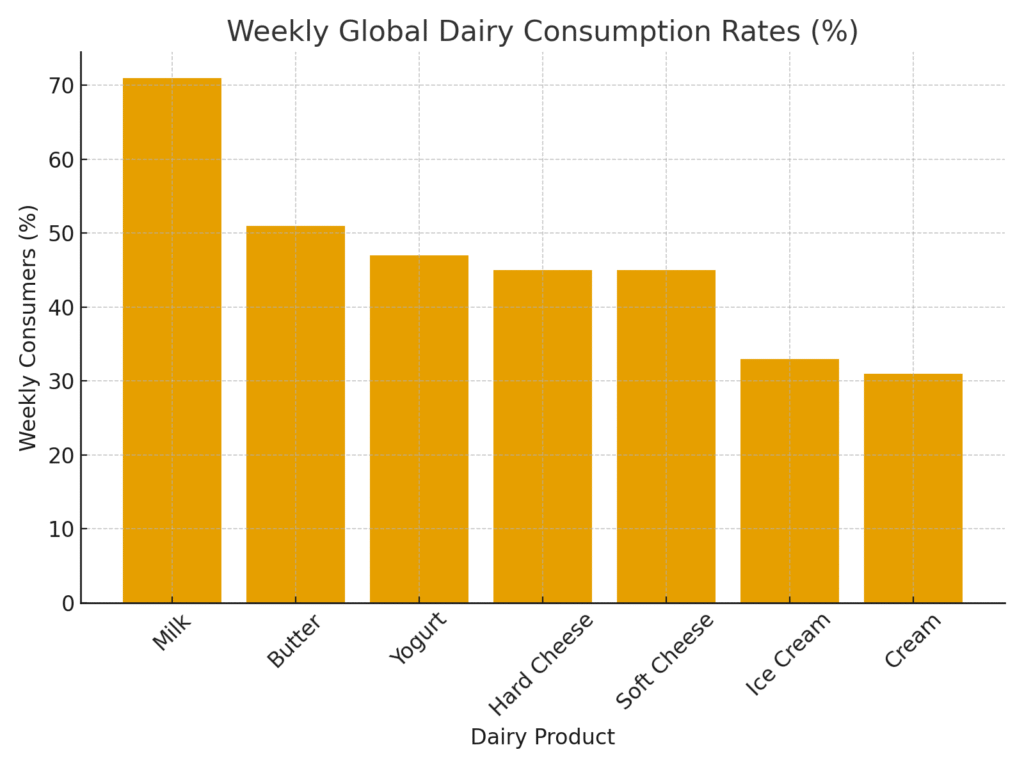
Dairy Marketing Statistics #11 Cream Consumed Weekly By 31%
Globally, 31% of consumers consume cream weekly, proving its niche but steady demand. Cream is tied to indulgence, special occasions, and baking trends. For marketers, cream offers opportunities in festive and premium product lines. Positioning cream as a luxury product enhances its appeal beyond necessity. This statistic suggests marketers can leverage cream in campaigns tied to lifestyle and celebration.
Dairy Marketing Statistics #12 Rising Demand For Functional Dairy Products
The demand for functional dairy products enriched with probiotics, proteins, and vitamins is rapidly increasing. Consumers are actively seeking health-boosting benefits in everyday dairy. This creates space for innovative product launches like fortified yogurts and protein milks. Marketers must lean into the health and wellness narrative to capture attention. Functional dairy is where nutrition and marketing intersect most powerfully.
Dairy Marketing Statistics #13 Intense Flavors Growing By 156% Year-On-Year
Mentions of “intense flavors” in dairy grew by 156% year-on-year in recipe and social media conversations. This shows consumers are eager for adventurous, bold taste experiences. Marketers can ride this trend with launches that mix global cuisines and unique combinations. The growing appetite for bold flavors redefines how traditional dairy products are positioned. Flavor-driven campaigns are becoming key to engaging younger audiences.
Dairy Marketing Statistics #14 Growth Of Goat And Sheep Milk Categories
Goat and sheep milk are expanding beyond niche markets, gaining mainstream acceptance. Consumers perceive them as healthier, more digestible alternatives to cow’s milk. For marketers, this opens opportunities to highlight differentiation and authenticity. Goat and sheep milk appeal to adventurous consumers seeking premium experiences. This statistic shows that variety is becoming a key driver in dairy marketing.
Dairy Marketing Statistics #15 Growing Popularity Of Lactose-Free Dairy
Demand for lactose-free dairy options continues to rise as consumers prioritize digestive health. This trend reflects inclusivity in dairy marketing, reaching previously underserved groups. Brands now highlight both taste and health benefits in lactose-free lines. For marketers, this trend is a chance to expand dairy’s reach without alienating traditional consumers. It shows that adaptation drives growth in the dairy category.
Dairy Marketing Statistics #11 Cream Consumed Weekly By 31%
Globally, 31% of consumers consume cream weekly, proving its niche but steady demand. Cream is tied to indulgence, special occasions, and baking trends. For marketers, cream offers opportunities in festive and premium product lines. Positioning cream as a luxury product enhances its appeal beyond necessity. This statistic suggests marketers can leverage cream in campaigns tied to lifestyle and celebration.
Dairy Marketing Statistics #12 Rising Demand For Functional Dairy Products
The demand for functional dairy products enriched with probiotics, proteins, and vitamins is rapidly increasing. Consumers are actively seeking health-boosting benefits in everyday dairy. This creates space for innovative product launches like fortified yogurts and protein milks. Marketers must lean into the health and wellness narrative to capture attention. Functional dairy is where nutrition and marketing intersect most powerfully.
Dairy Marketing Statistics #13 Intense Flavors Growing By 156% Year-On-Year
Mentions of “intense flavors” in dairy grew by 156% year-on-year in recipe and social media conversations. This shows consumers are eager for adventurous, bold taste experiences. Marketers can ride this trend with launches that mix global cuisines and unique combinations. The growing appetite for bold flavors redefines how traditional dairy products are positioned. Flavor-driven campaigns are becoming key to engaging younger audiences.
Dairy Marketing Statistics #14 Growth Of Goat And Sheep Milk Categories
Goat and sheep milk are expanding beyond niche markets, gaining mainstream acceptance. Consumers perceive them as healthier, more digestible alternatives to cow’s milk. For marketers, this opens opportunities to highlight differentiation and authenticity. Goat and sheep milk appeal to adventurous consumers seeking premium experiences. This statistic shows that variety is becoming a key driver in dairy marketing.
Dairy Marketing Statistics #15 Growing Popularity Of Lactose-Free Dairy
Demand for lactose-free dairy options continues to rise as consumers prioritize digestive health. This trend reflects inclusivity in dairy marketing, reaching previously underserved groups. Brands now highlight both taste and health benefits in lactose-free lines. For marketers, this trend is a chance to expand dairy’s reach without alienating traditional consumers. It shows that adaptation drives growth in the dairy category.
Dairy Marketing Statistics #16 Social Media As A Dairy Trend Driver
Social media is increasingly shaping dairy consumption habits through recipes, hacks, and viral flavors. Platforms like TikTok amplify dairy trends at unprecedented speed. Marketers who tap into this space can capture attention through relatable, creative storytelling. Campaigns that align with viral formats or influencers tend to outperform traditional ads. This statistic shows the importance of digital-first dairy marketing strategies.
Dairy Marketing Statistics #17 Cost, Talent, And Growth As Top Dairy Executive Priorities
In 2024, dairy executives ranked cost management, talent acquisition, and volume growth as their top priorities. This reflects the balancing act between operational efficiency and market expansion. Marketing strategies need to align with these executive focuses to secure investment. Sustainability and purpose, while important, ranked lower compared to immediate business concerns. This statistic reveals the business context shaping dairy marketing strategies.
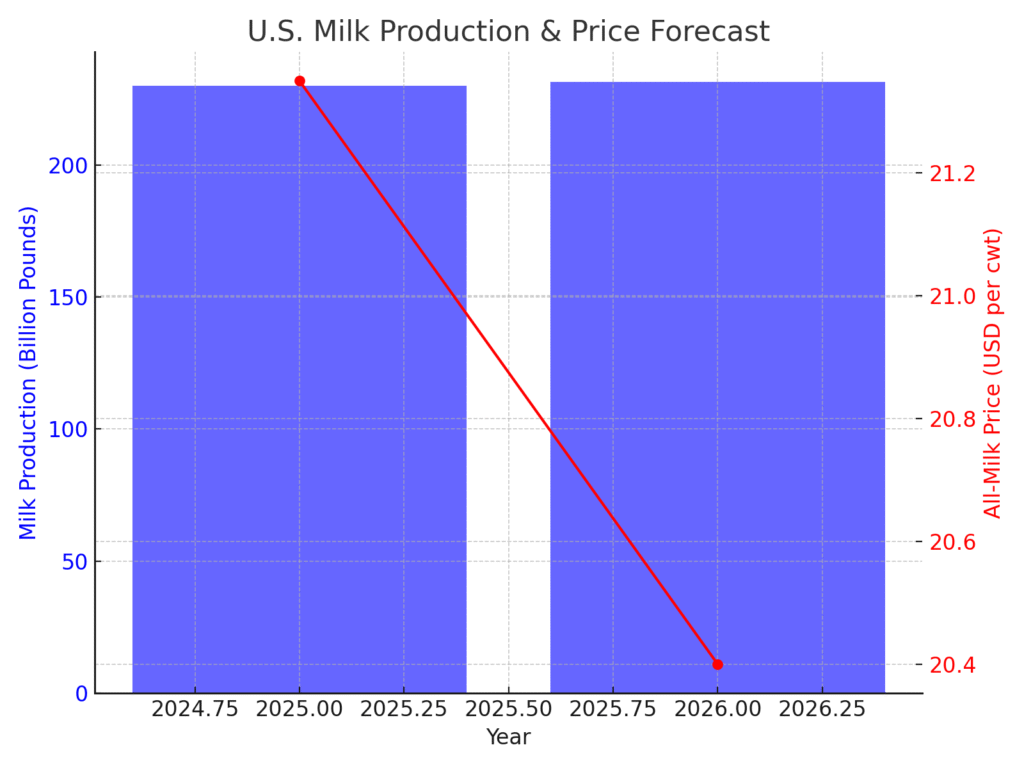
Dairy Marketing Statistics #18 U.S. Milk Production Projected At 230 Billion Pounds In 2025
The U.S. is forecast to produce around 230 billion pounds of milk in 2025. This immense supply drives both domestic marketing and export opportunities. Marketers can highlight abundance, freshness, and global reach in campaigns. This statistic underlines the scale at which U.S. dairy impacts the world. Production volume also reflects stability, reassuring consumers and trade partners alike.
Dairy Marketing Statistics #19 All-Milk Price Forecast At $21.35 Per Hundredweight In 2025
The all-milk price is forecast at $21.35 per hundredweight in 2025, showing modest pricing stability. Price forecasts are vital for both producers and marketers in planning. Stable pricing allows campaigns to focus on brand positioning rather than cost fluctuations. For marketers, this means more consistent messaging around value. Consumers benefit from predictability, reinforcing loyalty to trusted dairy brands.
Dairy Marketing Statistics #20 Top Dairy Companies By Revenue
Global dairy giants like Lactalis, Nestlé, and Dairy Farmers of America generated billions in dairy revenue in 2023. Lactalis alone earned over $30 billion, making it the industry leader. These numbers reflect both scale and brand trust built over decades. For marketers, studying these companies highlights strategies worth emulating—heritage, innovation, and global outreach. This statistic underscores the competitive landscape that shapes dairy marketing worldwide.
Why These Insights Matter
Looking back at these dairy marketing statistics, what strikes me most is how personal and practical they really are. They remind me that behind every trend or market figure is a consumer making a choice—choosing a brand because it feels healthier, more ethical, or simply more relatable. For me, the biggest takeaway is that success in dairy marketing isn’t just about scale; it’s about authenticity and understanding what people truly value. That’s something I’ve witnessed time and time again while working on real campaigns—numbers matter, but empathy matters even more. My hope is that you walk away from this with the same excitement I feel, knowing these insights can help shape smarter, more human-centered strategies for the future.
SOURCES